Category Archives: Human Rights

The Silent Spying Device in Your Pocket: Who is Afraid of Pegasus?

NSO Group, the Israeli company behind Pegasus spyware, says a group of investors led by Hollywood producer Robert Simonds has acquired a controlling stake in the firm, which has named a former Trump official to lead an effort to restore its battered reputation. The company, which has faced lawsuits and U.S. government sanctions since revelations that its technology was used to spy on political dissidents, human-rights advocates, journalists and American officials, declined to disclose the purchase price.

NSO’s new executive chairman, David Friedman, a former U.S. ambassador to Israel and onetime bankruptcy lawyer for President Trump, said he wants to use his ties to the Trump administration to help rebuild the company’s spyware business in the U.S…NSO’s flagship product, Pegasus, has used WhatsApp to infiltrate phones without the target having to do or tap on anything. The spyware has also been sent to phones via links in messages, according to security researchers. Pegasus can turn a smartphone into a silent spying device by gaining access to its files, messages, microphone and camera, they say.

In 2021, the Biden administration placed NSO on an export-prohibition list that restricted the firm from obtaining some types of technology from the U.S. In 2023, President Biden signed an executive order banning government agencies and departments from using commercial spyware that “poses risks to national security or has been misused by foreign actors to enable human rights abuses around the world.” Unless Biden’s executive order is rescinded, it is unlikely U.S. government agencies would do business with NSO.

Intelligence agencies such as the U.S. National Security Agency and the U.K.’s Government Communications Headquarters routinely use hacking tools. NSO often sells such cyber capabilities to countries that don’t have their own. Friedman said his pitch to the U.S. government is that NSO’s products will make America safer. NSO says its products can be used by government agencies to fight terrorism and crime by allowing them access to encrypted messaging systems such as WhatsApp….

In 2019, WhatsApp’s parent company, now called Meta, sued NSO over what it alleged was a breach of its servers to install NSO’s malware on target devices. In July 2025, the six-year trial came to an end, with a federal jury in California ordering NSO to pay Meta $168 million in damages. In October 2025, the U.S. District Court for the Northern District of California reduced the fine NSO was ordered to pay Meta down to $4 million. But in the same ruling, the judge ordered NSO to stop targeting WhatsApp, in a move that the company said during its defense could put it out of business. NSO is appealing the decision against targeting WhatsApp, and is filing for a stay.

Excerpt from Dov Lieber, Israeli Spyware Maker NSO Gets New Owners, Leadership and Seeks to Mend Reputation, WSJ, Nov. 9, 2025

Having What Nobody Can Have: The Superiors

Travel has always been a key feature of wealthy people’s lives, and more than ever they prioritize privacy, efficiency and customization, industry specialists say. Lauren Beall, owner of Travel Couture in Miami Beach, specializes in arranging custom travel experiences for the ultrawealthy. She has booked private islands for clients and flown in Michelin-starred chefs, yoga instructors and performers.

One coveted offering is a suite above the Christian Dior flagship store in Paris that can be rented, and includes an after-hours shopping excursion and a private dinner at Monsieur Dior restaurant. An estate Beall has reserved in Scotland comes with private chefs, horses to explore the countryside and a helicopter to visit towns for the day.

“We’re into that exclusive access right now—things that other people can’t get,” Beall said. “There’s a huge price tag that goes with it.”

Excerpt from Arias Campo-Flores, The Ultrarich Pay Big for Extreme Privacy, WSJ, Nov. 15, 2025

Mining Giants and Little People: Mariana Dam Disaster

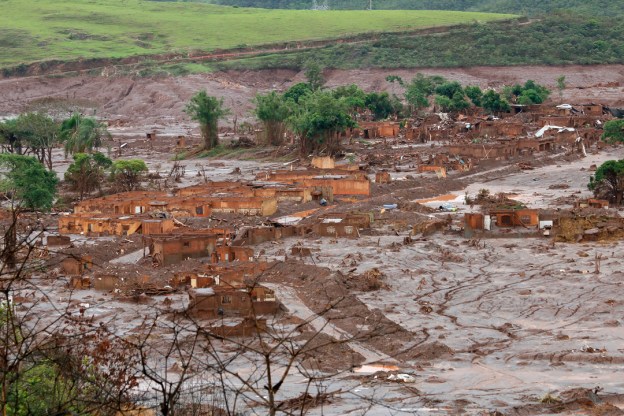
Mining company BHP has been found liable on November 13, 2025 for a 2015 dam collapse in Brazil,….[Note that this disaster was followed by yet another disaster in 2019 the Brumadinho dam disaster] The dam collapse killed 19 people, polluted the river and destroyed hundreds of homes. The civil lawsuit, representing more than 600,000 people including civilians, local governments and businesses, had been valued at up to £36bn ($48bn).

The dam in Mariana, southeastern Brazil, was owned by Samarco, a joint venture between the mining giants Vale and BHP. The claimants’ lawyers argued successfully that the trial should be held in London because BHP headquarters “were in the UK at the time of the dam collapse”. A separate claim against Samarco’s second parent company, Brazilian mining company Vale, was filed in the Netherlands, with more than 70,000 plaintiffs.

The dam was used to store waste from iron ore mining. When it burst, it unleashed tens of millions of cubic metres of toxic waste and mud. The sludge swept through communities, destroying hundreds of people’s homes and poisoning the river. Judge Finola O’Farrell said in her High Court ruling that continuing to raise the height of the dam when it was not safe to do so was the “direct and immediate cause” of the dam’s collapse, meaning BHP was liable under Brazilian law.

Excerpt from Ione Wells, UK court finds mining firm liable for Brazil’s worst environmental disaster, BBC, Nov. 14, 2025

———-

According to the UN Special Rapporteur who visited Brazil in 2019 and met BHP and Vale on numerous occasions, ” BHP and Vale rushed to create the Renova Foundation to provide the communities [affected by the collapse of the dam] an effective remedy. Unfortunately, the true purpose of the Renova Foundation appeared to be limit liability of BHP and Vale, rather than provide any semblance of an effective remedy

Furthermore, inadequate information was available about the toxicity of the waste after the Mariana disaster, the companies insisted that it was non-toxic, and rejected calls for precaution. Only three weeks after concerns were raised was information availed. When health impacts in Barra Longa emerged years later, Renova sought to exert ownership of epidemiological and toxicological studies by Ambios to suppress disclosure. Read the full report of the Special Rapporteur here.

Shut Up and Give Up: How to Deal with Environmental Disasters

The worst day of Bathsheba Musole’s life was February 18, 2025. It started with a deafening crash when the 30-foot wall around a toxic-waste pool collapsed at the Chinese copper mine above her village. A poisonous river of a stinking yellow liquid rushed downhill, inundating homes and fields, including the one where she grew corn to feed her eight children. The floodwater, laden with cyanide and arsenic, rose chest-high. “I thought I would drown,” said Musole, 48 years old, in a recent interview.

In August 2025, months after the Feb. 18, 2025 disaster, officials from Sino Metals, a unit of the state-owned China Nonferrous Mining Corp., showed up at Musole’s half-acre farm, which the Zambian government says is too toxic to sustain crops for at least three years. They were there to make things right, she recalled them saying. Their offer was $150, but it came with a catch. To get the money, she would have to agree never to talk about the spill, take legal action against Sino Metals or even reveal the contents of the nondisclosure agreement itself…

Zambia’s government and economy.. have grown reliant on China. Zambia collects about $2 billion a year in mining taxes, mostly from Chinese mining companies. Half of the copper mined in Zambia, much of it by Chinese companies, is exported to China. In 2024, the Zambian government announced that Chinese miners would invest $5 billion in the country by 2031…

After months of investigation, Drizit Environmental, a South African firm contracted by Sino Metals, concluded that 1.5 million tons of toxic waste had overflowed into the Kafue valley, 30 times what the company had said. Sino Metals terminated the firm’s contract a day before the final report was due…

Excerpt from Nicholas Bariyo, China Pushes to Silence Victims of African Mining Disaster, WSJ, Oct. 27, 2025

Next Wild West: Monetizing Mental Data

Some  brain–computer interfaces (BCI) are capable not only to record conscious thoughts but also the impulses of the preconscious. Most BCIs are connected the brain’s motor cortex, the part of the brain that initiates and controls voluntary movements by sending signals to the body’s muscles. But some people have volunteered to have an extra interface implanted in their posterior parietal cortex, a brain region associated with reasoning, attention and planning…The ability of these devices to access aspects of a person’s innermost life, including preconscious thought, raises the stakes on concerns about how to keep neural data private. It also poses ethical questions about how neurotechnologies might shape people’s thoughts and actions — especially when paired with artificial intelligence…

Consumer neurotech products capture less-sophisticated data than implanted BCIs do. Unlike implanted BCIs, which rely on the firings of specific collections of neurons, most consumer products rely on electroencephalography (EEG). This measures ripples of electrical activity that arise from the averaged firing of huge neuronal populations and are detectable on the scalp. Rather than being created to capture the best recording possible, consumer devices are designed to be stylish (such as in sleek headbands) or unobtrusive (with electrodes hidden inside headphones or headsets for augmented or virtual reality).

Still, EEG can reveal overall brain states, such as alertness, focus, tiredness and anxiety levels. Companies already offer headsets and software that give customers real-time scores relating to these states, with the intention of helping them to improve their sports performance, meditate more effectively or become more productive, for example. AI has helped to turn noisy signals from suboptimal recording systems into reliable data, explains Ramses Alcaide, chief executive of Neurable, a neurotech company in Boston, Massachusetts, that specializes in EEG signal processing and sells a headphone-based headset for this purpose…

With regard to EEG, “There’s a wild west when it comes to the regulatory standards”… A 2024 analysis of the data policies of 30 consumer neurotech companies by the Neurorights Foundation, a non-profit organization in New York City, showed that nearly all had complete control over the data users provided. That means most firms can use the information as they please, including selling it.

The government of Chile and the legislators of four US states have passed laws that give direct recordings of any form of nerve activity protected status. But ethicists fear that such laws are insufficient because they focus on the raw data and not on the inferences that companies can make by combining neural information with parallel streams of digital data. Inferences about a person’s mental health, say, or their political allegiances could still be sold to third parties and used to discriminate against or manipulate a person.

“The data economy, in my view, is already quite privacy-violating and cognitive- liberty-violating,” Ienca says. Adding neural data, he says, “is like giving steroids to the existing data economy”.

Excerpt from Liam Drew, Mind-reading devices can now predict preconscious thoughts: is it time to worry?, Nature, Nov. 19, 2025

Let them Eat Data! Decolonizing Artificial Intelligence

Tap water isn’t drinkable. Power outages are common. The national average annual wage is $2,200. Yet rising on Jakarta’s outskirts are giant, windowless buildings packed inside with Nvidia’s latest artificial-intelligence chips. They mark Indonesia’s surprising rise as an AI hot spot, a market estimated to grow 30% annually over the next five years to $2.4 billion.

The multitrillion-dollar spending spree on AI has spread to the developing world. It is driven in part by a philosophy known in some academic circles as AI decolonization. The idea is simple. Foreign powers once extracted resources such as oil from colonies, offering minimal benefits to the locals. Today, developing nations aim to ensure that the AI boom enriches more than just Silicon Valley.  Regulations effectively require tech companies such as Google and Meta to process local data domestically. That pushes companies to build or rent data facilities onshore instead of relying on global infrastructure. These investments add up to billions of dollars and create jobs that foster national talent, or so developing nations hope.

AI decolonization is a twist on data sovereignty, a concept that gained traction after Edward Snowden revealed that American tech companies cooperated with U.S. government surveillance of foreign leaders. The European Union in 2018 pioneered data-protection laws that other nations have since mimicked.

Regulations vary by country and industry, but the principle is this: If a developing-nation bank wants an American tech giant to store customer data and analyze it with AI, the bank must hire a company with domestically located servers… Nvidia Chief Executive Jensen Huang championed “sovereign AI” during a visit to Jakarta in 2024

“No country can afford to have its natural resource—the data of its people—be extracted, transformed into intelligence and then imported back into the country,” Huang said…

Excerpt from Stu Woo, It’s Not Just Rich Countries. Tech’s Trillion-Dollar Bet on AI Is Everywhere, WSJ, Oct. 26, 2025

The Right to Mental Privacy: How AI Can Read You Like a Book

A technique called ‘mind captioning’ described in a scientific paper published on November 5, 2025 generates descriptive sentences of what a person is seeing or picturing in their mind using scans of their brain activity. It is based 1) on artificial intelligence models trained on the text captions of thousands of videos,0 and 2) brain scans of people watching them. The technique could help those with language difficulties to communicate better… But it raises concerns of mental privacy…

Excerpt from Max Kozlov, Mind-captioning’ AI decodes brain activity to turn thoughts into text, Nature, Nov. 5, 2025

First French Village to Relocate due to Climate Change

[T]he village of Miquelon sits only 2 meters above sea level on the archipelago of Saint-Pierre and Miquelon. Situated off the Canadian coast to the south of Newfoundland, it is an “overseas collectivity” of France, and the country’s last foothold in North America…’

But it was not until 2022 that the local government started thinking in earnest about relocating after the village narrowly missed being hit by Hurricane Fiona, one of the most expensive weather events ever in Canada. The move, when it is complete, will give Miquelon the unenviable title of the first French village to relocate because of the climate emergency. ..For now, relocation is voluntary, and nearly 50 people have signed up to move…At the same time, workers started to extend Miquelon’s water and electricity supplies to the new site. The goal is to keep the two sites connected as people move across the bridge between them.

Even though the signs of the climate crisis are obvious on the island – the ocean is slowly eating away at the isthmus that connects the parts of the island – many believe they have more time…

Excerpt from Sara Hashemi, How do you move a village? Residents of France’s last outpost in North America try to outrun the sea, Guardian, Oct. 28, 2025

Why Arab Men Rape Black Women in Darfur

Sudan’s civil war is taking a jarring turn in Darfur, where an Arab-led militia is now using state-of-the-art drones and execution squads to dominate the region’s Black population. Rights researchers already are warning that the killings have the potential to surpass the genocide that played out in Rwanda just over 30 years ago. The group behind the violence, the Rapid Support Forces (RSF), led by Lt. Gen. Mohamed Hamdan Dagalo, has previously been accused by the U.S. of pursuing a genocide of Darfur’s Black population. Two decades ago, its predecessor was involved in the killing of more than 200,000 people in Darfur.

This time, the killings are the work of a closely-drilled and well-armed rebel force that already has established a parallel government to run Darfur, an expanse of western Sudan roughly the size of Spain. RSF fighters are armed with bomb-carrying Wing Loong II and FeiHong-95 drones, made in China, and supplied by the United Arab Emirates to help expand its own interests in the region.

The RSF have been conducting door-to-door searches, picking out non-Arab men and boys before executing them… Witnesses and residents say militia members swept through the city, raping Black women, detaining aid workers and forcing the last remaining residents to leave… Black women with long hair are systematically separated and raped, according to interviews with multiple aid workers and victims.

According to Eric Reeves, a fellow with the Nairobi-based Rift Valley Institute: “The fierce ethnic animus of the RSF toward non-Arab civilians is equal to that of the Hutus toward the Tutsis in Rwanda. The obscene violence is clearly comparable.”

Excerpt from Nicholas Bariyo, Sudan Militia, Armed With Drones, Hunts Down Black Population of Darfur, WSJ, Oct. 31, 2025

Which Tech Companies Work for the Military? All

Companies including Nokia, Dell, and Oracle are eager to apply decades of experience in civilian technology to the rapidly evolving battlefield. Drones, bodycams and digital sensors now stream real-time intelligence in volumes no human can digest. Military headquarters are crunching through that using artificial intelligence and pumping back to troops situational updates, tactical guidance and battle plans, constantly updated on computer screens and hand-held devices.  “We understand that the future weapon is data,” said Giorgi Tskhakaia, an adviser to Ukraine’s minister of digital transformation 

The first step is connectivity….Nokia is packaging 5G technology for ultra-secure use on battlefields and in national-security applications. It has developed backpacks with small 5G nodes and vehicle-based systems that can handle up to 1,000 users for a sort of tactical communications bubble. In 2025, it announced partnerships with military-equipment giants Lockheed Martin and Rheinmetall to integrate 5G communications into their systems.

Ericsson, the West’s only other maker of 5G networks and a producer of military radios going back to World War II, is also pushing into digital defense applications.

NATO is now working to adopt 5G as a military-communications standard across its 32 members. Alliance experts say the volume of military data is so great that 5G is best for transmission because the standard has at least 10 times the data capacity of earlier systems. It is also much more resilient against jamming

The second step is the extraction of data….Ukraine has spent three years developing AI systems to churn through all it collects… The Pentagon in 2017 launched a significant effort to adopt AI, Project Maven, tapping machine learning to digest mountains of data. Google’s role in the work sparked employee protests at the time…

Oracle, like many of its rivals, is no stranger to working with governments and militaries. The company began in 1977 out of a Central Intelligence Agency program—Project Oracle. But for decades it focused on corporate customers. Now, it and other cloud providers including Google, Amazon.com and IBM are applying to government and national-security work many lessons from their fierce commercial competition to move and process data fastest.

The final step in exploiting battlefield data is delivering it to fighters via gear that can handle combat conditions. Screens are proliferating on the battlefield, just as they did in offices and homes several decades ago, but warfare puts demands on equipment unlike any other environment…One Dell laptop is built to Pentagon standards for resistance to shocks, dust, sand, water and “explosive atmosphere,” meaning it won’t ignite flammable vapor. It can handle temperatures between minus 20 degrees and 145 degrees Fahrenheit.

Excerpt from Daniel Michaels, That 1990s Tech Brand? Its New Gig Is in Battlefield Data, WSJ, Sept. 9, 2025

Big Tech and Military: Microsoft – Israel Force

Microsoft terminated in September 2025 the Israeli military’s access to technology it used to operate a powerful surveillance system that collected millions of Palestinian civilian phone calls made each day in Gaza and the West Bank, according to Guardian. Microsoft told Israeli officials that Unit 8200, the military’s elite spy agency, had violated the company’s terms of service by storing the vast trove of surveillance data in its Azure cloud platform.

Equipped with Azure’s near-limitless storage capacity and computing power, Unit 8200 had built an indiscriminate new system allowing its intelligence officers to collect, play back and analyze the content of cellular calls of an entire population.

The project was so expansive that, according to sources from Unit 8200 – which is equivalent in its remit to the US National Security Agency – a mantra emerged internally that captured its scale and ambition: “A million calls an hour.

The enormous repository of intercepted calls – which amounted to as much as 8,000 terabytes of data – was held in a Microsoft data center in the Netherlands. Within days of the Guardian publishing, Unit 8200 appears to have swiftly moved the surveillance data out of the country.

Excerpt from Harry Davies and Yuval Abraham, Microsoft blocks Israel’s use of its technology in mass surveillance of Palestinians, Guardian, Sept. 25, 2025

Is Violence Necessary for the Protection of Environment?

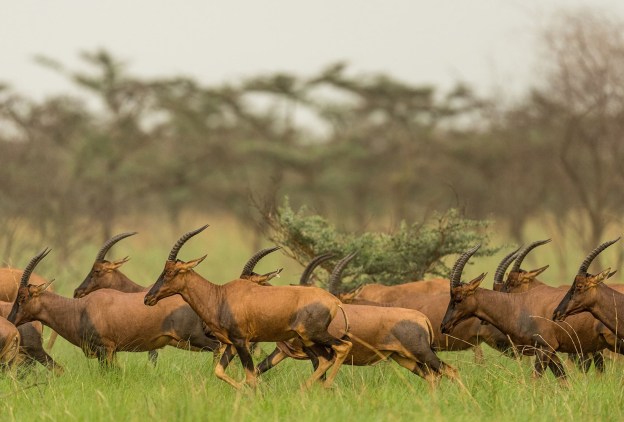
Six million antelope swarm across an area the size of Illinois,in Sough Sudan, a mass movement of mammals…African Parks, the Johannesburg-based conservation group that manages natural areas on behalf of South Sudan’s government, allowed The Wall Street Journal access to the 58,000-square-mile wilderness on the eastern bank of the White Nile….Although scientists and, of course, locals have known about the migration for years, only recently have researchers understood its staggering dimensions. In 2023, African Parks conducted an aerial survey revealing the movement included some 5.1 million white-eared kob, which generally move in a U shape in and around Boma National Park, sometimes crossing into Ethiopia’s Gambella National Park…

The interethnic violence that plagues South Sudan has, to a degree, helped protect the animal migration…South Sudanese rebels fought for decades to break away from Sudan. The South, mostly animist and Christian, finally won independence from the largely Muslim North in 2011, but quickly descended into civil war along ethnic lines. The war ended in 2020, but fighting in 2025 suggests stability remains a distant hope.

Among the region’s ethnic groups, the heavily armed Murle people in and around Boma National Park are known for stealing cattle and children from the Dinka and Anuak. Fighting is a way of life for Murle men, who divide themselves into age sets. Younger men gain status by taking on the men above them, with sticks and AK-47s, sometimes with lethal effect. Their torsos sometimes bear decorative scars resembling assault rifles…The Murle are so intimidating that other ethnic groups keep their distance to the extent possible. That has created a sort of no-man’s-land both in the parks and the places in between. “You’ve got this massive space that has allowed the migration to flourish,” says John Vogel, manager of Badingilo park.

With war, however, have come guns, and the temptation to poach is strong. Increasingly, hunters armed with military-grade weapons have been mowing down entire herds of antelope and just taking what they can carry to market on motorcycles. In a single month this year, African Parks counted 14,000 antelope carcasses passing through the town of Bor, where each animal sells for about $50, a vast amount to a poor rural family…

Excerpt from Michael M. Phillips, Researchers Track World’s Biggest Animal Migration, WSJ, Sept. 6, 2025

Blackmail and Espionage: rogue AI

Today I am reading on how AI models can blackmail and spy.

See How LLMs could be insider threats

DECEPTION IN LLMS: SELF-PRESERVATION AND AUTONOMOUS GOALS IN LARGE LANGUAGE MODELS

Chilling…

Individual Companies Can be Held Liable for Gross Contribution to Heatwaves

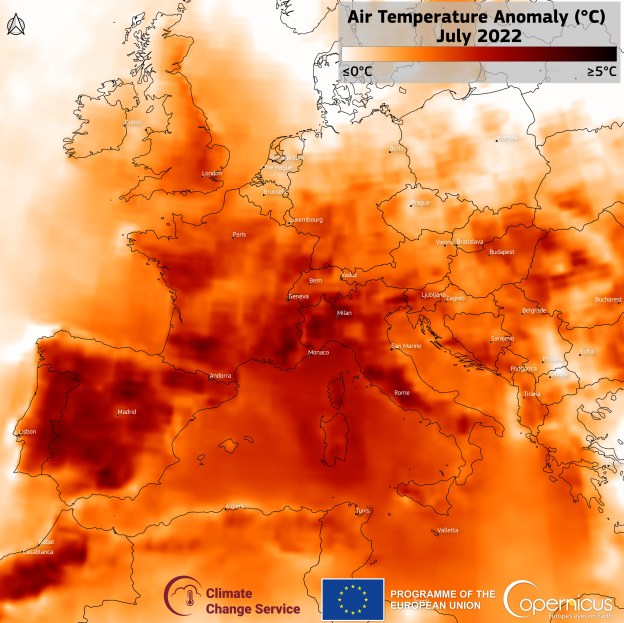
Climate scientists have been attributing storms, droughts and heatwaves to global warming for two decades. Now, they are tracing the chain of responsibility all the way back to the producers of fossil fuels. A study published in Nature in September 2025 shows that around one-quarter of the heatwaves recorded over 2000–23 can be directly linked to greenhouse-gas emissions from individual energy giants…some of whom include (the former Soviet Union, China (coal), Gazprom, Exxon Mobile, Chevron, National Iranian Oil Company, Saudi Aramco, BP, Shell, India (Coal)) The findings could provide fresh evidence to support lawsuits seeking to hold companies accountable for their impacts on the climate.

More than one-quarter of the 213 events recorded would have been “virtually impossible” without human-induced global warming, the study found. The emissions linked to energy companies and other major carbon emitters increased the likelihood of some 53 heatwaves by a factor of more than 10,000.

This is not the first time that climate impacts have been attributed to fossil-fuel producers, but this study go one step further than its predecessors and link individual companies directly to specific heatwaves. Legal experts say it’s a line of evidence that could feed into climate litigation that focuses on specific events, such as the 2021 heatwave that hammered the US Pacific Northwest in 2021. Already, a county government in Oregon has filed a US$52-billion civil lawsuit against fossil-fuel companies for contributing to that event.

Excerpts from Jeff Tollefson, Heatwaves linked to carbon emissions from specific companies, Nature, Sept. 10, 2025

Silicon Valley Has Best Genes for Embryos

In 2025, parents here are paying up to $50,000 for new genetic-testing services that include promises to screen embryos for IQ. The fascination with what some call “genetic optimization” reflects deeper Silicon Valley beliefs about merit and success. “I think they have a perception that they are smart and they are accomplished, and they deserve to be where they are because they have ‘good genes,’” said Sasha Gusev, a statistical geneticist at Harvard Medical School. “Now they have a tool where they think that they can do the same thing in their kids as well, right?”…

The growing IQ fetish is sparking debate, with bioethicists raising alarms about the new genetic-screening services. “Is it fair? This is something a lot of people worry about,” said Hank Greely, director of the Center for Law and the Biosciences at Stanford University. “It is a great science fiction plot: The rich people create a genetically super caste that takes over and the rest of us are proles.” Yet in Silicon Valley, where top preschools require IQ tests and openness to novelty runs high, parents aren’t burdened by moral quandaries of using technology to select for their children’s intelligence before birth…

The most unusual motive for making smarter babies is emerging from a brainy group of computer scientists in Berkeley. Known as the rationalists, they fear that AI poses an existential risk to humanity. “They think one of the ways that possibly we could make safe AI is if we had smarter humans building them,” said Hsu, the Genomic Prediction co-founder. “Some of these guys are committed to a long-term eugenics program where they create smarter humans, and the smarter humans are the ones that make AI safe.”  

Excerpt from Zusha Elinson, Inside Silicon Valley’s Growing Obsession With Having Smarter Babies

Password Prevents Spilling out Private Thoughts

A brain–computer interface (BCI) can decipher the imagined sentences of people who have conditions that interfere with speech — and it comes with password protection to avoid revealing private thoughts. The system begins decoding users’ internal speech only after they think of a specific keyword. This internally spoken “keyword” can enable a user to “lock” and “unlock” the BCI to prevent the broadcasting of their private thoughts or spontaneous ‘self-talk’.

Excerpt from Gemma Conroy, A mind-reading brain implant that comes with password protection, Nature, Aug. 14, 2025

International Environmental Law: Fairness, Effectiveness and World Order

Second Edition (2025) will be out in October 2025

Check my blog on the Cambridge website

Fifty Years of International Environmental Law: Looking Back and Looking Ahead

ChatGPT as a Confessor

ChatGPT users are unloading personal thoughts and feelings to the chatbot in detailed terms. So much so that Altman, OpenAI’s chief executive, has been warning that they shouldn’t expect the same sorts of privacy protections that come with intimate conversations with psychologists or lawyers. 

“People talk about the most personal s— in their lives to ChatGPT,” Altman said during a podcast appearance in July 2025. “If you go talk to ChatGPT about your most sensitive stuff and then there’s like a lawsuit or whatever, like we could be required to produce that and I think that’s very screwed up. I think we should have like the same concept of privacy for your conversations with AI that we do with a therapist or whatever.”

Excerpt from Tim Higgins, Why Apple’s Tim Cook Is the Odd Man Out in the AI Race, WSJ, Aug. 2025

Getting Raped as a Way of Life

Kanzira Kihanga, a woman who lives in Congo, says she wasn’t surprised to learn in May 2025 that she was infected by the virus that causes AIDS. The 21-year-old believes she contracted the virus after back-to-back rapes by armed men. After the first attack, she went to a clinic but was only given half a dose of the PEP medication.* Two weeks later, she was raped again as she walked to the clinic to pick up the remainder of the dosage.

*Post-exposure prophylaxis (PEP) refers to HIV medicines that are taken after a possible exposure to prevent HIV infection.

Excerpt from Nicholas Bariyo, Congo Braces for HIV Surge After U.S. Funding Stops, WSJ, July 4, 2025

If There is Hell, it Must Be Like This

On 6 August 1945, the United States dropped an atomic bomb on the Japanese city of Hiroshima, killing 80,000 people in a single day, and tens of thousands more in the subsequent months. “If there is a hell,” survivor Ōiwa Kōhei recalled thinking of the aftermath, “it must be just like this.” Kōhei, 13-years-old at the time, was plagued for months by radiation poisoning, and forever by the psychological trauma. The hibakusha — the Japanese term for atomic-bomb survivors — “will not be with us for much longer, so it is essential that their irreplaceable living testimony should continue to be diligently and accurately recorded while it is still available”, writes historian Mordecai Sheftall. Their testimony must be preserved not for historical record, but so that current and future generations will take the lessons of their experiences to heart, says Sheftall.

Excerpt from Mordecai Sheftall, The Sun had fallen to Earth’ — a survivor’s recollection of the Hiroshima bombing, Nature, August 5, 2025

Can AI Do That? Knowledge Impossible to Copy

Zuckerberg hasn’t had much success in his efforts to hire the field’s biggest stars, including OpenAI’s co-founder Ilya Sutskever and its chief research officer, Mark Chen. Many candidates are happy to take a meeting at Zuckerberg’s homes in Palo Alto and Lake Tahoe. In private, they are comparing gossip and calculating Meta’s chances of winning the AI race.

The handful of researchers who are smartest about AI have built up what one described as “tribal knowledge” that is almost impossible to replicate. Rival researchers have lived in the same group houses in San Francisco, where they discuss papers that might provide clues for achieving the next great breakthrough. 

Excerpt from Ben Coen et al, It’s Known as ‘The List’—and It’s a Secret File of AI Geniuses, WSJ, June 27, 2025

The Elite of the Elite: Musk, Thiel, Andreessen, Luckey

Since January 2025, more than three dozen employees and associates of Musk and fellow tech titans Peter ThielMarc Andreessen and Palmer Luckey have been tapped for roles at federal agencies critical to their businesses, a Wall Street Journal analysis found. The roles put them in departments that oversee, regulate and award business to the four men’s companies, according to personnel appointments, lawsuits, ethics disclosures and contract data, creating a web of potential conflicts that ethics experts call unprecedented.

The group includes current and former employees as well as lawyers, investors and financial advisers of the tech executives. They make up most of the identified people working for the Department of Government Efficiency, the powerful cost-cutting task force created to streamline federal bureaucracy… Others have been appointed to key roles across the government.

Companies founded, owned or invested in by Musk, Thiel, Andreessen and Luckey have won more than a dozen federal contracts totaling about $6 billion since President Trump’s inauguration, and are pursuing billions more… Their business interests are often intertwined: Musk’s SpaceX was backed by Thiel’s Founders Fund and Andreessen’s a16z; both venture funds also backed Anduril Industries, a defense-tech startup co-founded by Luckey.

Excerpt from Shane Shifflett et al., Silicon Valley’s New Hold on Washington, WSJ, May, 16, 2025

The Road to Success is Paved with Dirty Secrets

Amazon.com is the latest to face possible sanctions over allegations it improperly withheld tens of thousands of business records—including some unflattering to founder Jeff Bezos—in defending against an action by the Federal Trade Commission. At Google, a federal judge in San Francisco has ruled the company didn’t properly save evidence in a case brought by Epic Games, and its behavior has become a yoke as the Justice Department seeks to break up the search giant after winning two landmark antitrust cases. A different federal judge recently referred the behavior of Apple to the Justice Department, in part because of alleged efforts to hide documents from legal scrutiny…

Each company is accused of being overly aggressive in holding back internal documents under special legal standing—known as privilege—that should have, in fact, been turned over to the government or lawyers…Maybe it isn’t surprising the companies can’t help themselves in pushing the limits. It is, after all, what has made them so successful as disrupters turned conquerors. In their minds, they are the underdogs, whether they are facing the rise of AI, China or the next Big Thing lurking beyond the horizon. 

Excerpt from Tim Higgins, What Is Big Tech Trying to Hide?, WSJ, May 17, 2025

Indigenous Peoples against Netflix and Meta: Northern Kenya Rangelands Carbon Project

The Northern Kenya Rangelands Carbon Project managed by the Northern Rangelands Trust, a Kenyan nonprofit, is the world’s largest soil-carbon plan, its boosters say. Launched in 2012, it was designed to preserve some 4.7 million acres of grasslands to lock in carbon on land communally owned by the Maasai, Borana and other pastoralist groups, which is part of a network of protected areas hosting threatened species such as cheetahs, black rhinos and… giraffes.

On May 13, 2025, an international nonprofit , Verra, that certifies carbon credits suspended approval for the project, adding to the questions about the credibility of similar carbon-capture projects and whether they actually benefit the people who live off the land….A spokesperson for the group, Verra, said credits are now on hold as it reviews the program after a long-running dispute between the conservationists who created the rangelands project and local herders, who say the project disrupts grazing patterns built over the course of centuries…

The dispute reached a flashpoint in 2021, when 165 pastoralists from two conservation areas sued the Northern Rangelands Trust in Kenyan court for allegedly using their land without consent. The plaintiffs accused the trust of creating the conservancies—which acted as the herders’ representatives in the carbon deal—through pressure and intimidation rather than informed consent. The court ruled in their favor in January 2025.

Lawyers and rights groups representing pastoralists say the ruling, which applies to one of the biggest conservancies, invalidates around 20% of the entire project’s credits. They say credits in around half of the project’s 14 wildlife conservancies could be vulnerable to similar lawsuits. That could leave big corporations holding invalid offsets and open to charges from rights groups that they overstate their commitment to environmentally friendly practices.

The trust has sold over six million carbon credits, worth between $42 million and $90 million depending on market prices, to buyers including Netflix and Facebook parent Meta. Tech companies use credits to offset emissions from their energy-intensive operations, such as producing movies, running data centers to stream video, powering social media and training cutting-edge artificial-intelligence models, as well as from employee travel. Meta became carbon neutral—that is, it purchased enough credits to compensate for all of its emissions—in 2020, and Netflix followed suit two years later.

Excerpts from Caroline Kimeu, Netflix and Meta’s Carbon Credits Snared in Dispute With Maasai Herders, WSJ, May 13, 2025

See also Kenya: Landmark court ruling delivers devastating blow to flagship carbon offset project

The Scramble for Congo 21st Century Style

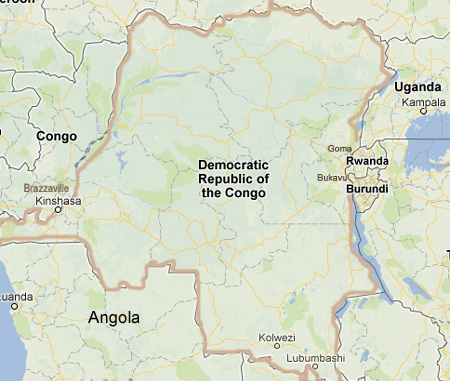
During the 19th century’s Scramble for Africa, European countries raced to secure territory and wealth across the continent. Now, African powers are grabbing resources from a neighbor crippled by infighting and ill-equipped to defend itself. Caught in the middle is the Democratic Republic of Congo, a country the size of Western Europe whose forests conceal a wealth of gold, diamonds and coltan, a key component in smartphones and computers. These mineral riches are turning what was already a region plagued by militia violence into a battleground, as Rwanda and its local allies seize coltan supplies while Uganda and its proxies move to take over gold mines to the northeast, according to United Nations and Ugandan officials…Ugandan President Yoweri Museveni and Rwandan President Paul Kagame are pouring troops and weapons into Congo, while their Congolese allies, who control strategic border crossings, secure smuggling routes to move more minerals to the global markets.

In 2024, Rwanda-backed M23 rebels seized the coltan-mining town of Rubaya, where fighters bring in around $800,000 each month by taxing traders. Rebel fighters have doubled diggers’ wages to encourage them to keep working, and they rely on forced labor to widen roads to accommodate trucks transporting coltan into Rwanda along with gold. According to the U.N., some 4,000 Rwandan soldiers are fighting inside Congo, a report that Rwandan authorities have denied.

Excerpt from While War Rages, Congo’s Neighbors Smuggle Out Its Gold and Mineral Wealth, WSJ, Apr. 7, 2025

To Own Means Nothing-To Do Means More: Metals and Minerals of the World

Trump wants to secure the minerals the U.S. needs for everything from smartphones to jet fighters by striking deals in Ukraine, Greenland and even Russia. But even if the Trump administration secures more mines for American companies through agreements like the mineral-rights deal being discussed with Ukraine, it may have to send much of the minerals to China—its main geopolitical rival—to be processed…

In truth, the U.S. already has abundant supplies of rare earths, but it relies on China to refine them. That is because the U.S. has lost much of its capacity to process minerals, while China has become the world’s dominant refiner of rare earths, cobalt, copper and many other metals.

Until the 1990s, the U.S. was a major refiner of minerals and metals. But then China emerged as the dominant player, powered by its cheap labor force and looser environmental regulations of a sector that can be highly polluting. The voracious need of Chinese manufacturers for raw materials during the country’s years of explosive growth was also a boon for Chinese refiners. Today, the sheer scale of China’s refining industry makes it difficult for others to compete. According to industry estimates, the cost of building a refinery plant in China is a third of the cost in the U.S.

Excerpts from  Jon Emon, How China Beat Out the U.S. to Become the Top Player in Rare-Earths Refining, WSJ, Mar. 25, 2025

The Conquest of Greenland–Not for the Faint Heart

Teeming with underground riches, Greenland might set the scene for a modern gold rush. President Trump, for one, covets Greenland’s deposits of critical minerals, some of the largest in the Western Hemisphere. But as the visiting Australian company, Energy Transition Minerals, has discovered, securing them is a daunting task. 

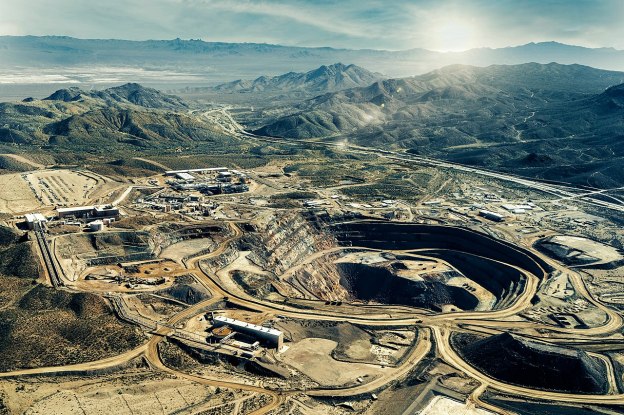
Kvanefjeld, the site of the billion-year-old solidified magma in the mountains above the town of Narsaq, contains an estimated 1 billion tons of minerals, enough to potentially transform the global market for rare-earth elements, used in such things as electric vehicles, jet fighters, wind turbines and headphones. 

Mining companies in Greenland operate in one of the most challenging environments in the world because of the Danish territory’s sparse infrastructure, hostile weather and a tricky political climate. Mining here is expensive, and few investors are willing to pay for it given the uncertainties.   Despite its extraordinary mineral wealth, Greenland has only two active mines: a gold mine in commissioning phase and a mine producing anorthosite, used in fiberglass, paints and other construction materials…“Investing in Greenland is not for the faint of heart,” said Brian Hanrahan, chief executive officer of Lumina Sustainable Materials, which operates the anorthosite mine on the west coast of Greenland. “The local logistics are incredibly complex.” Building a mine involves high startup costs, and has to be done from scratch in rugged terrain. Greenland is nearly one-fourth the size of the U.S., and about 80% of it is covered by ice, with deep fjords and ice sheets up to a mile thick. There are no roads between settlements, and shipping is treacherous because of floating ice off the coast.

Bureaucracy is a hindrance, too. The process of granting licenses to foreign companies to mine is lengthy and cumbersome. While applying for licenses, companies need to keep employees on payroll with benefits. With a population of 57,000, Greenland’s labor market is tight…Extracting Greenland’s minerals is about more than profit; it is about resource control. Western governments are eager to break China’s dominance of the global market for rare earths and other minerals, which it could wield as a weapon in a trade war…“Greenland is host to some of the largest rare-earth resources known to exist globally, which have potential to supply virtually all the foreseeable needs of North America and Europe for decades to come,” said Ryan Castilloux, managing director of Adamas Intelligence… ‘

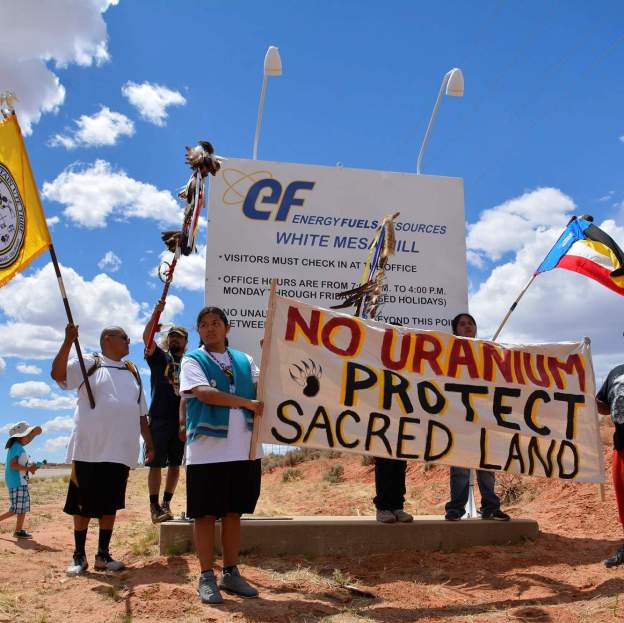
But when directors from Energy Transition Minerals visited Narsaq in February 2025, they were met near the icy helipad by protesters in brightly colored vests emblazoned with a logo spelling “Uranium? No, Thank You” in Greenlandic…Many among the Inuit population of Narsaq are concerned about contamination of drinking water, plants and wildlife. “We live off nature as our forefathers have done for generations. We will be forced to move,” said Avaaraq Bendtsen, a 25-year-old archaeology student. “Think about the indigenous people as well. This is our land. It is our mountain.”

Excerpts from Sune Engel Rasmussen, Greenland Has the Makings of a Mining Boom. So Where Is Everyone?, WSJ, Mar. 4, 2025

Ousting Indigenous Peoples is a Brutal Way to Protect the Environment

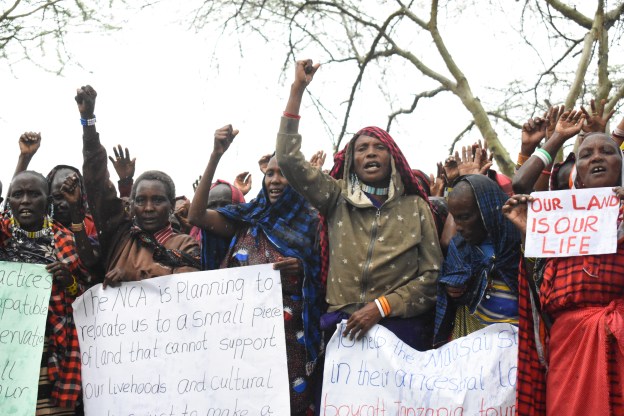
The government of Tanzania claims that the Maasai, the indigenous people of Tanzania,  present a threat to the ecosystem of the Serengeti National Park. The government says the seminomadic cattle farmers are a threat to the savannas and watering holes in an area that sustains the country’s money-spinning safari resorts and hunting reserves and, more recently, a swath of new carbon-credit projects.

To protect these areas, President Samia Suluhu Hassan’s government has outlawed human settlement there and begun evicting some of the more than 110,000 Maasai from the Ngorongoro Conservation Area—the vast zone of grass-, wood- and wetlands adjacent to the Serengeti that the Maasai have used for both herding and tourism for the past 65 years.

The area includes the famous Ngorongoro Crater, the world’s largest, fully-intact caldera and home of one of Africa’s densest populations of zebras, gazelles and other large mammals…The government argues that the number of Maasai living in Ngorongoro has expanded from just 8,000 in 1959, outpacing Tanzania’s overall population growth. The herders, along with their cattle, are overwhelming the area’s fragile ecosystem, it says. Similar warnings have been issued by the United Nations Educational, Scientific and Cultural Organization, or Unesco, which declared the Ngorongoro Conservation Area a World Heritage site in 1979.


But for the Maasai, the evictions are endangering a centuries-old way of life they say is much closer to nature than the rest of rapidly urbanizing Tanzania. They accuse the government of giving priority to revenue from foreign tourists, investors and conservation groups over the lives and livelihoods of some of its own citizens. ..Experts and activists focused on the rights of indigenous people say the Maasai are the latest group caught in the murky intersection of tourism, biodiversity protection and global climate goals. Similar conservation-related evictions have also targeted indigenous communities in the Brazilian Amazon and the Nouabalé-Ndoki rainforest in the Republic of Congo.

Revenue from tourism jumped 40% to $3.5 billion in 2023, about 17% of Tanzania’s gross domestic product, and according to government projections could reach $6 billion by 2025. The government has already set aside swaths of land around the Ngorongoro Crater previously reserved for the Maasai for the construction of a China-funded geological park, where tourists and researchers can explore fossils, rock paintings and other archaeological artifacts dating as far back as 4 million years ago. To the south of the Ngorongoro Conservation Area, a local company called Carbon Tanzania is selling carbon credits linked to about 273,000 acres of land that the Maasai have also used for grazing and limited cultivation. The project restricts the cutting down of trees but allows cultivation in some zones…

One of the most violent standoffs between the Maasai and Tanzanian authorities took place in mid-2022 in the grassy plains of Loliondo, about 100 miles west of Serengeti. Heavily armed police and rangers stormed Maasai villages, fired tear gas and live rounds, and bulldozed hundreds of houses as they sought to seize some 37,000 acres of land for a new game reserve. One police officer was killed by an arrow shot by the Maasai, authorities said. Many Maasai were wounded in the clashes, and thousands fled into neighboring Kenya to seek medical treatment. Dozens of others were arrested. After the mayhem in Loliondo, authorities appeared to have opted for a more tactical approach in neighboring Ngorongoro, closing down schools, water sources and hospitals to force residents out of homes, Maasai activists say.

Excerpts from Nicholas Bariyo, The Safaris and Carbon-Credit Projects Threatening the Serengeti’s Maasai, WSJ, Dec. 22, 2024

Satellites Reveal Depth of Destruction Vietnam War

During the Vietnam War, the United States dropped more than 8 million tons of bombs and sprayed 74 million liters of Agent Orange and other herbicides in Vietnam, Cambodia, and Laos. Nearly 50 years after the war’s end, the deadly impacts of these campaigns persist: Unexploded ordnance continues to maim and kill, while hot spots of dioxin, a potent toxin in the herbicides, might still be contributing to cancers and birth defects today. Now, using declassified military satellite photos, scientists have identified the likely locations of these hidden dangers, which could help direct remediation and cleanup efforts based on research, presented on December 11, 2024 at the annual conference of the American Geophysical Union (AGU)

Identifying these risky areas in the modern landscape is challenging. Tenacious vegetation growth has long since hidden the scars of war, and historical records of bombing and herbicide spraying are both incomplete and imprecise. That’s why Philipp Barthelme, a graduate student in geoscience at the University of Edinburgh, and his colleagues turned to declassified satellite photos from the KH-9 HEXAGON and KH-4a/b CORONA missions, which were sharp enough to reveal details as small as 0.6 meters.

Although the satellite data alone cannot identify unexploded bombs, the researchers surmised they are most likely to be found in regions that were heavily bombarded. The craters from the exploded bombs stand out in the satellite images as bright white splotches. The researchers used machine learning, a kind of artificial intelligence, to pinpoint more than 500,000 such craters in Vietnam’s Quang Tri province, which was the most heavily bombed during the war, as well as a region near the borders of Vietnam, Laos, and Cambodia.

In collaboration with the nonprofit Conflict and Environment Observatory, Barthelme also used satellite data to study herbicide spraying in southern Laos. The U.S. sprayed these compounds in secretive wartime campaigns to destroy crops and improve visibility by defoliating the lush jungles. However, the dioxin in the herbicides killed and debilitated hundreds of thousands of people…The zones of defoliation from the herbicides appear in satellite data as bright, sinuous lines….

Excerpts from Maya Wei-Haas, Declassified satellite photos reveal impacts of Vietnam War, Science, Dec. 14, 2024

How the Drug War has Fueled Sudan’s Conflict

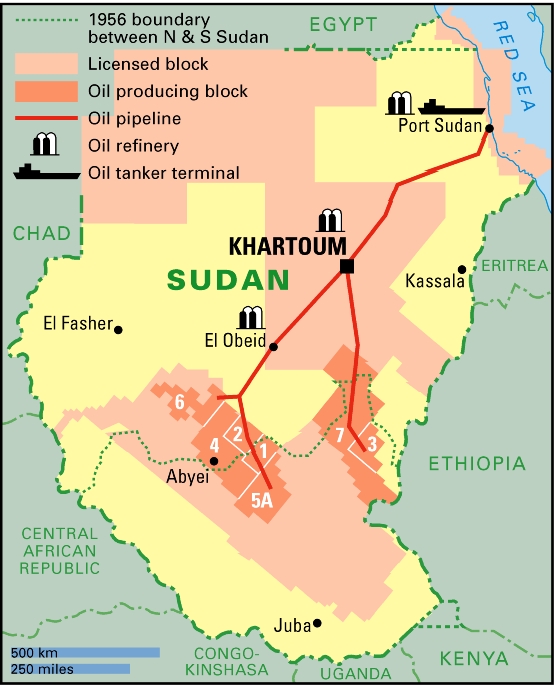
The war in Sudan between the country’s military and the rebel Rapid Support Forces (RSF) has turned in 2024 into a battleground for more foreign powers, drawing in fighters and weapons from as far as Latin America and Europe. Several regional governments are vying to assert their influence as the fighting escalates, led by the United Arab Emirates on one side and Egypt on the other—with devastating consequences for Sudan’s 48 million people, some of whom are now in the grip of famine. At stake is control of Red Sea shipping lanes, some of Africa’s largest gold reserves and the contested waters of the Nile.

The Colombian fighters seized in November 2024 in Darfur were hired earlier this year by an Abu Dhabi-based company called Global Security Services Group (GSSC)…The company describes itself as the only armed private security provider to the Emirati government and lists as its clients the Gulf state’s ministries of presidential affairs, interior and foreign affairs.  In Uganda, where GSSG has trained local troops in counterterrorism operations and VIP protection, the company presented itself as acting on behalf of the Emirati government, an army spokesman said. 

With its large stock of drug-war veterans trained on American weapons, Colombia has long been a target for recruiters from overseas security and mercenary groups. A decade ago, the U.A.E., through military contractors, sent Colombians to fight in the civil war in Yemen. In September 2024, a Bogotá, Colombia-registered recruitment company called International Services Agency, or A4SI, began posting ads on its website looking for drone operators, cybersecurity specialists and bodyguards to deploy in Africa…

By some estimates, as many as 150,000 people have been killed in Sudan. About 25 million, more than half of the population, are suffering crisis levels of hunger and one in four Sudanese have been forced from their homes. Famine has been declared in a Darfur camp hosting between 500,000 and a million displaced people.

Excerpts from Benoit Faucon and Gabriele Stein, The Global War Machine Supplying Colombian Mercenaries to Fight in Sudan, WSJ, Dec. 11, 2024

People are Still Assassinated for Witchcraft

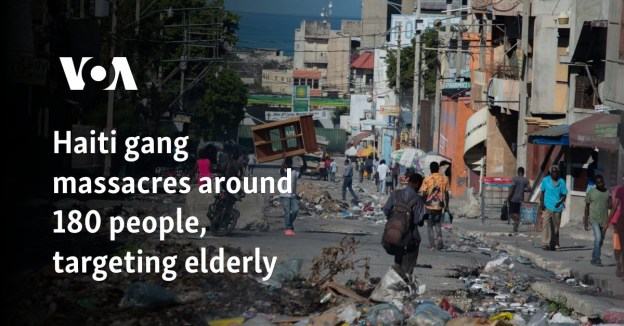
More than 180 people were killed in Haiti’s capital on December 7 and 8, 2024 as a powerful warlord ordered the slaying of elderly slum residents he suspected of giving his son a severe illness through witchcraft, the United Nations and Haitian human-rights groups said Monday.  Gang boss Monel Felix directed his followers to kill residents with guns, knives and machetes after he was advised by a voodoo priest that elderly people practicing sorcery had caused his son to be stricken with a fatal sickness, the National Human Rights Defense Network, a Haitian rights group, said in a report. The ill child died Saturday December 8  as Felix’s gang carried out the killings, the group said. 

Excerpt from Kejal Vyas, Haiti Gangs Kill More Than 180 Mostly Elderly People in Capital, WSJ, Dec. 9, 2024

How to Kill People 8 000 Feet Below Ground

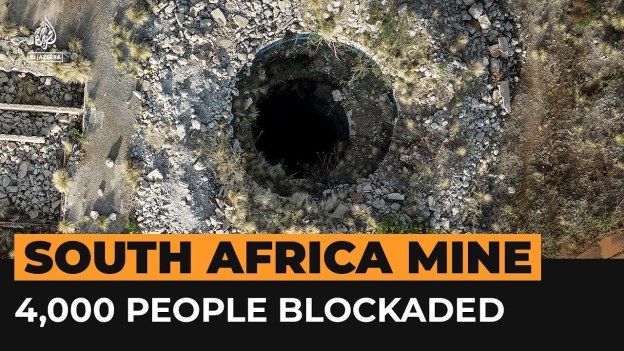
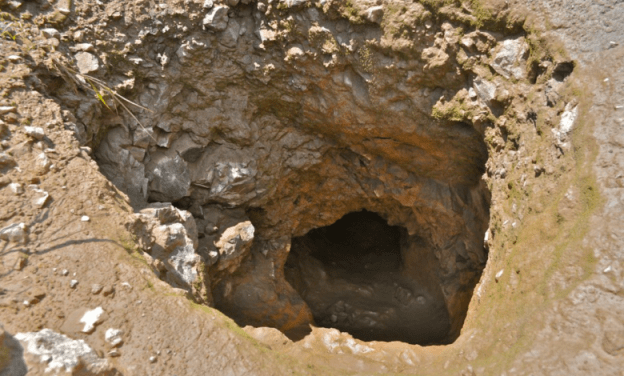
The South Africa’ government has been trying to starve out 1,000 informal prospectors so as to force them out of the Buffelsfontein mine, which extends some 8,000 feet below ground. For months in 2024, police have been sealing most entrances to the tunnels, blocking food and water deliveries and stationing guards at remaining exits to arrest any miners who make their way to the surface. In recent days, nearly 1,200 have surrendered. Police estimate that hundreds of men remain below, but it isn’t clear if they are unwilling or unable to reach the surface.

The operation is part of what police call their “Close the Hole” plan to combat illegal mining, an acute problem in what was once the gold-mining capital of the world. The South African government estimates that illegal gold mining costs the country the equivalent of over $3.8 billion a year in lost revenue, and is often associated with a jump in violent crime in nearby communities and an influx of migrants from neighboring countries… Facing a 42% unemployment rate, impoverished South Africans and migrants from nearby countries pry open sealed entrances and venture thousands of feet underground to try their luck. Locals call the men zama zamas, a Zulu phrase meaning “take a chance.”

Whole ecosystems exist below ground, with entrepreneurs selling miners everything from soda to toothpaste to sex.  The miners in Stilfontein, 100 miles southwest of Johannesburg, are suffering from hunger and dehydration, according to police. Industry experts say the zama zamas are often the lowest-level workers for larger criminal gangs that ultimately sell the gold abroad. Those who have migrated from elsewhere are sometimes victims of abuse, forced to work underground to pay off debts. Police said most miners who emerge will be charged with crimes and imprisoned or deported. 

Excerpt from Alexandra Wexler, The Standoff Deep Inside an Abandoned South African Gold Mine, WSJ, Nov. 15, 2024

Who Knew that UFOs are Real? Many

Unidentified flying objects (UFOs) are called today unidentified anomalous phenomena (UAP).  

It seems that have have been thousands of UAP and efforts to intimidate whistleblowers that report UAP in what seems to be a  government disinformation campaign.  Here is an excerpt of the testimony of Dr. Tim Gallaudet,  Rear Admiral, US Navy, before the Committee on Oversight & Accountability, US Congress 

According to Dr. Gallaudet: “We know from [the 2023 UAP Hearing before Congress] and recent statements and publications by credible whistleblowers that UAP…and their technology of unknown origin (TUO) represent a new realization that we are not the only advanced intelligence in the universe. Unelected officials in the U.S. government do not have an exclusive right to this knowledge about the nature of reality. The American people have a right to that knowledge. There is a public safety requirement for more government UAP transparency. 

There is a national security need for more UAP transparency as well.  In 2025, the U.S. will spend over $900 billion on national defense, yet we still have an incomplete understanding of what is in our airspace and water space. I add the term “water space” because UAP have been observed in the ocean and are known to exhibit transmedium travel through the air-sea interface. These are often referred to as unidentified submerged objects (USOs). Whether aerial or undersea, UAP are operating unhindered in our seas and skies and American taxpayers have a right to know why our military’s massive budget is inadequately addressing this national defense deficiency.”

The Disempowering Effects of Experimentation on Humans

Whenever we go online, we might find ourselves part of an experiment — without knowing it. Digital platforms track what users do and how they respond to features. Increasingly, these tests are having real-world consequences for its participants.

In a paper published in the Journal Academy of Management, it was reported that platforms that offer paid tasks and jobs to freelancers (H. A. Rahman et al. Acad. Mgmt. J. 66, 1803–1830; 2023) are experimenting  with using different methods for scoring people’s work, as well as changing how their skills would be listed on their profile page and how they could interact with their contractors. These changes affected people’s ratings and the amount of work they received. Twenty years ago, such experimentation was transparent. Gig workers could opt in or out of tests. But today, these experiments are done covertly. Gig workers waive their rights when they create an account.

Being experimented on can be disconcerting and disempowering. Imagine that, every time you enter your office, it has been redesigned. So has how you are evaluated, and how you can speak with your superiors, but without your knowledge or consent. Such continual changes affect how you do and feel about your job.

Gig workers expressed that, after noticing frequent changes on the listing platforms that were made without their consent, they started to see themselves as laboratory rats rather than valued users. Because their messages were blocked by chatbots, they were unable to speak to the platform to complain or opt out of the changes. Frustration flared and apathy set in. Their income and well-being declined.

This is concerning, not only because of how it affects gig workers, but also because academics are increasingly becoming involved in designing digital experiments. Social scientists follow strict Institutional Review Board (IRB) procedures that govern the ethics of experiments involving people — such as informing them and requiring consent — but these rules don’t apply to technology companies. And that’s leading to questionable practices and potentially unreliable results.

Excerpt from Tim Weiss, Why we are all lab rats in the digital world, Nature, Nov. 12, 2024

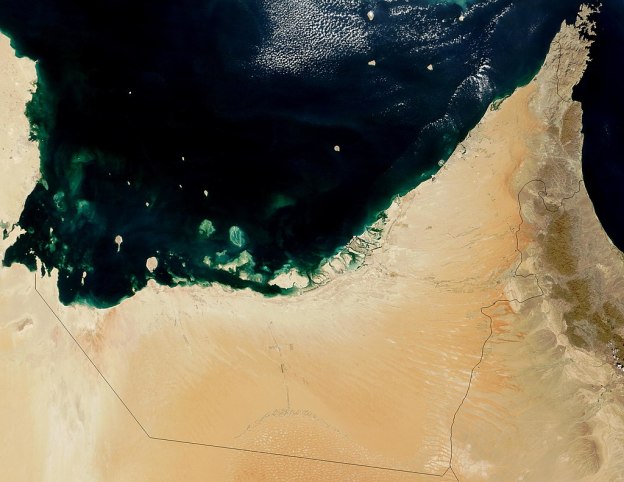
Under the Radar: How the U.A.E. is Colonizing Africa

The petrostate, United Arab Emirates, has invested billions of dollars on the other side of the Arabian peninsula, in Africa, where it is now emerging as a significant player, at times muscling out China and annoying the U.S. and others. It has taken sides in local wars and spent heavily on buying farmland, ports and other projects that could help reduce its own dependence on oil in the decades to come.

The U.A.E. government says investments in Africa amounted to about $110 billion over the past decade….Its portfolio includes renewable-energy projects in Egypt, leased rice and wheat farmlands in the muddy plains of northern Angola and a majority stake in one of Zambia’s largest copper mines. U.A.E.-backed port projects are dotted around the coasts of the Atlantic, the Red Sea and the Indian Ocean. The Gulf state is also trying to become a key supplier of the minerals used in a new generation of batteries.  

The Wall Street Journal has reported that the U.A.E. shipped weapons including antiaircraft missiles and drones, to Sudan’s Rapid Support Forces, which is waging a civil war against the Iran-backed Sudanese military and has perpetrated a series of well-documented atrocities against civilian populations, especially in Darfur. It also sold armed drones to Ethiopia’s government, while the U.S. was pushing for a peace deal with Ethiopian rebel groups. Before that, U.N. investigators say it transferred arms to Libyan militia leader Khalifa Haftar in violation of a United Nations Security Council arms embargo…

There are signs of pushback in parts of Africa, too. In Chad, local Zaghawa communities have repeatedly staged protests against the U.A.E.’s use of Amdjarass airport in the east of the country to ship supplies to the RSF, according to activists and videos shared online. .

Excerpts from Nicholas Bariyo, The New Investment Superpower Outflanking China and the U.S. in Africa, WSJ, Nov. 6, 2024

How Not To Get Raped: Lessons from India

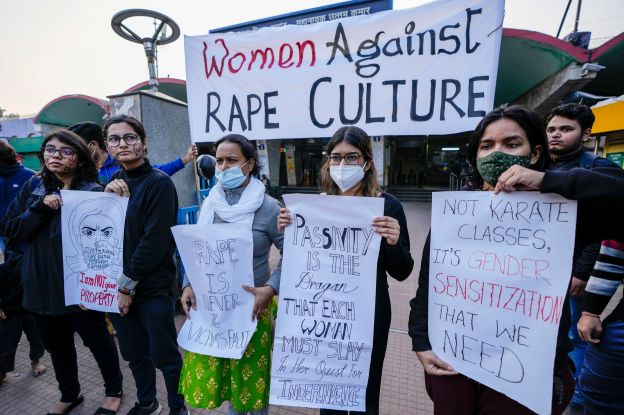
When Ajita Topo, a cook in an affluent neighborhood in Delhi, leaves work in the evening, she holds her bag like a shield against her chest, keeps her fists clenched and carries a black umbrella with a very sharp end to ward off a possible attack. She makes sure to wear lots of layers—no matter how hot it is—to deter someone from trying to grope her chest, and secures her bun with a sharp metal stick as an additional weapon.  Topo isn’t being paranoid. Last year, she was followed by two men when she left work after 10 p.m. She managed to scare them away by shouting as she passed homes with guards outside. “Workplace, public transport, public places, we feel safe nowhere,” said Topo, the sole breadwinner for her two children. “The only solution is to stay alert at all times.” For many women in India, taking steps to ward off a violent attack—and reassuring their families they are safe while at work and on their commutes—is an invisible form of labor that is a central element of their work life. 

The killing and rape of a trainee doctor in the city of Kolkata in August  2024 was a fresh reminder for Indian women who work of the dangers lurking in public spaces where women are far less visible than men, from the deserted corners of a hospital or corporate park, in public transport or on city streets. The 31-year-old was found dead in a seminar hall of the state-run hospital after she went on break during a night shift. A volunteer at the hospital has been arrested as a suspect. The killing prompted protests by women across the country. 

A decade ago, Indian laws dealing with crimes against women were overhauled in the wake of the gang-rape of a 23-year-old woman on a moving bus. But women’s rights advocates say that entrenched patriarchal attitudes haven’t budged significantly, and are at the root of frequent violence against women, both in the home and outside it. In other widely publicized incidents, female call-center workers have been assaulted and killed as they commuted to or from night shifts. Last year, a receptionist disappeared from the hotel where she worked and was found dead days later. Each time such a crime takes place, women experience another jolt of fear for their own safety

Vidhi Pandey, a digital-marketing professional, has an almost 90-minute commute between her home in Gurgaon and her office in the Indian capital, and frequently attends evening events. If an international client is involved, her day can end at 2 a.m. When she books a cab, she makes sure to look at the driver’s performance rating and reads riders’ feedback regarding his behavior. If she is wearing a skirt, she changes into something more covered up before getting into a taxi for her ride home. On her phone, she keeps the Delhi Police panic button app open throughout the ride. The app, developed after the 2012 bus attack and called “Himmat” or “courage,” allows the user to quickly send an alert to the Delhi Police, with a link to the user’s location on Google Maps, as well as notifications to family and friends. She makes sure to share her live location and trip status with her husband and at least one friend. Sometimes she keeps a phone call going with her mother or a friend throughout the car ride. “I keep thinking about how to escape if something goes wrong,” said Pandey. “I dream of a day when our society is safe enough for me to travel alone anytime, anywhere without any fear or worry.”

Excerpts from  Vibhuti Agarwal and Tripti Lahiri, For Working Women in India Staying Safe Can Feel Like a Full Time Job, WSJ, Oct. 16, 2024

Get Down and (Very) Dirty: How to Break Free from China’s Grip on Rare Earths and Minerals

The Biden administration held talks with three firms in the fall of 2024 about purchasing one of the world’s largest non-Chinese cobalt producers…The talks over Chemaf, a mining company based in the Democratic Republic of Congo, are part of a push by the administration to secure global supplies of a metal used in everything from jet fighters and drones to electric-vehicle batteries. For more than a decade, Chinese companies have spent billions of dollars buying out U.S. and European miners in Congo, which produces nearly 75% of the world’s cobalt supply. That has put China in a dominant position in both the production and processing of the mineral.

It has been difficult for the U.S. government to interest American investors in any sector in Congo because of the country’s poor infrastructure, limited skilled labor, resource nationalism and reputation for government corruption. U.S. government officials have spoken with mining and artificial-intelligence company KoBold Metals, copper miner First Quantum Minerals and investment firm Orion Resource Partners about participating in a deal to acquire Chemaf, either separately or jointly…

Chemaf, which says its mines could produce 20,000 tons of cobalt annually—making it one of the world’s largest cobalt producers—was put up for sale in 2023 by its founder, Shiraz Virji…When The Wall Street Journal visited Chemaf’s Mutoshi mine in 2018, freelance Congolese miners could be seen descending underground without helmets, shoes or safety equipment. Miners were using picks, shovels and bare hands to unearth rocks rich with the metal. Water sometimes rushed into holes and drowned people, and an earth mover buried one alive, said local workers and mine officials…

In June 2024, Chemaf agreed to sell itself to Chinese state-backed Norin Mining. Shortly after, U.S. pressure helped block the sale

Excerpts from  Alexandra Wexler and Julie Steinberg, How the U.S. Is Trying to Challenge China’s Cobalt Chokehold, WSJ, Oct. 15, 2024

Who Gets By and Who Throws and Thrives?

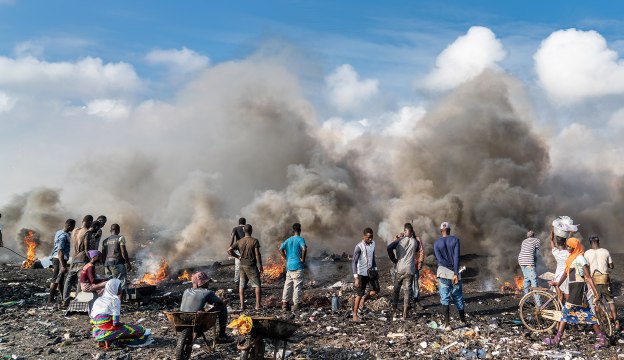
For years, a site called Agbogbloshie in Accra, Ghana was one of the largest e-waste processing sites in Africa, getting 15,000 tons of discarded phones, computers and other used electronics each year. Many Western media outlets depicted the site as a public health and environmental tragedy, rife with toxic chemicals that leach into the water and poison the air. While that’s undoubtedly true, it’s not the full story, according to a new collaborative photojournalism project. The project, called E-Waste in Ghana: Tracing Transboundary Flows, which won this year’s Fondation Carmignac photojournalism award, aims to capture both the positive and negative aspects of e-waste.

“The world cannot throw all its garbage here, it has truly negative consequences on the people,” says Anas Aremeyaw Anas, an investigative journalist in Ghana who co-led the project. “But there are positive aspects of sending us e-waste,” he says, as it’s sparked a dynamic, informal recycling economy in the country that, while often dangerous, can also help lift people out of poverty.

Globally, e-waste is an enormous problem. In 2022, humans discarded about 62 million tons of used electronics, enough to fill a line of trucks that spans the equator. But there’s opportunity too, as those trucks contain over $91 billion of valuable metals, the U.N. estimates….E-waste falls into two broad buckets: functional and non-functional. The line between them can be fuzzy, as what’s still usable or repairable to one person may not be to another, but the distinction is important. International laws prohibit trafficking of non-functional e-waste containing toxic substances, but the United Nations sees trading functional e-waste as beneficial, as it can lengthen the lifespan of a product…The project found that exporters often fail to separate functional from non-functional e-waste. “If you have a container full of TV screens, how on earth are you going to verify each and every one of them to make sure that they are functioning,” says photojournalist Bénédicte Kurzen, a co-author of the project. As a result, both kinds of e-waste get stuffed into container ships that make their way to low- and middle-income countries like Ghana.


Formally, Ghana prohibits the import of many forms of hazardous e-waste material. But the team found that a well-placed bribe can get port officials to look the other way. As a result, informal e-waste sites are growing across Ghana’s coast. There, both functional and non-functional e-waste get dumped into vast piles that are encroaching on residential areas. Thousands of “pickers” come to these sites, picking through the rubbish to separate items that might be repaired from waste that could contain valuable minerals.

It’s fraught, precarious work. To separate valuable minerals, like copper wire or iron, from useless plastic, pickers often burn the trash, producing noxious fumes. Burns, cuts and other injuries are common. E-waste workers — many of whom are children, the team found — are at risk of exposure to over 1,000 harmful chemicals, according to the World Health Organization, including lead, mercury and brominated flame retardants, which are linked to higher rates of diseases like cancer and diabetes.

A burgeoning recycling and repair industry has risen up alongside those harms. The team documented informal marketplaces, where vendors sell scores of busted cell phones to buyers looking to repair circuit boards or extract their precious metals. On Zongo Lane in Accra, the reporters say, hundreds of small, independent shops sell used or repaired equipment, ranging from televisions to computers….The most valuable minerals extracted from Ghana’s e-waste often don’t stay in Ghana. Many of the most valuable items get cherry picked and sent to more advanced smelters in Europe or Asia, the team found. “People are dismantling these items in toxic environments, and then the few piles that contain incredibly valuable minerals are going to be re-exported,” says Kurzen.

Excerpts from Jonathan Lambert, Stunning photos of a vast e-waste dumping ground — and those who make a living off it, NPR, Oct. 5, 2024

How Murder, Torture and Rape Fuel the Technological Revolution

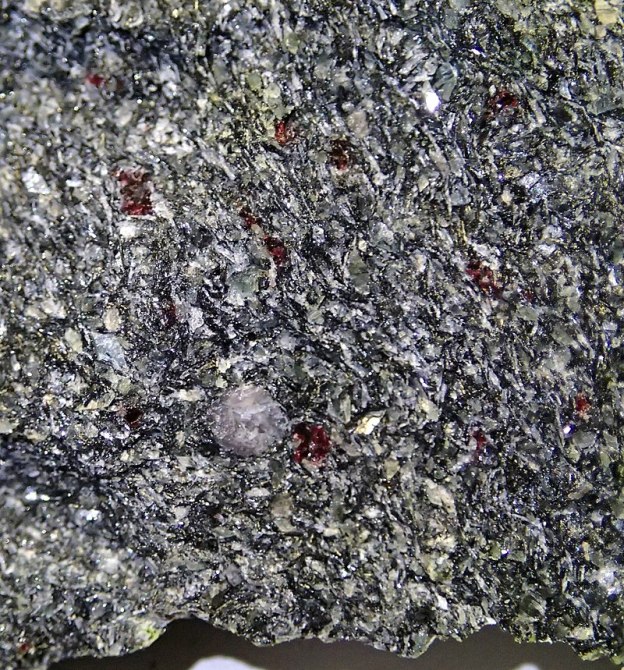
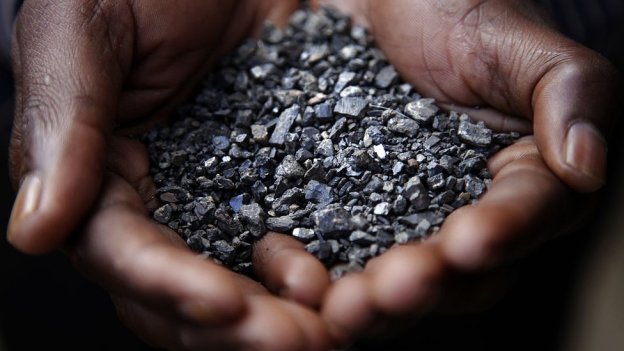
Congo is the world’s leading producer of coltan, from which tantalum is extracted. Tantalum is in hot demand because of its growing use in consumer products, from smartphones to laptops and it is critical for the defense industry (e.g., Apple iPhones, SpaceX rockets, IBM computers).

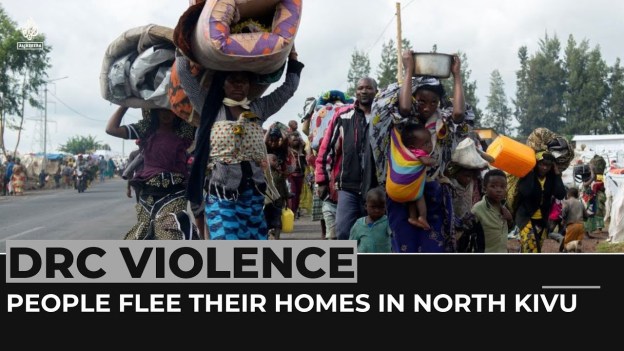
Coltan is mined in the country’s restive east, a region that has been engulfed in a decadeslong war between rebel groups and the Congolese army…A powerful militia backed by neighboring Rwanda has taken over swaths of eastern Congo, driving some two million people from their homes as fighters kill, torture and rape civilians. The militia, known as M23, has also seized control of Congo’s coltan production and transport, according to United Nations investigators, supply-chain experts, researchers and local traders. 

Now, a network of smuggling routes is increasingly being used to move ore illegally from militia-controlled mines in eastern Congo to neighboring Rwanda. From there, it is sold as Rwandan, and hence “conflict-free,” to smelters around the world, but primarily in China. 

M23 fighters levy taxes on informal coltan miners, who dig the ore from the ground, mostly by hand. The fighters also tax the movement of coltan, providing the militia with revenue to purchase weapons and other supplies. Overall, the trade generates around $300,000 a month for the fighters, according to Bintou Keita, the head of the U.N. mission in Congo….U.S. lawmakers have sought to prevent minerals commonly mined in eastern Congo—tin, tungsten, tantalum and gold—from financing conflict in the region. Legislation embedded in the 2010 Dodd-Frank Act requires U.S.-listed companies to disclose their use of the minerals, known as the 3TGs, as well as steps they are taking to prevent inadvertently financing armed groups. It doesn’t, however, oblige companies to remove potentially tainted materials from their supply chains…

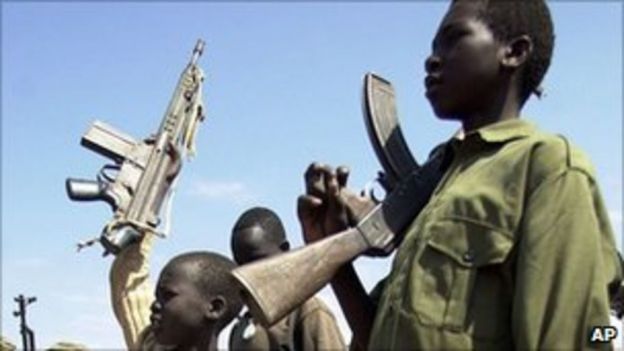
Other armed groups are also profiting from the illegal coltan trade, including an alliance of militias that is helping the Congolese military fight M23, according to rights groups and U.N. researchers. The alliance, known as the Wazalendo, which U.N. investigators say is armed by Congo’s military, includes groups that are under international sanctions for war crimes. M23 and the Wazalendo are both recruiting child soldiers, raping women and girls, looting, murdering civilians and committing other atrocities, according to rights groups and U.N. investigators. Like M23, the Wazalendo are collecting illegal taxes on coltan at roadblocks along transportation routes, as well as from some mining sites. 

Excerpt from Alexandra Wexler, How This Conflict Mineral Gets Smuggled Into Everyday Tech,  WSJ, Oct. 6, 2024

What Happens When 48 Women are Raped Every Hour?

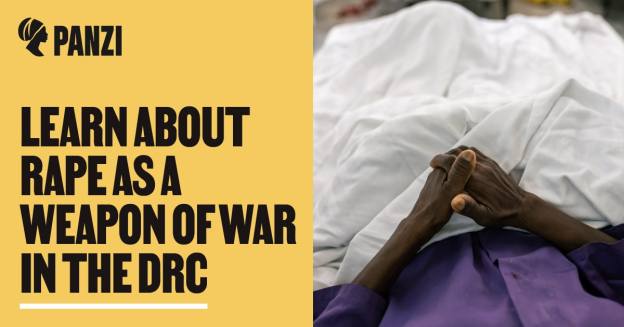
Congo is considered the rape capital of the world. On average, 48 women are raped every hour. Gang rapes, genital mutilation, and sexual violence are committed by armed groups, gangs, and government and police forces. Many of the victims are children and babies. Rape victims and children born of rape are often rejected by their families. HIV is rampant, and cases often go untested and untreated. Rapists almost always go unpunished.

Why OpenAI Flirts with UAE and What Happened to Women’s Rights

In February 2024, OpenAI CEO Sam Altman said the UAE could serve as the world’s “regulatory sandbox” to test artificial intelligence. Emirati President Sheikh Mohammed bin Zayed Al Nahyan’s first official trip to the United States in September 2024 aimed to push the United Arab Emirates-U.S. relationship to a new “geo-economic phase” centered on economic growth and innovation..,

Microsoft has invested  $1.5 billion investment in the UAE’s top artificial intelligence firm, G42, in April.   BlackRock, Global Infrastructure Partners, Microsoft and the Mubadala-backed MGX investment company also recently announced the Global AI Infrastructure Investment Partnership, underscoring the UAE’s strategic focus on U.S. technology and AI to drive future economic growth…The United States and the UAE have a trade and investment partnership that spans more than five decades. In 2023, bilateral trade between the UAE and the U.S. was worth around $31.4 billion, with U.S. exports to the UAE exceeding $24.8 billion, according to the UAE Embassy in Washington, D.C. The UAE, which produces nearly 4% of the world’s oil supply, also has investments in the United States that total $1 trillion. The UAE sovereign wealth funds including the Abu Dhabi Investment Authority and Mubadala are major investors in American real estate, infrastructure and technology sectors.

The UAE has remained a key strategic defense and security partner to Washington, playing host to the American air base in Al Dhafra, while working as a key partner alongside the U.S. in Afghanistan and Iraq….

On the systemic discrimination against women at the UAE, see letter of Human Rights Watch. Human Rights Watch has documented numerous incidents of enforced disappearances by the UAE in recent years, including the case of three Emirati sisters who were forcibly disappeared in 2015 after posting comments critical of the government on social media. Human Rights Watch has also documented cases of denial of adequate medical care to women who have since died or attempted suicide

Excerpt from Emma Graham and Dan Murphy, UAE hoping to expand $1 trillion partnership with U.S. through AI, Investment, CNBC, Sept. 20, 2024

Worldcoins for Your Eyes: How Sam Altman is Saving us from the Robots

Sam Altman wants to save us from the AI-dominated world he is building. The trouble is, governments aren’t buying his plan, which involves an attempt to scan the eyeballs of every person on Earth and pay them with his own cryptocurrency-the Worldcoin. But Worldcoin has come under assault by authorities over its mission. It has been raided in Hong Kong, blocked in Spain, fined in Argentina and criminally investigated in Kenya. A ruling looms on whether it can keep operating in the European Union….Among the concerns: How does the Cayman Islands-registered Worldcoin Foundation handle user data, train its algorithms and avoid scanning children? 

Worldcoin verifies “humanness” by scanning irises using a basketball-sized chrome device called the Orb. Worldcoin says irises, which are complex and relatively unchanging in adults, can better distinguish humans than fingerprints or faces. Users receive immutable codes held in an online “World ID” passport, to use on other platforms to prove they are human, plus payouts in Worldcoin’s WLD cryptocurrency. Worldcoin launched in 2023 and says it has verified more than six million people across almost 40 countries. Based on recent trading prices, the total pool of WLD is theoretically worth some $15 billion.

Altman says his technology is completely private: Orbs delete all images after verification, and iris codes contain no personal information—unless users permit Worldcoin to train its algorithms with their scans. Encrypted servers hold the anonymized codes and images. However, several authorities have accused Worldcoin of telling Orb operators, typically independent contractors, to encourage users to hand over iris images. Privacy advocates say these could be used to build a global biometric database with little oversight.

Excerpt from Angus Berwick, Sam Altman’s Worldcoin Is Battling With Governments Over Your Eyes, WSJ, Aug. 18, 2024

Why Americans Love Chinese Drones

China’s DJI drones  have been labeled a national-security risk by Republicans and Democrats, military officials and federal regulators. The U.S. government has placed tariffs on the drones and largely prohibited federal agencies from using DJIs. 

Yet DJI accounts for around 70% to 90% of the American commercial, local government and hobbyist drone market. Real-estate agents, movie producers, firefighters, roof inspectors, utilities and law enforcement have all come to depend on the brand. The Secret Service bought more than 20 of them in 2022 just before restrictions were put in place, according to federal purchasing records…Small drones have become essential tools in U.S. commerce and emerged as critical weapons in modern combat, handing the world’s largest supplier—DJI—enormous power. National-security experts say reliance on Chinese drones creates a dangerous dependency that China could exploit in a conflict.  Ukrainians have relied on DJI, while American models have often failed on the front lines—although soldiers have had to contend with security vulnerabilities…

American drones are in short supply with long wait times. Drone buyers say they sometimes have to wait close to five months for a U.S. drone, while DJIs are available immediately. “Are American drone companies ready to fill the void?” said Trevor Perrott, chief executive of Florida drone maker Censys Technologies. “No, we’re not ready. But DJI may very well be a Band-Aid we need to rip off for long-term gain.” 

Excerpts from Heather Somerville, Why First Responders Don’t Want the U.S. to Ban Chinese Drones, WSJ, Aug. 8, 2024

How to Categorize Individuals: Surveillance Pricing

The United States Federal Trade Commission issued orders to eight companies offering surveillance pricing products and services that incorporate data about consumers’ characteristics and behavior. The orders seek information about the potential impact these practices have on privacy, competition, and consumer protection.

The orders are aimed at helping the FTC better understand the opaque market for products by third-party intermediaries that claim to use advanced algorithms, artificial intelligence and other technologies, along with personal information about consumers—such as their location, demographics, credit history, and browsing or shopping history—to categorize individuals and set a targeted price for a product or service. The study is aimed at helping the FTC better understand how surveillance pricing is affecting consumers, especially when the pricing is based on surveillance of an individual’s personal characteristics and behavior.

“Firms that harvest Americans’ personal data can put people’s privacy at risk. Now firms could be exploiting this vast trove of personal information to charge people higher prices,” said FTC Chair Lina M. Khan. “Americans deserve to know whether businesses are using detailed consumer data to deploy surveillance pricing, and the FTC’s inquiry will shed light on this shadowy ecosystem of pricing middlemen.”

The FTC is using its 6(b) authority, which authorizes the Commission to conduct wide-ranging studies that do not have a specific law enforcement purpose, to obtain information from eight firms that advertise their use of AI and other technologies along with historical and real-time customer information to target prices for individual consumers. The orders were sent to: Mastercard, Revionics, Bloomreach, JPMorgan Chase, Task Software, PROS, Accenture, and McKinsey & Co.

FTC Issues Orders to Eight Companies Seeking Information on Surveillance Pricing, Press Release, July 23, 2024

Elites and Those Who Work for Them: The Discrimination Scandal at Davos Economic Forum

The Davos World Economic Forum’s board is working with a global law firm to investigate its workplace culture, weeks after The Wall Street Journal revealed allegations of harassment and discrimination at the organization behind the elite Davos gatherings. Based on interviews with more than 80 current and former employees, the Journal reported on June 29, 2024 that the Forum has allowed to fester an atmosphere hostile to women and Black people, with some alleging sexual harassment, pregnancy-related discrimination and racial discrimination. 

Excerpt from Shalini Ramachandran, World Economic Forum Opens Board Probe of Workplace Culture, WSJ, July 19, 2024

Chewing Gum and the Civil War in Sudan

Around 80% of the world’s gum arabic is harvested from Sudan’s acacia trees, which grow in the desert belt that stretches from Sudan’s western border with Chad to its eastern border with Ethiopia, covering an area of roughly 200,000 square miles. Gum arabic is a tasteless and odorless dried sap used as a stabilizer, thickening agent or emulsifier for many foods, drinks, cosmetics and medicines…The sap has become a key source of funding for both sides in the war, according to Sudanese traders. In addition to the RSF (Rapid Support Forces), a paramilitary group, collecting money through its control of most major agricultural routes, the Sudanese military—which runs the country’s de facto government—levies taxes and other tariffs on the gum arabic trade.

The U.S. has accused both sides in the conflict of committing war crimes. In September, 2023 the State Department slapped sanctions on two senior RSF commanders for their alleged involvement in ethnic killings, sexual violence and the looting and burning of communities, among other abuses. . Around 8.5 million Sudanese have been forced from their homes since the start of the war in April 2023. “Proceeds from the gum arabic exports are directly financing this fighting,” says Rabie Abdelaty, a Sudanese academic who has researched the gum arabic industry.

Despite these concerns, few companies have taken steps to make sure they are avoiding Sudanese gum arabic, based on interviews with manufacturers, suppliers and end-users. 

Excerpts from Alexandra Wexler, How Soda, Chocolate and Chewing Gum Are Funding War in Sudan, WSJ, May 23, 2024

Why Zuckerberg is Always Winning? the Magic of Free

Mark Zuckerberg has an unusual plan for winning the artificial-intelligence race: giving away his company’s technology free betting that providing the hottest new technology free will drive down competitors’ prices and spread Meta’s version of AI more broadly, giving Zuckerberg more control over the way people interact with machines in the future… Meta felt the cost of not controlling its own destiny when Apple decided in 2021 to cut off its ability to gather data on their users without asking for permission—something Meta had relied on to target ads. The company said it took a hit of more than $10 billion in revenue in 2022 as a direct result. The company’s stock swooned 26%.

For the AI-giveaway strategy to work, Meta must get its billions of users to look to those free AI services in the same way they flocked to Facebook, Instagram and WhatsApp. It wagers that advertising can come later, as it did in the past. Meta’s ability to turn eyeballs into ad dollars is well established

Meta in April 2024 released its most recent generative AI tool—dubbed Llama 3—free for any company to use and repurpose so long as they have fewer than 700 million users. And it integrated chatbots based on Llama 3 into Instagram, WhatsApp, Facebook, Messenger and on the web.  “All of our properties are free, we help people connect with each other, and we want to help connect people with AIs that can help them get things done,” Ahmad Al-Dahle, Meta’s vice president of generative AI, told The Wall Street Journal. “That’s always been our playbook. That’s what the company ethos is about…

Excerpts from Excepts from Salvador Rodriguez, Facebook Parent’s Plan to Win AI Race: Give Its Tech Away Free, WSJ May 19, 2024

Plastics, Nanoplastics and Heart Attacks

A Landmark treaty on plastic pollution scheduled to be adopted by the end of 2024  must put scientific evidence front and center. In the run-up to the final negotiations, researchers have been publishing more reports, data sets and models about plastics than ever before….Researchers have also organized groups, such as the Scientists’ Coalition for an Effective Plastics Treaty


The treaty was originally conceived as a mechanism to end plastic pollution, which is sometimes taken to mean driving the amount of ‘mismanaged waste’ to zero by 2040. Mismanaged waste is plastic that isn’t recycled or disposed of in a well-managed landfill or incinerator, but rather ends up loose in the environment or burned in an open pit. Annual production of plastics has grown exponentially, from about 2 million tonnes in 1950 to 460 million tonnes in 2019 (current levels are on track to triple by 2060). Mismanaged waste is hard to measure–estimates put it at 74 million tonnes each year., expect to reach, by 2050, 122 million tonnes per year, under business-as-usual projections. Unless policies change, the peak of mismanaged plastic waste “is nowhere yet in sight”, he says.

A new report from environmental-policy researcher Nihan Karali and her colleagues at Lawrence Berkeley National Laboratory in California concludes that plastic production generated the equivalent of 2.24 gigatonnes of carbon dioxide in 2019, mainly from the energy-intensive process of extracting and refining the fossil fuels used to generate the petrochemicals that make up most virgin plastic.


An individual plastic typically contains hundreds of chemicals — many of which are toxic and can leach out — that make the material more flexible, water repellent, flame retardant or resistant to ultraviolet light. Last month, researchers released a report listing 16,000 chemicals associated with plastics, of which they found at least to be 4,200 hazardous… A study published in February 2024 of some 250 people undergoing surgery showed that nano- and microplastics in carotid-artery blockages were linked to increased risk of heart attacks, strokes and death.

Excerpt from Nicola Jones, Plastic pollution: three numbers that support a crackdown,  Nature, April 2024

From Human Bones to Food: Another Soylent Green

A new book “Bones of Contention: The Industrial Exploitation of Human Bones in the Modern Age” argues that in the19th century human bones became a sought-after raw commodity. Scientists had just discovered its usefulness of human bones for agriculture as a source of phosphates for fertilizers and for the sugar industry, the use of bone char for beet sugar processing.

The high demand for these ingredients had one major unexpected consequence: the plundering of cemeteries and battlefields …in Britain, France, Belgium, Germany, Austria, Algeria and the United States. When countries out of bones in Europe, they turned to their colonies. The French plundered cemeteries in Algeria and shipped the bones to sugar factories in Marseilles. The British imported mummies and bones from Egypt on an industrial scale…

On Soylent Green, see Wikipedia

Excerpts from Science, Why Europe’s Battlefield Bones Are Missing?, Science, Apr.5, 2024

How Much Are Your Eyes Worth? Altman has an answer

Worldcoin is appealing a decision from Spain that temporarily banned it from scanning people’s eyes in exchange for cryptocurrency tokens…The Spanish Data Protection Agency, or AEPD, ordered a precautionary measure prohibiting Worldcoin’s activities in the country for up to three months after it received several complaints on the collection of data from minors, and what it said were other infringements.

Worldcoin operates as an open-source protocol, according to its website. Users download a wallet app that supports a digital identity known as World ID. To get their identity verified, users stand in front of a physical imaging device known as the orb that relies on sensors to scan their eyes “to verify humanness and uniqueness.” More than 4 million users across 120 countries signed up for World ID, with orb verifications taking place in 36 countries, according to Worldcoin’s website.

The AEPD said its precautionary measure effectively called on Tools for Humanity—the company of which OpenAI Chief Executive Sam Altman is a co-founder—to cease the collection and processing of personal data through its Worldcoin project and to stop using the data it had gathered so far in Spain.

Excerpts from  Mauro Orru, Sam Altman’s Eye-Scanning Worldcoin Venture Appeals, WSJ, Mar. 7, 2024

What Do You Do When You Are Up for Sale?

Under an executive order issued on February 28, 2024, specific classes of Americans’ sensitive data, including genomic, biometric, personal health, geolocation, financial and certain types of personal identifiers, will generally be barred from being sold or transferred in vast tranches to “countries of concern” or vendors known to supply data to them. The countries of concern are China, Russia, North Korea, Iran, Cuba and Venezuela, and have a record of misusing data on Americans, an official said.

In 2023, the U.S. intelligence community issued a groundbreaking report acknowledging that the vast amount of Americans’ personal data available for sale, which are often bought and repackaged by data brokers and then resold through a labyrinthine ecosystem of vendors and resellers, has provided a valuable stream of intelligence for the U.S. government and adversaries alike. The report, commissioned by Director of National Intelligence Avril Haines, admitted that such streams created significant threats to privacy, and had rapidly grown in scale such that they had begun to replicate the results of intrusive surveillance techniques, such as hacking, that are typically more targeted.

The executive order is notably silent on the purchasing of commercially available data sets by the U.S. government.

Excerpts from Dustin Volz, U.S. Limits Sales of Americans’ Personal Data to China, Other Adversaries, WSJ, Feb. 129, 2024

Miners against Miners: the Underground Battles

In South Africa, dissatisfied miners are taking their co-workers hostage and confining them in deep underground shafts to force concessions from corporate bosses. Mining companies and workers say the violent strikes emerged as part of a turf war between the country’s two biggest mining unions, whose competition for fee-paying members has heated up just months before national elections. At some mines, they were also employed to demand higher wages and other changes to compensation. The wildcat strikes began in October 2023 at Gold One, which has experienced two such underground protests, and have since spread to several other mines, including 

The disputes add to the physical risks of some of the world’s most dangerous jobs and further imperil South Africa’s embattled mining sector, where hundreds of thousands of workers still toil underground in some of the oldest and deepest shafts on earth. South Africa is the world’s largest producer of platinum and a major gold producer. The average salary of an underground employee at Modder East gold mine is 10,500 South African rand, equivalent to around $550, a month, according to Gold One. Miners typically work eight-hour shifts, six days a week.

At one such underground protest, the kidnappers sent a note to the mine’s managers at the surface that said they would start killing hostages [their co-workers] if no food was sent down. One miner was hospitalized with severe lacerations after being whipped on the lower half of his body…

Excerpts from Alexandra Wexler, Kidnapped by Co-Workers: South African Labor Disputes Take a Violent Turn, Feb. 14, 2024

Your Car Leaks Information about You: Who Benefits?

The California Privacy Protection Agency—created under a ballot initiative in 2020 and the only regulator in the nation solely dedicated to privacy issues—will examine the growing amalgamation of data collected by smart vehicles and whether the business practices of the companies collecting that data comply with state law. “Modern vehicles are effectively connected computers on wheels. They’re able to collect a wealth of information via built in apps, sensors, and cameras, which can monitor people both inside and near the vehicle,” Ashkan Soltani, the agency’s executive director, said in a statement in July 2023.

Regulators in Europe also have opened investigations into how the auto industry uses personal information from cars such as location data. In February 2023, Tesla agreed to offer a software update in Europe to change camera settings in cars after the Dutch privacy regulator investigated the company. Tesla disabled vehicles’ external security cameras by default until a driver turns on the function to record activity outside a car and changed the camera settings so they only save the last 10 minutes of footage recorded from outside the cars, compared with one hour of footage they previously had saved.  The Dutch regulator also said it was a privacy violation for the cameras to extensively record people outside of cars without their knowledge. The Tesla update also included features to warn people inside and outside of cars that the external cameras are recording. Headlights blink if the cameras are recording and a message is displayed on a touch screen inside the cars.

Automobiles represent the latest frontier for regulators, raising fresh questions about who will control the data generated by vehicles as they move through the world. Numerous companies are in a position to access the data—including the automakers themselves, companies that make or run in-car navigation or infotainment systems, satellite radio companies and in-vehicle security and emergency services providers. Insurance companies have also been encouraging consumers to share information about their driving behavior, sometimes in exchange for a discount.  

All the data has commercial potential. In some cases, it can be used by insurers in determining how to set rates, evaluate risk and gauge safe driving behavior…In some cases, data brokers make vehicle data available for sale—stripping it of personal information such as names. People’s movement patterns are often unique, however, and their real-world identities can be inferred in large-scale location data sets even when the data is stripped of personal information.

Law-enforcement agencies also can now obtain the historical location of suspects, usually with a warrant. The sensors on modern cars have raised national-security concerns as well. China in 2021 banned certain officials from owning or driving Tesla vehicles citing concerns that data the cars gather could be a source of national-security leaks.

Byron Tau, California Opens Privacy Probe Into Who Controls, Shares the Data Your Car Is Collecting, WSJ, July 31, 2023

Unstoppable: How the FBI Mines Personal Information

The Federal Bureau of Investigation’s access to a controversial intelligence trove of intercepted emails, texts, and other electronic data should be curtailed following serial missteps that have damaged public and congressional trust in the surveillance tool, a White House panel of intelligence advisers has concluded. in July 2023. The recommendation and others made by the panel come as a challenge to the Biden administration, which has spent months aggressively lobbying lawmakers to preserve the spying program, which is set to expire at the end of 2023. At issue is the FBI’s access to a cache of data collected under what is known as Section 702 of the Foreign Intelligence Surveillance Act.(FISA)..Top Biden administration officials have said the program—classified details of which were revealed 10 years ago by former intelligence contractor Edward Snowden—is among the most vital national security tools in their possession, critical to preventing terrorism, thwarting cyberattacks and understanding the aims of adversaries such as China and Russia. It allows the National Security Agency to siphon streams of electronic data from U.S. technology providers such as Meta and Apple. The data, collected in intelligence repositories, can then be searched without a warrant by spy agencies including the FBI, which has a robust counterintelligence mission.

The board was critical of the FBI’s history of wrongfully plumbing American data in the Section 702 trove, which have included improper searches of George Floyd protesters and sitting lawmakers, and said reforms needed to be adopted and codified in law.

Excerpts from Dustin Volz, FBI Access to Spying Tool Should Be Restricted, Panel Advises, WSJ, July 31, 2023
See also pdf

Mining and Child Prostitution

Years ago, education officials in the remote mining town, Mahdia Guyana, installed metal bars on the windows of the high school’s dormitory partly to keep girls and boys from being preyed upon in a town known for parties, nightclubs and brothels frequented by local gold miners.

But the grates and padlocked doors meant to protect students instead helped seal their fate as fire tore through the girls facility one night in late May 2023, killing 20, mostly indigenous girls from far-flung hamlets served by the school. Their bodies were so badly incinerated that authorities in this impoverished South American nation had to send DNA samples to New York to identify the victims. The tragedy rocked the small, South American country where poverty and child sexual exploitation remain entrenched in its lawless mining regions…

For decades, the gold deposits around Mahdia have drawn members of indigenous communities, young men from Guyana’s Atlantic coast, as well as Brazilian and Venezuelan wildcat miners who pay indigenous councils a 10% cut of their haul, according to Cornel Edwards, a 70-year-old toshao, or local chieftain. Some of those men have long flocked to Mahdia for booze and sex after toiling in mud pits hunting for gold, local government and residents say…

Children being lured into dangerous mining work and child prostitution in lawless mining regions are common in other countries in South America, including Ecuador and Colombia, according to a U.S. Labor Department report from 2021. In 2017, Unicef published a tool kit for industrial mining firms, offering guidelines on how to train workers at large-scale as well as smaller companies that buy gold from individual miners on the risks of children forced into sex work in mining areas.

Excerpts from Kejal Vya, Deadly School Fire Casts Light on Sexual Exploitation in Guyana Mining Town, WSJ, July 23, 2023

Mass-Market Brain Manipulation and Human Rights

Scientific advances are rapidly making science-fiction concepts such as mind-reading a reality — and raising thorny questions for ethicists, who are considering how to regulate brain-reading techniques to protect human rights such as privacy.

On 13 July, 2023 neuroscientists, ethicists and government ministers discussed the topic at a Paris meeting organized by UNESCO, the United Nations scientific and cultural agency. Delegates plotted the next steps in governing such ‘neurotechnologies’ — techniques and devices that directly interact with the brain to monitor or change its activity. The technologies often use electrical or imaging techniques, and run the gamut from medically approved devices, such as brain implants for treating Parkinson’s disease, to commercial products such as wearables used in virtual reality (VR) to gather brain data or to allow users to control software… Neurotechnology is now a US$33 billion industry.
One area in need of regulation is the potential for neurotechnologies to be used for profiling individuals and the Orwellian idea of manipulating people’s thoughts and behaviour. Mass-market brain-monitoring devices would be a powerful addition to a digital world in which corporate and political actors already use personal data for political or commercial gain.

Commercial devices are of more pressing concern to ethicists. Companies from start-ups to tech giants are developing wearable devices for widespread use that include headsets, earbuds and wristbands that record different forms of neural activity — and will give manufacturers access to that information.

The privacy of this data is a key issue. Rafael Yuste, a neuroscientist at Columbia University in New York City, told the meeting that an unpublished analysis by the Neurorights Foundation, which he co-founded, found that 18 companies offering consumer neurotechnologies have terms and conditions that require users to give the company ownership of their brain data. All but one of those firms reserve the right to share that data with third parties. “I would describe this as predatory,” Yuste says. “It reflects the lack of regulation.”…Another theme at the meeting was how the ability to record and manipulate neural activity challenges existing human rights. Some speakers argued that existing human rights — such as the right to privacy — cover this innovation, whereas others think changes are needed.

Yuste and his colleagues propose five main neurorights: the right to mental privacy; protection against personality-changing manipulations; protected free will and decision-making; fair access to mental augmentation; and protection from biases in the algorithms that are central to neurotechnology.

Excerpt from Liam Drew, Mind-reading machines are coming — how can we keep them in check?, Nature, July 24, 2023

The Law of the Jungle for Personal Data: Who Benefits?

The vast amount of Americans’ personal data available for sale has provided a rich stream of intelligence for the U.S. government but created significant threats to privacy, according to a newly released report by the U.S.’s top spy agency. Commercially available information, or CAI, has grown in such scale that it has begun to replicate the results of intrusive surveillance techniques once used on a more targeted and limited basis, the report found. “In a way that far fewer Americans seem to understand, and even fewer of them can avoid, CAI includes information on nearly everyone that is of a type and level of sensitivity that historically could have been obtained” through targeted collection methods such as wiretaps, cyber espionage or physical surveillance, the report concluded. 

In recent years, data brokers’ offerings have grown from basic address history and demographic information to include the trail of information generated by smartphone devices and apps, social-media platforms, automobiles and location trackers such as fitness watches. Such detailed information can now “cause harm to an individual’s reputation, emotional well-being, or physical safety,” said the report, which urged the intelligence community to develop better policies, procedures and safeguards around its acquisition of such information.  Virtually anyone can purchase the data, and the marketplace is loosely regulated in the U.S., which has no comprehensive national privacy law. 

Much of that data is sold to the government by vendors who claim it is “anonymized”—stripped of personal information such as names or addresses. But privacy advocates and researchers say that in the case of geolocation information on phones or cars, a name can often be inferred: Individuals typically park their cars at night and set down their phones at their homes. In the case of certain internet data, browsing behavior also can reveal personal information.

“If the government can buy its way around Fourth Amendment due-process, there will be few meaningful limits on government surveillance,” Wyden said in a statement, referring to the U.S. Constitution’s protections against “unreasonable searches and seizures.”

Excerpts from Byron Tau and Dustin Volz, U.S. Spy Agencies Buy Vast Quantities of Americans’ Personal Data, WSJ,, June 13, 2023

Genetic Surveillance based on Stray DNA

Everywhere they go, humans leave stray DNA. Police have used genetic sequences retrieved from cigarette butts and coffee cups to identify suspects; archaeologists have sifted DNA from cave dirt to identify ancient humans. But for scientists aiming to capture genetic information not about people, but about animals, plants, and microbes, the ubiquity of human DNA and the ability of even partial sequences to reveal information most people would want to keep private is a growing problem, researchers from two disparate fields warn this week. Both groups are calling for safeguards to prevent misuse of such human genomic “bycatch.”

Genetic sequences recovered from water, soil, and even air can reveal plant and animal diversity, identify pathogens, and trace past environments, sparking a boom in studies of this environmental DNA (eDNA). But the samples can also contain significant amounts of human genes, researchers report today in Nature Ecology & Evolution. In some cases, the DNA traces were enough to determine the sex and likely ancestry of the people who shed them, raising ethical alarms…Similarly, scientists have for decades analyzed the genetic information in fecal matter to reveal the microbes in people’s intestines—the gut microbiome, which plays dramatic roles in human health and development.

The power to extract personal data from eDNA and microbiome samples will continue to increase, both groups of authors warn. That raises concerns about misuse by police or other government agencies, collection by commercial companies, or even mass genetic surveillance, says Natalie Ram, a law and bioethics scholar at the University of Maryland Francis King Carey School of Law. In the United States, she says, researchers and funding agencies should make greater use of federal Certificates of Confidentiality. They prohibit the disclosure of “identifiable, sensitive research information” to anyone not connected with a study, such as law enforcement, without the subject’s consent….

“Which companies and governments are going to pay and license to have poop-based surveillance technology?” he asks. “Imputing people’s identity based on their poop is compelling and interesting, for a number of reasons, and most of them are all the wrong reasons.”

Excerpts from Gretchen Vogel, Privacy concerns sparked by human DNA accidentally collected in studies of other Species, Science, May 15, 2023

Fear of the Enemy Within: Unrestricted Surveillance

The Supreme Court declined to hear a constitutional challenge to a secretive government surveillance program, dealing a setback to privacy groups including the American Civil Liberties Union ahead of a looming debate in Congress over whether to renew the law that authorizes the intelligence tool.

In a brief order issued on February 2023, the high court said it wouldn’t hear arguments challenging the legality of the National Security Agency program known as “Upstream,” in which the intelligence agency collects and monitors internet communications without obtaining search warrants. Classified details about the program were among those exposed a decade ago by former intelligence contractor Edward Snowden, who has been charged with theft of government property and violating espionage laws and lives in Russia.

The legal challenge was brought by Wikimedia, the nonprofit owner of the Wikipedia online encyclopedia. Wikimedia was represented by lawyers at the ACLU, Cooley LLP and the Knight First Amendment Institute at Columbia University. Wikimedia’s lawyers urged the high court to rein in the “state secrets privilege,” a legal doctrine that allows the government to shut down lawsuits that could jeopardize sensitive national-security information. 

“The Supreme Court’s refusal to grant our petition strikes a blow against an individual’s right to privacy and freedom of expression—two cornerstones of our society and the building blocks of Wikipedia,” said James Buatti, Wikimedia’s legal director, in a statement.

Excerpts from  Jan Wolfe  and Dustin Volz, Justices Won’t Hear Challenged to NSA Surveillance, Feb. 22, 2023

Ecological Impacts of Mining Rivers for Gold

Mining in river channels provides a living for millions of people across the globe, particularly in the tropics. However, because this mining involves deforestation, excavating, dredging, and other work directly in or next to river channels, ecosystems are intensively degraded. Soils and river sediments excavated during mining are processed to extract the precious mineral of interest, usually gold, then discarded. Often the excess sand, silt, and clay is washed downstream by rivers, muddying river water for as much as 1,000 km downstream of mining sites. 

During the past 20 years, mining in rivers has increased dramatically, particularly during the Global Financial Crisis in 2008–09 when the price of gold increased significantly. Despite the human and ecological importance of mining-related environmental degradation, no global documentation of its environmental footprint exists. For the first time these environmental impacts were quantified through the use of satellite imagery and on-the-ground measurements, documenting more than 400 mining areas in 49 countries, mostly in the tropics. We show that the effects of mining have altered 173 rivers, which collectively represent 5–7% of large river length globally. In the tropical countries with river mining, on average nearly one-quarter of large river length is altered by river mining. 

Abstract Available online The recent rise of mining in rivers is a global crisis (Evan Dethier et al, 2022)

The Battle for Biodiversity and Human Rights

From the lush Amazon rainforest to the frigid Arctic Ocean, the world’s landscapes — and all the wildlife they contain — are under threat, and the world needs to set aside a third of all land and sea territories to save them, U.N. experts say.

The call is central to the global agreement being hashed out in December 2022 at the U.N. biodiversity summit in Montreal. If approved, governments would be agreeing to set aside 30% of their land and sea territories for conservation by 2030 – the so-called 30-by-30 goal, doubling the amount of land area and more than tripling the ocean territory currently under conservation…

A June 2022 study in the journal Science found, however, that at least 44% of global land area would be needed to protect areas with a high diversity of species, prevent the loss of intact ecosystems, and optimize the representation of different landscapes and species. But more than 1.8 billion people live in these areas

One of the key tension points that has emerged in the 30-by-30 debate at COP15 is whether the target should be carried out globally or at a national level…It is an important distinction, scientists and negotiators said. Some countries are small, without much land to set aside for nature. Others are vast and still contain a high degree of biodiversity, such as tropical forest nations like Brazil and Indonesia. Were such countries to protect only 30% of their territories, that could actually result in a significant loss of nature…Currently, just under 50% of the Amazon is under some form of official protection or indigenous stewardship, so a national pledge to conserve 30% would represent a significant downgrade.

The other dispute plaguing 30-by-30 is over what should count as protection. Some countries might allow people to live within protected areas or promote indigenous stewardship of these lands. Some might even allow for extractive industries to operate under permits and regulation. In other cases, conservation areas are off limits to everyone. The European Union has proposed allowing activities like logging, mining and fishing to be carried out under conservation management for 20% of protected areas, while 10% would be held under stricter protections.

The idea caused environmental nonprofit Greenpeace to accused the EU last week of trying to water down language on 30-by-30, which the EU denied.

Excerpts from Gloria Dickie, Protecting 30% of the planet to save nature is not as simple as it sounds, Reuters Dec. 14, 2022

Sins of Environmentalism

During the opening ceremony of the (Conference of the Parties) COP15 of the Biodiversity Convention taking place in early December 2022,  Canadian Prime Minister Justin Trudeau called for a global agreement to protect 30% of the world’s land and water by 2030. This so-called ’30×30′ plan is opposed by a number of groups that promote the rights of indigenous peoples. According to Survival International, an organization campaigning for Indigenous rights, 30 x 30 will be the biggest land grab in history.

Already in many Protected Areas around the world local people, who have called the land home for generations, are no longer allowed to live on and use the natural environment to feed their families, gather medicinal plants or visit sacred sites.

Fortress Conservation’ is one example of a conservation model that excludes Indigenous communities. It began with the formation of Yosemite, the world’s first national park, in North America over 150 years ago.  To preserve the ‘pristine wilderness’ humans needed to be expelled so the native Americans, who had lived in and cared for the region for thousands of years, were evicted.

Only 3 per cent of the world’s land remains ecologically intact, and biodiversity loss continues at an alarming rate.  In 2010, member states of the Convention on Biological Diversity (CBD) committed to placing 17 per cent of the world’s land within protected areas by 2020. Yet during that decade global biodiversity actually declined significantly.

There have also been systemic human rights abuses. Rainforest Foundation UK protects the world’s rainforests by supporting and empowering the Indigenous people and local communities which live in them.  But its research into 34 Protected Areas in the Congo Basin showed that without the presence of Indigenous communities, animal populations dwindled, and extractive activities increased. This was despite large investments having been channeled into them.  It also uncovered widespread disregard for local communities’ rights and livelihoods and conflict between forest peoples and conservationists in this region.

According to Joe Eisen, Executive Director of Rainforest Foundation UK, human rights abuses are commonplace in the Congo Basin. “Our research has shown these human rights abuses are not just the isolated actions of rogue park rangers but are rather part of a system in which displacement, torture, gender-based violence and extrajudicial killings are used to control Indigenous peoples and other local communities who live in, and depend on, areas of high conservation value,” he says.

Protected Areas are often managed by major international conservation organizations, who employ armed guards to evict the local population and prevent their return. These actions have long-term consequences and destroy Indigenous livelihoods and cultures.

There are calls for the development of a community-based conservation model, which empowers Indigenous people, rather than removing them from their ancestral lands.

Excerpts from Plans to protect 30% of the planet by 2030 could be ‘devastating’ for Indigenous people, Euronews, Dec. 8, 2022

Stargazing as a Right and Colonization of Skies

Do people have a right to an unobstructed view of the heavens? For most of human history, such a question would have been considered nonsensical—but with the recent rise of satellite mega constellations, it’s now being asked again and again. Mega constellations are vast groups of spacecraft, numbering in the thousands, that could spark a multitrillion-dollar orbital industry and transform global connectivity and commerce. But the rise of mega constellations also threatens to clutter the night sky, disrupt the work of some astronomers and create space debris that harms people on Earth and in space alike. The mega constellation era began in May 2019, when Elon Musk’s firm SpaceX launched the first 60 satellites in its Starlink constellation… Today the constellation’s numbers have swelled to more than 3,000 and account for fully half of all active satellites in space.

Ramon Ryan has argued in the in the Vanderbilt Journal of Entertainment and Technology Law that the regulatory approval of these satellites by the U.S. Federal Communications Commission (FCC) may breach environmental law as part of the U.S. National Environmental Policy Act (NEPA) enacted in 1970. Specifically, he argued that the natural aesthetic of the night sky and the profession of astronomy may be protected under NEPA—but that the FCC has so far sidestepped NEPA’s oversight , thanks to a “categorical exclusion” the agency was granted in 1986 (when it simply wasn’t licensing that many satellites)….  

In November 2022, the US General Accounting Office (GAO) published a report that suggest that the FCC should revisit its categorical exclusion from NEPA and consider whether it should update its procedures in light of the rise of mega constellations. “We think they need to revisit [the categorical exclusion] because the situation is so different than it was in 1986,” says Andrew Von Ah, a director at the GAO…The White House Council on Environmental Quality (CEQ) recommends that agencies “revisit things like categorical exclusions once every seven years,” Von Ah says. But the FCC “hasn’t really done that since 1986.”

According to the report’s recommendations, the FCC should review whether mega constellations affect the environment…The findings showed there were concerns in a number of areas, not just the brightness of the satellites but also the collision risk they pose in space and the possible creation of space junk, the interference to radio astronomy caused by satellite radio transmissions and even the potential for satellites reentering the atmosphere to affect Earth’s climate or harm humans on the ground. ..

The day after the GAO report’s release, the FCC  announced the creation of a new bureau for its space activities, which will help the agency handle the applications for 64,000 new satellites it is presently considering…

Excerpts from  Jonathan O’Callaghan Satellite Constellations Could Harm the Environment, New Watchdog Report Says, Scientific American, November 24, 2022

Exist, Evolve, Be Restored: the Rights of Nature

Only a few years ago, the clear, shallow waters of Mar Menor, a saltwater lagoon off eastern Spain that is Europe’s largest, hosted a robust population of the highly endangered fan mussel, a meter-long bivalve. But in 2016, a massive algal bloom, fueled by fertilizer washing off farm fields, sucked up the lagoon’s oxygen and killed 98% of the bivalves, along with seahorses, crabs, and other marine life.

The suffocating blooms struck again and again, and millions of dead fish washed onto shore. In 2021 local residents—some of whom benefit from tourism to the lagoon—had had enough. Led by a philosophy professor, activists launched a petition to adopt a new and radical legal strategy: granting the 135-square-kilometer lagoon the rights of personhood. Nearly 640,000 Spanish citizens signed it, and on 21 September, Spain’s Senate approved a bill enshrining the lagoon’s new rights. The new law doesn’t regard the lagoon and its watershed as fully human. But the ecosystem now has a legal right to exist, evolve naturally, and be restored. And like a person, it has legal guardians, including a scientific committee, which will give its defenders a new voice.

The lagoon is the first ecosystem in Europe to get such rights, but this approach to conservation has been gaining popularity around the world over the past decade…The clearest success story, scholars say, is the Whanganui River in New Zealand, which was given legal rights by an act of Parliament in 2017. Like a person, the river and its catchment can sue or be sued, enter contracts, and hold property. In that case, the aim was not to stop pollution but to incorporate the Māori connection between people and nature into Western law. “The river and the land and its people are inseparable,” Niko Tangaroa, a Māori elder of the Whanganui Iwi people and a prominent activist for the river, wrote in 1994.

Excerpts from Erik Stokstad, This Lagoon is Effectively a Person, New Spanish Law Says, Science, Oct. 7, 2022

Rich Environmental Criminals

“The brutality and profit margins in the area of environmental crime are almost unimaginable. Cartels have taken over entire sectors of illegal mining, the timber trade and waste disposal,” according to Sasa Braun, intelligence officer with Interpol’s environmental security program  Braun listed examples. Villages in Peru that had resisted deforestation efforts had been razed to the ground by criminal gangs in retribution, he said, while illegal fishing fleets had thrown crew overboard to avoid having to pay them.

Environmental crime has many faces and includes the illegal wildlife trade, illegal logging, illegal waste disposal and the illegal discharge of pollutants into the atmosphere, water or soil. It is a lucrative business for transnational crime networks. Illegal waste trafficking, for example, accounts for $10 to 12 billion (€10.28 to 12.34 billion) annually, according to 2016 figures from the United Nations Environment Program. Criminal networks save on the costs of proper disposal and obtaining permits. For some crime networks, the profits from waste management are so huge that it has become more interesting than drug trafficking…The profits from illegal logging have also grown…

According to the European Union Agency for Law Enforcement Cooperation (Europol), environmental crime — the third most lucrative area of crime worldwide after drug trafficking and counterfeit goods — generates profits of between $110 billion and $280 billion each year.

Excerpts from Environmental crime: Profit can be higher than drug trade, DW, Oct. 16, 2022

Patriotic Traitors: Covering Up Oil Theft in Nigeria

Nigeria, Africa’s most populous country desperately needs the money an oil boom could bring. Some 40% of its people live on less than the equivalent of $1.90 a day. The woeful economy has contributed to the violence that afflicts much of the country. In the first half of this year, nearly 6,000 people were killed by jihadists, kidnappers, bandits or the army.

One of the reasons Nigeria’s public finances benefit so little from high oil prices is that production itself has slumped to 1.1m barrels per day, the lowest in decades. Output has been dipping since 2005.  Output is falling partly because the Nigerian National Petroleum Corporation (NNPC) is so short of cash…And a lot of the oil it pumps never makes it into official exports because it is stolen. Watchdogs reckon that 5-20% of Nigeria’s oil is stolen…The spate of vandalism at one point prompted the NNPC to shut down its entire network of pipelines, he said.

One way to steal is to understate how much oil has been loaded in legitimate shipments. Another is to break into pipelines and siphon oil off, then cook it up in bush refineries before selling it. Five years ago the Stakeholder Democracy Network, a watchdog in the Niger Delta, carried out a survey that found more than a hundred such refineries in just two of Nigeria’s nine oil-producing states. Lacking other ways to make a good living, hundreds of thousands of young people are involved in illegal refining, says Ledum Mitee, a local leader from Ogoniland, a region in the Delta.
 
Plenty of stolen crude goes straight into the international market. Small boats glide along the Delta’s canals, filling up from illegally tapped pipelines. They deliver it to offshore tankers or floating oil platforms. Sometimes the stolen crude is mixed with the legal variety, then sold to unknowing buyers. Much of it, however, is bought by traders who pretend not to know it is stolen, or simply do not care if it is or not. “

Tapping into the pipes for large volumes, heated to keep the crude flowing, requires real expertise. It also requires complicity from some of the officials running the pipelines and from the security forces supposedly guarding them…The NNPC itself is “the north star in Nigeria’s kleptocratic constellation”, says Matthew Page of Chatham House, a think-tank in London.

Excepts from How oil-rich Nigeria failed to profit from an oil boom, Economist, Sept. 17, 2022

Employers Kill: Knowing Your Place in Global Economy

Most migrant workers in the Gulf are Asian, but a growing number of East Africans are joining them. Last year 87,000 Ugandans travelled to the Middle East under the government’s “labor externalization” program. About that many Kenyans made similar trips. Official routes to the Gulf are distinct from irregular migration… but they are not risk-free. Returning workers tell stories of racism, abuse and exploitation.

For African governments, exporting workers is easier than creating jobs for them at home. Remittances sent back to Uganda by workers from abroad generate more foreign exchange than coffee, the main export crop. Labor migration is good business for more than 200 recruitment firms, some of which are owned by army officers and close relatives of the president, Yoweri Museveni.

Employers in the Gulf want African labor because it is cheap. Under bilateral agreements a Ugandan maid in Saudi Arabia gets 900 riyals ($240) a month—much more than she could make at home, but less than the 1,500 riyals which most Filipinos earn…For most Africans, the Gulf means two years of drudgery, mixing long hours with grinding isolation. For some it is far worse. Jacky (not her real name) was raped by her boss in Saudi Arabia.

In a survey of Kenyan migrants to the Gulf by the Global Fund to End Modern Slavery, a campaign group, 99% said they had been abused. The most frequent complaints were the confiscation of passports or withholding of wages, but violence and rape were also depressingly common. Last year 28 Ugandans died while working in the Middle East. Activists suspect that some may have been killed by their bosses…The kafala system, prevalent in the Gulf,  ties migrant workers to the employers who sponsored their visas. “The minute you leave your workplace without the employer’s permission, you can be deported as a runaway,” says Vani Saraswathi of Migrant-Rights.org, an advocacy group based in the Gulf. 

Why then do Ugandans still migrate? Some may be naïve, but many are grimly realistic about their place in the world economy. This pragmatism is evident at a training session in Kampala, where a hundred recruits are learning how to make beds, wash a car and use a microwave. 

Excerpts from In the Gulf 99% of Kenyan migrant workers are abused, a poll finds, Economist, Sept. 17, 2022

The Power of Listening: when Indigenous People Win

 Indigenous traditional owners on Sept. 21, 2022 won a court challenge that prevents an energy company from drilling for gas off Australia’s north coast. The Federal Court decision against Australian oil and gas company Santos Ltd. was a major win for Indigenous rights in the nation. Dennis Murphy Tipakalippa, who was described in court documents as an elder, senior lawman and traditional owner of the Munupi clan on the Tiwi Islands, had challenged the regulator’s approval of Santos’ $3.6 billion plan to drill the Barossa Field beneath the Timor Sea. Justice Mordy Bromberg quashed the February decision by the regulator, the National Offshore Petroleum Safety and Environmental Management Authority, to allow the drilling.

Tipakalippa had argued that the regulator could not be “reasonably satisfied,” as required by law, that Santos had carried out necessary consultations with indigenous peoples about its drilling plans. Santos had not consulted with his clan, Tipakalippa said, and he feared the project would harm the ocean environment.

See Tipakalippa v National Offshore Petroleum Safety and Environmental Management Authority (No 2) [2022] FCA 1121    

Judge Bromberg went to the Tiwi Islands in August and took evidence about the Munupi people’s connection to the environment. According to indigenous peoples, the court’s willingness  to travel and listen to communities are signs that Australian institutions are increasingly taking  the concerns and heritage of indigenous peoples into account.

ROD McGUIRK, Australian Indigenous traditional owners halt gas drilling, AP, Sept. 21, 2022; Mike Cherney, In Australian Gas-Project Dispute, Sacred Dances Part of Court Hearing, WSJ, Sept. 8, 2022

Everybody and their Watch Box: State Surveillance

Aerial surveillance can reach backwards in time, by the expedient of indiscriminately recording everything that is going on in a particular neighborhood, and then looking for useful patterns in the resulting footage. This technique, called wide-area motion imagery (Wami), has been around since 2006. But improvements in both the recording equipment used and the means by which the images are analysed are making it more and more valuable.

Wami was first employed by American forces in Iraq to track down those placing roadside bombs. When such a bomb went off, it was possible to run the relevant footage in reverse and trace the events that led up to the explosion. That often allowed the bombers to be identified and dealt with…Wami began with an aircraft-borne system called Constant Hawk, which was developed by Lawrence Livermore National Laboratory, in California. Constant Hawk’s success in Iraq begat more powerful versions. Gorgon Stare, carried by drone, was designed by the armed forces themselves…

But there is a problem. Explosions are easy to see. For many tasks, however, an awful lot of staring at screens looking for things that are out-of-the-ordinary is involved. People are bad at this…So AI is here to help…. Chips called graphic-processing units, borrowed from the video-game industry, are helping. So is machine learning, the basis of much modern artificial intelligence. .

l3Harris, a company in Florida, sells Wami sensors for use as automatic sentries. Their software monitors the coming and going of vehicles and pedestrians into and out of so-called watch boxes. These are protected areas surrounded by virtual trip wires, the triggering of which will cause a vehicle or individual of interest to be tracked…This approach can detect immediate threats. It can also, working over a longer period, carry out “pattern of life” analysis by building up a picture of what normal daily traffic looks like in an area. That permits the identification of anomalies which might signal hostile agents whose movements would otherwise be masked by the hurly-burly around them.

The sensors themselves are getting better, too….The latest version includes a so-called hyperspectral sensor, which sees simultaneously across many different wavelengths, including infrared and ultraviolet. It is thus able to distinguish things which the naked eye cannot, such as the difference between camouflage and vegetation. This approach’s real power, however, lies in software which automatically passes data between sensors…Future multi-sensor pods may include other instruments, such as signals-intelligence receivers. These are bits of equipment which can detect radio-frequency communicators like mobile phones and walkie-talkies, enabling particular devices to be identified and located. That would permit the individual carrying the phone, and also those he or she came into contact with, to be tracked and photographed. 

So far, the costs and complexity of Wami have kept it as a predominantly military technology. But that is starting to change. Smaller and more affordable versions are now within the reach of police, fire services and other non-military users…The most famous examples were in Baltimore, where the local cops experimented with the idea twice—first in 2016 and then in 2020. The second time around they made the mistake of monitoring a political protest as well as looking for crimes such as vehicle theft. 

Excerpts from Aerial Surveillance: The Spies in the Sky that See Backwards in Time, Economist, May 7, 2022

Who Cares? Clicking Away Privacy Rights

The latest developments in a high-profile criminal probe by  US special counsel John Durham show the extent to which the world’s internet traffic is being monitored by a coterie of network researchers and security experts inside and outside the US government. The monitoring is made possible by little-scrutinized partnerships, both informal and formal, among cybersecurity companies, telecommunications providers and government agencies.

The U.S. government is obtaining bulk data about network usage, according to federal contracting documents and people familiar with the matter, and has fought disclosure about such activities. Academic and independent researchers are sometimes tapped to look at data and share any findings with the government without warrants or judicial authorization…

Unlike the disclosures by former intelligence contractor Edward Snowden from nearly a decade ago, which revealed U.S. intelligence programs that relied on covert access to private data streams, the sharing of internet records highlighted by Mr. Durham’s probe concerns commercial information that is often being shared with or sold to the government in bulk. Such data sets can possess enormous intelligence value, according to current and former government officials and cybersecurity experts, especially as the power of computers to derive insights from massive data sets has grown in recent years.

Such network data can help governments and companies detect and counter cyberattacks. But that capability also has privacy implications, despite assurances from researchers that most of the data can’t be traced back to individuals or organizations.

At issue are several kinds of internet logs showing the connections between computers, typically collected on networking devices such as switches or routers. They are the rough internet equivalent of logs of phone calls—showing which computers are connecting and when, but not necessarily revealing anything about the content of the transmissions. Modern smartphones and computers generate thousands of such logs a day just by browsing the web or using consumer apps…

“A question worth asking is: Who has access to large pools of telecommunications metadata, such as DNS records, and under what circumstances can those be shared with the government?…Surveillance takes the path of least resistance…,” according to Julian Sanchez, a senior fellow at the Cato Institute.

Excerpts from Byron Tau et al., Probe Reveals Unregulated Access to Data Streams, WSJ, Feb.. 28, 2022

The Sacrificial Lambs of Green Energy

Lithium Americas, a Canadian company, has plans to build a mine and processing plant at Thacker Pass, near the southern tip of the caldera in Nevada. It would be America’s biggest lithium mine. Ranchers and farmers in nearby Orovada, a town of about 120 people, worry that the mine will threaten their water supply and air quality. Native American tribes in the region say they were not properly consulted before the Bureau of Land Management (BLM), a federal agency that manages America’s vast public lands, decided to permit the project. Tribes also allege that a massacre of their ancestors took place at Thacker Pass in 1865…

The fight over Thacker Pass is not surprising. President Joe Biden wants half of all cars sold in 2030 to be electric, and to reach net-zero emissions by 2050. These ambitious climate targets mean that battles over where and how to mine are coming to mineral-rich communities around the country. America is in need of cobalt, copper and lithium, among other things, which are used in batteries and other clean-energy technologies. As with past commodity booms, large deposits of many of these materials are found in America’s western states . America, of course, is not the only country racing to secure access to such materials. As countries pledge to go carbon-free, global demand for critical minerals is set to soar. The International Energy Agency, a forecaster, estimates that by 2040 demand for lithium could increase by more than 40 times relative to 2020. Demand for cobalt and nickel could grow by about 20 times in the same period.

Beyond its green goals, America is also intent on diversifying mineral supplies away from China and Russia (big producer of nickel), which—by virtue of its natural bounty and muscular industrial policy—has become a raw-materials juggernaut… The green transition has also turned the pursuit of critical minerals into a great-power competition not unlike the search for gold or oil in eras past. Mining for lithium, the Department of Energy (DOE) says, is not only a means of fighting climate change but also a matter of national security.

Westerners have seen all this before, and are wary of new mines…The economic history of the American West is a story of boom and bust. When a commodity bubble burst, boomtowns were abandoned. The legacy of those busts still plagues the region. In 2020 the Government Accountability Office estimated that there could be at least 530,000 abandoned hardrock-mine features, such as tunnels or waste piles, on federal lands. At least 89,000 of those could pose a safety or environmental hazard. Most of America’s abandoned hardrock mines are in 13 states west of the Mississippi River…

Is it possible to secure critical minerals while avoiding the mistakes of previous booms? America’s debates over how to use its public lands, and to whom those lands belong, are notoriously unruly. Conservationists, energy companies, ranchers and tribal nations all feel some sense of ownership. Total harmony is unlikely. But there are ways to lessen the animosity.

Start with environmental concerns. Mining is a dirty business, but development and conservation can coexist. In 2020 Stanford University helped broker a national agreement between the hydropower industry and conservation groups to increase safety and efficiency at existing dams while removing dams that are harming the environment….Many worry that permitting new development on land sacred to tribes will be yet another example of America’s exploitation of indigenous peoples in pursuit of land and natural resources. msci, a consultancy, reckons that 97% of America’s nickel reserves, 89% of copper, 79% of lithium and 68% of cobalt are found within 35 miles of Native American reservations.

TThe BLM is supposed to consult tribes about policies that may affect the tribes but the  consultation process is broken. Often it consists of sending tribes a letter notifying them of a mining or drilling proposal.

Lithium Americas has offered to build the town a new school, one that will be farther away from a road that the firm will use to transport sulphur. Sitting in her truck outside a petrol station that doubles as Orovada’s local watering hole, Ms Amato recalled one group member’s response to the offer: “If all I’m going to get is a kick in the ass, because we’re getting the mine regardless, then I may as well get a kick in the ass and a brand new school.”

Excerpt from America’s Next Mining Boom: Between a Rock and a Hard Place, Economist, Feb. 19, 2022

Living in the Russian Digital Bubble

Vladimir Putin, Russia’s president, has portrayed his aggression on the Ukrainian border as pushing back against Western advances. For some time he has been doing much the same online. He has long referred to the internet as a “CIA project”. His deep belief that the enemy within and the enemy without are in effect one and the same… Faced with such “aggression”, Mr Putin wants a Russian internet that is secure against external threat and internal opposition. He is trying to bring that about on a variety of fronts: through companies, the courts and technology itself.

In December 2021, VK, one of Russia’s online conglomerates, was taken over by two subsidiaries of Gazprom, the state-owned gas giant. In the same month a court in Moscow fined Alphabet, which owns Google, a record $98m for its repeated failure to delete content the state deems illegal. And Mr Putin’s regime began using hardware it has required internet service providers (ISPS) to install to block Tor, a tool widely used in Russia to mask online activity. All three actions were part of the country’s effort to assure itself of online independence by building what some scholars of geopolitics, borrowing from Silicon Valley, have begun calling a “stack”.

In technology, the stack is the sum of all the technologies and services on which a particular application relies, from silicon to operating system to network. In politics it means much the same, at the level of the state. The national stack is a sovereign digital space made up not only of software and hardware (increasingly in the form of computing clouds) but also infrastructure for payments, establishing online identities and controlling the flow of information

China built its sovereign digital space with censorship in mind. The Great Firewall, a deep-rooted collection of sophisticated digital checkpoints, allows traffic to be filtered with comparative ease. The size of the Chinese market means that indigenous companies, which are open to various forms of control, can successfully fulfil all of their users’ needs. And the state has the resources for a lot of both censorship and surveillance. Mr Putin and other autocrats covet such power. But they cannot get it. It is not just that they lack China’s combination of rigid state control, economic size, technological savoir-faire and stability of regime. They also failed to start 25 years ago. So they need ways to achieve what goals they can piecemeal, by retrofitting new controls, incentives and structures to an internet that has matured unsupervised and open to its Western begetters.

Russia’s efforts, which began as purely reactive attempts to lessen perceived harm, are becoming more systematic. Three stand out: (1) creating domestic technology, (2) controlling the information that flows across it and, perhaps most important, (3) building the foundational services that underpin the entire edifice.

Russian Technology

The government has made moves to restart a chipmaking plant in Zelenograd near Moscow, the site of a failed Soviet attempt to create a Silicon Valley. But it will not operate at the cutting edge. So although an increasing number of chips are being designed in Russia, they are almost all made by Samsung and TSMC, a South Korean and a Taiwanese contract manufacturer. This could make the designs vulnerable to sanctions….

For crucial applications such as mobile-phone networks Russia remains highly reliant on Western suppliers, such as Cisco, Ericsson and Nokia. Because this is seen as leaving Russia open to attacks from abroad, the industry ministry, supported by Rostec, a state-owned arms-and-technology giant, is pushing for next-generation 5g networks to be built with Russian-made equipment only. The country’s telecoms industry does not seem up to the task. And there are internecine impediments. Russia’s security elites, the siloviki, do not want to give up the wavelength bands best suited for 5g. But the only firm that could deliver cheap gear that works on alternative frequencies is Huawei, an allegedly state-linked Chinese electronics group which the siloviki distrust just as much as security hawks in the West do.

It is at the hardware level that Russia’s stack is most vulnerable. Sanctions imposed may treat the country, as a whole,  like Huawei is now treated by America’s government. Any chipmaker around the world that uses technology developed in America to design or make chips for Huawei needs an export license from the Commerce Department in Washington—which is usually not forthcoming. If the same rules are applied to Russian firms, anyone selling to them without a license could themselves risk becoming the target of sanctions. That would see the flow of chips into Russia slow to a trickle.

When it comes to software the Russian state is using its procurement power to amp up demand. Government institutions, from schools to ministries, have been encouraged to dump their American software, including Microsoft’s Office package and Oracle’s databases. It is also encouraging the creation of alternatives to foreign services for consumers, including TikTok, Wikipedia and YouTube. Here the push for indigenization has a sturdier base on which to build. Yandex, a Russian firm which splits the country’s search market with Alphabet’s Google, and VK, a social-media giant, together earned $1.8bn from advertising last year, more than half of the overall market. VK’s vKontakte and Odnoklassniki trade places with American apps (Facebook, Instagram) and Chinese ones (Likee, TikTok) on the top-ten downloads list.

This diverse system is obviously less vulnerable to sanctions—which are nothing like as appealing a source of leverage here as they are elsewhere in the stack. Making Alphabet and Meta stop offering YouTube and WhatsApp, respectively, in Russia would make it much harder for America to launch its own sorties into Russian cyberspace. So would disabling Russia’s internet at the deeper level of protocols and connectivity. All this may push Russians to use domestic offerings more, which would suit Mr Putin well.

As in China, Russia is seeing the rise of “super-apps”, bundles of digital services where being local makes sense. Yandex is not just a search engine. It offers ride-hailing, food delivery, music-streaming, a digital assistant, cloud computing and, someday, self-driving cars. Sber, Russia’s biggest lender, is eyeing a similar “ecosystem” of services, trying to turn the bank into a tech conglomerate. In the first half of 2021 alone it invested $1bn in the effort, on the order of what biggish European banks spend on information technology (IT). Structural changes in the IT industry are making some of this Russification easier. Take the cloud. Its data centres use cheap servers made of off-the-shelf parts and other easily procured commodity kit. Much of its software is open-source. Six of the ten biggest cloud-service providers in Russia are now Russian…The most successful ones are “moving away from proprietary technology” sold by Western firms (with the exception of chips)…

Information Flow

If technology is the first part of Russia’s stack, the “sovereign internet” is the second. It is code for how a state controls the flow of information online. In 2019 the government amended several laws to gain more control of the domestic data flow. In particular, these require ISPS to install “technical equipment for counteracting threats to stability, security and functional integrity”. This allows Roskomnadzor, Russia’s internet watchdog, to have “middle boxes” slipped into the gap between the public internet and an ISPS’ customers. Using “deep packet inspection” (DPI), a technology used at some Western ISPS to clamp down on pornography, these devices are able to throttle or block traffic from specific sources (and have been deployed in the campaign against Tor). DPI kit sits in rooms with restricted access within the ISPS’ facilities and is controlled directly from a command center at Roskomnadzor. This is a cheap but imperfect version of China’s Great Firewall.

Complementing the firewall are rules that make life tougher for firms. In the past five years Google has fielded 20,000-30,000 content-removal requests annually from the government in Russia, more than in any other country. From this year 13 leading firms—including Apple, TikTok and Twitter—must employ at least some content moderators inside Russia. This gives the authorities bodies to bully should firms prove recalcitrant. The ultimate goal may be to push foreign social media out of Russia altogether, creating a web of local content… But this Chinese level of control would be technically tricky. And it would make life more difficult for Russian influence operations, such as those of the Internet Research Agency, to use Western sites to spread propaganda, both domestically and abroad.

Infrastructure

Russia’s homegrown stack would still be incomplete without a third tier: the services that form the operating system of a digital state and thus provide its power. In its provision of both e-government and payment systems, Russia puts some Western countries to shame. Gosuslugi (“state services”) is one of the most-visited websites and most-downloaded apps in Russia. It hosts a shockingly comprehensive list of offerings, from passport application to weapons registration. Even critics of the Kremlin are impressed, not least because Russia’s offline bureaucracy is hopelessly inefficient and corrupt. The desire for control also motivated Russia’s leap in payment systems. In the wake of its annexation of Crimea, sanctions required MasterCard and Visa, which used to process most payments in Russia, to ban several banks close to the regime. In response, Mr Putin decreed the creation of a “National Payment Card System”, which was subsequently made mandatory for many transactions. Today it is considered one of the world’s most advanced such schemes. Russian banks use it to exchange funds. The “Mir” card which piggybacks on it has a market share of more than 25%, says GlobalData, an analytics firm.

Other moves are less visible. A national version of the internet’s domain name system, currently under construction, allows Russia’s network to function if cut off from the rest of the world (and gives the authorities a new way to render some sites inaccessible). Some are still at early stages. A biometric identity system, much like India’s Aadhaar, aims to make it easier for the state to keep track of citizens and collect data about them while offering new services. (Muscovites can now pay to take the city’s metro just by showing their face.) A national data platform would collect all sorts of information, from tax to health records—and could boost Russia’s efforts to catch up in artificial intelligence (AI).

Excerpt from Digital geopolitics: Russia is trying to build its own great firewall, Economist, Feb. 19, 2022
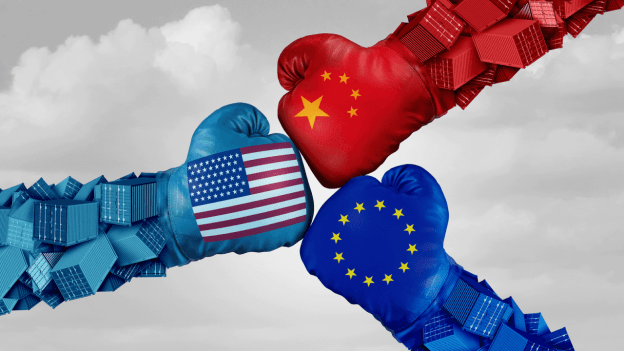

The EU and US Bait and Switch Operation in Ukraine

What Is Bait and Switch?
Bait and switch is a morally suspect sales tactic that lures customers [Ukraine] in with specific claims about the quality or low prices on items [joining NATO and the EU] that turn out to be unavailable in order to upsell them on a similar, pricier item [Russian invasion]. It is considered a form of retail sales fraud, though it takes place in other contexts…From the Investopedia

Q-Day: the Behind-The-Scenes Internet

In cybersecurity circles, they call it Q-day: the day when quantum computers will break the Internet. Almost everything we do online is made possible by the quiet, relentless hum of cryptographic algorithms. These are the systems that scramble data to protect our privacy, establish our identity and secure our payments. And they work well: even with the best supercomputers available today, breaking the codes that the online world currently runs on would be an almost hopeless task.

But machines that will exploit the quirks of quantum physics threaten that entire deal. If they reach their full scale, quantum computers would crack current encryption algorithms exponentially faster than even the best non-quantum machines can. “A real quantum computer would be extremely dangerous,” says Eric Rescorla, chief technology officer of the Firefox browser team at Mozilla in San Francisco, California.

As in a cheesy time-travel trope, the machines that don’t yet exist endanger not only our future communications, but also our current and past ones. Data thieves who eavesdrop on Internet traffic could already be accumulating encrypted data, which they could unlock once quantum computers become available, potentially viewing everything from our medical histories to our old banking records. “Let’s say that a quantum computer is deployed in 2024,” says Rescorla. “Everything you’ve done on the Internet before 2024 will be open for discussion.”

But the risk is real enough that the Internet is being readied for a makeover, to limit the damage if Q-day happens. That means switching to stronger cryptographic systems, or cryptosystems. Fortunately, decades of research in theoretical computer science has turned up plenty of candidates. These post-quantum algorithms seem impervious to attack: even using mathematical approaches that take quantum computing into account, programmers have not yet found ways to defeat them in a reasonable time.

Which of these algorithms will become standard could depend in large part on a decision soon to be announced by the US National Institute of Standards and Technology (NIST) in Gaithersburg, Maryland. In 2015, the US National Security Agency (NSA) announced that it considered current cryptosystems vulnerable, and advised US businesses and the government to replace them. The following year, NIST invited computer scientists globally to submit candidate post-quantum algorithms to a process in which the agency would test their quality, with the help of the entire crypto community. It has since winnowed down its list from 65 to 15. In the next couple of months, it will select a few winners, and then publish official versions of those algorithms. Similar organizations in other countries, from France to China, will make their own announcements…

Although NIST is a US government agency, the broader crypto community has been pitching in. “It is a worldwide effort,” says Philip Lafrance, a mathematician at computer-security firm ISARA Corporation in Waterloo, Canada. This means that, at the end of the process, the surviving algorithms will have gained wide acceptance. “The world is going to basically accept the NIST standards,” he says. He is part of a working group that is monitoring the NIST selection on behalf of the European Telecommunications Standards Institute, an umbrella organization for groups worldwide. “We do expect to see a lot of international adoption of the standard that we’ll create,” says Moody…

China is said to be planning its own selection process, to be managed by the Office of State Commercial Cryptography Administration... “The consensus among researchers in China seems to be that this competition will be an open international competition, so that the Chinese [post-quantum cryptography] standards will be of the highest international standards,” says Jintai Ding, a mathematician at Tsinghua University in Beijing. Meanwhile, an organization called the Chinese Association for Cryptologic Research has already run its own competition for post-quantum algorithms. Its results were announced in 2020, leading some researchers in other countries to mistakenly conclude that the Chinese government had already made an official choice…

Fully transitioning all technology to be quantum resistant will take a minimum of five years and whenever Q-day happens, there are likely to be gadgets hidden somewhere that will still be vulnerable, he says. “Even if we were to do the best we possibly can, a real quantum computer will be incredibly disruptive.”

Excerpts from Davide Castelvecchi, The race to save the Internet from quantum hackers, Nature, Feb. 8, 20202

Treating People Like Roaches-no longer legal

Since its adoption in 1993, the Chemical Weapons Convention has banned the development, possession, and use of weaponized toxic chemicals.  However, whether this prohibition also applied to law enforcement use of certain agents that act on the central nervous system (CNS) remained the subject of debate. In December 2021,  Chemical Weapons Convention adopted a landmark Decision to effectively outlaw the aerosolized use of CNS-acting chemical agents for law enforcement purposes.  

Although 85 countries supported the Decision, including Australia, Switzerland, and the United States, the vote was opposed by 10 countries, which may not feel constrained by its prohibitions. Notable among the opponents was Russia, whose security forces used aerosolized fentanyl derivatives to end the 2002 Moscow theater siege, causing the deaths of more than 120 hostages from poisoning and asphyxiation. Subsequent dual-use research into CNS-acting chemicals has been reported by Russian scientists as well as scientists from China and Iran, who also opposed this Decision.

Furthermore, the Decision is limited in scope. It explicitly prohibits only aerosolized CNS weapons, excluding other delivery mechanisms such as law enforcement dart guns…
 
Excerpt from MICHAEL CROWLEY AND MALCOLM DANDO, Central nervous system weapons dealt a blow, Science, Jan. 14, 2022

Alas! Computers that Really Get You

 Artificial intelligence (AI) software can already identify people by their voices or handwriting. Now, an AI has shown it can tag people based on their chess-playing behavior, an advance in the field of “stylometrics” that could help computers be better chess teachers or more humanlike in their game play. Alarmingly, the system could also be used to help identify and track people who think their online behavior is anonymous

The researchers are aware of the privacy risks posed by the system, which could be used to unmask anonymous chess players online…In theory, given the right data sets, such systems could identify people based on the quirks of their driving or the timing and location of their cellphone use.

Excerpt from  Matthew Hutson, AI unmasks anonymous chess players, posing privacy risks, Science, Jan. 14, 2022

Rapes and Razor Blades: Raping Children to Death in War Zones

Sexual abuse of young children happens all around the world. But children living in war-torn countries are at much higher risk. Those in countries recovering from conflict, such as Liberia, may also face greater dangers. The UN has recorded 15,000 cases of rape and sexual violence against children in conflict zones over the past 15 years. This, it warns, is probably a fraction of the true number. Around 72m children live in war zones in which fighters sexually attack children, according to research by Ragnhild Nordås of the University of Michigan and co-authors. That is almost ten times the number in 1990. In 2021, Liberia recorded 1,275 sexual assaults or rapes of people of all ages, according to official figures. Fully 10% of the victims were younger than six and 36% were younger than 13.

At a sexual-violence clinic in Monrovia, the capital, a nurse recounts how an eight-month-old baby was raped by her step father. A soft toy to comfort children perches on the examination table next to a large doll which young victims, often unable to speak, can point at to show what happened to them… In 2020,  another three-year-old was lured away from a water pump by a 15-year-old who used a razor blade to cut open her genital area to penetrate her. That attack caused large protests in Monrovia, which prompted President George Weah to declare rape a “national emergency”.

Why so many men rape young children in war and its aftermath is not well understood. Some experts think that war warps not just morality but also common sense. Between 2013 and 2016 in Kavumu, a village in eastern Congo, at least 11 men kidnapped and raped about 40 girls under the age of ten. Some were as young as 18 months. After each rape the men would take some blood from the victim’s hymen, believing this would protect them from bullets in battle. In 2017 a court convicted the 11 men of murder and rape.

Many of their victims were treated at Panzi Hospital, which was founded by Denis Mukwege, who was jointly awarded the Nobel peace prize in 2018 for his efforts to end sexual violence in war. The number of babies and infants treated for rape at the hospital dipped in the year after the trial, says Sylvain Mwambali, a doctor who works there. But it soon shot up again, to a higher level than in the three years before the convictions. In the past three years the hospital has treated 103 raped children aged five or younger, or about one every ten days. In 2020 Dr Mwambali treated a baby just a few months old whose vagina and intestines were mutilated by rape. “I could not sleep for weeks,” she says. “How can someone carry on, creating a wound like that? She would have been suffering, crying, they destroyed her vulva, up until the anus, yet they continued.”

Sometimes rebels may rape children to terrorise and control the population. Other men may copy them, perhaps because it makes them feel powerful. A breakdown in law and order may allow rapists to escape any punishment. “There is a social deterioration,” says Dr Mwambali. “People can rape your mother in front of you…there are rapes in churches.” In Liberia, warped beliefs of a different kind are a common explanation for why men rape young children. Some traditional healers tell people, “If you have intercourse with a young girl, you will become rich,” says Margaret Taylor of Women Empowerment Network, an NGO. “The younger the person is, the more riches they get.”

Excerpt from: The Sexual Abuse of Children: Child rape is far too common in some war-torn African countries, Economist, Feb. 5, 2022

The Other Middle East Crisis: Rivers are Drying

Protests in the Iranian city of Isfahan erupted in November 2021 due to a severe shortage of water, as the region continues to suffer from a year of low rainfall and drought. Thousands of farmers and others who supported them took to the streets in Isfahan in central Iran, expressing their dissatisfaction at the water shortages and urging the government to solve the crisis. They shouted “let Isfahan breathe again, revive Zayandeh Rud,” referring to the dried river which supplies their crops with water.

The drying up of the Zayandeh Rud river has not only been caused by drought, however, but also by the government’s diversion of water from the river to supply other areas and with a pipeline supplying water to Yazd province also having been damaged. Those incidences have contributed to the farms being left dry and the famers’ livelihoods being threatened.

The water shortages and the drying of the river come at a time when the region is suffering from a similar shortage, as rainfall has been low and temperatures have increased to make it one of the hottest and driest years recorded. ..Neighboring Iraq and Syria have also been expressed concern over the shortage of water this year… In November 201, a major reservoir in Syria also dried up completely, and was similarly due to a combination of climatic and structural causes.

Excerpts from Protests over water shortages erupt in Iran, as river dries up, Middle East Monitor, Nov. 21, 2021

Genocide in the Empire of Mark Zuckerberg

Facebook failed to quickly stop the spread of hate speech and misinformation against the Rohingya people, in turn contributing to the persecution and alleged genocide of the minority community in Myanmar, according to a lawsuit filed in December 2021 in a California court that asks for more than $150 billion in compensation.
 
The class-action lawsuit against Meta, Facebook’s parent company, was brought by a Rohingya woman in Illinois on behalf of the 10,000-plus Rohingya refugees who have resettled in the United States since 2012. It alleges that Facebook’s algorithm amplified hate speech and that the company neglected to remove inflammatory content despite repeated warnings that such posts could foment ethnic violence.
A similar complaint against the tech giant is expected to be filed in a British court.

Myanmar’s military launched a “scorched-earth campaign” in 2017 to push Rohingya residents, who are mostly Muslim, out of Rakhine state. Some 750,000 Muslim men, women and children were driven out in a campaign of rape, murder and razed villages that a top United Nations official called a “textbook example of ethnic cleansing.” That year, Doctors Without Borders estimated that at least 6,700 Rohingya people had been killed as a result of the attacks. Around the same time, influential figures such as nationalist monks and top government officials posted or recirculated slurs against the Rohingya, while spreading falsehoods and doctored images that suggested some Rohingya burned their own villages and then blamed it on Myanmar security forces. Myanmar has denied the genocide accusations and has justified some actions on counterterrorism grounds.
 
In 2018, a U.N. report connected Facebook to the atrocities against the Rohingya people. According to the report:

“Facebook has been a useful instrument for those seeking to spread hate, in a context where, for most users, Facebook is the Internet. Although improved in recent months, the response of Facebook has been slow and ineffective. The extent to which Facebook posts and messages have led to real-world discrimination and violence must be independently and thoroughly examined.” 

After the publication of the UN Report, the region became a priority for the company, which began flooding it with resources in 2018… The platform said that it removed some 64,000 pieces of content in Myanmar that violated its policies against hate speech…“Not until 2018 — after the damage had been done — did Facebook executives … meekly admit that Facebook should and could have done more,” the lawsuit alleges. “Facebook is like a robot programed with a singular mission: to grow. And the undeniable reality is that Facebook’s growth, fueled by hate, division, and misinformation, has left hundreds of thousands of devastated Rohingya lives in its wake.”….

Backed by the Organization of Islamic Cooperation, Gambia asked a U.S. court to force Facebook to turn over data related to accounts it deleted in 2018 that fueled atrocities in Myanmar. After some legal wrangling, a federal judge in D.C. shot down the request  on December 3, 2021.

Excerpt from Amy Cheng, Rohingya refugees sue Facebook for $150 billion, alleging it helped perpetuate genocide in Myanmar, Washington Post, Dec. 7, 2021

Israel’s Preemptive Attacks on Chemical Weapons, Syria

Israel twice struck chemical weapons facilities in Syria between 2020 and 2021 in a campaign to prevent Syria from renewing chemical weapons production…Syria’s government denies using chemical arms. In 2013 it promised to surrender its chemical weapons, which it says it has done.

On June 8, 2021, Israeli jets hit three military targets near the cities of Damascus and Homs, all linked to Syria’s former chemical weapons program. In March 2020, Israel targeted a villa and compound tied with the procurement of a chemical that can be used in nerve agents. Whether Israel’s attacks were fully successful in disrupting Syria’s plans is unclear. Israeli officials intended the strikes to be preemptive, knocking out the country’s production capabilities before actual weapons could be made…

Excerpts from Israel hit chemical weapons facilities in Syria over past two years, Reuters, Dec. 13, 2021

Battle for Storing Medical Nuclear Waste: Australia

Napandee, a 211 hectare property near the town of Kimba, has been acquired by the Australian  government and will be used to store low and medium-level nuclear waste. “This is still the right decision at the right site,” Resources Minister Keith Pitt said.  “It’s certainly got all of the right geological requirements, we have majority support from the local community and we should never forget that this has taken 40 years and I understand some 16 ministers,” he said.  “Fundamentally, for the local community of Kimba it’s been over six years of consultation.” The consultation culminated in a ballot which showed just over 60 per cent of Kimba residents supported the project.

However, the Barngarla traditional owners opposed the project and said they were not included in the consultation. “There have been significant and repeated grave problems with the government’s conduct regarding the site selection process,” a spokesperson for the Barngarla Determination Aboriginal Corporation said in a statement. “We remain confident that, once assessed by the Court, the declaration to locate the facility at Napandee on our Country will likely be overturned.”

According to the Australian minister, every Australian would need to use nuclear medicine at some point in their life. “If we are going to use this technology, it produces low-level radioactive waste and we have to deal with it and store it. This is the best option on the table.” “This is a facility that will last more than 100 years and it’s important for the country.” The Australian Radioactive Waste Agency, created to establish the Napandee facility, will start work on detailed designs.

Excerpts from Declan Gooch and Emma Pedler, Napandee chosen as nuclear waste storage site after ‘six years of consultation’, ABC, Nov. 29, 2021

Animal Rights March On

A dispute over the fate of hippos in Colombia has given rise to a federal court ruling in Ohio, United States that, for the first time in American law, recognizes animals as people. This should come as welcome news to the 100-plus hippos of Colombia’s Magdalena river. They are the offspring of four hippos smuggled into the country by Pablo Escobar, a drug lord. 

The surfeit of hippos has coated lakes with algae and could displace otters, manatees and endangered turtles. Hippos have begun wandering into villages, too—a potential peril for human persons. In 2020, Colombia’s government considered a cull, prompting a Colombian lawyer to take up the cause. The hippos, his lawsuit says, enjoy protection under Colombian law and must not be killed….

Judge Karen Litkovitz, the federal judge in Ohio (USA), does not get to decide the hippos’ fate. But on October 15, 2021 she agreed with the Animal Legal Defense Fund that the hippos are “interested persons” under a law permitting foreign litigants to gather evidence in America that may buttress their claims. Experts in non-surgical sterilization will be deposed for their insights on PZP, a contraceptive that could spare the hippos while dampening their growth.

America is not the first country to regard animals as legal persons. An Indian court cited the constitution in banning a bullfighting festival in 2014. A judge in Argentina ruled that Sandra, an orangutan, was a non-human person eligible for better environs than her concrete enclosure in a Buenos Aires zoo; she now luxuriates in a sanctuary in Florida. In 2020 a court in Islamabad, faced with cases involving stray dogs, an elephant and a bear, recognized the “right of each animal…to live in an environment that meets the latter’s behavioral, social and physiological needs”.

Judge Litkovitz’s decision is not couched in such sweeping terms. It remains to be seen whether other American courts take her cue in cases such as that of Happy, an elephant at the Bronx Zoo who has shown signs of self-awareness and misery. In 2022 New York’s highest court will consider whether the writ of habeas corpus—protection from unjust imprisonment—applies to Happy.

Excerpt from Animal rights: Pablo Escobar’s hippos lead a charge for animal rights, Economist, Oct. 30, 2021

Mining to Death for Uranium: the Navajo

The Navajo people have petitioned the Inter-American Commission on Human Rights arguing that the U.S. government failed to protect the human rights of Indigenous communities when the Nuclear Regulatory Commission (NRC) licensed uranium mining on their territories.

The Eastern Navajo Diné Against Uranium Mining (ENDAUM)  petition states that when the NRC licensed Hydro Resources, Inc. (HRI) (now known as NuFuels) to operate uranium mining in the two Diné (Navajo) communities of Crownpoint and Churchrock it violated human rights guaranteed in the American Declaration of the Rights and Duties of Man, including the rights to life, health, benefits of culture, fair trial, and property.
According to the Navajo, the NRC licensed uranium mining  it knew would contaminate the groundwater that is an important resource of drinking water and cultural identity to communities that suffer increased risk of death and disease from historic uranium mining and milling the United States government not only tolerated but promoted.

The Inter-American Commission on Human Rights declared ENDAUM’s petition “admissible” in March 2021 and provided until October 21, 2021 for additional observations to be submitted. These additional observations were submitted in October, 2021. 

New Mexico Environmental Law Center, Press Release, Oct. 20, 2021

Case with annexes

How to Relocate a Whole Nation

Small island states will not, most likely, be swallowed by the sea… In research published in 2010, Paul Kench measured the size of 27 atolls over a period of decades and found that while 14% had shrunk and a couple had disappeared, 43% stayed the same size and another 43% became bigger. Many of the ring-shaped coral reefs have been able to adapt to sea-level rise, changing shape as sediment is eroded and pushed around. Tuvalu’s land surface, for instance, increased by 3% between 1971 and 2014 despite a rise in the local sea level of 4mm a year, twice the global average for that period…

But there are other, more immediate effects of climate change that threaten the lives and livelihoods of the citizens of these countries. They are less arresting, harder to explain and, as in the changing shape and size of islands, sometimes counterintuitive. But the upshot is the same: the countries may soon become uninhabitable.

One is “king tides”, high tides that briefly but entirely inundate the narrow strips of low-lying land that comprise most atoll, are becoming more frequent. The saltwater can kill crops such as banana and papaya and seeps into groundwater, making it unfit to drink

There are also ways to keep islands habitable: Kiribati plans to dredge its lagoons and use the sand to raise the surrounding islands higher above the sea. Tuvalu has embarked on a land-reclamation project. But the spectre of climate change makes it harder to drum up investment for such schemes. “I am trying to change the minds of the many people who say, ‘We cannot invest in your country, you’re finished’,” says Kiribati’s Mr Tito.

The depressing long-term solution may be to move. The Marshall Islands hopes to renegotiate its post-colonial “Compact of Free Association” with America, which expires in 2023, to ensure a permanent right of residence in the United States for all Marshallese. Tuvalu has no such option. Maina Talia, a climate activist, thinks that the government should take Fiji up on its offer of a home where Tuvaluans could practice the same culture rather than “be dumped somewhere in Sydney’‘.

Earlier this year, the government of Tuvalu, which until recently insisted that there would be no Plan B, established a new un initiative. Its aim is to work with “like-minded countries” to figure out how and where such countries could be relocated, how they could continue to function ex-situ, and whether they could still lay claim to vast exclusive economic zones if their land disappeared under water.

Relocating a country would raise other big questions, too, for both the international system and the way in which people think about statehood. “How to prepare to move a nation in dignity, that has never been done before,” says Kamal Amakrane, a migration expert whose ideas helped spark the UN initiative. 

Excerpt from Moving story: Pacific countries face more complex problems than sinking, Economist, August 7, 2021

Surveillance by the Masses for the Masses

New sensors, from dashboard cameras to satellites that can see across the electromagnetic spectrum, are examining the planet and its people as never before. The information they collect is becoming cheaper. Satellite images cost several thousand dollars 20 years ago, today they are often provided free and are of incomparably higher quality….

Human Rights Watch has analysed satellite imagery to document ethnic cleansing in Myanmar. Nanosatellites tag the automatic identification system of vessels that are fishing illegally. Amateur sleuths have helped Europol, the European Union’s policing agency, investigate child sexual exploitation by identifying geographical clues in the background of photographs. Even hedge funds routinely track the movements of company executives in private jets, monitored by a web of amateurs around the world, to predict mergers and acquisitions. OSINT (open-source intelligence) thus bolsters civil society, strengthens law enforcement and makes markets more efficient. It can also humble some of the world’s most powerful countries.

In the face of vehement denials from the Kremlin, Bellingcat, an investigative group, meticulously demonstrated Russia’s role in the downing of Malaysian Airlines Flight mh17 over Ukraine in 2014, using little more than a handful of photographs, satellite images and elementary geometry. It went on to identify the Russian agents who attempted to assassinate Sergei Skripal, a former Russian spy, in England in 2018. Amateur analysts and journalists used OSINT to piece together the full extent of Uyghur internment camps in Xinjiang. In recent weeks researchers poring over satellite imagery have spotted China constructing hundreds of nuclear-missile silos in the desert.

Such an emancipation of information promises to have profound effects. The decentralised and egalitarian nature of OSINT erodes the power of traditional arbiters of truth and falsehood, in particular governments and their spies and soldiers. The likelihood that the truth will be uncovered raises the cost of wrongdoing for governments. Although osint might not prevent Russia from invading Ukraine or China from building its gulag, it exposes the flimsiness of their lies

Liberal democracies will also be kept more honest. Citizens will no longer have to take their governments on trust. News outlets will have new ways of holding them to account. Today’s open sources and methods would have shone a brighter light on the Bush administration’s accusation in 2003 that Iraq was developing chemical, biological and nuclear weapons. That would have subjected America’s invasion of the country to greater scrutiny. It might even have prevented it.,,

The greatest worry is that the explosion of data behind open-source investigations also threatens individual privacy. The data generated by phones and sold by brokers let Bellingcat identify the Russian spies who last year poisoned Alexei Navalny, an opposition leader. Similar data were exploited to pick out a senior Catholic priest in America, who resigned last month after his location was linked to his use of Grindr, a gay dating app.

Excerpts from The people’s panopticon: The promise of open-source intelligence, Economist, Aug. 7, 2021

Eradicating Old Cities and their Populations

The fighters of Islamic State…raided the tombs of Assyrian kings in Nineveh, blew up Roman colonnades in Palmyra and sold priceless relics to smugglers. But their vandalism was on a modest scale compared with some of the megaprojects that are habitually undertaken by many Middle Eastern government… Iraq’s government began to build the Makhoul dam. Once complete, it is likely to flood Ashur—and another 200 historical sites.

Similar archaeological tragedies have occurred across the region, mainly thanks to the appetite of governments for gigantism in the name of modernization…The re-landscaping displaces people as well as erasing their heritage, sometimes as a kind of social engineering….

Egypt’s dictator, Abdel Fattah al-Sisi, has bulldozed swathes of Cairo, the old capital, to make way for motorways, flyovers and shiny skyscrapers that line the road to the new administrative capital he is building. To ease congestion he has scythed a thoroughfare named Paradise through the City of the Dead, a 1,000-year-old necropolis that is a un-designated world heritage site. Hundreds of tombs were destroyed. He has turfed out tens of thousands of people from their homes in Boulaq, along the Nile, calling it slum clearance. This was where Cairo’s old port prospered in Ottoman times. Instead of rehabilitating it, Mr Sisi is letting property magnates carpet the area with high-rise apartment buildings. Mr Sisi has allowed investors from the United Arab Emirates to build a mini-Dubai on Cairo’s largest green space, a nature reserve on al-Warraq island. Its 90,000 residents will be shunted off, mainly to estates on the city’s edge. Protesters have been condemned as Islamist terrorists and sent to prison, many for 15 years…

Some rulers have security in mind when they bulldoze history. Mr Sisi can send in the tanks faster on wider roads. Removing Egypt’s poor from city centres may curb the risk of revolution. “They know that poor areas revolted in 2011,” says Abdelrahman Hegazy, a Cairene city planner. “They’re afraid of population density.” During Syria’s current civil war, President Bashar al-Assad and his Russian patrons ruined parts of the old cities of Homs and Aleppo, treasure troves of antiquity that were also rebel strongholds, with relentless barrel-bombing….

Excerpts from Bulldozing history: Arab states are wrecking old treasures, Economist, Sept. 4, 2021

Keep Killing Environmental Defenders

A report released by Global Witness in September 2021 reveals that 227 land and environmental activists were murdered in 2020 for defending their land and the planet. That constitutes the highest number ever recorded for a second consecutive year…The figures show the human cost of the destruction wrought by exploitative industries and corporations. At least 30% of recorded attacks were reportedly linked to resource exploitation – across logging, hydroelectric dams and other infrastructure, mining, and large-scale agribusiness. Logging was the industry linked to the most murders with 23 cases – with attacks in Brazil, Nicaragua, Peru and the Philippines…

Colombia was once again the country with the highest recorded attacks, with 65 defenders killed in 2020. A third of these attacks targeted indigenous and afro-descendant people, and almost half were against small-scale farmers. In 2020 the disproportionate number of attacks against indigenous communities continued – with over a third of all fatal attacks targeting indigenous people. Attacks against indigenous defenders were reported in Mexico, Central and South America, the Philippines, Saudi Arabia and Indonesia. Nicaragua saw 12 killings – rising from 5 in 2019, making it the most dangerous country per capita for land and environmental defenders in 2020.

Excerpt from  LAND AND ENVIRONMENTAL DEFENDERS, Global Witness Press Release, Sept. 13, 2021

To Know the Truth Even if it Harms You

Distributed Denial of Secrets, or DDoSecrets, an NGO, had been a thorn in the side of secretive governments, corrupt corporations, and powerful law firms since its founding in late 2018. In June 2020, in a release known as BlueLeaks, the group published 269 gigabytes of law enforcement data, which exposed police malfeasance and surveillance overreach across the United States.

DDoSecrets also published incriminating records from overseas tax shelters, from the social media site Gab, and from a Christian crowdfunding site often used by the far right. The group has affected autocrats as well, exposing the Russian government’s plans in Ukraine and mapping out the Myanmar junta’s business dealings. These revelations have spawned numerous news stories in the public interest, making DDoSecrets a valuable source for journalists, but also rendering it a target: In July 2020, German authorities seized one of the organization’s servers. August of 2020 brought ominous news of a Department of Homeland Security bulletin labeling DDoSecrets a “criminal hacker group.” ..

Avowedly nonpartisan, DDoSecrets nonetheless exhibits an ethos that seems to fuse anarchist politics, a hacker’s curiosity about forbidden knowledge, and a general sympathy for the oppressed. Its barbed Latin slogan, Veritatem cognoscere ruat caelum et pereat mundus, roughly translates to, “To know the truth, even if the heavens fall and the world perishes.” Call it a bolder, more transformative version of “information wants to be free.”

Emma Best…launched DDoSecrets in December 2018 with someone known only by the pseudonym “The Architect.” Together, they set out to distinguish their group from WikiLeaks, which they felt had morphed into a vehicle for Julian Assange’s ego…”Truth has an impact, regardless of the respectability politics some people choose to engage in when it comes to the alleged sources,” Best wrote after Swiss law enforcement, at the request of U.S. authorities, arrested Tillie Kottmann, a hacker who alerted journalists to security vulnerabilities in a vast commercial network of surveillance cameras. “The world can no longer be rid of hacktivists or leaktivists. Not as long as people are willing.”

Excerpts from Jacob Silverman, The New WikiLeaks, The New Republic, Aug. 18, 2021

Who Owns your Cells? the case of Henrietta Lacks

In 1951, a young mother of five named Henrietta Lacks visited The Johns Hopkins Hospital complaining of vaginal bleeding….As medical records show, Mrs. Lacks began undergoing radium treatments for her cervical cancer…. A sample of her cancer cells retrieved during a biopsy were sent, without her knowledge or consent, to Dr. George Gey’s nearby tissue lab. For years, Dr. Gey, a prominent cancer and virus researcher, had been collecting cells from all patients who came to The Johns Hopkins Hospital with cervical cancer, but each sample quickly died in Dr. Gey’s lab. What he would soon discover was that Mrs. Lacks’ cells were unlike any of the others he had ever seen: where other cells would die, Mrs. Lacks’ cells doubled every 20 to 24 hours.

Today, these incredible cells— nicknamed “HeLa” cells, from the first two letters of her first and last names — are used to study the effects of toxins, drugs, hormones and viruses on the growth of cancer cells without experimenting on humans. They have been used to test the effects of radiation and poisons, to study the human genome, to learn more about how viruses work, and played a crucial role in the development of the polio vaccine.

In July 2021, the family of Henrietta Lacks has hired a prominent civil rights attorney, who says he plans to seek compensation for them from big pharmaceutical companies across the country that made fortunes off medical research with her famous cancer cells…The legal team is investigating lawsuits against as many as 100 defendants, mostly pharmaceutical companies, but they haven’t ruled out a case against the Johns Hopkins Hospital.’

Excerpts from Family of Henrietta Lacks hires civil rights attorney to seek funds over famous cells, Washington Post, July 31, 2021, and https://www.hopkinsmedicine.org/henriettalacks/

Decoding Brain Signals with a Credit Card

A man unable to speak after a stroke has produced sentences through a system that reads electrical signals from speech production areas of his brain, researchers reported in July 2021…The participant had a stroke more than a decade ago that left him with anarthria—an inability to control the muscles involved in speech. Because his limbs are also paralyzed, he communicates by selecting letters on a screen using small movements of his head, producing roughly five words per minute.

To enable faster, more natural communication, neurosurgeon Edward Chang of the University of California, San Francisco, tested an approach that uses a computational model known as a deep-learning algorithm to interpret patterns of brain activity in the sensorimotor cortex, a brain region involved in producing speech . The approach has so far been tested in volunteers who have electrodes surgically implanted for non-research reasons such as to monitor epileptic seizures.

In the new study, Chang’s team temporarily removed a portion of the participant’s skull and laid a thin sheet of electrodes smaller than a credit card directly over his sensorimotor cortex. To “train” a computer algorithm to associate brain activity patterns with the onset of speech and with particular words, the team needed reliable information about what the man intended to say and when….So the researchers repeatedly presented one of 50 words on a screen and asked the man to attempt to say it on cue. Once the algorithm was trained with data from the individual word task, the man tried to read sentences built from the same set of 50 words, such as “Bring my glasses, please.” 


With the new approach, the man could produce sentences at a rate of up to 18 words per minute, Chang says…The system isn’t ready for use in everyday life, Chang notes. Future improvements will include expanding its repertoire of words and making it wireless, so the user isn’t tethered to a computer roughly the size of a minifridge.

Excerpts from Kelly Servick, Brain signals ‘speak’ for person with paralysis, Science, July 16, 2021

The Uses and Abuses of Alexa

Excerpts from the Interview with Robert Lewis Shayon author of “The Voice Catchers: How Marketers Listen In to Exploit Your Feelings, Your Privacy, and Your Wallet” published  at the Pennsylvania Gazette July 2021

There is  emerging industry that is deploying immense resources and breakthrough technologies based on the idea that voice is biometric—a part of your body that those in the industry believe can be used to identify and evaluate you instantly and permanently. Most of the focus in voice profiling technology today is on emotion, sentiment, and personality. But experts tell me it is scientifically possible to tell the height of a person, the weight, the race, and even some diseases. There are actually companies now trying to assess, for example, whether you have Alzheimer’s based upon your voice…

The issue is that this new voice intelligence industry—run by companies you know, such as Amazon and Google, and some you don’t, such as NICE and Verint—is sweeping across society, yet there is little public discussion about the implications. The need for this conversation becomes especially urgent when we consider the long-term harms that could result if voice profiling and surveillance technologies are used not only for commercial marketing purposes, but also by political marketers and governments, to say nothing of hackers stealing data.

There are hundreds of millions of smart speakers out there, and far more phones with assistants, listening to you and capturing your voice. Voice technology already permeates virtually every important area of personal interaction—as assistants on your phone and in your car, in smart speakers at home, in hotels, schools, even stores instead of salespeople. 

Amazon and Google have several patents centering around voice profiling that describe a rich future for the practice…But consider the downside: we could be denied loans, have to pay much more for insurance, or be turned away from jobs, all on the basis of physiological characteristics and linguistic patterns that may not reflect what marketers believe they reflect.

The first thing to realize is that voice assistants are not our friends no matter how friendly they sound. I argue, in fact, that voice profiling marks a red line for society that shouldn’t be crossed.

From Natural Landmark to an Oil Spill Wasteland

Mohammad Abubakar, Minister of Environment  disclosed in July 2021 that Nigeria recorded 4,919 oil spills between 2015 to March 2021 and lost 4.5 trillion barrels of oil to theft in four years.

Mr Abubakar disclosed this at a Town Hall meeting in Abuja, organised by the Ministry of Information and Culture, on protecting oil and gas infrastructure. “The operational maintenance is 106, while sabotage is 3,628 and yet to be determined 70, giving the total number of oil spills on the environment to 235,206 barrels of oil. This is very colossal to the environment.

“Several statistics have emphasised Nigeria as the most notorious country in the world for oil spills, loosing roughly 400,000 barrels per day. “The second country is followed by Mexico that has reported only 5,000 to 10,000 barrel only per day, thus a difference of about 3, 900 per cent.

“Attack on oil facilities has become the innovation that replaced agitations in the Niger Delta region against perceived poor governance and neglect of the area.

Excerpts from Nigeria Records 4,919 Oil Spills in 6 Years, 4.5trn Barrels Stolen in 4 Years, AllAfrica.com, July 6, 2021

Who’s Not Giving a Damn about Nuclear Fallout

On May 1st 1962, French officials in Algeria told Algerians to leave their homes in the southern city of Tamanrasset. It was just a precaution. France was about to detonate an atom bomb, known as Beryl, in the desert some 150km away. The blast would be contained underground. Two French ministers were there to witness the test. But things did not go as planned. The underground shaft at the blast site was not properly sealed. The mountain (Taourirt Tan Afella) above the site cracked and black smoke spread everywhere. The ministers (and everyone else nearby) ran as radioactive particles leaked into the air. Nevertheless, in the months and years after, locals would go to the area to recover scrap metal from the blast for use in their homes.

France carried out 17 nuclear tests in Algeria between 1960 and 1966. Many took place after Algeria’s independence from France in 1962, under an agreement between the two countries. There are no good data on the effects of the explosions on public health and the environment, but locals note that some people living near the test sites have suffered cancers and birth defects typically caused by radiation. The sites, say activists, are still contaminated.

Taourirt is a group dedicated to identifying the location of nuclear waste left by France. All that exists in the public domain is an inventory of the contaminated materials buried somewhere in the desert. (The known test sites are poorly secured by the Algerian government.) Others are pressing France to clean up the sites and compensate victims. There has been some progress in this direction, but not enough, say activists.

In 2010 the French parliament passed the Morin law, which is meant to compensate those with health problems resulting from exposure to the nuclear tests. (France carried out nearly 200 tests in French Polynesia, too.) But the law only pertains to certain illnesses and requires claimants to show they were living near the tests when they took place. This is difficult enough for Algerians who worked for the French armed forces: few had formal contracts. It is almost impossible for anyone else. Only a small fraction of the claims filed have come from Algeria.

Excerpts from Algeria and France: Lingering Fallout, Economist, June 26, 2021

How to Detect Humans Under-the-Ground: Surveillance Best

Tunnel-digging in times of conflict has a long history. These days, secret tunnels are used to move weapons and people between Gaza and Egypt, and by Kurdish militia operating on the frontier between Syria and Turkey. But the same principle applies. What happens underground is hard for the enemy to observe. Digging for victory is therefore often a good idea…

That, though, may be about to change. Real-time Subsurface Event Assessment and Detection (RESEAD), a project being undertaken at Sandia National Laboratories in New Mexico, uses novel sensors to make accurate maps of what is happening underground. This will, no doubt, have many civilian applications. But Sandia is principally a weapons lab…The sensors themselves are a mixture of accelerometers, which pick up vibrations, current detectors, which measure the electrical-resistance of rocks and soil, and subsurface radar…

Exactly how RESEAD sensors would be put in place in a zone of active conflict remains to be seen. But the system could certainly be useful for other sorts of security. In particular, America has a problem with tunnels under its border with Mexico being used to smuggle drugs and migrants into the country. RESEAD would be able to detect existing tunnels and nip new ones in the bud. 

Excerpts from Tunnel Vision: How to detect the enemy when they are underground, Economist, June 24, 2021

How to Spy on Your Own Country for $1.25 per day

San Francisco-based Premise Data Corp. pays users, many of them in the developing world, to complete basic tasks for small payments. Typical assignments involve snapping photos, filling out surveys or doing other basic data collection or observational reporting such as counting ATMs or reporting on the price of consumer goods like food.

About half of the company’s clients are private businesses seeking commercial information, Premise says. That can involve assignments like gathering market information on the footprint of competitors, scouting locations and other basic, public observational tasks. Premise in recent years has also started working with the U.S. military and foreign governments, marketing the capability of its flexible, global, gig-based workforce to do basic reconnaissance and gauge public opinion.

Premise is one of a growing number of companies that straddle the divide between consumer services and government surveillance and rely on the proliferation of mobile phones as a way to turn billions of devices into sensors that gather open-source information useful to government security services around the world.

Premise launched in 2013,, As of 2019, the company’s marketing materials said it has 600,000 contributors operating in 43 countries, including global hot spots such as Iraq, Afghanistan, Syria and Yemen. According to federal spending records, Premise has received at least $5 million since 2017 on military projects—including from contracts with the Air Force and the Army and as a subcontractor to other defense entities. In one pitch on its technology, prepared in 2019 for Combined Joint Special Operations Task Force-Afghanistan, Premise proposed three potential uses that could be carried out in a way that is “responsive to commander’s information requirements”: gauge the effectiveness of U.S. information operations; scout and map out key social structures such as mosques, banks and internet cafes; and covertly monitor cell-tower and Wi-Fi signals in a 100-square-kilometer area. The presentation said tasks needed to be designed to “safeguard true intent”—meaning contributors wouldn’t necessarily be aware they were participating in a government operation…

 Another Premise document says the company can design “proxy activities” such as counting bus stops, electricity lines or ATMs to provide incentives for contributors to move around as background data is gathered. Data from Wi-Fi networks, cell towers and mobile devices can be valuable to the military for situational awareness, target tracking and other intelligence purposes. There is also tracking potential in having a distributed network of phones acting as sensors, and knowing the signal strength of nearby cell towers and Wi-Fi access points can be useful when trying to jam communications during military operations. Nearby wireless-network names can also help identify where a device is, even if the GPS is off, communications experts say.

Mr. Blackman said gathering open-source data of that nature doesn’t constitute intelligence work. “Such data is available to anyone who has a cellphone,” he said. “It is not unique or secret.” Premise submitted a document last July to the British government describing its capabilities, saying it can capture more than 100 types of metadata from its contributors’ phones and provide them to paying customers—including the phone’s location, type, battery level and installed apps. 

Users of the Premise app aren’t told which entity has contracted with the company for the information they are tasked with gathering. The company’s privacy policy discloses that some clients may be governments and that it may collect certain types of data from the phone, according to a spokesman…Currently the app assigns about five tasks a day to its users in Afghanistan, according to interviews with users there, including taking photos of ATMs, money-exchange shops, supermarkets and hospitals. One user in Afghanistan said he and others there are typically paid 20 Afghani per task, or about 25 cents—income for phone and internet services. A few months ago, some of the tasks on the site struck him as potentially concerning. He said the app posted several tasks of identifying and photographing Shiite mosques in a part of western Kabul populated largely by members of the ethnic Hazara Shiite minority. The neighborhood was attacked several times by Islamic State over the past five years…. Because of the nature and location of the tasks in a hot spot for terrorism, the user said he thought those tasks could involve spying and didn’t take them on.

Excerpt from Byron Tau, App Users Unwittingly Collect Intelligence, WSJ,  June 25, 2010

Green Con Artists and their Moneyed Followers

Green investing has grown so fast that there is a flood of money chasing a limited number of viable companies that produce renewable energy, electric cars and the like. Some money managers are stretching the definition of green in how they deploy investors’ funds. Now billions of dollars earmarked for sustainable investment are going to companies with questionable environmental credentials and, in some cases, huge business risks. They include a Chinese incinerator company, an animal-waste processor that recently settled a state lawsuit over its emissions and a self-driving-truck technology company.

One way to stretch the definition is to fund companies that supply products for the green economy, even if they harm the environment to do so. In 2020 an investment company professing a “strong commitment to sustainability” merged with the operator of an open-pit rare-earth mine in California at a $1.5 billion valuation. Although the mine has a history of environmental problems and has to bury low-level radioactive uranium waste, the company says it qualifies as green because rare earths are important for electric cars and because it doesn’t do as much harm as overseas rivals operating under looser regulations…

When it comes to green companies, “there just isn’t enough” to absorb investor demand…In response, MSCI has looked at other ways to rank companies for environmentally minded investors, for example ranking “the greenest within a dirty industry”….

Of all the industries seeking green money, deep-sea mining may be facing the harshest environmental headwinds. Biologists, oceanographers and the famous environmentalist David Attenborough have been calling for a yearslong halt of all deep-sea mining projects. A World Bank report warned of the risk of “irreversible damage to the environment and harm to the public” from seabed mining and urged caution. More than 300 deep-sea scientists released a statement today calling for a ban on all seabed mining until at least 2030. In late March 2021, Google, battery maker Samsung SDI Co., BMW AG and heavy truck maker Volvo Group announced that they wouldn’t buy metals from deep-sea mining.

[However the The Metals Company (TMC) claims that deep seabed mining is green].

Excerpts from Justin Scheck et al, Environmental Investing Frenzy Stretches Meaning of ‘Green’, WSJ, June 24, 2021

Tesla as Catfish: When China Carps-Tech CEOs Fall in Line

Many countries are wrestling with how to regulate digital records. Some economies, including in Europe, emphasize the need for data privacy, while others, such as China and Russia, put greater focus on government control. The U.S. currently doesn’t have a single federal-level law on data protection or security; instead, the Federal Trade Commission is broadly empowered to protect consumers from unfair or deceptive data practices.

Behind China’s moves is a growing sense among leaders that data accumulated by the private sector should in essence be considered a national asset, which can be tapped or restricted according to the state’s needs, according to the people involved in policy-making. Those needs include managing financial risks, tracking virus outbreaks, supporting state economic priorities or conducting surveillance of criminals and political opponents. Officials also worry companies could share data with foreign business partners, undermining national security.


Beijing’s latest economic blueprint for the next five years, released in March 2021, emphasized the need to strengthen government sway over private firms’ data—the first time a five-year plan has done so. A key element of Beijing’s push is a pair of laws, one passed in June 2021, the Data Security Law,  and the other a proposal updated by China’s legislature in Apr0il 2021. Together, they will subject almost all data-related activities to government oversight, including their collection, storage, use and transmission. The legislation builds on the 2017 Cybersecurity Law that started tightening control of data flows.

The law will “clearly implement a more stringent management system for data related to national security, the lifeline of the national economy, people’s livelihood and major public interests,” said a spokesman for the National People’s Congress, the legislature. The proposed Personal Information Protection Law, modeled on the European Union’s data-protection regulation, seeks to limit the types of data that private-sector firms can collect. Unlike the EU rules, the Chinese version lacks restrictions on government entities when it comes to gathering information on people’s call logs, contact lists, location and other data.

In late May 2021, citing concerns over user privacy, the Cyberspace Administration of China singled out 105 apps—including ByteDance’s video-sharing service Douyin and Microsoft Corp.’s Bing search engine and LinkedIn service—for excessively collecting and illegally accessing users’ personal information. The government gave the companies named 15 days to fix the problems or face legal consequences….

Beijing’s pressure on foreign firms to fall in line picked up with the 2017 Cybersecurity Law, which included a provision calling for companies to store their data on Chinese soil. That requirement, at least initially, was largely limited to companies deemed “critical infrastructure providers,” a loosely defined category that has included foreign banks and tech firms….Since 2021, Chinese regulators have formally made the data-localization requirement a prerequisite for foreign financial institutions trying to get a foothold in China. Citigroup Inc. and BlackRock Inc. are among the U.S. firms that have so far agreed to the rule and won licenses to start wholly-owned businesses in China…

Senior officials have publicly likened Tesla to a “catfish” rather than a “shark,” saying the company could uplift the auto sector the way working with Apple and Motorola Mobility LLC helped elevate China’s smartphone and telecommunications industries. To ensure Tesla doesn’t become a security risk, China’s Cyberspace Administration recently issued a draft rule that would forbid electric-car makers from transferring outside China any information collected from users on China’s roads and highways. It also restricted the use of Tesla cars by military personnel and staff of some state-owned companies amid concerns that the vehicles’ cameras could send information about government facilities to the U.S. In late May 2021, Tesla confirmed it had set up a data center in China and would domestically store data from cars it sold in the country. It said it joined other Chinese companies, including Alibaba and Baidu Inc., in the discussion of the draft rules arranged by the CyberSecurity Association of China, which reports to the Cyberspace Administration…

Increasingly, China’s president, Mr. Xi, leaned toward voices advocating greater digital control. He now labels big data as another essential element of China’s economy, on par with land, labor and capital.  “From the point of view of the state, anti-data monopoly must be strengthened,” said Li Lihui, a former president of state-owned Bank of China Ltd. and now a member of China’s legislature. He said he expects China to establish a “centralized and unified public database” to underpin its digital economy.

Excerpts from China’s New Power Play: More Control of Tech Companies’ Troves of Data, WSJ, June 12, 2021

Nuking Tahiti: the Moruroa Files

From 1966 to 1974, France blew up 41 nuclear weapons in above-ground tests in French Polynesia, the collection of 118 islands and atolls that is part of France. The French government has long contended that the testing was done safely. But a new analysis of hundreds of documents declassified in 2013 suggests the tests exposed 90% of the 125,000 people living in French Polynesia to radioactive fallout—roughly 10

The findings come from a 2-year collaboration, dubbed the Moruroa Files, between Disclose, a French nonprofit that supports investigative journalism; Interprt, a collective of researchers, architects, and spatial designers affiliated with the Norwegian University of Science and Technology who focus on environmental issues; and the Science & Global Security program at Princeton. The findings were presented on 9 March on the project’s website, in a book, and in a technical paper posted to the arXiv preprint server.

The abandoned testing facility at the Moruroa Atoll. The atoll is at the risk of collapsing due to nuclear blasts

Declassified documents suggest actual exposures were between two and 20 times higher than France’s Atomic Energy Commission (CEA) estimates… Reasons for the discrepancies vary from test to test, he says. For example, CEA acknowledged that the first test, dubbed Aldébaran, exposed residents of the Gambier Islands to relatively high levels of fallout. But actual exposures were likely higher still… Although CEA noted that contaminated rainwater fell on the island, he says, it failed to consider that many residents likely drank the contaminated water, collected in household cisterns, for days.

Most important, the documents suggest a single test in 1974, called Centaure, exposed the entire population of Tahiti—87,500 people at the time—to fallout. French authorities set off a relatively tiny atom bomb with an explosive yield equal to 4 kilotons of TNT, and weather forecasts predicted that winds should carry fallout to the north. Instead, the wind blew to the west, carrying the plume directly over Tahiti. A new simulation based on data in the documents shows how the plume of radiation wafted over the island. CEA estimated that people on the island received a dose of about 0.6 mSv.  However, Phillipe and colleagues argue that CEA underestimated the total amount of radiation that accumulated on the ground over several days, didn’t account for radiation lingering in vegetables consumed later…

The new analysis moves the vast majority of French Polynesians past the exposure threshold to qualify for compensation. Philippe and Schoenberger would like to see France do away with the exposure standard and compensate anyone who lived through the tests and developed a qualifying cancer. “Our hope is to demonstrate that this kind of threshold can be prejudicial to claimants just because of the difficulties of proving exposure,” Schoenberger says.

Philippe estimates that, assuming a cancer rate of 0.2% per year, roughly 10,000 cancer patients or their families would qualify retroactively and that compensating them would cost about €700 million. Future cancers would cost about €24 million per year, he estimates. However, Hughes says it remains to be seen whether the French government will even acknowledge the analysis. “My fear is that they will simply ignore it,” Hughes says.

The declassified documents also show the French government routinely failed to warn Polynesians about the radiation risks, Philippe says. In the Centaure test, authorities could have warned Tahitians about the approaching fallout 2 days in advance, but did not. Ironically, Philippe notes, the United States, the Soviet Union, and other countries were monitoring the tests remotely. “Everybody knew what was going on,” he says, “except the Polynesians.”

Excerpt from Adrian Cho, France grossly underestimated radioactive fallout from atom bomb tests, study finds, Science, Mar. 11, 2021

Wild West: Mercury Pollution in the Amazon Rainforest

Munduruku Indigenous people in the Tapajós basin – an epicenter of illegal gold mining in the Amazon rainforest – in southwestern Pará state have reported increasing encroachments upon their lands by armed “wildcat” miners known as “garimpeiros” since March 14, 2021. The Federal Prosecutor’s Office has warned of a potential for violence between local residents and the miners and urged the deployment of the federal police and other authorities to remove the trespassers. But the government has yet to act. The tension has escalated in recent weeks after a group of miners brought equipment to the area.

Illegal mining causes significant deforestation in the Brazilian Amazon and has been linked to dangerous levels of mercury poisoning, from mercury widely used to process the gold, in several Munduruku communities along the Tapajós basin. Indigenous people also fear that miners could spread the Covid-19 virus in their communities.

In a public statement on March 16, 2021 the Federal Prosecutor’s Office reported that a helicopter appeared to have escorted the miners and their equipment, suggesting the invasion is “an orchestrated action” by an organized crime group. The office also reported that the miners may be coordinating the invasion with a “small group” of Indigenous people who support the mining. Members of Munduruku communities who oppose the mining and have reported the invasions to the authorities say they have faced threats and intimidation. On March 19, 2021 armed men reportedly prevented a group of Munduruku Indigenous people from disembarking from their boats in an area within their territory. On March 25, 2021 in the Jacareacanga municipality, miners and their supporters forced their way into a building that houses the Wakoborun Women’s Association and other community organizations that have opposed the mining. The attackers destroyed furniture and equipment and set fire to documents, Indigenous leaders reported…

President Bolsonaro has signaled his aversion to protecting Indigenous lands. As a candidate, he vowed not to designate “one more centimeter” of land as Indigenous territory. His administration has halted the demarcation of Indigenous territories – there are 237 pending requests – leaving Indigenous communities even more vulnerable to encroachments, deforestation, and violence. The Munduruku territory is already demarcated. In 2020, Bolsonaro introduced a draft bill in Congress to allow mining and other commercial activities in Indigenous territories. The bill is pending in Congress and is listed as one of Bolsonaro’s priorities.

Excerpt from Brazil: Remove Miners from Indigenous Amazon Territory, Human Rights Watch, Apr. 12, 2021

Shallow Your Tongue: The Giddy Western Plutocracy of Hong Kong

You might think the death of liberalism in Asia’s financial center, Hong Kong, which hosts $10trn of cross-border investments, would trigger panic, capital flight and a business exodus. Instead Hong Kong is enjoying a financial boom. Share offerings have soared as China’s leading companies list there. Western firms are in the thick of it: the top underwriters are Morgan Stanley and Goldman Sachs. In 2020, the value of us dollar payments cleared in Hong Kong, a hub for the world’s reserve currency, hit a record $11trn.

The same pattern of political oppression and commercial effervescence is to be found on the mainland…Yet when they talk to shareholders about China, global firms gloss over this brutal reality: “Very happy,” says Siemens; “Phenomenal,” reckons Apple; and “Remarkable,” says Starbucks…Tougher policing does not affect Westerners, says a mainland financier. His foreign clients in Hong Kong laugh about the anxious memos they receive from bosses at home, asking about political developments. “It doesn’t really affect their life, right? They’re not going on the street to try to demonstrate against the government.”

Mainland China attracted $163bn of fresh multinational investment in 2020, more than any other country. It is opening the mainland capital markets to foreigners, who have invested $900bn, in a landmark shift for global finance.

Moreover, the pull China exerts is no longer just a matter of size—although, with 18% of world GDP, it has that too. The country is also where firms discover consumer trends and innovations. It is increasingly where commodity prices and the cost of capital are set, and is becoming a source of regulations. Business is betting that, in Hong Kong and the mainland, China’s… government is capable of self-restraint in the commercial sphere, providing contractual certainty, despite the lack of fully independent courts and free speech. Though China’s best-known tycoon, Jack Ma, has fallen from political favor, foreign investors’ stakes in his empire are still worth over $500bn.

Excerpts from Dealing with China, The Way its Going to Be, Economist, Mar 20, 2021 

The Horrors of Bombing: 50 Years After

 In Cambodia, however, fertile land often signifies danger rather than abundance. When America dropped an estimated 1.8m tonnes of explosives on the country during the Vietnam war, those falling on hard ground generally detonated, whereas many landing on softer earth did not. No one knows how many bombs remain in rich soil. But a paper by four academics at Ohio State University who studied satellite images and reports by landmine-removal groups from a single village, found that perhaps half of the munitions have not exploded.

These wartime remnants have given the United States’ bombing campaign of 1965-73—which ostensibly targeted Viet Cong supply lines, but caused perhaps 150,000 deaths—an enduringly lethal legacy. Since 1979, unexploded ordnance has killed at least 19,000 people in Cambodia (though some may have been blown up by landmines from subsequent wars, rather than by American bombs). Cambodia now has the world’s highest rate of amputees.

A recent study by Erin Lin shows that America’s bombardment injured not just Cambodia’s people but its economy as well. She first interviewed farmers in the country, who said they thought that richer, darker soil presented an unusually high risk of hidden ordnance—especially in heavily bombed areas. They work in constant fear of explosions. Some said that they only planted crops in parts of their farms that they were confident contained no bombs, or that they used hand tools instead of machines to reduce the risk of detonation.

Excerpt from Blood and Soil: American Bombing 50 Years Ago Still Shapes Cambodian Agriculture, Mar. 20, 2021

The Thirst for Rape that Won’t Go Away

Ethiopia’s government says it is conducting a policing operation against the ousted rulers of Tigray, the Tigrayan People’s Liberation Front. Yet as phone connections to the region are restored, having been cut off since the fighting started on November 4th, 2020 credible reports of atrocities and war crimes are emerging. Many involve troops from neighbouring Eritrea, who are fighting alongside Ethiopian forces.

Perhaps the worst incident took place in Axum, one of Ethiopia’s holiest cities. According to Amnesty International, a rights group, Eritrean soldiers killed hundreds of civilians over two days in late November 2020 in retaliation for an attack on their camp. The soldiers picked out unarmed young men and killed them on the spot. They then plundered the city. “All we could see on the streets were bodies and people crying,” one survivor told Amnesty…

Months of restrictions on journalists and NGOs make it hard to know exactly what has been happening. The state-funded Ethiopian Human Rights Commission says it is investigating the Axum massacre and that its preliminary findings indicate that Eritrean soldiers killed a number of civilians in the city. It says it is also investigating reports of shelling in several parts of Tigray. Ethiopian officials including the president, Sahle-Work Zewde, have admitted that women in Tigray have been raped in large numbers. “We cannot pretend that we do not see or hear,” she said on February 19th, 2021. But she failed to identify the perpetrators, even though the victims said their rapists were soldiers in Eritrean and Ethiopian uniforms.

One survivor recounted a harrowing 10-day ordeal during which she said she and five other women were gang-raped by Eritrean soldiers. She said the troops joked and took photos as they injected her with a drug, tied her to a rock, stripped, stabbed and raped repeatedly her. Doctors who’ve treated Tigrayan women have said one woman’s vagina was stuffed with nails, stones and plastic.

Excepts from Murder in the mountains: Soldiers have killed hundreds of civilians in Tigray, Economist, Feb. 27, 2021

The Fukushima Nuclear Meltdown: Ten Years — and Counting

A resolution to the crisis at the Fukushima Daiichi nuclear power plant remains a distant goal a decade after three of its reactors melted down. The most challenging part of the cleanup—removing molten nuclear fuel from each reactor—has yet to begin because of high radiation inside the reactor buildings, putting the targeted decommissioning of the plant by 2051 into doubt.

More than 80% of the Japanese public doesn’t feel significant progress is being made and is concerned about further accidents because of recent events. On Feb. 13, 2021 a large earthquake centered near Fukushima, an aftershock of the one 10 years ago, caused water to slosh out of a tank containing spent fuel rods, which must be kept submerged to avoid overheating. A week later, a fish caught off the coast of Fukushima was found to contain 10 times the allowed level of radioactive cesium…This incident shows how risks from the plant continue to weigh on those who live and work nearby. 

“We are still struggling with harmful rumors from the nuclear plant accident,” said Tadaaki Sawada, a spokesman for the federation of Fukushima fishery cooperatives. “How many more years will it continue?”…By several measures, the worst nuclear disaster since the Chernobyl accident in 1986 has been contained. Only around 2% of Fukushima prefecture, or state, is still a no-go area, down from 12% immediately after the disaster. An extensive decontamination process removed topsoil from areas around the plant. Still, thousands of people remain forced out of towns closest to the plant.

In 2020, plant operator Tokyo Electric Power Co., known as Tepco, and the government were close to a decision to start releasing into the sea over a million cubic meters of water from the plant, but plans were suspended amid opposition from local fishermen and concerns raised by neighboring countries. Contaminated rain and groundwater is stored in large tanks that dominate one side of the plant site. Once treated to remove most radioactive elements, the water still contains tritium, a form of hydrogen that emits a weak form of radiation. Tritium is regularly released into the sea and air from nuclear plants around the world after dilution.

Inspectors from the International Atomic Energy Agency visited the Fukushima plant in 2020 and said disposal of the treated water into the sea would be in line with international practice. “A decision on the disposition path should be taken urgently” to keep the overall decommissioning on track, the IAEA said.

The most challenging part of the cleanup—removing molten nuclear fuel from each reactor—has yet to begin…Tepco has yet to get a clear picture of the location of molten fuel in the reactors because the levels of radiation are damaging even to robots…Gov. Uchibori said that gaining an accurate grasp of the molten-fuel situation was critical to making headway. “If you look at the entire process, right now we are still around the starting point of decommissioning,” he said.

Excerpts from Alastair Gale Fukushima Nuclear Cleanup Is Just Beginning a Decade After Disaster, 

So You Want a Job? De-Humanizing the Hiring Process

Dr. Lee, chairman and chief executive of venture-capital firm Sinovation Ventures and author of “AI Superpowers: China, Silicon Valley and the New World Order,” maintains that AI “will wipe out a huge portion of work as we’ve known it.” He hit on that theme when he spoke at The Wall Street Journal’s virtual CIO Network summit.

Artificial intelligence (AI) (i.e., robots), according to Dr. Lee, can be used for recruiting…We can have a lot of résumés coming in, and we want to match those résumés with job descriptions and route them to the right managers. If you’re thinking about AI computer and video interaction, there are products you can deploy to screen candidates. For example, AI can have a conversation with the person, via videoconference. And then AI would grade the people based on their answers to your questions that are preprogrammed, as well as your micro-expressions and facial expressions, to reflect whether you possess the right IQ and EQ (emotional intelligence) for a particular job.

Excerpts from Jared Council , AI’s Impact on Businesses—and Jobs, WSJ,  Mar. 8, 2021

The Fake Green Labels Lulling Our Conscience

Certification is a verification process through which an owner of a farm, a fishery or a forest can indicate they comply with social or environmental standards, and earn the right to sell their products as certified. Certified products often include consumer-facing ecolabels. Companies producing or trading “forest and ecosystem-risk commodities” often rely on certification to reassure customers. They want to show that they or their suppliers have taken action to minimize the negative environmental and social impacts linked to production, so their products can be considered ‘sustainable’.

According to a Greenpeace report, while some certification schemes have strong standards, weak implementation combined with a lack of transparency and product traceability means even these schemes have major failings. Too many certified companies continue to be linked to forest and ecosystem destruction, land disputes and human rights abuses. Currently, certification enables destructive businesses to continue operating as usual. By improving the image of forest and ecosystem risk commodities and so stimulating demand, certification risks actually increasing the harm caused by the expansion of commodity production. Certification schemes thus end up greenwashing products linked to deforestation, ecosystem destruction and rights abuses.

Excerpt from Certification schemes such as FSC (Forest Stewardship Council) are greenwashing forest destruction, Greenpeace Press release, Mar. 10, 2021

Beyond Deforestation–Toxic Waste Pollution at the Amazon Rainforest

Maria do Socorro explains in graphic detail the spate of ailments affecting newborns in her remote community in the Amazon: her grandson died after being born with his intestines outside his body, while others were missing organs or had undeveloped bones.  For the 56-year-old community leader, there is little doubt about the cause of these illnesses. She said the rainforest town had for years suffered from toxic waste pollution from the local operations of Norwegian aluminum producer Norsk Hydro.

Long a simmering environmental scandal in Brazil, the allegations were brought on to the international stage in February 2021 when Socorro’s community sued the Norwegian giant in a Dutch court, seeking damages for claims that “the incorrect disposal of toxic waste” from operations in the area had caused a variety of health ailments, polluted the rainforest and destroyed economic opportunities.

“If business can be global, why can’t justice? These companies have businesses everywhere, but then when they do something wrong they want to smother the possibility of people getting compensation,” said Pedro Martins, partner at law firm PGMBM, which is representing 40,000 alleged victims bringing the suit against Norsk Hydro…

Through local entities, Norsk Hydro runs three facilities — a bauxite mine, a refinery and a smelter — in Pará, a vast Amazonian state that is a flashpoint for illegal deforestation, gold mining and land-grabbing.  The company…denied that in 2018 pollutants from its facilities spilled over during heavy rains and polluted nearby rivers and earth….

Locals say bauxite, lead and aluminium pollution have turned the region’s rivers red. A study from the Evandro Chagas Institute, a Brazilian public health body, found in 2018 that the region’s waters were so polluted with industrial waste from the Norsk Hydro facilities that they “cannot be used for recreation, fishing, or human consumption”.

“I invite these Norwegians to come and bathe in our waters. I challenge them. They have good water there in Norway. Our wealth just goes there,” said Socorro, who heads Cainquiama, a group representing mainly indigenous people and quilombolas — the descendants of runaway slaves. Nearly all of the claimants in the suit have complained about chronic pain, hair loss and skin conditions. The suit also contains claims in relation to birth defects, such as those that have affected Socorro’s grandson, who was born with gastroschisis — a hole in the abdominal wall.

The case is a sensitive one for Norwegian investors and the government, which owns a 34 per cent stake in Norsk Hydro. Oslo has long attempted to hold Brasília to account for the environmental destruction of the Amazon, even publishing its own data on deforestation in the world’s largest rainforest.

Excerpts from Bryan Harris, Norsk Hydro blamed for birth defects in Amazon forest pollution case, FT, Feb. 27, 2021

Gorillas, Murders and Making $1.50 per day-Congo Rainforest

Protecting the forests of Virunga National Park in eastern Democratic Republic of Congo – home to endangered mountain gorillas – could be described as one of the toughest jobs on the planet. In the past 12 months, more than 20 of the park’s staff have been murdered – and last week rebels were accused of killing the Italian ambassador to DR Congo, his security guard and driver in an attack within the park. “The level of sacrifice that’s involved in keeping this work going will always be the hardest thing to deal with,” says Emmanuel de Merode, who is in charge of more than 800 rangers at Virunga, Africa’s oldest and largest national park.


The Virunga park spans 7,800 sq km (3,000 sq miles) and is home to an astonishingly diverse landscape – from active volcanoes and vast lakes to rainforest and mountains.
The park was set up nearly 100 years ago to protect mountain gorillas, of which there are only 1,000 left in the world. It’s a national park which is part of the Congolese state which has been affected by civil war for the most of its recent history.

In  April 2020, 13 rangers were murdered in what park officials described as a “ferociously violent and sustained” attack by an armed group In January 2021, six rangers, patrolling the park’s boundary on foot, were killed in an ambush by militias. All of those who died were aged between 25 and 30.  It’s a national park which is part of the Congolese state which has been affected by civil war…. 

It’s estimated that a dozen or so armed militia groups survive off the park’s resources – poaching or chopping down wood to sell for fuel. DR Congo’s natural resources have been fought over for decades. The country – which is the size of mainland western Europe – has more mineral wealth, with diamonds, oil, cobalt and copper, than anywhere else on the planet. These are some of the elements essential to modern technology, making up key components in electric cars and smartphones.
Virunga is no different. It’s rich in resources underground as well as in nature and wildlife. But the two million people living in the region of the park mainly live on under $1.50 (£1.08) a day. This tussle for survival is not lost on Mr De Merode who sees protecting the park as essentially a social justice issue.

“It’s not a simple problem of protecting gorillas and elephants; it is overcoming an economic problem at the heart of one of the most horrific civil wars in history,” says Merode. 

Excerpt from Vivienne Nunis and Sarah Treanor, DR Congo’s Virunga National Park: The deadly job of protecting gorillas, BBC, Mar. 4, 2021

The Great Green Wall and its Past Mistakes

The Great Green Wall  aims to transform the lives of some 100 million people by planting a mosaic of trees, shrubs, and grasses along a corridor stretching some 8000 kilometers across Africa by 2030. Since the African Union first launched the Great Green Wall in 2007, the initiative has struggled to make headway. Made up of local efforts across 11 countries, it has reached just 16% of its overall goal to vegetate 150 million hectares.

But in January 2021, the project—which analysts estimate will cost at least $30 billion—got a major boost: a pledge of $14 billion in funding over the next 5 years from a coalition of international development banks and governments. The money is meant to accelerate the effort to sustain livelihoods, conserve biodiversity, and combat desertification and climate change, French President Emmanuel Macron said in announcing the pledges on January 11, 2021.

Environmental restoration and community development specialists welcomed the news. But many are also apprehensive. In recent years, research by ecologists, economists, and social scientists has shown that many forestry projects around the world have failed because they didn’t adequately address fundamental social and ecological issues…Many efforts, particularly those not led by local communities, stumble. Newly planted trees can die of neglect when planners don’t engage communities from the start in discussions about which species to plant, as well as whether residents are willing and able to provide the water, fertilizer, and protection from grazing animals that saplings need. Farmers are often busy and have their own priorities; they “will not … manage trees that they do not value.” …

Elvis Paul Tangem, who coordinates the Great Green Wall Initiative for the African Union Commission, agrees. He says promises to plant huge numbers of trees at low cost, for example at $1 per seedling, can distract from the real challenge. “You can plant a tree for $1,” he says, “but you cannot grow a tree for $1.”

Excerpt from Rachel CernanskyNew funds could help grow Africa’s Great Green Wall. But can the massive forestry effort learn from past mistakes?, Science, Feb. 11, 2021

Genomic Surveillance

The use of DNA profiling for individual cases of law enforcement has helped to identify suspects and to exonerate the innocent. But retaining genetic materials in the form of national DNA databases, which have proliferated globally in the past two decades, raises important human rights questions.

Privacy rights are fundamental human rights. Around the world, the unregulated collection, use, and retention of DNA has become a form of genomic surveillance. Kuwait passed a now-repealed law mandating the DNA profiling of the entire population. In China, the police systematically collected blood samples from the Xinjiang population under the guise of a health program, and the authorities are working to establish a Y-chromosome DNA database covering the country’s male population. Thailand authorities are establishing a targeted genetic database of Muslim minorities. Under policies set by the previous administration, the U.S. government has been indiscriminately collecting the genetic materials of migrants, including refugees, at the Mexican border.

Governments should reform surveillance laws and draft comprehensive privacy protections that tightly regulate the collection, use, and retention of DNA and other biometric identifiers .They should ban such activities when they do not meet international human rights standards of lawfulness, proportionality, and necessity.

Excerpts from Yves Moreau and Maya Wong, Risks of Genomic Surveillance and How to Stop it, Science, Feb. 2021

Natural Capital and Human Well-Being

What is the contribution of nature to the economy?… The breathable air, drinkable water and tolerable temperatures that allow humans to do everything they do, and the complex ecosystems that maintain them, tend to be taken for granted. Professor Dasgupta’s review on the Economics of Biodiversity does not seek to play on the heartstrings with tales of starving polar bears. Rather, it makes the hard-headed case that services provided by nature are an indispensable input to economic activity. Some of these services are relatively easy to discern: fish stocks, say, in the open ocean. Others are far less visible: such as the complex ecosystems within soil that recycle nutrients, purify water and absorb atmospheric carbon. These are unfamiliar topics for economists, so the review seeks to provide a “grammar” through which they can be analysed.

The report features its own illustrative production function, which includes nature. The environment appears once as a source of flows of extractable resources (like fish or timber). But it also shows up more broadly as a stock of “natural” capital. The inclusion of natural capital enables an analysis of the sustainability of current rates of economic growth. As people produce GDP, they extract resources from nature and dump waste back into it. If this extraction and dumping exceeds nature’s capacity to repair itself, the stock of natural capital shrinks and with it the flow of valuable environmental services. Between 1992 and 2014, according to a report published by the UN, the value of produced capital (such as machines and buildings) roughly doubled and that of human capital (workers and their skills) rose by 13%, while the estimated value of natural capital declined by nearly 40%. The demands humans currently place on nature, in terms of resource extraction and the dumping of harmful waste, are roughly equivalent to the sustainable output of 1.6 Earths (of which, alas, there is only the one)…Indeed, Professor Dasgupta argues that economists should acknowledge that there are in fact limits to growth. As the efficiency with which we make use of Earth’s finite bounty is bounded (by the laws of physics), there is necessarily some maximum sustainable level of GDP…

Professor Dasgupta hints at this problem by appealing to the “sacredness” of nature, in addition to his mathematical models and analytical arguments.

Excerpts from How should economists think about biodiversity?, Economist, Feb. 6, 2021

At Gunpoint in Congo: Is Coltan Worse than Oil?

Tantalum, a metal used in smartphone and laptop batteries, is extracted from coltan ore. In 2019 40% of the world’s coltan was produced in the Democratic Republic of Congo, according to official data. More was sneaked into Rwanda and exported from there. Locals dig for the ore by hand in Congo’s eastern provinces, where more than 100 armed groups hide in the bush. Some mines are run by warlords who work with rogue members of the Congolese army to smuggle the coltan out.

When demand for electronics soared in the early 2000s, coltan went from being an obscure, semi-valuable ore to one of the world’s most sought-after minerals. Rebels fought over mines and hunted for new deposits. Soldiers forced locals to dig for it at gunpoint. Foreign money poured into Congo. Armed groups multiplied, eager for a share.

Then, in 2010, a clause in America’s Dodd-Frank Act forced American firms to audit their supply chains. The aim was to ensure they were not using minerals such as coltan, gold and tin that were funding Congo’s protracted war. For six months mines in eastern Congo were closed, as the authorities grappled with the new rules. Even when they reopened, big companies, such as Intel and Apple, shied away from Congo’s coltan, fearing a bad press.

The “Obama law”, as the Congolese nickname Dodd-Frank, did reduce cash flows to armed groups. But it also put thousands of innocent people out of work. A scheme to trace supply chains known as ITSCI run by the International Tin Association based in London and an American charity, Pact, helped bring tentative buyers back to Congo.  ITSCI staff turn up at mining sites to see if armed men are hanging about, pocketing profits. They check that no children are working in the pits. If a mine is considered safe and conflict-free, government agents at the sites put tags onto the sacks of minerals. However, some unscrupulous agents sell tags on the black market, to stick on coltan from other mines. “The agents are our brothers,” Martin says. It is hard to police such a violent, hilly region with so few roads. Mines are reached by foot or motorbike along winding, muddy paths.

For a long time those who preferred to export their coltan legally had to work with itsci, which held the only key to the international market. Miners groaned that itsci charged too much: roughly 5% of the value of tagged coltan. When another scheme called “Better Sourcing” emerged, Congo’s biggest coltan exporter, Société Minière de Bisunzu, signed up to it instead.

Excerpts from Smugglers’ paradise: Congo, Economist, Jan. 23, 2021

Living in the World of Tesla: Cobalt, Congo and China

 A 20% rise in the price of cobalt since the beginning of 2021 shows how the rush to build more electric vehicles is stressing global supply chains. 

A majority of the world’s cobalt is mined in the Democratic Republic of the Congo in central Africa. It typically is carried overland to South Africa, shipped out from the port of Durban, South Africa, and processed in China before the material goes to battery makers—meaning the supply chain has several choke points that make it vulnerable to disruption…

Car and battery makers have been looking for more control over their cobalt supply and ways to avoid the metal altogether. Honda Motor Co. last year formed an alliance with a leading Chinese car-battery maker, Contemporary Amperex Technology Ltd. , hoping that CATL’s supply-chain clout would help stabilize Honda’s battery supply..

Meanwhile, China plays a critical role even though it doesn’t have significant reserves of cobalt itself. Chinese companies control more than 40% of Congo’s cobalt-mining capacity, according to an estimate by Roskill, the London research firm…China’s ambassador to Congo was quoted in state media last year as saying more than 80 Chinese enterprises have invested in Congo and created nearly 50,000 local jobs…

To break China’s stronghold, auto makers and suppliers are trying to recycle more cobalt from old batteries and exploring other nations for alternative supplies of the material.  Another reason to look for alternatives is instability in Congo and continuing ethical concerns about miners working in sometimes-harsh conditions with rudimentary tools and no safety equipment.

Excerpt from Yang Jie, EV Surge Sends Cobalt Prices Soaring, WSJ, Jan. 23, 2021

The New Lepers: Oil in Ecuador and Arctic Drilling

Some of Europe’s largest banks are phasing out trading services for the export of oil from the Ecuadorean Amazon, a move that reflects the growing focus of global banks on climate change and their shift away from increasingly risky fossil fuels.

On January 25, 2021, Switzerland’s Credit Suisse Group AG and Holland’s ING said that they were excluding new transactions related to exports of Ecuador’s Amazonian oil from their trading activities, citing climate change and concerns for the Amazon rainforest and its Indigenous people. France’s BNP Paribas SA, the largest bank in the eurozone and one of the region’s trading powerhouses, said in December 2020 that it would immediately exclude from its trading activities the seaborne exports of oil from the Esmeraldas region in Ecuador under its latest environmental finance policies.

Ecuador isn’t one of the world’s top oil producers, but petroleum exports are a key contributor to the country’s economy. Petroecuador, the nation’s state-owned oil company, didn’t respond to requests for comment.  The banks’ flight from Amazonian crude follows last year’s crash in oil prices and growing fears of so-called stranded assets, which are fossil fuels that lose value due to the world’s transition to cleaner forms of energy…

Banks are also facing calls from environmentalists and Indigenous peoples to limit their involvement in fossil fuels. In Ecuador, a campaign by activists and Indigenous people spurred ING and Credit Suisse to reduce their exposure to the Amazonian oil trade. The nonprofits Stand.earth and Amazon Watch published a report in 2020 that called out banks—including ING, Credit Suisse and BNP Paribas—for their financing of Amazonian crude…

Banks and insurers are also cutting ties with Arctic oil drilling. This month, Axis Capital Holdings joined fellow insurers AXA and Swiss Re in pledging not to underwrite any new oil-and-gas drilling in the Arctic Wildlife Refuge in Alaska.  The six biggest U.S. banks— Citigroup Inc., Bank of America Corp. , Goldman Sachs Group Inc., JPMorgan Chase & Co., Morgan Stanley and Wells Fargo & Co.—have also said they would end funding for new drilling and exploration projects in the Arctic.

Excerpts from Dieter Holger & Pietro Lombardi, European Banks Quit Ecuador’s Amazonian Oil Trade, WSJ, Jan. 25, 2021

Assigning Responsibility for Oil Leaks: Shell’s Deep Pockets

Royal Dutch Shell’s  Nigerian subsidiary has been ordered on January 29, 2021 by a Dutch court to pay compensation for oil spills in two villages in Nigeria…The case was first lodged in 2008 by four Nigerian farmers and Friends of the Earth Netherlands. They had accused Shell and its Nigerian subsidiary of polluting fields and fish ponds through pipe leaks in the villages of Oruma and Goi.

The Court of Appeal in the Hague, where Shell has its headquarters, also ordered the company to install equipment to safeguard against future pipeline leaks. The amount of compensation payable related to the leaks, which occurred between 2004 and 2007, is yet to be determined by the court.  The case establishes a duty of care for the parent company to play a role in the pollution abroad, in this case by having the duty to make sure there is a leak-detection system…

Shell argued that the leaks were caused by sabotage…

In recent years there have been several cases in U.K. courts related to whether claimants can take matters to a parent company’s jurisdiction. In 2019, the U.K. Supreme Court ruled that a case concerning pollution brought by a Zambian community against Vedanta, an Indian copper-mining company previously listed in the U.K., could be heard by English courts. “It established that a parent company can be liable for the actions of the subsidiary depending on the facts,” said Martyn Day, partner at law firm Leigh Day, which represented the Zambians.

The January 2021 case isn’t the first legal action Shell has faced related to pollution in Nigeria. In 2014, the company settled a case with over 15,000 Nigerians involved in the fishing industry who said they were affected by two oil spills, after claims were made to the U.K. High Court. Four months before the case was due to go to trial Shell, which has its primary stock-exchange listing in the U.K., agreed to pay 55 million British pounds, equivalent to $76 million…  

The January 2021  verdict tells oil majors that “when things go wrong they will be held to account and very likely held to account where their parent company is based,” said Mr. Day, adding that the ruling could spark more such actions.

Excerpts from Sarah McFarlane, Shell Ordered to Pay Compensation Over Nigerian Oil Spills, WSJ, Jan. 29, 2021

The Perils of Inhaling Lead Dust: Zambia

Kabwe,  in Zambia,  sprung up around a mine founded in 1904 by the Rhodesian Broken Hill Development Company, a British colonial firm. For decades miners crushed and burnt ore to extract lead. That metal made Kabwe but it also devastated it. To this day lead particles blow across town, making their way into houses and bloodstreams.

Scientists generally consider soil hazardous if it has more than 400mg of lead per kilogram. In three townships near the old mine the soil contains six, eight and 15 times that amount, according to analysis in 2014 by Pure Earth, an environmental ngo. “Kabwe is the most toxic place I’ve ever been to,” says Richard Fuller, its president…

The pollution in Kabwe is a scandal. Yet responsibility for it has long been contested, and that is set to continue. In October 2020, Mbuyisa Moleele Attorneys, a South African law firm, with help from Leigh Day, a British one, announced a class-action lawsuit against a subsidiary of Anglo American on behalf of potentially more than 100,000 children and women of reproductive age in Kabwe. It is targeting Anglo because it was affiliated to the mine from the 1920s until shortly after Zambia’s mines were nationalised in 1970. The suit claims that most of the pollution stems from the period when the mine was under the de facto control of Anglo, which allegedly did not do enough to stop the harm. Anglo rejects the claims, arguing that its involvement ended five decades ago and that, before then, it was neither the operator nor a majority shareholder in the mine and thus not responsible.

The case may take years. The lawyers for the plaintiffs must first convince a South African court to take it on. Only then may it proceed to a trial. Meanwhile children in Kabwe will keep on playing in the dust.

The World Bank included Kabwe in a broader project it funded to clean up Zambian mines. The scheme, which ran from 2003-2011, had some successes. It dredged a toxic canal and buried some contaminated soil. But it did not treat the main source of the dust—the former mine and dumps—and it left roads unpaved and most houses untreated…Another clean-up funded by the bank was started in December 2016. But it, too, is struggling. Some children have been tested and have received therapy to reduce blood lead levels. But since little has been done about the lead in the environment there is a risk their levels will rise again. 

Excerpt from Mining’s Toxic Legacy: Lead Astray, Economist,  Dec. 12, 2020

The Worst Cultural Calamity of 2020: Blowing Up the 46 000-Year-Old Caves at the Juukan Gorge

In May 2020, mining giant Rio Tinto blasted through two rock shelters in Juukan Gorge in Western Australia in order to mine iron ore. Evidence of human habitation there dates back tens of millennia.  Rio Tinto obtained permission to mine in the area in 2013, a right which was not affected by the discovery of ancient artefacts such as stone relics, faunal remains and human hair in one of the Juukan caves a year later…

Critics of Rio Tinto say there is abundant evidence that the company was aware of the site’s importance before the blasting. For example, the BBC reported that in the days running up to the caves’ destruction in May 2020, Rio Tinto hired lawyers in case opponents tried to seek injunctions to stop them.

Some 7,000 artefacts were discovered during the excavation of one of the Juukan sites.

Excerpt from MERRIT KENNEDY, A Mining Company Blew Up A 46,000-Year-Old Aboriginal Site. Its CEO Is Resigning, NPR, Sept. 11, 2020

Satellites Shed Light on Modern Slavery in Fishing

While forced labor, a form of modern slavery, in the world’s fishing fleet has been widely documented, its extent remains unknown. No methods previously existed for remotely identifying individual fishing vessels potentially engaged in these abuses on a global scale. By combining expertise from human rights practitioners and satellite vessel monitoring data, scientists have showed in an recent study that vessels reported to use forced labor behave in systematically different ways from other vessels. Scientists used machine learning to identify high-risk vessels from among 16,000 industrial longliner, squid jigger, and trawler fishing vessels.

The study concluded that 14% and 26% of vessels were high-risk. It also revealed patterns of where these vessels fished and which ports they visited. Between 57,000 and 100,000 individuals worked on these vessels, many of whom may have been forced labor victims. This information provides unprecedented opportunities for novel interventions to combat this humanitarian tragedy….

The study found, inter alia, that longliners and trawlers using forced labor travel further from port and shore, fish more hours per day than other vessels, and have fewer voyages and longer voyage durations…  Taiwanese longliners, Chinese squid jiggers, and Chinese, Japanese, and South Korean longliners are consistently the five fisheries with the largest number of unique high-risk vessels. This pattern is consistent with reports on the abuses seen within distant water fleets that receive little legal oversight and often use marginalized migrant workers .

Excerpts from Gavin G. McDonald et, al, Satellites can reveal global extent of forced labor in the world’s fishing fleet, Dec. 21, 2020

Your Phone Is Listening: smart-phones as sniffers

U. S. government agencies from the military to law enforcement have been buying up mobile-phone data from the private sector to use in gathering intelligence, monitoring adversaries and apprehending criminals. Now, the U.S. Air Force is experimenting with the next step.

The Air Force Research Laboratory is testing a commercial software platform that taps mobile phones as a window onto usage of hundreds of millions of computers, routers, fitness trackers, modern automobiles and other networked devices, known collectively as the “Internet of Things.” SignalFrame, a Washington, D.C.-based wireless technology company, has developed the capability to tap software embedded on as many as five million cellphones to determine the real-world location and identity of more than half a billion peripheral devices. The company has been telling the military its product could contribute to digital intelligence efforts that weave classified and unclassified data using machine learning and artificial intelligence.

The Air Force’s research arm bought the pitch, and has awarded a $50,000 grant to SignalFrame as part of a research and development program to explore whether the data has potential military applications, according to documents reviewed by The Wall Street Journal. Under the program, the Air Force could provide additional funds should the technology prove useful.

SignalFrame has largely operated in the commercial space, but the documents reviewed by the Journal show the company has also been gunning for government business. A major investor is Razor’s Edge, a national-security-focused venture-capital firm. SignalFrame hired a former military officer to drum up business and featured its products at military exhibitions, including a “pitch day” sponsored by a technology incubator affiliated with U.S. Special Operations command in Tampa, Fla.

SignalFrame’s product can turn civilian smartphones into listening devices—also known as sniffers—that detect wireless signals from any device that happens to be nearby. The company, in its marketing materials, claims to be able to distinguish a Fitbit from a Tesla from a home-security device, recording when and where those devices appear in the physical world. Using the SignalFrame technology, “one device can walk into a bar and see all other devices in that place,” said one person who heard a pitch for the SignalFrame product at a marketing industry event…

“The capturing and tracking of unique identifiers related to mobile devices, wearables, connected cars—basically anything that has a Bluetooth radio in it—is one of the most significant emerging privacy issues,” said Alan Butler, the interim executive director and general counsel of the Electronic Privacy Information Center, a group that advocates for stronger privacy protections. “Increasingly these radios are embedded in many, many things we wear, use and buy,” Mr. Butler said, saying that consumers remain unaware that those devices are constantly broadcasting a fixed and unique identifier to any device in range.

Byron Tau,  Military Tests New Way of Tracking, WSJ, Nov. 28, 2020

To Steal To Survive: the Illegal Lumberjacks of the Amazon

The Amata logging company was supposed to represent an answer to the thorny problem of how countries like Brazil can take advantage of the Amazon rainforest without widespread deforestation.  But after spending tens of millions of dollars since 2010 to run a 178-square-mile concession in the rainforest to produce timber sustainably, Amata pulled out in April 2020. The reason: uncontrolled wildcat loggers who invaded Amata’s land, illegally toppling and stealing trees.

Amata’s executives in São Paulo said that instead of promoting and protecting legal businesses, Mr. Bolsonaro’s administration did next to nothing to control the illegal loggers who invaded the concession in the western state of Rondônia. “It’s a conflict area,” Amata Chief Executive Ana Bastos said of the land granted to the company. “Those lumberjacks steal our lumber to survive. If we try to stop them, they will fight back. It will be an eternal conflict.”

Since they pay no taxes and make no effort to protect certain species or invest in restoration, illegal loggers can charge $431 per square meter of lumber, compared with $1,511 per square meter of legally logged timber, concession operators said.  “It is like having a regular, taxpaying shop competing with lots of tax-free peddlers right in front of your door,” said Jonas Perutti, owner of Lumbering Industrial Madeflona Ltda., which also operates concessions in the Amazon…

“The organized crime that funds illegal activity in the Amazon—including deforestation, land grabbing, lumber theft and mining—remains strong and active,” said Carlos Nobre, a Brazilian climate scientist. “It seems [the criminals] aren’t frightened by the government’s zero-tolerance rhetoric or don’t believe it’s serious.”…

Wildcat loggers are among the Amazon’s poorest residents, and many feel they have an ally in Mr. Bolsonaro,[Brazil’s President]…“There’s much corruption in law enforcement, and consumers don’t care if the wood they are buying is legal or not,” said Oberdan Perondi, a co-owner of a concession that is five times as large as Amata’s and also competes with illegal loggers.

Excerpt from Paulo Trevisani and Juan Forer, Brazil Wanted to Harvest the Amazon Responsibly. Illicit Loggers Axed the Plan, WSJ, Oct. 28, 2020

Paper Parks, their Elephants and Marginal People

Since 2010 Chad has taken a step that other African countries are increasingly following. It handed management of its national park to an NGO. Since African Parks took over, the elephant population has begun to rise. In 2011 just one calf was born; in 2018, 127 were. The revival is emblematic of broader success that public-private partnerships (PPPs) are having in conserving some of the most precious parts of the planet.  Sixty years ago, when decolonization was sweeping the continent, the UN counted 3,773 “protected areas” in Africa and its surrounding waters. By 1990 the figure was 6,075; today it is 8,468. Some 14% of the continent’s land has been categorized as protected, according to the World Database on Protected Areas…

Most “protected areas” are “paper parks”, argues Peter Fearnhead, the chief executive of African Parks. In theory their demarcation denotes stewardship; in practice there is often very little care. Since its founding in 2000 the NGO has grown to manage 19 parks in 11 countries. It is the largest of an expanding number of ppp operators across the continent. The African Parks model relies on “three ms”, explains Mr Fearnhead: a clear mandate from a government (which keeps ownership of the area but hands over the running to the NGO); sound management; and money from donors such as the EU.

Zakouma is African Parks’ flagship operation. When it took over its management the priority was security. The national park was caught up in Chad’s civil conflicts in the 2000s, when rebel groups, some backed by Sudan, took on government forces. Janjaweed militias, notorious for mass murder and rape in Darfur, took advantage of the vacuum to slaughter Zakouma’s elephants and launch attacks on nearby villages.
The approach to security is a blend of low and high tech. It relies on residents of surrounding areas to alert it to poachers. Local intelligence is then combined with satellite tracking of the elephants. This helps anti-poaching rangers to know where to go.

Winning the support of people on the edge of the park has been crucial. Locals are happy to help report sightings of the Janjaweed, since they fear being robbed or murdered by them. African Parks also negotiates with nomads to ensure their caravans of camels do not go through the park.

Excerpts from Elephants’ graveyard no more: African governments are outsourcing their natural areas, Economist, Oct. 22, 2020

Modern Slavery and the Collapse of Fisheries

Illegal, unreported and unregulated fishing accounts for a staggering 20-50% of the global catch. It is one reason fish stocks are plummeting: just a fifth of commercial species are sustainably fished. Illegal operators rob mostly poor coastal states of over $20bn a year and threaten the livelihoods of millions of small fishermen. A huge amount of illicit fishing happens on licensed boats, too. They might catch more than their quota, or falsely declare their catch as abundant albacore tuna instead of the more valuable bigeye. In port fisheries inspectors are always overstretched. If an operator is caught, for instance, fishing with too fine a net, the fine and confiscation are seen as a cost of doing business. Many pay up and head straight back out to sea.

The damage from illicit fishing goes well beyond fish stocks. Operators committing one kind of crime are likely to be committing others, too—cutting the fins off sharks, or even running guns or drugs. Many are also abusing their crews… A lot of them are in debt bondage…. Unscrupulous captains buy and sell these men and boys like chattel

Too often, the ultimate beneficiaries of this trade are hard to hook because they hide behind brass-plate companies and murky joint ventures. Pursuing them requires the same kind of sleuthing involved in busting criminal syndicates. An initiative led by Norway to go after transnational-fisheries crime is gaining support. Much more cross-border co-operation is needed.

At sea, technology can help. Electronic monitoring promises a technological revolution on board—Australian and American fleets are leading the way. Cameras combined with machine learning can spot suspicious behavior and even identify illicit species being brought on board…. Equally, national regulators should set basic labor standards at sea. If countries fail to follow the rules, coastal states should bar their fishing fleets from their waters. Fish-eating nations should allow imports only from responsible fleets.

Above all, governments should agree at the World Trade Organization to scrap the subsidies that promote overfishing. Of the $35bn a year lavished on the industry, about $22bn helps destroy fish stocks, mainly by making fuel too cheap. Do away with subsidies and forced labor, and half of high-seas fishing would no longer be profitable. Nor would that of China’s environmentally devastating bottom-trawling off the west African coast. 

Excerpt from Monsters of the deep: Illicit fishing devastates the seas and abuses crews, Economist, Oct., 22, 2020

What really happens in the seas? GlobalFishing Watch, Sea Shepherd, Trygg Mat Tracking

The Plight of Electric Cars: Cobalt Batteries and Mining

About 60% of the world’s cobalt is found in Congo, scattered across the copperbelt that stretches east into Zambia. The people of Kawama, Gongo grumble that too much land has been sold to mining firms. “We used to dig freely,” says Gerard Kaumba, a miner. “But now the government has sold all the hills.” There are still some sites where miners can turn up and dig, but they have to sell to whoever owns the concession. A sweltering day’s work might earn you $7. Many people have found they can make more at night, pilfering cobalt from industrial mines.

Glencore, a commodities giant with two mines in Congo, reckons that some 2,000 people sneak into its pits every day. Other companies have even more robbers to contend with. In 2019 Congolese soldiers chased thieves out of a mine owned by China Molybdenum where, it was reckoned, 10,000-odd people were then illegally digging. Sneaking into Glencore’s mines is hardest, says a Kawaman, as its guards do not collude with thieves—and often chase them away with dogs.

Congo’s industrial miners are not all angels.  Gécamines, the state-owned company, has enriched crooked politicians for half a century. Global Witness, a watchdog based in London, says Congo’s treasury lost $750m of mining revenues to graft between 2013 and 2015. ENRC, which has mines in Congo, has faced allegations of corruption and an investigation by Britain’s Serious Fraud Office (it denies wrongdoing). So has Glencore, which has worked with Dan Gertler, an Israeli billionaire. Mr Gertler, a close friend of a former Congolese president, Joseph Kabila, is under American sanctions… 

While big firms rake in millions, many of the little guys languish in jail. The prison in Kolwezi, the largest city in the mining region, is crammed with men caught stealing copper and cobalt. More than a hundred inmates occupy one stinking room, sitting in rows on the ground, each wedged between another’s legs. Prissoners are allowed to use the toilet only once a day, so they often urinate in their clothes

Excerpt from Cobalt blues: In Congo the little guys are jailed for stealing minerals. Economist, Oct. 17, 2020

Addictive Ads and Digital Dignity

Social-media firms make almost all their money from advertising. This pushes them to collect as much user data as possible, the better to target ads. Critics call this “surveillance capitalism”. It also gives them every reason to make their services as addictive as possible, so users watch more ads…

The new owner could turn TikTok from a social-media service to a digital commonwealth, governed by a set of rules akin to a constitution with its own checks and balances. User councils (a legislature, if you will) could have a say in writing guidelines for content moderation. Management (the executive branch) would be obliged to follow due process. And people who felt their posts had been wrongfully taken down could appeal to an independent arbiter (the judiciary). Facebook has toyed with platform constitutionalism now has an “oversight board” to hear user appeals…

Why would any company limit itself this way? For one thing, it is what some firms say they want. Microsoft in particular claims to be a responsible tech giant. In January  2020 its chief executive, Satya Nadella, told fellow plutocrats in Davos about the need for “data dignity”—ie, granting users more control over their data and a bigger share of the value these data create…Governments increasingly concur. In its Digital Services Act, to be unveiled in 2020, the European Union is likely to demand transparency and due process from social-media platforms…In the United States, Andrew Yang, a former Democratic presidential candidate, has launched a campaign to get online firms to pay users a “digital dividend”. Getting ahead of such ideas makes more sense than re-engineering platforms later to comply.

Excerpt from: Reconstituted: Schumpeter, Economist, Sept 5, 2020

See also Utilities for Democracy: WHY AND HOW THE ALGORITHMIC
INFRASTRUCTURE OF FACEBOOK AND GOOGLE MUST BE REGULATED
(2020)

The Green Climate Fund and COVID-19

 The Green Climate Fund has promised developing nations it will ramp up efforts to help them tackle climate challenges as they strive to recover from the coronavirus pandemic, approving $879 million in backing for 15 new projects around the world…The Green Climate Fund (GCF) was set up under U.N. climate talks in 2010 to help developing nations tackle global warming, and started allocating money in 2015….

Small island states have criticised the pace and size of GCF assistance…Fiji’s U.N. Ambassador Satyendra Prasad said COVID-19 risked worsening the already high debt burden of small island nations, as tourism dived…The GCF  approved in August 2020 three new projects for island nations, including strengthening buildings to withstand hurricanes in Antigua and Barbuda, and installing solar power systems on farmland on Fiji’s Ovalau island.

It also gave the green light to payments rewarding reductions in deforestation in Colombia and Indonesia between 2014 and 2016. But more than 80 green groups opposed such funding. They said deforestation had since spiked and countries should not be rewarded for “paper reductions” in carbon emissions calculated from favourable baselines…. [T]he fund should take a hard look at whether the forest emission reductions it is paying for would be permanent.  It should also ensure the funding protects and benefits forest communities and indigenous people…

Other new projects included one for zero-deforestation cocoa production in Ivory Coast, providing rural villages in Senegal and Afghanistan with solar mini-grids, and conserving biodiversity on Indian Ocean islands.  The fund said initiatives like these would create jobs and support a green recovery from the coronavirus crisis.

Excerpts from Climate fund for poor nations vows to drive green COVID recovery, Reuters, Aug. 22, 2020

Trade in Human and Animal Hair in the 21st Century

“My outfit for the day determines what hair I will be wearing,” says Olayinka Titilope, a Nigerian wigmaker. She has a different peruke for each day of the month…She sells wigs for between $60 and $800. Those at the top end are made of human hair from Cambodia, she says.  Some African feminists argue that to wear a long, straight-haired wig or hair extension is to grovel to Western ideals of beauty. Yet wig-buyers in Nigeria seem to enjoy variety. Sellers advertise hair from everywhere. Brazilian is praised for its sheen and durability; Vietnamese, for its bounce; Mongolian, because it is easy to curl. One seller in Lagos offers “Italian posh hair” which is supposedly odour-free. Whatever the label says, much of the hair really comes from elsewhere, often China, a source some buyers deem downmarket.

It is hard even for the most conscientious hair-traders to trace where their wares came from. Most of the hair that reaches Africa travels via factories in China, where it is sorted and often treated, dyed or curled. Bundles of human hair may be bulked up with horse mane or goat thatch….“The demand for hair generally exceeds supply, fuelling an almost constant sense of scarcity,”…

In the past decade Myanmar has quadrupled the volume of hair it ships out and is now the world’s fourth-largest exporter. Nay Lin, a hair-trader in the former capital, Yangon, says he knows when the economy is bad because more women turn up at his shop to sell their tresses. …Some 500km north of Yangon, in the town of Pyawbwe, farmers who once harvested onions and chillies now spend their days unpicking hairballs. These are often gathered by door-to-door collectors, who buy hair from people’s combs and bathroom plugs. Some hairballs arrive in sacks from India and Bangladesh. Workers in Pyawbwe (which has earned the nickname “Hair City”) make about $1.20 a day untangling them and removing lice or white strands. This hair is so common in Chinese factories that it is referred to as “standard hair”. It costs more than the fake stuff, but less than locks cut straight from a head. “We call that stuff factory trash,” scoffs Ms Titilope, who insists that none of it goes into her products…

Excerpts from Nigeria’s demand for fancy wigs fuels a global trade, Economist, Aug. 15, 2020

The End of the Mindless Self-Indulgence: the Gulf States

Algeria needs the price of Brent crude, an international benchmark for oil, to rise to $157 dollars a barrel. Oman needs it to hit $87. No Arab oil producer, save tiny Qatar, can balance its books at the current price, around $40 (summer 2020)….The world’s economies are moving away from fossil fuels. Oversupply and the increasing competitiveness of cleaner energy sources mean that oil may stay cheap for the foreseeable future. 

Arab leaders knew that sky-high oil prices would not last for ever. Four years ago Muhammad bin Salman, the de facto ruler of Saudi Arabia, produced a plan called “Vision 2030” that aimed to wean his economy off oil. Many of his neighbours have their own versions. But “2030 has become 2020…” 

Still, some see an upside to the upheaval in oil-producing states. The countries of the Gulf produce the world’s cheapest oil, so they stand to gain market share if prices remain low. As expats flee, locals could take their jobs…

Remittances from energy-rich states are a lifeline for the entire region. More than 2.5m Egyptians, equal to almost 3% of that country’s population, work in Arab countries that export a lot of oil. Numbers are larger still for other countries: 5% from Lebanon and Jordan, 9% from the Palestinian territories. The money they send back makes up a sizeable chunk of the economies of their homelands. As oil revenue falls, so too will remittances. There will be fewer jobs for foreigners and smaller pay packets for those who do find work. This will upend the social contract in states that have relied on emigration to soak up jobless citizens….With fewer opportunities in the oil-producing states, many graduates may no longer emigrate. But their home countries cannot provide a good life. Doctors in Egypt earn as little as 3,000 pounds ($185) a month, a fraction of what they make in Saudi Arabia or Kuwait. A glut of unemployed graduates is a recipe for social unrest…

For four decades America has followed the “Carter Doctrine”, which held that it would use military force to maintain the free flow of oil through the Persian Gulf. Under President Donald Trump, though, the doctrine has started to fray. When Iranian-made cruise missiles and drones slammed into Saudi oil facilities in September 2019, America barely blinked. The Patriot missile-defence batteries it deployed to the kingdom weeks later have already been withdrawn. Outside the Gulf Mr Trump has been even less engaged, all but ignoring the chaos in Libya, where Russia, Turkey and the UAE (to name but a few) are vying for control.

A Middle East less central to the world’s energy supplies will be a Middle East less important to America. ..As Arab states become poorer, the nature of their relationship with China may change. This is already happening in Iran, where American sanctions have choked off oil revenue. Officials are discussing a long-term investment deal that could see Chinese firms develop everything from ports to telecoms… Falling oil revenue could force this model on Arab states—and perhaps complicate what remains of their relations with America.

Excerpts from The Arab World: Twilight of the Petrostates, Economist, July  18, 2020

How to Poison a Population: War and Persistent Oil Pollution

Oil pollution in Syria has been a growing concern since the 2011 onset of a civil war that has taken a toll on oil infrastructure and seen rival powers compete over control of key hydrocarbon fields. In the Kurdish-held northeast, a large storage facility in the Rmeilan oil field in Hasakeh province is of particular concern, according to the Dutch peace organisation PAX. [A River of Death, pdf] Oil leaks from the Gir Zero storage facility have been suspected since at least 2014, the latest in March 2020, it said in a June report. Thousands of barrels have leaked out into creeks in the area over the past five years, threatening the health and livelihoods of people in dozens of villages….

The major Rmeilan field controlled by the Kurdish administration, located near a US airbase, has been among the Syrian Kurds’ most prized assets since regime forces withdrew early on in the war. But oil wealth comes at a heavy cost for livestock farmers
whose sheep and cows have died because they drank oil contaminated water.

Residents too suffer heavily from the pollution because  of the foul odour of gas and crude oil wafting over the area… Compounding the situation, makeshift oil refineries have cropped up across the northeast in recent years, dumping oil waste in the waterways…These informal refineries receive oil from nearby fields and process it to provide benzine, gasoline and diesel to locals.

Excerpts from Delil SouleimanBlack waters: Oil spills pollute northeast Syria creeks
by Delil Souleiman, AFP, July 23, 2020

Global Nuclear Waste Movements: from Estonia to Utah

Regulators are weighing whether a local uranium company can import the material for processing at a mill near the border of a Native American reservation. For Energy Fuels Inc , the shipment represents an economic lifeline, after the company posted an operating loss of $7.8 million for the first quarter of 2020. Its president in March 2020 described the U.S. uranium industry as being “on the cusp of complete collapse.”
But for the Ute Mountain Ute Tribe living near the facility – the only operational uranium mill in the United States – the proposal has stoked fears that tribal land will become a dumping ground for global radioactive waste. Both the White Mesa mill and the tribal reservation are in San Juan County, Utah’s poorest.

The mill, built in 1979, was only meant to process conventional uranium ores from the Colorado Plateau for up to 20 years, the tribe says. The Navajo Utah Commission and Navajo Nation have also that the company’s application be rejected. “The state of Utah must recognize and acknowledge the reality that the mill is far past its design life and no longer a conventional uranium mill, but, instead, a radioactive waste dump seeking to operate for decades, if not a millennium,” the Ute Mountain Ute Tribe said in a document submitted to the state….

The 660 tons of powdered material in question, now sitting in 2,000 drums at a plant on the Estonian coast near the Russian border, would be Energy Fuels’ first-ever radioactive import from outside North America. The powder is a byproduct from tantalum and niobium mining by Estonian company Silmet, which contains uranium. But it cannot stay within Estonia, where there is no licensed facility for reprocessing radioactive material. Energy Fuels says there is enough uranium in that byproduct that it is worth processing. Opponents say Energy Fuels is simply taking in waste, which would be stored on site. According to Energy Fuels business from the shipment would help the company keep its 70 workers employed.

Energy Fuels anticipates demand for domestic uranium could rise, after the Trump administration in April 2020 proposed a $1.5 billion federal uranium reserve that would purchase uranium from domestic producers. Such a reserve, however, would need Congressional approval – a major hurdle. The reserve was one of the main proposals to come from a federal Nuclear Fuel Working Group aimed at reviving the U.S. uranium and nuclear industry. The United States currently imports over 90% of its uranium from abroad for its reactors.

Excerpts from Valerie Volcovicin Utah, a Debate Stirs Over Estonian Radioactive Waste, Reuters, July 16, 2020

Radioactive Water Dumping and Human Rights

In the aftermath of the Fukushima Daiichi nuclear disaster, [UN Special Rapporteurs  have] consistently raised concerns about the approaches taken by the government of Japan. UN Special Rapporteurs have been concerned that raising of “acceptable limits” of radiation exposure to urge resettlement violated the government’s human rights obligations to children.

UN Special Rapporteurs have been concerned of the possible exploitation of migrants and the poor for radioactive decontamination work. Their most recent concern is how the government used the COVID-19 crisis to dramatically accelerate its timeline for deciding whether to dump radioactive wastewater accumulating at Fukushima Daiichi in the ocean

The communities of Fukushima, so devastated by the tragic events of March 11, 2011, have expressed their concerns and opposition to the discharge of the contaminated water into their environment. It is their human right to an environment that allows for living a life in dignity, to enjoy their culture, and to not be exposed deliberately to additional radioactive contamination. Those rights should be fully respected and not be disregarded by the government in Tokyo. The discharge of nuclear waste to the ocean could damage Japan’s international relations. Neighboring countries are already concerned about the release of large volumes of radioactive tritium and other contaminants in the wastewater.

Japan has a duty under international law to prevent transboundary environmental harm. More specifically, under the London Convention, Japan has an obligation to take precaution with the respect to the dumping of waste in the ocean.

Indigenous peoples have an internationally recognized right to free, prior and informed consent. This includes the disposal of waste in their waters and actions that may contaminate their food. No matter how small the Japanese government believes this contamination will be of their water and food, there is an unquestionable obligation to consult with potentially affected indigenous peoples that it has not met…The disaster of 2011 cannot be undone. However, Japan still has an opportunity to minimize the damage…There are grave risks to the livelihoods of fishermen in Japan and also to its international reputation. Again, I urge the Japanese government to think twice about its legacy: as a true champion of human rights and the environment, or not.

Excerpts from, Baskut Tuncak [UN Rapporteur], Fukushima nuclear waste decision also a human rights issue, Kyodo News, July 8, 2020

How to Make Friends: Load Them Up with Debt

“It’s no secret…China is by far the largest bilateral creditor to African governments,” said Mike Pompeo, America’s secretary of state, in June 2020, blaming it for creating an unsustainable debt burden. The World Bank disclosed ib July 2020, how much governments owe to China (and other lenders). The World Bank report revealed that developing countries owed $104 billion to China at the end of 2018. The total includes soft loans from China’s government, semi-soft loans from “policy banks”, such as China Development Bank, and profit-seeking loans from state-owned commercial lenders. The same countries owed $106bn to the World Bank and $60bn to bondholders…

The new figures confirm Mr Pompeo’s observation that China is by far the biggest bilateral creditor to Africa, and in many poor countries elsewhere. It accounts for about 20% of the total foreign debt owed by the 73 governments eligible for the G-20 moratorium on debt payments due to the COVID-19 pandemic (the Debt Service Suspension Initiative (DSSI)). That is more than all of the Paris Club lenders, including America, Britain and Japan, combined.

Excerpts from Public Finance: The Debt Toll, Economist, July 4, 2020

The Worst Murderer: Jihadists or Governments?

Sahel: West Africa’s most populous countries, along the Atlantic coast, have become vulnerable to the predations of jihadists spilling out of failing states farther north in the Sahel on the borders of the Sahara desert. Jihadists seized control of chunks of Mali in 2012 and were stopped from overrunning Bamako, its capital, only after thousands of French troops were hurriedly flown in. The insurgents have since pushed across the border into Niger and Burkina Faso. In those three countries alone, 4,800 people lost their lives in the conflict last year. Fully 1.7m people have been forced to flee their homes. Now the war is beginning to jump borders again, putting at risk some of Africa’s fastest-growing economies, including Benin, Ghana and Ivory Coast.


This war in the Sahel has been growing rapidly. Ten times more people were killed last year than in 2014 (excluding deaths in north-eastern Nigeria, which faces its own jihadist insurgents). Two main jihadist groups are behind most of the fighting: the Islamic State in the Greater Sahara (ISGS) and Jama’at Nasr al-Islam wal Muslimin (JNIM), which is linked to al-Qaeda. These groups have extended their reach, even though thousands of international peacekeepers and local and Western soldiers have been deployed to stop them. France has sent some 5,100 troops to the Sahel, while the United States has provided another 1,200. In addition, the un has 15,000 blue helmets there, including about 350 Germans, plus 250 British soldiers who are soon to arrive. With American forces leaving Afghanistan, the Sahel will soon be the West’s biggest combat zone.

Worse, the jihadists are expanding in three directions at once. To the south they threaten Benin, Ghana, Ivory Coast and Togo. To the west there has been a spate of attacks in Mali close to its border with Senegal; and to the east with Nigeria’s insurgent groups. The jihadists already have a “de facto safe haven in northern Mali”, says General Dagvin Anderson, in charge of America’s commandos in Africa. He frets that as they expand they will have more scope to plan attacks on American soil.

The weakness of governments and the feebleness of their public services are helping the jihadists. In the neglected hinterlands of the Sahel the rebels offer themselves as an alternate state, serving up sharia and medical aid. Moreover, the jihadists have been adept at exploiting ethnic faultlines, for instance between largely Muslim and seminomadic Fulani herders and more settled farming communities, which have their own armed groups of traditional hunters known as Dozos. =

Trade and commerce also provide an incentive for the jihadists to expand their reach. The migration corridor between Burkina Faso and Ivory Coast is the busiest in Africa. Jihadists cash in by taxing traders and smuggling stolen livestock, drugs and guns. The gold mines in Burkina Faso have become a target. Much of the gold is smuggled out through Togo, which officially exported seven tonnes of the metal to the United Arab Emirates in 2018, despite mining very little itself. Gold is also pulling jihadists towards Senegal…

But in 2020, more civilians in the Sahel have been killed by government soldiers than by jihadists, says José Luengo-Cabrera of the International Crisis Group (icg), a Brussels-based ngo. “When soldiers kill the head of the family, they almost throw his sons and nephews into the arms of bearded men in shorts hiding in the bush,” one villager told Human Rights Watch, a global monitor. It says in the town of Djibo alone, in Burkina Faso, evidence suggests government forces have murdered 180 men—many of them were blindfolded and had their hands bound before they were shot. In Burkina Faso… citizens may feel safer living among terrorists than with their own country’s security forces.

Governments in the region and some Western forces have made matters worse by supporting militias. In 2018 the French army allied itself with Tuareg militias from Mali to fight against ISGS. They clobbered the jihadists but also killed scores of civilians, aggravating ethnic tensions and fuelling recruitment by the insurgents….Above all, governments need to regain legitimacy by providing services and holding themselves to account. “It is not possible to win the war if there is not trust from the population,” says Niagale Bagayoko of the African Security Sector Network…But good governance and decent services in the region are scarce. At a meeting of Sahelian leaders with Mr hard. In Burkina Faso alone, the jihadists have forced about 2,500 schools to close.

Excerpts from Jihad in the Sahel: Fighting a Spreading Insurgency, Economist, July 11, 2020

I Can’t Imagine Germany without China

Germany is struggling to pick sides in the escalating dispute between the U.S. and China over issues including trade and human rights, amid mounting American pressure and Beijing’s authoritarian drift. Of all advanced economies outside Asia, Germany has the deepest economic ties in both camps and would have the most to lose from a Cold War between Washington and Beijing.

Berlin’s snaking trade links with China and the U.S. have served Germany well in the past two decades, providing it with steady growth, near full employment and full public coffers that have allowed the deployment of more than €1 trillion ($1.13 trillion) in measures to support its economy during the pandemic.  Now, Germany’s reluctance to take sides is diluting Europe’s broader efforts to present a united front to China, undermining the bloc’s power to shape a new global architecture…

Germany’s export-oriented economic model means it can’t really choose at all. It needs both the US and China.  China is Germany’s largest trading partner; the U.S. its biggest export market. And they stand neck-and-neck: Last year, Germany exported €119 billion of goods to the U.S. and €96 billion to China….Around 28% of jobs in Germany are directly or indirectly linked to exports, and in manufacturing that figure is 56%, according to the German Ministry for Economic Affairs. Germany exports nearly as much as the U.S. despite having only one-quarter the population.

Germany’s world-beating engineering companies supplied the factory equipment and the infrastructure that powered China’s transformation into the world’s top manufacturer. Harnessed to the fast-growing giant, Germany rebounded strongly after the financial crisis and weathered the eurozone debt crisis…

“I can’t imagine Volkswagen without China,” said Ferdinand Dudenhoeffer, director of the Center Automotive Research at the University of Duisburg-Essen.  Volkswagen CEO Herbert Diess, who refers to China as his company’s “second home,” has recently praised China’s handling of the coronavirus pandemic. The company in May said it would pour $2 billion into China’s electric-car market….

Excerpts from Tom Fairless et al., U.S.-China Tensions Leave Germany Squirming in the Middle, WSJ, June 24, 2020

No Clean-Up, No Justice: Ogoniland, Nigeria

The UN Environment Programme in 2011 proposed the creation of a $1 billion fund to repair the damage done by decades of crude spills in the Ogoniland area in southeastern Nigeria. However, progress has been poor and the little work that has been done is sub-standard, advocacy groups including Amnesty International reported in June 2020.  “Research reveals that there is still no clean-up, no fulfillment of ‘emergency’ measures, no transparency and no accountability for the failed efforts, neither by the oil companies nor by the Nigerian government,” the groups said.

Shell’s Nigerian unit pumped oil in Ogoniland until 1993, when the company withdrew amid increasing protests against its presence. Even though the Hague-based company no longer produces crude in the area, a joint venture operated by Shell Petroleum Development Company, or SPDC, still owns pipelines that crisscross the region.

A government agency responsible for overseeing the clean-up, the Hydrocarbon Pollution Remediation Project, known as Hyprep, was finally set up in 2017 after several false starts, but it’s failing to deliver. …“Hyprep is not designed, nor structured, to implement a project as complex and sizable as the Ogoniland clean-up,” the report cites UNEP as saying in 2019

Excerpt from Clean Up Oil in Nigerial Lacks Progress, Bloomberg, June 18,, 2020

Oil Spills of Sudan, Humanity for Africa, and East African Court of Justice

The East African Court of Justice delivered in June 2020 a temporary injunction order to the country’s Minister for Justice, the Greater Pioneer Operating Company (GPOC), and the Dar Petroleum Operating Company. The Court approved the application by Hope for Humanity Africa (H4HA), a non-governmental organization (NGO), which sought to highlight the environmental damage caused by oil spills… The NGO contends that: “Over 47,249 of the local population in Upper Nile State and 60,000 in Unity State are at risk of being exposed to the oil pollution this is because the local population depends on the wild foods for survival, the contaminated swamps, streams and rivers waters for cooking, drinking, washing, bathing and fishing.”…

The H4HA is looking for an injunction to stop multiple companies from exporting oil from the region, including CNPC of China, Petronas of Malaysia, and Oil & Natural Gas Corp. of India (ONGC) 

Excerpts South Sudan Suspended by African Union, Barred From Exporting Oil by East African Court, https://www.youngbhartiya.com, June 24, 2020

Amazon Rainforest: Source of Food for Vegans, Meat-Lovers

In the first four months of 2020 an estimated 1,202 square km (464 square miles) were cleared in the Brazilian Amazon, 55% more than during the same period in 2019, which was the worst year in a decade…Less attention has been paid to the role of big firms like JBS and Cargill, global intermediaries for beef and soya, the commodities that drive deforestation.  The companies do not chop down trees themselves. Rather, they are middlemen in complex supply chains that deal in soya and beef produced on deforested land. The process begins when speculators, who tend to operate outside the law, buy or seize land, sell the timber, graze cattle on it for several years and then sell it to a soya farmer. Land in the Amazon is five to ten times more valuable once it is deforested, says Daniel Nepstad, an ecologist. Not chopping down trees would have a large opportunity cost. In 2009 Mr Nepstad estimated that cost (in terms of forgone beef and soy output) would be $275bn over 30 years, about 16% of that year’s GDP.

Under pressure from public opinion, the big firms have made attempts to control the problem. In 2009, a damning report from Greenpeace led JBS, Marfrig and Minerva, meat giants which together handle two-thirds of Brazil’s exports, to pledge to stop buying from suppliers that deforest illegally. (The forest code allows owners to clear 20% of their land.) JBS, which sources from an area in the Amazon larger than Germany, says it has blocked 9,000 suppliers, using satellites to detect clearing.

The problem is especially acute in ranching, which accounts for roughly 80% of deforestation in the Amazon, nearly all of it illegal. “Cows move around,” explains Paulo Pianez of Marfrig. Every fattening farm the big meatpackers buy from has, on average, 23 of its own suppliers. Current monitoring doesn’t cover ranchers who breed and graze cattle, so it misses 85-90% of deforestation. Rogue fattening farms can also “launder” cattle by moving them to lawful farms—perhaps their own—right before selling them. A new Greenpeace report alleges that through this mechanism JBS, Marfrig and Minerva ended up selling beef from farms that deforested a protected Amazon reserve on the border between Brazil and Bolivia. They said they had not known about any illegality.

One reason that soya giants seem more serious than meat producers about reducing deforestation a network of investors concerned about sustainability, is that most soya is exported. The EU is the second-top destination after China. But companies struggle to get people to pay more for a “hidden commodity”… But few people will pay extra for chicken made with sustainable soya, which explains why just 2-3% is certified deforestation-free. ….Four-fifths of Brazilian beef, by contrast, is eaten in Brazil. Exports go mostly to China, Russia and the Middle East, where feeding people is a higher priority than saving trees. Investors, for their part, see beef firms as unsexy businesses with thin margins

According to soya growers, multinational firms failed to raise $250m to launch a fund for compensating farmers who retain woodland. “They demand, demand, demand, but don’t offer anything in return,” complains Ricardo Arioli….

Reducing deforestation will require consensus on tricky issues like the fate of tens of thousands of poor settlers on public lands in the Amazon, where half of deforestation takes place….

Excerpts from The AmazonL Of Chainshaws and Supply Chains, Economist, JUne 13, 2020

Selling War Services: the Mercenaries

Despite a UN treaty banning mercenaries, their day is far from over. Some analysts think there are now more of them in Africa than ever. But can they ever be a force for good?  ….In the years after most African countries gained independence, mercenaries were notorious for supporting secessionist movements and mounting coups. 

Western governments have in the past winked at mercenary activity that served their commercial interests. But nowadays Russia is seen as the leading country egging on mercenaries to help it wield influence. It does so mainly through Wagner, ***whose founder, Yevgeny Prigozhin, is close to President Vladimir Putin.

Wagner has been hired to prop up a number of shaky African regimes. In Sudan it tried to sustain the blood-drenched dictatorship of Omar al-Bashir. He was ousted last year after big protests. In 2018 hundreds of Wagner men arrived in the Central African Republic to guard diamond mines, train the army and provide bodyguards for an embattled president, Faustin-Archange Touadéra. In Guinea, where Rusal, a Russian aluminium giant, has a big stake, Wagner has cosied up to President Alpha Condé, who has bloodily faced down protests against a new constitution that lets him have a third term in office. In Libya, despite a un arms embargo, Wagner is reported to have deployed 800-1,200 operatives in support of a rebel general, Khalifar Haftar, who has been trying to defeat the UN-recognised government….

Mercenaries have three main advantages over regular armies. First, they give plausible deniability. Using them, a government such as Russia’s can sponsor military action abroad while pretending not to. Second, they tend to be efficient, experienced, nimble and flexible. Third, they are cheaper than regular armies. Whereas soldiers receive lifelong contracts and pensions, mercenaries are often paid by the job..

***Other firms include Dyke Advisory Group (DAG) , OAM Middle East

See also The UN Working Group on the Use of Mercenaries

Excerpts from Soldiers of misfortune: Why African governments still hire mercenaries, Economist, May 30, 2020

How to Create a National Park? Beat Up and Intimidate Indigenous Peoples

Armed ecoguards partly funded by the conservation group WWF to protect wildlife in the Republic of the Congo beat up and intimidated hundreds of Baka pygmies living deep in the rainforests, according to a UNDP investigation. A team of investigators sent to northern Congo by the UN Development Programme (UNDP) to assess allegations of human rights abuses gathered “credible” evidence from different sources that hunter-gatherer Baka tribespeople living close to a proposed national park had been subjected to violence and physical abuse from the guards over years, according to a leaked draft of the report obtain by the Guardian in February 2020.

The allegations, reported to the UN in 2019, included Baka tribespeople being beaten by the ecoguards, the criminalisation and illegal imprisonment of Baka men, summary evictions from the forest, the burning and destruction of property, and the confiscation of food.  In addition, the UNDP’s social and environmental compliance unit heard how the ecoguards allegedly treated the Baka men as “sub-human” and humiliated some Baka women by forcing them to take off their clothes and “be like naked children”.

The report says: “These beatings occur when the Baka are in their camps along the road as well as when they are in the forest. They affect men, women and children. Other reports refer to ecoguards pointing a gun at one Baka to force him to beat another and guards taking away the machetes of the Baka, then beating them with those machetes.

“There are reports of Baka men having been taken to prison and of torture and rape inside prison. The widow of one Baka man spoke about her husband being so ill-treated in prison that he died shortly after his release. He had been transported to the prison in a WWF-marked vehicle.”

The draft report, dated 6 January 2020, adds: “The violence and threats are leading to trauma and suffering in the Baka communities. It is also preventing the Baka from pursuing their customary livelihoods, which in turn is contributing to their further marginalisation and impoverishment.”

The $21.4m (£16.6m) flagship Tridom 11 project in northern Congo set up in 2017 with money from the WWF, UNDP, the European commission, US and Congolese governments and the Global Environment Facility, as well as logging and palm oil conglomerates, includes as its centrepiece a 1,456 sq km area of forest known as Messok Dja.

This global biodiversity hotspot is rich in wildlife, including elephants, gorillas and chimpanzees, and has been lived in and used for the hunting of small game by the semi-nomadic Baka tribes for millennia. The WWF has pressed for it to be designated a protected area, or national park, for 10 years, on the grounds that it will reduce wildlife crime and act as an ecological corridor linking national parks in neighbouring Cameroon.

The WWF says the ecoguards were employed by the Congolese government, but admits contributing to their training and wages along with other funders through the Tridom interzone project (ETIC), a Congo government collaboration with WWF. It adds that there are no legal restrictions preventing Baka using the forests….The investigators also identified multiple failures of the UNDP to adhere to human rights policies and standards, and said little consideration had been given to the impact of the project on the Baka peoples….Investigators also said they found no evidence that the UNDP had taken into account the risk of co-financing the project with palm oil and logging companies whose work by its nature threatens large-scale biodiversity loss.

The report strongly criticises the way conservation is practised in central Africa. “The goal of establishing Messok Dja as a protected area was pursued by following the established patterns of conservation projects in the Congo Basin, which largely exclude indigenous peoples and treat them as threats rather than partners,” it says.

Excerpts from John Vidal, Armed ecoguards funded by WWF ‘beat up Congo tribespeople’, Guardian, Feb, 3, 2020

Ethical Killing: Landmines

During the Gulf war of 1991, no fewer than 117,000 landmines were showered over Kuwait and Iraq by American planes. This barely dented the Pentagon’s vast stockpile of 19m. Just under a quarter of the devices scattered in the path of Saddam Hussein’s army were anti-personnel landmines (APLs), the sort that would soon be banned by the Anti-Personnel Mine Ban Convention of 1997, widely known as the Ottawa treaty. The Ottawa treaty has 164 parties, all of which ban the production and use of APL (anti-vehicle mines, among others, are still allowed). America is not among them. When the treaty was finalised, America declined to join (other holdouts include China, Cuba, Iran, Russia and Syria).

Landmines have a number of military uses. They are typically used to channel opposing armies away from particular areas and into others. A minefield can force an enemy to turn, which exposes their flank and makes them especially vulnerable, says Vincent Brooks, a retired general who commanded American forces in South Korea in 2016-18. They can also be used to “canalise” the enemy, channelling attackers into unfavourable terrain, where they may be more exposed to concentrated artillery fire. …But landmines are reviled weapons, and not without good reason. “They’re indiscriminate,”… Landmine casualties have fallen sharply over the years, but at least 2,000 people were killed or wounded by manufactured or improvised APLS in 2018, according to data collected by the Landmine and Cluster Munition Monitor, a research group. Laying a mine can cost a few dollars; clearing one can require $1,000.

The Pentagon has an answer to this. It says that it only possesses, would only produce and would only use “non-persistent” landmines with the capacity to self-destruct or, failing that, to self-deactivate, with a battery losing its charge, within 30 days (some models can blow themselves up in as little as a few hours). It claims that such features are remarkably reliable. …“When the technology is brought into the battlefield, we see that the actual data doesn’t match with the promises,” says Erik Tollefsen, head of Weapons Contamination for the International Committee of the Red Cross. He says that impressive reliability rates are usually derived from tests in sterile conditions, and prove wildly exaggerated in practice. In 2002 a report by the Government Accountability Office, an agency that audits the federal government, noted that during the Gulf war one in 10,000 mines were expected to remain active, which would have produced 12 duds. The actual figure was almost 2,000.

Others argue that there are perfectly viable alternatives to APLs….In particular, remotely activated mines (rather than victim-activated ones) are allowed under the treaty if the person triggering the device has the would-be victim in sight, although this makes them harder to use at range and hostage to a breakdown of communications. In 2018 Finland—a late and reluctant signatory to Ottawa, given its long border with Russia—said it was developing a new, remote-controlled variety of anti-personnel “bounding” mine that leaps into the air and fires metal bullets downward.

Excerpts from Ethical Landmines: Watch Your Step, Economist, Feb. 15, 2020

Breath and Sweat: the Biometrics of All Private Things

It is not just DNA that people scatter to the wind as they go about their business. They shed a whole range of other chemicals as well, in their breath, their urine, their faeces and their sweat. Collectively, these molecules are referred to as metabolites….

The most common way of analysing metabolite content is gas chromatography-mass spectrometry. This technique sorts molecules by their weight, producing a pattern of peaks that correspond to different substances….There are, however, a lot of information sources out there, in the form of publicly available metabolite databases. The databases themselves are getting better, too…. A study just published by Feliciano Priego-Capote at University of Cordoba, in Spain, for example, shows it is possible to extract much meaningful information from even a dried-up drop of sweat. “The day is coming soon”, observes Cecil Lewis, a molecular anthropologist at University of Oklahoma, who is studying the matter, “when it will be possible to swab a person’s desk, steering wheel or phone and determine a wide range of incredibly private things about them….


The police may be tempted to push the boundaries as well. The fourth amendment to America’s constitution protects against unwarranted searches and seizure of evidence. This means it is hard to force someone to give a sample. But if obtaining such merely requires taking a swab of a surface in a public place—perhaps a keyboard someone has just used—the 4th amendment is unlikely to apply.

That is not necessarily wrong, if it means more criminals are caught and convicted. But it needs to be thought about carefully, because many metabolites are sticky. Cocaine is a case in point. Studies have shown that as many as two-thirds of the dollar bills in circulation in America carry traces of this substance, which might thus end up on the fingertips of the innocent, as well as the guilty.

Excerpts from Metabolites and You, Economist, Feb. 15, 2019

What Shrimp and Beef Have in Common? carbon footprint

Shrimp farms tend to occupy coastal land that used to be covered in mangroves. Draining mangrove swamps to make way for aquaculture is even more harmful to the atmosphere than felling rainforest to provide pasture for cattle. A study conducted in 2017 by cifor, a research institute, found that in both these instances, by far the biggest contribution to the carbon footprint of the resulting beef or shrimp came from the clearing of the land. As a result, CIFOR concluded, a kilo of farmed shrimp was responsible for almost four times the greenhouse-gas emissions of a kilo of beef

Eating wild shrimp is not much better: catches are declining around the world as a result of overfishing. Trawlers can pull as much as 20kg of by-catch from the sea for every kilo of shrimp. And reports abound of the appalling treatment of workers on shrimp-fishing vessels, including human-trafficking and child labour. When UN investigators interviewed a sample of Cambodians who had escaped virtual slavery on Thai fishing boats, 59% of them reported seeing fellow crew-members murdered by the captain.


Most of the world’s shrimp and prawns come from Asia. The continent accounts for 85% of the farmed sort and 74% of the wild catch. Global sales were around $45bn in 2018 and are thought to be growing by about 5% a year. But the industry is controversial, not just because of its part in global warming. Razing mangroves also leaves coastal regions vulnerable to flooding. Many shrimp farms are unsanitary; ponds often have to be abandoned after a few years because of problems with disease and pollution.

All this has given one Singaporean company a brain wave. “Farmed shrimps are often bred in overcrowded conditions and literally swimming in sewage water. We want to disrupt that—to empower farmers with technology that is cleaner and more efficient,” says Sandhya Sriram, one of the founders of Shiok Meats. The firm aims to grow artificial shrimp, much as some Western firms are seeking to create beef without cows. The process involves propagating shrimp cells in a nutrient-rich solution. Ms Sriram likens it to a brewery, disdaining the phrase “lab-grown”….The hitch is that producing shrimp in this way currently costs $5,000 a kilo.

Excerpts from How artificial shrimps could change the world, Economist, Feb. 28, 2020

Biometrics Run Amok: Your Heartbeat ID, please

Before pulling the trigger, a sniper planning to assassinate an enemy operative must be sure the right person is in the cross-hairs. Western forces commonly use software that compares a suspect’s facial features or gait with those recorded in libraries of biometric data compiled by police and intelligence agencies. Such technology can, however, be foiled by a disguise, head-covering or even an affected limp. For this reason America’s Special Operations Command (SOC), which oversees the units responsible for such operations in the various arms of America’s forces, has long wanted extra ways to confirm a potential target’s identity. Responding to a request from soc, the Combating Terrorism Technical Support Office (CTTSO), an agency of the defence department, has now developed a new tool for the job.

This system, dubbed Jetson, is able to measure, from up to 200 metres away, the minute vibrations induced in clothing by someone’s heartbeat. Since hearts differ in both shape and contraction pattern, the details of heartbeats differ, too. The effect of this on the fabric of garments produces what Ideal Innovations, a firm involved in the Jetson project, calls a “heartprint”—a pattern reckoned sufficiently distinctive to confirm someone’s identity.

To measure heartprints remotely Jetson employs gadgets called laser vibrometers. These work by detecting minute variations in a laser beam that has been reflected off an object of interest. They have been used for decades to study things like bridges, aircraft bodies, warship cannons and wind turbines—searching for otherwise-invisible cracks, air pockets and other dangerous defects in materials. However, only in the past five years or so has laser vibrometry become good enough to distinguish the vibrations induced in fabric by heartprints….

Candice Tresch, a spokeswoman for the cttso…. cannot discuss the process by which heartprint libraries might be built up in the first place. One starting point, presumably, would be to catalogue the heartbeats of detainees in the way that fingerprints and dna samples are now taken routinely.

Excerpts from Personal identificationPeople can now be identified at a distance by their heartbeat, Economist, Jan 23, 2020

Human and Environmental Costs of Low-Carbon Technologies

Substantial amounts of raw materials will be required to build new low-carbon energy devices and infrastructure.  Such materials include cobalt, copper, lithium, cadmium, and rare earth elements (REEs)—needed for technologies such as solar photovoltaics, batteries, electric vehicle (EV) motors, wind turbines, fuel cells, and nuclear reactors…  A majority of the world’s cobalt is mined in the Democratic Republic of Congo (DRC), a country struggling to recover from years of armed conflict…Owing to a lack of preventative strategies and measures such as drilling with water and proper exhaust ventilation, many cobalt miners have extremely high levels of toxic metals in their body and are at risk of developing respiratory illness, heart disease, or cancer.

In addition, mining frequently results in severe environmental impacts and community dislocation. Moreover, metal production itself is energy intensive and difficult to decarbonize. Mining for copper,and mining for lithium has been criticized in Chile for depleting local groundwater resources across the Atacama Desert, destroying fragile ecosystems, and converting meadows and lagoons into salt flats. The extraction, crushing, refining, and processing of cadmium can pose risks such as groundwater or food contamination or worker exposure to hazardous chemicals. REE extraction in China has resulted  threatens rural groundwater aquifers as well as rivers and streams.

Although large-scale mining is often economically efficient, it has limited employment potential, only set to worsen with the recent arrival of fully automated mines. Even where there is relative political stability and stricter regulatory regimes in place, there can still be serious environmental failures, as exemplified by the recent global rise in dam failures at settling ponds for mine tailings. The level of distrust of extractive industries has even led to countrywide moratoria on all new mining projects, such as in El Salvador and the Philippines.

Traditional labor-intensive mechanisms of mining that involve less mechanization are called artisanal and small-scale mining (ASM). Although ASM is not immune from poor governance or environmental harm, it provides livelihood potential for at least 40 million people worldwide…. It is also usually more strongly embedded in local and national economies than foreign-owned, large-scale mining, with a greater level of value retained and distributed within the country. Diversifying mineral supply chains to allow for greater coexistence of small- and large-scale operations is needed. Yet, efforts to incorporate artisanal miners into the formal economy have often resulted in a scarcity of permits awarded, exorbitant costs for miners to legalize their operations, and extremely lengthy and bureaucratic processes for registration….There needs to be a focus on policies that recognize ASM’s livelihood potential in areas of extreme poverty. The recent decision of the London Metals Exchange to have a policy of “nondiscrimination” toward ASM is a positive sign in this regard.

A great deal of attention has focused on fostering transparency and accountability of mineral mining by means of voluntary traceability or even “ethical minerals” schemes. International groups, including Amnesty International, the United Nations, and the Organisation for Economic Co-operation and Development, have all called on mining companies to ensure that supply chains are not sourced from mines that involve illegal labor and/or child labor.

Traceability schemes, however, may be impossible to fully enforce in practice and could, in the extreme, merely become an exercise in public relations rather than improved governance and outcomes for miners…. Paramount among these is an acknowledgment that traceability schemes offer a largely technical solution to profoundly political problems and that these political issues cannot be circumvented or ignored if meaningful solutions for workers are to be found. Traceability schemes ultimately will have value if the market and consumers trust their authenticity and there are few potential opportunities for leakage in the system…

Extended producer responsibility (EPR) is a framework that stipulates that producers are responsible for the entire lifespan of a product, including at the end of its usefulness. EPR would, in particular, shift responsibility for collecting the valuable resource streams and materials inside used electronics from users or waste managers to the companies that produce the devices. EPR holds producers responsible for their products at the end of their useful life and encourages durability, extended product lifetimes, and designs that are easy to reuse, repair, or recover materials from. A successful EPR program known as PV Cycle has been in place in Europe for photovoltaics for about a decade and has helped drive a new market in used photovoltaics that has seen 30,000 metric tons of material recycled.

Benjamin K. Sovacool et al., Sustainable minerals and metals for a low-carbon future, Science, Jan. 3, 2020

Left to their Own Bad Devices: the Future of Ogoni Land in Nigeria

The decades-overdue clean-up of Ogoniland, after years of oil spills from the pipelines that criss-cross the region, is finally under way. But the billion-dollar project — funded by Nigeria’s national oil company and Royal Dutch Shell — is mired in allegations of corruption and mismanagement.  “We are not pleased with what is going on,” said Mike Karikpo, an attorney with Friends of the Earth International and a member of the Ogoniland team that negotiated the creation of the Hydrocarbon Pollution Remediation Project (Hyprep), the government body running the clean-up… 

Nigeria is Africa’s biggest oil producer, pumping out about 1.8m barrels per day. It provides roughly 90 per cent of the country’s foreign exchange and more than half of government revenues.  The clean-up began only the summer 2019, about a year after the first of an expected five tranches of $180m in funding was released to Hyprep. Mr Karikpo complains of a lack of transparency, alleging that planning, budgeting and awarding of contracts took place behind closed doors. Work started at the height of the rainy season, washing away much of the progress as contaminated soil collected for treatment was swept back into the environment…

Ogoniland, like the broader Niger Delta, has become more polluted and development has stalled, with little to show for the billions of dollars in crude that has been extracted. Critics have now accused Hyprep of being, like much of Nigeria’s oil sector, a vehicle for political patronage and graft. This year 16 companies were awarded contracts for the first phase of the clean-up, which — to the consternation of critics — focuses on the least contaminated parts of Ogoniland.

An investigation by the news site Premium Times found that almost all the companies were set up for other purposes, including poultry farming, car sales and construction, and had no experience of tackling oil pollution.  Meanwhile, insiders have questioned Hyprep’s capacity to handle such a massive project…

Shell and Hyprep have rejected the criticism.  Shell, which closed its Ogoniland operations in 1993, said it accepted responsibility “for spills arising from its operations”, but that some of the blame for the pollution must go to thieves who illegally tapped into pipelines and makeshift refining operations in the Delta’s creeks

Excerpts from Craft and Mismanagement Taint Nigeria’s Oil CleanUp, Financial Times, Dec. 29, 2019

Over Your Dead Body: the Creation of Internet Companies

Jeff Kosseff’s “The Twenty-Six Words That Created the Internet” (2019) explains how the internet was created. The 26 words are these: “No provider or user of an interactive computer service shall be treated as the publisher or speaker of any information provided by another information content provider.” They form Section 230 of the Communications Decency Act, itself a part of the Telecommunications Act of 1996.   Section 230 shields online platforms from legal liability for content generated by third-party users. Put simply: If you’re harassed by a Facebook user, or if your business is defamed by a Yelp reviewer, you might be able to sue the harasser or the reviewer, assuming you know his or her identity, but don’t bother suing Facebook or Yelp. They’re probably immune. That immunity is what enabled American tech firms to become far more than producers of content (the online versions of newspapers, say, or company websites) and to harness the energy and creativity of hundreds of millions of individual users. The most popular sites on the web—YouTube, Twitter, Facebook, eBay, Reddit, Wikipedia, Amazon—depend in part or in whole on user-generated content…

Because of section 230, the U.S. was able to cultivate online companies in ways that other countries—even countries in the developed world—could not….American law’s “internet exceptionalism,” as it’s known, is the source of mind-blowing technological innovation, unprecedented economic opportunity and, a great deal of human pain. The book chronicles the plights of several people who found themselves targeted or terrorized by mostly anonymous users… Each of them sued the internet service providers or websites that facilitated these acts of malice and failed to do anything about them when alerted. And each lost—thanks to the immunity afforded to providers by Section 230.

Has the time come to delete the section?

Excerpt from Barton Swaim, ‘The Twenty-Six Words That Created the Internet’ Review: Protecting the Providers, WSJ, Aug. 19, 2019

Stasi Reborn: Democratizing Internet Censorship

The internet is the “spiritual home” of hundreds of millions of Chinese people. So China’s leader, Xi Jinping, described it in 2016. He said he expected citizens to help keep the place tidy. Many have taken up the challenge. In December 2019 netizens reported 12.2m pieces of “inappropriate” content to the authorities—four times as many as in the same month of 2015. The surge does not indicate that the internet in China is becoming more unruly. Rather, censorship is becoming more bottom-up

Officials have been mobilising people to join the fight in this “drawn-out war”, as a magazine editor called it in a speech in September to Shanghai’s first group of city-appointed volunteer censors. “Internet governance requires that every netizen take part,” an official told the gathering. It was arranged by the city’s cyber-administration during its first “propaganda month” promoting citizen censorship. The 140 people there swore to report any online “disorder”…

 Information-technology rules, which took effect on December 1st, 2019 oblige new subscribers to mobile-phone services not only to prove their identities, as has long been required, but also to have their faces scanned. That, presumably, will make it easier for police to catch the people who post the bad stuff online.

Excerpt from  The Year of the Rat-fink: Online Censorship, Economist, Jan 18, 2020

Swept Under the Rug: Radioactive Dust and Brine in the Oil Industry

A salty substance called  “brine,” is  a naturally occurring waste product that gushes out of America’s oil-and-gas wells to the tune of nearly 1 trillion gallons a year, enough to flood Manhattan, almost shin-high, every single day. At most wells, far more brine is produced than oil or gas, as much as 10 times more. Brine collects in tanks, and workers pick it up and haul it off to treatment plants or injection wells, where it’s disposed of by being shot back into the earth

The Earth’s crust is in fact peppered with radioactive elements that concentrate deep underground in oil-and-gas-bearing layers. This radioactivity is often pulled to the surface when oil and gas is extracted — carried largely in the brine…

Radium, typically the most abundant radionuclide in brine, is often measured in picocuries per liter of substance and is so dangerous it’s subject to tight restrictions even at hazardous-waste sites. The most common isotopes are radium-226 and radium-228, and the Nuclear Regulatory Commission requires industrial discharges to remain below 60 for each. Some brine samples registered combined radium levels above 3,500, and one was more than 8,500. “It’s ridiculous that those who haul brine are not being told what’s in their trucks,” says John Stolz, Duquesne’s environmental-center director. “And this stuff is on every corner — it is in neighborhoods. Truckers don’t know they’re being exposed to radioactive waste, nor are they being provided with protective clothing.

“Breathing in this stuff and ingesting it are the worst types of exposure,” Stolz continues. “You are irradiating your tissues from the inside out.” The radioactive particles fired off by radium can be blocked by the skin, but radium readily attaches to dust, making it easy to accidentally inhale or ingest. Once inside the body, its insidious effects accumulate with each exposure. It is known as a “bone seeker” because it can be incorporated into the skeleton and cause bone cancers called sarcomas. It also decays into a series of other radioactive elements, called “daughters.” The first one for radium-226 is radon, a radioactive gas and the second-leading cause of lung cancer in the U.S. Radon has also been linked to chronic lymphocytic leukemia.

Oil fields across the country — from the Bakken in North Dakota to the Permian in Texas — have been found to produce brine that is highly radioactive. “All oil-field workers,” says Fairlie, “are radiation workers.” But they don’t necessarily know it.

The advent of the fracking boom in the early 2000s expanded the danger, saddling the industry with an even larger tidal wave of waste to dispose of, and creating new exposure risks as drilling moved into people’s backyards. “In the old days, wells weren’t really close to population centers. Now, there is no separation,” says City University of New York public-health expert Elizabeth Geltman. In the eastern U.S. “we are seeing astronomically more wells going up,” she says, “and we can drill closer to populations because regulations allow it.” As of 2016, fracking accounted for more than two-thirds of all new U.S. wells, according to the Energy Information Administration. There are about 1 million active oil-and-gas wells, across 33 states, with some of the biggest growth happening in the most radioactive formation — the Marcellus. …

There is little public awareness of this enormous waste stream, the disposal of which could present dangers at every step — from being transported along America’s highways in unmarked trucks; handled by workers who are often misinformed and underprotected; leaked into waterways; and stored in dumps that are not equipped to contain the toxicity. Brine has even been used in commercial products sold at hardware stores and is spread on local roads as a de-icer

But a set of recent legal cases argues a direct connection to occupational exposure can be made… Pipe cleaners, welders, roughnecks, roustabouts, derrickmen, and truck drivers hauling dirty pipes and sludge all were exposed to radioactivity without their knowledge and suffered a litany of lethal cancers. An analysis program developed by the Centers for Disease Control and Prevention determined with up to 99 percent certainty that the cancers came from exposure to radioactivity on the job, including inhaling dust and radioactivity accumulated on the workplace floor, known as “groundshine.”

“Almost all materials of interest and use to the petroleum industry contain measurable quantities of radionuclides,” states a never-publicly released 1982 report by the American Petroleum Institute, the industry’s principal trade group, passed to Rolling Stone by a former state regulator. Rolling Stone discovered a handful of other industry reports and articles that raised concerns about liability for workers’ health. A 1950 document from Shell Oil warned of a potential connection between radioactive substances and cancer of the “bone and bone marrow.” In a 1991 paper, scientists with Chevron said, “Issues such as risk to workers or the general public…must be addressed.”

“There is no one federal agency that specifically regulates the radioactivity brought to the surface by oil-and-gas development,” an EPA representative says. In fact, thanks to a single exemption the industry received from the EPA in 1980, the streams of waste generated at oil-and-gas wells — all of which could be radioactive and hazardous to humans — are not required to be handled as hazardous waste. In 1988, the EPA assessed the exemption — called the Bentsen and Bevill amendments, part of the Resource Conservation and Recovery Act — and claimed that “potential risk to human health and the environment were small,” even though the agency found concerning levels of lead, arsenic, barium, and uranium, and admitted that it did not assess many of the major potential risks. Instead, the report focused on the financial and regulatory burdens, determining that formally labeling the “billions of barrels of waste” as hazardous would “cause a severe economic impact on the industry.”…

There is a perception that because the radioactivity is naturally occurring it’s less harmful (the industry and regulators almost exclusively call oil-and-gas waste NORM — naturally occurring radioactive material, or TENORM for the “technologically enhanced” concentrations of radioactivity that accumulate in equipment like pipes and trucks.”…

In Pennsylvania, regulators revealed in 2012 that for at least six years one hauling company had been dumping brine into abandoned mine shafts. In 2014, Benedict Lupo, owner of a Youngstown, Ohio, company that hauled fracking waste, was sentenced to 28 months in prison for directing his employees to dump tens of thousands of gallons of brine into a storm drain that emptied into a creek that feeds into the Mahoning River. While large bodies of water like lakes and rivers can dilute radium, Penn State researchers have shown that in streams and creeks, radium can build up in sediment to levels that are hundreds of times more radioactive than the limit for topsoil at Superfund sites. Texas-based researcher Zac Hildenbrand has shown that brine also contains volatile organics such as the carcinogen benzene, heavy metals, and toxic levels of salt, while fracked brine contains a host of additional hazardous chemicals. “It is one of the most complex mixtures on the planet,” he says…

“There is nothing to remediate it with,” says Avner Vengosh, a Duke University geochemist. “The high radioactivity in the soil at some of these sites will stay forever.” Radium-226 has a half-life of 1,600 years. The level of uptake into agricultural crops grown in contaminated soil is unknown because it hasn’t been adequately studied.

“Not much research has been done on this,” says Bill Burgos, an environmental engineer at Penn State who co-authored a bombshell 2018 paper in Environmental Science & Technology that examined the health effects of applying oil-field brine to roads. Regulators defend the practice by pointing out that only brine from conventional wells is spread on roads, as opposed to fracked wells. But conventional-well brine can be every bit as radioactive, and Burgos’ paper found it contained not just radium, but cadmium, benzene, and arsenic, all known human carcinogens, along with lead, which can cause kidney and brain damage.

Brine as dust suppressant

Ohio, because of its geology, favorable regulations, and nearness to drilling hot spots in the Marcellus, has become a preferred location for injection wells. Pennsylvania has about a dozen wells; West Virginia has just over 50. Ohio has 225. About 95 percent of brine was disposed of through injection as of 2014. Government scientists have increasingly linked the practice to earthquakes, and the public has become more and more suspicious of the sites. Still, the relentless waste stream means new permits are issued all the time, and the industry is also hauling brine to treatment plants that attempt to remove the toxic and radioactive elements so the liquid can be used to frack new wells.

Excerpts from America’s Radioactive Secret, Rolling Stone Magazine, Jan. 21, 2020

The Global Experiment with Malaria Vaccine Starts in African States

Thirty years in the making, RTS,S, the malaria vaccine, also known by its brand name, Mosquirix, targets Plasmodium falciparum, the most common and most lethal of four malaria parasite species. It is an answer to a dire need. After decades of declining numbers of cases and deaths, the fight against malaria has stalled. Parasites resistant to the most widely used treatment, called artemisinin-based combination therapy, are spreading, while malaria mosquitoes are increasingly resistant to insecticides. And yet the rollout in Malawi and in two other African countries, isn’t quite the breakthrough the field has been waiting for. Mosquirix’s efficacy and durability are mediocre: Four doses offer only 30% protection against severe malaria, for no more than 4 years. Some experts question whether that is worth the cost and effort

The biggest concerns, however, are about the vaccine’s safety. In the largest trial, children who received Mosquirix had a risk of meningitis 10 times higher than those who received a control vaccine. Mosquirix may not have triggered the meningitis cases—there are other possible explanations—but the possible risk worried the global health community so much that, rather than rolling out the vaccine across Africa, the World Health Organization (WHO) has decided to set up a pilot in Malawi, Ghana, and Kenya in which the vaccine will be given to hundreds of thousands of children.

The Malaria parasite  is a challenging target for a vaccine. It has a complex life cycle that begins when an infected female mosquito bites a human and spits Plasmodium cells called sporozoites into the bloodstream. They multiply in the liver, emerge as another cell type named merozoites, invade red blood cells, and continue to multiply. The blood cells burst, causing fever, headache, chills, muscle aches, and often anemia. (They also flood the blood with gametocytes—the parasite’s reproductive cells—ready to be picked up by the next mosquito.) Along the way, the parasite frequently changes its surface proteins. That makes it an elusive target for the immune system, and for a vaccine.

Mosquirix, developed in the 1980s by a team in Belgium at SmithKline-RIT, now part of GlaxoSmithKline (GSK), stimulates an immune response against a protein that occurs only on the sporozoites’ surface. To bolster the response, the research team fused the vaccine protein with a hepatitis B surface protein and added an adjuvant….

A relative outside, Danish anthropologist and vaccine researcher Peter Aaby of the Bandim Health Project in Guinea-Bissau, offered another argument against introduction. After reanalyzing the data from the biggest trial, Aaby discovered that although the vaccinated children had malaria less often, they did not die less often. Among girls, overall mortality was almost doubled, Aaby told his colleagues at the meeting. “This vaccine is killing girls,” he recalls saying. Whereas WHO expects the vaccine to save one life per 200 children vaccinated, Aaby believes one in 200 will die as a result of it; he predicts “a nightmare.”

Aaby and Christine Stabell Benn, a global health professor at the University of Southern Denmark, have an explanation. The married couple has studied routine vaccinations in Africa for decades and believes vaccines can “train” the immune system in ways that don’t affect just the target disease. Vaccines that contain a living, weakened pathogen—such as the vaccines against measles and tuberculosis—strengthen the immune system generally, Aaby and Stabell Benn say, making recipients better able to fight off other infections. But vaccines that contain a killed pathogen or only bits of it weaken the immune system, their theory goes—especially in girls, because their immune systems seem to respond more strongly to vaccines in general.

Excerpts from Jop de Vrieze, A Shot of Hope, Science Magazine, Nov. 29, 2019, at 1063

Does Fracking Cause Cancer? The Right to Know and the Duty to Protect

An increase in the number of teens and young adults diagnosed with a rare cancer in the southwest corner of Pennsylvania has caused the state to look for a link between fracking and the disease.The investigation was sparked by a spate of Ewing’s sarcoma cases in and around Washington County, which has more Marcellus Shale gas wells than any other county in the state. In April 2019 state Department of Health found that the cases didn’t constitute a statistically significant cancer cluster. But affected families and other residents lobbied the governor for an investigation.

 The region is home to coal mining, oil drilling, chemical plants and a former uranium-processing facility.  Each year, about 250 children in the U.S. are diagnosed with Ewing’s sarcoma, a rare cancer of the bone or surrounding soft tissue, according to the National Institutes of Health.  In four counties in southwest Pennsylvania, 31 people were diagnosed with Ewing’s sarcoma from 2006 through 2017, according to state cancer data. That is a roughly 40% increase from the period from 1995 through 2005, when 22 people in the same area were diagnosed, according to state data. Residents point to two additional cases in 2018. Most troubling to many local residents is that the six cases in Washington County since 2008 occurred in one school district.

Other communities are studying potential health risks of fracking. In October 2019, Colorado regulators said they would tighten regulation of drilling after a state-funded study found that people living within 2,000 feet of oil-and-gas wells could have, in worst-case scenarios, an elevated risk for infrequent, short-term health effects such as nosebleeds and headaches from emissions.

Evelyn Talbott, a professor of epidemiology at the University of Pittsburgh, said Pennsylvania investigators should look at residents’ potential exposures to chemicals and to radiation from natural-gas sites. She said they also should look at the sealed waste site of the defunct uranium-processing plant…Since Pennsylvania’s first Marcellus Shale well was drilled in Washington County in 2003, more than 1,800 wells have been fracked there. Compressor stations, processing plants and pipelines have followed. Some residents worry that pollutants such as benzene from air emissions or radium from wastewater could affect people’s health.

Kris Maher, Cancer Cases Raise Fracking Fears, WSJ, Dec. 21, 2019

See also Shale gas development and cancer incidence in southwest Pennsylvania

Imperfect Tools Used Imperfectly: 400 000 Malaria Deaths

According to a report, published on December 4th, 2019 by the World Health Organization,  there were 228 million cases of malaria in 2018, which resulted in 400,000 deaths. Most victims were young children in Africa. That is a far cry from targets set in 2015 for the near-elimination of malaria by 2030.  These targets depended on a $6 billion a year being poured into malaria-control efforts. Funding in recent years, however, has been about $3 billion a year. More money would surely help. But substantial gains can be made by doing things more efficiently—something at which malaria programmes have been dismal.

Stopping malaria relies on three things: insecticide-treated bed nets to prevent nocturnal mosquito bites; the spraying of homes with insecticides; and the treating of pregnant women and children with rounds of preventive medication. These are all “imperfect tools, often used imperfectly”, says Pedro Alonso, head of the malaria programme at the World Health Organisation. Countries usually deploy the same package of measures everywhere, even though infection rates and their seasonal patterns vary a lot between regions, and particularly between cities and the countryside. Transmission reaches a peak in the rainy season, when mosquitoes are abundant, so preventive mass-treatment of children then can make a huge difference. Regional variations are particularly pronounced in large countries like Nigeria—a place that, by itself, accounts for a quarter of the world’s malaria cases.

The typical approach of a malaria-control programme is to bombard a country with bed nets and then use whatever cash remains for sporadic rounds of preventive medication. But in many big cities, such as Dar es Salaam and Nairobi, cases are few and far between, so deploying nets there is a waste. Overspending on nets at the expense of other things happens partly because nets are easy to count—a feature that aid programmes are particularly fond of. Results which cannot be attributed directly to money a donor spends tend to fall further down that donor’s list of priorities. This kind of reasoning tips the scales, because foreign aid accounts for two-thirds of the money spent on malaria.

Excerpts from Tropical disease: Malaria infections have stopped falling, Economist, Dec. 7, 2019

The Biometrics Bonanza: Measuring and Identifying Humans

Many African  governments have unwisely bought biometric proprietary systems of private companies, meaning that they are forced to go back to the seller for maintenance, upgrades and new components. That can be expensive. When Nigeria wanted to use its own card-printing machines, the firm that had sold it software tried to insist that Nigeria buy its machines as well… They eventually got help from Pakistan, which had software that worked on any machine.

But there are signs of change coming from within the industry itself, spurred by developments in an entirely different part of the world: India. Like Africa, it is vast, poor and home to more than a billion people. Yet as a single country India has tremendous negotiating power. When India developed its “Aadhaar” identity programme it invited leading firms to bid—but with the caveat that they provide open-source software, or code that can be examined and changed by others. This allowed engineers to knit together different bits of a system such as databases, enrollment software, fingerprint scanners and so on. The suppliers agreed because they did not want to miss out on the biggest identity bonanza the world had ever seen. Moreover, India’s spending led to a big increase in production, which caused prices to fall across the industry.

Even as governments think about the technical problems of recording identity, they also need to grapple with the far more consequential ones around rights, governance and privacy. The starkest warning of the misuse of identity was in the Rwandan genocide, where ID papers listed ethnicity, making it easy to target Tutsis. Since data on religion and ethnicity are not needed to provide services, governments should not be hoovering it up.

States should also be wary of denying people their rights by creating a class of citizens without papers. In Kenya, for example, the government wants everyone to register for ID  cards, but it discriminates against members of the Nubian minority by forcing them to appear before a security panel to prove their nationality. Modern identity systems promise to bring many benefits to Africa. But as they proliferate, so too will the temptation for politicians to misuse them

Excerpts from Identity Documentation in Africa: Papers Please, Economist, Dec. 7, 2019