Category Archives: Energy

Saving the Fisheries of Barents Sea from Nuclear Waste: the Andreeva Bay Case

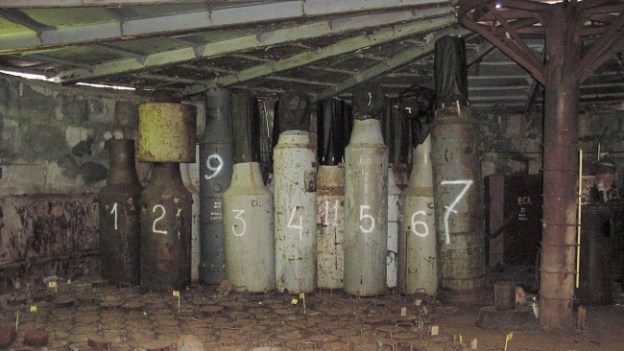
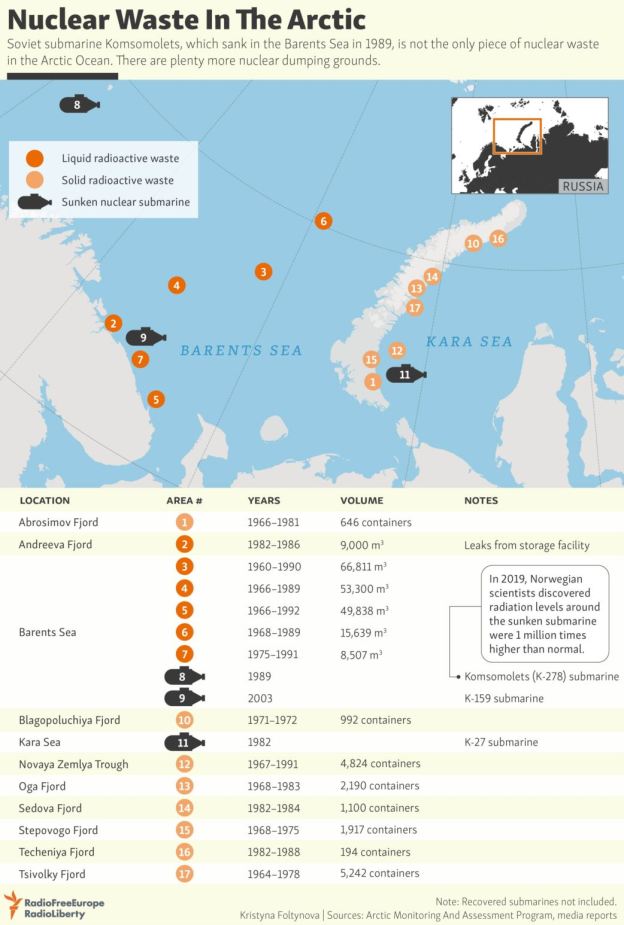
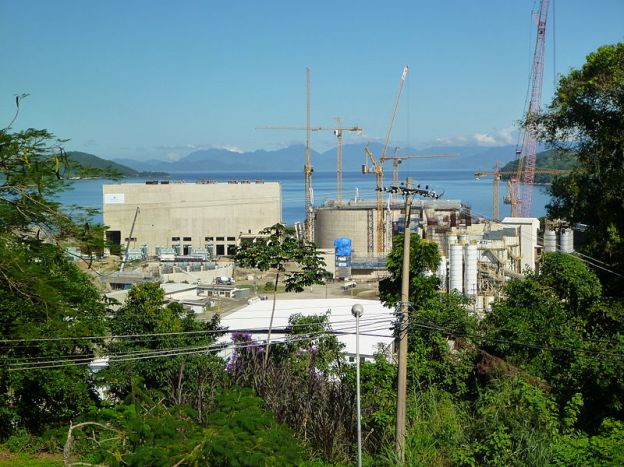
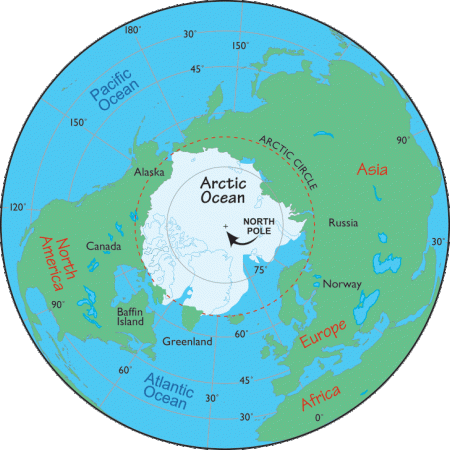
A shipment of 14 containers with spent nuclear fuel from Andreeva Bay to Atomflot in Murmansk, Russia took place in December 2019 but it was paid by Norway.  Unloading the 40-years old spent uranium fuel elements from the rundown storage tanks and repacking them to transport containers came with a price-tag of 5 million kroner (€500 000), while the shipment from Andreeva Bay to Murmansk will cost additional 2,5 million kroner (€250 000).

The December 2019 shipment was the fourth that year, but the first one paid by Norway.  In Andreeva Bay, only 65 kilometers from the border to Norway, the Soviet navy packed away its lethal leftovers. Without too much thought for the costs of future clean up.  In Norway, like in Russia, the demand for action came out of fears for possible radioactive leakages that could have potentially negative impact on the important fisheries in the Barents Sea.  So far, isotopes contamination has only been discovered in the sediments in the near proximity off the shore and not further out in the bay.

Concerns of nuclear accidents and radioactive leakages are also why Norwegian authorities have granted hundres of millions kroner in aid to secure and clean up the site.  After 25 years of cooperation to improve the situation in Andreeva Bay, the Norwegian experts argue that direct financing of practical work is the best way to gain an insight into how Russia deals with the clean up.

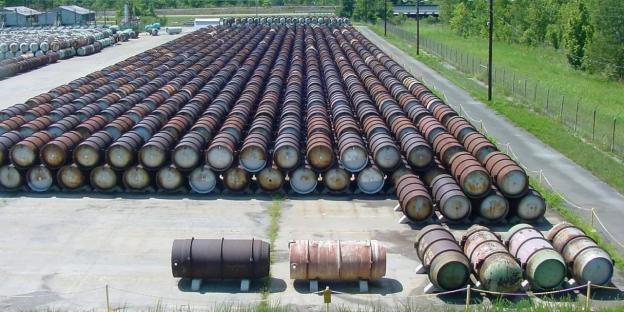
By the end of Soviet times, in the late 1980s, a total of 22,000 spent nuclear fuel elements, equal to about 100 reactor cores from submarines, had accumulated at the run-down storage facilities. In addition came thousands of cubic meters of solid radioactive waste stored outdoor in rusty containers and hundreds of cubic meters of liquid radioactive waste in tanks.

The two first decades of international cooperation concentrated on improving the infrastructure. Buildings were erected to cover three concrete tanks holding the spent nuclear fuel, both to keep out rain and snow, but also to make sure the removal- and repacking work could take place in safe conditions.  The quay by the shore was rebuilt, a new special crane for lifting transport casks where put in place. Even a new on-purpose designed ship was built, paid by Italy.

In 2017, the first load of containers with spent nuclear fuel left Andreeva Bay towards Murmansk, from where it go by rail to Mayak, Russia’s reprocessing plant north of Chelyabinsk east of the Ural Mountains.  So far in 2019, three shipments paid by Russia and one shipment paid by Norway have left Andreeva Bay.  “25% of the original amount of spent nuclear fuel is now removed,” says Per-Einar Fiskebeck…

The remaining waste, tank 3A holds numerous rusty, partly destroyed steel pipes where concrete of poor quality was filled in the space between. Some of those fuel assemblies are stuck in the canisters, while some of the canisters are stuck in the cells.  This is high level nuclear waste with radiation levels close to the uranium fuel comparable to the melted fuel rods inside the ill-fated Chernobyl reactor. 

Another groundbreaking milestone in the clean up work took place earlier this fall when the retrieval of six abandoned, highly radioactive spent nuclear fuel assemblies from the bottom of Building No. 5 were successfully completed.  Building No. 5 is a former pool storage, where several elements fell to the floor following a water-leakages in 1982. Traces of uranium and other radionuclides remained in the sludge at the bottom of the pool.

Thomas Nilsen,Norway helps pay for transporting old Russian navy nuclear waste, Barents Observer, Dec. 20, 2019

Forever Fukushima: Cleaning Up the Huge Mess

By the end of 2019, Japan further delayed the removal of thousands of spent fuel units that remain in cooling pools since the 2011 disaster The government and the plant operator, Tokyo Electric Power Co., are keeping a 30- to 40-year completion target.

More than 4,700 units of fuel rods remain at the three melted reactors and two others that survived the 2011 earthquake and tsunami. They pose a high risk because their storage pools are uncovered and a loss of water in case of another major disaster could cause the fuel rods to melt, releasing massive radiation. Their removal at Units 1 and 2, after repeated delays, is now postponed by up to 10 years from the initial target of 2018, with more preparation needed to reduce radiation and clear debris and other risks.

Fuel rod removal at the Unit 1 reactor pool will begin sometime in 2027-2028, after debris is cleaned up and a huge rooftop cover installed to contain radioactive dust. Fuel removal at Unit 2 pool is to begin in 2024-2026. Work at the Unit 3 reactor pool began in April 2019 and all 566 units will be removed by March 2021. TEPCO has emptied the pool at Unit 4, which was offline and only suffered building damage, and aims to have all remaining rods in reactor pools removed by 2031 for safer storage in dry casks.

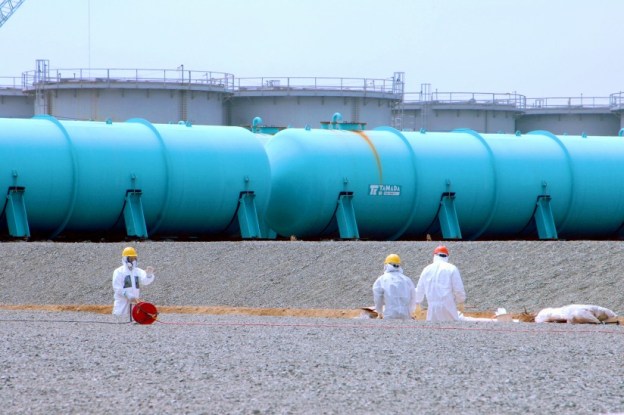
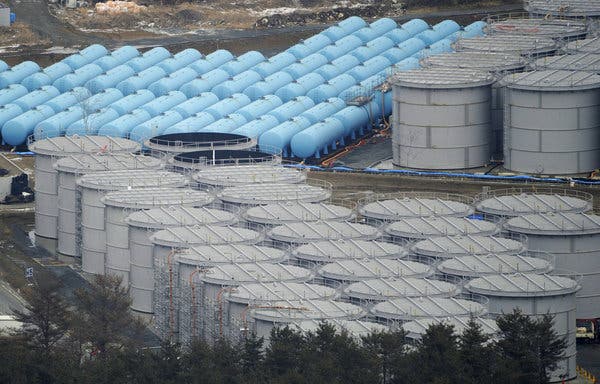
TEPCO has been unable to release the 1.2 million tons of treated but still radioactive water kept in nearly 1,000 tanks at the plant, fearing public repercussions and the impact on the area’s struggling fishing and agriculture. The amount of water is growing by 170 tons daily because it is used to cool the melted fuel inside the reactors.

The Ministry of Economy, Trade and Industry recently drafted a proposal to release the water to the sea or the air, or a combination of both. TEPCO says it can only store up to 1.37 million tons, or until the summer of 2022. Time is limited because preparation is needed before any water release. TEPCO and the government say the tanks pose risks if they were to spill their contents in another major earthquake, tsunami or flood…. The water is still somewhat contaminated, but TEPCO says further treatment can remove all but radioactive tritium to levels allowed for release. Experts say tritium is not harmful to humans in small amounts and has been routinely released from nuclear plants around the world.

Removing an estimated 880 tons of molten fuel from Fukushima’s three melted reactors is the toughest and unprecedented challenge. It’s six times the amount dealt with in the aftermath of the 1979 Three Mile Island partial core melt in the United States.  Removal is to begin in 2021 at Unit 2, where robotic probes have made more progress than at Units 1 and 3. A robotic arm was developed to enter the reactor from the side to reach the melted fuel, which has largely fallen to the bottom of the primary containment vessel… The first decade through 2031 is a crucial phase that will affect future progress…

Japan has yet to develop a plan to dispose of the highly radioactive melted fuel and other debris that come out of the reactors. TEPCO will compile a plan for those after the first decade of melted fuel removal. Managing the waste will require new technologies to reduce its volume and toxicity. TEPCO and the government say they plan to build a site to store waste and debris removed from the reactors, but finding one and obtaining public consent will be difficult.

Additionally, there will be an estimated 770,000 tons of solid radioactive waste by 2030, including contaminated debris and soil, sludge from water treatment, scrapped tanks and other waste. They will be sorted, treated and compacted for safe storage under a plan to be compiled by 2028.

The government says Fukushima’s decommissioning cost is estimated at 8 trillion yen ($73 billion), though adding compensation, decontamination of surrounding areas and medium-term storage facilities would bring the total to an estimated 22 trillion yen ($200 billion). The Japan Center for Economic Research, a think tank, estimates that decommissioning alone would cost 51 trillion yen ($470 billion) if the water is not released and tritium removal technology is pursued.

More than 10,000 workers will be needed annually in coming years, about one third assigned to work related to the radioactive water. 

Excerpts from MARI YAMAGUCHI,  Japan revises Fukushima cleanup plan, delays key steps, Associated Press, Dec. 27, 2019

The Eco-Villain of the 2020s: Moving

[E]ven “green” transport risks becoming a villain… Transport has been the only sector in which greenhouse-gas emissions have consistently risen both in the U.S. and in the European Union… Road, aviation, waterborne and rail transportation put together now account for eight metric gigatons of carbon-dioxide equivalents, which is 24% of global greenhouse-gas emissions, according to the International Energy Agency. In the U.S. this figure rises to 34%….To be consistent with the existing Paris Agreement goals, transport emissions need to peak around 2020 and then fall around 70% relative to 2015 levels, estimates by the International Energy Agency show.

In theory, electric and plug-in hybrid vehicles chart a clear path to lower emissions. Even once the costs of making the batteries and generating the electricity that feeds them is taken into account, most estimates suggest that they emit roughly half as much greenhouse gases as a gasoline car. But recent experience proves that consumer tastes can easily sabotage steps toward sustainability: In the U.S., rising demand for pickup trucks has offset any gain from electric vehicles. And faster economic development in emerging nations will inevitably mean higher emissions, even if each vehicle pollutes less.

In China and India, the number of motorized vehicles per person quintupled and tripled, respectively, between 2007 and 2017, according to U.S. Department of Energy data. Catching up with U.S. levels of motorization—which admittedly are very high—both countries would need two billion extra vehicles. Even if 100% of those were electric, they would add more emissions on their own than the total level allowed by the Paris goals.

Greenhouse gases coming from aviation also keep surging despite the fact that planes are becoming increasingly fuel efficient because air traffic growth has surged. Furthermore, while environmental policies have tended to focus on passenger transport, this misses a big chunk of the picture, because almost half of transportation emissions now come from freight.

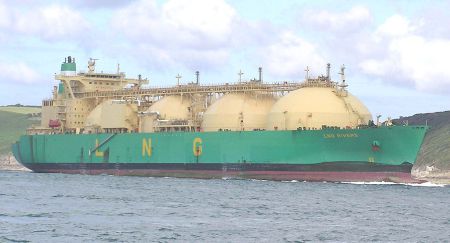
Adoption of rail, a cleaner alternative, isn’t picking up. Meanwhile ocean freight, which is by far the most efficient form of transport per ton mile, faces a reckoning from new rules that take effect in January 2020 because it relies on the dirtiest fuel to be so economical.

Excerpts from  Jon Sindreu, In the Green Transition, Transportation Is the Next Big Baddie, WSJ, Dec. 23, 2019

Does Fracking Cause Cancer? The Right to Know and the Duty to Protect

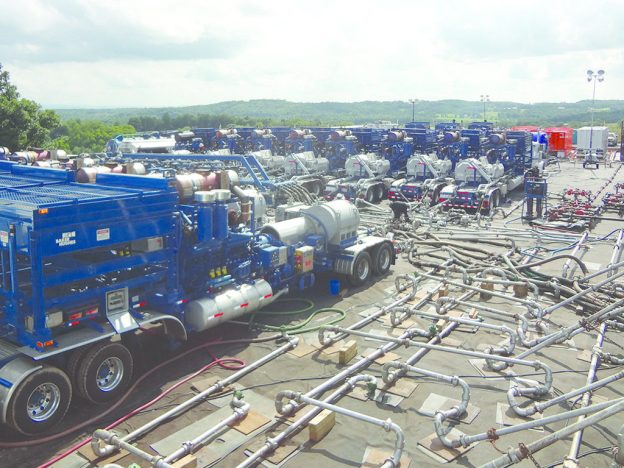
An increase in the number of teens and young adults diagnosed with a rare cancer in the southwest corner of Pennsylvania has caused the state to look for a link between fracking and the disease.The investigation was sparked by a spate of Ewing’s sarcoma cases in and around Washington County, which has more Marcellus Shale gas wells than any other county in the state. In April 2019 state Department of Health found that the cases didn’t constitute a statistically significant cancer cluster. But affected families and other residents lobbied the governor for an investigation.

 The region is home to coal mining, oil drilling, chemical plants and a former uranium-processing facility.  Each year, about 250 children in the U.S. are diagnosed with Ewing’s sarcoma, a rare cancer of the bone or surrounding soft tissue, according to the National Institutes of Health.  In four counties in southwest Pennsylvania, 31 people were diagnosed with Ewing’s sarcoma from 2006 through 2017, according to state cancer data. That is a roughly 40% increase from the period from 1995 through 2005, when 22 people in the same area were diagnosed, according to state data. Residents point to two additional cases in 2018. Most troubling to many local residents is that the six cases in Washington County since 2008 occurred in one school district.

Other communities are studying potential health risks of fracking. In October 2019, Colorado regulators said they would tighten regulation of drilling after a state-funded study found that people living within 2,000 feet of oil-and-gas wells could have, in worst-case scenarios, an elevated risk for infrequent, short-term health effects such as nosebleeds and headaches from emissions.

Evelyn Talbott, a professor of epidemiology at the University of Pittsburgh, said Pennsylvania investigators should look at residents’ potential exposures to chemicals and to radiation from natural-gas sites. She said they also should look at the sealed waste site of the defunct uranium-processing plant…Since Pennsylvania’s first Marcellus Shale well was drilled in Washington County in 2003, more than 1,800 wells have been fracked there. Compressor stations, processing plants and pipelines have followed. Some residents worry that pollutants such as benzene from air emissions or radium from wastewater could affect people’s health.

Kris Maher, Cancer Cases Raise Fracking Fears, WSJ, Dec. 21, 2019

See also Shale gas development and cancer incidence in southwest Pennsylvania

How to Pull off an Economic Coup: China in Guinea

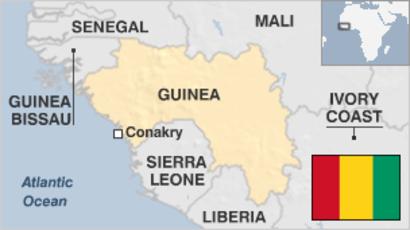
The Simandou mine is a large iron mine located in the Simandou mountain range of southern Guinea, Simandou represents one of the largest iron ore reserves in Guinea and in the world, having estimated reserves of 2.4 billion tonnes of ore grading 65% iron meta. Since November 2019, Simandou is owned by a Chinese consortium: SMB, a joint-venture which includes Winning Shipping, a Singaporean maritime firm, UMS, a Guinean-French logistics company, and Shandong Weiqiao, a big Chinese aluminium producer. The entity, in which Guinea’s government holds a 10% stake, will pay $15bn to develop the site, build a new deepwater port and a 650km railway to link the two.

The successful bid is a coup for SMB, which is barely known outside the west African nation. The private joint-venture keeps its finances close to its chest but Bob Adam, an expert on mining in Guinea, reckons that after taxes, royalties and operating costs smb is making about $800m profit a year. “They are now the most significant economic enterprise in Guinea,” he says—and the only one among the world’s biggest bauxite producers with a direct link to China.

A shift into iron ore presents challenges. Building a port and a railway through the country’s malaria-infested forest will take years and could cost much more than the estimated $10bn. Also, the Boké region has been plagued by riots. Many local residents are angered by lack of access to clean water or health care. But China is keen on Simandou’s high-grade iron ore, which emits less pollution when processed.It also wants to lock in supply

Galvanised:  SMB Winning pays $15bn for rights to Guinea’s iron mountain, Economist, Dec. 7, 2019

.

A Brand New World: Mapping the Ocean Floor

Mapping of the ocean floor may expand under an order signed by President Donald Trump on in  November, 2019 to create a federal plan to explore U.S. coastal waters. The announcement…comes amid growing international interest in charting the sea floor as unmanned aquatic drones and other new technologies promise to make the work cheaper and faster. The maps, also created by ship-towed sonar arrays, are crucial to understanding basic ocean dynamics, finding biological hot spots, and surveying mineral, oil, and gas deposits.

But much of the ocean floor remains unmapped; an international campaign called Seabed 2030 aims to map all of it in detail by 2030. Such maps cover just 40% of the 11.6 million square kilometers in the U.S. exclusive economic zone, which extends 320 kilometers from the coasts of all U.S. states and territories—an area larger than the total U.S. land mass. Today, those maps are a hodgepodge drawn from government, industry, and academic research, says Vicki Ferrini, a marine geophysicist at Columbia University’s Lamont-Doherty Earth Observatory in Palisades, New York. The federal plan, she says, could be a “game changer.”

Excerpts from  United States to Survey Nearby Sea Floor, Science, Nov. 29, 2019, at 6469

The Privilege of Polluting v. Decarbonization

The Paris climate agreement of 2015 calls for the Earth’s temperature to increase by no more than 2°C over pre-industrial levels, and ideally by as little as 1.5°C. Already, temperatures are 1°C above the pre-industrial, and they continue to climb, driven for the most part by CO2 emissions of 43bn tonnes a year. To stand a good chance of scraping under the 2°C target, let alone the 1.5°C target, just by curtailing greenhouse-gas emissions would require cuts far more stringent than the large emitting nations are currently offering.

Recognising this, the agreement envisages a future in which, as well as hugely reducing the amount of CO2 put into the atmosphere, nations also take a fair bit out. Scenarios looked at by the Intergovernmental Panel on Climate Change (IPCC) last year required between 100bn and 1trn tonnes of CO2 to be removed from the atmosphere by the end of the century if the Paris goals were to be reached; the median value was 730bn tonnes–that is, more than ten years of global emissions…

If you increase the amount of vegetation on the planet, you can suck down a certain amount of the excess CO2 from the atmosphere. Growing forests, or improving farmland, is often a good idea for other reasons, and can certainly store some carbon. But it is not a particularly reliable way of doing so. Forests can be cut back down, or burned—and they might also die off if, overall, mitigation efforts fail to keep the climate cool enough for their liking. …But the biggest problem with using new or restored forests as carbon stores is how big they have to be to make a serious difference. The area covered by new or restored forests in some of the ipcc scenarios was the size of Russia. And even such a heroic effort would only absorb on the order of 200bn tonnes of CO2 ; less than many consider necessary.

The world has about 2,500 coal-fired power stations, and thousands more gas-fired stations, steel plants, cement works and other installations that produce industrial amounts of CO2. Just 19 of them offer some level of Carbon Capture and Storage (CCS), according to the Global Carbon Capture and Storage Institute (GCSI), an advocacy group. All told, roughly 40m tonnes of CO2 are being captured from industrial sources every year—around 0.1% of emissions.

Why so little? There are no fundamental technological hurdles; but the heavy industrial kit needed to do CCS at scale costs a lot. If CO2 emitters had to pay for the privilege of emitting to the tune, say, of $100 a tonne, there would be a lot more interest in the technology, which would bring down its cost. In the absence of such a price, there are very few incentives or penalties to encourage such investment. The greens who lobby for action on the climate do not, for the most part, want to support CCS. They see it as a way for fossil-fuel companies to seem to be part of the solution while staying in business, a prospect they hate. Electricity generators have seen the remarkable drop in the price of wind and solar and invested accordingly.

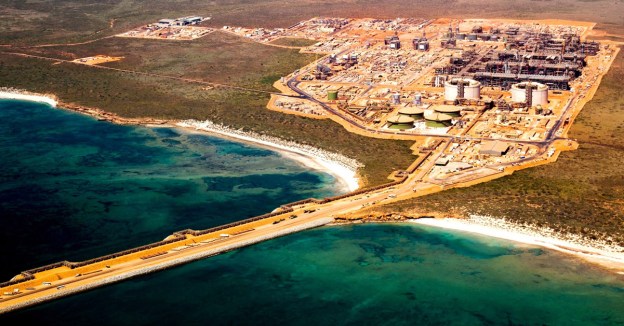
Equinor, formerly Statoil, a Norwegian oil company, has long pumped CO2 into a spent field in the North Sea, both to prove the technology and to avoid the stiff carbon tax which Norway levies on emissions from the hydrocarbon industry. As a condition on its lease to develop the Gorgon natural-gas field off the coast of Australia, Chevron was required to strip the CO2 out of the gas and store it. The resultant project is, at 4m tonnes a year, bigger than any other not used for EOR. But at the same time, what the Gorgon project stores in a year, the world emits in an hour.

In Europe, the idea has caught on that the costs of operating big CO2 reservoirs like Gorgon’s will need to be shared between many carbon sources. This is prompting a trend towards clusters that could share the storage infrastructure. Equinor, Shell and Total, two more oil companies, are proposing to turn CCS into a service industry in Norway. For a fee they will collect CO2 from its producers and ship it to Bergen before pushing it out through a pipeline to offshore injection points. In September Equinor announced that it had seven potential customers, including Air Liquide, an industrial-gas provider, and ArcelorMittal, a steelmaker.

Similar projects for filling up the emptied gasfields of the North Sea are seeking government support in the Netherlands, where Rotterdam’s port authority is championing the idea, and in Britain, where the main movers are heavy industries in the north, including Drax.

The European Union has also recently announced financial support for CCS, in the form of a roughly €10bn innovation fund aimed at CC S, renewables and energy storage. The fund’s purpose is not to decarbonise fossil-fuel energy, but rather to focus on CCS development for the difficult-to-decarbonise industries such as steel and cement.

Excerpts from, The Chronic Complexity of Carbon Capture, Economist, Dec. 7, 2019

The Carbon-Neutral Europe and its Climate Bank

The European Union (EU) Green Deal, a  24-page document reads like a list of vows to transform Europe into a living demonstration of how a vast economy can both prosper and prioritise the health of the planet. It covers everything from housing and food to biodiversity, batteries, decarbonised steel, air pollution and, crucially, how the EU will spread its vision beyond its borders to the wider world….The plan is large on ambition, but in many places frustratingly vague on detail.

Top billing goes to a pledge to make Europe carbon-neutral by 2050….Current policies on renewable energy and energy efficiency should already help to achieve 45-48% cuts by 2030. Green NGOs  would like to see the EU sweat a bit more and strive for 65% cuts by 2030, which is what models suggest is needed if the bloc is to do its share to limit global warming to 1.5-2ºC.

All this green ambition comes at a price. The commission estimates that an additional €175bn-€290bn ($192bn-$320bn) of investment will be needed each year to meet its net-zero goals. Much of this will come from private investors. One way they will be encouraged to pitch in is with new financial regulations. On December 5th, 2019 EU negotiators struck a provisional agreement on what financial products are deemed “green”. Next year large European companies will be forced to disclose more information about their impacts on the environment, including carbon emissions. These measures, the thinking goes, will give clearer signals to markets and help money flow into worthy investments.

Another lever is the European Investment Bank, a development bank with about €550bn on its balance-sheet, which is to be transformed into a climate bank. Already it has pledged to phase out financing fossil fuels by 2021. By 2025 Werner Hoyer, its boss, wants 50% of its lending to go to green projects, up from 28% today, and the rest to go to investments aligned with climate-change goals. Some of that money will flow into a “just transition” fund, worth €100bn over seven years. Job losses are an unavoidable consequence of decarbonising Europe’s economy; the coal industry alone employs around 250,000 people, mainly in eastern Europe. The fund will try to ease some of this pain, and the political opposition it provokes.

The Green Deal goes beyond the scope of previous climate policies. One area it enters with gusto is trade. Under the commission’s proposals, the eu will simply refuse to strike new trade deals with countries that fail to comply with the Paris agreement’s requirement that signatories must increase the scale of their decarbonisation pledges, known as “nationally determined contributions” or NDCs, every five years. That would mean no new deals with America while Donald Trump is president; it is set to drop out of the Paris agreement late in 2020. And, because the first round of enhanced ndcs is due next year, it would put pressure on countries that are dragging their feet on these, of which there are dozens—including China and India.

The deal also sketches out plans for a carbon border-adjustment levy. Under the eu’s emission-trading scheme, large industries pay a fee of about €25 for every tonne of carbon dioxide they emit. Other regions have similar schemes with different carbon prices. A border-adjustment mechanism would level the playing field.

Excerpts from, The EU’s Green Deal, Economist, Dec. 2019

The Nuclear Fuel Bank is Up and Running

The International Atomic Energy Agency (IAEA) received in December 2019 the second and final shipment of low-enriched uranium (LEU) at a purpose-built facility in Kazakhstan housing the IAEA LEU Bank, which was established to provide assurance to countries about the supply of nuclear fuel. The delivery completes the planned stock of the material that the IAEA LEU Bank will hold, following the first shipment in October 2019.

Kazakhstan’s JSC National Atomic Company Kazatomprom – the world’s largest producer of natural uranium – delivered 28 cylinders of LEU to the facility at the Ulba Metallurgical Plant (UMP) in the city of Ust-Kamenogorsk. The uranium originated from Kazakhstan and was enriched at a facility in neighbouring Russia before the LEU was transported by train to the site in eastern Kazakhstan, where it was checked and officially accepted by IAEA experts.

Owned by the IAEA and hosted by Kazakhstan, the IAEA LEU Bank is one of the Agency’s most ambitious undertakings since it was founded in 1957.  The establishment and operation of the IAEA LEU Bank are fully funded by voluntary contributions from IAEA Member States and other donors totalling US $150 million, covering estimated costs for at least 20 years of operation. Donors include the Nuclear Threat Initiative, the United States, the European Union, the United Arab Emirates, Kuwait, Norway and Kazakhstan. Kazakhstan contributed also in kind by hosting the IAEA LEU Bank.

The Bank operates with er assurance of supply mechanisms established including a guaranteed physical reserve of LEU maintained by the Russian Federation at the International Uranium Enrichment Centre in Angarsk, Russian Federation, and an assurance of supply guaranty by the United Kingdom for supplies of LEU enrichment services.

Globally, there are around 450 nuclear power reactors in operation today, supplying about 10 percent of the world’s electricity and one-third of all low-carbon electricity. Fifty-two additional nuclear power reactors are currently under construction.

Excerpts from Second Shipment of Low Enriched Uranium Completes IAEA LEU Bank, IAEA Press Release, Dec. 10, 2019

The Fight for the Remnant Trees of Europe

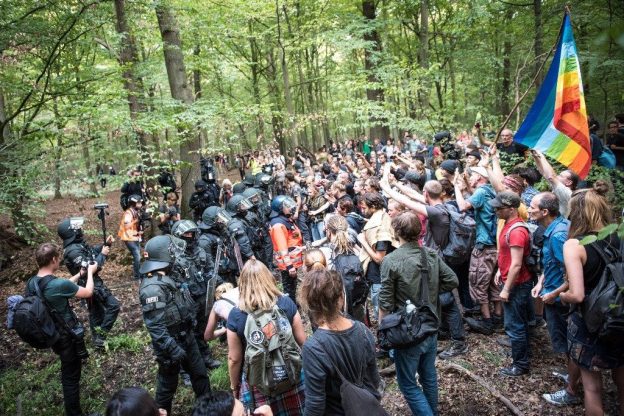
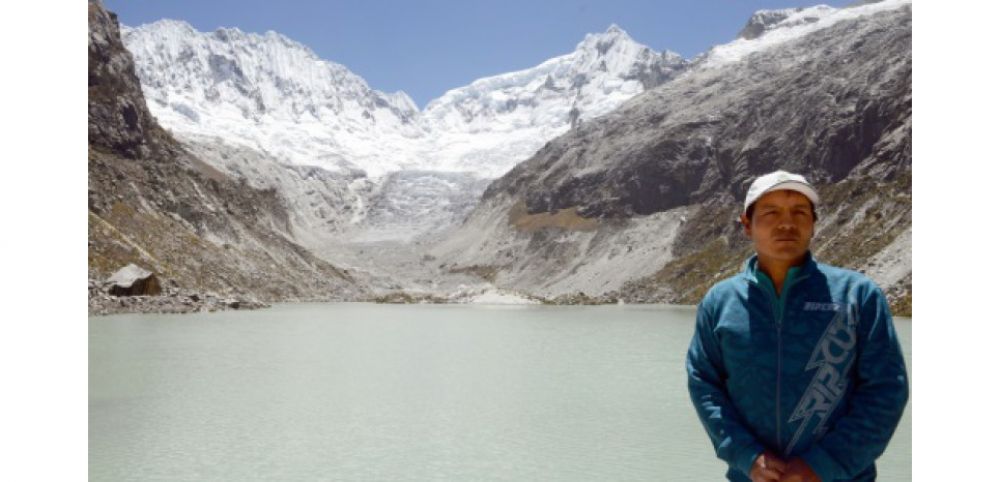
For 120 years RWE has been one of Europe’s biggest emitters of carbon dioxide. The German utility cleared almost all of Hambacher forest, a once-vast wood in western Germany, to mine lignite, an especially filthy fossil fuel, which it burned to generate electricity. What is left of “Hambi” has become a symbol of the anti-coal movement, occupied by activists camping in 80-odd tree houses.  RWE is under fire even where it does not operate. A Peruvian farmer has sued it in a German court for its contribution to climate change that led to the melting of an Andean glacier, which threatens to flood his home. He lost but is appealing.

Peruvian farmer who sued RWE

But  in September 2019, the EU agreed to a €43bn ($47.5bn) asset swap between RWE and its rival E.ON. It turns E.ON into Europe’s largest power-grid operator by assets and RWE into the world’s second-biggest producer of offshore wind power and Europe’s third-biggest producer of renewable energy. [RWE] has vowed to become carbon neutral by 2040

Of the eu’s 28 members, 18 have pledged to emit no net carbon by 2050. Germany says it will stop using coal by 2038 and stump up €40bn to ease the transition.   RWE is demanding a chunk of the transition pot. It still runs three lignite mines, which directly employ 9,900 people and indirectly support another 20,000 jobs in the Rhine region….  [To complicate matters further], in October 2019 a court ordered a halt to the clearing of its remaining 200 hectares of the forest…RWE says the forest could be left as it is—but at a price. It may cost the company €1.5bn or so to find an alternative to a planned expansion of an open-pit mine at Hambach.

Excerpts from  RWE: After Hambi, Economist, Nov. 23, at 59

Denizen Nuclear Waste: the Orchid Island

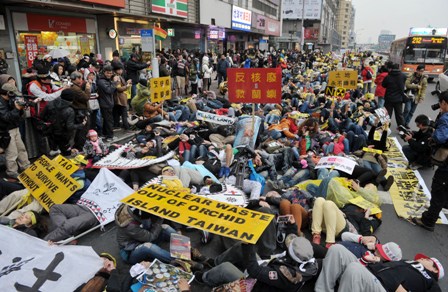
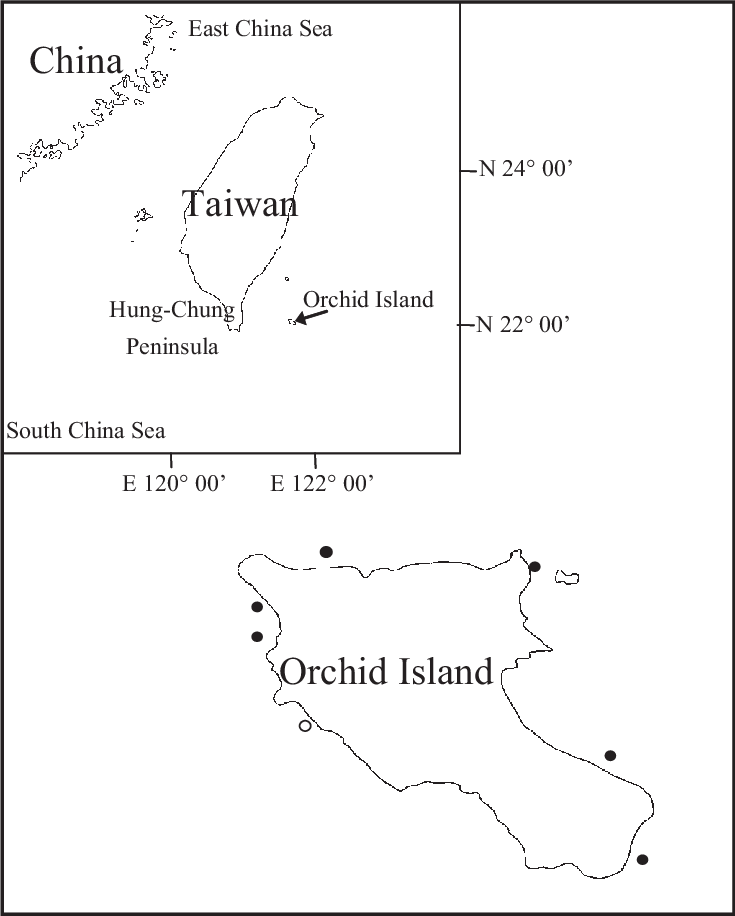
Several members of the Tao Aboriginal community in Taiwan reiterated their decades-long demand that the government remove nuclear waste from Taitung County’s Orchid Island saying that they would not accept the NT$2.55 billion (US$83.57 million) in compensation.  Since construction of a storage site was finished in 1982, more then 100,000 barrels of low-level radioactive waste have been transported from nuclear power plants on Taiwan proper to the outlying island, without obtaining residents’ consent in advance….  [According to the community], the government should establish a platform to discuss how to handle the nuclear waste and related compensation, while also continuing to reveal the storage site’s buried history

Excerpts from Lin Chia-nan,  Tao protest, reject compensation for waste, Tapei Times, Nov. 30, 2019
 
By Lin Chia-nan  /  Staff reporter

The Enormous Task of Nuclear Waste Storage

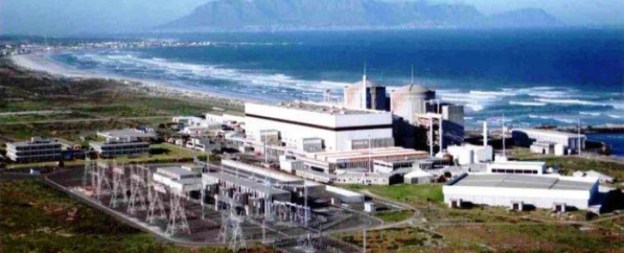
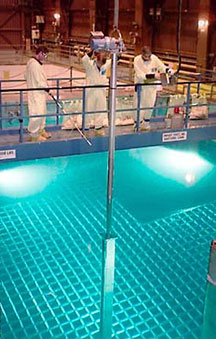
“The Koeberg spent fuel pool storage capacity in South Africa  is currently over 90% full. (These) pools will reach (their) capacity by April 2020,” Eskom, the South African utility, told Reuters in a statement on Nov. 25, 2019.  Koeberg produces about 32 tonnes of spent fuel a year. Fuel assemblies, which contain radioactive materials including uranium and plutonium that can remain dangerous for thousands of years, are cooled for a decade under water in spent fuel pools.

Fuel Pool at Koeberg, South Africa

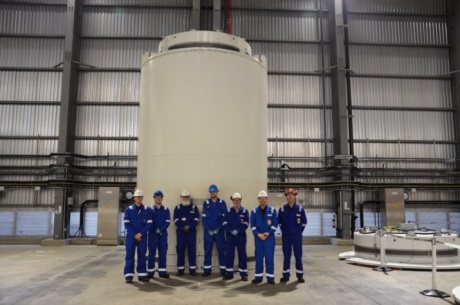
In 2016,  Eskom paid an estimated 200 million rand ($13.60 million) for an initial batch of seven reinforced dry storage casks from U.S. energy company Holtec International to help keep Koeberg running beyond 2018.  Eskom now has nine new unused casks on site, each with an individual capacity of 32 spent fuel assemblies, with another five expected to be delivered soon.

Holtec Cask

The 14 casks should ensure there is sufficient storage in the spent fuel pool until 2024, Eskom said, ahead of a tender for an extra 30 casks….Anti-nuclear lobby group Earthlife Africa said South Africa could not afford the social, environmental and economic costs associated with nuclear waste.  “We have a ticking bomb with high-level waste and fuel rods at Koeberg,” said Makoma Lekalakala, Earthlife Africa’s director.

Wendell Roelf, Waste storage at Africa’s only nuclear plant brimming, Reuters, Nov. 25, 2019

How to Own a Foreign Country: the Strategy of Gulf States in Egypt and Sudan

Nile has become a battleground. Countries that sit upriver and wealthy Gulf states are starting to use the Nile more than ever for water and electricity. That means less water for the 250 million-plus small farmers, herders and city dwellers in the Nile basin.  Dams funded by foreign countries including China and oil-rich neighbors like Saudi Arabia and other Gulf states are tapping the river to irrigate industrial farms and generate electricity. Crops grown using Nile water are increasingly shipped out of Africa to the Middle East, often to feed livestock such as dairy cows

Exporting crops to feed foreign animals while borrowing money to import wheat is “almost insane,” Sudan’s new prime minister, Abdalla Hamdok, said in an interview. “It’s exporting water, basically. We could be growing wheat and getting rid of half our import bill,” he said. Mr. Hamdok’s predecessor, dictator Omar al-Bashir, is in prison after an uprising sparked by rising prices for food….

The most dramatic change to the Nile in decades is rising in Ethiopia, where the Blue Nile originates. Ethiopia, which has one of the world’s fastest-growing economies, turned to China to help finance the $4.2 billion Grand Ethiopian Renaissance Dam project to generate electricity. While the dam, located just miles from the Sudan border, won’t supply water for farms and cities, its massive reservoir will affect the flow of water.

Downstream, Egypt is worried that Ethiopia will try to quickly fill the reservoir beginning in 2020. The issue is “a matter of life and death for the nation,” Egyptian President Abdel Fattah Al Sisi said in televised remarks in 2017. “No one can touch Egypt’s share of water.” A spokesman for Ethiopia’s Ministry of Foreign Affairs said in a September press conference that “any move that does not respect Ethiopia’s sovereignty and its right to use the Nile dam has no acceptance.”  Sharing of the Nile’s waters has long been governed by international treaties, with Egypt claiming the vast majority. Since Ethiopia wasn’t included in those treaties, it was never provided an allotment of water. Ethiopia’s massive dam has thrown a wrench into past agreements…

Sudan is stuck in the middle. Much of the water that flows through the country is already allocated. “Sudan actually doesn’t have that much free water available,” says Harry Verhoeven, author of “Water, Civilisation and Power in Sudan.”  By early 2015, Saudi Arabia doubled its investment in Sudan’s agriculture sector to $13 billion, equaling about one-third of all foreign investment in Sudanese industry….The contrast between verdant export crops watered by the Nile and parched villages was visible in the area where protests started in December 2019, during a nationwide wheat shortage.   The protesters were angry about food prices, poor job prospects, social strictures and Sudan’s moribund economy, Mr. Alsir says. “We’re surrounded by farms,” he says. “But we’re not getting any of it.

Past a rocky expanse next to the village flows a deep canal, green with weeds, dug a decade ago by a Saudi-owned company called Tala Investment Co. It runs from the Nile about 10 miles to Tala’s farm, which leases its land from the government.  Tala grows crops for export and maximizes profits using Sudan’s “cheap manpower,” the company’s website says….The alfalfa is shipped 400 miles overland to Port Sudan and then across a nearly 200-mile stretch of the Red Sea to Jeddah in Saudi Arabia, then is used for animal feed….

The Aswan dam  In Egypt is primarily used to generate electricity. But a sprawling desert farm, the Toshka project to the west, taps the reservoir. That is where Saudi Arabia and the U.A.E. have made some of their biggest agricultural investments in Egypt in the past decade.  The strategy there is straightforward, says Turki Faisal Al Rasheed, founder of Saudi agriculture company Golden Grass Inc., which has explored purchasing farms in Egypt and Sudan. “When you talk about buying land, you’re not really buying land,” he says. “You’re buying water.”

Even with all that water dedicated to growing crops, Egypt  is rapidly outstripping its resources.  This is because he country’s population is forecast to grow 20% to 120 million by 2030, and to 150 million by 2050.  Access to water in Egypt is increasingly uncertain. The country’s annual per capita water use dipped below 24,000 cubic feet in recent years and is expected to fall below 18,000 cubic feet by 2030, a level defined as “absolute water scarcity,” according to the United Nations. The comparable figure in the U.S. is 100,000 cubic feet, enough to fill an Olympic swimming pool.  Saudi Arabia and the U.A.E. control about 383,000 acres of land in Egypt, an expanse nearly twice the size of New York City, according to Land Matrix. The main crops are corn, potatoes, wheat, alfalfa, barley and fruit such as grapes that are exported back home.

Mr. Sisi is now looking for new places to grow food. In 2015 he launched a program to expand arable land by more than 1.5 million acres in the country, part of which will tap into the Nubian aquifer, an irreplaceable ancient store of water beneath the Sahara. Saudi and U.A.E. companies have bid for lands in the project, according to the New Egyptian Countryside Development Co., which is managing the project.  Mr. Al Rasheed, the Saudi farm owner in Egypt, says that for him and others from the Gulf, farming along the Nile is about building regional influence as much as ensuring food supplies. “Food is the ultimate power,” he says.


Excerpts from Justin Scheck &Scott Patterson, ‘Food Is the Ultimate Power’: Parched Countries Tap the Nile River Through Farms, WSJ, Nov. 25, 2019

Between Colonialism and the Abyss: the Desperate Search for a Nuclear Waste Disposal Site, United States

A proposal for New Mexico to house one of the world’s largest nuclear waste storage facilities has drawn opposition from nearly every indigenous nation in the state. Nuclear Issues Study Group co-founder and Diné organizer Leona Morgan told state legislators in November 2019 the project, if approved, would perpetuate a legacy of nuclear colonialism against New Mexico’s indigenous communities and people of color.

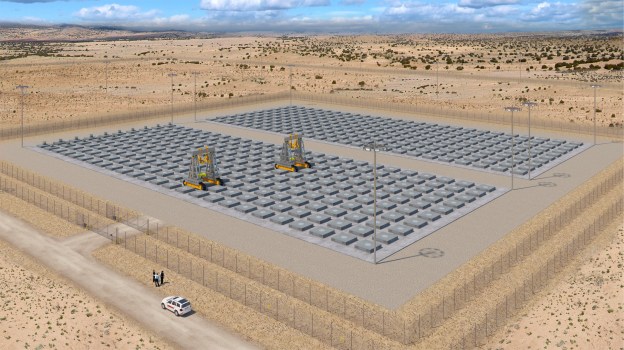
Holtec International, a private company specializing in spent nuclear fuel storage and management, applied for a license from the federal Nuclear Regulatory Commission to construct and operate the facility in southeastern New Mexico. Holtec’s proposal would see the majority of high-level nuclear waste in the U.S. transported to a consolidated interim storage facility located in southeastern New Mexico. If licensed, the facility would house up to 100,000 metric tons of high-level waste at capacity — more nuclear waste than currently exists in the country — for up to 40 years, while the federal government either re-opens Yucca Mountain or establishes a new deep repository to permanently store the waste.

The proposal, which has been in the works since 2011, would see high-level waste generated at nuclear power plants across the country transported to New Mexico for storage at the proposed facility along the Lea-Eddy county line between Hobbs and Carlsbad. Holtec representatives say the facility would be a temporary solution to the nation’s growing nuclear waste problem, but currently there is no federal plan to build a permanent repository for the waste.

Legislators, activists and residents alike share concerns about the proposals. Some fear the “interim” storage facility could become a de facto permanent storage facility if no other repository is built; others question the site selection for a nuclear facility so close to oil and gas activity in the Permian Basin. Increased transport of high-level radioactive waste across the state could also lead to potentially dangerous nuclear releases, leaving impacted communities responsible for emergency responses.

“New Mexico doesn’t make the waste, why should we take the waste?” Morgan said. “What we’re advocating for is not a temporary, band-aid solution, but something more scientifically sound. The waste does have to go somewhere. However, storing it in New Mexico temporarily is not the right idea. It’s not safe; it’s not supported by the local communities; and New Mexico does not want it.”  “We see this as environmental racism and perpetuating nuclear colonialism that is going to result in a continuation of a slow genocide,” she said….

Meanwhile, nuclear power utilities across the country have sued the federal government over a breach of contract for failing to establish a permanent repository for the waste

Nuclear colonialism, a term first coined by environmentalist Winona LaDuke and activist Ward Churchill, describes a systematic dispossession of indigenous lands, the exploitation of cultural resources, and a history of subjugation and oppression of indigenous peoples by a government to further nuclear production of energy and proliferation of weapons.  “All of the impacts from nuclear colonialism can be simplified by explaining it as environmental racism,” Morgan told state legislators last week. She pointed to the health and environmental consequences of uranium mining on the Navajo Nation during the last century.  “My family lives in areas where there was past uranium mining. We’re still dealing with the legacy of all of the mining that fuelled World War II and the Cold War,” Morgan said. “This legacy is still unaddressed — not just in New Mexico, but in the entire country. For that reason, my concern is the health of our people, our environment.”

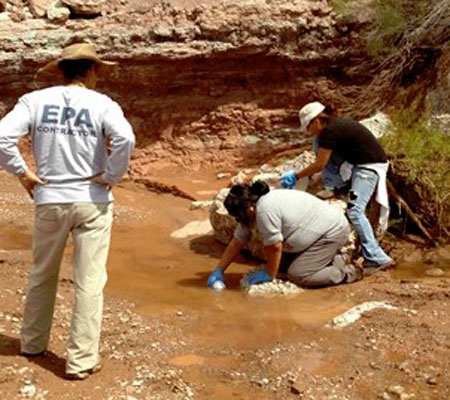
Cleaning Abandoned Uranium Mines New Mexico

“We do not believe we are separate from the environment,” Morgan said. “We are not here to protect the environment as land and as mountains, but as living, breathing entities.”  Similar beliefs, sometimes referred to in policy discussions as “environmental personhood,” have gained recognition among regulators in countries across the world in recent years. 

Excerpts from Kendra Chamberlain, Nuclear Colonialism: Indigenous opposition grows against proposal for nation’s largest nuclear storage facility in NM, https://nmpoliticalreport.com/,  Nov. 14, 2019

Why Russia Loves Germany’s Toxic Waste

Environmental groups have voiced concern in November 2019 that Russia is again accepting shipments of uranium tails, a byproduct formed when uranium is enriched, from a German nuclear fuel firm, reigniting a debate over whether the substance meets the definition of nuclear waste.  The shipments of the toxic compound – also called uranium hexafluoride – were halted in 2009 over revelations that Russia was accepting it from foreign customers and storing it in the open. At that time, Rosatom, Russia’s nuclear corporation, bowed to environmental pressure and promised to no longer import the radioactive substance.

But German government documents revealed in November 2019 by Greenpeace and the Russian environmental group Ecodefense show that the German-based enrichment company Urenco resumed the uranium tail shipments as long ago as May 2019.  According to Urenco’s contract with the Russian nuclear-fuel giant Teksnabeksport (Tenex), a subsidiary of Rosatom, some 12,000 tons of uranium tails are set to be delivered to Novouralsk, near Yekaterinburg by 2022. Four thousands tons have been sent so far….

Urenco, Germany

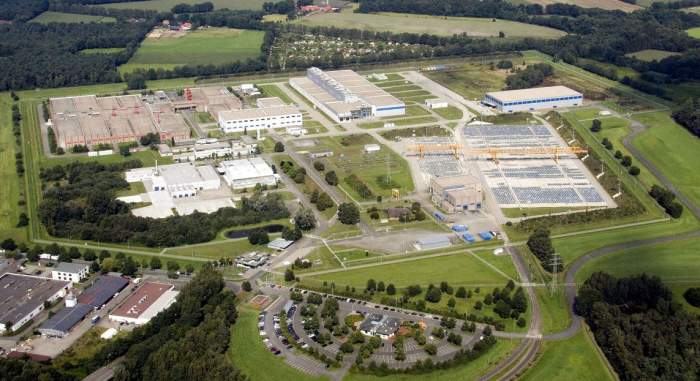
Uranium hexafluoride, also called depleted uranium, is a colorless radioactive powder that is produced as a byproduct of enriching uranium for use as fuel in nuclear power plants. Urenco, which is a partnership involving German, British and Dutch energy firms, has operated an enrichment facility in Gronau, Germany since 1985.  This facility stores depleted uranium in the open air. In the early 1990s, Russian opened its doors to reprocessing depleted uranium from foreign customers. A previous contract between Tenex and Urenco envisioned the import of 100,000 tons of uranium tails between 1996 and 2009.

The issue of whether uranium tails in fact constitute nuclear waste depends on whom you ask. Both Rosatom and Germany’s nuclear industry classify uranium hexafluoride as a recyclable material. The US Nuclear Regulatory Commission, however, has long held that uranium tails should be classified as nuclear waste – a view that Bellona, Ecodefense and Greenpeace share.  But while Rosatom asserts that uranium tails are valuable raw material, the motive for importing them is unclear. By most estimates, Russia already holds nearly 1 million tons of uranium tails from its own fuel production – making the need for another 12,000 tons from abroad questionable.

Charles Digges, Russia resumes importing depleted uranium from Germany, breaching old promises, Bellona, Nov. 1, 2019

Stopping GreenWashing

The EU wants to revolutionise the world of green finance. Brussels officials, MEPs and member states are currently trying to thrash out plans for a gold standard in green investment they hope will unleash tens of millions of euros of private money to fund the transition to a more sustainable world.   The project has a classically boring Brussels name — the “taxonomy” for sustainable activities — but the implications are potentially transformative. The EU wants to become the first supranational regulator to write rules that banks and funds will have to comply with when they claim to launch “green” products or investments.  As it stands, there is no global benchmark to judge just how green a financial product is. Funds and banks can sell and label sustainable finance products without an independent arbiter checking if reality meets the hype. The point of the EU’s work is to stamp out this so-called “greenwashing”…

Perhaps the most sensitive issue of all is how to handle nuclear energy. France — which has big nuclear business interests — doesn’t want the taxonomy to stigmatise nuclear as a “brown” technology. Other member states, led by Germany, want it excluded from being green, as do the MEPs. 

Excerpts from  Mehreen Khan, The Green Gold Standard, FT, Nov. 11, 2019

Cyber-Attacking Nuclear Plants: the 3 000 cyber bugs

In the first half of 2019 , no country endured more cyber-attacks on its Internet of Things—the web of internet-connected devices and infrastructure—than India did. So asserts Subex, an Indian telecommunications firm, which produces regular reports on cyber-security. Between April and June of 2019, it said, recorded cyber-attacks jumped by 22%, with 2,550 unique samples of malware discovered. Some of that malicious code is turning up in hair-raising places.

On October 28, 2019 reports indicated that malware had been found on the computer systems of Kudankulam Nuclear Power Plant in Tamil Nadu, the newest and largest such power station in India. Pukhraj Singh, a cybersecurity researcher who formerly worked for the National Technical Research Organisation (NTRO), India’s signals-intelligence agency, says he was informed of the malware by an undisclosed third party in September, and notified the government.The attackers, he said, had acquired high-level access and struck “extremely mission-critical targets”…. On October 30, 2019 the body that operates nuclear power plants acknowledged, sheepishly, that a computer had indeed been infected, but it was only an “administrative” one.

Sensitive sites such as power plants typically isolate the industrial-control systems (those that control the workings of a plant) from those connected to the wider internet. They do so using air-gaps (which involve disconnecting the system from the wider world), firewalls (which monitor data-flows for suspicious traffic) or data diodes (which allow information to flow out but not in).

But breaching a computer on the outside of these digital moats is nevertheless troubling. It could have given the attackers access to sensitive emails, personnel records and other details which would, in turn, make it easier to gain access to the more isolated operational part of the plant. America and Israel are thought to have sneaked the devastating Stuxnet virus into Iran’s air-gapped uranium-enrichment plant at Natanz around 2007 by planting a USB stick on a worker, who carried it inside and plugged it in.

The culprit behind the Kudankulam attack is unknown, but left some clues. The malware in question is from a family known as DTrack, which gives attackers an intimate look at what victims are doing—down to their keystrokes. It is typically used to monitor a target, making it easier to deliver further malware. DTrack was originally developed by a group of hackers known as the Lazarus Group, who are widely assumed to be controlled or directed by North Korea.

Excerpts from On the DTrack: A cyber-attack on an Indian nuclear plant raises worrying questions, Economist, Nov. 1, 2019

When Logging Works: “Every Part of the Tree”

The rapacious industrialisation of the Finnish forest, which covers three-quarters of the country’s landscape, looks the antithesis of tree-hugging environmentalism. The forest is home to wolves, bears, deer and many other species of wildlife, and its trees lock away carbon that would otherwise be in the air, warming the atmosphere. Yet Metsä Group, which operates the Äänekoski pulp mill, claims the very opposite.  Metsä is ultimately controlled by a co-operative belonging to more than 100,000 families who have each owned large chunks of the forest for generations. For every tree harvested, four saplings are planted. These are allowed to grow for a few years and are then thinned to encourage the best specimens to develop vigorously. The thinnings, however, are not wasted. They are sent to the mill. The mature trees, meanwhile, are harvested when they are between six and ten decades old. The consequence of this husbandry, according to Finland’s Natural Resources Institute, is that the annual growth of trees in Finland exceeds the volume of felling and natural loss by over 20m cubic metres, despite the increasing demand for wood.

As for the mill itself, Metsä’s stated aim is to make best use of every part of a tree, both to maximise the value of its wood and, where possible, to continue to lock up its carbon. To this end, besides the bread-and-butter business of turning out planks and plywood, the firm has come up with several new ideas. Three are of particular interest. One is a better way of converting wood pulp into fibre that can be turned into textiles. A second is to produce plastic-free cardboard cartons which can be used as food containers and then recycled. The third is to find employment for lignin, a by-product of the pulping process which is, at the moment, usually burned…

Metsä has also teamed up with Itochu, a Japanese trading company with a large clothing business, to make fabric that will compete with oil-based synthetic fibres and provide an alternative to cotton, the growing of which requires a lot of land, irrigation and pesticides. Some fabrics—rayon, for example—can be made from wood….

The complex processes involved in processing wood result in several “sidestreams”. These are wastes that become raw materials for other processes. They include sulphuric acid, which is re-used by the mill, and biogas, tall oil (a byproduct of papermaking) and lignin—carbon-rich materials burnt to produce electricity. This powers the mill, and yields a surplus which is exported to the national grid. As a consequence, unlike some wood mills, the Äänekoski plant uses no fossil fuels.

Excerpts from Sustainable Forestry: If you go down to the woods today, Economist, Oct. 19, at 75

Gambling with the Environment: Shell’s Decommissioning Plans in the North Sea

Giant oil firms have spent more than four decades pumping billions of pounds worth of oil from the seabed. But now decommissioned rigs in the North Sea are at the centre of an environmental storm with an oil giant under intense pressure to rethink plans to leave some of the platforms in the sea.

Several hundred oil drilling platforms in the waters off Scotland are due to be decommissioned over the next three decades as they approach the end of their operational lifetime.  Due to the cost and difficulty of dismantling the structures – each of which can be as tall as the Eiffel Tower – Shell proposed removing only the topside of its four Brent platforms, leaving the huge concrete legs in place.

A natural gas platform in Norway. Almost all of the 600KT structure will be submerged.

That resulted in the controversial suggestion that oil mixed with sediment in 42 out of 64 concrete storage cells – each up to 66 feet in diameter and 200 feet high, around the height of the Scott Monument in Edinburgh – should remain on the seabed. These could remain for up to 500 years after the platforms have been decommissioned.

Chevron oil platform

The plans have raised alarm in some quarters over the impact of leaks from the estimated 11,000 tonnes of raw oil and toxins remaining in the base of the four Brent installations – Alpha, Bravo, Charlie and Delta, all put up in the East Shetland basin in the 1970s.  It has emerged that a report of an expert evaluation group commissioned by the Dutch government has provided a critical analysis of the position and recommends a clean-up be carried out as agreed more than 20 years ago in international treaties.   See Brent Decommissioning Derogation: An evaluation. The special treaty known as Ospar, which was adopted in 1992, states that rigs, including their contents and pipelines, must be removed from the sea after decommissioning.

The experts said that removing all contaminated materials “presents the most certain solution”.  They say staying true to Ospar “not only avoids passing on potential problems to future generations” but also prevents “large amounts of negative public attention as was the case in the decommissioning of Brent Spar in the 1990s”.  When Shell proposed sinking the Spar oil storage buoy in 1995, it prompted protests by Greenpeace, petrol boycotts in Germany and a falling share price. The company was eventually forced to back down and find a more environmentally friendly plan.

In October 2019, Greenpeace activists from the Netherlands, Germany and Denmark boarded two oil platforms in Shell’s Brent field in a protest against the plans. They scaled Brent Bravo and hung banners saying “Shell, clean up your mess!” and “Stop Ocean Pollution”.

The 2019 report revealed that an earlier independent review group(that took place in 2017)said that a “leave in place” solution with appropriate navigational markers and safety zones gave “a risk in relation to shipping impact that Shell regarded as acceptable”.  The report added: “However, although the estimated probabilities of a collision may be low on a per annum basis, the consequences could be catastrophic and result in major injury and loss of life or serious marine pollution.”

Excerpts from North Sea oil decommissioning: pressure grows on Shell to back down, the Herald, Oct. 20, 2019
 

Rivers of Crude Oil: the poisoned land of Iraq

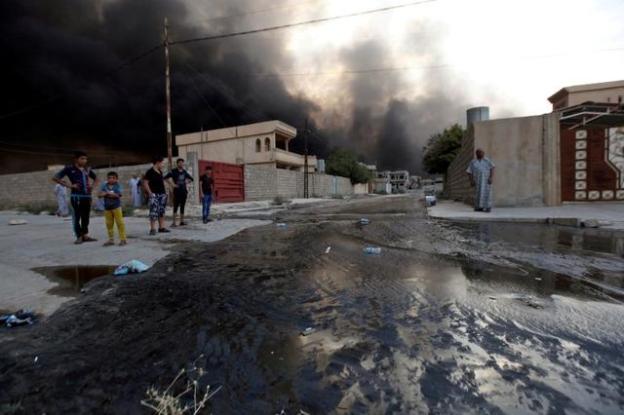
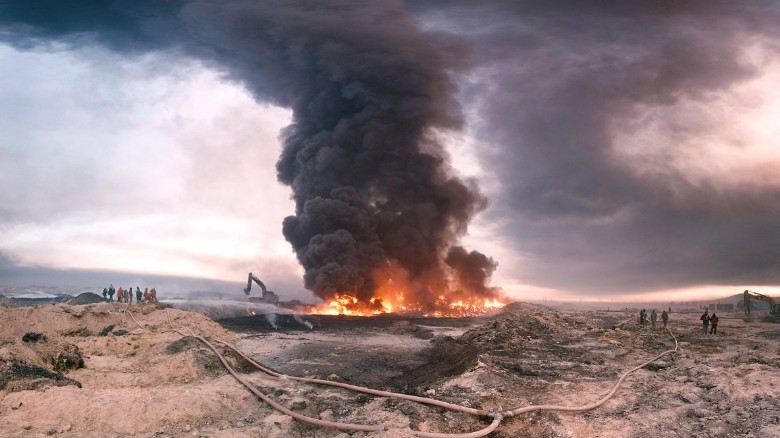
A biological remediation pilot project seeking to enhance nature’s own ability to clear up oil spills in Iraq’s conflict-affected areas has been launched in Kirkuk, Iraq…This UNEP initiative seeks to harness naturally occurring soil bacteria as a powerful natural ally to decontaminate poisoned land.  Over three years ago in summer 2016, the residents of Qayyarah—a small town of around 25,000 people, some 60 km south of Mosul—were caught in the line of fire as so-called Islamic State fighters torched nineteen nearby oil wells. So thick were the clouds of smoke, that people could not distinguish day from night for weeks in what infamously came to be known as the “Daesh winter”.  Rivers of crude oil flowed through Qayyarah’s streets and into seasonal wadis as oil wells spewed tens of thousands of barrels of oil relentlessly for months. The specter of an even worse environmental catastrophe was heightened as the oil slick migrated to less than three kilometers from the Tigris River, Iraq’s water lifeline.

Following an epic battle to control the oil fires that took nearly a year, North Oil Company, which manages the oil fields of northern Iraq, is currently collecting an estimated 20,000 tonnes of remaining oil waste in Qayyarah into around a dozen large pits.  Progress, however, has been slow and pools of heavy viscous oil remain on the doorsteps of entire neighborhoods and households, who complain about the impacts of noxious fumes on their children’s health.

“In some places, the layer of heavy oil is two to three meters thick, and long stretches of wadi channels are now effectively tarmac roads on which cars can be driven,” observed Mohammed Dawood, head of Qayarrah oil refinery’s environmental unit. Furthermore, Environment Ministry officials expressed concern that exceptionally heavy rains and flash floods of the 2018/19 winter season washed out oil from the holding pits into the Tigris River.

While oil production restarted in Qayyarah immediately after the conflict ended in June 2017, reaching currently an estimated 40,000 barrels per day, little has been done to clean up the conflict’s toxic aftermath… The UN Environment Programme in collaboration with the UN Assistance Mission in Iraq delivered a four-day hands-on training workshop on remediation of oil spills by the use of bacteria  in September 2019. “By adding nutrients from manure, bulking agents like wood chips and water, we are simply creating the ideal conditions for bacteria to thrive and speeding up the natural process of breaking down the oil,”

Excerpts from  Microbes offer hope of cleaning up Iraq conflict’s pollution legacy, UNEP Press Release, Oct. 23, 2019

Greening the Mining Industry

An Australian regulator recently told Peabody Energy Glencore they couldn’t export coal from a new mine to countries that haven’t signed the Paris climate agreement. Two other Australian coal projects were scuttled in 2019, partly out of concern about greenhouse-gas emissions overseas.  Investors, too, are growing inquisitive about miners’ records on their customer emissions—partly out of fear about potential liability. Miners are responding by increasing carbon-impact disclosure, forming alliances with buyers and investing in technology to cut emissions from steel mills and power plants.  BHP  has said its scope 3 emissions—pollution mostly created when customers transport and use the commodities it produces—are almost 40 times greater than those generated at its own operations.

In the oil industry, facing similar pressures, there is friction among large companies over whether to commit to reducing greenhouse-gas emissions from products such as gasoline—in big part because emissions vary hugely depending on the vehicle…

Threats to miners’ business go beyond pushback on new projects. Consumer brands could stop buying commodities they consider too dirty, experts say. Many are already innovating with recycled materials.

In July 2019, BHP pledged to spend $400 million over five years to develop technologies that can reduce emissions both from its operations and its customers’.  “We won’t stop at the mine gate,” BHP Chief Executive Andrew Mackenzie said. …Rio Tinto is also drawing up scenarios for decarbonizing the steel industry. Success could materially affect the value of its core iron-ore business, it said.  Meantime, miners are touting their role in the shift to a low-carbon economy by producing commodities such as copper and nickel for wind turbines and electric vehicles.

Excerpts from Rhiannon Hoyle, Miners’ New Worry: Other People’s Pollution, WSJ, Oct. 9, 2019

Bio-Energy and Food Security

In the effort to keep the planet from reaching dangerous temperatures, a hybrid approach called BECCS (bioenergy with carbon capture and storage) has a seductive appeal. Crops suck carbon dioxide (CO2) from the atmosphere, power plants burn the biomass to generate electricity, and the emissions are captured in a smokestack and pumped underground for long-term storage. Energy is generated even as CO2 is removed: an irresistible win-win. But, the United Nations’s climate panel sounded a warning about creating vast bioenergy plantations, which could jeopardize food production, water supplies, and land rights for poor farmers.

In an earlier special report in October 2018, IPCC called for holding the rise in global average temperatures to no more than 1.5°C above preindustrial conditions to avoid the worst consequences of climate change. It emphasized that cutting emissions won’t be enough to reach that goal. Replacing coal with renewable energy, and significantly cutting oil and natural gas, would still leave gigatons of excess carbon in the atmosphere. BECCS could remove it, computer models suggested, if several million square kilometers—an area the size of India—were devoted to energy crops.

But the 2019 IPCC report examines the consequences of deploying BECCS on that vast scale and concludes it could “greatly increase” the demand for agricultural land. The pressure on conventional crops could compromise food security, as happened in 2007 when rising U.S. corn ethanol production contributed to a spike in food prices. (In Mexico, the price of tortillas, a staple for the poor, rose 69% between 2005 and 2011.) The bioenergy plantations could also take a toll on biodiversity—as is happening in Southeast Asia, where plantations producing palm oil for biodiesel as well as food are displacing diverse tropical forest. And they could suck up scarce water, especially in drylands, where irrigation of crops might deplete local supplies, the IPCC report says.

Industrial bioenergy crops can lead to the same kinds of problems as intensive food production, such as the contamination of water from excess fertilizer. Scaling up bioenergy in developing countries can also exacerbate social problems like the loss of land by small farmers.

Excerpts from Erik Stokstad, Bioenergy plantations could fight climate change—but threaten food crops, U.N. panel warns, Science, Aug. 8, 2019

A Cure Worse than the Disease? Biofuels in Planes

The 2019 report by the Rainforest Foundation Norway RFN is called ‘Destination Deforestation’ and reviewed the role of the aviation industry in contributing to the climate crisis, concluding that there’s a high risk that increased use of palm and soy-based biofuel in planes will lead to increased deforestation.

Finland, the world’s largest producers of renewable diesel and the only EU country that gives additional incentives for the use of palm oil products to manufacture biofuel, could spearhead the race towards deforestation, as areas of rainforest in countries like Indonesia or in South America are cleared to plant crops that will later be used to produce the fuel.  RFN says that meeting the aviation industry’s own climate-change targets to reduce emissions could result in 3.2 million hectares of tropical forest lost, an area larger than Belgium.

Researchers at Rainforest Foundation Norway believe the Finnish incentives for (Palm Fatty Acid Distillate) PFAD-based biofuels are likely to contribute to this deforestation, since Finland’s state-owned oil company Neste produces half of the world’s renewable diesel.  “Finland continues to treat the palm oil by-product PFAD as a waste, eligible for additional incentives. In addition, Finland is home to Neste, the world’s largest producer of hydrotreated biodiesel, and uses PFAD as a raw material. Therefore, Finland’s program could contribute to the massive deforestation discussed in our report” he explains.

With Finland left isolated as the only EU country to pay producers to use waste-classified PFAD in biofuel production, Rainforest Foundation Norway cautions that the country risks becoming a dumping ground for unsustainable raw material….“As long as PFAD is classified as ‘waste’, it enjoys huge incentives from the state. Biofuels made out of PFAD are completely exempt from carbon dioxide tax in Finland. Additionally, PFAD’s emissions can be discounted, and it is not subject to the same sustainability criteria as other raw materials.

With ‘flight shame’ gaining more momentum across the world, the aviation industry is desperate to find ways to make flying compatible with climate goals. While replacing fossil fuels with renewables sounds like a great idea, the sustainability of biofuels is highly dependent on the raw materials used to produce them…The most common aviation biofuels, Hydrogenated Esters and Fatty Acids (HEFA) fuels are produced from vegetable oils and animal fats. While the use of waste oils and other recycled materials is possible, the most viable raw materials for HEFA jet fuels are food crops.  “The cheapest and most readily available raw materials for HEFA jet fuel are palm oil and soy oil, which are closely linked to tropical deforestation” Ranum says.  The experts suggest that aiming to reduce emissions by increasing demand for palm and soy oil is a cure worse than the disease.

Elias Huuhtan, Report: Finland’s push to use biofuel could cause ‘massive deforestation, https://newsnowfinland.fi/ , Oct. 7, 2019

A Huge Headache: the Radioactive Water at Fukushima

What to do with the enormous amount of radioactive  water, which grows by around 150 tons a day at Fukushima, is a thorny question, with controversy surrounding a long-standing proposal to discharge it into the sea, after extensive decontamination.  The water comes from several different sources: Some is used for cooling at the plant, which suffered a meltdown after it was hit by a tsunami triggered by a massive earthquake in March 2011.  Groundwater that seeps into the plant daily, along with rainwater, add to the problem.

A thousand, towering tanks have now replaced many of the cherry trees that once dotted the plant’s ground. Each can hold 1,200 tons, and most of them are already full.  “We will build more on the site until the end of 2020, and we think all the tanks will be full by around the summer of 2022,” said Junichi Matsumoto, an official with the unit of plant operator TEPCO in charge of dismantling the site.
TEPCO has been struggling with the problem for years, taking various measures to limit the amount of groundwater entering the site.  There is also an extensive pumping and filtration system, that each day brings up tons of newly contaminated water and filters out as many of the radioactive elements as possible.

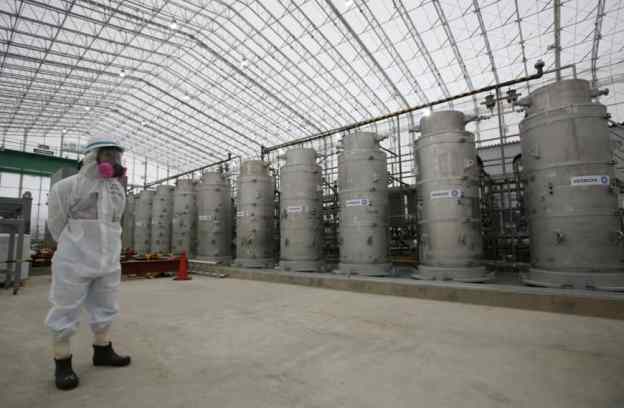
The hangar where the decontamination system runs is designated “Zone Y” — a danger zone requiring special protections.  All those entering must wear elaborate protection: a full body suit, three layers of socks, three layers of gloves, a double cap topped by a helmet, a vest with a pocket carrying a dosimeter, a full-face respirator mask and special shoes.  Most of the outfit has to burned after use.

“The machinery filters contain radionuclides, so you have to be very protected here, just like with the buildings where the reactors are,” explained TEPCO risk communicator Katsutoshi Oyama.  TEPCO has been filtering newly contaminated water for years, but much of it needs to go through the process again because early versions of the filtration process did not fully remove some dangerous radioactive elements, including strontium 90.

The current process is more effective, removing or reducing around 60 radionuclides to levels accepted by the International Atomic Energy Agency (IAEA) for water being discharged.  But there is one that remains, which cannot be removed with the current technology: tritium.

Tritium is naturally present in the environment, and has also been discharged in its artificial form into the environment by the nuclear industry around the world.  There is little evidence that it causes harm to humans except in very high concentrations and the IAEA argues that properly filtered Fukushima water could be diluted with seawater and then safely released into the ocean without causing environmental problems.

But those assurances are of little comfort to many in the region, particularly Fukushima’s fishing industry which, like local farmers, has suffered from the outside perception that food from the region is unsafe.

Karyn Nishimura, At Fukushima plant, a million-ton headache: radioactive water, Japan Times, Oct. 7, 2019
 

Zero Radioactive Leakage: China Experiments with Nuclear Waste Disposal

China has chosen a site for an underground laboratory to research the disposal of highly radioactive waste, the country’s nuclear safety watchdog said in September 2019.
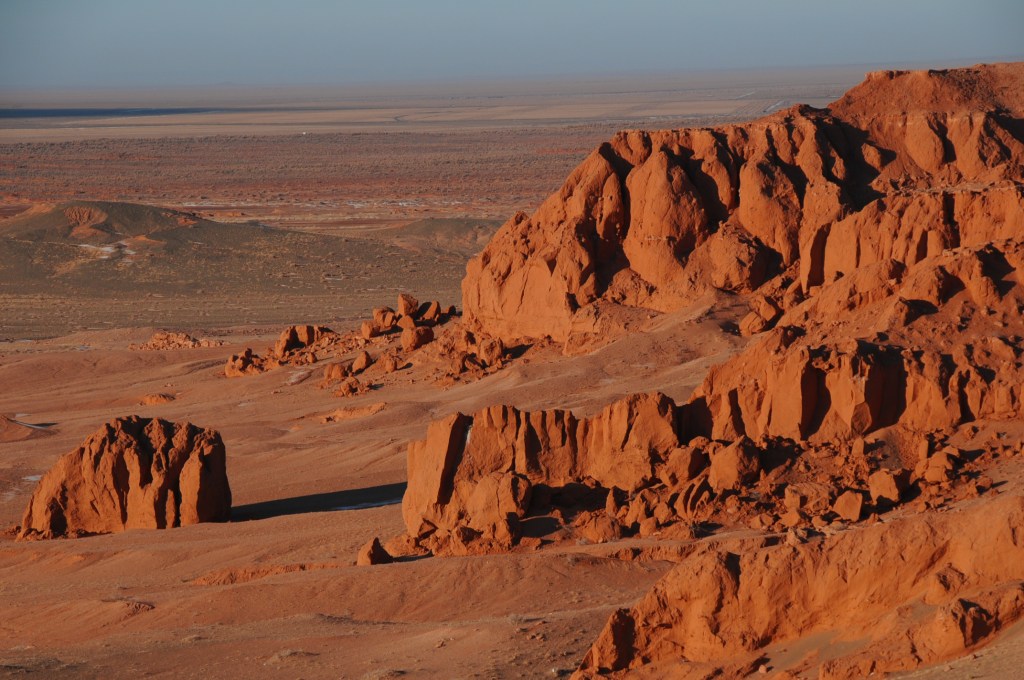
Officials said work would soon begin on building the Beishan Underground Research Laboratory 400 metres (1,312 feet) underground in the northwestern province of Gansu, in the middle of the Gobi desert.

(a) Enttrance Beishan Underground Research Laboratory
(b) Ramp Beishan Underground Research Laboratory

Liu Hua, head of the National Nuclear Safety Administration, said work would be carried out to determine whether it was possible to build a repository for high-level nuclear waste deep underground….Once the laboratory is built, scientists and engineers will start experiments to confirm whether it will make a viable underground storage facility…

Gobi desert

Lei Yian, an associate professor at Peking University’s school of physics, said there was no absolute guarantee that the repositories would be safe when they came into operation.
Leakage has happened in [repositories] in the US and the former Soviet Union … It’s a difficult problem worldwide,” he said. “If China can solve it, then it will have solved a global problem.”
China is also building more facilities to dispose of low and intermediate-level waste. Officials said new plants were being built in Zhejiang, Fujian and Shandong, three coastal provinces that lack disposal facilities.

Excerpts from Echo Xie , China earmarks site to store nuclear waste deep underground,  South China Morning Post, Sept 5, 2019

Free Markets? No! Subsidies for Nuclear Industry

The U.S. Department of Energy (DOE) announced on Aug. 15, 2019 the launch of the National Reactor Innovation Center (NRIC). The new initiative will assist with the development of advanced nuclear energy technologies by harnessing the world-class capabilities of the DOE national laboratory system.  Authorized by the Nuclear Energy Innovation Capabilities Act, NRIC will provide private sector technology developers the necessary support to test and demonstrate their reactor concepts and assess their performance. This will help accelerate the licensing and commercialization of these new nuclear energy systems.

“NRIC will enable the demonstration and deployment of advanced reactors that will define the future of nuclear energy,” said U.S. Energy Secretary Rick Perry. “By bringing industry together with our national labs and university partners, we can enhance our energy independence and position the U.S. as a global leader in advanced nuclear innovation.”  NRIC will be led by Idaho National Laboratory and builds upon the successes of DOE’s Gateway for Accelerated Innovation in Nuclear (GAIN) initiative… 

The Nuclear Energy Innovation Capabilities Act was signed into law in 2018 by President Donald J. Trump and eliminates some of the financial and technological barriers standing in the way of nuclear innovation. It directs DOE to facilitate the siting of advanced reactor research demonstration facilities through partnerships between DOE and private industry. The House Energy and Water Development committee has allocated $5 million in the FY2020 budget for NRIC, which plans to demonstrate small modular reactor and micro-reactor concepts within the next five years.

Excerpts from DOE,  Energy Department Launches New Demonstration Center for Advanced Nuclear Technologies, Press Release, Aug. 15, 2019

Greening Natural Gas: How to Record Gas Leaks with Hand-Held Cameras

Energy companies are producing record volumes of natural gas, thanks in part to the U.S. fracking boom. They have ambitious plans to make the cleaner-burning fuel a big part of the global energy mix for decades to come by sending tankers of liquefied gas around the world.But growing public concern over leaks and intentional releases of gas and its primary component, methane, threaten to derail the dominance of gas in the new energy world order.  Methane is far more potent than carbon dioxide in contributing to climate change. That makes it particularly harmful to the environment when it is discharged into the atmosphere.

In the U.S. alone, the methane that leaks or is released from oil and gas operations annually is equivalent to the greenhouse gas emissions from more than 69 million cars, according to a Wall Street Journal analysis using conversion formulas from the Environmental Protection Agency and emissions estimates for 2015 published last year in the journal Science….The Intergovernmental Panel on Climate Change, a United Nations body, says methane is even more potent than the estimates the EPA uses. By its calculation the annual releases would be equal to those of about 94 million cars, or roughly a third of the nation’s registered vehicles.

About 2.3% of the natural gas produced in the U.S. escapes directly into the atmosphere due in part to leaky equipment or intentional discharges, according to the Science study, which analyzed 2015 emissions. (Some discharges are legally permitted.) At that rate, it would have amounted to about $7.6 million worth of gas lost each day last year.  Another roughly $4.5 million in U.S. gas went up in smoke each day in 2018, World Bank data show, as energy companies burned fuel  (a practice known as flaring) they couldn’t move to market or chose not to ship because the cost of doing so would have exceeded the price the gas would fetch in some regions. Many companies drill primarily for oil and treat the gas released in the process as a byproduct.

Leaking and flaring are a global problem. As gas displaces coal for electricity production in the U.S. and other countries its side effects are drawing more attention, not just from environmental activists but investors fretting about how gas will compete over the long term against renewable energy sources such as wind and solar, which are dropping in price.

President Trump’s administration has moved to relax existing federal requirements for monitoring and fixing leaks. Still, from oil giants to the independent drillers powering the shale boom, companies are scrambling to rein in emissions over concerns from their executives, shareholders and environmentalists that gas waste could undermine the argument for gas as the “bridge fuel” to a cleaner future of renewables.

Methane is invisible to the naked eye, so companies detect leaks with infrared cameras and lasers. That can be a tall task—the gas can seep out of countless places, from wells to pipelines to storage facilities.  As a result, energy companies are increasingly supplementing manual inspections with aerial monitoring to survey large swaths of land checkerboarded with oil and gas infrastructure.  In West Texas, BP has begun monthly flights over its wells by a drone equipped with methane-detection equipment.   The company also is looking to cut back on flaring, which many companies do in the Permian Basin of Texas and New Mexico because they lack access to pipelines to move the product to market….BP is investing in a new gas-gathering and compression system that will allow it to send more gas to customers instead of burning it away…

Kairos,  a company, specializes in identifying larger methane releases by flying small planes about 3,000 feet above the ground. …Kairos has received funding from the Oil and Gas Climate Initiative, an industry organization whose members include Exxon Mobil Corp. and Chevron Corp. The companies in the organization have pledged to collectively cut average methane emissions to less than 0.25% of gas sold by 2025.

One reason companies are stepping up monitoring is that environmental activists are watching, using technology to record leaks as they seek to boost public awareness of methane emissions.  Sharon Wilson, an organizer for the advocacy organization Earthworks, visits the Permian almost every month to monitor leaks from oil and gas sites, using a hand-held infrared camera. She submits the footage as evidence in state regulatory complaints against energy companies and often posts it on YouTube…Earthworks has filed more than 100 complaints in Texas and New Mexico since the beginning of 2018. State regulators issued violations or compelled operators to make repairs or install new equipment in fewer than 10% of the instances as of July, according to estimates by the group.

Excerpts from Rebecca Elliott, The Leaks that Threaten the Clean Image of Natural Gas, WSJ,  Aug. 10, 2019

The Rolls Royce Nuclear Reactor

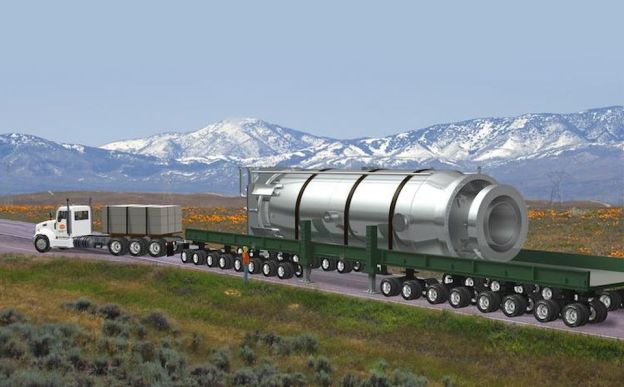
Small modular nuclear  reactors (SMRs) are relatively small and flexible: they have a power capacity of up to 300 MW(e) and their output can fluctuate in line with demand. This makes them particularly attractive for remote regions with less developed grids, but also for use as a complement to renewables and for non-electric applications of nuclear power. SMRs can be manufactured and then shipped and installed on site, so they are expected to be more affordable to build.

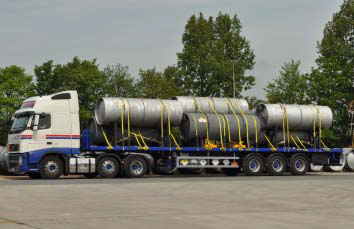
The Rolls Royce SMR is small enough to be transported by truck.

Globally, there are about 50 SMR designs and concepts at different stages of development. Three SMR plants are in advanced stages of construction or commissioning in Argentina, China and Russia, which are all scheduled to start operation between 2019 and 2022…Some SMR designs have features that could reduce the tasks associated with spent fuel management. Power plants based on these designs require less frequent refuelling, every 3 to 7 years, in comparison to between 1 and 2 years for conventional plants, and some are even designed to operate for up to 30 years without refuelling. Nevertheless, even in such cases, there will be some spent fuel left, which will have to be properly managed.

Excerpts from Small Modular Reactors: A Challenge for Spent Fuel Management? IAEA News, Aug. 8, 2019

Where to Go? 1 Million Tons Radioactive Water at Fukushima

In August 2019, Tepco projected that storage of radioactive water at the Fukushima nuclear plant would reach full capacity by around summer 2022 even after the expansion — the first time it has issued such a precise estimate.  According to Tepco, the Fukushima No. 1 plant had 960 massive tanks containing 1.15 million tons of treated water as of July 18, 2019. Water that has touched the highly radioactive melted fuel debris has been cleaned up through water treatment machines and is stored in the tanks, but the high-tech treatment machines are able to remove most radionuclides except tritium. The plant currently sees an increase of contaminated water by 170 tons a day, Tepco says.

Releasing tritium-tainted water into the sea in a controlled manner is common practice at nuclear power plants around the world, and it was generally considered the most viable option as it could be done quickly and would cost the least.  The head of the Nuclear Regulation Authority, Toyoshi Fuketa, has long said that releasing the treated water into the sea is the most reasonable option, but people in Fukushima, especially fishermen, fear it will damage the region’s reputation.

Addressing those concerns, the government panel, launched in November 2016, has been looking for the best option in terms of guarding against reputational damage. Injecting it into the ground, discharging it as steam or hydrogen, or solidification followed by underground burial have all been on the table. Under the current plan, Tepco is set to increase the tank space to store 1.37 million tons of water a total, but estimates show that will only last until summer 2022.  But the more space it creates, the bigger the decommissioning headache becomes.

Excerpts from KAZUAKI NAGAT, Fukushima nuclear plant to run out of tanks to store tritium-laced water in three years, Tepco says, Japan Times, Aug. 9, 2019
BY KAZUAKI NAGATA

The 2017 Nuclear Cloud: Unreported Nuclear Accidents

The probable culprit behind a mysterious cloud of radioactive particles detected floating above much of Europe in 2017 appears to have been identified. The radiation spike – in the form of an extremely high airborne concentration of the radioactive isotope ruthenium–106 – was detected by scientists in October 2017, but the source of the dramatic radiation surge (almost 1,000 times normal levels) was never definitively confirmed.  At the time, many speculated that nuclear facilities in Russia were responsiblefor what was perceived as an accidental ruthenium–106 release – despite denials at the time by Russian authorities.

Now new research looks to back up the Russian origin hypothesis, according to an international team of almost 70 scientists led by radionuclides researcher Olivier Masson from the Institut de radioprotection et de sûreté nucléaire (IRSN) in France.  “Based on airborne concentration spreading and chemical considerations, it is possible to assume that the release occurred in the Southern Urals region (Russian Federation),” the researchers explain in their new paper.

In what they claim is the most comprehensive assessment of the incident to date, Masson and his team analysed over 1,300 readings taken of the radioactive cloud, recorded by 176 measuring stations in almost 30 countries.  While the airborne radioactive matter released was not harmful to human health, it nonetheless constituted the most serious release of radioactive material since the Fukushima accident in 2011 – with maximum values of 176 millibecquerels of the isotope per cubic metre of air.

Shortly after the release, Russian officials suggested the radiation surge might have been due to a crashing satellite, with the isotope being released from the battery of a spacecraft re-entering Earth’s atmosphere.  “The measurements indicate the largest singular release of radioactivity from a civilian reprocessing plant,” says one of the researchers, radioecologist Georg Steinhauser from the University of Hanover.  Specifically, the new evidence – based on modelling of air mass movements around the time of the accident – indicates Russia’s Mayak nuclear complex in the southern Urals “should be considered as a likely candidate for the release”, the researchers conclude…

If the researchers’ modelling is correct, the accident occurred sometime in late September 2017, on either the 25th or 26th of the month – almost exactly 60 years to the day after one of the worst nuclear accidents in history at the same site: the Kyshtym disaster, ranked as the third most serious nuclear accident ever on the International Nuclear Event Scale.

Excerpts frorm  PETER DOCKRILL,  Mysterious Radioactive Cloud That Blanketed Europe Traced to Russian Nuclear Facility, Science Alert, July 30, 2019

How to Detect Nuclear Terrorism in Big Cities

According to DARPA, terrorist attacks involving the use of proliferated radiological and special nuclear materials pose a potential threat to U.S. citizens and servicemembers. Early detection of such materials and devices made from them is a critical part of the U.S. strategy to prevent attacks. Lower-cost and more sensitive detectors, along with innovative deployment strategies, could significantly enhance detection and deterrence of attack.

The SIGMA program aims to revolutionize detection and deterrent capabilities for countering nuclear terrorism. A key component of SIGMA thus involves developing novel approaches to achieve low-cost, high-efficiency, packaged radiation detectors with spectroscopic gamma and neutron sensing capability. The program will seek to leverage existing infrastructure to help enable these next-generation detectors and their deployment in order to demonstrate game-changing detection and deterrent systems.

The Defense Advanced Research Projects Agency fielded a sensor network to trace radioactive and nuclear materials during the Indianapolis 500 event on June 30, 2019

The Most Nuclearized Waters on the Planet: Arctic

Northern Norway saw a record number of 12 visiting NATO nuclear-powered submarines in 2018. The subs are in for supplies or crew change before continuing the cat-and-mouse hunt for Russian submarines sailing out in the strategically important waters between Norway, Iceland and Greenland.  It was here, in international waters outside Senja in Troms, the Russian Echo-II class submarine K-192 suffered a severe reactor coolant accident 30 years ago, on June 26th 1989. Radioactive iodine was leaking with the reactor-steam while the vessel was towed around the coast of northernmost Norway to the navy homeport at the Kola Peninsula.

Fearing similar accidents could happen again, Norway is pushing for international awareness to..A dedicated group, named ARCSAFE, was established under the Arctic Council in 2015 aimed at sharing knowledge and experiences between national radiation authorities and other rescue services.“Norway has suggested to form an expert group, where one of the tasks could be to look into a possible Arctic Council agreement for radiation emergencies, like already exists for oil spill and search- and rescue cooperation,” says Øyvind Aas-Hansen.

Meanwhile, international experts on radiation monitoring teamed up with industry developers looking at the potential for using unmanned aerial vehicles (UAVs) in the Arctic. …Some environments are too risky for humans to survey and collect data. A nuclear accident site is one such spot, also if it happens at sea. UAVs, better known as drones, could carry a geiger counter, camera or other tools in the air over hazardous objects like a submarine on fire. From safe distance, emergency response units could then be better prepared before boarding or sailing close-up.

The Barents Observer has recently published an overview  listing the increasing number of reactors in the Russian Arctic.  According to the list there are 39 nuclear-powered vessels or installations in the Russian Arctic today with a total of 62 reactors. This includes 31 submarines, one surface warship, five icebreakers, two onshore and one floating nuclear power plants.  Looking 15 years ahead, the number of ships, including submarines, and installations powered by reactors is estimated to increase to 74 with a total of 94 reactors, maybe as many as 114. Additional to new icebreakers and submarines already under construction, Russia is brushing dust of older Soviet ideas of utilizing nuclear-power for different kind of Arctic shelf industrial developments, like oil- and gas exploration, mining and research.  “By 2035, the Russian Arctic will be the most nuclearized waters on the planet,” the paper reads.

Other plans to use nuclear reactors in the Russian Arctic in the years to come include many first-of-a-kind technologies like sea-floor power reactors for gas exploration, civilian submarines for seismic surveys and cargo transportation, small-power reactors on ice-strengthen platforms.

In the military sphere, the Arctic could be used as testing sites for both Russia’s new nuclear-powered cruise-missile and nuclear-powered underwater weapons drone. Both weapons were displayed by President Vladimir Putin when he bragged about new nuclear weapons systems in his annual speech to the Federation Council last year.

For Norway and Russia, a nuclear accident in the Barents Sea could be disastrous for sales of seafood. The two countries export of cod and other spices is worth billions of Euros annually.

Excerpts from Arctic countries step up nuclear accident preparedness, Barents Observer, June 30, 2019.

The Nuclear Waste Dumps in the Arctic

Source: Nuclear Waste In the Arctic, RadioFreeEurope/RadioLiberty, July 12, 2109

Hunting Down Polluters: Repairing the Ozone Layer

CFC-11 is also known as trichlorofluoromethane, and is one of a number of chloroflurocarbon (CFC) chemicals that were initially developed as refrigerants during the 1930s. However, it took many decades for scientists to discover that when CFCs break down in the atmosphere, they release chlorine atoms that are able to rapidly destroy the ozone layer which protects us from ultraviolet light. A gaping hole in the ozone layer over Antarctica was discovered in the mid 1980s.  The international community agreed the Montreal Protocol in 1987, which banned most of the offending chemicals. Recent research suggests that the hole in the Northern Hemisphere could be fully fixed by the 2030s and Antarctica by the 2060s.

CFC-11 was the second most abundant CFCs and was initially seen to be declining as expected.However in 2018 a team of researchers monitoring the atmosphere found that the rate of decline had slowed by about 50% after 2012.  Further detective work in China by the Environmental Investigation Agency in 2018 seemed to indicate that the country was indeed the source. They found that the illegal chemical was used in the majority of the polyurethane insulation produced by firms they contacted.One seller of CFC-11 estimated that 70% of China’s domestic sales used the illegal gas. The reason was quite simple – CFC-11 is better quality and much cheaper than the alternatives.

This new paper seems to confirm beyond any reasonable doubt that some 40-60% of the increase in emissions is coming from provinces in eastern China.  Using what are termed “top-down” measurements from air monitoring stations in South Korea and Japan, the researchers were able to show that since 2012 CFC-11 has increased from production sites in eastern China.They calculated that there was a 110% rise in emissions from these parts of China for the years 2014-2017 compared to the period between 2008-2012.

“If we look at these extra emissions that we’ve identified from eastern China, it equates to about 35 million tonnes of CO2 being emitted into the atmosphere every year, that’s equivalent to about 10% of UK emissions, or similar to the whole of London.”  The Chinese say they have already started to clamp down on production by what they term “rogue manufacturers”. In  November 2018, several suspects were arrested in Henan province, in possession of 30 tonnes of CFC-11.

Excerpts from Matt McGrath,  Ozone layer: Banned CFCs traced to China say scientists, BBC, May 22, 2019

How Companies Buy Social License: the ExxonMobil Example

The Mobil Foundation sought to use its tax-exempt grants to shape American laws and regulations on issues ranging from the climate crisis to toxic chemicals – with the explicit goal of benefiting Mobil, documents obtained by the Guardian newspaper show.  Recipients of Mobil Foundation grants included Ivy League universities, branches of the National Academies and well-known civic organizations and environmental researchers.  Benefits for Mobil included – in the foundation’s words – funding “a counterpoint to so-called ‘public interest’ groups”, helping Mobil obtain “early access” to scientific research, and offering the oil giant’s executives a forum to “challenge the US Environmental Protection Agency (EPA) behind-the-scenes”….

A third page reveals Mobil Foundation’s efforts to expand its audience inside environmental circles via a grant for the Environmental Law Institute, a half-century-old organization offering environmental law research and education to lawyers and judges.  “Institute publications are widely read in the environmental community and are helpful in communicating industry’s concerns to such organizations,” the entry says. “Mobil Foundation grants will enhance environmental organizations’ views of Mobil, enable us to reach through ELI activities many groups that we do not communicate with, and enable Mobil to participate in their dialogue groups.”

The documents also show Mobil Foundation closely examining the work of individual researchers at dozens of colleges and universities as they made their funding decisions, listing ways that foundation grants would help shape research interests to benefit Mobil, help the company recruit future employees, or help combat environmental and safety regulations that Mobil considered costly.  “It should be a wake-up call for university leaders, because what it says is that fossil fuel funding is not free,” said Geoffrey Supran, a postdoctoral researcher at Harvard and MIT.  “When you take it, you pay with your university’s social license,” Supran said. “You pay by helping facilitate these companies’ political and public relations tactics.”

In some cases, the foundation described how volunteer-staffed not-for-profits had saved Mobil money by doing work that would have otherwise been performed by Mobil’s paid staff, like cleaning birds coated in oil following a Mobil spill.  In 1987, the International Bird Rescue Research Center’s “rapid response and assistance to Mobil’s West Coast pipeline at a spill in Lebec, CA not only defused a potential public relations problem”, Mobil Foundation said, “but saved substantial costs by not requiring our department to fly cross country to respond”.d of trustees at the Woods Hole Oceanographic Institution (recipient of listed donations totalling over $200,000 from Mobil) and a part of UN efforts to study climate change.

Wise ultimately co-authored two UN Intergovernmental Panel on Climate Change reports, serving as a lead author on one. One report chapter Wise co-authored prominently recommended, among other things, burning natural gas (an ExxonMobil product) instead of coal as a way to combat climate change.

Excerpts from How Mobil pushed its oil agenda through ‘charitable giving’, Guardian, June 12, 2019

Institutions Go Away But Not Nuclear Waste

The Trump administration  is asking Congress for money to resume work on the Yucca Mountain nuclear waste storage in Nevada.  But that may not end local opposition or a longstanding political stalemate. And in the meantime, nuclear plants are running out of room to store spent fuel….As the waste piles up, private companies are stepping in with their own solutions for the nation’s radioactive spent fuel. One is proposing a temporary storage site in New Mexico, and another is seeking a license for a site in Texas.

Most experts agree that what’s needed is a permanent site, like Yucca Mountain, that doesn’t require humans to manage it.  “Institutions go away,” says Edwin Lyman, acting director of the Nuclear Safety Project at the Union of Concerned Scientists. “There’s no guarantee the owner will still be around for the duration of time when that waste remains dangerous, which is tens or hundreds of thousands of years.”

A California company says it has a viable plan for permanent storage. Deep Isolation wants to store spent fuel in holes drilled at least 1,000 feet underground in stable rock formations. The company says the waste would be separate from groundwater and in a place where it can’t hurt people.  “I like to imagine having a playground at the top of the Deep Isolation bore hole where my kids and I can go play,” says CEO Elizabeth Muller.  In November 2018, Muller’s company conducted a test north of Austin, Texas. Crews lowered an 80-pound canister into a drilled hole. It was a simulation, so no radioactive substances were involved. The goal was to determine whether they could also retrieve the canister.  The test was successful, and that’s important. Regulators require retrieval, because new technology could develop to better deal with the spent fuel. And the public is less likely to accept disposal programs that can’t be reversed, according to the International Atomic Energy Agency.

Proving the waste can be retrieved may be the easy part. The bigger challenge is federal law, which doesn’t allow private companies to permanently store nuclear waste from power plants.  Current law also says all the waste should end up at Yucca Mountain in Nevada. By contrast, Deep Isolation’s technology would store waste at sites around the country, likely near existing nuclear power plants.

Jeff Brady, As Nuclear Waste Piles Up, Private Companies Pitch New Ways To Store It, NPR, Apr. 30, 2019

From Nuclear Powerhouse to Nuclear Mafia: South Korea

South Korea, which is roughly the size of Indiana, eventually became the most reactor-dense country in the world, with 23 reactors providing about 30% of the country’s total electricity generation…. South Korea’s reactors…are mostly packed into a narrow strip along the densely populated southeastern coast. The density was a way of cutting costs on administration and land acquisition. But putting reactors close to one another—and to large cities—was risky. … 

In December 2009, the UAE had awarded a coalition led by Korea Electric Power Corporation (KEPCO) a $20 billion bid to build the first nuclear power plant in the UAE. Barakah was chosen as the site to build four APR-1400nuclear reactors successively.  In 2012 to Park Geunhye the newly elected president pledged to increase South Korea’s reactor fleet to 39 units by 2035 and making sales trips to potential client states such as the Czech Republic and Saudi Arabia bulding on prior success like the UAE deal mentioned above. …


Barakah under construction in UAE

But on September 21, 2012, officials at Korea Hydro & Nuclear Power (KHNP), a subsidiary of the Korea Electric Power Corporation (KEPCO),  received an outside tip about illegal activity among the company’s parts suppliers. Eventually, an internal probe had become a full-blown criminal investigation. Prosecutors discovered that thousands of counterfeit parts had made their way into nuclear reactors across the South Korea, backed up with forged safety documents. KHNP insisted the reactors were still safe, but the question remained: was corner-cutting the real reason they were so cheap?

Park Jong-woon, a former manager who worked on reactors at KEPCO and KHNP until the early 2000s, believed so. He had seen that taking shortcuts was precisely how South Korea’s headline reactor, the APR1400, had been built…After the Chernobyl disaster in 1986, most reactor builders had tacked on a slew of new safety features.KHNP followed suit but later realized that the astronomical cost of these features would make the APR1400 much too expensive to attract foreign clients.“They eventually removed most of them,” says Park, who now teaches nuclear engineering at Dongguk University. “Only about 10% to 20% of the original safety additions were kept.”  Most significant was the decision to abandon adding an extra wall in the reactor containment building—a feature designed to increase protection against radiation in the event of an accident. “They packaged the APR1400 as ‘new’ and safer, but the so-called optimization was essentially a regression to older standards,” says Park. “Because there were so few design changes compared to previous models, [KHNP] was able to build so many of them so quickly.”

Having shed most of the costly additional safety features, KEPCO was able to dramatically undercut its competition in the UAE bid, a strategy that hadn’t gone unnoticed. After losing Barakah to KEPCO, Areva CEO Anne Lauvergeon likened the Korean nuclear plant to a car without airbags and seat belts. At the time Lauvergeon’s comments were dismissed as sour words from a struggling rival.

By the time it was completed in 2014, the KHNP inquiry had escalated into a far-reaching investigation of graft, collusion, and warranty forgery; in total, 68 people were sentenced and the courts dispensed a cumulative 253 years of jail time. Guilty parties included KHNP president Kim Jong-shin, a Kepco lifer, and President Lee Myung-bak’s close aide Park Young-joon, whom Kim had bribed in exchange for “favorable treatment” from the government.

Several faulty parts had also found their way into the UAE plants, angering Emirati officials. “It’s still creating a problem to this day,” Neilson-Sewell, the Canadian advisor to Barakah, told me. “They lost complete faith in the Korean supply chain.”

Excerpts from Max S. Kim,  How greed and corruption blew up South Korea’s nuclear industry, MIT Technology Review, April 22, 2019

Armed Attack on Truck Carrying Nuclear Fuel: Brazil

Armed men shot at members of a convoy transporting uranium to one of Brazil’s two working nuclear power plants on a coastal road in Rio de Janeiro state on March 19, 2019 police and the company managing the plant said.  They said the truck carrying the nuclear fuel and its police escort came under attack when it was passing by the town of Frade, about 30 km (19 miles) from Angra dos Reis, where the reactor is located.  Policemen guarding the convoy returned the attackers’ fire, police said. They said there were no injuries or arrests and the armed men fled.

Excerpts from Brazilian nuclear plant uranium convoy attacked by armed men: police, Reuters, Africa, Mar. 19, 2019

The World in its Pocket: Saudi Arabia as a Nuclear Power

New satellite imagery shows that construction on an experimental nuclear  reactor in Saudi Arabia  is making”expeditious” progress — just three months after the Kingdom announced plans to build it…  The Kingdom has been open about its nuclear program with the IAEA, which sent a team to Saudi Arabia last July to check on building plans. It has repeatedly pledged that the program is peaceful. But Crown Prince Mohammed bin Salman said last year that “without a doubt if Iran developed a nuclear bomb, we will follow suit as soon as possible.”
 
Also raising concern among industry experts and some in Congress is the Saudi insistence that it should be allowed to produce its own nuclear fuel, rather than import it under strict conditions.  In an interview last year, Saudi Energy Minister Khalid al Falih said: “It’s not natural for us to bring enriched uranium from a foreign country to fuel our reactors,” citing the country’s uranium reservess.  Saudi Arabia went public with its nuclear ambitions nine years ago, but the plans have gone into overdrive as part of the Crown Prince’s “Vision 2030” — a strategy to wean Saudi Arabia off its reliance on oil and diversify both the economy and its energy mix.  Companies that help Saudi Arabia with its nuclear ambitions  are US, China, Russia, France and South Korea. Saudi Arabia has also signed agreements with the China National Nuclear Corporation for exploring uranium reserves in the Kingdom

In heated exchanges at the Senate Armed Services committee at the end of March, US Energy Secretary Rick Perry said that if the United States did not cooperate with the Saudis, they would look to Russia or China to develop their nuclear industry.  “I can assure you that those two countries don’t give a tinker’s damn about nuclear non-proliferation,” Perry said.

Excerpts from Saudi nuclear program accelerates, raising tensions in a volatile region, CNN, Apr. 7, 2019

5,000 Eyes in the Sky: environmental monitoring

The most advanced satellite to ever launch from Africa will soon be patrolling South Africa’s coastal waters to crack down on oil spills and illegal dumping.  Data from another satellite, this one collecting images from the Texas portion of a sprawling oil and gas region known as the Permian Basin, recently delivered shocking news: Operators there are burning off nearly twice as much natural gas as they’ve been reporting to state officials.

With some 5,000 satellites now orbiting our planet on any given day…. They will help create a constantly innovating industry that will revolutionize environmental monitoring of our planet and hold polluters accountable…

A recent study by Environmental Defense Fund focused on natural gas flares from the wells in the Permian Basin, located in Western Texas and southeastern New Mexico. Our analysis proved that the region’s pollution problem was much larger than companies had revealed.  A second study about offshore gas flaring in the Gulf of Mexico, published by a group of scientists in the Geophysical Research Letters, showed that operators there burn off a whopping 40% of the natural gas they produce.

Soon a new satellite will be launching that is specifically designed not just to locate, but accurately measure methane emissions from human-made sources, starting with the global oil and gas industry.  MethaneSAT, a new EDF affiliate unveiled in 2018, will launch a future where sensors in space will find and measure pollution that today goes undetected. This compact orbital platform will map and quantify methane emissions from oil and gas operations almost anywhere on the planet at least weekly.

Excerpts from Mark Brownstein, These pollution-spotting satellites are just a taste of what’s to come, EDF, Apr. 4, 2019

Why Texas Loves Nuclear Waste

A proposal to take in more out-of-state waste at a West Texas radioactive waste disposal site has encountered an unlikely argument against it: that it can harm the booming oil and gas industry.  Waste Control Specialists is asking state lawmakers for permission to take in more low-level radioactive waste — such as rags, syringes and protective clothing from nuclear plants or hospitals — from outside of Texas for disposal at its Andrews County facility near the Texas-New Mexico border.

Environmental groups have long opposed radioactive waste at the site, which they say could jeopardize groundwater.  Environmentalists at the hearing were joined by Tommy Taylor, director of oil and gas development for Fasken Oil and Ranch, which operates in Andrews County.  Quoting from a handbook of the International Atomic Energy Agency, Taylor said radioactive waste dumps should be sited away from “land with exportable minerals and energy resources.”  “Don’t put it in an oilfield,” he said. “The oil and gas resources of the Permian Basin are too important for the security of the state of Texas and the United States to put it at risk with storing spent fuel rod casks in this region.”

Spent fuel is not designated as low-level waste, but he said he worried that designation could change.  It’s unusual for a representative of an oil and gas company to publicly criticize at the Capitol another segment of the energy industry…

But If Waste Control Specialists becomes insolvent the state might have to take control of the facility.  The legislation poposed by Texas lawmakers lifts the cap on the amount of out-of-state, low-level waste the company can accept at the 8.9 million cubic feet-capacity site from 30 percent to 60 percent.  The company currently pays six Austin lobbyists as much as $240,000 to persuade lawmakers of the wisdom of its plans….Waste Control Specialists’ partnership with Orano USA, called Interim Storage Partners LLC, has asked the Nuclear Regulatory Commission for permission to accept used nuclear fuel — high-level waste — at the Andrews facility.  Waste Control Specialists, which already disposes of other kinds of radioactive waste at its site in Andrews County, has been trying to position itself as a short-term alternative to Yucca Mountain, the Nevada site long ago selected by the federal government for storage of radioactive waste. Yucca had been bedeviled by decades of political quarrels, even as radioactive waste has piled up at the country’s nuclear power plants.

Excerpt from Asher Price, Radioactive waste site seeks more out-of-state material, Statesman, Mar. 30, 2019

The Unquenchable Thirst for Oil

Demand for oil is rising and the energy industry, in America and globally, is planning multi-trillion-dollar investments to satisfy it. No firm embodies this strategy better than ExxonMobil, the giant that rivals admire and green activists love to hate. As our briefing explains, it plans to pump 25% more oil and gas in 2025 than in 2017. If the rest of the industry pursues even modest growth, the consequence for the climate could be disastrous.

To date politicians, particularly in America, have been reluctant to legislate for bold restrictions on carbon. That is in part thanks to ExxonMobil’s attempts to obstruct efforts to mitigate climate change. …ExxonMobil’s policies on climate change remain marred by inconsistencies. In October the company said it was giving $1m, spread over two years, to a group advocating a carbon tax. ExxonMobil maintains that a carbon tax is a transparent and fair way to limit emissions. But the sum is less than a tenth of its federal lobbying spending in 2018. Moreover, the carbon tax it favours would include protection for oil companies from climate lawsuits.

The firm is also working to reduce leaks of methane, a powerful greenhouse gas, from its wells, pipelines and refineries. However the American Petroleum Institute  (API) has been a main force urging Mr Trump’s administration to ease regulations on methane emissions. The API’s other efforts include lobbying against incentives for electric cars.  ExxonMobil is not alone in trying to sway the climate debate in its direction either. Shell, Total and BP are all members of the API. Marathon Petroleum, a refiner, reportedly campaigned to ease Barack Obama’s fuel-economy standards. BP spent $13m to help block a proposal for a carbon tax in Washington state in November. The Western States Petroleum Association, whose membership includes ExxonMobil and Shell, also lobbied to defeat that tax.

While oil companies plan to grow, trends in cleaner energy are moving in the wrong direction. Investments in renewables fell as a share of the total in 2017 for the first time in three years, as spending on oil and gas climbed. In 2018 carbon emissions in America grew by 3.4% as economic activity picked up, even as coal fell out of favour. Mr Woods maintains that any change to the energy supply will be gradual. “I don’t think people can readily understand just how large the energy system is, and the size of that energy system will take time to evolve,” he argues… Out at sea, ExxonMobil is working to increase production. By next year an underwater web of pipes will connect wells on the seabed to a vast vessel. From there the oil will be transferred to smaller tankers, then to the vast infrastructure that can refine and transport it until it reaches consumers in the form of fertiliser, plastic bottles, polyester or, most likely, petrol. From beneath the ocean floor to your car’s tank, for about the price of a gallon of milk.

Excerpts from  Crude Awakening, Economist,  Feb. 9, 2019; Bigger Oil, Economist,  Feb. 9, 2019

How Iranian Oil Escapes US Sanctions

 At least two tankers have ferried Iranian fuel oil to Asia in February 2019 despite U.S. sanctions against such shipments, according to a Reuters analysis of ship-tracking data and port information, as well as interviews with brokers and traders.  The shipments were loaded onto tankers with documents showing the fuel oil was Iraqi. But three Iraqi oil industry sources and Prakash Vakkayil, a manager at United Arab Emirates (UAE) shipping services firm Yacht International Co, said the papers were forged.  The people said they did not know who forged the documents, nor when.

“Some buyers…will want Iranian oil regardless of U.S. strategic objectives to deny Tehran oil revenue, and Iran will find a way to keep some volumes flowing,” said Peter Kiernan, lead energy analyst at the Economist Intelligence Unit.  While the United States has granted eight countries temporary waivers allowing limited purchases of Iranian crude oil, these exemptions do not cover products refined from crude, including fuel oil, mainly used to power the engines of large ships. Documents forwarded to Reuters by ship owners say a 300,000 tonne-supertanker, the Grace 1, took on fuel oil at Basra, Iraq, between Dec. 10 and 12, 2018. But Basra port loading schedules reviewed by Reuters do not list the Grace 1 as being in port during those dates.  One Iraqi industry source with knowledge of the port’s operations confirmed there were no records of the Grace 1 at Basra during this period. 

Grace 1 oil tanker

Reuters examined data from four ship-tracking information providers – Refinitiv, Kpler, IHS Markit and Vessel Finder – to locate the Grace 1 during that time. All four showed that the Grace 1 had its Automatic Identification System (AIS), or transponder, switched off between Nov. 30 and Dec. 14, 2018, meaning its location could not be tracked.  The Grace 1 then re-appeared in waters near Iran’s port of Bandar Assaluyeh, fully loaded, data showed. The cargo was transferred onto two smaller ships in UAE waters in January, from where one ship delivered fuel oil to Singapore in February 2019.  Shipping documents showed about 284,000 tonnes of fuel oil were transferred in the cargoes tracked by Reuters, worth about $120 million at current prices…

One of those vessels, the 130,000 tonne-capacity Kriti Island, offloaded fuel oil into a storage terminal in Singapore around Feb. 5 to 7. Reuters was unable to determine who purchased the fuel oil for storage in Singapore.  The Kriti Island is managed by Greece’s Avin International SA… Avin International’s Chief Executive Officer George Mylonas told Reuters. Mylonas confirmed the Kriti Island took on fuel oil from the Grace 1.There is no indication that Avin International knowingly shipped Iranian fuel oil. Mylonas said his firm had conducted all necessary due diligence to ensure the cargo’s legitimate origin….

Kriti Island oil tanker

Excerpts from Roslan Khasawneh et al, Exclusive: How Iran fuel oil exports beat U.S. sanctions in tanker odyssey to Asia, Reuters, Mar. 20, 2019

Olkiluoto 3 Nuclear Plant is Ready: 2005-2020

Finland’s Radiation and Nuclear Safety Authority (Stuk) yesterday informed the government it sees no reason why an operating licence for the first-of-a-kind nuclear plant EPR at Olkiluoto 3 should not be granted to utility Teollisuuden Voima Oyj (TVO).]…The Areva-Siemens consortium began construction of Olkiluoto 3 – the first-of-a-kind EPR – in 2005 under a turnkey contract signed with TVO in late 2003. Completion of the reactor was originally scheduled for 2009, but the project has suffered various delays and setbacks. Under the latest schedule, fuel will now be loaded into the reactor core in June 2019, with grid connection to take place in October 2019, and the start of regular electricity generation scheduled for January 2020.

In December 2018, unit 1 of the Taishan plant in China’s Guangdong province became the first EPR to enter commercial operation. Taishan 2 is scheduled to begin commercial operation in 2019. The loading of fuel into the core of the Flamanville EPR in France is expected towards the end of this year. Two EPR units are also under construction at the Hinkley Point C project in Somerset, UK.

Excerpts from Regulator concludes Finnish EPR can operate safely, Nuclear News, Feb. 2019

From Savior to Villain: Biofuel from Palm Oil

Globally, average palm oil yields have been more or less stagnant for the last 20  years, so the required increase in palm oil production to meet the  growing demand for biofuels  has come from deforestation and peat destruction in Indonesia.  Without fundamental changes in governance, we can expect at least a third of new palm oil  area to require peat drainage, and a half to result in deforestation.

Currently, biofuel policy results in 10.7  million tonnes of palm oil demand.  If the current biofuel policy continues we expect by 2030:
• 67 million tonnes palm oil demand due to biofuel policy.
• 4.5 million hectares deforestation.
• 2.9 million hectares peat loss.
• 7 billion tonnes of CO2 emissions over 20 years, more than total annual U.S. GHG emissions.
It must always be remembered that the primary purpose of biofuel policy in the EU and many  other countries is climate change mitigation. Fuel consumers in the European Union, Norway  and elsewhere cannot be asked to continue indefinitely to pay to support vegetable oil based
alternative fuels
that exacerbate rather than mitigate climate change.

The use of palm oil-based biofuel should be  reduced and ideally phased out entirely.  In Europe, the use of biodiesel other than that produced from approved waste or  by-product feedstocks should be reduced or eliminated.
In the United States, palm oil biodiesel should continue to be restricted from generating  advanced RINs under the Renewable Fuel Standard. Indonesia should reassess the relationship between biofuel mandate, and its  international climate commitments, and refocus its biofuel programme on advanced biofuels from wastes and residues. The aviation industry should focus on the development of advanced aviation biofuels  from wastes and residues, rather than hydrotreated fats and oils.

Excerpts from Dr Chris Malins,  Driving deforestation: The impact of expanding palm oil demand through biofuel policy, January 2018

In Feb. 28, 2019, Norway’s $1 trillion sovereign wealth fund, the world’s largest, pulled out of more than 33 palm oil companies over deforestation risks.

Worse than the Dirty Bomb? Mobile Nuclear Military Reactors

In January 2019, the Defense Department issued a call for information in support of the aptly titled Project Dilithium. It seeks to develop a tiny, readily transportable, yet virtually indestructible nuclear power reactor for use at forward operating bases, the military facilities that provide logistical and troop support to the front-lines of conflict zones.

To be sure, the type of reactor it is seeking could be a great military asset: all the benefits of nuclear energy with none of the risks. The costly and dangerous process of trucking diesel fuel to bases, sometimes through hostile territory, may eventually be a thing of the past. Unfortunately, the need to store and ship irradiated nuclear fuel in a war zone will introduce different problems. And the odds that a meltdown-proof reactor could be successfully developed any time soon are vanishingly small.

The Defense Department…is seeking a nuclear reactor capable of producing 1 to 10 megawatts of electricity. …The reactor, at a minimum, should be less than 40 tons total weight; small enough to be transported by truck, ship, and aircraft; able to run for at least three years without refueling; and capable of semi-autonomous operation… The reactor should have an “inherently safe design” that ensures “a meltdown is physically impossible in various complete failure scenarios;” cause “no net increase in risk to public safety … by contamination with breach of primary core;” and have “minimized consequences to nearby personnel in case of adversary attack.

 An Octrober 2018 report commissioned by the army’s Deputy Chief of Staff admits, quite reasonably, that exposed mobile nuclear plants would “not be expected to survive a direct kinetic attack.” If commanders need to expend significant resources to protect the reactors or their support systems from military strikes, such reactors could become burdens rather than assets.  Can one really invent a reactor robust enough to suffer such a strike without causing unacceptable consequences? …If a severe accident or sabotage attack were to induce more extreme conditions than the reactor was designed to withstand, all bets are off. How long would passive airflow keep nuclear fuel safely cool if, say, an adversary threw an insulating blanket over a small reactor? Or if the reactor were buried under a pile of debris?

Moreover, it is hard to imagine that a direct explosive breach of the reactor core would not result in dispersal of some radioactive contamination. An operating nuclear reactor is essentially a can filled with concentrated radioactive material, including some highly volatile radionuclides, under conditions of high pressure and/or temperature. Even a reactor as small as 1 megawatt-electric would contain a large quantity of highly radioactive, long-lived isotopes such as cesium-137—a potential dirty bomb far bigger than the medical radiation sources that have caused much concern among security experts. 

At best a release of radioactivity would be a costly disruption, and at worst it would cause immediate harm to personnel, render the base unusable for years, and alienate the host country. For any reactor and fuel design, extensive experimental and analytical work would be needed to understand how much radioactivity could actually escape after an attack and how far it would disperse. This is also true for spent fuel being stored or transported.

The 2018 report describes several existing reactor concepts that it thinks might meet its needs. One is the 2 megawatt-electric “Megapower” reactor being designed by Los Alamos National Laboratory. But a 2017 INL study of the design iden­­tified several major safety concerns, including vulnerabilities to seismic and flooding events. The study also found that the reactor lacked sufficient barriers to prevent fission product release in an accident. INL quickly developed two variants of the original Los Alamos design, but a subsequent review found that those shared many of the safety flaws of the original and introduced some new ones.

Building Mobile Nuclear Reactor LANL

The other designs are high-temperature gas-cooled reactors that use TRISO (“tristructural isotropic”) fuel, which was originally developed decades ago for use in reactors such as the now-decommissioned Fort St. Vrain plant in Colorado. TRISO fuel consists of small particles of uranium coated with layers of different materials designed to retain most fission products at temperatures up to 1,600 degrees Celsius.

TRISO fuel enthusiasts have long claimed that reactors utilizing it do not need containments because each particle essentially has its own. This would seem to make TRISO an ideal fuel for small, mobile reactors, which can’t be equipped with the large, leak-tight containment structures typical of commercial power reactors. The army report buys into the notion that these “encapsulated” nuclear fuels can “avoid the release of radioactive volatile elements” and prevent contamination of the surrounding area, either during normal operations or accidents.

TRISO fuel contained in pebble

TRISO fuel’s actual performance has been inconsistent, however, and much is still not known. The Energy Department has been carrying out a program for more than a decade to try to improve TRISO fuel, but final results are not expected for years. In addition, if the fuel temperature rises above 1,600 degrees Celsius, fission product release can rapidly increase, making it vulnerable to incendiary weapons that burn hotter, such as thermite. The Defense Department may have already realized that TRISO fuel is not as miraculous as it first thought.

The RFI also specifies that the reactor should be capable of being transported within seven days after shutdown, presumably with the irradiated nuclear fuel still inside. While this requirement is understandable—if forces need to retreat in a hurry, they would not want to leave the reactor behind—it is unrealistic to expect this could be met while ensuring safety. Typically, spent nuclear fuel is stored for many months to years after discharge from a reactor before regulators allow it to be shipped, to allow for both thermal cooling and decay of short-lived, intensely radioactive fission products. Moving a reactor and its irradiated fuel so soon after shutdown could be a risky business.

Finally, the proliferation risks of these reactors and their fuel is a concern. The original RFI stipulated that the reactor fuel had to be high-assay low-enriched uranium (HALEU), which is uranium enriched to levels above the 5 percent uranium-235 concentration of conventional power reactors, but still below the 20 percent that marks the lower limit for highly enriched uranium (HEU), which is usable in nuclear weapons….If the Defense Department goes forward with Project Dilithium, other nations, including US adversaries, may be prompted to start producing HALEU and building their own military power reactors.

Excerptsf rom Edwin Lyman The Pentagon wants to boldly go where no nuclear reactor has gone before. It won’t work, Feb. 22, 2019

A Theshold Nuclear Weapon State: Brazil

Brazil’s government is struggling to attract investors to restart construction on its Angra 3 nuclear plant, where work has been halted since 2015…The government continues to talk to potential investors, including Russian and Chinese companies, but remains far from a dea.

State-controlled Centrais Eletricas Brasileiras SA is building what would be Brazil’s third nuclear plant. Through its Eletronuclear unit, Eletrobras has already invested 5 billion reais ($1.56 billion) in the facility, which is two-thirds complete, and has contracted equipment from foreign and domestic suppliers.  The company now needs 13 billion reais to finish the project, and the proposed price of electricity produced would need to increase, according to the sources….Eletronuclear said a new business plan for Angra 3 should be ready by June 2019, with an aim to complete the plant by 2025…Construction of Angra 3 halted in 2015 amid a financial crisis at Eletrobras and allegations of corruption in handing out contracts for the project.  Work on the project had started in the 1980s but quickly stalled due to lack of resources before resuming in 2009.

Excerpts fromLuciano Costa, Rodrigo Viga Gaier, Brazil Struggles to Find Investors in on-again, off-again Nuclear Project, Reuters, Jan. 12, 2019

The Nine and their Nuclear Weapons

Nine nationst control the roughly 14,200 nuclear weapons in the world… But What makes a good nuclear arsenal?  First, a good nuclear doctrine. Will a country strike first, or only in response?  Second, safety. Are the nukes secure? Does the country participate in nonproliferation treaties?
Third, do the nukes work as intended? Is the arsenal sufficient? Can the nukes survive an initial attack?…Business Insider has weighed these questions with the help of Hans Kristensen, the director of the Nuclear Information Project at the Federation of American Scientists, to rank the world’s nuclear arsenals.

9. North Korea: North Korea fails by virtually every metric used to measure nuclear arsenals… Because Pyongyang can never hope to defeat any of its enemies in conventional fighting, it turned to nukes as a guarantor of its security.  Weapons count: estimated 60. North Korea has a number of short- to intercontinental-range ballistic-missile systems thought to operate off the backs of mobile missile launchers.  One analyst has warned that North Korea’s mobile launchers may simply distract from the real threat of hidden nuclear silos, but no evidence of such silos has ever appeared in US intelligence reports made public.  It’s completely unknown if North Korea keeps its nuclear weapons mated or with the warhead affixed to the missile.

8. Pakistan: Pakistan built nuclear weapons in response to its bitter regional rival, India, testing and proceeding with a relatively simple nuclear mission: deter or defeat India….Pakistan has links to Islamic extremists with connections to global terror networks. Experts have long feared not enough has been done to secure Islamabad’s nukes against these threats.  Additionally, “Pakistan has lowered the threshold for nuclear weapons use,” by building smaller, tactical nuclear weaponsWeapons count: 150.  Pakistan has ballistic missiles with ranges just long enough to hit anywhere in the country of India….The US has specifically given Pakistan permission to modify its F-16 fighters to drop nuclear weapons…Pakistan is thought to keep its nuclear warheads separate from its missiles and delivery systems.

7. India: “India is still a nuclear posture that’s still in vivid development,” Just as Pakistan fears India’s greater strength and numbers, India has come to fear China’s growing and modernizing conventional forces.  But unlike Pakistan, India has sworn off nuclear first strikes and not looked into tactical nuclear weapons. ..But India’s submarine fleet remains a dream at the moment, lowering its overall score.  Weapons count: 140 (stored)  India recently launched its first nuclear-powered submarine..As it stands, the missiles and submarine India has picked out for its underwater nuclear deterrent can’t range China’s vital points or most of Pakistan.

6. Russia: “Russia seems to sort of be driven by a frantic exploitation of different options,”   Weapons count: 6,850 (1,600 deployed; 2,750 stored; 2,500 retired).  Russia has the full nuclear triad with constantly modernized bombers, land-based missiles, and submarines. The triad is a true 24/7/365 force with submarines on deterrence patrols at all times.  Additionally, Russia has a high number of tactical nuclear weapons with shorter-range and smaller-explosive yield…Russia’s Poseidon underwater 100 to 200 megaton nuclear torpedo is the biggest nuclear explosive device ever built…The weapon would essentially set off tidal waves so large and an explosion so radioactive and punishing that continents, not countries, would pay the price for decades.  The US has not found it useful to respond to these doomsday-type devices.  Russia stores its nuclear warheads mated to missiles and ready to fire. Additionally, it has surrounded Moscow with 68 nuclear-tipped missile interceptors meant to protect the city from a US strike.

5. Israel:   “Israel is interesting because it’s a semi-dormant nuclear program, but it’s not dormant,” …Israel’s conventional military, with its top-of-the-line air force and close coordination with the US, easily overpowers its regional foes in traditional fighting.  Instead of reaching for nuclear weapons to threaten a more powerful foe, Israel has a “very relaxed nuclear posture, truly what you could call a last resort posture,”  Weapons count: estimated 80..Truly, nobody knows what weapons Israel has or doesn’t have, and that’s the way they like it.

4. UK:   Weapons count: 215 (120 deployed; 95 stored)  During the Cold War, the UK labored to create its own nuclear weapons and delivery systems, but since the collapse of the Soviet Union, the UK has withdrawn from that posture and essentially become a client of the US.  The UK operates four nuclear submarines that fire can fire 16 Trident missiles made by the US. That’s it. The UK won’t get an “arsenal” page for this reason. The warheads on these patrols are mated to missiles.

3. France:  France has a long history with nuclear weapons, like the UK, but has maintained more independence and control over its stockpile and doctrine.  Weapons count: 300 (290 deployed; 10 stored)..France has four nuclear-powered submarines, one of which stays on a constant deterrence patrol ready to fire mated nuclear missiles.  While it’s not a nuclear weapon outright, outside of the US, only France operates a nuclear-powered aircraft carrier, the Charles de Gaulle.

2. US: Weapons count: 6,450 (1,750 deployed; 2,050 stored; 2,650 retiredd)Today the US’s nuclear arsenal has narrowed down to a triad in constant stages of modernization.  The US operates two nuclear-capable bombers, the B-2 Spirit stealth bomber and the B-52 Stratofortress, originally built in the 1950s and slated to fly for 100 years.  The US operates a fleet of nuclear submarines, which it keeps on constant deterrence patrols.  The US also has nearly 400 intercontinental-range missiles in silos around the country, mostly aimed at Russia’s nuclear weapons for an imagined “mutual destruction” scenario.  Recently, the US has come under intense criticism for President Donald Trump’s proposal to build more smaller or tactical nuclear weapons. Experts say these weapons make nuclear war more likely.  The US has tactical nuclear weapons stored around Europe and Turkey, which, like the bigger strategic weapons, are stored mated.


1. China:   China has just 280 nuclear warheads, and none of them are mated to delivery systems. China flies bombers and sails submarines that it calls nuclear-capable, but none of them have ever actually flown with nuclear weapons.  China’s nuclear doctrine forbids first strikes and centers around the idea that China would survive a nuclear strike, dig its bombs out of deep underground storage, and send a salvo of missiles back in days, months, or years.  This essentially nails the idea of “credible minimum deterrence.” Everyone knows China has nuclear weapons, that they work, and nobody doubts China would use them if it first received a nuclear attack.  China has nuclear-capable submarines and bombers, but they do not ever travel with nuclear weapons on board.  China relies on a growing and modernizing conventional military to assert its will on other countries and virtually never mentions its nuclear arsenal.

Excerpts from Alex Lockie,  We ranked the world’s nuclear arsenals — here’s why China’s came out on top, Business Insider, Jan. 25, 2019

After Khashoggi: the Saudi Missiles

Satellite images suggest that Saudi Arabia has constructed its first known ballistic missile factory, according to weapons experts and image analysts, a development that raises questions about the kingdom’s increasing military and nuclear ambitions under its 33-year-old crown prince.  If operational, the suspected factory at a missile base in al-Watah, southwest of Riyadh, would allow Saudi Arabia to manufacture its own ballistic missiles, fueling fears of an arms race against its regional rival Iran.  Saudi Arabia currently does not possess nuclear weapons, so any missiles produced at the apparent factory are likely to be conventionally armed. But a missile-making facility would be a critical component of any eventual Saudi nuclear weapons program, hypothetically giving the kingdom capability to produce the preferred delivery systems for nuclear warheads.

Two additional missile experts who reviewed the satellite images for The Washington Post… agreed that the high-resolution photographs of the al-Watah site appear to depict a ­rocket-engine production and test facility, probably using solid fuel…The complex…highlights the nation’s intention to make its own advanced missiles after years of seeking to purchase them abroad, at times successfully….

Saudi Arabia has been pursuing a nuclear power-plant deal with the United States that would potentially include allowing it to produce nuclear fuel. The kingdom’s insistence on domestic fuel production has raised worries among U.S. officials that the kingdom wants the atomic power project not only for civil use but also for covert weapon-making purposes. ..

How the Saudis obtained the technological expertise necessary to build the facility is unclear. One potential supplier: China…China has sold ballistic missiles to Saudi Arabia in the past and has helped supply ballistic missile production capabilities to other nations. In the 1990s, Pakistan secretly built a plant for medium-range missiles using blueprints and equipment supplied by China. The factory in Pakistan has long drawn the attention of top Saudi officials. ..

The main way the United States seeks to prevent the spread of drone and missile technology is through the Missile Technology Control Regime, or the MTCR, an informal multicountry pact designed to prevent the transfer of certain missile technologies. China is not a member but has agreed to abide by some of its stipulations.   While the United States sells an array of weaponry to Saudi Arabia, Washington has not sold ballistic missiles to Riyadh, in part because such missiles traditionally have been seen as destabilizing for the region. Saudi Arabia has turned to China in the past when met with refusals from the United States for certain weapons requests.

For example, the United States declined repeated Saudi requests to purchase what are known as category-one American drones, including Predators and Reapers, partly because of MTCR’s regulations. Instead, the kingdom turned to China, first purchasing drones and later striking a deal in which China will build a drone factory that will produce a Chinese copycat of the Predator in Saudi Arabia.

Excerpts Paul Sonne, Can Saudi Arabia produce ballistic missiles? Satellite imagery raises suspicions, Washington Post, Jan. 22, 2019

A Never-Ending Disaster: radioactive water at Fukushima

A Greenpeace report details how plans to discharge over 1 million tonnes of highly contaminated water into the Pacific Ocean was proposed by a Japanese government task force.  According to Greenpeace.

“The decision not to develop water processing technology that could remove radioactive tritium was motivated by short term cost cutting not protection of the Pacific ocean environment or the health and livelihoods of communities along the Fukushima coast,” said Kazue Suzuki, Energy Campaigner at Greenpeace Japan. “  The report concludes that the water crisis remains unresolved, and will be for the foreseeable future. The only viable option to protect the environment and the communities along the Fukushima coast being long term storage for the contaminated water.

The discharge option for water containing high levels of radioactive tritium was recommended as least cost by the Government’s Tritiated Water Task Force and promoted by Japan’s Nuclear Regulation Authority (NRA). The Task Force concluded in 2016 that “sea discharge would cost 3.4 billion yen (US$30 million) and take seven years and four months to complete. It concluded that this was cheapest and quickest of the five methods.” However, technical proposals for removing tritium were submitted to the same Government Task Force by multiple nuclear companies with estimated costs ranging from US$2-US$20 billion to US$50-US$180 billion depending on the technology used. These were dismissed as not viable but without detailed technical consideration.

TEPCO has claimed since 2013 that its ALPS technology would reduce radioactivity levels “to lower than the permissible level for discharge.” However, in September 2018 TEPCO admitted that the processing of over 800,000 tons of contaminated water in 1000 storage tanks, including strontium, had failed to remove radioactivity to below regulatory limits, including for strontium-90, a bone seeking radionuclide that causes cancer. TEPCO knew of the failure of the technology from 2013. The Greenpeace report details technical problems with the ALPS system.

The Fukushima Daiichi site, due its location, is subject to massive groundwater contamination which TEPCO has also failed to stop. Each week an additional 2-4000 tonnes of contaminated water is added to the storage tanks.

Excerpts from Technical failures increase risk of contaminated Fukushima water discharge into Pacific, Greenpeace Press Release,  Jan. 22, 2019

Natural Gas and Freedom

[A] tanker chartered by Cheniere Energy, an American company, left a Louisiana port this week with the first major exports of U.S. liquefied natural gas, or LNG. This shipment isn’t going to Europe, but others are expected to arrive by spring.  “Like shale gas was a game changer in the U.S., American gas exports could be a game changer for Europe,” said Maros Sefcovic, the European Union’s energy chief.

Many in Europe see U.S. entry into the market as part of a broader effort to challenge Russian domination of energy supplies and prices in this part of the world. Moscow has for years used its giant energy reserves as a strategic tool to influence former satellite countries, including Lithuania, one of the countries on the fringes of Russia that now see a chance to break away.

Some are building the capacity to handle seaborne LNG, including Poland, which opened its first import terminal in 2015. In Bulgaria, which buys about 90% of its gas from Russia, Prime Minister Boyko Borissov said last month that supplies of U.S. gas could arrive via Greek LNG facilities, “God willing.”… Deutsche Bank estimates the U.S. could catch up with Russia as Europe’s biggest gas supplier within a decade, with each nation controlling around a fifth of the market. Russia supplies about a third of Europe’s gas via pipeline….The U.S. will compete with Russia, Norway, U.K., Australia and others in Europe’s gas market. Germany, for example, gets half its gas and Italy a third from Russia.Low prices also mean natural gas could compete with coal and help Europe achieve its commitment to reducing greenhouse gas emissions .In Lithuania, officials have accused Moscow of engaging in a campaign of espionage and cyberwarfare to keep its share of the lucrative energy market….

Bulgarian officials allege Russia bankrolled a wave of street protests in 2012 that forced the government to impose a moratorium on shale gas exploration. In 2014, Anders Fogh Rasmussen, then-head of NATO, told reporters that Russia was covertly funding European environmental organizations to campaign against shale gas to help maintain dependence on Russian gas.

Until 2014, Gazprom owned 37% of Lithuania’s national gas company, Lietuvos Dujos, and dominated its boardroom, said current and former officials.“There was no negotiation about gas prices,” said Jaroslav Neverovic, Lithuania’s energy minister from 2012 to 2014. He said Gazprom would send Lietuvos Dujos a list of gas prices, which the board automatically approved..  In 2015,  [though] Lithuania began receiving Norwegian LNG, reducing Gazprom’s gas monopoly to a market share of less than 80%. In the months before the terminal opened, Gazprom lowered Lithuanian gas prices by 23% and it remained cheaper than Norwegian gas. Still, Lithuania plans to increase its purchase of Norwegian gas this year. The U.S. is next….

Klaipeda’s mayor, Mr. Grubliauskas, said during a recent interview at his office, decorated with photographs of U.S. naval drills in the port: “U.S. LNG is more than just about gas. It’s about freedom.”

Excerpts With U.S. Gas, Europe Seeks Escape From Russia’s Energy Grip, WSJ, Feb. 26, 2016

Caring for the Third Pole

The Tibetan Plateau and its surrounding mountains [the Himalayas], often termed the Third Pole, contain more ice than anywhere outside the Arctic and Antarctic. This region is also the source of the nine largest rivers in Asia, providing fresh water, food, and other ecosystem services to more than 1.5 billion people…In recent decades, air temperature at the Third Pole has warmed significantly faster than the global average…Meanwhile, intensive anthropogenic activities, such as overgrazing, deforestation, urbanization, and expansion of infrastructure projects such as construction of roads, dams, and electrical grids, are causing widespread landcover changes within the region.

Together, these changes are altering the Third Pole’s biogeochemical cycles and pushing the fragile ecosystem toward degradation and possible collapse, which would cause irreversible harm on a regional and global scale. To avoid this, all nations must meet the standards laid out in the Paris Agreement. At the regional level, we strongly urge the relevant nations (including Afghanistan, Bhutan, China, India, Kyrgyzstan, Myanmar, Nepal, Pakistan, and Tajikistan) to cooperate in addressing these impending threats through systematic changes to management policies. Rapid and unprecedented coordination will be necessary, including a regional cooperation treaty and formation of a cross-border biodiversity conservation plan for the Third Pole region. Meanwhile, any infrastructure projects undertaken must be environmentally sustainable, and a practicable grazing management policy should be adopted.

Excerpts from Jie Liu, Protect Third Pole’s Fragile Ecosystem, Science,  Dec. 21, 2018

Climate Change: the Costs of Deep Decarbonization

Nuclear is already the largest source of low-carbon energy in the United States and Europe and the second-largest source worldwide (after hydropower). In the September 2018 report of the MIT Energy Initiative, The Future of Nuclear Energy in a Carbon-Constrained World shows that extending the life of the existing fleet of nuclear reactors worldwide is the least costly approach to avoiding an increase of carbon emissions in the power sector. Yet, some countries have prioritized closing nuclear plants, and other countries have policies that undermine the financial viability of their plants. Fortunately, there are signs that this situation is changing. In the United States, Illinois, New Jersey, and New York have taken steps to preserve their nuclear plants as part of a larger decarbonization strategy. In Taiwan, voters rejected a plan to end the use of nuclear energy. In France, decisions on nuclear plant closures must account for the impact on decarbonization commitments. In the United Kingdom, the government’s decarbonization policy entails replacing old nuclear plants with new ones. Strong actions are needed also in Belgium, Japan, South Korea, Spain, and Switzerland, where the existing nuclear fleet is seriously at risk of being phased out.

What about the existing electricity sector in developed countries—can it become fully decarbonized? In the United States, China, and Europe, the most effective and least costly path is a combination of variable renewable energy technologies—those that fluctuate with time of day or season (such as solar or wind energy), and low-carbon dispatchable sources (whose power output to the grid can be controlled on demand). Some options, such as hydropower and geothermal energy, are geographically limited. Other options, such as battery storage, are not affordable at the scale needed to balance variable energy demand through long periods of low wind and sun or through seasonal fluctuations, although that could change in the coming decades.

Nuclear energy is one low-carbon dispatchable option that is virtually unlimited and available now. Excluding nuclear power could double or triple the average cost of electricity for deep decarbonization scenarios because of the enormous overcapacity of solar energy, wind energy, and batteries that would be required to meet demand in the absence of a dispatchable low-carbon energy source.  One obstacle is that the cost of new nuclear plants has escalated, especially in the first-of-a-kind units currently being deployed in the United States and Western Europe. This may limit the role of nuclear power in a low-carbon portfolio and raise the cost of deep decarbonization. The good news is that the cost of new nuclear plants can be reduced through…modular construction shifting  labor from construction sites to productive factories and shipyards…and seismic isolation to protect the plant against earthquakes, which simplifies the structural design of the plant.

Excerpts from John Parsons, A fresh look at nuclear energy, Science, Jan. 2019

What to Do with 56 000 Drums of Nuclear Waste: Japan

At least 1.9 trillion yen ($17.12 billion) will be needed for the planned scrapping of 79 nuclear facilities, including the failed Monju prototype fast-breeder reactor, according to the Japan Atomic Energy Agency (JAEA).

However, the JAEA’s estimate, released on Dec. 26, 2018 does not include maintenance expenses for the facilities nor costs to deal with leftover uranium and plutonium, meaning the actual tally could increase by hundreds of billions of yen.  State subsidies account for the bulk of the JAEA’s budget, so taxpayers will likely foot most of the bill.  The agency plans to shut down 79 of its 89 nuclear facilities, including research reactors and test buildings, over 60 to 70 years due to aging and the huge costs needed for their continued operations under stricter safety standards.

According to the JAEA’s estimate, the cost to decommission the Tokai spent nuclear fuel reprocessing plant in Ibaraki Prefecture will be 770 billion yen.  But the overall cost would reach nearly 1 trillion yen if expenses on dealing with highly radioactive liquid waste, which is left after plutonium is extracted from spent fuel rods at the plant, are included.

The problem-plagued Monju prototype fast-breeder reactor in Tsuruga, Fukui Prefecture, cost taxpayers more than 1 trillion yen ($8.82 billion) despite running for only 250 days during its two-decade operation. ..But the JAEA currently has no plan on how to handle plutonium stored at the facilities. In addition, no decision has been made on what to do with radioactive waste from the 79 facilities that could fill more than 560,000 200-liter drums.

Excerpt JAEA: Closing 79 nuclear facilities will cost at least 1.9 trillion yen
THE ASAHI SHIMBUN, Dec. 27 2018

Devil’s Idea for Tokyo’s End: Fukushima

By late March 2011… after tsunami struck the Fukushima Daiichi plant—it was far from obvious that the accident was under control and the worst was over. Chief Cabinet Secretary Yukio Edano feared that radioactive material releases from the Fukushima Daiichi plant and its sister plant (Fukushima Daini) located some 12 km south could threaten the entire population of eastern Japan: “That was the devil’s scenario that was on my mind. Common sense dictated that, if that came to pass, then it was the end of Tokyo.”

Prime Minister Naoto Kan asked Dr. Shunsuke Kondo, then-chairman of the Japanese Atomic Energy Commission, to prepare a report on worst-case scenarios from the accidenta .  Dr. Kondo led a 3-day study involving other Japanese experts and submitted his report (Kondo, 2011) to the prime minister on March 25, 2011. The existence of the report was initially kept secret because of the frightening nature of the scenarios it described. An article in the Japan Times quoted a senior government official as saying, “The content [of the report] was so shocking that we decided to treat it as if it didn’t exist.” …

One of the scenarios involved a self-sustaining zirconium cladding fire in the Unit 4 spent fuel pool. Radioactive material releases from the fire were estimated to cause extensive contamination of a 50- to 70-km region around the Fukushima Daiichi plant with hotspots significant enough to require evacuations up to 110 km from the plant. Voluntary evacuations were envisioned out to 200 km because of elevated dose levels. If release from other spent fuel pools occurred, then contamination could extend as far as Tokyo,…There was particular concern that the zirconium cladding fire could produce enough heat to melt the stored fuel, allowing it to flow to the bottom of the pool, melt through the pool liner and concrete bottom, and flow into the reactor building.

Lessons Learned from the Fukushima Daiichi Accident for Spent Fuel Storage: The U.S. nuclear industry and its regulator should give additional attention to improving the ability of plant operators to measure real-time conditions in spent fuel pools and maintain adequate cooling of stored spent fuel during severe accidents and terrorist attacks. These improvements should include hardened and redundant physical surveillance systems (e.g., cameras), radiation monitors, pool temperature monitors, pool water-level monitors, and means to deliver pool makeup water or sprays even when physical access to the pools is limited by facility damage or high radiation levels….

[At nuclear power plants there must be…adequate separation of plant safety and  security systems so that security systems can continue to function independently if safety systems are damaged. In particular, security systems need to have independent, redundant, and protected power sources…]

Excerpts from Lessons Learned from the Fukushima Accident for Improving
Safety and Security of U.S. Nuclear Plants: Phase 2, US National Academies, 2016

Nuclear Robots

Robots have been used in nuclear facilities for a long time.Scenarios such as maintenance tasks in nuclear facilities or even disasters like radioactive leaks or search and rescue operations have proven to be quite successful. We are talking about robotic  arms or remote operated vehicles with some end effectors built in to handle dangerous situations.”

1986: Chernobyl’s robot trouble–During the Chernobyl nuclear incident, the Soviet authorities in charge of cleaning up nuclear waste developed around 60 unique remote-controlled robots to spare human workers from radioactive exposure. The total cost of the clean-up operation was $2bn.  Designs included the STR-1 robot, which resembles a moon buggy. It was placed on the roof of the nuclear plant and used to clean upparts of the destroyed reactor. Another design for the purpose of debris cleaning was the Mobot, developed by Moscow State University. It was a smaller version of a loader used in construction, with a front-end bucket used to  scoop up debris.

The problem was that cleaning up nuclear waste required more skills than the robots could provide, eventually resulting in the authorities sending in soldiers to perform most of the decontamination works. Radiation was so high that each worker could only spend 40 seconds inside or near the facility; 31 died from exposure, while 237 suffered from acute radiation sickness.

2008: Cleaning up nuclear waste at Hanford Nuclear Reservation. The Hanford Nuclear Reservation in the US has been somewhat of a hub for nuclear waste innovation. This is because scientists, and their robot friends, are faced with the task of emptying nuclear and chemical waste tanks the size of around 150 basketball courts before the waste reaches the Columbia River. Exposure to the material would kill a human instantly.

Luckily, Hanford has developed a few automated machines thatare specifically designed for different parts of the job. Take Foldtrack, for example, which can access the tanks through one-foot-wide pipes in the roof bysplitting into a string of pieces, and then rebuilding itself like a Transformer once inside. The remote-controlled robot uses a 3,000psi water cannon to blast nuclear sludge off the walls of the tank and pump it out. Upon completion, scientists are forced to leave the $500,000 robot in the tank due to the high levels of contamination.

Another robot, the Sand Mantis, looks like a fire hose on wheels. However, it comes packed with power, with the ability to blast tough toxic salts that build up in waste tanks with its 35,000psi water cannon. For comparison, a regular firehose has around 300psi of pressure. In order to support the huge power, the orifice of the hose is made of gems, such as sapphires, which can withstand the pressure….Finally, the Tandem Synthetic Aperture Focusing Technique,or Tank Crawler, locates cracks or corrosion in Hanford’s waste storage tanks using ultrasonic and electrical conductivity sensors.

2011: Fukushima—Previously designed robots failed to visually inspect the reactor, either breaking due to high radiation or by getting stuck in the confined spaces. That was until Toshiba’s senior scientist in its technology division, Kenji Matsuzaki, developed the Little Sunfish – an amphibious bread loaf-sized robot that could slip into the 5.5-inch reactor pipelines.

In 2017,  the Sellafield nuclear site in the UK, scientists have been working on methods to clean up the vast amounts of nuclear sludge from its First-Generation Magnox Storage Pond, as part of decommissioning efforts said to cost around £1.9bn each year. The size of two Olympic swimming pools, the storage pond contains large amounts of nuclear sludge from decaying fuel rods stored below the surface.  While robots have been designed to reach the depths of the pond and remove nuclear waste, none proved to be very successful, until Cthulhu– Collaborative Technology Hardened for Underwater and Littoral Hazardous Environment.  Cthulhu is a tracked robot that can move along the bottom ofthe storage pond, using whisker-like sensors and sonar to identify and retrieve the nuclear rods.

2018:  The South West Nuclear Hub at the University of Bristol inthe UK is collaborating with Sellafield to develop a nuclear waste robotic suit for humans, taking inspiration from the comic book hero Iron Man.

Excepts from Cherno-bots to Iron Man suits: the development of nuclear waste robotics,, Power-Technology. com, Dec. 4, 2018

Where to Go? Plutonium from Nuclear Weapons

The lack of space at the federal government’s only underground nuclear waste repository is among several challenges identified by the National Academy of Sciences who is looking at the viability of disposing tons of weapons-grade plutonium.  The National Academies of Sciences, Engineering, and Medicine released a preliminary report on the U.S. government’s plan, which calls for diluting 34 metric tons of plutonium and shipping it to the Waste Isolation Pilot Plant (WIPP) in southern New Mexico.

The disposal of plutonium has to do with a  pact signed between the United States and Russia. That pact was based on a proposal for turning the surplus plutonium into fuel that could be used for commercial nuclear reactors. That project, beset by years of delays and cost overruns, was cancelled in early 2018.

If the plan were to be approved, the Energy Department has estimated that it would take 31 years to dilute and dispose of all 34 metric tons. The work would involve four sites around the U.S. — the Pantex Plant in West Texas, the Savannah River Site in South Carolina, Los Alamos National Laboratory in northern New Mexico and the Waste Isolation Pilot Plant.

The panel of scientists found that the agency doesn’t have a well-developed plan for reaching out to those host sites and stressed that public trust would have to be developed and maintained over the life of the project.

Excerpts from Scientists: Capacity at US nuclear waste dump a challenge, Associated Press, Nov. 30, 2018

The New Oil – Lithum

As demand heats up for lithium, a group of companies are hastening efforts to shine a light into the long-opaque market for the battery material that metal-industry cheerleaders call the “new oil.” … Auto makers, battery companies, and smartphone and laptop providers have been racing to lock down supplies of lithium from major producers such as Albemarle Corp of United States, the world’s biggest miner of lithium by volume, and Chilean company Sociedad Quimica y Minera de Chile, the No. 2 producer. Some of the world’s notable lithium users include Apple Inc., Samsung Electronics Co. and TeslaInc.

The surge in demand has sparked efforts to bring transparency to prices for lithium. …Because lithium isn’t traded on any exchange—unlike gold or silver, for instance—buyers have long been at a disadvantage in negotiations with producers, according to market watchers. In opaque markets, producers often have greater access to information about fast-moving market dynamics, such as unintended mine outages or suddenly sagging demand. That is especially the case with lithium, a metal mined by a relatively small group of big suppliers in countries from Chile to Australia…Big lithium miners “may say they support transparency, but they really don’t,” said Chris Berry, founder of New York commodity consultant House Mountain Partners. “Keeping prices secret between themselves and their end users is good for them.”

Excerpts  from Scott Patterson Lithium Boom Raises Question: What Is Its Price? WSJ,  Nov. 27, 2018

A Case for Nuclear Energy: Taiwan

Taiwanese voters have rejected the island’s policy to phase out nuclear energy. In a referendum held on Saturday, 59% of voters supported overturning legislation enacted last year that would end all use of nuclear power by 2025.

Taiwan’s three nuclear reactors provided 8.3% of its electricity in 2017, according to the Ministry of Economic Affairs. The Democratic Progressive Party (DPP), which controls both the presidency and the legislature, had hoped to take nuclear power out of the mix by increasing the share of renewable sources in power generation to 20% by 2025; 50% would come from liquefied natural gas (LNG) and 30% from coal. But pro-nuclear advocates gathered more than 290,000 valid signatures in favor of a referendum on removing the nuclear phaseout clause from the books—enough for the referendum to proceed.  Science spoke with Min Lee, a nuclear engineering professor at National Tsing Hua University in Hsinchu, Taiwan, and one of the referendum’s co-organizers.

Q: Why do you think Taiwan cannot make it without nuclear power?

A: The government says we are going to have 20% renewable energy. I don’t think we can make it, because Taiwan is a highly populated island, and for renewable energy you need large pieces of land. But even if we succeed, what are you going to use for the remaining 80%? Coal is considered a highly polluted fuel; people don’t like coal at all. That leaves only LNG. But Taiwan is an island, so we have to rely on ships, LNG terminals, and a big tank to store LNG. It’s not safe. If anything happened, we could easily be left without gas and we could face the problem of power shortages. And the price of LNG is not stable—it fluctuates a lot—so the price of electricity is not going to be stable.

Q: Hundreds of academics wrote a letter urging the public to vote “no” on your referendum. They argued nuclear power is unsafe and there is no long-term solution to nuclear waste. How would you respond?

A: I think nuclear power is safe, even after the Three Mile Island accident, Chernobyl, and Fukushima. The Three Mile Island accident happened 40 years ago [in Pennsylvania]; the nuclear industry really made a lot of changes since then. The Chernobyl reactor [in what is now Ukraine] used a different design than the light-water reactor designs we use in Taiwan; what happened in Chernobyl will not happen here. As to the nuclear power plant in Fukushima, [Japan,] it was not damaged by the earthquake, it was the tsunami. The Tokyo Electric Power Company really did not pay enough attention to plant safety related to the tsunami. And we don’t think nuclear power plants in Taiwan could be hit by a tsunami of the same magnitude because the height of a tsunami is maximal if seismic faults are parallel to the coast, as they were in Fukushima. Faults near Taiwan are instead at an angle to the coast.

Talking about nuclear waste, there is low-level and high-level waste. We really do not have much high-level nuclear waste, we only have spent fuel, but it is all on-site. We can have interim storage for spent fuel in a dry cask. So, it’s not a problem either.

Excerpts from Andrew Silver , Meet the engineering professor who got Taiwanese voters to support nuclear power, Sience Magazine, Nov. 27, 2018

Nuclear Priesthood: the future of nuclear waste

As  the world increasingly buries its nuclear waste, a growing number of experts are trying to come up with a way to warn future generations of what, exactly, will be lying under their feet.    Deciding where to create nuclear waste storage sites, demarcating them clearly and then writing it all down seems like the obvious solution. After all, mankind started writing down its history 5,500 years ago and the likelihood of us stopping to do so seems slim.   But the question then becomes: what should we write this crucial piece of information on?  Stone and paper deteriorate. USB sticks and servers do, too.  Some government entities, like ANDRA, the French National Agency in charge of managing radioactive waste, have started to record their archive on permanent paper.  Also known as acid-free paper due to its composition, it can remain chemically and physically stable for a long period of time — unlike traditional paper, which starts to yellow and decay over time when exposed to light or heat.

The agency has also built sapphire discs, made out of sapphire and etched with platinum on one side. These can contain up to 40,000 pages of pictures and text and could, theoretically, last for some two million years.   Language, after all, is a living, changing entity. That’s why it took us decades to decode Egyptian hieroglyphs and why you might have gotten a headache reading Shakespeare’s Old English masterpieces in class. So who’s to say that French scientists 1,000 years from now will be able to understand la langue de Moliere’s current form?  The OECD’s Nuclear Energy Agency (NEA) has since created a working group whose task it is to set the best practices on Radioactive Waste Repository Metadata Management so that all the information is not only stored properly but is also easily accessible as national nuclear waste programmes evolve…

In a report, the researchers led by Thomas Sebeok of the University of Indiana recommended the creation of a nuclear priesthood, inspired by the Catholic Church, which would relay information down the generations through “a mixture of iconic, indexical and symbolic elements” and “a high degree of redundancy of messages.”..

The problem with art, explained Peter Galison, professor of the History of Science and of Physics at Harvard University and author of the Containment documentary, is that if a message is too artistic, then it might not be properly understood as different people may have different interpretations of it….For instance, you know for sure what the skull pictogram means. If you’re thinking death, you’re right. Yet this symbol, Blanquer said, “comes from alchemists.”  “The skull represents Adam and the crossing bones the promise of resurrection,” he revealed. So in the span of just a few centuries this particular pictogram has evolved from meaning resurrection to meaning death.

As waste can be buried either near or deep under the surface, the signal should be seen both above but also under the ground. The researchers employed by the US Department of Energy in the mid-1980s (who came up with the nuclear priesthood, remember!), had also envisioned different monuments to get the point across: fields of pikes, threatening statues of thunderbolts, or enormous blocs of granite positioned into a tight grid….
The Finnish project of Onkalo took the problem completely differently: what if we came up with a way that would allow us to simply not tell future generations?  Its solution? Digging a deep geological repository for spent nuclear fuel.  “The entire concept of Posiva (the company which manages the project), is that 100 to 120 years after it’s been closed, the site will not be signalled. The 500 meters to the storage site in the geological layer will be filled with rock and the entire thing will be isolated and invisible in the natural landscape.”

Excerpts from What will a nuclear waste warning look like in 100,000 years’ time?, Euronews, Nov. 16, 2018

Ozone Layer Recovery Success

The study, “Scientific Assessment of Ozone Depletion: 2018”, is the latest in a series of reports, released every four years, which monitor the recovery of ozone in the stratosphere, a layer that protects life on Earth from harmful layers of ultraviolet rays from the sun.  It shows that the concentration of ozone-depleting substances continues to decrease, leading to an improvement in the layer since the previous assessment carried out in 2014.

Ozone in parts of the stratosphere has recovered at a rate of 1-3 percent since 2000 and, at projected rates, Northern Hemisphere and mid-latitude ozone is scheduled to heal completely by the 2030s, followed by the Southern Hemisphere in the 2050s and polar regions by 2060.

This is due to internationally agreed actions carried out under the historic Montreal Protocol, which came into being over 30 years ago in response to the revelation that chlorofluorocarbons (CFCs) and other ozone-depleting substances – used in aerosols, cooling and refrigeration systems, and many other items – were tearing a hole in the ozone layer and allowing dangerous ultraviolet radiation to flood through.

Next year, the Protocol is set to be strengthened with the ratification of the Kigali Amendment, which calls for the future use of powerful climate-warming gases in refrigerators, air conditioners and related products to be slashed…The writers of the report found that, if the Kigali Amendment is fully implemented, the world can avoid up to 0.4 percent of global warming this century, meaning that it will play a major role in keeping the global temperature rise below 2°C.

Excerpts from Healing of ozone layer gives hope for climate action: UN report, UN News, Nov. 5, 2018

Revival of Nuclear Industry – Japan

Japan prepares to  reopen Shikoku Electric Power’s Ikata nuclear plant, nestled next to Japan’s inland sea at the base of the verdant Sadamisaki peninsula. Nearly eight years after an earthquake and tsunami triggered nuclear meltdowns at Tokyo Electric Power’s Fukushima Daiichi plant, the battered industry is making a quiet and somewhat unexpected return in Japan.

Ikata is a poster child for that recovery. In September 2018, a court reversed a decision that had idled Shikoku Electric’s sole nuclear reactor for about a year, paving the way for the operator to re-open the facility last week.  Regional utilities like Shikoku Electric have aggressively fought a string of lawsuits since 2011, hiring veteran lawyers to beef up their legal teams. At the same time, they wooed towns where nuclear plants are based, visiting with residents door to door while the government kept up a stream of generous subsidies for local projects.

Thanks in large part to this strategy, Japan is on track to have nine reactors running in the near future…That is a far cry from the 54 running before 2011 – all of which were idled after the Fukushima disaster – but more than analysts and experts expected, considering it seemed at the time like the end of the road for the country’s nuclear industry…

The quiet revival of Japan’s nuclear industry is most tangible in rural areas like Ikata, which are home to the bulk of the country’s nuclear plants…The town, with 9,500 residents, relies on nuclear power for a third of its annual revenue. Since 1974, Ikata has received more than 101.7 billion yen ($908.4 million) in such payments.  These funds literally built the town; Ikata’s roads, schools, hospitals, fire stations and even five traditional “taiko” drums for festivals were all paid for with subsidies.  The town and utility’s mutual dependence stretch back decades.

Excerpts from  Mari Saito, Treading carefully, Japan’s nuclear industry makes a comeback, Reuters, Nov. 1, 2018


Skip Pakistan: new way into Afghanistan

A port being developed in the southern Iranian city of Chabahar underscores some of the dilemmas U.S. policy makers face in implementing sanctions against Tehran.  Strategically located on the Gulf of Oman and named for an Iranian revolutionary war hero, the Shahid Beheshti Port is exactly the sort of Iranian economic development the Trump administration wants to stop with sanctions that kick in on Nov. 5, 2018…

Once completed, the port—a small part of which started initial operations in December—could help Iran by strengthening economic ties with South and Central Asia, providing an export point for its oil beyond the Persian Gulf and functioning as a strategic military asset.   But it could also be a critical economic lifeline for Afghanistan, where the U.S. has tried for 16 years to strengthen and stabilize the government so thousands of U.S. troops can come home.

The port also could be a big boon to India, an increasingly close partner of the U.S. in Asia. India wants Chabahar port activities exempted from sanctions. Indian companies are mostly equipping and operating the facility. If the port is completed, they are expected to be among the biggest users of the port in order to participate in the reconstruction of Afghanistan—something the Trump administration has asked India to get more involved in—and establish a stronger economic presence in Central Asia.

The Chabahar port has long been seen as a potential way around Pakistan, a sworn enemy of India that believes holding sway over Afghanistan is critical to its own security.  Pakistan has squelched trade between India and Afghanistan across its territory. It wants Afghanistan to eventually transport goods through a competing Pakistani port on the Gulf of Oman that is being developed with China…

“If you stop Chabahar, you make Afghanistan permanently dependent on Pakistan,” said Barnett Rubin, a New York University expert on South Asia who has advised Western governments on policy in Afghanistan and the surrounding region.

Exceprts from Iranian Port Project Poses a Dilemma for U.S., WSJ, Oct. 29, 2018

Nuclear Waste Above Sea Level: Pilgrim

Pilgrim Nuclear Power Station (PNPS) is the only nuclear power plant operating in Massachusetts. …On October 13, 2015, plant owners announced that it would close by June 1, 2019, citing “market conditions and increased costs,” which would have included tens of millions of dollars of necessary safety upgrades.

Up to 2015,all of the nuclear reactor fuel rods from the Pilgrim Nuclear Power Station were submerged in a deep pool of water, which was running out of space.  In 2015, the company started to use casks to store the waste. Cask storage is used at many nuclear plants in the United States to deal with excess nuclear reactor waste. The casks, 18 feet tall and 11 feet wide, are designed to withstand a truck bomb or a tornado-borne projectile moving at 360 miles per hour.

The plant in 2018 had 17 steel-reinforced concrete cylinders filled with the radioactive waste on a concrete pad about 25 feet above sea level and about 200 feet from shore.  It announced it was planning to move these 360,000-pound casks to a new pad on an existing parking lot that’s about 75 feet above mean sea level and 700 feet from shore to avoid risks associated with sea-level rise due to climate change.

Dismantling Nuclear Reactors at Fukushima

In the aftermath of the Fukushima nuclear disaster in 2011, Naraha decided to oppose nuclear energy and call for the closure of the Fukushima No. 2 nuclear power plant that it co-hosts on the coast of the prefecture.  Since the 1970s, the town has been home to the No. 2 plant, which first went into service in 1982.  For decades, Naraha has received central government grants and subsidies for hosting the No. 2 plant, as well as tax revenues from TEPCO and its affiliates operating in the town.The plant also employed 860 people, many of them from Naraha and its surrounding communities.

Naraha had a population of about 8,000 before the Great East Japan Earthquake and tsunami caused the triple meltdown at TEPCO’s Fukushima No. 1 nuclear plant in March 2011. The crippled plant is located within 20 kilometers from Nahara.  The quake and tsunami also created a scare at the No. 2 plant by leaving the facility with only a limited power supply from external sources and emergency diesel generators to cool the reactors. But the plant brought the situation under control.

After long remaining silent about the fate of the No. 2 plant, TEPCO decided to retire all of its four reactors, which were approaching their legal operating limit of 40 years. If the power company wanted to continue operations at the plant, it would have to spend hundreds of billions of yen on upgrades to meet the more stringent safety standards that were set after the accident at the No. 1 plant…

Although Naraha and Tomioka officials share concerns about their municipalities’ financial futures, they see a silver lining in the situation at the Fukushima No. 1 nuclear plant.  Both towns have served as front-line bases for workers involved in decommissioning of the stricken plant.  About 5,000 workers a day who are involved in the decommissioning effort provide steady business for convenience stores and other shops in the two towns. Business hotels, dorms and apartment buildings have been built in the towns and neighboring communities to accommodate the workers. Work to dismantle the No. 1 plant is expected to take decades to complete. Local officials said the closure of the No. 2 plant could bring about a similar economic boon. “Decommissioning can become a major industry,” Naraha Mayor Matsumoto said.

Excerpts from  Nuclear plant closure brings hope, despair to Fukushima town
THE ASAHI SHIMBUN, October 18, 2018

One Player, Many Pawns: the thirst for nuclear technology

The nuclear power industry, which had been in the doldrums since the 1980s, suffered a devastating blow in 2011 when a tsunami engulfed the Fukushima power plant in Japan, ultimately causing a meltdown. The amount of electricity generated by nuclear power worldwide plunged 11% in two years, and has not recovered since. Within this declining industry, one country now dominates the market for design and export of nuclear plants: Russia.

Rosatom, Russia’s state-owned nuclear-power company,  is focused on what some call the “great grand middle”: countries that are close allies of neither the United States nor Russia. In April Russia started building Turkey’s first nuclear plant, worth $20bn. Its first reactor is due for completion in 2023. Rosatom says it has 33 new plants on its order book, worth some $130bn. A dozen are under construction, including in Bangladesh, India and Hungary…. Once completed the plants offer an obvious diplomatic lever in the form of sway over a large portion of a country’s electricty generation… The relationship betweeen exporter and customer is particularly close in a nuclear plant’s early years, when local employees are still being trained and the exporting country is direclty involved in the plant’s operation….

Russia’s nuclear programme has endured for two main reasons. Its designs are cheap, and Rosatom enjoys the backing of the state, which helps it absorb hard-to-insure risks like nuclear meltdowns. Its competitors trail hopelessly: France’s Areva (now Orano) has started building only two plants in the past ten years, in Finland and China; both are delayed and over budget. KEPCO, South Korea’s energy company, is facing a domestic backlash against nuclear power, while Westinghouse, in America, is only now emerging from bankruptcy.

Russia’s only real competitor is China..Yet although China will surely catch up, for now Russia has no serious rivals in the export of nuclear technology. In a world that needs to generate much more electricity from nuclear power if it is to take decarbonisation seriously, that is a sobering though

Excerpts from  Atoms for Peace: Russia and Nuclear Power, Economist, Aug. 4, 2018, at 43

An Epiphany Moment: useful waste-water

Fledgling companies, many backed by private equity, are rushing to help shale drillers deal with one of their trickiest problems: what to do with the vast volumes of wastewater that are a byproduct of fracking wells.

When producers blast a mix of water, sand and chemicals to release oil and gas from rock formations miles underground, they not only unlock oil and gas, but also massive quantities of briny water long buried beneath the surface. Drillers in the Permian Basin in New Mexico and Texas currently generate more than 1,000 Olympic-size swimming pools full of this murky, salty water every day. Handling it amounts to up to 25% of a well’s lease operating expense, according to analysts.

Investors have expressed interest in this corner of the U.S. shale industry as oil production in the Permian soars to record levels. Analysts said the region could produce more than five million barrels of oil a day by 2023, more than the current daily production of Iran.

Sensing a chance for a big return, private-equity firms have invested more than $500 million into wastewater-disposal companies such as Solaris Water Midstream LLC, WaterBridge Resources LLC, Goodnight Midstream LLC and Oilfield Water Logistics LLC. There are roughly a dozen of these water-focused companies that analysts said could each be worth hundreds of millions of dollars.

These companies are building pipelines to transport the wastewater and dispose of it deep underground, hoping to displace the trucks that currently do the job. Some companies have a longer-term plan: recycling the wastewater to sell it back to drillers to reuse. Most of the companies are currently private;….

Apache Corp. , one of the largest producers in the Permian, wants to reuse more water to reduce the millions of barrels it must dispose of and limit the freshwater it purchases for fracking, according to a company presentation earlier this year. Apache recycled more than 22 million barrels of water from 2013 to 2016 in just one subsection of the Permian.

Excerpts from The Next Big Bet in Fracking: Water, WSJ, Aug. 12, 2018

Floating Nuclear Graveyard Rests

Russia: The Lepse service vessel, Russia’s waterborne atomic graveyard, has inched a step closer to complete dismantlement as officials say they will begin extracting nuclear fuel rods from its irradiated holds in September 2018 — a long awaited development involving robotic technology, thousands of technicians and a small city of radiation shelters surrounding the vessel’s hull.

The vessel, which technicians are carefully pulling apart at the Nerpa Shipyard near Murmansk, was used to refuel Russia’s nuclear icebreakers at sea – a job that eventually turned it into one of the world’s most dangerous radioactive hazards. Since its retirement, it has become a flagstone in Northwest Russia’s legacy of Cold War nuclear waste.

Removing spent fuel from the vessel ­– including the extraction of several damaged assemblies ­– is among the most complex nuclear cleanup operations Russia has ever undertaken. When it’s completed in 2020, it will be a decades-long culmination of high-tech preparation paid for by marshaling millions of dollars from nearly a dozen western countries, (the European Bank of Reconstruction and Development) often in the face of trying political circumstances.
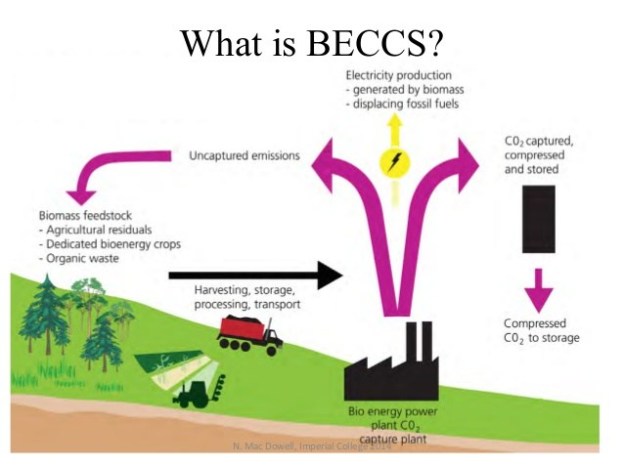
The new phase in the Lepse dismantlement also marks another step toward cleaning up naval and civilian nuclear debris in Northwest Russia. Almost exactly a year ago, the first containers of spent nuclear fuel that accrued over fifty years at Andreyeva Bay were hauled away for storage. Both are projects that Bellona has long advocated for.

During its career, the Lepse amassed 639 spent nuclear fuel assemblies in its holds, many from refueling the Lenin, the flagship Soviet icebreaker, between 1965 and 1967. The bulk of those fuel rods are damaged, and defy removal by conventional means.

Excerpts from Charles Digges, Anna Kireeva,  Russia to start breaking down one of its most radioactive ships next month, Bellona. org, Aug. 1, 2018

Mini-Green Grids

A forested village in Jharkhand state, eastern India, Narotoli is home mainly to adherents of Sarna, a nature-worshipping tribal religion. In more ways than one, it has long been off-grid… In 2018, it became one of the last in India to benefit from a push by Narendra Modi, the prime minister, to supply electricity to all the country’s villages. But the national power lines are so “reliably unreliable”, says an Indian executive, that they might as well be washing lines.

In 2016, before the national grid arrived, however, Mlinda, a social enterprise, had set up a “mini-grid”, a bank of batteries charged by solar panels and hooked up to homes, to guarantee round-the-clock power independent of the national network.  The power generated by the plant is expensive (though it costs less than villagers often pay for alternatives such as kerosene for lighting and diesel for irrigation pumps). The worry is that demand for electricity may not be enough to justify the installation cost. …But Mlinda and other mini-grid installers see them as more than a way to satisfy existing demand for electricity: they are a way to catalyse development. The installers advise villagers on irrigation, farming and marketing to help them develop businesses that require reliable electricity, which in turn justifies the expense of installation.

Vijay Bhaskar of Mlinda says a big mistake in development has been to assume that, once people are hooked up to electricity, businesses will automatically flourish. People have to be taught how to make the most of power, he says. “Bringing energy is the easy part. The hard part is finding productive ways to make use of it.”  According to one British expert, “mini-grid operators are not sellers of kilowatt-hours; they are stimulators of rural development.” Jaideep Mukherjee, the boss of Smart Power India, an NGO supported by the Rockefeller Foundation, says their job is to “demonstrate the benefits, train and then propagate”.

An independent study for Mlinda found that GDP per person in eight villages with mini-grids rose by 10.6% on average over the first 13 months, compared with 4.6% in a group of similar villages without them.  Mini-grids are being set up at the rate of just 100 or so a year, from Myanmar to Mozambique. But the International Energy Agency (IEA), a forecaster, says hundreds of thousands of them could connect 440m people by 2030, with the right policies and about $300bn of investment.

African countries used to focus almost exclusively on expanding national electricity networks. Now some, including Nigeria and Togo, have started to prioritise mini-grids. ..

Most mini-grids are green, unlike diesel, kerosene and coal- and gas-fired electricity. That is a welcome feature, though not the main aim, since the contribution of places like Narotoli to global warming is minuscule.

Excerpts from Mini-girds and development: Empowering Villages, Economist, July 14, 2018, at 61

How to Navigate the Rubble: DARPA

Imagine a natural disaster scenario, such as an earthquake, that inflicts widespread damage to buildings and structures, critical utilities and infrastructure, and threatens human safety. Having the ability to navigate the rubble and enter highly unstable areas could prove invaluable to saving lives or detecting additional hazards among the wreckage.

Dr. Ronald Polcawich, a DARPA program manager in the Microsystems Technology Office (MTO):”There are a number of environments that are inaccessible for larger robotic platforms. Smaller robotics systems could provide significant aide, but shrinking down these platforms requires significant advancement of the underlying technology.”

Technological advances in microelectromechanical systems (MEMS), additive manufacturing, piezoelectric actuators, and low-power sensors have allowed researchers to expand into the realm of micro-to-milli robotics. However, due to the technical obstacles experienced as the technology shrinks, these platforms lack the power, navigation, and control to accomplish complex tasks proficiently

To help overcome the challenges of creating extremely [Size, Weight and Power] SWaP-constrained microrobotics, DARPA is launching a new program called SHort-Range Independent Microrobotic Platforms (SHRIMP). The goal of SHRIMP is to develop and demonstrate multi-functional micro-to-milli robotic platforms for use in natural and critical disaster scenarios. To achieve this mission, SHRIMP will explore fundamental research in actuator materials and mechanisms as well as power storage components, both of which are necessary to create the strength, dexterity, and independence of functional microrobotics platforms.

“The strength-to-weight ratio of an actuator influences both the load-bearing capability and endurance of a micro-robotic platform, while the maximum work density characterizes the capability of an actuator mechanism to perform high intensity tasks or operate over a desired duration,” said Polcawich. “

Excerpts from Developing Microrobotics for Disaster Recovery and High-Risk Environments: SHRIMP program seeks to advance the state-of-the art in micro-to-milli robotics platforms and underlying technology, OUTREACH@DARPA.MIL, July 17, 2018

Drones for Renewable Energy

Utilities in Europe are looking to long-distance drones to scour thousands of miles of grids for damage and leaks in an attempt to avoid network failures that cost them billions of dollars a year. w altitudes over pipelines and power lines….Italy’s Snam, Europe’s biggest gas utility, told Reuters it is trialing one of these machines – known as BVLOS drones (Beyond Visual Line of Sight) because they fly ‘beyond the visual line of sight’ of operators – in the Apennine hills around Genoa. It hopes to have it scouting a 20 km stretch of pipeline soon.

France’s RTE has also tested a long-distance drone, which flew about 50 km inspecting transmission lines and sent back data that allowed technicians to virtually model a section of the grid. The company said it would invest 4.8 million euros ($5.6 million) on drone technology over the next two years.

At present, power companies largely use helicopters equipped with cameras to inspect their networks. They have also recently started occasionally using more basic drones that stay within sight of controllers and have a range of only about 500 meters.  However an industry-wide shift toward renewable energy, and the need to monitor the myriad extra connections needed to link solar and wind parks to grids, is forcing utilities to look at the advanced technology.  “It’s a real game changer,” Michal Mazur, partner at consultancy PwC, said of drones. “They’re 100 times faster than manual measurement, more accurate than helicopters and, with AI devices on board, could soon be able to fix problems.”

In-sight drones cost around 20,000 euros each and BVLOS ones will cost significantly more, according to executives at tech companies that make the machines for utilities, and a fleet of dozens if not hundreds would be needed to monitor a network.

Power grid companies are expected to spend over $13 billion a year on drones and robotics by 2026 globally, from about $2 billion now, according to Navigant Research.  But that is still dwarfed by the amount of money the sector loses every year because of network failures and forced shutdowns – about $170 billion, according to PwC…

BVLOS drone flights are largely prohibited because of safety concerns. However over the past year European watchdogs have for the first time granted special permits to allow utilities – namely RTE and Snam – to test prototypes. it…Xcel Energy (XEL.O) in April  2018 became the first American utility to gain approval for BVLOS flights.

Excerpts from Power to the drones: utilities place bets on robots, Reuters, July 16, 2018

Fukushima in 2018: Radioactive Mud

Radioactive cesium from the crippled Fukushima No. 1 nuclear power plant continued to flow into Tokyo Bay for five years after the disaster unfolded in March 2011, according to a researcher.  Hideo Yamazaki, a former professor of environmental analysis at Kindai University, led the study on hazardous materials that spewed from the nuclear plant after it was hit by the Great East Japan Earthquake and tsunami on March 11, 2011.

Five months after disaster caused the triple meltdown at the plant, Yamazaki detected 20,100 becquerels of cesium per square meter in mud collected at the mouth of the Kyu-Edogawa river, which empties into Tokyo Bay.  In July 2016, the study team detected a maximum 104,000 becquerels of cesium per square meter from mud collected in the same area of the bay, Yamazaki said.

He said cesium released in the early stages of the Fukushima disaster remained on the ground upstream of the river, such as in Chiba Prefecture. The radioactive substances were eventually washed into the river and carried to Tokyo Bay, where they accumulated in the mud, he said.

On a per kilogram basis, the maximum level of radioactivity of cesium detected in mud that was dried in the July 2016 study was 350 becquerels.  The government says soil with 8,000 becquerels or lower of radioactive cesium per kilogram can be used in road construction and other purposes.  The amount of radioactive cesium in fish in Tokyo remains lower than 100 becquerels per kilogram, the national safety standard for consumption.

Excerpts from  NOBUTARO KAJI,  Cesium from Fukushima flowed to Tokyo Bay for 5 years, June 7, 2018

A Gasfield and the Cows Next to it

High levels of a radioactive material and other contaminants have been found in water from a West Australian fracking site* but operators say it could be diluted and fed to beef cattle.  The revelations illustrate the potential risks associated with the contentious gas extraction process known as fracking, or hydraulic fracturing, as the Turnbull government pressures states to ease restrictions on the industry and develop their gas reserves.

The findings were contained in a report by oil and gas company Buru Energy that has not been made public. It shows the company also plans to reinject wastewater underground – a practice that has brought on seismic events when used in the United States.

Buru Energy has been exploring the potentially vast “tight gas” resources of the Kimberly region’s Canning Basin. The work was suspended when the WA government last year introduced a fracking moratorium, subject to the findings of a scientific inquiry.

In a submission to the inquiry obtained by the Lock the Gate Alliance, Buru Energy said a “relatively high concentration” of Radium-228…The samples exceeded drinking water guidelines for radionuclides. However Buru Energy said samples collected from retention ponds were below guideline levels and the water posed “no risk to humans or animals”.  Water monitoring also detected elevated levels of the chemical elements barium, boron and chloride….Buru Energy said while the water was not suitable for human consumption, the “reuse of flowback water for beef cattle may also be considered”.  The water did not meet stockwater guidelines but this could be addressed “through dilution with bore water”.

The company’s development in the Yulleroo area of the basin could lead to 80 wells operating over 20 years….The company insists its fracking fluids are non-toxic and to illustrate its safety, executive chairman Eric Streitberg drank the fluid at the company’s 2016 annual general meeting.

Excerpt from  Nicole Hasham Radioactive water reignites concerns over fracking for gas, Sydney Morning Herald, June 24, 2018

*Fracking, which involves injecting water mixed with chemicals and sand deep underground in order to fracture rock and release oil and gas, generates large amounts of wastewater. … In some cases, improper handling of this waste water has resulted in the release of radioactive fracking waste that has contaminated streams and rivers, Science Magazine, Apr 9, 2015

For Voices against Fracking in WA, Dont Frack WA

Fish, Gas and Minerals: the Arctic

Mr Xi has been showing a growing interest in Arctic countries. In 2014 he revealed in a speech that China itself wanted to become a “polar great power”..,,In January 2018 the Chinese government published its first policy document outlining its Arctic strategy.

China is also keen to tap into the Arctic resources that will become easier to exploit as the ice cap retreats. They include fish, minerals, oil and gas. The region could hold a quarter of the world’s as-yet-undiscovered hydrocarbons, according to the United States Geological Survey. Chinese firms are interested in mining zinc, uranium and rare earths in Greenland.

As the ice melts, it may become more feasible for cargo ships to sail through Arctic waters. China is excited by this possibility (its media speak of an “ice silk road”). In the coming decades such routes could cut several thousand kilometres off journeys between Shanghai and Europe. Sending ships through the Arctic could also help to revive port cities in China’s north-eastern rustbelt… China is thinking of building ports and other infrastructure in the Arctic to facilitate shipping. State-linked firms in China talk of building an Arctic railway across Finland.

Chinese analysts believe that using Arctic routes would help China strategically, too. It could reduce the need to ship goods through the Malacca Strait, a choke-point connecting the Pacific and Indian oceans. Much of China’s global shipping passes through the strait. It worries endlessly about the strait’s vulnerability to blockade—for example, should war break out with America.

There are no heated territorial disputes in the Arctic, but there are sensitivities, including Canada’s claim to the North-West Passage, a trans-Arctic waterway that America regards as international—ie, belonging to no single state.

Plenty of non-Arctic countries, including European ones, have similar dreams. But China is “by far the outlier” in terms of the amount of money it has pledged or already poured into the region, says Marc Lanteigne of Massey University in New Zealand. Its biggest investments have been in Russia, including a gas plant that began operating in Siberia in December 2017. Russia was once deeply cynical about China’s intentions. But since the crisis in Ukraine it has had to look east for investment in its Arctic regions.

The interest shown by Chinese firms could be good news for many Arctic communities. Few other investors have shown themselves willing to stomach the high costs and slow pay-offs involved in developing the far north…. The main concern of Arctic countries is that China’s ambitions will result in a gradual rewiring of the region’s politics in ways that give China more influence in determining how the Arctic is managed. Greenland is a place to watch. Political elites there favour independence from Denmark but resist taking the plunge because the island’s economy is so dependent on Danish support. The prospect of Chinese investment could change that. Should Greenland become independent, China could use its clout there to help further its own interests at meetings of Arctic states, in the same way that it uses its influence over Cambodia and Laos to prevent the Association of South-East Asian Nations from criticising Chinese behaviour in their neighbourhood.

Excerpts from The Arctic: A Silk Road through Ice, Economist, Apr. 14, 2018, at 37

Furthest from their Minds: greenhouse gases in Afirca

When sub-Saharan Africa comes up in discussions of climate change, it is almost invariably in the context of adapting to the consequences, such as worsening droughts. That makes sense. The region is responsible for just 7.1% of the world’s greenhouse-gas emissions, despite being home to 14% of its people. Most African countries do not emit much carbon dioxide. Yet there are some notable exceptions.

Start with coal-rich South Africa, which belches out more carbon dioxide than Britain, despite having 10m fewer people and an economy one-eighth the size. Like nearly all of its power plants, many of its vehicles depend on coal, which is used to make the country’s petrol (a technique that helped the old apartheid regime cope with sanctions). A petrochemical complex in the town of Secunda owned by Sasol, a big energy and chemicals firm, is one of the world’s largest localised sources of greenhouse gases.  Zambia is another exception. It burns so much vegetation that its land-use-related emissions surpass those of Brazil, a notorious—and much larger—deforester.

South Africa and Zambia may be extreme examples, but they are not the region’s only big emitters . Nigerian households and businesses rely on dirty diesel generators for 14GW of power, more than the country’s installed capacity of 10GW. Subsistence farmers from Angola to Kenya use slash-and-burn techniques to fertilise fields with ash and to make charcoal, which nearly 1bn Africans use to cook. This, plus the breakneck growth of extractive industries, explains why African forests are disappearing at a rate of 0.5% a year, faster than in South America. Because trees sequester carbon, cutting them counts as emissions in climate accounting.

Other African countries are following South Africa’s lead and embracing coal…A new coal-fired power plant ….Lamu in Kenya is one of many Chinese-backed coal projects in Africa…Africa’s sunny skies and long, blustery coastlines offer near-limitless solar- and wind-energy potential. But what African economies need now are “spinning reserves”, which can respond quickly to volatile demand, says Josh Agenbroad of the Rocky Mountain Institute, a think-tank in Colorado. Fossil fuels deliver this; renewables do not…. Several countries are intrigued by hybrid plants where most electricity is generated by solar panels, but diesel provides the spinning reserves…

Excerpts from  Africa and Climate Change: A Burning Issue, Economist,  Apr. 21, 2018, at 41.

Congo, China and Battery Minerals

The demand of cobalt is bound to increase because of the batteries needed to power  electric vehicles (EVs).  Each battery uses about 10kg of cobalt. It is widely known that more than half of the world’s cobalt reserves and production are in one dangerously unstable country, the Democratic Republic of Congo. What is less well known is that four-fifths of the cobalt sulphates and oxides used to make the all-important cathodes for lithium-ion batteries are refined in China. (Much of the other 20% is processed in Finland, but its raw material, too, comes from a mine in Congo, majority-owned by a Chinese firm, China Molybdenum.)

On March 14t, 2018 concerns about China’s grip on Congo’s cobalt production deepened when GEM, a Chinese battery maker, said it would acquire a third of the cobalt shipped by Glencore, the world’s biggest producer of the metal, between 2018 and 2020—equivalent to almost half of the world’s 110,000-tonne production in 2017. This is likely to add momentum to a rally that has pushed the price of cobalt up from an average of $26,500 a tonne in 2016 to above $90,000 a tonne

South Korean and Japanese tech firms and it’s a big concern of theirs that so much of the world’s cobalt sulphate comes from China. Memories are still fresh of a maritime squabble in 2010, during which China restricted exports of rare-earth metals vital to Japanese tech firms. China produces about 85% of the world’s rare earths.

Few analysts expect the cobalt market to soften soon. Production in Congo is likely to increase in the next few years, but some investment may be deterred by a recent five-fold leap in royalties on cobalt. Investment elsewhere is limited because cobalt is almost always mined alongside copper or nickel. Even at current prices, the quantities needed are not enough to justify production for cobalt alone.

But demand could explode if EVs surge in popularity… the use of cobalt for EVs could jump from 9,000 tonnes in 2017 to 107,000 tonnes in 2026.  The resulting higher prices would eventually unlock new sources of supply. But already non-Chinese battery manufacturers are looking for ways to protect themselves from potential shortages. Their best answer to date is nickel.

The materials most commonly used for cathodes in EV batteries are a combination of nickel, manganese and cobalt known as NMC, and one of nickel, cobalt and aluminium known as NCA. As cobalt has become pricier and scarcer, some battery makers have produced cobalt-lite cathodes by raising the nickel content—to as much as eight times the amount of cobalt. This allows the battery to run longer on a single charge, but makes it harder to manufacture and more prone to burst into flames. The trick is to get the balance right.

Strangely, nickel has not had anything like cobalt’s price rise. Nor do the Chinese appear to covet it… Nickel prices plummeted from $29,000 a tonne in 2011 to below $10,000 a tonne 2017…. But by 2025 McKinsey expects EV-related nickel demand to rise 16-fold to 550,000 tonnes.

In theory, the best way to ensure sufficient supplies of both nickel and cobalt would be for prices to rise enough to make mining them together more profitable. But that would mean more expensive batteries, and thus electric vehicles.

Excerpts from The Scramble for Battery Minerals, Economist, Mar. 24, 2018

Sailing the Seas Pollution Free

The shipping industry made a historic step toward cleaner air on April 13, 2018 with a deal to cut greenhouse gas emissions by half by 2050 compared to 2008…  Shipping and aviation were excluded from the Paris climate agreement adopted under a United Nations framework in 2015, with governments entrusting the International Maritime Organization (IMO) to come up with a consensus on carbon reduction measures from ocean going vessels.

The aviation sector reached a deal on carbon emissions in 2016, but it took shipping much longer as ocean carriers and regulators considered measures such as the adoption of clean-burning fuels or electric propulsion, slower sailing speeds and hull design improvements at a cost of hundreds of billions of dollars.  The deal puts the agreement into force world-wide, with no other action needed by the regulatory body. The final pact was a compromise between groups and countries including the European Union, China, and other Asia and Pacific nations that pushed for reductions in emissions by as much as 70% and the U.S., Argentina, Brazil and Saudi Arabia, among others, that pushed for lower targets.

Of the 173 IMO-member states, only the U.S. and Saudi Arabia, objected to the draft IMO agreement…Shipping contributes about 3% of total annual carbon dioxide (similar to an economy the size of Germany), or CO2, world-wide emissions, about the same as an economy the size of Germany, according to an IMO study. But vessel emissions are projected to increase by between 50% and 250% by 2050 as global trade grows and carriers add capacity without any action to intervene.  The IMO reductions would aim to cut carbon emissions to half the 2008 carbon dioxide levels.

The emission cuts will also affect thousands of exporters world-wide. Brazil, for example, exports large amounts of iron ore to China and fears strong caps will push up freight rates, helping rival Australia, whose iron exports sail half the distance to China.  Slow steaming, in which ships purposely throttle back to slower speeds, is also an anathema for countries exporting perishable goods like cherries from Chile and meat from Argentina.  Some countries with big shipping registries like the low-lying Marshall Islands, that want to stop the effects of climate change, led the call for strong cuts…

Excerpt from Shipping Regulators Reach Deal to Cut Carbon Emissions, Wall Street Journal,  Apr. 13, 2018

See also who is lobbying who on climate

A Nuclear Titanic? the First Floating Nuclear Plant

A massive floating nuclear power plant is now making its way toward its final destination at an Arctic port (April 30, 2018)… It’s the first nuclear power plant of its kind, Russian officials say.  Called the Akademik Lomonosov, the floating power plant is being towed at a creeping pace out of St. Petersburg, where it was built over the last nine years. It will eventually be brought northward, to Murmansk – where its two nuclear reactors will be loaded with nuclear fuel and started up in the fall of 2018.

From there, the power plant will be pulled to a mooring berth in the Arctic port of Pevek, in far northeast Russia. There, it will be wired into the infrastructure so it can replace an existing nuclear power installment on land.  Critics of the plan include Greenpeace, which recently warned of a “Chernobyl on ice if Russia’s plans to create a fleet of floating nuclear power stations result in a catastrophe.

Russian officials say the mandate of the Akademik Lomonoso is to supply energy to remote industrial plants and port cities, and to offshore gas and oil platforms.  “The nuclear power plant has two KLT-40S reactor units that can generate up to 70 MW of electric energy and 50 Gcal/hr of heat energy during its normal operation,” Rosatom said. “This is enough to keep the activity of the town populated with 100,000 people.”

It will take more than a year for the power plant to reach its new home port. The original plan had called for fueling the floating plant before it began that journey, at the shipyard in central St. Petersburg – but that was scuttled in the summer of 2017, after concerns were raised both in Russia and in countries along the power plant’s route through the Baltic Sea and north to the Arctic. Rosatom says it hopes the floating nuclear power plant will be online in 2019.

Excerpts from Russia Launches Floating Nuclear Power Plant; It’s Headed To The Arctic, NPR, Apr. 30, 2018

Nuclear Waste and Nuclear Energy, Uganda

Mukono- Residents of Kitoba village in Mukono District have opposed plans by the Uganda Atomic Energy Council (AEC) to construct a nuclear and atomic waste site in the area.  The residents fear the dump for non-functional atomic equipment, including X-rays and cancer machines, will compromise their safety.  Already, the residents at Canaan Sites are suspicious of a container that has been standing on the 11.5 acres of land acquired by the AEC in 2011.

But AEC executive secretary Deogratias Luwalira told the residents that the Energy ministry acquired the land to implement a five-year master plan.
He told the residents at Kichwa Primary School in Mpoma during a community awareness meeting on that the Energy ministry acquired the land to build AEC headquarters, staff accommodation, laboratories, atomic/nuclear storage facility, and sports fields.

“The equipment to be kept here has no safety hazards. The store will have a safety case that will be operated in a safe manner,” Mr Luwalira said.
He said radioactive wastes are currently scattered in different parts of the country and needed to be secured in one central location…

In the meantime, Uganda plans to be the first African nation to develop nuclear power, see IAEA gives node as Uganda pushes for nuclear power use (jan. 2018)

Excerpts Mukono rejects radioactive waste site, http://www.monitor.co.ug/, Apr. 10, 2018

OPL 245: an Affair to Remember and Sanction

Nigeria has long ignited interest from oil firms, but it can be a dangerously combustible environment when it comes to the risk of corruption. Two firms caught up in scandals are Royal Dutch Shell and Eni, Italy’s state-backed energy group.

The case centres on the purchase of a big offshore oil field known as OPL 245, and touches the top ranks of both firms. In the dock will be, among others, Eni’s current CEO, Claudio Descalzi, and Shell’s former exploration chief, Malcolm Brinded. Also on trial are the firms themselves, charged with failing to prevent bribery. The individuals face jail if convicted; the companies face fines. All deny wrongdoing.

In 2011 Shell and Eni jointly paid the Nigerian government $1.3bn for OPL 245. Prosecutors allege they knew the government would pass $1.1bn of the funds to a shell company called Malabu, controlled by Dan Etete, a former oil minister. They claim the companies had reason to believe Mr Etete would use much of what he received to pay off officials, including Nigeria’s president at the time, Goodluck Jonathan. They also suspect that more than $50m may have gone to Shell and Eni executives as kickbacks. Mr Jonathan has denied involvement. Mr Etete faces charges in Nigeria; his whereabouts are unknown…

International investors are particularly vexed about the alleged involvement of Shell, a blue-chip oil major. In 2017, after e-mails were leaked, it admitted that executives had known that much of the purchase price would go to Mr Etete, a convicted money-launderer. In the e-mails, they speculated that funds might flow on to Mr Etete’s political friends. One investor says that Shell, by emphasising for so long who the contract was with, not where the money was going, honoured the letter but not the spirit of good governance—“and that’s not good enough anymore”.

Excerpts from The OPL 245 Affair: Drillers in the Dock, Economist, Mar. 3, 2018

The Expoitation of Seabed

Patania One became in May 217the first robot in 40 years to be lowered to the sea floor in the Clarion Clipperton Zone (CCZ), about 5,000 metres beneath the Pacific ocean…There it gathered data about the seabed and how larger robots might move carefully across it, sucking up valuable minerals en route.

The CCZ is a 6m square-kilometre (2.3m square-mile) tract between two of the long, straight “fracture zones” which the stresses of plate tectonics have created in the crust beneath the Pacific. Scattered across it are trillions of fist-sized mineral nodules, each the result of tens of millions of years of slow agglomeration around a core of bone, shell or rock. Such nodules are quite common in the Pacific, but the CCZ is the only part of the basin where the International Seabed Authority (ISA), which regulates such matters beyond the Exclusive Economic Zones (EEZs) of individual countries, currently permits exploration. Companies from Japan, Russia, China and a couple of dozen other countries have been granted concessions to explore for minerals in the CCZ. The ISA is expected to approve the first actual mining in 2019 or 2020.

This could be big business. James Hein of the United States Geological Survey and colleagues estimated in a paper in 2012 that the CCZ holds more nickel, cobalt and manganese than all known terrestrial deposits of those metals put together. The World Bank expects the battery industry’s demand for these, and other, minerals to increase if the transition to clean energy speeds up enough to keep global temperatures below the limits set in the Paris agreement on climate.

One of the firms attracted by this vast potential market is DEME, a Belgian dredging company ….Korea, Japan and China all have state-run research projects looking to dredge nodules from the deep sea with robots: “It really is a race,” says Kris Van Nijen, who runs DEME’s deep-sea mining efforts…

[It was expected]that deep-sea mining would develop rapidly by the 1980s. A lack of demand (and thus investment), technological capacity and appropriate regulation kept that from happening. The UN Convention on the Law of the Sea (UNCLOS), which set up the ISA, was not signed until 1982. (America has still not ratified it, and thus cannot apply to the ISA for sea-floor-mining permits.)

Mr Van Nijen and his competitors think that now, at last, the time is right. DEME is currently building Patania Two, or P2… In order to satisfy the ISA, this new machine does not just have to show it can harvest nodules; it also has to show that it can do so in an environmentally sensitive way. Its harvesting will throw up plumes of silt which, in settling, could swamp the sea floor’s delicate ecosystem. A survey of CCZ life in 2016 found a surprising diversity of life. Of the 12 animal species collected, seven were new to science…

The CCZ is not the only sea floor that has found itself in miners’ sights. Nautilus, a Canadian firm, says it will soon start mining the seabed in Papua New Guinea’s EEZ for gold and copper, though at the time of writing the ship it had commissioned for the purpose sits unfinished in a Chinese yard. A Saudi Arabian firm called Manafai wants to mine the bed of the Red Sea, which is rich in metals from zinc to gold. There are projects to mine iron sands off the coast of New Zealand and manganese crusts off the coast of Japan. De Beers already mines a significant proportion of its diamonds from the sea floor off the coast of Namibia, although in just 150 metres of water this is far less of a technical challenge.

If the various precautions work out, the benefits of deep-sea mining might be felt above the water as well. Mining minerals on land can require clearing away forests and other ecosystems in order to gain access, and moving hundreds of millions of tonnes of rock to get down to the ores. Local and indigenous people have often come out poorly from the deals made between miners and governments. Deep-sea mining will probably produce lower grade ores, but it will do so without affecting human populations.

Undersea Mining: Race to the Bottom, Economist, Mar. 10, 2018

Well blowouts and Pipeline breakdowns: Who Profits?

The global oil spill management market size is projected to grow beyond USD 125.62 billion by 2024. Growing incidents of oil spilling in the past along with severe safety and environmental policies are likely to propel the market over the forecast phase (2016-2024). Also, escalating pipeline and seaborne shipping of crude oil and chemicals could positively impact the market further.  The market is fragmented by technologies, techniques, applications, and regions. Technologies are Pre-oil spill and Post-oil spill. Pre-oil spill segment is divided into double-hull, pipeline, leak detection, blow-out preventers, and others. Double-hulling was the dominant segment in 2015 with highest shares.

Marine trade registers for a majority of petroleum products and natural gas transportation. Mounting demand for crude and petroleum products oil in Europe and Asia Pacific will boost the maritime trade growth further. Post-oil spill segments are mechanical, chemical, biological, and physical. Chemical and mechanical containment and recovery are the techniques used in the industry….In 2015, onshore post-oil spill sector was valued close to 60% of the total market demand. Regions such as Norway, U.S, Mexico, Canada, U.S., China, and Nigeria have observed well blowouts and occurrences of pipeline breakdowns. This could be accredited to huge market diffusion in past

Main regions in the market encompass North America, Europe, Asia Pacific, the Middle East and Africa (MEA), and Central & South America. North America was the leading market for pre-oil spill management. It was estimated at 40.1% of total demand in 2015. This region will potentially face lucrative demand due to production activities and increasing oil & gas discovery. Pre-oil spill management shares in Asia Pacific will gain over USD 21,540 million by 2024…  Top companies in the global oil spill management market include OMI Environmental Solutions, Skim Oil Inc., American Green Ventures Inc., and Spill Response Services.

Excerpts from Global Oil Spill Management Market Size is Projected to Grow Beyond USD 125.62 Billion by 2024, Hexa Research Press Release, Mar. 17, 2018

Let the Race Begin: Nuclear Saudi Arabia v. Iran

In the desert 220km (137 miles) from Abu Dhabi, the capital of the United Arab Emirates (UAE), a South Korean firm is close to finishing the Arab world’s first operational nuclear-power reactor. The project started ten years ago in Washington, where the Emiratis negotiated a “123 agreement”. Such deals, named after a clause in America’s export-control laws, impose tough safeguards in return for American nuclear technology. When the UAE signed one in 2009, it also pledged not to enrich uranium or reprocess spent fuel into plutonium. Both can be used to make nuclear weapons. Arms-control wonks called it the gold standard of 123 deals.

Saudi Arabia… has its own ambitious nuclear plans: 16 reactors, at a cost of up to $80bn. But, unlike the UAE, it wants to do its own enrichment. Iran, its regional rival, is already a step ahead. The most controversial provision of the nuclear deal it signed with world powers in 2015 allows it to enrich uranium. Iran did agree to mothball most of the centrifuges used for enrichment, and to process the stuff only to a level far below what is required for a bomb. Still, it kept the technology. The Saudis want to have it, too… Indeed, critics of the Iran deal fear that a Saudi enrichment programme would compromise their effort to impose tighter restrictions on Iran. But Donald Trump, America’s president, is less concerned. He has close ties with the Saudis. He has also pledged to revitalise America’s ailing nuclear industry. Among the five firms bidding for the Saudi project is Westinghouse, an American company that filed for bankruptcy last year. It would not be able to join the project without a 123 agreement…One is Rosatom, Russia’s state-owned nuclear-power company, which is pursuing a frenetic sort of nuclear diplomacy in the Middle East. In December it signed a $21.3bn contract to build Egypt’s first power reactor. Jordan inked a $10bn deal with the Russians in 2015. Despite their differences, particularly over Syria, the Saudis are keen to have closer ties with the region’s resurgent power [Russia]. King Salman spent four days in Moscow in October 2017, the first such visit by a Saudi ruler.

Excerpt from Nuclear Power in the Middle East: An Unenriching debate, Economist,  Feb. 10, 2018

The Arctic through China’s Eyes

China on  January 25, 2018 outlined its ambitions to extend President Xi Jinping’s signature Belt and Road Initiative to the Arctic by developing shipping lanes opened up by global warming.  Releasing its first official Arctic policy white paper, China said it would encourage enterprises to build infrastructure and conduct commercial trial voyages, paving the way for Arctic shipping routes that would form a “Polar Silk Road”…China, despite being a non-Arctic state, is increasingly active in the polar region and became an observer member of the Arctic Council in 2013.

Among its increasing interests in the region is its major stake in Russia’s Yamal liquefied natural gas project which is expected to supply China with four million tonnes of LNG a year.

Shipping through the Northern Sea Route would shave almost 20 days off the regular time using the traditional route through the Suez Canal. COSCO Shipping has also previously sailed vessels through the Arctic’s northeast passage.

China’s increasing prominence in the region has prompted concerns from Arctic states over its long-term strategic objectives, including possible military deployment…The white paper said China also eyes development of oil, gas, mineral resources and other non-fossil energies, fishing and tourism in the region. China’s Belt and Road initiative aims to connect China to Europe, the Middle East and beyond via massive infrastructure projects across dozens of countries…

Excerpts from China unveils vision for ‘Polar Silk Road’ across Arctic, Reuters, Jan. 25, 2018

The Geopolitics of Enriched Uranium: controlling Urenco

The Japanese government has entered into negotiations to acquire U.K.-based Urenco, a major European producer of enriched uranium, in a deal that is expected to be worth several billions of dollars.  The state-owned Japan Bank for International Cooperation is expected to make an offer together with U.S. nuclear energy company Centrus Energy [formely known as United States Enrichment Corporation].  The not-so-ulterior motive is to block companies from Russia and China — two countries that are increasing their influence in the global nuclear power market — from taking control of the company.

The Japanese government is holding talks with major shareholders of Urenco, sources close to the matter said. Ownership of Urenco is evenly split by three parties — the governments of the U.K. and the Netherlands as well as German electric utilities including RWE.The German side is exploring a sale as the government plans to phase out nuclear power. The U.K. government, working on fiscal consolidation, is also looking for a buyer.  Urenco is engaged in turning natural uranium into enriched uranium, which is critical in generating nuclear power [and nuclear weapons]. The company ranks second in the world after Tenex — a unit of Russian nuclear concern Rosatom — in terms of capacity to produce enriched uranium, holding a global share of around 30%…

According to the Japan Atomic Industrial Forum, China had 35 nuclear reactors in operation as of January 2017, while Russia had 30. Including reactors in the planning stage, however, the numbers grow to 82 in China and 55 in Russia, surpassing Japan’s 53.

Excerpts from Japan in talks over bid for UK uranium powerhouse, Nikkei Asian Review, Jan. 19, 2018

The Right to Drinkable Water and Uranium Mining in the USA

[T]he uranium mining industry in the United States is renewing a push into the areas adjacent to Navajo Nation, Utah: the Grand Canyon watershed to the west, where a new uranium mine is preparing to open, and the Bears Ears National Monument to the north.

The Trump administration is set to shrink Bears Ears National Monument by 85 percent in February 2018, potentially opening more than a million acres to mining, drilling and other industrial activity….[T]here were more than 300 uranium mining claims inside the monument, according to data from Utah’s Bureau of Land Management (B.L.M.) office that was reviewed by The New York Times.  The vast majority of those claims fall neatly outside the new boundaries of Bears Ears set by the [Trump] administration. And an examination of local B.L.M. records, including those not yet entered into the agency’s land and mineral use authorizations database, shows that about a third of the claims are linked to Energy Fuels, a Canadian uranium producer. Energy Fuels also owns the Grand Canyon mine, where groundwater has already flooded the main shaft.

Energy Fuels, together with other mining groups, lobbied extensively for a reduction of Bears Ears, preparing maps that marked the areas it wanted removed from the monument and distributing them during a visit to the monument by Mr. Zinke, Energy Secretary,  in May 2017.

The Uranium Producers of America, an industry group, is pushing the Environmental Protection Agency to withdraw regulations proposed by the Obama administration to strengthen groundwater protections at uranium mines. Mining groups have also waged a six-year legal battle against a moratorium on new uranium mining on more than a million acres of land adjacent to the Grand Canyon…

Supporters of the mining say that a revival of domestic uranium production, which has declined by 90 percent since 1980 amid slumping prices and foreign competition, will make the United States a larger player in the global uranium market.  It would expand the country’s energy independence, they say, and give a lift to nuclear power, still a pillar of carbon-free power generation. Canada, Kazakhstan, Australia, Russia and a few other countries now supply most of America’s nuclear fuel.

The dwindling domestic market was thrust into the spotlight by the contentious 2010 decision under the Obama administrationthat allowed Russia’s nuclear agency to buy Uranium One, a company that has amassed production facilities in the United States. The Justice Department is examining allegations that donations to the Clinton Foundation were tied to that decision.

“If we consider nuclear a clean energy, if people are serious about that, domestic uranium has to be in the equation,” said Jon J. Indall, a lawyer for Uranium Producers of America. “But the proposed regulations would have had a devastating impact on our industry.” “Countries like Kazakhstan, they’re not under the same environmental standards. We want a level playing field.”…

In Sanders, Arizona, hundreds of people were exposed to potentially dangerous levels of uranium in their drinking water for years, until testing by a doctoral researcher at Northern Arizona University named Tommy Rock exposed the contamination.  “I was shocked,” Mr. Rock said. “I wasn’t expecting that reading at all.”

Mr. Rock and other scientists say they suspect a link to the 1979 breach of a wastewater pond at a uranium mill in Church Rock, N.M., now a Superfund site. That accident is considered the single largest release of radioactive material in American history, surpassing the crisis at Three Mile Island.

It wasn’t until 2003, however, that testing by state regulators picked up uranium levels in Sanders’s tap water. Still, the community was not told. Erin Jordan, a spokeswoman for the Arizona Department of Environmental Quality, said the department had urged the now-defunct local water company for years to address the contamination, but it had been up to that company to notify its customers….The town’s school district, whose wells were also contaminated with uranium, received little state or federal assistance. It shut off its water fountains and handed out bottled water to its 800 elementary and middle-school students.  “I still don’t trust the water,” said Shanon Sangster, who still sends her 10-year-old daughter, Shania, to school with bottled water. “It’s like we are all scarred by it, by the uranium.”

Excerpts from HIROKO TABUCHIJAN,  Uranium Miners Pushed Hard for a Comeback. They Got Their Wish,  NY Times, Jan. 13, 2018

Air, Water, Waste and Death

The UN Environment and WHO have agreed a new, wide-ranging collaboration to accelerate action to curb environmental health risks that cause an estimated 12.6 million deaths a year.

On January 10, 2018 in Nairobi, Mr Erik Solheim, head of UN Environment, and Dr Tedros Adhanom Ghebreyesus, Director-General of WHO, signed an agreement to step up joint actions to combat air pollution, climate change and antimicrobial resistance, as well as improve coordination on waste and chemicals management, water quality, and food and nutrition issues. The collaboration also includes joint management of the BreatheLife advocacy campaign to reduce air pollution for multiple climate, environment and health benefits

“Our health is directly related to the health of the environment we live in. Together, air, water and chemical hazards kill more than 12.6 million people a year. This must not continue,” said WHO’s Tedros.  He added: “Most of these deaths occur in developing countries in Asia, Africa and Latin America where environmental pollution takes its biggest health toll.”

Excerpts from, UN Environment and WHO agree to major collaboration on environmental health risks, Press Release, Jan. 10, 2017

Fake Nuclear Leaks:

Russia, which for years has used its vast supply of natural gas as a political lever with energy-hungry Europe, is building a nuclear power plant in Moscow-friendly Belarus. Neighboring Lithuania and Poland are so determined to escape Russia’s clutch that they refused to buy electricity from the plant.

Still, the $11 billion Ostrovets nuclear-power project, 30 miles from Lithuania’s capital, Vilnius, is fueling fears in the Baltic republic. Lithuanians say they don’t think Moscow would actually trigger a nuclear accident but they do worry about a panic-inducing warning of a leak—real or not.  “Even a fake message about the disaster could trigger a lot of damage to our country,” said Lithuanian President Dalia Grybauskaitė. “We treat this as a national security threat.”  Evacuating Vilnius would be massively disruptive, lower the country’s defenses, and increase its vulnerability to potential covert action by Russia…

Infrastructure projects are seen as potential weapons in other parts of the world. South Korea so fears North Korea will use its Imnam hydroelectric dam to try to flood Seoul that it spent $429 million building its own dam in defense. China’s new artificial islands in the South China Sea are seen by the U.S. and its allies as permanent aircraft carriers…

European officials are divided over the potential threat from the Ostrovets plant. Rosatom has projects around Europe, including nuclear power plants under construction in Hungary and Finland. Accidents are bad for business, even false alarms, say energy experts.

Excerpts from Russia Nuclear Plant Worries Europe, Wall Street Journal,  Dec. 24, 2017

Exploiting Chaos: water management in the Middle East

A water crisis rooted in wasteful irrigation, climate change and dam-building is imperiling [the wetlands of Iraq] again.

A weakened flow into the Tigris and Euphrates rivers means that salt water from the Persian Gulf can now seep upstream into the marshes. This, coupled with farming run-off that has boosted salinity,threatens wetland wildlife, vegetation and the local Marsh Arabs who have depended on them for millennia.  The problem is partly home-made. Iraq’s irrigation methods are often wasteful, and the equipment tends to be rickety. Many farmers rely on thirsty crops such as rice. Politicians have in the past secured extra water for their upstream districts at the marshes’ expense. Reform-minded technocrats are forced to contend with deep-rooted corruption, the distracting and costly fight against the Islamic State (IS) group, and low oil prices, all of which have drained state coffers.

But other problems lie beyond Iraq’s control. For decades dams built in Syria, Turkey and Iran have swallowed up the waters of the Tigris, Euphrates and other rivers feeding the marshes. New dams due to open in Turkey, including the 1,200-megawatt Ilisu Dam, could further restrict the flow of the Tigris.

Talks over these dams have been inconclusive, partly because the Syrian and Iraqi states barely function and partly because IS has controlled swathes of the Euphrates. Turkey may be tempted to exploit its upstream position.

Climate change is taking its toll, too. Last summer temperatures of about 54°C were recorded in southern Iraq, among the hottest ever.

If only Iran, Iraq, Syria and Turkey would share their waters as amicably as the Danube countries do… Dam levels should be calibrated during wet and dry years to ensure steadier flows. Iraqi officials might also ponder novel solutions, he says, such as renting storage at the Ilisu Dam for use when needed. Yet stronger countries have exploited their advantages rather than seek compromise

Excerpts from Iraq’s Wetlands: Drying Up Again,  Economist,  Sept. 16, 2017

Cut or Pay up: Net Negative Carbon Emissions

Sweden’s parliament passed a law in June which obliges the country to have “no net emissions” of greenhouse gases into the atmosphere by 2045. The clue is in the wording. This does not mean that three decades from now Swedes must emit no planet-heating substances; even if all their electricity came from renewables and they only drove Teslas, they would presumably still want to fly in aeroplanes, or use cement and fertiliser, the making of which releases plenty of carbon dioxide. Indeed, the law only requires gross emissions to drop by 85% compared with 1990 levels. But it demands that remaining carbon sources are offset with new carbon sinks. In other words greenhouse gases will need to be extracted from the air

[I]f the global temperature is to have a good chance of not rising more than 2ºC above its pre-industrial level, as stipulated in the Paris climate agreement of 2015, worldwide emissions must similarly hit “net zero” no later than 2090. After that, emissions must go “net negative”, with more carbon removed from the stock than is emitted…

To keep the temperature below a certain level means keeping within a certain “carbon budget”—allowing only so much to accumulate, and no more. Once you have spent that budget, you have to balance all new emissions with removals. If you overspend it…you have a brief opportunity to put things right by taking out more than you are putting in…

Climate scientists like Mr Henderson have been discussing negative-emissions technologies (NETs) with economists and policy wonks since the 1990s. [But] NETs were conspicuous by their absence from the agenda of the annual UN climate jamboree which ended in Bonn on November 17th 2017.

 Reforesting logged areas or “afforesting” previously treeless ones presents no great technical challenges. More controversially, they also tend to invoke “bioenergy with carbon capture and storage” (BECCS). In BECCS, power stations fuelled by crops that can be burned to make energy have their carbon-dioxide emissions injected into deep geological strata, rather than released into the atmosphere….

The Carbon Capture and Storage (CCS)  technologies that exist today, under development by companies such as Global Thermostat in America, Carbon Engineering in Canada or Climeworks of Switzerland, remain pricey. In 2011 a review by the American Physical Society to which Ms Wilcox contributed put extraction costs above $600 per tonne, compared with an average estimate of $60-250 for BECCS…

Much of the gas captured by Climeworks and other pure NETs firms (as opposed to fossil-fuel CCS) is sold to makers of fizzy drinks or greenhouses to help plants grow. It is hard to imagine that market growing far beyond today’s total of 10m tonnes. And in neither case is the gas stored indefinitely. It is either burped out by consumers of carbonated drinks or otherwise exuded by eaters of greenhouse-grown produce…..

One way to create a market for NETs would be for governments to put a price on carbon. Where they have done so, the technologies have been adopted. Take Norway, which in 1991 told oil firms drilling in the North Sea to capture carbon dioxide from their operations or pay up. This cost is now around $50 per tonne emitted; in one field, called Sleipner, the firms have found ways to pump it back underground for less than that. A broader carbon price—either a tax or tradable emissions permits—would promote negative emissions elsewhere, too…

Another concern is the impact on politicians and the dangers of moral hazard. NETs allow politicians to go easy on emission cuts now in the hope that a quick fix will appear in the future.

Excerpt from Sucking up Carbon, Combating Climate Change, Economist,  Nov. 18, 2017

Staying in Svalbard

Svalbard has an unusual status that makes it a flashpoint of an escalating face-off in the Arctic between Russia and the West.  Norway, a member of the North Atlantic Treaty Organization, and Russia subsidize unprofitable mines to keep a strategic footprint on an icy group of islands where Oslo and Moscow have been the main players since a 1920 treaty among multiple nations recognized Norwegian sovereignty but allowed other nations to develop some commercial interests. (pdf).

NATO has described its lack of maritime resources in the region as a weakness.  “Svalbard is part of Norway and therefore it’s part of NATO,” Secretary-General Jens Stoltenberg. “So, of course, all the NATO security guarantees apply to Svalbard. When it comes to the question of coal mining, that’s for the Norwegian authorities to decide.”…

Oslo is planning to buy new submarines and has increased the number of troops on its border with Russia.  But Norway, one of the world’s richest countries on a per capita basis, is debating whether to keep financing coal mining on Svalbard. A renewed commitment to mining would be controversial, not just for the cost but also because of Norwegians’ vision of themselves as champions of environmental causes…

“It’s a question of how much are we going to spend doing something irrational versus how great do we feel the need to counter Russian Arctic activity,” said Indra Overland, head of energy at the Norwegian Institute of International Affairs, a think tank that is partially funded by the state…

Some 800 miles from the North Pole, the islands are barren, with temperatures that dip to minus-20 degrees Celsius (minus-4 degrees Fahrenheit) in winter months when the sun doesn’t rise.  Miners on both sides are attracted by relatively high salaries. Barentsburg’s 400 inhabitants are also provided with health care, a school and low-cost housing.Russia, which started mining here in the 1930s, focused on Barentsburg and another settlement called Pyramiden. The towns housed swimming pools, 24-hour canteens and food products that were then largely unavailable elsewhere in the Soviet Union…

Russia’s government has ordered coal production to slow to stretch reserves out until 2032, and will then face a decision similar to Norway’s on whether to invest in a new mine…

Both countries are turning to tourism.  In Russia’s settlements, visitor numbers have doubled in the past four years, and income from tourism stood at $2.4 million last year, more than from mining. Arktikugol received $8 million in government subsidies in 2016….Norway has opened a university, and one closed coal mine has become a museum and film archive. Old miners’ cabins have been renovated for holiday accommodation and a warehouse is now a restaurant.

But Norwegian politicians and academics admit that without a coal mine, their country’s presence will diminish, in part because tourism is so seasonal.  “To put it bluntly, the purpose of the Norwegian settlements is to assert Norwegian sovereignty over Svalbard,” said Torbjørn Pedersen, a political scientist at Nord University in Bodø, Norway

Excerpts from A New Cold War Grip Arctic Enclave, Wall Street Journal, Oct. 11, 2017

Don’t Cut that Tree!

A revolutionary new approach to measuring changes in forest carbon density has helped scientists determine that the tropics now emit more carbon than they capture, countering their role as a net carbon “sink.”*

“These findings provide the world with a wakeup call on forests,” said scientist Alessandro Baccini, the report’s lead author….Forests are the only carbon capture and storage ‘technology’ we have in our grasp that is safe, proven, inexpensive, immediately available at scale, and capable of providing beneficial ripple effects—from regulating rainfall patterns to providing livelihoods to indigenous communities.”

Using 12 years (2003-2014) of satellite imagery, laser remote sensing technology and field measurements, Baccini and his team were able to capture losses in forest carbon from wholesale deforestation as well as from more difficult-to-measure fine-scale degradation and disturbance …from smallholder farmers removing individual trees for fuel wood. These losses can be relatively small in any one place, but added up across large areas they become considerable.

[T] he researchers discovered that tropics represent a net source of carbon to the atmosphere — about 425 teragrams of carbon annually – which is more than the annual emissions from all cars and trucks in the United States.

Excerpts from New approach to measuring forest carbon density shows tropics now emit more carbon than they capture, Woods Hole Research Institute Press Release, Sept. 28, 2017

*Tropical forests are a net carbon source based on aboveground measurements of gain and loss by A. Baccini et al., Science, Sept. 28, 2017

Unjustifiable Extinctions

The world’s botanic gardens contain at least 30% of all known plant species, including 41% of all those classed as ‘threatened’, according to the most comprehensive analysis to date of diversity in ‘ex situ’ collections: those plants conserved outside natural habitats.

The study, in September 2017 in the journal Nature Plants, found that the global network of botanic gardens conserves living plants representing almost two-thirds of plant genera and over 90% of plant families.  However, researchers from the University of Cambridge discovered a significant imbalance between temperate and tropical regions. The vast majority of all plants species grown ex situ are held in the northern hemisphere. Consequently, some 60% of temperate plant species were represented in botanic gardens but only 25% of tropical species, despite the fact that the majority of plant species are tropical.

For the study, researchers analysed datasets compiled by the Botanic Gardens Conservation International (BGCI)….

“The global network of botanic gardens is our best hope for saving some of the world’s most endangered plants,” said senior author Dr Samuel Brockington, a researcher at Cambridge’s Department of Plant Sciences as well as a curator at the University’s own Botanic Garden….“Currently, an estimated one fifth of plant diversity is under threat, yet there is no technical reason why any plant species should become extinct.   “If we do not conserve our plant diversity, humanity will struggle to solve the global challenges of food and fuel security, environmental degradation, and climate change.”

The plants not currently grown in botanic gardens are often more interesting than those that are, say the researchers. Hydrostachys polymorpha, for example, an African aquatic plant that only grows in fast flowing streams and waterfalls, or the tiny parasitic plant Pilostyles thurberi – only a few millimetres long, it lives completely within the stem tissue of desert shrubs.  Species from the most ancient plant lineages, termed ‘non-vascular’ plants, are currently almost undocumented in botanic gardens – with as few as 5% of all species stored in the global network. These include plants such as the liverworts and mosses.

“Non-vascular species are the living representatives of the first plants to colonise the land,” said Brockington. “Within these plants are captured key moments in the early evolutionary history of life on Earth, and they are essential for understanding the evolution of plants”

Excerpts from World’s botanic gardens contain a third of all known plant species, and help protect the most threatened, Press Release of Botanic Gardens Conservation International, Sept. 25, 2016

Disused, Dangerous and Nuclear

Most of radioactive waste arising from nuclear applications consists of disused sealed radioactive sources (DSRS). Radioactive sources are used in different devices in medical, industrial and agricultural facilities. They have to be accounted for and when they are no longer usable, they have to be recovered, dismantled, stored and, as the case may be, prepared for transportation. Therefore, countries with or without nuclear power programmes have to make sure they have the ability to properly manage them. The IAEA is supporting capacity building in both regulatory framework and operation and can support removal operations. The IAEA is also developing tools (mobile tool kits, mobile hot cells, transport packages) and supporting the strengthening of regional capabilities.

In an effort to scale up the safe and secure management of disused sealed radioactive sources (DSRS), the IAEA on September 19, 2017 introduced a new concept of Qualified Technical Centres.

“At the IAEA we receive a large number of requests for assistance in characterization, conditioning and removal of all categories of DSRS,” said Christophe Xerri, Director of the IAEA Division of Nuclear Fuel Cycle and Waste Technology, Xerri, Director, IAEA Division of Nuclear Fuel Cycle and Waste Technology  “The idea behind this initiative is to increase the worldwide capability to manage DSRS by encouraging countries with well-equipped centres and trained personnel to provide technical services for the management of DSRS, within their countries and regionally.”…

The IAEA regularly dispatches expert missions to Member States to provide advice and guidance for the recovery and conditioning of DSRS. The most recent missions include recovery and conditioning of DSRS in Honduras in July, in Ghana in August and in Malaysia in September 2017…

During the event, experts from several Member States highlighted recent projects and activities related to DSRS management. Participants learned details of a South American Source Removal Project, with 29 sources to be removed from five countries. The event also included presentations on national regulatory infrastructure for inventories of radioactive sources and progress made on the integration of mobile hot cell with borehole disposal system.

Excerpts from IAEA Announces Concept of Qualified Technical Centres for the Management of Disused Sealed Radioactive Sources, IAEA Department of Nuclear Energy, Sept. 19, 2017

When Price is Not the Issue: nuclear power

Georgia Power Co. Thursday told state regulators it wants to continue the Vogtle nuclear power plant expansion in spite of sharply higher estimates of the cost to complete the project.

The recommendation from the Southern Co. subsidiary to the Georgia Public Service Commission means that at least part of the new wave of nuclear construction in the U.S. might be salvaged. Recently, owners of a plant in South Carolina abruptly halted construction of two new nuclear reactors due to cost overruns.

Georgia Power said that the total capital cost of the project is now expected to be about $19 billion, compared with an estimate of $9.7 billion in 2008. That figure doesn’t include financing costs.

Georgia Power Chief Executive Paul Bowers said the company took the long view…Once complete, the two new nuclear units will be in service for 60 to 80 years, he said. “There are naysayers in the marketplace but they are looking at it in the short-term perspective,” Mr. Bowers said. ..

Plant Vogtle in Georgia and V.C. Summer in South Carolina were supposed to be the leading edge of the next generation of nuclear reactors in the aging U.S. nuclear power fleet. They are years behind schedule and billions of dollars over budget, and main contractor Westinghouse Electric Co. has filed for bankruptcy. In July 2017, owners abandoned work on the half-built South Carolina project, due to swelling costs.

Excerpts from  Georgia Power Persist in Project, Wall Street Journal, Sept. 1, 2017

Lithium Resources and Markets

Lithium is a coveted commodity. Lithium-ion batteries store energy that powers mobile phones, electric cars and electricity grids (when attached to wind turbines and photovoltaic cells). Joe Lowry, an expert on the lightest metal, expects demand to nearly triple by 2025. Supply is lagging, which has pushed up the price. Annual contract prices for lithium carbonate and lithium hydroxide doubled in 2017, according to Industrial Minerals, a journal. That is attracting investors to the “lithium triangle” that overlays Argentina, Bolivia and Chile .  The region holds 54% of the world’s “lithium resources”, an initial indication of potential supply before assessing proven reserves.

Chile dominated the world lithium markets for decades. The Atacama salt flat has the largest and highest-quality proven reserves. The desert’s blazing sun, scarce rainfall and mineral-rich brines make Chile’s production costs the world’s lowest. Allied to this is the region’s most benign investment climate. Chile is far ahead in rankings of ease of doing business, levels of corruption, and the quality of its bureaucracy and courts (see charts). Its lithium deposits are close to Antofagasta and other Chilean ports;

But growth has flattened, allowing Australia to threaten Chile’s position as the world’s top producer…Laws enacted in the 1970s and 1980s classify lithium as a “strategic” material on the ground that it can be used in future nuclear-fusion power plants. There is little prospect that Chile will soon build one of these, but controls on lithium production remain as a way of protecting the desert’s fragile ecosystem.

Just two companies, Chile’s SQM and Albemarle of the United States, are allowed to extract brine under leases that were signed in the 1980s. In addition, they are subject to quotas on the lithium they can produce from the brine, which also yields other minerals

Argentina: Under the constitution, provinces, not the federal government, own the country’s minerals. Mining firms had to find their way through a confusion of provincial rules and regulations. “It was like the Tower of Babel,” says Daniel Meilán, the country’s current mining secretary. I Argentina’s newish president, Mauricio Macri, has tried to unblock investment, including that in lithium….  The federal government is trying to harmonise provincial regulations. It has hammered out agreement on a standard royalty (3% of revenue, plus 1.5% to improve local infrastructure)…

These advances have started to unfreeze investment in lithium. In 2016 the sector attracted $1.5bn; production rose by nearly 60%……..Ending the metal’s strategic status and getting rid of quotas would make still more sense. So would improving Chile’s institutions and infrastructure.

Under the left-wing government led by President Evo Morales since 2006, Bolivia has pulled out of numerous bilateral investment treaties, denying investors access to international arbitration. His government has nationalised parts of the oil and gas industries, along with the biggest telecoms company and most of the electricity sector.  The government keeps an even tighter grip on lithium than it does on gas, its biggest export. YPFB, the state-owned natural-gas company, at least enters into joint ventures with private-sector firms. Since 2010 the right to extract lithium brine has been reserved for the state. Private firms can now do no more than gaze longingly upon the Uyuni salt flat near Potosí, the largest in the world…

Like Chile, Bolivia hopes to form partnerships with private firms to make value-added products, including batteries and electric cars, through a new lithium enterprise, Yacimientos de Litio Bolivianos. But the government’s insistence on keeping a controlling stake is discouraging potential investors. In 2016 Bolivia sold 25 tonnes of lithium carbonate to China, pocketing a princely $208,000.

The white gold rush: The lithium triangle, Economist, June 17, 2017

The Nuclear Fuel Bank in Kazakhstan

Kazakhstan has chosen August 29, 2017 for the opening ceremony of the first Low Enriched Uranium Bank (LEU Bank), being established in Kazakhstan under the auspices of the International Atomic Energy Agency (IAEA).

The idea to establish the LEU bank was initially put forward in 2006 by Sam Nunn, co-founder of the Nuclear Threat Initiative (NTI), a non-profit organization… The IAEA authorised the initiative in 2010 and Kazakhstan volunteered the following year to host the bank.

Previously Kazakhstan voluntarily had destroyed the 1,400 nuclear weapons it inherited from the collapse of the Soviet Union in 1991….Kazakhstan was the first to close, at the end of Soviet days, the largest nuclear test site in the world, the Semipalatinsk test site, where 500 nuclear explosions took place,” he said, adding the LEU Bank is another example of Kazakh efforts to address the nuclear weapons issue.

The LEU bank will operate as a mechanism of last resort; in case of unforeseen disruption in a commercial market of uranium, countries that are unable to procure uranium for their nuclear power plants can request LEU from the bank under certain conditions. Thus, it will ensure a global nuclear fuel supply and facilitate nuclear non-proliferation efforts.The bank will be based at the Ulba Metallurgy Plant in Ust-Kamenogorsk in eastern Kazakhstan. The plant has dealt with and stored nuclear materials for more than 60 years without any incidents.  The funding is based on voluntary contributions from the NTI, the U.S., the European Union, the United Arab Emirates, Norway, Kuwait, and Kazakhstan, which in total equals to $150 million, believed to be enough to procure 90 tonnes of low enriched uranium.

Excerpt from  Colin Stevens, 29 August opening of Kazakhstan Low Enriched Uranium Bank, EU Report, July 24, 2017

The Nuclear Supply Chain

The report from the Energy Futures Initiative released on August 15, 2017 by former Energy Secretary Ernest Moniz calls for greater federal investment in the US huclear-power industry. The report calls for expanded government loan guarantees, tax incentives and research on nuclear technology.

Nuclear power makes up about 20 percent of U.S. electricity generation, but the industry has been struggling.  Five nuclear plants, with a combined capacity of 5 gigawatts, have closed early since 2013, and an additional six plants are scheduled to shutter early over the next nine years. Of the two new nuclear plants under construction in the U.S., one was halted by Scana Corp. in July 2017 and backers of the other, Southern Co.’s Vogtle plant in Georgia, are seeking additional aid from the federal government.

Westinghouse Electric Co., the nuclear technology pioneer that is part of Toshiba Corp., went bankrupt in March, after it hit delays with its AP1000 reactors at each of those plants. After it declared bankruptcy, Westinghouse — whose technology is used in more than half the world’s nuclear power plants — said it shifted its focus from building reactors to helping dismantle them.

The U.S. needs companies and engineers that can both build and run nuclear enterprises…. The U.S. Navy’s reactors require supplies and qualified engineers, and American nuclear scientists fill vital national security roles, it said.  Companies, such as BWX Technologies Inc. of Lynchburg, Virginia manufacture nuclear components for both the commercial nuclear industry and naval reactors. If the commercial business collapses, that may mean one less company able to process highly enriched uranium, according to the report.

“A shrinking commercial enterprise will have long term spillover effects on the Navy supply chain, including by lessened enthusiasm among American citizens to pursue nuclear technology careers,” according to the report.

In addition to extending a tax credit for new nuclear power and the Energy Department’s loan guarantee program, the report says the federal government could also direct the Federal Energy Regulatory Commission to “place a greater emphasis on the national security importance of nuclear power and its associated supply chain.”

Excerpts from Moniz: Nuclear Power’s Woes Imperil US National Security, Bloomberg, Aug. 15, 2017


Nuclear plutonium Live

South Carolina is suing the U.S. government to recover $100 million in fines it says the Department of Energy owes the state for failing to remove one metric ton of plutonium stored there.  The lawsuit was filed on August 7, 2017.

Congress approved fines of $1 million per day for the first 100 days of each year through 2021, beginning 2016, if the weapons-grade plutonium was not removed from the Savannah River Site at the state’s border with Georgia, the attorney general’s office said.   The federal government cannot break its obligations and “leave South Carolina as the permanent dumping ground for weapons-grade plutonium” said in the complaint.

Built in the 1950s, the U.S.-owned Savannah River Site processes and stores nuclear materialss.  A U.S. treaty with Russia in 2000 [The Plutonium Disposition Agreement]* required each country to dispose of 34 metric tons of weapons-grade plutonium, left over from the Cold War.

The United States began building a mixed oxide fuel fabrication facility, known as the MOX project, at the Savannah River Site to dispose of weapons-grade plutonium by mixing it with uranium to form safer fuel pellets for use in commercial nuclear reactors.  But the project is years overdue and billions over budget, and the technology for the new fuel fabrication is not fully developed. Russian President Vladimir Putin in October 2016 pulled out of the plutonium pact amid rising tensions over Ukraine and Syria.  The Trump administration proposed in the fiscal year 2018 budget to scrap the project and pursue diluting the plutonium and disposing it underground, an alternative called for by the Obama administration.

Excerpts from   Harriet McLeod, South Carolina seeks $100 million from U.S. over plutonium removal, Reuters,  Aug. 9, 2017

*through which the United States and Russia agreed to immobilize 68 metric tons of weapons-grade plutonium.

Melted Nuclear Fuel at Fukushima

jA robot operating deep inside a failed reactor at the stricken Fukushima nuclear plant north of Tokyo has revealed what appears to be stalactites of melted nuclear fuel, the plant’s operator has said.  The discovery is considered a key development in the decommissioning process of the plant, which suffered a catastrophic meltdown in 2011 after a huge tsunami swamped the facility.

Operating remotely within submerged parts of the Fukushima Daiichi plant’s Unit 3 reactor, the robot sent back 16 hours worth of images of massive, lava-like fuel deposits on the floor of the pedestal, a part of the reactor that sits underneath and supports the core….The discovery is key to determining how to further advance the cleanup of the plant, a process that is expected to take decades.  “This was the first time that we could confirm the status inside the pedestal,” TEPCO spokesperson Maki Murayama said. “This is a big step towards the decommission process.”..

Having entered the stricken Pressure Containment Vessel (PCV) through a pipe designed to prevent the escape of radioactive gas, the robot descended into the cooling water which accumulated following the accident.  The device was equipped with thrusters to navigate through the water, and featured front and rear cameras.  The small “radiation-hardened, screw-driven” submersible robot was designed to fit through the narrow, 14-centimeter (5.5-inch) diameter entrance of the pipe, according to the Tokyo-based International Research Institute for Nuclear Decommissioning (IRID), which developed the device alongside technology company Toshiba.

As the robot navigates through the ruined reactor, melted equipment and the fuel deposits can be seen.

The mission was launched after previous photographic inspection of the Unit 3 reactor suggested that, “during the accident, fuel assemblies melted from the excess heat, dropping from their original position down to the pedestal area,” according to a statement released by TEPCO.

Excerpt from Euan McKirdy and Yoko Wakatsuki, Fukushima robot reveals first sign of melted fuel in submerged reactor, CNN, July 24, 2017

The Future of Nuclear Waste: Czech Republic

Czech plans for dealing with nuclear waste have been put under the spotlight once again thanks to a European Commission warning calling for the country to outline its plans for deal with nuclear waste. The Czech Republic was last week one of five states which the Commission said had failed to pass on their long-term nuclear waste plans by the original deadline of August 2015. The other countries include, somewhat ironically, largely non-nuclear Austria, Italy, Portugal, and Croatia.

The Czech Republic has around 10,000 tonnes of high radioactive nuclear waste, mostly stemming from the spent fuel of its nuclear power plants which begin operating in the mid-1980s, but also from other civil activities. The spent fuel is stored on site at nuclear power plants but the barrels containing it will wear out long before the contents become safe.

The Czech Republic set out a strategy to deal with high radioactive nuclear waste already in 2002 with the main focus on finding a deep storage site. The preliminary search has been focused on seven localities which are reckoned to be geologically suitable as well as near the Dukovany nuclear power plant. But there have been vociferous public protests at most of the sites causing the current government to back down and promise that no steps will be taken in the face of opposition. Even so, a timeline for choosing a deep repository has already been set with the selection of a site due to take place in 2025, construction started in 2050, and the final facility ready by 2065.

But the aged 2002 strategy is now being updated with public consultation part of the process. Environmentalists on one side argue that the existing framework focused primarily on the search for a deep repository should be overhauled and that the country should take its time and keep its options option with technological advancement likely offering other options for radioactive waste in the near future. 

Excerpts from BRUSSELS CALLS FOR CZECH STRATEGY FOR RADIOACTIVE WASTE, Radio Prague, July 24, 2017

Nuclear Power in South Korea

South Korea, one of the world’s largest nuclear electricity producers, will scrap plans to add nuclear power plants, its president said on June 19, 2017, signaling a shift in decades of reliance on nuclear energy.  President Moon Jae-in said South Korea will move away from nuclear energy and will not seek to extend the life of existing plants.  He also vowed to cut South Korea’s reliance on coal. South Korea will shut 10 old coal power plants and stop building more coal power plants.

“So far South Korea’s energy policy pursued cheap prices and efficiency. Cheap production prices were considered the priority while the public’s life and safety took a backseat,” Moon said at a ceremony marking the shutdown of the country’s oldest power plant, Kori 1, in Busan, home to South Korea’s largest cluster of nuclear power plants. “But it’s time for a change.”

The speech was Moon’s followup on his presidential campaigns to cut coal and nuclear power. Greenpeace and other environmental groups welcomed Moon’s announcement.

Since the Kori 1 reactor went online in 1978, the resource poor-country added 24 nuclear power plants to meet rising demand for electricity from rapid industrialization and economic development. In 2016, a third of electricity in South Korea was produced from nuclear power plants. Its nuclear power production from 25 nuclear plants in 2016 was the fifth-largest in the world, according to the World Nuclear Association.

South Korea is also one of the few countries that have exported its nuclear reactor technology… building a nuclear reactor in United Arab Emirates.

But South Koreans’ enthusiasm for nuclear energy quickly waned following the 2011 Fukushima meltdowns in its neighbor Japan. In the following year, fake parts scandals prompted an investigation and spread fear over nuclear plants’ safety. Recent earthquakes in southeastern South Korea also dented public support in the country that was long believed to be safe from earthquakes. South Korea is also searching for answers on how and where to store spent nuclear fuels permanently.

To decommission the Kori 1 reactor, South Korea plans to invest developing its own decommissioning technology and experts in the area. The decommissioning will take at least 15 years and cost 643.7 billion won ($569 million or 64 billion yen), the energy ministry said.

The 2020 Deadline for Fuel Oil

Circle January 2020 on your calendar for what could be a major disruption to the energy market and a jolt to the global economy.The origin of the problem isn’t some oil cartel’s machinations, a looming war or even a technological shift — it is a bureaucratic body that few people have heard of: the International Maritime Organization. Just 30 months from now the cargo vessels that are the lifeblood of global trade will be required to cut the sulfur content in their fuel from 3.5% to 0.5%.

Ships move more than 10 billion tons of cargo a year and do it far more efficiently than road or rail, but it comes at a high cost in terms of overall pollution because ships use fuel oil, which is just about the cheapest, dirtiest stuff to come out of refineries. About 9% of all sulfur dioxide emitted globally comes from ships, contributing to acid rain and many premature deaths annually. Even the new cap is 500 times the sulfur content of most road diesel.

Even with significant investment, refiners may not be ready and ships may have to burn more expensive marine diesel.”Marine diesel affects land diesel which affects jet fuel which affects gasoline,” explains Mr. Tallett. That could cause the prices of those fuels to go up by 10% to 20%.

The only solution may be to simply refine more oil, which means increasing overall demand, to get enough low-sulfur fuel out of the world’s refineries. The International Energy Agency worried about the impact in a February 2017 report, yet it assumes many ships will install marine scrubbers to clean the dirty fuel and that refiners will add units to reduce sulfur content — both expensive propositions.

Excerpts from High Seas are to Deliver a Shock to Energy Sector, Wall Street Journal, June 7, 2017

Seaborne Gas: LNG

One day in March 2017, he Rioja Knutsen tanker, filled with liquefied natural gas, was traveling from the U.S. to Portugal. Suddenly, Mexico’s power company lobbed in a higher bid for its cargo. At the Bahamas, the ship abruptly made a starboard turn and headed south.  How natural gas is bought and sold in the world’s scattered regional markets for the fuel is changing rapidly. Ships such as the Rioja Knutsen are stitching those regions together and a single global market is emerging.  This is already how nearly every other hydrocarbon, from crude oil to obscure petrochemicals, is sold. As gas joins the club, the effects will ripple through energy prices, company profits, the environment and geopolitics.

Behind the evolution is improving technology for moving gas as a liquid, which means it can go to many more places rather than simply where a pipeline runs. …The share of gas moving by sea reached 40% of total trades in 2015, and the International Energy Agency forecasts that seaborne gas will account for a bigger share of trading than pipelines by 2040.

Thirty-nine countries now import LNG, up from 17 a decade ago, according to data and analytics firm IHS Markit. Several more, among them Uruguay, Bahrain and Bangladesh, are expected to lift the total to 46 in the next couple of years.

In one sign of how gas is going global, the U.S. and China are working on a trade deal that could send vast quantities of gas pumped in Texas and Pennsylvania to factories in Shanghai and Guangdong. Improved access for U.S. exporters to China’s giant energy markets could boost overall global shipments…

As LNG import terminals open in more locations, gas pricing and trading mechanisms are developing as well. Some investors are increasingly using the gas price at a pipeline intersection in Louisiana, called the Henry Hub, as a global benchmark.  Trading in the New York Mercantile Exchange’s Henry Hub gas futures contract is becoming more global, said Peter Keavey, global head of energy at Nymex owner CME Group . In May, Standard & Poor’s and the Intercontinental Exchange launched the first futures contract based on LNG produced in the U.S.

Seaborne gas is reducing some countries’ historic dependence on pipelines that run through potentially unfriendly territory. Poland, for instance, opened its first import terminal a year ago, lessening its reliance on gas piped from Russia.

When global trade in LNG began in the 1960s, the cost of liquefying gas was so high it was a niche product, affordable only by developed countries such as Japan.  As the technology proved reliable, trade in LNG became more common, but contracts to deliver the fuel by ship were decades long and had ironclad destination clauses. Gas contracted for Tokyo couldn’t be rerouted to Seoul. Traders called gas tankers “pipelines at sea.Now, contracts are getting shorter and starting to allow gas to be diverted to where demand is greatest. Earlier this year, three large LNG buyers in Japan, China and South Korea agreed to work together to push sellers for more contract flexibility and fewer onerous restrictions.

At any given time, there are about 170 tankers filled with LNG on the world’s oceans,… At the heart of the changes is supply. Huge new discoveries in the U.S., Middle East, East Africa and Australia, along with recovery techniques such as fracking, have expanded the amount of gas available for export….One pioneer is Houston-based Cheniere Energy Inc. FBy next year, Sabine Pass and other LNG terminals are expected to turn the U.S. into a net gas exporter….In a quest for customers, Cheniere has invested in a Chilean project to build a power plant, LNG terminal, storage facility and pipeline.   Oil titans Total SA and Royal Dutch Shell PLC also are offering to build facilities to burn gas. The two and their partners are building an import terminal and pipeline for an estimated $200 million in Ivory Coast, which will feed a power plant in the West African country’s economic hub of Abidjan. Qatar, the longtime LNG leader, recently lifted a self-imposed moratorium on the development of its North Field, the single largest gas reservoir in the world. So far there is little indication Qatar’s diplomatic spat with Arab neighbors will affect the gas market.

Helping make gas more accessible is a relatively new technology—floating LNG facilities. ..The first floating terminal was christened in 2005. Today there are 25….Excelerate Energy, a Houston company that developed this technology, is working on new floating terminals in Namibia, Bangladesh, Pakistan and elsewhere. The equipment to liquefy gas can also now be put on a large vessel that can be anchored offshore.

Excerpts from Long Promised, the Global Market for Natural Gas Has Finally Arrived, Wall Street Journal, June 7, 2017

Qatar-Russia Financial Alliance

Russia’s sale of one-fifth of its state-owned oil company to Qatar and commodities giant Glencore PLC last year had an unusual provision: Moscow and Doha agreed Russia would buy a stake back, people familiar with the matter said.  Russian President Vladimir Putin hailed the $11.5 billion sale of the Rosneft stake in December 2016 as a sign of investor confidence in his country. But the people with knowledge of the deal say it functioned as an emergency loan to help Moscow through a budget squeeze.

Moscow agreed with Qatar that Russia would buy back at least a portion of the stake from the rich Persian Gulf emirate, the people said. The Qatar Investment Authority and Glencore, the Swiss-based commodities giant, formed a partnership to buy the 19.5% stake in Russia’s energy jewel at a time when Mr. Putin’s government needed cash. The people with knowledge of the deal say the buyback arrangement was negotiated with involvement from Mr. Putin and the emir of Qatar, Sheikh Tamim bin Hamad Al Thani. Russia and Qatar saw it as an opportunity to build a bridge between countries that had taken up opposite sides in the Syrian civil war, the people said. One of the people said the buyback would happen in the next 10 years…

Rosneft, the world’s largest listed oil producer, is traded publicly in Moscow, but it isn’t easy to buy and sell large pieces of the company because it remains majority-owned by the Russian state and is an instrument of economic power for Mr. Putin.  The people familiar with the deal said a time-limited structure and a buyback agreement for the deal worked for both Qatar and Russia.

Qatar wanted its Rosneft stake to be temporary, the people said. The emirate believes it will profit from selling the shares back to Russia at a later date, the people said, betting that oil prices will rise and push up Rosneft’s share price. Qatar saw the political benefits of giving Russia access to quick cash as a sort of loan to address a budget deficit that had widened due to lower oil prices, the people said.  After the deal, a range of talks opened between Russian and Qatari businesses on a scale not seen before, Russian news agencies have reported….The deal was called the largest-ever foreign investment in a Russian company.

In an unusual arrangement, the rest of the financing was provided by Russian banks, which contributed EUR2.2 billion, and Italian bank Intesa Sanpaolo SpA, which lent EUR5.2 billion to the Glencore-Qatar consortium, according to a Dec. 10, 2016 new release issued by Glencore. The financing is “non-recourse,” Glencore said in the release, meaning the lenders couldn’t pursue Glencore and the Qatar Investment Authority if they weren’t repaid….Under the deal, the Rosneft shares aren’t held directly by Glencore and Qatar but by a U.K. limited liability partnership, according to British corporate records….

After the deal was announced, Mr. Putin awarded one of Russia’s top honors for foreigners — the Order of Friendship — to Qatar Investment Authority’s chief executive, Sheikh Abdullah bin Mohammed bin Saud Al-Thani, Intesa’s chief executive, Carlo Messina, and Glencore’s chief executive, Ivan Glasenberg.

Excepts from Russia’s Rosneft Stake Sale Had a Twist , Wall Street Journal, June 8, 2017


Final Development Frontier in Nepal

While India, Pakistan and China have all developed massive hydropower plants along the Himalayan mountains, Nepal’s civil war and political instability scared off investment for decades.  Now, thanks to an inclusive peace process that allowed the country’s main rebel leader to be elected prime minister twice, the focus is shifting to Nepal. Hydropower projects worth billions of dollars are in progress, with geologists and investors scouring the landscape for more.

Government surveys show Nepal’s abundant water resources can feasibly yield hydropower equal to more than 40% of U.S. output, a 40-fold increase from today. Officials project almost a third more hydropower capacity will come online this year. More than 100 projects under construction—over 40 since last year—and others in development will yield at least a tenfold increase in the next decade to 10 gigawatts of power, they say.

Nepal is ramping up its development of hydroelectric power plants in the Himalayas, but building in the region can be risky work. Photo: Brian Sokol for The Wall Street Journal  “There’s such an energy shortage that any project you build will find a market,” said Allard Nooy, CEO of InfraCo Asia, a development body funded by the U.K., Swiss and Australian governments that is financing one hydro project and seeking to develop two more.

Still, power companies don’t face an easy ride.  Among the hurdles are natural ones: earthquakes, landslides and inland tsunamis from glacial lakes as warmer temperatures prompt ice melt. Two years ago a series of massive quakes killed 9,000 people and shattered the country.

Opposition from environmental groups is another difficulty, especially for a new generation of dam projects. In the past, the World Bank and Japan’s Asian Development Bank have withdrawn support for projects amid opposition from environmental groups that say large dams can damage natural habitats like wetlands, threaten migratory fish stocks, and displace traditional farming communities.

Activists are concerned over the effects hydropower projects have on the environment and communities. Here are some of their top worries.

Displacement Dams flood valleys and in many cases require communities to abandon their land. A number of dam projects under consideration in Nepal would require whole villages to relocate.
Earthquakes A growing body of research suggests large dams can trigger quakes by adding pressure to areas near fault lines, a phenomenon known as “reservoir-induced seismicity.”
Wildlife Projects can disrupt the natural migration of fish and other river life. Environmentalists in Nepal are particularly concerned about the country’s small population of endangered Ganges River Dolphins.
Seasonal River-based hydropower projects, which are popular in Nepal, only generate electricity when water is flowing, making them less effective in the dry season. Dams can generate power in any season.

The greater stability has boosted momentum for rising investment in the Himalayas—a region dominated by Nepal, India and Bhutan that is considered the final development frontier in South Asia. Hydro energy projects are the biggest focus.  “The only resource we have, like the Arabian countries have oil, is water,” said Chhabi Gaire, project manager at the Rasuwagadhi Hydroelectric Project, a 1f11-megawatt plant under construction near China’s border.

Funding for projects is increasingly coming from Nepalese working abroad, says the Nepal Electricity Authority. Their remittances reached $6.7 billion in 2015, according to the World Bank, more than even Thai and South Korean workers abroad sent to their own countries.  Meanwhile, India’s cabinet approved $850 million in February to build a plant on Nepal’s Arun River that would export most of its energy to India. A month earlier, the Chinese-state owned China Three Gorges Company agreed to a joint venture with Nepal’s government to build a $1.6 billion hydropower plant on Nepal’s Seti River, also mainly for electricity export to India…

Workers on Nepal’s hydropower projects face sometimes deadly risks in the steep mountain valleys of the Himalayas such as landslides, falling boulders and flash floods…  [T] he 456-megawatt Upper Tamakoshi project, funded by a group of Nepal’s major banks and pension funds, is now under construction and set to open in mid-2018 with a reservoir to enable energy generation in the dry season.  It’s is also a risky project.

To the East the dangerous glacial lake Tsho Rolpa threatens to burst its banks. To the West, the Gongar river routinely spits boulders the size of two-story buildings over the valley wall. A bridge the developers built over the Gongar was swept away in a flash flood during monsoon season. Landslides triggered by quakes swept away swaths of the access road. To keep working, project developers built a steel truss bridge and drilled a new road tunnel through a collapsed valley wall.  Moreover, the project is built on such volatile terrain that the turbines and delicate transmission equipment were buried 460 feet beneath the surface.

Excerpts from In the Himalayas, a New Power Rises: Water, Wall Street Journal, May 18, 2017


Japan’s Nuclear Waste

Japan seeks final resting place for highly radioactive nuclear waste…[W]ith a number of Japan’s nuclear reactors closed down for good in the wake of the Fukushima accident, the need for a permanent storage site is more pressing than ever.

The disaster, in which a 13-meter tsunami triggered by an off-shore earthquake crippled four reactors at the plant and caused massive amounts of radioactivity to escape into the atmosphere, also underlined just how seismically unstable the Japanese archipelago is and the need for the repository to be completely safe for 100,000 years.

“They have been trying to get this plan of the ground for years and one thing they tried was to offer money to any town or village that agreed to even undergo a survey to see if their location was suitable,” she said.  “There were a number of mayors who accepted the proposal because they wanted the money – even though they had no intention of ever agreeing to host the storage site – but the backlash from their constituents was fast and it was furious,” Smith added.  “In every case, those mayors reversed their decisions and the government has got nowhere,” she said. “But I fear that means that sooner or later they are just going to make a decision on a site and order the community to accept it.”

The security requirements of the facility will be exacting, the government has stated, and the site will need to be at least 300 meters beneath the surface in a part of the country that is not subject to seismic activity from active faults or volcanoes. It must also be safe from the effects of erosion and away from oil and coal fields. Another consideration is access and sites within 20 km of the coast are preferred.

The facility will need to be able to hold 25,000 canisters of vitrified high-level waste, while more waste will be produced as the nation’s nuclear reactors are slowly brought back online after being mothballed since 2011 for extensive assessments of their safety and ability to withstand a natural disaster on the same scale as the magnitude-9 earthquake that struck Fukushima.

When it is released, the government’s list is likely to include places in Tohoku and Hokkaido as among the most suitable sites, because both are relatively less populated than central areas of the country and are in need of revitalization efforts. Parts of Tohoku close to the Fukushima plant may eventually be chosen because they are still heavily contaminated with radiation from the accident.

Excerpts from Japan seeks final resting place for highly radioactive nuclear waste, Deutsche Welle, May 4, 2017

Nuclear Power in the United States: Westinghouse bankruptcy

Westinghouse founded in 1886 is the company that brought electricity to the masses.  Its AP1000 pressurised water reactor was supposed to make nuclear plants simpler and cheaper to build, helping to jump-start projects in America and around the world.  But those nuclear ambitions have gone awry. On March 29th the firm filed for Chapter 11 bankruptcy in New York. Its troubles have been a running sore at Toshiba, its Japanese parent, a headache for its creditors, and the latest bad tidings for a nuclear industry beset with problems.

Toshiba was triumphant in 2006 when it paid $5.4bn for Westinghouse after a bidding war, beating out General Electric. Around the same time, Southern and SCANA, two big utilities based in Georgia and South Carolina, respectively, chose the AP1000 design for new nuclear plants.But these American projects soon faced the problems that have long plagued nuclear construction. In Westinghouse’s bankruptcy filing, the company explains a dismal chain reaction. Unexpected new safety and other requirements from American regulators caused delays and additional costs. That sparked a fight between the utilities, Westinghouse and its construction contractor, a subsidiary of Chicago Bridge & Iron (CB&I), about who should bear them. The brawl exacerbated delays…

There have been rumours that Korea Electric Power, a state-controlled utility, might take over, but Westinghouse’s steep losses may keep it away. “This has bankrupted Westinghouse,” says Mr Byrd. “Why would another firm step into that situation?”

The future for other AP1000 reactors looks bleak. A plant in China is years behind schedule. In America, the troubles in Georgia and South Carolina may bolster support for more modest nuclear projects, says Tyson Smith, a nuclear-energy expert at Winston & Strawn, a law firm. On March 15th, 2017 the country’s nuclear regulator said it would review an application for America’s first small modular nuclear reactor (SMR), from a company called NuScale, in Oregon. The SMR technology has been touted as a cheaper, easier way to build nuclear capacity. But it will have to compete with inexpensive natural gas, wind farms and solar plants. Those hoping for an American nuclear resurgence may have to wait a long time yet.

Excerpts Fallout Westinghouse files for bankruptcy, Economist, Apr. 1, 2017

Taxing Carbon Emissions: EU

The European Union wants to slash greenhouse-gas emissions to 80% below 1990 levels by 2050. It is on course to cut just half that amount. To get back on track, on February 15th, 2017 the European Parliament voted for a plan to raise the cost for firms to produce carbon. It has prompted growing calls for the bloc to tax the carbon emissions embodied in the EU’s imports. At best, such a levy will barely curb emissions. At worst, it could cause a trade war.

The EU’s latest reforms try to put up the price of carbon by cutting the emissions allowances firms are granted. They include the EU’s first border tax on carbon, levied on cement imports.

Under the EU’s reforms, steelmakers in Europe would pay up to €30 ($32) to emit a tonne of carbon, but foreign producers selling in the EU would not have to pay a cent. Putting an equivalent tax on these imports is a neat solution to this problem. “It’s wonderful in theory,” says Jean Chateau, an economist at the OECD, a club of rich countries. But “in reality it’s very problematic.”

One big problem is how to calculate the carbon in imports. This is not easy even for simple steel sheets; for items made of several bits of metal from different sources, it is hellishly complex. Some countries might even refuse to provide the information. And any method brought in for foreign firms, if not applied to local ones, could fall foul of WTO rules,..

A global carbon price would produce far greater economic benefits than border taxes, but would require closer international co-operation. A trade war is not the way to get there.

Excerpts from Steely defences: Carbon tariffs and the EU’s steel industry, Economist,  Feb. 18, at 62

The Future of Recycling

About 90 percent of the 8 billion soda cans sold in California every year get turned in for recycling and a 5¢ refund. But cheaper commodity prices, plus lower Chinese demand for America’s used bottles and cans, have upended the economics of the state’s recycling industry. Over the past two years, California’s recycling rate has fallen enough to relegate more than 2 billion containers a year to landfills.  About 700 of the 2,400 redemption centers California had in 2011 have closed, according to CalRecycle, the state’s recycling agency, the majority in the past year. The mostly small companies that run the shedlike centers in parking lots outside grocery stores are being squeezed by a commodity bust that’s lowered the price they receive for recycled glass, plastic, and aluminum. The price they have to pay consumers for this detritus has stayed fairly high. A state subsidy program that was supposed to help make up the difference hasn’t kept up.,,

The decline in the value of scrap is draining California’s Beverage Container Recycling Fund, which relies on the proceeds from bottle deposits consumers pay upfront to reimburse redemption centers. As of June 30, it had $195 million, down from $246 million a year earlier. At this rate, it’s expected to run out of money in the first half of 2018.

“There’s been a massive crisis and a massive failure to respond to that crisis,” says Susan Collins, president of the Container Recycling Institute, an advocacy group in Southern California. Collins says the state needs to boost its “outdated” payment formula by as much as $1 million a month or follow other states, where bottling companies pay recycling centers a fixed amount per container. A spokesman for CalRecycle says the state is looking at all options.

China is the largest destination for U.S. scrap exports, taking about 11 percent by volume in 2015. Since 2013, under a government program called Operation Green Fence, China has been aggressively inspecting and in some cases turning away bottles and cans that are mixed in with food waste or other nonrecyclable scrap. The policy has forced waste processors in the U.S. to screen discarded containers more carefully, driving up costs and diminishing the value of some waste.

Excerpts from California’s Recycling Industry is in the Dumps, Bloomberg Business Week, Oct. 6, 2016

Power Grid: smart and sensitive

Raytheon Company  and Utilidata have formed a strategic alliance to help power utilities proactively detect, defend against and respond to cyber threats.  The effort will combine Utilidata’s experience in the use of real-time data from the electrical grid to detect and respond to cyber attacks and Raytheon’s expertise in proactive cyber threat hunting, automation and managed security services to provide world-class cybersecurity, analytics and other innovative technologies….

[According to] Scott DePasquale, chairman and CEO of Utilidata. “With more and more devices and systems connected to the internet, and all of them needing electrical power, these challenges are increasing exponentially. This new alliance will help define the future of cybersecurity in the power utilities sector.”  In December 2015, a cyber attack shut down a large section of the Ukrainian power grid – an incident that the Department of Energy identified in the 2017 installment of the Quadrennial Energy Review as an ‘indicator of what is possible.’

Excerpts from  Raytheon, Utilidata to deliver defense-grade cybersecurity for utilities, PRNewswire, Feb. 8, 2017

Scorpion Robots at Fukushima

Hopes have been raised for a breakthrough in the decommissioning of the wrecked Fukushima Daiichi nuclear plant after its operator said it may have discovered melted fuel beneath a reactor, almost six years after the plant suffered a triple meltdown.  Tokyo Electric Power (Tepco) said on January 30, 2017 that a remote camera appeared to have found the debris beneath the badly damaged No 2 reactor, where radiation levels remain dangerously high. Locating the fuel is the first step towards removing it.  If Tepco can confirm that the black mass comprises melted fuel, it would represent a significant breakthrough in a recovery effort that has been hit by mishaps, the buildup of huge quantities of contaminated water, and soaring costs….Using a remotely controlled camera attached to the end of a 10.5-metre-long telescopic arm, Tepco technicians located black lumps on wire-mesh grating just below the reactor’s pressure vessel, local media reported.

The company plans to send a scorpion-like robot equipped with cameras, radiation measuring equipment and a temperature gauge into the No 2 reactor containment vessel….Three previous attempts to use robots to locate melted fuel inside the same reactor ended in failure when the devices were rendered useless by radiation.

The delicate, potentially dangerous task of decommissioning the plant has barely begun, however.Japanese media said that plans to remove spent fuel from the No 3 reactor building had been delayed, while decommissioning the entire plant was expected to take at least 40 years.  In December 2016, the government said the estimated cost of decommissioning the plant and decontaminating the surrounding area, as well as paying compensation and storing radioactive waste, had risen to 21.5 trillion yen ($187bn), nearly double an estimate released in 2013.

Excerpts Possible nuclear fuel find raises hopes of Fukushima plant breakthrough, Guardian, Jan. 30, 2017

Debt and Coal: China-Mongolia friendship

Mongolia recently reached a new deal to sell coal to China, helping it boost its faltering economy and start repaying billions of dollars it owes Wall Street lenders.  Under the landmark agreement completed late 2016, Mongolia’s state-owned mining company will sell coal to China at roughly double the previously agreed-upon rate.  The deal follows a devastating four-year period when Mongolian miners exported coal to China at deeply-discounted prices, sometimes for as little as 11% of the global benchmark price, undercutting Mongolia’s economic growth. Mongolia agreed to those punitive terms to get the loan from China and has been struggling to repay it.

The new export agreement will help Mongolia pay its mounting debt, including bonds held by BlackRock Inc., Fidelity Investments, UBS Global Asset Management and other global investors that bought the debt for its double-digit yields, according to bond investors.

But the export deal has a downside for Mongolia: It effectively transfers much coal production from China, which is bent on cleaning up its environment, to its poorer neighbor…  Trucks carrying coal are backed up for nearly 40 miles at Mongolia’s southern border with China, in what some analysts call the world’s largest traffic jam…Yet Mongolia seems willing to make that trade-off, with coal prices soaring since China has begun cutting production, analysts say. Market prices for the type of coal produced in Mongolia, which is used in steel- and iron-making operations, skyrocketed 200% in 2016 to $225 a ton.

Mongolia is also in talks with some Asian firms to develop its Tavan Tolgoi coal reserves, analysts say. The Gobi desert site is one of the world’s largest untapped coal mines, with more than six billion tons of coal deposits.

Excerpts from the New China-Mongolia Mining Deal: Economic Windfall or Environmental Threat?, Wall Street Journal, Jan. 21, 2017

Dams and Drought: the Amazon

The São Luiz do Tapajós (SLT) project… would dam one of the last big unobstructed tributaries of the Amazon. The project would provide about a third of the hydropower that Brazil plans for the forthcoming decade, but it would also flood 376 square km (145 square miles) of land where the Munduruku hunt, fish and farm. “The Tapajós valley is our supermarket, our church, our office, our school, our home, our life,” explained Mr Kabá.

The tussle over the Tapajós dam is part of a bigger fight about Brazil’s energy future. SLT is an example of a new sort of hydropower project, which floods a smaller area than traditional dams and therefore ought to cause less disruption and environmental damage. The massive Itaipu dam on the border with Paraguay inundated an area nearly four times as large. But critics of hydropower say “run of river” projects like SLT, which use a river’s natural flow to turn turbines, do not work as well as advertised. Though less destructive than conventional dams, which require bigger reservoirs, they still provoke opposition from people like the Munduruku. Other energy sources, such as gas and wind, are becoming more competitive. Brazil has “an opportunity” to rethink its energy policies, says Paulo Pedrosa, an energy official.

Hydropower has long been Brazil’s main way of generating electricity. Most forecasts suggest it will remain so. The government intends to build more than 30 dams in the Amazon over the next three decades. 

Climate change may worsen the problem. Some climate models predict that river flows in large parts of the Amazon will fall by 30% in coming decades. Deforestation is delaying the onset of the rainy season in some areas by six days a decade, according to research published in Global Change Biology, a journal.   Drought can be expensive. In 2014 power from conventional dams dipped because of a dry spell, forcing electricity companies to buy from gas- and coal-powered generators at high spot prices. The risk of such fluctuations rises with run-of-river dams. Carlos Nobre, a former chief of research at the ministry of science, technology and innovation, thinks more frequent droughts will make future hydropower projects in the Amazon unprofitable.

Brazil’s potential for solar and wind energy is among the highest in the world. The government has promoted them with lavish tax breaks. In the blustery north-east, wind power overtook hydropower this year; wind turbines now generate 36% of the region’s electricity, up from 22% in 2015. The Energy Research Company, a firm linked to the energy ministry, expects renewable generating capacity apart from hydropower to double by 2024.

Generators fuelled by natural gas have been hurt by the subsidies lavished on renewable energy. But, though less climate-friendly than hydropower, they are beginning to compete with it as a source of steady baseload electricity. Brazil now produces gas in abundance as a by-product of pumping oil from its offshore wells. Its marginal cost of production is nearly zero. The future of baseload energy is “hydro-thermal”, rather than hydro alone, says Adriano Pires of the Brazilian Infrastructure Centre, a think-tank in Rio de Janeiro.

Excerpts from Dams in the Amazon: Not in my valley, Economist,  Nov. 5, 2016

Pollution-Left-Behind at Nuclear Weapon Sites

About a mile from homes in Missouri’s St. Louis County lies a radioactive hot spot with contamination levels hundreds of times above federal safety guidelines. But there are no plans to clean it up.  That is because the location, tainted with waste from atomic-weapons work done in local factories decades ago, has been deemed by the federal government to be effectively inaccessible and not a threat. The site, which runs along and underneath a railroad track, is far off the beaten path and the contamination is covered and anchored in place, said Bruce Munholand of the U.S. Army Corps of Engineers, which is removing weapons-related waste at dozens of sites in the St. Louis area.

However, a group of private researchers funded by an environmental activist, including a former senior official of the Clinton administration’s Energy Department, is challenging those assurances.  They say a recent sampling they did suggests contamination from the radioactive hot spot is entering a nearby stream, known as Coldwater Creek, and then traveling downstream into the yards of homes. The contamination involves thorium, a radioactive material that can increase a person’s risks for certain cancers if it gets inside the body, according to the Environmental Protection Agency.

The dispute over the hot spot is part of a larger debate nationally over the radioactive legacy of the nuclear-weapons program. With dozens of locations being cleaned up, one question is how much contamination can safely be left behind. In many of these sites, cleanup issues involve how accessible particular locations are to the public and what future uses might be.

Some of the St. Louis weapons-related waste was stored for a time in piles above ground. Portions of it were eventually dumped in a landfill in the area, where heated arguments continue over what to do with it. Some waste simply fell off trucks and railcars as it was being transported.

Dr. Kaltofen and his fellow researchers—Robert Alvarez, the former Energy Department official, and Lucas Hixson, a nuclear researcher in Michigan—recently did a study regarding possible off-site contamination from that local landfill, known as West Lake. Published in the peer-reviewed Journal of Environmental Radioactivity, the study was funded by a St. Louis-area environmental activist.

In doing further work in the area, “we followed a breadcrumb trail of microscopic particles upstream from the residential neighborhoods and found this hot spot,” said Dr. Kaltofen. Sampling found levels of radioactive thorium at up to nearly 11,000 picocuries per gram, some 700 times the federal cleanup standard of 15 picocuries per gram being used by the Corps…. If contamination is still getting into Coldwater Creek and being carried into yards during floods, the hot-spot’s level of contamination and proximity to the stream makes it a prime suspect, he argued.

Excerpt from Radioactive Hot Spot Prompts Researchers’ Concerns, Wall Street Journal, Apr. 28, 2017

Nuclear Self-Sufficiency: Monju Reactor, Japan

Japan on December 21, 2016 formally pulled the plug on an $8.5 billion nuclear power project designed to realize a long-term aim for energy self-sufficiency after decades of development that yielded little electricity but plenty of controversy.  The move to shut the Monju prototype fast breeder reactor in Fukui prefecture west of Tokyo adds to a list of failed attempts around the world to make the technology commercially viable and potentially cut stockpiles of dangerous nuclear waste.

“We do not accept this,” Fukui Governor Issei Nishikawa told ministers involved in the decision.”…Nishikawa strongly backed the project because of the jobs and revenue it brought to a prefecture that relies heavily on nuclear installations. He said decommissioning work for Monju would not start without local government approval.  Four conventional commercial nuclear stations lie in close proximity to Monju, earning Fukui the nickname “nuclear alley.”

The Fukushima crisis sparked strong anti-nuclear sentiment in Japan, making it harder to pursue projects like the Monju facility which has faced accidents, cover-ups and regulatory breaches since construction began in 1985.  The plant was built to burn plutonium derived from the waste of reactors at Japan’s conventional nuclear plants and create more fuel than it used, closing the so-called nuclear fuel cycle and giving a country that relies on overseas supplies for most of its energy needs a home-grown electricity source.

Excerpts from  Japan pulls plug on Monju, ending $8.5 bln nuclear self-sufficiency push, Reuters, Dec. 21, 2016

Isolating Nuclear Waste for 15 Billion Years

Professor Ashutosh Goel at Rutgers University is the primary inventor of a new method to immobilize radioactive iodine in ceramics at room temperature and six glass-related research projects …Developing ways to immobilize iodine-129 found in nuclear waste,...is crucial for its safe storage and disposal in underground geological formations. The half-life of iodine-129 is 15.7 million years, and it can disperse rapidly in air and water, according to the U.S. Environmental Protection Agency. If it’s released into the environment, iodine will linger for millions of years. Iodine targets the thyroid gland and can increase the chances of getting cancer.

Among Goel’s major funders is the U.S. Department of Energy (DOE), which oversees one of the world’s largest nuclear cleanups following 45 years of producing nuclear weapons. The national weapons complex once had 16 major facilities that covered vast swaths of Idaho, Nevada, South Carolina, Tennessee and Washington state, according to the DOE.

The agency says the Hanford site in southeastern Washington, which manufactured more than 20 million pieces of uranium metal fuel for nine nuclear reactors near the Columbia River, is its biggest cleanup challenge.  Hanford plants processed 110,000 tons of fuel from the reactors. Some 56 million gallons of radioactive waste – enough to fill more than 1 million bathtubs – went to 177 large underground tanks. As many as 67 tanks – more than one third – are thought to have leaked, the DOE says. The liquids have been pumped out of the 67 tanks, leaving mostly dried solids…

“What we’re talking about here is highly complex, multicomponent radioactive waste which contains almost everything in the periodic table,” Goel said. “What we’re focusing on is underground and has to be immobilized.”

One of his inventions involves mass producing chemically durable apatite minerals, or glasses, to immobilize iodine without using high temperatures. A second innovation deploys synthesizing apatite minerals from silver iodide particles. He’s also studying how to immobilize sodium and alumina in high-level radioactive waste in borosilicate glasses that resist crystallization.

Excerpt from Professor Ashutosh Goel Invents Method to Contain Radioactive Iodine, Rutgers School of Engineering Press Release, Nov. 2016

Keep Forests Standing: the forests bond

Launched on November 1, 2016, the Forests Bond will provide investors the opportunity to invest in a traditional financial product that offers the unique option of receiving interest payments in the form of environmental impact — in this case, verified carbon credits generated through REDD, an initiative that rewards landholders for protecting forests, thereby reducing carbon emissions that worsen climate change. The development of the bond is a collaboration of the International Finance Corporation (IFC), a member of the World Bank Group, and BHP Billiton with technical support from Baker & McKenzie and Conservation International (CI).

REDD (short for Reducing Emissions from Deforestation and forest Degradation), which offers financial incentives to landholders in tropical countries to keep their forests standing, has met with mixed success since its launch in 2005, in part because the lack of a carbon market left it dependent on voluntary action and bereft of the certainty needed to attract private funding.

“If you look at the scale of the problem, roughly US$ 100 billion to 300 billion needed to cut deforestation by half over the next decade, it’s clear that we need to mobilize private institutional investors, who control vastly greater amounts than public or philanthropic aid can deliver,” said Agustin Silvani, Conservation International’s vice president of conservation finance. “The REDD mechanism has mostly excluded them because it required specific carbon expertise or a specific interest in forests to engage with it.”

The Forests Bond supports a REDD project in Kenya, and investors can choose between a cash or carbon credit coupon (the interest received from the bond), or a combination of both. This unique element of the bond is made possible by the price support that BHP Billiton**is providing, which means that investors can either 1) elect to take the carbon credits to offset corporate greenhouse gas emissions or 2) sell them on the carbon market, or 3) take a traditional financial return instead. This provides the certainty needed to attract institutional investors while still generating verified reductions in deforestation, in the form of REDD credits…

The REDD project that the Forests Bond will support takes place in the Kasigau Corridor in eastern Kenya….Forest protection activities include forest and biodiversity monitoring, funding for community wildlife scouts, forest patrols, social monitoring and carbon inventory monitoring. Community development activities include reforestation of Mount Kasigau; establishment of an eco-charcoal production facility; support to community-based organizations; and expanding an organic clothing facility.

The bond is listed on the London Stock Exchange and has raised US$152 million from institutional investors.

**BHP Billiton is providing a price support mechanism of US$12 million that ensures that the project can sell a pre-defined minimum quantity of carbon credits every year until the Bond matures, whether or not investors in the Bond elect to receive carbon credit coupons.

Excerpt from Bruno Vander Velde  New bond aims to unlock private investment to protect forest, Reuters, Nov. 1, 2016 and BHP Billiton and IFC collaborate on new Forests Bond, Press Release of BHP Billiton, Nov. 1, 2016

The Niger Delta Avengers

Leaders from Nigeria’s Niger Delta called on President Muhammadu Buhari to pull the army out from the oil hub, order oil firms to move headquarters there and spend more on development to end militancy in the region.  Buhari met leaders from the southern swampland for the first time since militants started a wave of attacks on oil pipelines in January 2016 to push for a greater share of oil revenues.

At the meeting in the presidential villa in Abuja, Niger Delta leaders, joined by representatives of militant groups, gave Buhari a list of 16 demands to pacify the impoverished region where many say they do not benefit from the oil wealth…

The delegation leader said oil firms should move headquarters to the region so unemployed youths – who often work for militants – could get more jobs. Foreign firms active in Nigeria are often based in the commercial capital Lagos.  The Niger Delta leaders also asked for more funds for the development and an amnesty plan for former fighters which Buhari had planned to cut.

The attacks, which put four key export streams under force majeure, had led production to plunge to 1.37 million barrels per day in May, the lowest level since July 1988, according to the International Energy Agency (IEA), from 2.2 million barrels in January 2016.

Nigeria agreed on a ceasefire with major militant groups in 2009 to end an earlier insurgency. But previously unknown groups have since taken up arms after authorities tried to arrest a former militant leader on corruption charges.  Under a 2009 amnesty, fighters who lay down arms receive training and employment. However, of the $300 million annual funding set aside for this, much ends up in the pockets of “generals” or officials, analysts say – an endemic problem in a country famous for graft.

Any ceasefire would be difficult to enforce as militants are splintered into small groups of angry, young unemployed men even their leaders struggle to control.

A major group, the Niger Delta Avengers, had initially declared a ceasefire in August 2016 but then claimed another attack in October 2016 .

Excerpts from Niger Delta leaders want army out, Reuters, Nov. 2, 2016

Nuclear Waste at Hinkley Point: worst case scenario

Taxpayers will pick up the bill should the cost of storing radioactive waste produced by Britain’s newest nuclear power station soar, according to confidential documents which the government has battled to keep secret for more than a year.The papers confirm the steps the government took to reassure French energy firm EDF and Chinese investors behind the £24bn Hinkley Point C plant that the amount they would have to pay for the storage would be capped…

[The government]  released a “Nuclear Waste Transfer Pricing Methodology Notification Paper”. Marked “commercial in confidence”, it states that “unlimited exposure to risks relating to the costs of disposing of their waste in a GDF [geological disposal facility], could not be accepted by the operator as they would prevent the operator from securing the finance necessary to undertake the project”.

Instead the document explains that there will be a “cap on the liability of the operator of the nuclear power station which would apply in a worst-case scenario”. It adds: “The UK government accepts that, in setting a cap, the residual risk, of the very worst-case scenarios where actual cost might exceed the cap, is being borne by the government.”Separate documents confirm that the cap also applies should the cost of decommissioning the reactor at the end of its life balloo….Hinkley Point C developers face £7.2bn cleanup bill at end of nuclear plant’s life

Excerpt from Secret government papers show taxpayers will pick up costs of Hinkley nuclear waste storage, The Guardian, Oct. 30, 2016

Ogoni versus Royal Dutch Shell

The widow of a Nigerian activist is planning to sue Royal Dutch Shell in the Dutch courts alleging the oil company was complicit in the execution of her husband by the Nigerian military in 1995, court documents filed in the United States/Esther Kiobel has filed an application in New York to secure documents from Shell’s US lawyers, which she could use in the Dutch action.

The filings with the US District Court for the Southern District Court of New York said she planned to begin the action before the end of the year.“Ms. Kiobel will demonstrate that Shell encouraged, facilitated, and conspired with the Nigerian government to commit human rights violations against the Ogoni people,” a memorandum in the application filed last week said.
Kiobel previously took her lawsuit to the United States but the US Supreme Court ruled in 2013 the case could not be heard because the alleged activities took place outside the country.

In 2009 prior to that ruling Shell had agreed in the United States to pay $15.5 million to settle lawsuits related to other activists executed at the same time as Barinem Kiobel, including author and environmental activist Ken Saro-Wiwa.    [three separate lawsuits were brought by the family of Ken Saro-Wiwa].

The Nigerian military cracked down heavily on local opposition to oil production by a Shell joint venture in the Niger Delta in the early 1990s. Kiobel alleges that Shell provided support to the military in its crackdown.  A Dutch court ruled in December that Shell may be sued in the Netherlands for oil spills at its subsidiary in Nigeria, although it did not say Shell was responsible..

Excerpts from Shell faces possible Dutch lawsuit over Nigerian activist’s execution, Reuters, Oct. 18, 2016

Ozone Layer at 2016

In 1974 scientists discovered that chlorofluorocarbons (CFCs), chemicals used in refrigeration and as propellants in products such as hairsprays, release chlorine into the stratosphere as they decompose. This depletes the ozone that protects Earth from ultraviolet radiation. CFCs are also powerful greenhouse gases, which absorb solar radiation reflected back from the planet’s surface and so trap heat in the atmosphere.

Initially, the consequences for the ozone layer caused most concern. In 1985 a gaping hole in it was found above Antarctica. Two years later, leaders from around the world acted decisively. They signed a deal, the Montreal protocol, to phase out CFCs. Now ratified by 197 countries, it has prevented the equivalent of more than 135 billion tonnes of carbon-dioxide emissions, and averted complete collapse of the ozone layer by the middle of the century. Instead, by that point the ozone hole may even have closed up….

In order to manage without CFCs, firms replaced them in applications such as refrigeration, air-conditioning and insulation with man-made hydrofluorocarbons (HFCs). These substances do not deplete ozone and last in the atmosphere for just a short time. However, they still contribute hugely to global warming.  The average atmospheric lifetime for most commercially used HFCs is 15 years or less; carbon dioxide can stay in the atmosphere for more than 500 years. But, like CFCs, HFCs cause a greenhouse effect between hundreds and thousands of times as powerful as carbon dioxide while they linger. Total emissions are still relatively low, but are rising by 7-15% a year. Controlling HFC emissions has been under discussion for the past decade; America and China, the world’s two biggest polluters, made a deal on the issue in 2013, which paved the way for co-operation on limiting carbon emissions ahead of UN-sponsored climate talks in Paris last year. There leaders agreed to keep warming “well below” levels expected to be catastrophic.

Average global temperatures are already 1°C higher than in pre-industrial times….America wants action on HFCs speedy enough that emissions will peak in 2021 and then start to fall; after recent talks in Hangzhou between Mr Obama and Mr Xi China may be ready to commit to reaching that point by 2023. Brazil, Indonesia and Malaysia lean towards 2025, and India has lobbied for a later date, closer to 2030.

Some sectors firms are already preparing to move away from HFCs: in 2015 the Consumer Goods Forum, an international industry group whose members include Walmart and Tesco, began enacting a plan to phase out the substances.

A big question is what to use instead….Some HFCs commonly used in refrigeration could be replaced by others that would have an impact more than 1,000 times smaller. Honeywell, an electronics giant, already makes these less-damaging alternatives. But patents covering such substances have been a sticking point in past discussions, says Achim Steiner, until recently the head of the UN Environment Programme….Other possible replacements include isobutane, propane and propylene, all of which occur naturally. These hydrocarbons are cheap and non-toxic, and can be used as coolants without the same harm to the ozone layer….

Excerpts from The Montreal protocol, Economist, Sept. 24, 2016,at 58

The Nuts and Bolts of Oil Spills

US regulators warned subsea oil drillers and equipment makers that bolt failures in the Gulf of Mexico could result in an oil spill on the scale of the Deepwater Horizon disaster.

“Fortunately, as of today we’ve had no major catastrophes from bolt failures,” said Brian Salerno, director of the Bureau of Safety and Environmental Enforcement  (BSEE) at the Department of the Interior, which oversees the offshore oil industry. “We believe it may only be a matter of time before our luck runs out….. The agency’s working group and a parallel task force set up by an oil industry trade group are trying to determine why critical metal fasteners have corroded and failed in recent years.

Regulators and makers of oil production equipment, including General Electric Co., Schlumberger Ltd. and National Oilwell Varco Inc., are trying to determine what is causing the failures, which have included premature corroding, stripping of threads or snapping outright. The problems have been found over the past four years on safety equipment in underwater oil production, including on blowout preventers, which are designed as a last defense against a major oil spill like the Deepwater Horizon incident in the Gulf of Mexico….

In 2013, GE recalled more than 10,000 bolts after a failure on one of its components, a blowout preventer connector, which led to a spill of more than 400 barrels of drilling fluid in the Gulf of Mexico…. Troy Trosclair, a BSEE supervisor for the Gulf of Mexico region, said Brazilian officials reported that 56 rigs working for Petróleo Brasileiro SA, or Petrobras, that country’s biggest oil producer, were affected by the 2013 GE recall

Excerpts from Ted Mann,U.S. Regulators Warn Drillers to Find Solution to Subsea Bolt Failures, Wall Street Journal,  Aug. 30, 2016

Ban Nuclear Weapons: genie back into bottle?

Australia*** has attempted to derail a ban on nuclear weapons at a UN meeting on disarmament, by single-handedly forcing a vote on a report that had been expected to pass unanimously.The report, which recommended negotiations begin in 2017 to ban nuclear weapons, was eventually passed by 68 votes to 22.

Moves towards a ban have been pursued because many saw little progress under the existing non-proliferation treaty, which obliges the five declared nuclear states to “pursue negotiations in good faith” towards “cessation of the nuclear arms race … and nuclear disarmament”.

The proposal recommended a conference be held next year to negotiate “a legally binding instrument to prohibit nuclear weapons, leading towards their total elimination”.,…Anti-nuclear campaigners involved in the process expected the report would pass without objection. But Australia surprised observers by objecting and forcing a vote…

in 2015, documents obtained under Freedom of Information revealed Australia opposed the ban on nuclear weapons, since it believed it relied on US nuclear weapons as a deterrent.  “As long as the threat of nuclear attack or coercion exists, and countries like the DPRK [North Korea] seek these weapons and threaten others, Australia and many other countries will continue to rely on US extended nuclear deterrence,” said one of the briefing notes for government ministers.

The documents revealed however that Australia and the US were worried about the momentum gathering behind the Austrian-led push for a ban nuclear weapons, which diplomats said was “fast becoming a galvanising focus for those pushing the ban treaty option”.

Excerpts from Australia attempts to derail UN plan to ban nuclear weapons, Guardian, Aug. 20, 2017
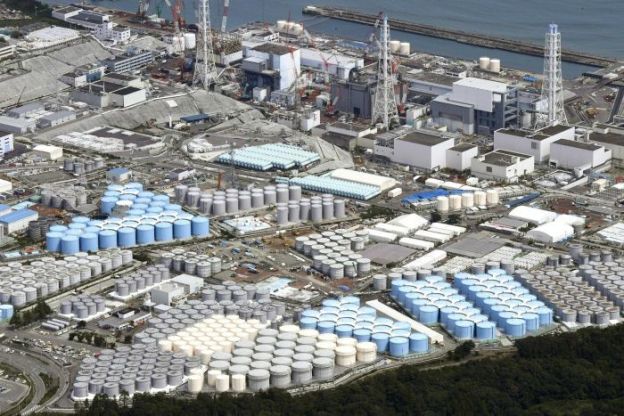
***The following countries agreed with Australia: Belgium, Bulgaria, Canada, Croatia, Estonia, Finland, Germany, Greece, Hungary, Italy, Japan, Latvia, Lithuania, Netherlands, Norway, Poland, Portugal, Republic of Korea, Romania, Slovakia, Slovenia, Spain and Turkey

These countries want a legal instrument to ban nuclear weapons ASAP: Afghanistan, Algeria, Andorra, Angola, Antigua and Barbuda, Argentina, Austria, Bahamas, Bahrain, Barbados, Belize, Benin, Bolivia, Botswana, Brazil, Brunei, Burkina Faso, Burundi, Cabo Verde, Cambodia, Central African Republic, Chad, Chile, Colombia, Comoros, Congo, Cook Islands, Costa Rica, Côte d’Ivoire, Cuba, Cyprus, Democratic Republic of the Congo, Djibouti, Dominica, Dominican Republic, Ecuador, Egypt, El Salvador, Eritrea, Ethiopia, Fiji, Gambia, Ghana, Grenada, Guatemala, Guinea, Guinea-Bissau, Guyana, Haiti, Honduras, Indonesia, Iraq, Ireland, Islamic Republic of Iran, Jamaica, Jordan, Kazakhstan, Kenya, Kiribati, Kuwait, Kyrgyzstan, Lebanon, Lesotho, Liberia, Libya, Liechtenstein,Madagascar, Malawi, Malaysia, Mali, Malta, Marshall Islands, Mauritania, Mauritius, Mexico, Mongolia, Namibia, Nauru, Nicaragua, Niger, Nigeria, Oman, Niue, Palau, Panama, Papua New Guinea, Paraguay, Peru, Philippines, Qatar, Saint Kitts and Nevis, Saint Lucia. Saint Vincent and the Grenadines, Samoa, San Marino, Sao Tome and Principe, Saudi Arabia, Senegal, Serbia, Seychelles, Sierra Leone, Singapore, Somalia, South Africa, Sri Lanka, State of Palestine, Sudan, Suriname, Swaziland, Tajikistan, The former Yugoslav Republic of Macedonia, Timor Leste, Togo, Trinidad and Tobago, Tunisia, Tuvalu, Uganda, United Arab Emirates, United Republic of Tanzania, Uruguay, Vanuatu, Venezuela, Viet Nam, Yemen, Zambia, Zimbabwe

See the Legal Gap

Illegal Waste Gangs: the case of ENI

Italian prosecutors on August 12, 2016, agreed to release energy giant ENI’s Centro Oli oil treatment plant from court-ordered seizure. The plant near the town of Viggiano in the Agri Valley in the southern Basilicata region was seized on March 31. 2016  in a probe that resulted in ex industry minister Federica Gudi resigning amid conflict-of-interest claims. It treated some 75,000 barrels of oil a day, before two tanks and a reinjection well were seized.

State-controlled ENI, nine other companies, and 60 individuals have been investigated for illegal waste trafficking in the southern Basilicata region,..The 70 subjects were notified that the investigation has ended, in Italy usually a prelude to indictment.

Prosecutors say ENI reaped millions in “unjust profits” from illegally dumping waste from its Viggiano plant. As well, the probe found irregularities in the construction of Total’s Tempa Rossa oil centre between Corleto Perticara near Potenza and Gorgoglione near Matera.

Former Total chiefs as well as various businessmen and officials were sentenced to terms ranging from two to seven years in prison on April 4, 2016.  The current suspects include former Corleto Perticara mayor Rosaria Vicino from Premier Matteo Renzi’s Democratic Party (PD), former Basilicata environmental department chief Donato Viggiano, former ENI southern region exec Ruggero Gheller, his current replacement Enrico Trovato, and five ENI staffers who have been under house arrest since March 31.
ENI earlier defended its Viggiano plant operations….

Excerpts from : Prosecutors OK freeing of ENI oil plant (2), Basilicata plant seized in waste trafficking probe,  ANSA, Aug. 5, 2016

Bio-Materials: DARPA

Consider the benefits to be gained from a chimney that heals after damage, a roof that breathes to control airflow, surfaces that don’t flake or fade, and a driveway that eats oil to clean up after spills.–From the DARPA website

The structural materials that are currently used to construct homes, buildings, and infrastructure are expensive to produce and transport, wear out due to age and damage, and have limited ability to respond to changes in their immediate surroundings. Living biological materials—bone, skin, bark, and coral, for example—have attributes that provide advantages over the non-living materials people build with, in that they can be grown where needed, self-repair when damaged, and respond to changes in their surroundings. The inclusion of living materials in human-built environments could offer significant benefits; however, today scientists and engineers are unable to easily control the size and shape of living materials in ways that would make them useful for construction.

DARPA is launching the Engineered Living Materials (ELM) program with a goal of creating a new class of materials that combines the structural properties of traditional building materials with attributes of living systems. Living materials represent a new opportunity to leverage engineered biology to solve existing problems associated with the construction and maintenance of built environments, and to create new capabilities to craft smart infrastructure that dynamically responds to its surroundings.

“The vision of the ELM program is to grow materials on demand where they are needed,” said ELM program manager Justin Gallivan. “Imagine that instead of shipping finished materials, we can ship precursors and rapidly grow them on site using local resources. And, since the materials will be alive, they will be able to respond to changes in their environment and heal themselves in response to damage.”…

Scientists are making progress with three-dimensional printing of living tissues and organs, using scaffolding materials that sustain the long-term viability of the living cells. These cells are derived from existing natural tissues, however, and are not engineered to perform synthetic functions. And current cell-printing methods are too expensive to produce building materials at necessary scales.

ELM looks to merge the best features of these existing technologies and build on them to create hybrid materials composed of non-living scaffolds that give structure to and support the long-term viability of engineered living cells. DARPA intends to develop platform technologies that are scalable and generalizable to facilitate a quick transition from laboratory to commercial applications.

The long-term objective of the ELM program is to develop an ability to engineer structural properties directly into the genomes of biological systems so that neither scaffolds nor external development cues are needed for an organism to realize the desired shape and properties. ….

Work on ELM will be fundamental research carried out in controlled laboratory settings. DARPA does not anticipate environmental release during the program.

Excerpts from Living Structural Materials  Could Open New Horizons for Engineers and Architects, DARPA seeks to develop design tools and methods for creating programmable, self-healing, living building materials, OUTREACH@DARPA.MIL, Aug. 5, 2016

See also FBO.org

Nuclear Power Plants as Trojan Horses

The British government in July 2016 cast doubt on the future of a controversial 18-billion pound ($24 billion) project led by Electricite de France SA to build Britain’s first nuclear power plant in more than 20 years… Concern about China General Nuclear Power Corp.’s minority stake in the project may have been among reasons for the delay….
The Chinese company’s main involvement will be in the supply chain, providing some components for Hinkley, said Malcolm Grimston, senior research fellow at Imperial College London’s center for environmental policy. Operation of the facility would be in the hands of EDF, which has been in U.K. for years, he said. “The Chinese see Hinkley C as first step towards their goal of building a nuclear station using Chinese technology in the U.K. and as a stepping stone to starting a plant export business to rival the Russians, the Japanese and the French,” said Grimston. “I’m not sure what their motivation would be” to halt an operational power plant “given their interest in being seen as a trustworthy partner.”

The strategic investment agreement reached by EDF and state-owned CGN in October 2016 was to build three new nuclear power stations in the U.K., including a 1 gigawatt plant at Bradwell that the Chinese company would build using its own technology and take a 66.5 percent stake. Chinese reactor designs haven’t yet been approved by the British nuclear regulator, a process which could take at least three years.

Bernard Jenkin, the Conservative member of parliament for Harwich and North Essex, near the proposed Bradwell plant, last year urged the government to assess the security implications of a Chinese designed, owned and operated technology. It could be a “Trojan horse” used to threaten the U.K at a time of critical disagreement or conflict, he said. …
The U.K. government agreed to pay 92.50 pounds for every megawatt-hour of electricity produced from Hinkley Point for 35 years, about twice the current market rate. That contract has been widely criticized after data published on a government website last month showed this subsidy could cost more than 30 billion pounds.

Excerpts from Is China’s Role in Hinkley Point Really a Security Threat?, Bloomberg, Aug. 5, 2016

The Carbon Bubble

Regulators around the globe are researching potential risks to financial stability from a failure to contain climate change or a sudden collapse in the value of fossil-fuel assets.  Institutions such as the Bank of England, the Financial Stability Board and the European Systemic Risk Board are examining how banks, insurers and pension funds would cope if policies designed to reduce carbon-dioxide emissions led to a sharp drop in the share price of oil, gas and coal companies.They are looking at new rules to disclose exposures to both stocks and bonds in such companies, conducting stress tests based on different climate scenarios or even requiring additional capital buffers.

The regulators’ concerns rest on scientific assessments that much of the world’s known fossil-fuel reserves would have to stay underground if governments want to limit global warming to 2 degrees Celsius above preindustrial levels. If they aim to contain average temperature increases to 1.5 degrees, as set out in an international climate deal sealed in Paris in December 2015, the so-called carbon budget would shrink even more.

That…cause selloffs of fossil-fuel companies and broader economic problems caused by energy shortages. In 2015, the Group of 20 major economies asked the FSB to scope out potential vulnerabilities in the financial system linked to climate change.

Not everyone agrees with the regulators’ new focus….Spencer Dale, chief economist of BP PLC and a former executive director for financial stability at the Bank of England says only around 2% to 3% of proven fossil-fuel reserves are actually featured on energy majors’ balance sheets, limiting the danger of a sudden drop in the companies’ value due to climate-change policies. “The idea that somehow that we have a carbon bubble—in the sense that the assets that are currently on oil companies’ balance sheets are overpriced, because they won’t be able to use them—I don’t think makes any economic sense,” he says.

Instead, energy companies should provide more information on how climate change and climate-change policies will affect their businesses and allow investors to make their own assessment, says Mr. Dale. BP and Royal Dutch Shell PLC both backed shareholder resolutions to that effect last year.

Excerpts from  Climate Financial Risks Examined, Wall Street Journal, Apr. 1, 2016

Carbon budget

How to Clean Radioactive Water

Russia’s nuclear energy giant Rosatom’s subsidiary RosRAO has created a prototype water decontamination plant for use at Tokyo Electric Power Co. Holdings’ Fukushima Daiichi nuclear power station — the site of Japan’s largest nuclear disaster in March 2011. The scrubbing facility, unveiled in June 2014, is capable of removing tritium, or radioactive hydrogen, from nuclear-tainted water, something beyond the capabilities of the Fukushima plant’s current cleanup equipment. Distillation and electrolysis isolate and concentrate the isotope, which is then locked away in titanium. Experiments under conditions similar to those on the ground reportedly show the technology cutting wastewater’s radioactive material content to one-6,000th the initial level, making it safe for human consumption or release into the ocean.

Duplicating the facility near the Fukushima site and running it for the five years necessary to process 800,000 cu. meters of contaminated water would cost around $700 million in all. Companies in Japan and the U.S. are at work on their own facilities for tritium disposal, but the Russian plan’s cost and technological capability make it fully competitive, according to the project’s chief.

Rosatom has made other overtures to Japan. Executives from a mining and chemical unit have visited several times this year for talks with Japanese nuclear companies, aiming to cooperate on decommissioning the Fukushima plant and upgrading a reprocessing plant in Aomori Prefecture for spent nuclear fuel. Russia has amassed a wealth of expertise dealing with damaged nuclear reactors in the wake of the Chernobyl disaster, and would like Japan to draw on that knowledge, the subsidiary’s chief executive said.

Revving up nuclear technology exports is essential to re-energizing Russia’s domestic industry and breaking free of dependence on the resource sector, Moscow has decided. The nuclear business, along with the space industry, is one of the few tech-intensive sectors where the country is internationally competitive. President Vladimir Putin has leaned more heavily on leaders in Europe and emerging countries in recent years to agree to deals with Russia’s nuclear companies.

In Japan, the public has grown wary of nuclear energy since the accident, leaving demand for new plants in the country at next to nil. Yet Japan has more than 10 reactors slated for decommissioning, creating a market worth up to 1 trillion yen ($9.42 billion) by some calculations. Russia aims to use cooperation on the Fukushima plant to crack the broader market and grow its influence, a source at a French nuclear energy company said…

But Japanese Prime Minister Shinzo Abe nevertheless visited Russia in May 2016 for top-level talks despite U.S. objections, eager to make progress on territorial disputes over islands north of Hokkaido. Preparation is underway for another summit in the far-eastern city of Vladivostok in September 2016, as well as a visit by Putin to Japan before the year is out.
Excerpts from TAKAYUKI TANAKA, Japan nuclear cleanup next target in Russian economic offensive, Nikkei Asian Review, July 24, 2016


Tracking the Oil

The oil he industry counts on a small group of little-known companies whose main job is to count the number of tankers leaving ports, at best using data gathered from satellites, at worst using simple binoculars. They then guess how much crude is being carried by measuring the depth of the vessels in the water.

Swiss-based Petro-Logistics S.A., one of those companies, calls its work “the art and science of tanker tracking,” with the aim being to discover what oil producers “are really doing as distinct to what they say they are doing,” according to a statement on its website. While the information produced by companies such as Petro-Logistics and U.K.-based Oil Movements serves as a main input for estimates by consultants, traders and official bodies, it’s not the only measurement stick in use.

The matter becomes even more complex for oil moved within pipelines. Russia, for instance, exports roughly 30 percent of its crude via pipeline, according to official data. That flow is most often measured by independent groups using infra-red photography, which provides only a rough approximation of output.

The Organization of Petroleum Exporting Countries traditionally has published a measure of production based on what the group calls “secondary sources,” in effect consultants who calculate flows from a variety of sources, including tanker tracking data. The cartel also publishes production figures based on what OPEC countries release publicly.

The IEA and the U.S. government also publish estimates, as do many news organizations, including Bloomberg. The most recent addition to this flood of information is the Joint Organisations Data Initiative (JODI), a project begun in 2002 that’s backed by some of the world’s richest countries.Although all of these sources rely on tanker-tracking data as a base of their data, each group also incorporates its own market intelligence and different methodologies to come up with their data

Excerpt from the Art and Science of Tanker Tracking, Bloomberg, Mar. 14, 2016

Defenses Against the Sea: Bangladesh

Facing the bleak prospect of millions of its citizens being displaced in coming years due to storms and sea level rise caused by climate change, Bangladesh is building up existing coastal embankments in a bid to protect coastal lands and people. On November 2015, the Bangladesh Water Development Board (BWDB) signed a deal with the Chinese firm First Engineering Bureau of Henan Water Conservancy to start work on the Coastal Embankment Improvement Project-1… And as per the agreement, the Chinese firm is helping rebuild four polders in two coastal districts – Khulna and Bagerhat.

Bangladesh is a low-lying delta, making it one of the most vulnerable countries to climate change. The coastal region adjoining the Bay of Bengal is characterised by a vast network of active tidal rivers. The strength of the tides and the flatness of the delta causes the tides to influence river processes a long way upstream in the southern estuaries. And climate change has intensified the tides in recent years.

“We will repair all 139 coastal polders considering the climate-induced changes presumed to take place by 2050 to protect coastal people from recurrent climatic disasters like cyclone and storm surge,” Water Resources Minister Anisul Islam Mahmud told IPS.  He said the water development board is currently working to rebuild 17 coastal embankments in its first phase, and the remaining polders will be repaired gradually.

The Coastal Embankment Improvement Project Phase-1 (CEIP-1) involving 400 million dollars to rebuild 17 polders in six coastal districts – Khulna, Satkhira, Begerhat, Pirojpur, Barguna and Patuakhali. The height of 200-kilometre-long embankments will be increased by one to two metres and 58 regulators will be set up in the first phase.

Since the 1960s, Bangladesh built 139 polders to protect about 1.2 million hectares of land from seawater…

Excerpts from Rafiqul Islam , Raising Walls Against the Sea, IPS News Service, May 12, 2016

Hacking German Nuclear Plants

A computer virus has been found in a nuclear power plant in Bavaria…The virus was found in Block B of the nuclear reactor at Gundremmingen in western Bavaria, a statement released by the power plant said.  The malware is well known to IT specialists and it attempts to create a connection to the internet without the user of the computer choosing to do so, the statement added…[T]he virus posed no danger to the public as all the computers which are responsible for controlling the plant are disconnected from one another and not connected to the internet. The virus is also not capable of manipulating the functions of the power plant, the statement claims. State authorities have been informed about the issues and specialists from the energy firm RWE are examining the computer system to asses how it became infected with the virus..

Germans are very sensitive to the dangers of nuclear technology… As recent as 2010, officials found traces of radioactivity connected to the 1986 Chernobyl catastrophe in German wildlife, like wild boar…Shortly after the Fukushima meltdown in 2011, Chancellor Angela Merkel announced that the country would phase out nuclear power by 2021…

Several newspapers reported that the terrorists behind the Paris attacks had the plans for a German nuclear facility, a claim later denied by German intelligence. Then, days later, it was found that inspectors responsible for carrying out safety checks at two nuclear plants had submitted fake reports.

Excerpts from Computer Virus in Bavarian Nuclear Plant, http://www.thelocal.de/, Apr. 26, 2016

Who is Watching North Korea

The 38 North, a US institute monitoring North Korea said that the country appears to be beginning or planning to extract plutonium, the core material of a nuclear bomb, at a nuclear plant in Yongbyon, north of Pyongyang.  Satellite imagery dated April 11,  2016 shows a vehicle loaded with tanks or casks in the premises of a nuclear reprocessing facility, according to the 38 North website operated by Johns Hopkins University’s US-Korea Institute in Washington.  “Such tanks or casks could be used to supply chemicals used in a reprocessing campaign intended to produce additional plutonium, haul out waste products or a number of other related activities,” the institute said.  Similar vehicles were observed in the early 2000s, it said, when North Korea extracted plutonium apparently as part of its nuclear programmes.

On April 4, 2016 the institute said plumes were detected from the reprocessing facility fueling the speculation that Pyongyang has engaged in additional production of plutonium.

Excerpts from Satellite images show North Korea may have begun extracting plutonium at nuclear facility, says US institute, Associated Press, Apr. 16, 2016

Deep Horizon Oil Spill: final settlement

U.S. District Judge Carl Barbier in New Orleans gave his final approval April 4, 2016 to an estimated $20 billion settlement over BP’s massive 2010 oil spill. On July 2015, BP reached the $20 billion settlement with the federal government and five gulf states. The Justice Department has called it the largest environmental settlement in U.S. history as well as the largest-ever civil settlement with a single entity.  Barbier presided over a multiphase trial for the spill litigation before last summer’s settlement agreement resolved the bulk of the remaining civil claims against BP. The judge heard testimony from rig workers who survived the blast and from company executives who worked on the ill-fated drilling project off Louisiana’s coast. Barbier set the stage for the settlement when he ruled BP acted with “gross negligencein the disaster….

In addition BP pleaded guilty in 2013 to manslaughter for the rig workers’ deaths and agreed to pay a record $4 billion in criminal fines and penalties.

In BP reached a multibillion-dollar settlement agreement with businesses and residents who claim the spill cost them money. That deal didn’t have a cap***, and a court-supervised claims administrator is still processing many of the claims.

***There is no limit on the total dollar amount of the Settlement, but BP will pay no more than $2.3 billion to compensate qualified claimants who are in the Seafood Compensation Program.

While BP has estimated that the total costs of the Settlement will be approximately $7.8 billion, there is no limit on the total amount of the Settlement (with the exception of the Seafood Compensation Program). The actual total amount paid out will depend on the number of qualified claims made, and could be higher or lower than BP’s estimate.***

Excerpts from Judge approves $20 billion settlement in gulf oil spill, Associated Press, April 4, 2016

Nothing Outlasts the Fukushima Disaster

As Prime Minister Shinzo Abe moves to reopen Japanese nuclear plants that were all shut after the disaster on March 11, 2011, a distrustful public is pushing back. A court on March 9, 2016ordered Kansai Electric Power Co. to halt two of the four reactors that have been restarted, saying the utility had failed to show the public they were safe. The utility called the ruling “unacceptable” and said it would appeal….However, near the ruined Fukushima reactors……Growing swaths of land are covered with black bags full of slightly radioactive soil.

The hardest parts of the cleanup haven’t even begun. Tepco, as Tokyo Electric is known, has yet to draw up plans for removing highly radioactive nuclear fuel that melted through steel containment vessels and now sits at the bottom of three Fukushima reactors.The company estimates that the nearly $20 billion job of decommissioning the plant could take another three or four decades. That is not counting damages and cleanup costs expected to reach some $100 billion or more, including about $50 billion paid to evacuees. Legal wrangling over the disaster continues. In February 2016, three former Tepco executives were charged with professional negligence.

Tepco also is working to reduce a total 400 tons of rain and groundwater that breach the plant’s defenses daily, becoming contaminated and requiring treatment and storage. But a wall of frozen earth meant to reduce the flow has run into resistance from regulators.On large parts of the site, workers can now walk around without full-face shields or hazmat suits, using simple surgical masks for protection.Fukushima was once a prized post for elite engineers and technicians in Japan’s nuclear heyday. Now, unskilled laborers make up the bulk of a workforce of about 6,000 workers, down from a peak of 7,450 in 2014. “There’s a constant stream of people who can’t find work elsewhere,” said Hiroyuki Watanabe, a Communist city councilman in Iwaki, about 30 miles away. “They drift and collect in Fukushima.”…

Looking ahead, the biggest issue remains the reactors. No one knows exactly where the molten nuclear debris sits or how to clean it. Humans couldn’t survive a journey inside the containment vessels, so Tepco hopes to use robots guided by computer simulations and video images. But two attempts had to be abandoned after the robots got tripped up on rubble.“The nature of debris may depend on when the nuclear fuel and concrete reacted,” said Pascal Piluso, an official of France’s Alternative Energies and Atomic Energy Commission. “We are talking about extremely varied and complex debris.”….A government panel recently questioned Tepco’s ability to tackle the daunting task of decommissioning while seeking profit for its shareholders. The disaster nearly pushed the company to bankruptcy, prompting the government to buoy it with ¥1 trillion ($9 billion  (really????) in public money and pledge government grants and guarantees to help Tepco compensate victims.”…

Excerpts  from Fukushima Still Rattles Japan, Five Years After Nuclear Disaster, Wall Street Journal, Mar. 8, 2016

The Most Dangerous Dam

Sensors installed by American army engineers in December 2015 show widening fissures in the fragile gypsum base underneath the Mosul dam,  though no one can predict when a breach might occur….The Iraqi government has now contracted with the Trevi Group, an Italian firm, which it hopes will offer a more advanced and permanent method of plugging cavities in the stone base than the constant maintenance it has required for the past 30 years. That maintenance came to an abrupt halt after IS seized the dam in August 2014, and has continued only intermittently after it was seized back three weeks later. Essential equipment went missing then, and half its staff decided not to return to work.

One study says that if the dam collapses, Mosul would be submerged within hours. Another warns that half a million Iraqis could be killed by floodwaters, and more than a million forced from their homes. Disease and looting as the floodwaters raced through Baiji, Tikrit, Samarra and even parts of Baghdad would complete that dreadful scenario.

The dam was built by an Italian-German consortium and started operating in 1986. Because of the high proportion of gypsum in the area, the construction included a grouting tunnel to allow almost constant injection of cement and drilling mud into crevices in the base that are widened by the water flowing through them. America’s Army Corps of Engineers warned in 2005 that the “extraordinary engineering measures” needed to maintain its structural integrity made the structure potentially the most dangerous in the world.*** But taking the dam out of commission is not an attractive option. Emptying the reservoir would leave Iraqis seriously short of drinking and unpolluted irrigation water in the summer.

Excerpts from The Mosul dam: A watery time-bomb, Economist, Feb. 13, 2016, at 42

***  The dam was constructed on a foundation of water soluble gypsum!!! More than 50,000 tonnes  of material have been injected into the dam since leaks began forming shortly after the reservoir was filled in 1986, and 24 machines currently continuously pump grout into the dam base. Between 1992 and 1998 four sinkholes formed downstream of the dam and a fifth sinkhole developed east of the dam in February 2003 which was filled several times. In August 2005 another sinkhole developed to the east (Wikipedia).

Nuclear Waste: Ukraine

A consortium of four German companies has been awarded a contract to improve infrastructure for managing radioactive waste, the rehabilitation of contaminated areas and the decommissioning of nuclear power plants in Ukraine.  The consortium – comprising Brenk Systemplanung, DMT, Plejades and TÜV Nord EnSys – was awarded the contract for the project, which is within the framework of the European Union-funded Instrument for Nuclear Safety Cooperation (INSC). The INSC is designed to support non-EU countries in improving nuclear safety. The contract will run for an initial two-year period and have a maximum budget of €1.5 million ($1.6 million).

According to the tender notice, the main objectives of the contract are to support the Ukrainian State Corporation ‘Radon’ in establishing an emergency response system for “radiation incidents involving unauthorized radioactive materials that are not related to nuclear power plant operation”. It also calls for the establishment of integrated, automated monitoring systems for radiation and environmental protection at Radon facilities, as well as the remediation of radioactive waste storage sites resulting from the Chernobyl nuclear power plant accident and situated outside the exclusion zone.

In a statement yesterday, DMT said it will jointly lead with TÜV Nord EnSys Hannover the assessment of some 50 radioactive waste storage sites.

Excerpts from German consortium awarded Ukrainian waste contract, World Nuclear News, Mar. 2, 2016

Fishermen + Farmers Against Shell

Tens of thousands of Nigerian fishermen and farmers are suing multinational oil giant Shell in two new lawsuits filed on March 2, 2016 in a British High Court, alleging that decades of uncleaned oil spills have destroyed their lives.  London law firm Leigh Day & Co. is representing them after winning an unprecedented $83.5 million in damages from Shell in a landmark ruling by the same court last year. Shell originally offered villagers $50,000.

In a statement on March 2, 2016 before the trial opened, Shell blamed sabotage and oil theft for the ongoing pollution and noted it had halted oil production in 1993 in Ogoniland, the area where the two communities are located in Nigeria’s oil-rich southern Niger Delta.  Shell said it will challenge the jurisdiction of the British court.

The Ogoni are among the most traumatized of millions of Nigerians suffering oil pollution since the late 1950s….

Excerpts from  MICHELLE FAUL, Nigerians sue Shell in UK court for oil spills contamination, Associated Press, Mar. 2, 2016

Foreign Nuclear Waste: the benefits

The storage and disposal of used nuclear fuel from other countries is likely to deliver substantial economic benefits for South Australia, a royal commission into the nuclear fuel cycle has found.  On Monday, the South Australian royal commission released its tentative findings, which backed nuclear fuel storage and left the door open to further uranium mining and processing but came down against the use of nuclear power for electricity generation.

The findings said a nuclear storage and disposal facility would be commercially viable and South Australia could store nuclear waste as early as the late 2020s. It suggested the state set up a sovereign wealth fund “to accumulate and equitably share the profits from the storage and disposal of waste”.  The royal commission noted the main hazard from developing an industry storing other countries’ used fuel rods was emission of radiation into the natural environment, including that particles emitting radiation could be inhaled or ingested by humans and other organisms.  But it said Finland and Sweden had both developed safe facilities for long-term disposal of nuclear waste. Risks could be mitigated by storing waste in solid form in geologically stable areas, and several layers of packaging and containers to prevent waste contaminating groundwater.  South Australia was suitable because of its low levels of seismic activity, arid environment in many parts of the state, stable political structure and frameworks for securing long-term agreement with landowners and the community.

The draft findings were that nuclear waste storage and disposal could generate $5bn a year for the first 30 years of operation and about $2bn a year until waste receipts conclude. This would result in $51bn profit over the life of the project, it said.  The report predicted nuclear storage would create approximately 1,500 full-time jobs during a construction period of about 25 years, peaking at 4,500, and leaving more than 600 jobs once operations begin.

The report also said expansion of uranium mining could be economically beneficial but “it is not the most significant opportunity”.  The royal commission said uranium processing could not be developed in the next decade as a standalone industry as the market was already oversupplied and uncertain, but uranium leasing, which links uranium processing with its eventual return for disposal, is more likely to be commercially attractive….

Federal minister for resources and energy Josh Frydenberg …the federal government’s proposed national nuclear waste facility would only store low and intermediate level waste. “It cannot and will not be built to store radioactive waste generated overseas or high level waste,” he said.
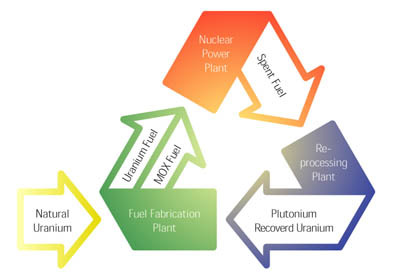
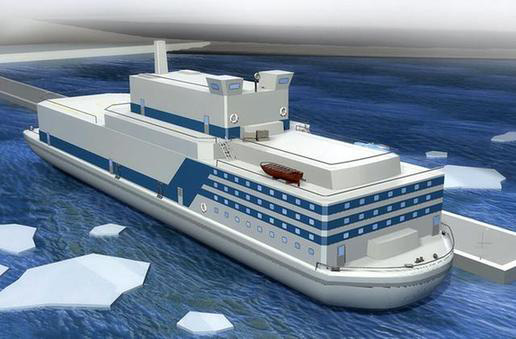
Excerpts Paul Karp,  Inquiry backs plan to store world’s nuclear waste in outback Australia, Guardian, Feb. 14, 2016

Hacking the Power Grid

In Ukraine on Dec. 23, 2015 the power suddenly went out for thousands of people in the capital, Kiev, and western parts of the country. While technicians struggled for several hours to turn the lights back on, frustrated customers got nothing but busy signals at their utilities’ call centers….Hackers had taken down almost a quarter of the country’s power grid, claimed Ukrainian officials.  Specifically, the officials blamed Russians for tampering with the utilities’ software, then jamming the power companies’ phone lines to keep customers from alerting anyone….Several of the firms researching the attack say signs point to Russians as the culprits. The malware found in the Ukrainian grid’s computers, BlackEnergy3, is a known weapon of only one hacking group—dubbed Sandworm by researcher ISight Partners—whose attacks closely align with the interests of the Russian government. The group carried out attacks against the Ukrainian government and NATO in 2014…

The more automated U.S. and European power grids are much tougher targets. To cloak Manhattan in darkness, hackers would likely need to discover flaws in the systems the utilities themselves don’t know exist before they could exploit them. In the Ukrainian attack, leading security experts believe the hackers simply located the grid controls and delivered a command that shut the power off. Older systems may be more vulnerable to such attacks, as modern industrial control software is better at recognizing and rejecting unauthorized commands, says IOActive’s Larsen.

That said, a successful hack of more advanced U.S. or European systems would be a lot harder to fix. Ukrainian utility workers restored power by rushing to each disabled substation and resetting circuit breakers manually. Hackers capable of scrambling New York’s power plant software would probably have to bypass safety mechanisms to run a generator or transformer hotter than normal, physically damaging the equipment. That could keep a substation offline for days or weeks, says Michael Assante, former chief security officer for the nonprofit North American Electric Reliability.

Hackers may have targeted Ukraine’s grid for the same reason NATO jets bombed Serbian power plants in 1999: to show the citizenry that its government was too weak to keep the lights on. The hackers may even have seen the attack as in-kind retaliation after sabotage left 1.2 million people in Kremlin-controlled Crimea without lights in November 2015. In that case, saboteurs blew up pylons with explosives, then attacked the repair crews that came to fix them, creating a blackout that lasted for days. Researchers will continue to study the cyber attack in Ukraine, but the lesson may be that when it comes to war, a bomb still beats a keyboard.

Excerpts How Hackers Took Down a Power Grid, Bloomberg Business Week, Jan. 14, 2016

Eco-Peace for the Middle East?

EcoPeace, a joint Israeli, Jordanian and Palestinian NGO thinks it just might. In December it presented an ambitious, if far from fully developed, $30 billion plan to build a number of desalination plants on the Mediterranean shore of Israel and the Gaza Strip. At the same time, large areas in Jordan’s eastern desert would host a 200 square km (75 square mile) solar-energy plant, which would provide power for desalination (and for Jordan) in exchange for water from the coast. “A new peaceful economy can be built in our region around water and energy” says Gidon Bromberg, EcoPeace’s Israeli director. Jordan and the Palestinian Authority are already entitled to 120 million cubic meters of water a year from the Jordan river and West Bank aquifers but this is not enough to meet demand, particularly in Jordan, which regularly suffers from shortages….

The main drawback to making fresh water from the sea is that it takes lots of energy. Around 25% of Jordan’s electricity and 10% of Israel’s goes on treating and transporting water. Using power from the sun could fill a sizeable gap, and make Palestinians less dependent on Israeli power. Renewables supply just 2% of Israel’s electricity needs, but the government is committed to increasing that share to 17% by 2030. Jordan, which has long relied on oil supplies from Arab benefactors, is striving for 10% by 2020.,,, Over the past 40 years there has been a series of plans to build a Red Sea-Dead Sea canal that would have irrigated the Jordan Valley and generated power, none of which have been built.

Beyond many logistical and financial obstacles, the plan’s boosters also have to navigate a political minefield.

Excerpts from Utilities in the Middle East: Sun and Sea, Economist, Jan. 16, 2016, at 54

Dams on Nile: winners and losers

Egyptian politicians discussed sabotaging the Grand Ethiopian Renaissance Dam in 2013, they naturally assumed it was a private meeting. But amid all the scheming, and with a big chuckle, Muhammad Morsi, then president, informed his colleagues that their discussion was being broadcast live on a state-owned television channel.

Embarrassment apart, it was already no secret that Egypt wanted to stop the largest hydroelectric project in Africa. When Ethiopia completes construction of the dam in 2017, it will stand 170 metres tall (550 feet) and 1.8km (1.1 miles) wide. Its reservoir will be able to hold more than the volume of the entire Blue Nile, the tributary on which it sits. And it will produce 6,000 megawatts of electricity, more than double Ethiopia’s current measly output, which leaves three out of four people in the dark…

This boon for Ethiopia is the bane of Egypt, which for millennia has seen the Nile as a lifeline snaking across its vast desert. The river still provides nearly all of Egypt’s water. Egypt claims two-thirds of that flow based on a treaty it signed with Sudan in 1959. But even that is no longer enough to satisfy the growing population and sustain thirsty crops. Annual water supply per person has fallen by well over half since 1970. The UN warns of a looming crisis. Officials in Egypt, while loth to fix leaky pipes, moan that the dam will leave them high and dry.,,

Only recently has the Egyptian government adopted a more conciliatory tone. In March of last year Abdel-Fattah al-Sisi, who ousted Mr Morsi in a coup, joined Hailemariam Desalegn, Ethiopia’s prime minister, and Omar al-Bashir, Sudan’s president, to sign a declaration that tacitly blesses construction of the dam so long as there is no “significant harm” to downstream countries. The agreement was affirmed in December. 2015, when the three countries settled on two French firms to study the dam’s potential impact. The impact studies were meant to be completed last year, but bickering over the division of labour, and the withdrawal of one firm, caused delays. Many Egyptians believe that Ethiopia is stalling so that the dam becomes a fait accompli. Already half-finished, experts worry that it may be too late to correct any problems. Representatives of the three countries are now meeting to discuss “technical” issues. The contracts for studying the dam are not yet signed.

A sense of mistrust hangs over the dam’s ultimate use. Ethiopia insists that it will produce only power and that the water pushing its turbines (less some evaporation during storage) will ultimately come out the other side. But Egypt fears it will also be used for irrigation, cutting downstream supply.  …A more reasonable concern is over the dam’s large reservoir. If filled too quickly, it would for a time significantly reduce Egypt’s water supply and affect the electricity-generating capacity of its own Aswan Dam. But the Ethiopian government faces pressure to see a quick return on its investment. The project, which is mostly self-funded, costs $4.8 billion….

A potential wild card in the negotiations is Sudan, which long sided with Egypt in opposition to the dam, some 20km from its border. But as the potential benefits to Sudan have become clear, it has backed Ethiopia…Short on energy itself, Sudan will receive some of the power produced by the dam. By stabilising the Nile’s flow, it will also allow Sudan to prevent flooding, consume more water and increase agricultural output (once old farming methods are updated). Currently much of the country’s allocation of water under the 1959 treaty is actually consumed by Egyptians…

The Renaissance Dam is merely the latest test of countries’ willingness to share water. There may soon be more difficulties. Ethiopia plans to build other dams on the river, which could further affect downstream supply. Sudan has promised foreign investors an abundance of water for irrigation…

Sharing the Nile, Economist, January 16, 2016, at 49

The Scramble for Lithium

SQM, Chile’s biggest lithium producer [has]Its headquarters in the military district of Santiago bears no name. The man who for years ran the business, Julio Ponce, is the former son-in-law of the late dictator, Augusto Pinochet. He quit as chairman in 2015, during an investigation into SQM for alleged tax evasion. (The company is co-operating with the inquiry.) Last month it emerged that CITIC, a Chinese state-controlled firm, may bid for part of Mr Ponce’s controlling stake in SQM, as part of China’s bid to secure supplies of a vital raw material…

SQM is part of a global scramble to secure supplies of lithium by the world’s largest battery producers, and by end-users such as carmakers. That has made it the world’s hottest commodity. The price of 99%-pure lithium carbonate imported to China more than doubled in the two months to the end of December, to $13,000 a tonne…

The industry is fairly concentrated, which adds to the worry. Last year Albermarle, the world’s biggest lithium producer, bought Rockwood, owner of Chile’s second-biggest lithium deposit. It and three other companies—SQM, FMC of America and Tianqi—account for most of the world supply of lithium salts, according to Citigroup, a bank. What is more, a big lithium-brine project in Argentina, run by a joint venture of Orocobre, an Australian miner, and Toyota, Japan’s largest carmaker, is behind schedule. Though the Earth contains plenty of lithium, extracting it can be costly and time-consuming, so higher prices may not automatically stimulate a surge in supply.

Demand is also on the up. At the moment, the main lithium-ion battery-makers are Samsung and LG of South Korea, Panasonic and Sony of Japan, and ATL of Hong Kong. But China also has many battery-makers…Tesla Motors, an American maker of electric cars founded by Elon Musk, a tech tycoon, is also on the prowl. It is preparing this year to start production at its “Gigafactory” in Nevada, which it hopes will supply lithium-ion batteries for 500,000 cars a year within five years….[I]n August Bacanora, a Canadian firm, said it had signed a conditional agreement to supply Tesla with lithium hydroxide from a mine that it plans to develop in northern Mexico. Bacanora’s shares jumped on the news—though analysts noted that shipping fine white powder across the United States border would need careful handling.Bigger carmakers also have a growing appetite for lithium…

Another big source of demand may be for electricity storage. The holy grail of renewable electricity is batteries cheap and capacious enough to overcome the intermittency of solar and wind power—for example, to store enough power from solar panels to keep the lights on all night.

Excerpts from  An increasingly precious metal, Economist, January 16, 2016

Threshold Nuclear Weapon States: Japan

See also Security Strategies of Threshold Nuclear Weapon States

Japan…had 54 reactors in operation before the Fukushima accident..,,. After the accident, which was of unprecedented scale, Japan promptly decided to stop all remaining nuclear power reactors in the country, but was not able to phase out nuclear energy like Germany. Instead, operation of these halted reactors has resumed since Shinzo Abe returned to the Prime Minister’s office in spite of massive protests and the objection of the majority of the public; Sendai 1 Reactor in Kagoshima Prefecture was restarted on August 11, 2015 and Sendai 2 Reactor successively went online on October 15, 2015….

Japan is the only country in the world that is permitted to reprocess its spent fuel, which means it can possess plutonium — a weapon-usable material…Originally, Japan envisioned fast breeder reactors (FBR) for generating electricity with plutonium separated from reprocessing. Japan’s sodium-cooled FBR Monju, which is supposed to produce more fuel than it consumes and thus is regarded as a dream reactor, has never been realized mainly because of insuperable technical problems, despite astronomical investment that exceeded 1 trillion Japanese Yen….

Meanwhile, it has never been easy to start up the reprocessing plant in Rokkasho Village, Aomori Prefecture. This reprocessing plant was initially planned to start its operation in 2000, but completion of reprocessing plant construction has been delayed more than twenty times. Moreover, the construction cost has surged up to approximately 22 billion USD, almost four times higher than the original cost planned back in 1989. And on November 16, 2015, Japan Nuclear Fuel Ltd. (JNFL), the operator of reprocessing plant, announced that the operation of the reprocessing plant is postponed again to as late as September 2018. JNFL’s President Kenji Kudo reported that a separate plant for producing MOX fuel had also been delayed by early 2019….

Nonetheless, the Japanese government still shows reluctance to withdraw from reprocessing with the excuse of its scarcity of natural resources. Without a technical way out, however, the plutonium stockpile of Japan continues to rise. As for July 2015, its plutonium stockpile reached 47.8 metric tons – 10.8 tons in Japan, 16.3 tons in France, and 20.7 tons in the United Kingdom –  the fifth largest next to the United Kingdom, France, Russia, and the United States. Considering the fact that Japan is not a nuclear-armed state, this number is obviously an outlier. For instance, Germany, which also does not possess nuclear weapons, only had 3 tons of separated plutonium at the end of 2013…. [B]oth Rokkasho Village and Aomori Prefecture intimidated the central government into adhering to [opening the Rokkasho reprocessing plant]. [T]hey contended that the more than 3,000 tons of spent fuel in the area should otherwise be transferred back to the reactors where the spent fuel was originally produced. This alternative however, is politically and technically implausible because the host communities of reactors also expect spent fuel to be removed from their backyards almost immediately…Japan’s unusual surplus of plutonium creates tremendous political pressures for the Japanese government. Japan’s neighbors like China and South Korea often become suspicious of Japan’s real reasons for having that amount of plutonium.

Furthermore, Japan’s recent performance triggered a backlash even from the IAEA, whose head is a former Japanese diplomat; 640 kilogram of unused plutonium was not included in Japan’s annual reports to IAEA in 2012 and 2013. IAEA experts criticized this as “inappropriate omission” though JAEC explained that the stock was part of MOX fuel stored in a reactor that was not in operation during that period of time, and accordingly assumed exempt from reporting requirements. Japan has insisted that it would be impossible to inappropriately separate plutonium at the reprocessing plant in Rokkasho Village under the IAEA’s 24-hour surveillance. However, surveillance burdens for safeguards have aggravated simply because of the absolute amount of stockpile.

Excerpts from  Eunjung Lim, Japan’s Nuclear Trilemma,  Jan. 19, 2016

Marine Nuclear Power: China

China’s first marine nuclear power platform  is sponsored by China Shipbuilding Industry Corporation, which began the R&D process in 2014. Military analyst Shi Hong explains the technology….”A marine nuclear power platform is a floating nuclear power plant, built on a mobile platform on the ocean…It can provide energy for ocean water purification and electricity generation on islands….”Marine nuclear power platforms can also provide safe and reliable energy for oceanic oil exploration.

Shi Hong says beyond serving civil functions, the technology also has military applications.“The development of such nuclear power platforms can present new opportunities for war ships…”Two construction plans have been drawn up by the developer. One is for a power plant built on a mobile platform in the ocean. The other is for a submersible plant that can operate below the ocean surface under harsh conditions.

Excerpt from China to Build First Marine Nuclear Power Platform, CRIENGLISH.com , Jan 10, 2016

Lawsuits Against Shell, Nigeria

A Dutch appeals court ruled on December 18, 2015 that Royal Dutch Shell can be held liable for oil spills at its subsidiary in Nigeria, potentially opening the way for other compensation claims against the multinational. Judges in The Hague ordered Shell to make available to the court documents that might shed light on the cause of the oil spills and whether leading managers were aware of them.  This ruling overturned a 2013 finding by a lower Dutch court that Shell’s Dutch-based parent company could not be held liable for spills at its Nigerian subsidiary.

The legal dispute dates back to 2008, when four Nigerian farmers and the campaign group Friends of the Earth filed a suit against the oil company in the Netherlands, where its global headquarters is based.  “Shell can be taken to court in the Netherlands for the effects of the oil spills,” the court ruling stated on Friday. “Shell is also ordered to provide access to documents that could shed more light on the cause of the leaks.”  The case will continue to be heard in March 2016.  Judge Hans van der Klooster said the court had found that it “has jurisdiction in the case against Shell and its subsidiary in Nigeria”….

“There are 6,000km of Shell pipelines and thousands of people living along them in the Niger Delta,” he said. “Other people in Nigeria can bring cases and that could be tens of billions of euros in damages.”  In a separate case, Shell agreed in January to pay out £55m ($82 million) in out-of-court compensation for two oil spills in Nigeria in 2008, after agreeing a settlement with the affected community in the Delta.

Excerpt from Dutch appeals court says Shell may be held liable for oil spills in Nigeria, Guardian, Dec. 18, 2015.


ISIS Money

So while Islamic State probably maintains some refining capacity, the majority of the oil in IS territory is refined by locals who operate thousands of rudimentary, roadside furnaces that dot the Syrian desert.  Pentagon officials also acknowledge that for more than a year they avoided striking tanker trucks to limit civilian casualties. “None of these guys are ISIS. We don’t feel right vaporizing them, so we have been watching ISIS oil flowing around for a year,” says Knights. That changed on Nov. 16, 2015 when four U.S. attack planes and two gunships destroyed 116 oil trucks. A Pentagon spokesman says the U.S. first dropped leaflets warning drivers to scatter.

Beyond oil, the caliphate is believed by U.S. officials to have assets including $500 million to $1 billion that it seized from Iraqi bank branches last year, untold “hundreds of millions” of dollars that U.S. officials say are extorted and taxed out of populations under the group’s control, and tens of millions of dollars more earned from looted antiquities and ransoms paid to free kidnap victims….

Arguably the least appreciated resource for Islamic State is its fertile farms. Before even starting the engine of a single tractor, the group is believed to have grabbed as much as $200 million in wheat from Iraqi silos alone.  paid on black markets. And how do you conduct airstrikes on farm fields?  For his part, Bahney contends that the group’s real financial strength is its fanatical spending discipline. Rand estimates the biggest and most important drain on Islamic State’s budget is the salary line for up to 100,000 fighters. But the oil revenue alone could likely pay those salaries almost two times over, Bahney says.

Excerpts from Cam Simpson, Why U.S. Efforts to Cut Off Islamic State’s Funds Have Failed: It’s more than just oil, WSJ, Nov. 19, 2015

The Japan-India Nuclear Deal, 2015


Prime Minister Shinzo Abe’s agreement in principle to supply nuclear power technology to India may run counter to Japan’s stated commitment against the proliferation of nuclear weapons.  The deal was reached on Dec. 12, 2015 during a meeting between Abe, who is visiting New Delhi, and his Indian counterpart, Narendra Modi. If an actual nuclear power agreement is signed, it would mark the first for Japan with a nation that has not signed the Nuclear Nonproliferation Treaty. The latest move by Japan was met swiftly with criticism in Hiroshima and Nagasaki.

Japan and India began negotiating a nuclear power agreement in 2010 when the Democratic Party of Japan was still in power. Japan had wanted a provision in any such deal that would allow it to immediately stop any nuclear power cooperation should India resume testing of nuclear weapons, which has been on hold since 1998.  Although a joint declaration and a memorandum regarding a nuclear power agreement were released on Dec. 12, 2015 no provisions were included regarding a suspension of cooperation should India resume nuclear testing.  In the joint declaration, the two leaders confirmed that a nuclear power agreement would be signed after completion of the technological details through further negotiations between the two nations.

Excerpt from Japan’s nuclear power deal in principle with India a first with an NPT non-signer,  ASAHI SHIMBUN, Dec. 13, 2015


From Cities to Shantytowns: Basra, Iraq

Basra should be Iraq’s most successful province. It lies furthest from IS’s front lines and has a tradition as the country’s most cosmopolitan city. It remains the country’s dynamo. It has Iraq’s only ports, and oil production that generates around 95% of the government’s oil revenues. But four decades of war, sanctions, occupation, neglect and Shia infighting have rendered it decrepit and dysfunctional. Its utilities are worse than those of Mosul, Iraq’s second city, which is controlled by IS. Power cuts last most of the day. The water is stickily saline. The air is acrid from oil plumes and from sewage that dribbles into collapsed canals which once saw Basra called “the Venice of the East”. Cholera is back. “Our health was better under sanctions and Saddam Hussein,” says a local councillor.

With nothing to do, the city’s youth turn to militias for jobs. They are probably the province’s largest employer...International oil companies might have kick-started the economy, but chose to locate all but essential operations abroad. Though local hire is cheaper, under their oil contracts, whoever they hire the Iraqi government pays. Such are the inflated costs that producing a barrel of Iraqi oil costs twice as much as in Saudi Arabia.

The oil companies argue that foreign labour is more reliable. But had the security environment been better and had Iraq paid its dues, they might have established training centres and universities in Iraq just as they did in Saudi Arabia. By sealing themselves off from Iraq, they are creating a vicious circle. As the gap between them and the locals widen, grievances mount. Worried about the prospects, Occidental Petroleum Corp, America’s fourth-largest producer, asked the government to buy back its stake in Zubair, a large southern oilfield, last month.

Iraqi politics compounds the lack of opportunity. The ruling parties in Baghdad divvy up the oil revenues before they trickle south. Their local representatives immobilise the rest. Basra’s governor, council head and mayor all belong to rival religious Shia parties. Each vetoes the others’ decisions and projects. Their militiamen jostle for control on the streets. In October 2014 Badr, the most powerful militia group, took over Saddam’s palace, from where the British ran their occupation in 2003, and pinned portraits of Iran’s supreme leader, Ali Khamenei, and Shia Iraq’s own religious leader, Ali al-Sistani, on its walls. Posters of their martyrs line Basra’s highways. The limited political freedoms gained since Saddam’s fall are receding…

“The middle class are selling what assets they still have and are fleeing the country,” says a local journalist, who is toying with following them. Flights bound for Istanbul leave full and return half empty. But the numbers in Basra are quickly replenished. Land clearance for oilfields has triggered a rural flight, ringing the city in shantytowns. More arrive from poorer neighbouring provinces with no oil. As an urban middle class is replaced by more conservative, poorer people from the countryside, Basra’s character is changing…. Restoration of the city’s grand old Jewish and Greek palaces stopped when Saddam was overthrown.

An hour’s drive north of Basra, the city of Amara shows what could be possible. There, the Shia religious parties co-operate, holding each other to account rather than blocking each others’ projects. The province has revamped its roads and sewage system and sports flashy government buildings. Chinese contractors shop in the markets without their security escorts. Two new gas-powered plants are set to fire up next year. But much worse can happen, too. In 2013 Iraqis in the disenfranchised north-west staged months of protests, which the authorities ignored and then fiercely repressed. Islamic State took their place, offering another way.

Excerpts from Iraq: The blighted city, Economist,  Nov. 21, 2015, at 48.

Anadarko Fined for Gulf of Mexico Spill

Anadarko Petroleum Corp. was ordered to pay almost $160 million for its role as part-owner of the doomed Gulf of Mexico well that in 2010 caused the biggest offshore oil spill in U.S. history.  The fine was the last big uncertainty hanging over Anadarko from the disaster. The order on November 30, 2015  comes after the government told U.S. District Judge Carl Barbier in New Orleans that the company should be fined more than $1 billion for its role in the well’s blowout, which killed 11 people and spewed oil for almost three months. Anadarko, which had a 25 percent stake in the Macondo well, argued it shouldn’t be required to pay fines simply because it owned part of the well, as the accident wasn’t its fault. In 2014, The Woodlands, Texas-based company set aside $90 million for the case when it offered to settle for that amount.

Barbier said the fine reflected his finding that Anadarko didn’t have a role in causing the spill. Under the law, he could have imposed as much as $1,100 per barrel of oil spilled, or about $3.5 billion.  The fine is “only 4.5 percent of the maximum penalty, and therefore on the low end of the spectrum,” Barbier said in his order. “The court finds this amount strikes the appropriate balance between Anadarko’s lack of culpability and the extreme seriousness of this spill.”

Barbier rejected Anadarko’s argument that a heavy penalty could cause minority partners to seek a larger role in offshore operations, which might complicate safety and drilling decisions. “A penalty of this size might encourage non-operators to avoid investing with careless operators,” he said.  The company said it’s pleased the penalty is less than what the government sought and that it’s reviewing whether to file an appeal. “While we respect the court’s decision, we continue to believe that penalizing a non-operator for events beyond its control is inconsistent with the intent of the Clean Water Act,” Anadarko said in a statement posted on its website.

David Berg, a Houston attorney who has tracked the oil spill litigation and often sues polluters on behalf of municipalities, said given the damage from the spill, the fine is “not a slap on the wrist; it’s a tongue kiss from the judge.”  David Uhlmann, former head of the Justice Department’s environmental crimes unit, said the fine is “too small to be an effective deterrent.” It “will not have a significant effect on a company worth approximately $30 billion,” said Uhlmann, now a University of Michigan law professor.

The professor said Anadarko wasn’t a silent partner in its dealings with BP Plc, which owned 65 percent of the well.  “Anadarko urged BP to continue drilling deeper, even when BP wanted to stop,” he said. “Yet the judge refused to consider evidence of Anadarko’s risky behavior, which may explain the small size of Anadarko’s fine.”

Excerpt from Anadarko Ordered to Pay $159.5 Million for 2010 Gulf Spill, Bloomberg Business, Nov. 30, 2015