Category Archives: Energy

Shut Up and Give Up: How to Deal with Environmental Disasters

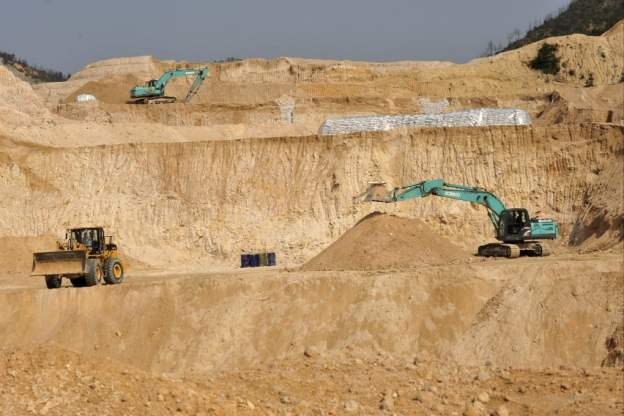
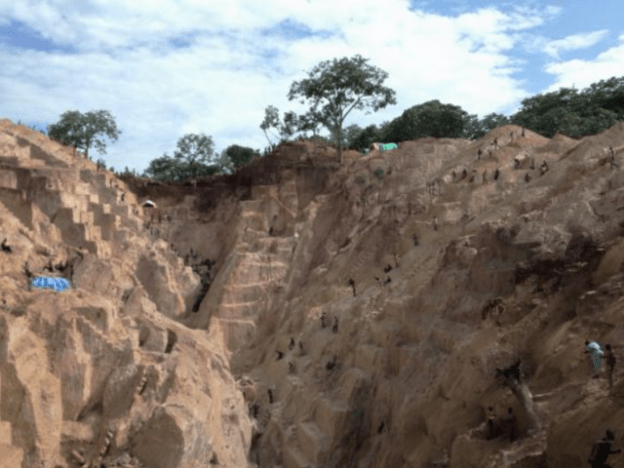
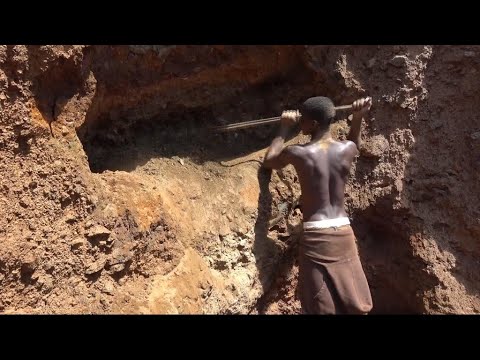
The worst day of Bathsheba Musole’s life was February 18, 2025. It started with a deafening crash when the 30-foot wall around a toxic-waste pool collapsed at the Chinese copper mine above her village. A poisonous river of a stinking yellow liquid rushed downhill, inundating homes and fields, including the one where she grew corn to feed her eight children. The floodwater, laden with cyanide and arsenic, rose chest-high. “I thought I would drown,” said Musole, 48 years old, in a recent interview.

In August 2025, months after the Feb. 18, 2025 disaster, officials from Sino Metals, a unit of the state-owned China Nonferrous Mining Corp., showed up at Musole’s half-acre farm, which the Zambian government says is too toxic to sustain crops for at least three years. They were there to make things right, she recalled them saying. Their offer was $150, but it came with a catch. To get the money, she would have to agree never to talk about the spill, take legal action against Sino Metals or even reveal the contents of the nondisclosure agreement itself…

Zambia’s government and economy.. have grown reliant on China. Zambia collects about $2 billion a year in mining taxes, mostly from Chinese mining companies. Half of the copper mined in Zambia, much of it by Chinese companies, is exported to China. In 2024, the Zambian government announced that Chinese miners would invest $5 billion in the country by 2031…

After months of investigation, Drizit Environmental, a South African firm contracted by Sino Metals, concluded that 1.5 million tons of toxic waste had overflowed into the Kafue valley, 30 times what the company had said. Sino Metals terminated the firm’s contract a day before the final report was due…

Excerpt from Nicholas Bariyo, China Pushes to Silence Victims of African Mining Disaster, WSJ, Oct. 27, 2025

Transparency against Free Speech? Exxon v. California, the Climate Risks

Exxon Mobil says rules requiring it to disclose climate risks infringe on the company’s right to free speech. The oil-and-gas giant made the argument in a suit filed October 24, 2025 (pdf) against the state of California, which is rolling out requirements for businesses to report ton their greenhouse gas emissions and climate-related financial risks. Exxon Mobil asked the court to halt the rules, arguing that they would violate free speech protections by forcing the business to use frameworks that put “disproportionate blame on large companies” such as the energy producer itself. The rules would require Exxon Mobil “to serve as a mouthpiece for ideas with which it disagrees,” the company said in the complaint, which was submitted to the U.S. District Court for the Eastern District of California.

The California regulations were set up by state laws SB 253 and SB 261: the Climate Corporate Data Accountability Act and the Climate-Related Financial Act. The first requires companies to disclose their greenhouse gas emissions, while the second mandates disclosures of climate-related financial risks.

The rules are specific to California but their oversight reaches businesses across the globe. Under SB 253, companies doing business in the state with an annual total revenue exceeding $1 billion, be they public or private, will have to disclose their greenhouse gas emissions—the ones from their immediate operations, such as electricity intake, and those from their… supply chain. Even if they are based elsewhere in the U.S. or overseas, the rules will apply.

The climate risk reporting rule, SB 261, will affect more companies. It requires public and private firms doing business in California with annual revenue of more than $500 million to disclose climate-related financial risks, along with the measures they are taking to mitigate and adapt to such risks, starting Jan. 1, 2026

Companies are also preparing for coming climate reporting rules in Europe known as the Corporate Sustainability Due Diligence Directive.

Excerpt from Clara Hudson, Exxon Mobil Sues California Over Looming Climate Disclosure Rules, WSJ, Oct. 27, 2025

Emit all the Carbon You Want; But Please! Don’t Greenwash

A French court, October 23, 2025 ruled oil and gas giant TotalEnergies had engaged in “misleading commercial practices” by overstating its climate pledges—the first such ruling worldwide against a major oil company for climate misinformation. The ruling is the first conviction in the world against an oil company, and a great win against greenwashing the act of claiming to be more environmentally responsible than in reality.

Find here a machine-translated pdf of ruling.

Why AI Industry is Like the Nuclear Industry

According to the Anthropic’s CEO  Jack Clark, governments ” should think of AI systems as kind of like countries that are arriving into the world, and misaligned AI systems as like rogue states.” He isn’t advocating for the end of AI but rather pushing for openness so these potential monsters aren’t created in the dark. He’s worried about a crisis—like what happened with the nuclear industry—that sparks drastic policy changes that derails development.

Excerpt from Tim Higgins, The Fight Over Whose AI Monster Is Scariest, WSJ, Oct. 18, 2025

A Pipe Dream: Carbon Capture and Storage

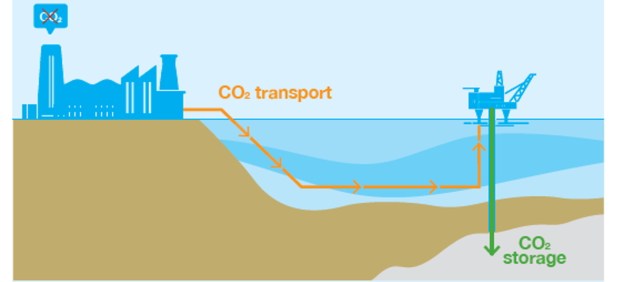
Drawing down carbon from the air and stashing it in underground rock formations has been framed as an essential way to slow and reverse global warming. But new research published in the journal Nature finds there are far fewer suitable places to do this than previously thought.

After screening out “risky” areas, like those that are vulnerable to earthquakes, a team of researchers from Europe and the U.S. found that the Earth can only safely store about 1,460 gigatons of injected carbon in its sedimentary basins. This is an order of magnitude less than previous estimates… 

Carbon storage “can no longer be considered an unlimited solution to bring our climate back to a safe level,” one of the study’s co-authors, Joeri Rogelj, said in a statement. “Geological storage space needs to be thought of as a scarce resource that should be managed responsibly to allow a safe climate future for humanity.” Rogelj is director of research at the Grantham Institute on climate change and the environment at Imperial College London.

Carbon storage refers to the injection of carbon dioxide into underground reservoirs where it theoretically can’t contribute to climate change.

According to the study’s authors, no previous global or regional estimate of the Earth’s technical carbon storage potential has taken into account key risk factors that would make some areas undesirable for storage. Starting from an estimate of all potentially available storage sites, their analysis cuts out areas that are too shallow, too deep, and too prone to earthquakes, as well as environmentally protected areas and areas near where people live. This reduces the total available capacity for carbon storage from 11,780 gigatons to just 1,460 gigatons of CO2, 70 percent of it on land and 30 percent on the seafloor.

They also noted some geographical disparities in the potential for carbon storage: While some historical climate polluters such as the U.S. and Canada have lots of space to safely stash carbon, others in Europe don’t. If those countries intend to make carbon storage a significant piece of their climate mitigation plans, they will likely have to look for locations in countries that have done little to contribute to climate change, potentially in Africa.

Except  from Joseph Winters, How much carbon can we safely store underground? Much less than previously thought, Yale Climate Connections, Sept. 10, 2025

Clouds! and Climate Change

Clouds are not just poetic. They’re pivotal in helping to regulate Earth’s temperature. And their influence on the climate is evolving in ways we’re only beginning to understand.

How exactly cloud cover will shift in a warming world is anyone’s guess; it’s one of the largest sources of uncertainty in climate science. But it should also be everyone’s concern. What happens to our clouds as the planet warms is so important that we need a renaissance in the study of clouds.

Excerpt from Gavin Pretor-Pinney, We Take Clouds for Granted, NYT, Sept. 10, 2025

Read here his beautiful essay!

For more, see Cloud Appreciation Society

Individual Companies Can be Held Liable for Gross Contribution to Heatwaves

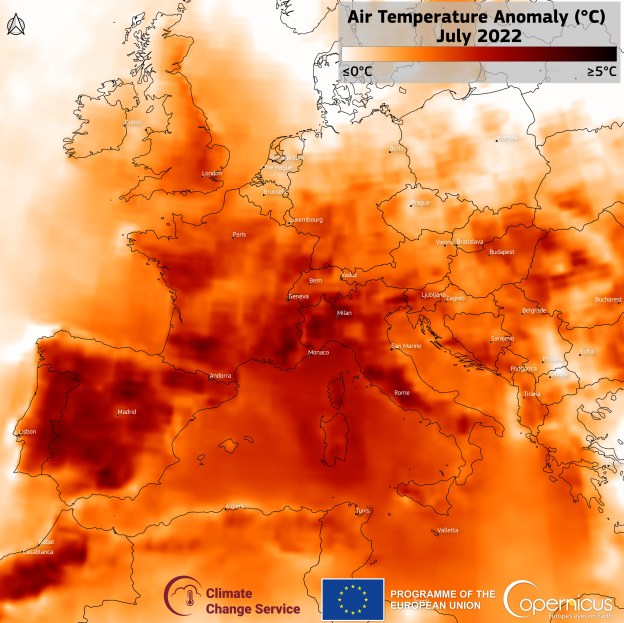
Climate scientists have been attributing storms, droughts and heatwaves to global warming for two decades. Now, they are tracing the chain of responsibility all the way back to the producers of fossil fuels. A study published in Nature in September 2025 shows that around one-quarter of the heatwaves recorded over 2000–23 can be directly linked to greenhouse-gas emissions from individual energy giants…some of whom include (the former Soviet Union, China (coal), Gazprom, Exxon Mobile, Chevron, National Iranian Oil Company, Saudi Aramco, BP, Shell, India (Coal)) The findings could provide fresh evidence to support lawsuits seeking to hold companies accountable for their impacts on the climate.

More than one-quarter of the 213 events recorded would have been “virtually impossible” without human-induced global warming, the study found. The emissions linked to energy companies and other major carbon emitters increased the likelihood of some 53 heatwaves by a factor of more than 10,000.

This is not the first time that climate impacts have been attributed to fossil-fuel producers, but this study go one step further than its predecessors and link individual companies directly to specific heatwaves. Legal experts say it’s a line of evidence that could feed into climate litigation that focuses on specific events, such as the 2021 heatwave that hammered the US Pacific Northwest in 2021. Already, a county government in Oregon has filed a US$52-billion civil lawsuit against fossil-fuel companies for contributing to that event.

Excerpts from Jeff Tollefson, Heatwaves linked to carbon emissions from specific companies, Nature, Sept. 10, 2025

AI Eats Up Crazy Amounts of Electricity

Global demand for AI is ramping up rapidly. Electricity demand from data centers worldwide is set to more than double by 2030 to about 945 terawatt-hours, which is more than Japan’s total electricity consumption, according to the International Energy Agency. “A single AI-focused data center can use as much electricity as a small city and as much water as a large neighborhood,” according to the Union of Concerned Scientists….A data center that fuels AI can consume as much electricity as 100,000 households, but the largest ones that haven’t been completed yet could consume 20 times as much. It’s a particular problem in the U.S., with data centers making up nearly half of its electricity demand growth over the next five years, according to the IEA.

There’s also been heightened concern recently about the amount of water that is required to cool electrical equipment in data centers. Just a few weeks ago, French company Mistral AI released a report detailing the environmental footprint of training its language model Mistral Large 2, including the amount of water it consumes. The water consumption from generating one page of text is 0.05 liter, enough to grow a small radish, the report says…

Excerpt from Clara Hudson, Google Wants You to Know the Environmental Cost of Quizzing Its AI. WSJ, Aug. 21, 2025

Laughingstock: The Net-Zero Banking Alliance

The Net-Zero Banking Alliance (NZBA) said in August 2025 that it was pausing operations and initiating a vote to decide on whether to continue working as a membership-based alliance or operate as a framework initiative…The move by the NZBA to suspend activities comes after numerous banks from the U.S. and Europe left the alliance. Those banks said that being part of such an organization was no longer necessary and that their business practices now incorporated the ESG principles learned over the past five years…Shortly after President Trump’s electoral win, major banks including JPMorgan, Citi and Morgan Stanley exited the alliance that they had proudly been a member of for years. The departure of the banks came as many faced strong pressure from the Trump administration and Republican attorneys generals to oppose climate groups and ESG investing more generally…

A sister organization, the Net Zero Asset Managers initiative was also set up, with a similar remit but instead focused on the activities of asset managers. It suspended activities in January 2025 after a wave of departures from the likes of BlackRock and Vanguard…. BlackRock, State Street and Vanguard were sued in November2024 by Texas Attorney General Ken Paxton, who alleged that the asset managers were violating antitrust law by being part of alliances like the NZAM initiative, which worked to move investments away from fossil fuels, especially coal. Paxton said this raised energy costs for consumers by not providing the full remit of energy sources.

In August 2025, a federal-district court judge denied the asset manager’s motion to dismiss the case, allowing litigation to continue under Texas and federal antitrust laws. “Today’s victory represents a major step in holding them accountable. I will continue fighting to protect Texas and defend America’s energy independence from this unlawful conspiracy,” Paxton said…

Excerpt from Yusuf Khan,, Net-Zero Banking Alliance Suspends Activities Amid Wave of Departures, WSJ, Aug. 27, 2025

Climate Change Can Wait: China’s Greed for Oil

China’s thirst for oil drove global demand for decades…Chinese officials have long worried that the U.S. and its allies could hamstring the nation’s economy by choking off its supply of foreign oil. So China has poured hundreds of billions of dollars into weaning itself off the imported stuff by reviving domestic production and swiftly building the world’s leading electric-vehicle industry. “The energy rice bowl must be held in our own hands,” Chinese leader Xi Jinping has said.

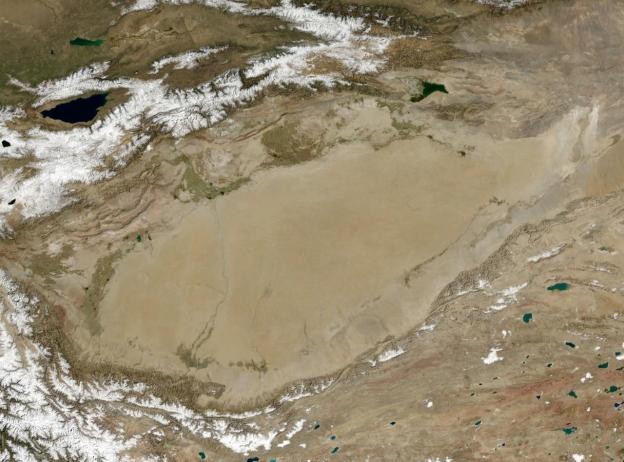
In a remote corner of China. the Tarim Basin, called the “sea of death” for its harsh conditions, oil workers are trying to coax more crude out of the ground by drilling holes as deep as Mt. Everest is high. State-owned PetroChina reported $38 billion of capital expenditures in 2024, nearly as much as Exxon Mobil’s and Chevron’s combined. China’s desire for energy independence dates all the way back to former leader Mao Zedong, who once dispatched tens of thousands of workers to search for oil in China’s northeast to ensure China wouldn’t be dependent on imports…

In July 2018, Xi personally ordered state-owned companies to revive domestic oil production to safeguard national security. Three state-owned oil majors invested an additional $10 billion the following year in exploration and production. They zeroed in on offshore areas such as the South China Sea and the Bohai Sea off the country’s northeast coast, as well as remote reserves near China’s western border with Kyrgyzstan, in a region called the Tarim Basin

In the deserts of the Tarim Basin crews are exploring some of the nation’s deepest reserves. Summer temperatures can top 120 degrees, and in the winter they can hit minus 20. Such ultradeep exploration is expensive, with some wells costing three times as much as shallower traditional wells, a Chinese oil executive told state media.  In 2023, Xi held a video call with Tarim Basin oil workers, praising their “indispensable contributions” to the nation. About 5% of China’s total oil and gas output in 2024 came from the basin’s deep reservoirs, a number Chinese oil executives intend to increase.

As of May 2024, PetroChina’s parent company, China National Petroleum, said it had drilled 193 wells in the Tarim Oilfield at least 5 miles deep. In the U.S., many wells are a mile or two deep.

Excerpt from Brian Spegele, How China Curbed Its Oil Addiction—and Blunted a U.S. Pressure Point, WSJ, July 21,2025

Green Frenzy Is Not Environmental Protection

Since 1960, Singapore has reclaimed around 150 square kilometres of land from the sea. In part, this is to meet demand for homes: around 80% of Singaporeans live in government-provided housing, nicknamed HDBs, after the Housing and Development Board, and many of those are in high-density skyscrapers. Singapore is the third most densely populated territory in the world, after Macau and the city-state of Monaco. Alongside this, the country’s economic success is buttressed by being the world’s busiest port outside China, hosting more than 3.11 billion tonnes in traffic in 2024.

This urban development and economic success has come at a cost for the natural environment: where once there was jungle, there is now city. Singapore has lost almost all of its primary rainforest, except for a small tract of land in the Central Catchment Nature Reserve, which sits in the middle of the island and is part of one of the two main water catchment areas. Although some of the country’s remaining non-primary rainforests, including in the Central Catchment, are protected from development, their long-term fate is a concern for environmentalists…

In a bid to achieve its sustainability goals, the government has pledged to plant one million trees by 2030 and transplant 100,000 corals into its marine waters, which NParks said in 2024 would take at least 10 years to complete. Neither project is without controversy. “Nobody is tracking how many trees we are cutting down while we are planting a million trees,”…“How about those century-old trees that are being cut down for development?”… Academics and civil-society groups say that they cannot access the same data that are available to government agencies…

Excerpts from Jack Leeming, Singapore’s fight to save its green spaces from development, Nature, May 28, 2025

De-Chinafication of Rare Earths: an Uphill Battle

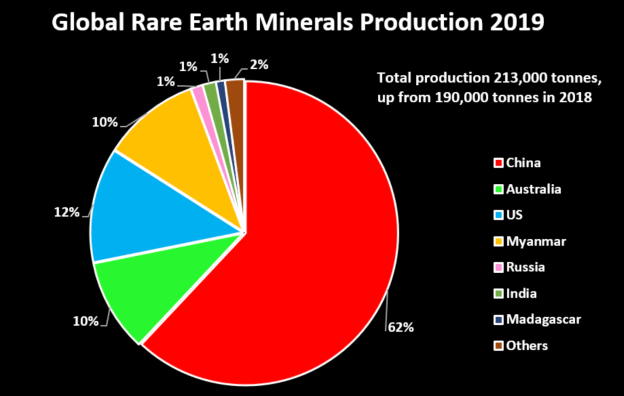
China mines some 70% of the world’s rare earths, the 17 metallic elements primarily used in magnets needed for civilian and military technologies. But its 90% share of processing for rare earths mined around the world is what really concerns officials from other countries working to secure their supply.

“China is a formidable competitor,” said Ramón Barúa, chief executive of Canada’s Aclara Resources, which is opening a rare-earths mine in Brazil to supply a processing plant it plans to build in the U.S. Aclara said it plans by August to decide where in the U.S. to build its plant for separating rare-earths deposits into individual elements. Aclara signed an agreement in 2024 to supply rare earths to VAC, a German company that is building a factory in South Carolina with $94 million in Pentagon funding to make magnets for clients including General Motors…

Brazil has the world’s second-largest rare-earth reserves after China, some 21 million tons, according to the U.S. Geological Survey. That represents more than a fifth of known global reserves—and more than 10 times those in the U.S…Despite its huge reserves, Brazil has been a small player in rare earths because of its complex mining regulations and the difficulty of attracting financing from companies willing to confront entrenched Chinese competitors. Costs to mine and process Brazilian rare earths are estimated to be around three times China’s, meaning Western buyers would likely pay a substantial premium for Brazilian minerals. Only a few companies outside China have mastered rare-earth processing, and the learning curve is steep

Brazil’s first big rare-earths mine opened in 2024 by a US private equity company some 90 miles west of the town of Nova Roma…but the mine is contracted to ship most of its production to China !…Aclara plans to invest some $600 million to complete work on a larger plant next to the mine in Nova Roma to start full production in 2028.

Excerpt from Samantha Pearson, Rare-Earths Plants Are Popping Up Outside China, WSJ, May 18, 2025

Are Banks Responsible for Climate Change? the Lawsuit Against ING

Friends of the Earth Netherlands, together with 30,000 co-plaintiffs, have started a lawsuit against ING to bring the bank’s climate goals in line with the Paris Agreement…Milieudefensie is demanding that ING halves its emissions in 2030 and ceases financing companies that still develop new oil and gas projects…Milieudefensie has gathered almost 10,000 pages of evidence that substantiate the harmful effects of ING’s policy. ..Nicky van Dijk, research coordinator, adds: “ING’s own annual report states that ING is currently financing fossil fuel energy with 30 billion euro… 

Excerpt from Milieudefensie and more than 30,000 co-plaintiffs take ING to court, Milieudefensie Press Release, Mar. 28, 2025

New Climate Lawsuit Against Shell, 2025

Shell is under intensifying legal scrutiny as environmental organization Milieudefensie, the Dutch branch of Friends of the Earth, announces fresh legal action. The NGO, based in Netherlands, claims that by investing in new oil and gas projects despite a previous court decision requiring emissions reductions, the oil and gas company violated its duty of care under Dutch law. This case could escalate tensions between fossil fuel corporations and climate activists pressing for stricter adherence to international climate goals.

The foundation of this new lawsuit lies in a historic 2021 court decision, upheld in part during a 2023 appeal, which found Shell partially liable for climate change. The appeal acknowledged Shell’s obligation to reduce CO2 emissions, citing its substantial role in contributing to the climate crisis. However, it stopped short of specifying a target percentage for reductions. Milieudefensie now argues that Shell’s ongoing fossil fuel investments clearly violate the legal duties affirmed by that judgment. “Companies like Shell have it within their power to combat the climate problem and therefore have a legal obligation to reduce emissions,” stated the Dutch Court of Appeal.

Shell has stated  that it plans to expand fossil fuel operations, particularly in the sectors of liquefied natural gas and oil production through 2040. This strategy directly conflicts with climate science, which indicates that new fossil fuel development must be halted to limit global warming to 1.5°C.  More than 700 new oil and gas fields are presently under development by Shell, per a thorough report by Milieudefensie and Global Witness. Since May 2021, Shell has finalized investment decisions for 32 new projects, potentially resulting in 972 million tons of CO2 emissions, an amount nearly equivalent to the annual emissions of the entire European Union.

Excerpt from Shell Faces Renewed Legal Pressure on Fossil Fuel Expansion, Zacks, May 14, 2025


Mines and the Meaning of Eternity

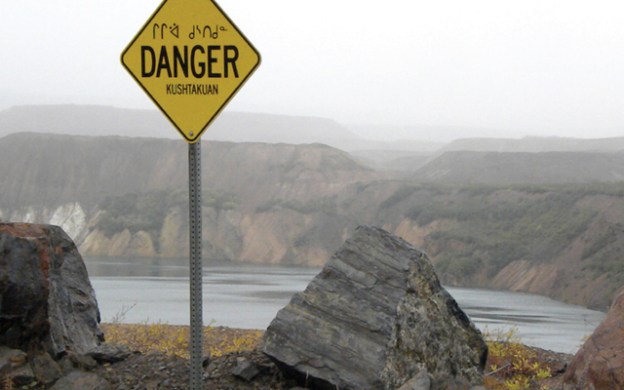
There are 237,000 metric tons of arsenic trioxide locked in the subterranean caverns of Giant Mine on the edge of Yellowknife, an unwanted byproduct from what was once one of the largest gold mines in Canada’s Northwest Territories. Consider that it only takes 140 milligrams of arsenic trioxide to kill a person; there’s enough of the poison here to kill 1.7 trillion people. The local indigenous people refer to the arsenic as a sleeping monster. Company and government officials hoped the arsenic would remain frozen underground forever. But mining operations and climate change caused the permafrost to melt, raising fears in the city of 20,000 people that toxic material could mix with the runoff and slither into the nearby waters of Great Slave Lake, the world’s 10th-largest freshwater body. From there, it could snake 1,000 miles along the Mackenzie River to the Beaufort Sea in the Arctic Ocean, poisoning the wildlife, the land and the water along its path.

The gold mine was one of the largest in Canada’s Northwest Territories, producing 7.6 million ounces of gold between 1948 and 2004—and leaving behind a toxic legacy.
But extracting minerals from the North carries high, and enduring, risks and costs. Current estimates put the cost of cleaning up Giant Mine at $3.2 billion, making it the most expensive mine remediation in Canadian history. The last owner, Royal Oak Mines, went bankrupt and left the bill to the government…

Canada’s government estimates there are roughly 24,000 contaminated sites across the country, which will cost 10 billion Canadian dollars—or $7.25 billion—to clean up. “Mining is a necessary evil. Fundamentally, it’s a license to pollute,” said David Livingstone, former chairman of the Giant Mine Oversight Board, an independent advisory body that monitors the Giant Mine cleanup. 

The arsenic at Giant Mine is the legacy of five decades of gold mining. Between 1948 and 2004, the mine produced 7.6 million ounces of gold, worth roughly $20 billion at today’s prices. There was so much gold that local indigenous people named Yellowknife “Somba K’e,” which means Money Place…But the precious metal was embedded in arsenopyrite, a mineral containing iron, sulfur and arsenic. To get to the gold, miners had to roast the rock, a process that also transformed the once-stable arsenic into toxic gas.

In the early years, miners ejected the arsenic out of a smokestack, believing the poison would be diluted in the air. Instead, the smoke condensed and fell to earth as a fine dust. It collected in the water and on the land. Cows and other livestock sickened and died. In 1951, an indigenous toddler died after eating arsenic-laden snow. After that, miners collected the dust and pumped it back underground, theorizing the arsenic would remain frozen in permafrost. For decades, the system worked. But the Canadian North is warming at a rate four times faster than the rest of the world, and the once-frozen ground is thawing.  Water is trickling into Giant Mine, a potentially catastrophic situation because the highly soluble arsenic trioxide could get carried into Baker Creek.
The creek runs through the mine site, and then into Yellowknife Bay in Great Slave Lake.
The headwaters for the Mackenzie River originate at Great Slave Lake. The river travels more than 1,000 miles to the Beaufort Sea in the Arctic Ocean…

Today, maintenance of the mine is an ongoing task. Waste materials, called tailings, are kept in large reservoirs around the mine. To stop dust contaminated with arsenic and cyanide from flying downwind, workers spray the tailings with a chemical mix called Rhino Snot, a blue-green dust suppressant developed by the U.S. military. But there are still times when wind carries dust southeast toward Ndilǫ, an indigenous community located on the west side of Great Slave Lake’s Yellowknife Bay, less than 2 miles from the mine as the crow flies. When the clouds of dust descend, the Yellowknives Dene council calls residents to warn them to shut their windows and stay indoors, said Ndilǫ Chief Fred Sangris, one of two chiefs of the Yellowknives Dene. “We tell them the mine is coming,” he said.

Sangris is so angry about what Giant Mine has done to the Dene’s traditional hunting grounds that he can’t even look at it. “It’s a poison place,” he said. “It’s a place to avoid.”…“They say forever, and they mean 100 years,” he said. “They don’t know what forever is.” 

Excerpt from Vipal Monga et al., Deep in an Abandoned Gold Mine, a Toxic Legacy Lurks, WSJ, May 5, 2025

The Scramble for Congo 21st Century Style

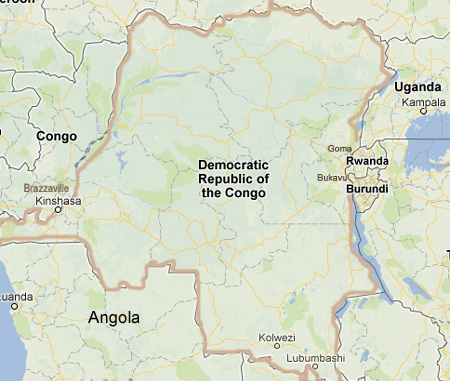
During the 19th century’s Scramble for Africa, European countries raced to secure territory and wealth across the continent. Now, African powers are grabbing resources from a neighbor crippled by infighting and ill-equipped to defend itself. Caught in the middle is the Democratic Republic of Congo, a country the size of Western Europe whose forests conceal a wealth of gold, diamonds and coltan, a key component in smartphones and computers. These mineral riches are turning what was already a region plagued by militia violence into a battleground, as Rwanda and its local allies seize coltan supplies while Uganda and its proxies move to take over gold mines to the northeast, according to United Nations and Ugandan officials…Ugandan President Yoweri Museveni and Rwandan President Paul Kagame are pouring troops and weapons into Congo, while their Congolese allies, who control strategic border crossings, secure smuggling routes to move more minerals to the global markets.

In 2024, Rwanda-backed M23 rebels seized the coltan-mining town of Rubaya, where fighters bring in around $800,000 each month by taxing traders. Rebel fighters have doubled diggers’ wages to encourage them to keep working, and they rely on forced labor to widen roads to accommodate trucks transporting coltan into Rwanda along with gold. According to the U.N., some 4,000 Rwandan soldiers are fighting inside Congo, a report that Rwandan authorities have denied.

Excerpt from While War Rages, Congo’s Neighbors Smuggle Out Its Gold and Mineral Wealth, WSJ, Apr. 7, 2025

Mining the Seabed: By hook or by crook

The Trump administration is reportedly considering an executive order that would accelerate deep-sea mining in international waters by allowing companies to bypass a United Nations-backed review process. The order would affirm the United States’ right to extract critical minerals from the ocean floor, enabling companies to seek permits directly from the National Oceanic and Atmospheric Administration (NOAA).

The International Seabed Authority (ISA), established in 1982 under the UN Convention on the Law of the Sea (UNCLOS)—which the U.S. has not ratified—has spent years developing regulations for deep-sea mining.  In 2021, the island nation of Nauru sponsored Canada’s The Metals Company (TMC) to begin deep-sea mining, forcing the ISA to draft rules before any company could start extracting minerals in international waters. The 36-member ISA council has since met repeatedly to finalize regulations. In March 2025, officials gathered in Jamaica to review hundreds of proposed amendments to a 256-page draft mining code, but the session ended without a resolution.

Frustrated by the ISA’s slow progress, TMC in March 2025 formally urged the Trump administration to issue deep-sea mining permits, arguing that “commercial industry is not welcome at the ISA.” “The Authority is being influenced by a faction of States allied with environmental NGOs who see the deep-sea mining industry as their ‘last green trophy,’” TMC chairman and chief executive, Gerard Barron. “They have worked tirelessly to continuously delay the adoption of the Exploitation Regulations with the explicit intent of killing commercial industry.”

Governments interested in developing deep-sea mining within their territorial waters — typically 200 nautical miles from shore — include the Cook Islands, Norway and Japan.

Proponents of seabed mining contend that its environmental impact is lower than land-based extraction. Critics warn that the long-term consequences remain uncertain and advocate for further research before large-scale operations begin.

Excerpt from Cecilia Jamasmie, Trump eyes executive order to fast-track deep-sea mining, Mining.com, Apr. 1, 2025

World Reeling, Trump Mining

The two oldest sons of President Trump are investing in a bitcoin-mining company, adding to the Trump family’s expanding portfolio of cryptocurrency businesses.   Eric Trump and Donald Trump Jr.’s American Data Centers will merge with and take a 20% stake in American Bitcoin, a mining operation majority-owned by Hut. Together, they aim to create the world’s largest miner of the digital currency, with designs on building its own “bitcoin reserve.”

In a matter of months, the Trumps started a decentralized-finance, or DeFi, project called World Liberty Financial, said their social-media company would invest in bitcoin and other digital assets, launched meme coins to capitalize on the popularity of the president and his wife and announced plans to issue a World Liberty dollar-backed stablecoin. And in his return to the White House, President Trump has said he aims to make the U.S. the “crypto capital of the world.” …As part of the deal, Hut 8 will shift nearly 61,000 of its specialized bitcoin-mining machines to American Bitcoin in exchange for an 80% ownership in the new entity. The companies said no cash changed hands in the deal…

The business of mining new bitcoin has grown more challenging as new companies have sprung up to capitalize on rising prices and the number of unmined tokens has dwindled. Bitcoin’s pseudonymous creator, Satoshi Nakamoto, capped the digital currency’s supply at 21 million, and more than 90% of those tokens have already been released. Critics also raised concerns about the environmental impact of bitcoin mining, pointing to the massive amounts of energy required to run mining operations.

Excerpt from The Trump Family Advances Its All-Out Crypto Blitz, This Time With Bitcoin Mining, WSJ, Mar. 31, 2025

Will Bacteria Save the Earth?

Microorganisms have shaped Earth for almost four billion years. At least a trillion microbial species sustain the biosphere — for instance, by producing oxygen or sequestering carbon. Microbes thrive in extreme environments and use diverse energy sources, from methane to metals. And they can catalyse complex reactions under ambient temperatures and pressures with remarkable efficiency.

And bacteria or fungi are already being used to produce materials, fuels and fertilizers in ways that reduce energy consumption and the use of fossil-fuel feedstocks, as well as to clean up waste water and contaminants…For instance, a start-up firm called Carbios, based in Clermont-Ferrand, France, has developed a modified bacterial enzyme that breaks down and recycles polyethylene terephthalate (PET), one of the most common single-use plastics. Another company — Oil Spill Eater International in Dallas, Texas — uses microbes to clean up oil spills, and large waste-management corporations in North America are using bacteria called methanotrophs to convert the methane produced from landfill (a more potent greenhouse gas than CO2) into ethanol, biofuels, polymers, biodegradable plastics and industrial chemicals….The company Floating Island International in Shepherd, Montana, is even building artificial floating islands on lakes and reservoirs that have been polluted by excessive nutrient run-off, so that methane-metabolizing microbes (which colonize the underside of the islands) can remove methane originating from lake sediments. The goal in this case is to transform inland lakes and reservoirs from net methane sources into carbon sinks…

Finally, microbes could be used to make food production less reliant on chemical fertilizers and so more sustainable. Many bacteria and archaea can be used to produce nitrogen fertilizer with much lower greenhouse-gas emissions than synthetic fertilizers…Several companies are now selling biofertilizers, which are formulations containing bacteria called rhizobia or other microbes that can increase the availability of nutrients to plants. A growing number of microbial biopesticides are also offering food producers a way to control crop pests without harming human or animal health or releasing greenhouse gases into the atmosphere8..

Many solutions, such as using bacteria to degrade crude oil or plastics, have been shown to be effective and safe in a laboratory setting. Yet scaling up their use to the levels needed to reduce global emissions or global biodiversity loss could lead to unforeseen complications. Certain safeguards — designing bacteria that can persist in an ecosystem for only a short time or that can exist under only specific environmental conditions — are already being developed and applied. 

Excerpts from Rino Rappuoli, et al., Microbes can capture carbon and degrade plastic — why aren’t we using them more?, Nature, Mar. 25, 2025

The Malicious Misuse of Nuclear Materials

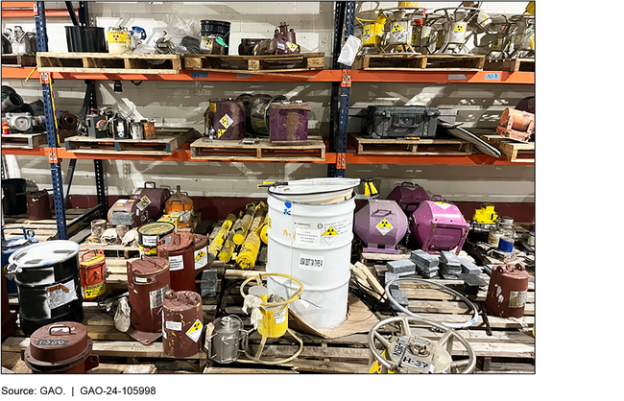
According to IAEA (International Atomic Energy Agency) report, in 2024, 147 incidents of illegal or unauthorized activities involving nuclear and other radioactive material were reported to the Incident and Trafficking Database (ITDB), a number aligned with the historical average…Out of 147, three incidents reported in 2024 were likely related to trafficking or malicious use, and there was insufficient information to determine the intent of 21 other incidents. Furthermore, 123 incidents were not connected to trafficking or malicious use but most likely resulted from unauthorized disposal, unauthorized shipment or the discovery of radioactive material. The ITDB receives information on incidents involving illegal possession, attempted sale and smuggling of nuclear and other radioactive material, as well as unauthorized disposal and the discovery of lost radioactive sources. A total of 4390 incidents have been reported since 1993. 

Excerpt More than 145 Reports Added to IAEA Incident and Trafficking Database in 2024, IAEA, Feb. 28, 2025

The Nuclear Waste Problem of Power-Hungry AI

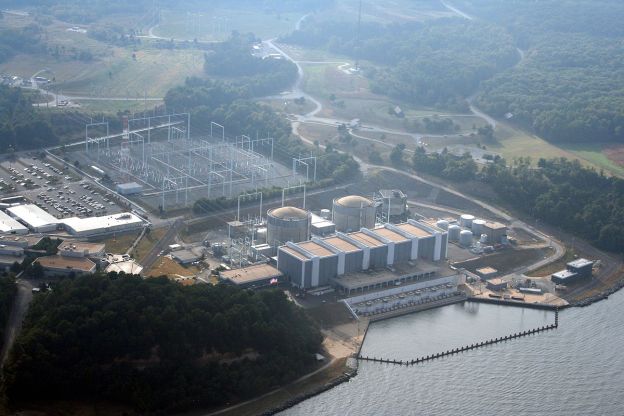
A nuclear power renaissance—driven in part by power-hungry AI data centers—has revived a thorny problem: what to do with the radioactive waste left behind. Already, more than 90,000 metric tons of spent nuclear fuel is being stored at sites in 39 states. These include 73 commercial nuclear power plants and more than three dozen university and government facilities, according to a 2024 report by the Pacific Northwest National Laboratory…Meanwhile, nuclear reactors continue to provide almost 20% of U.S. electricity and produce about 2,000 metric tons of waste each year. As additional plants become available to meet the demands of data centers, industrial plants, homes and electric vehicles, the waste pile is poised to grow even more.  The US first new reactors in three decades were completed last year in Georgia. Plans are in the works to reopen closed reactors in Michigan, Iowa, Pennsylvania and South Carolina…

France generates 70% of its electricity from nuclear energy, recycles about 96% of its waste into new fuel and stores the remainder in a centralized cooling pool in Normandy. French officials expect to start construction in 2027 on a permanent underground repository in northeastern France to open by 2035.  In November 2025, Canadian officials selected a permanent site for nuclear waste to be dug out of bedrock in northwestern Ontario. But U.S. efforts stalled decades ago, when a $15 billion project to build a permanent, underground storage facility at Yucca Mountain, Nevada, was halted amid opposition by elected officials in the state. The Yucca Mountain failure cast a shadow over efforts to build a permanent disposal site, according to interviews with nuclear experts, policymakers and elected officials. 

Excerpts Eric Niiler, Nuclear Power’s Revival Is Here. What Do You Do With All the Radioactive Waste?, WSJ, Mar. 5, 2025

The Conquest of Greenland–Not for the Faint Heart

Teeming with underground riches, Greenland might set the scene for a modern gold rush. President Trump, for one, covets Greenland’s deposits of critical minerals, some of the largest in the Western Hemisphere. But as the visiting Australian company, Energy Transition Minerals, has discovered, securing them is a daunting task. 

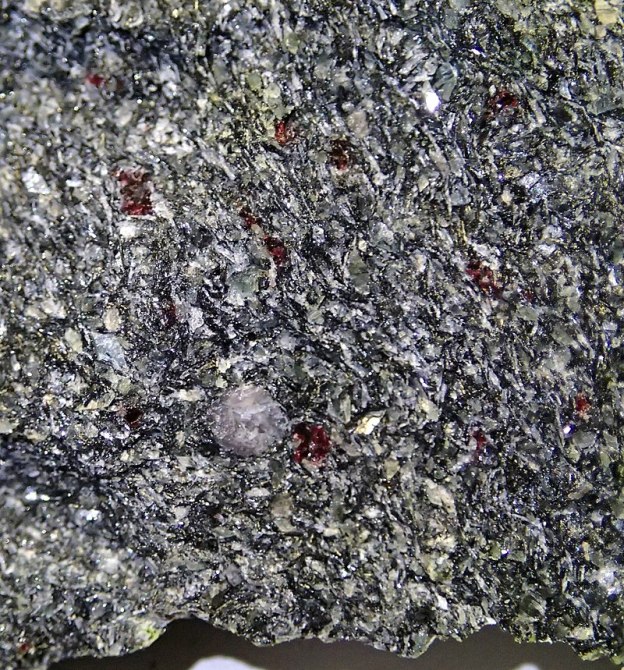
Kvanefjeld, the site of the billion-year-old solidified magma in the mountains above the town of Narsaq, contains an estimated 1 billion tons of minerals, enough to potentially transform the global market for rare-earth elements, used in such things as electric vehicles, jet fighters, wind turbines and headphones. 

Mining companies in Greenland operate in one of the most challenging environments in the world because of the Danish territory’s sparse infrastructure, hostile weather and a tricky political climate. Mining here is expensive, and few investors are willing to pay for it given the uncertainties.   Despite its extraordinary mineral wealth, Greenland has only two active mines: a gold mine in commissioning phase and a mine producing anorthosite, used in fiberglass, paints and other construction materials…“Investing in Greenland is not for the faint of heart,” said Brian Hanrahan, chief executive officer of Lumina Sustainable Materials, which operates the anorthosite mine on the west coast of Greenland. “The local logistics are incredibly complex.” Building a mine involves high startup costs, and has to be done from scratch in rugged terrain. Greenland is nearly one-fourth the size of the U.S., and about 80% of it is covered by ice, with deep fjords and ice sheets up to a mile thick. There are no roads between settlements, and shipping is treacherous because of floating ice off the coast.

Bureaucracy is a hindrance, too. The process of granting licenses to foreign companies to mine is lengthy and cumbersome. While applying for licenses, companies need to keep employees on payroll with benefits. With a population of 57,000, Greenland’s labor market is tight…Extracting Greenland’s minerals is about more than profit; it is about resource control. Western governments are eager to break China’s dominance of the global market for rare earths and other minerals, which it could wield as a weapon in a trade war…“Greenland is host to some of the largest rare-earth resources known to exist globally, which have potential to supply virtually all the foreseeable needs of North America and Europe for decades to come,” said Ryan Castilloux, managing director of Adamas Intelligence… ‘

But when directors from Energy Transition Minerals visited Narsaq in February 2025, they were met near the icy helipad by protesters in brightly colored vests emblazoned with a logo spelling “Uranium? No, Thank You” in Greenlandic…Many among the Inuit population of Narsaq are concerned about contamination of drinking water, plants and wildlife. “We live off nature as our forefathers have done for generations. We will be forced to move,” said Avaaraq Bendtsen, a 25-year-old archaeology student. “Think about the indigenous people as well. This is our land. It is our mountain.”

Excerpts from Sune Engel Rasmussen, Greenland Has the Makings of a Mining Boom. So Where Is Everyone?, WSJ, Mar. 4, 2025

The Real Green Energy Transition: Mining Minerals from Plants

Worries about China’s domination of critical minerals are driving Western scientists and companies to embark on increasingly novel ways to develop alternative sources. One such effort seeks to exploit a quirk of nature: Certain plants, called hyperaccumulators, absorb large quantities of minerals, like nickel and zinc, from the soil. Cultivating these plants, and then incinerating them for their metal, could provide U.S. companies with a small stream of domestically sourced minerals—without the expense and environmental destructiveness of conventional mining….At a greenhouse in Amherst, MA, scientists undertake gene editing to build a new fast-growing, nickel-absorbing oilseed plant. If successful, the plant could be used to harvest the metal from mineral-rich soils in states such as Maryland and Oregon…

Some 10 million acres of barren, nickel-rich soil are scattered around the U.S. In such areas, concentrations of minerals are generally too low to justify large-scale mining, but could offer opportunity for inexpensive nickel farming. In the case of nickel phyto-mining, as such efforts are known, the plants are dried and incinerated, leaving an ashy nickel concentrate. This concentrate can then be further purified and turned into battery-grade material.

To be sure, phytomining is small in scale. Companies in the field are targeting harvests of around 300 pounds of nickel per acre per year, roughly enough for six EV batteries. But the funding for nickel-farming plants is one small piece of a broad effort by the U.S. government to develop secure supplies of the minerals that are needed for defense and cutting-edge industry, and are an area where China is dominant.

Excerpt from Jon Emont, The New Weapon Against China’s Mineral Dominance: Plants, WSJ,  Jan. 25, 2025

Appalling Human Rights Violations in South Africa Mining Sector

With hundreds of miners trapped below ground without food or water, two men from down the road volunteered to venture where no police, government officials or professional rescuers were willing to go.

On their first descent into the shaft this week, Mandla Charles and Mzwandile Mkwayi, wearing white hardhats, headlamps and T-shirts, stepped out of a red cage dangling on a cable from a crane on the surface 4,200 feet above them. Their lights illuminated a sea of emaciated faces, men crowded into a chamber who were crying and pleading to be saved from the pitch black of the abandoned Buffelsfontein gold mine. The miners’ lights had burned out weeks or months earlier. The volunteers made more than 30 round trips underground over the next three days, bringing up 246 living prospectors and the remains of 78 more. The cage, designed to hold six people in close confinement, lifted as many as 13 men to the surface on some trips.

“I can’t explain the smell down there,” Charles, 38, told The Wall Street Journal at the mine entrance in Stilfontein, 100 miles southwest of Johannesburg. “They told us they were eating human flesh and cockroaches. They had lost hope.” The rescue mission, which concluded January 16,2025 when no more survivors could be found, ended a monthslong standoff between miners who had been illegally digging for gold and a government determined to force them to the surface. The miners had been holed up since the police cut off their supplies of food and water in August 2024. 

For about five months, the informal workers were trapped underground as police tried to “smoke them out,” in the words of Khumbudzo Ntshavheni, minister in the South African presidency. The operation was part of the police’s “Close the Hole” plan to combat illegal mining, which has reached crisis levels here. A staggering 42% unemployment rate in South Africa has led to high levels of chronic poverty, leaving many men with little choice but to clamber down gold shafts closed by some of the world’s biggest mining companies, in order to feed their families. The zama zamas are often the lowest-level workers for larger criminal gangs that ultimately sell the gold abroad.

Excerpts from Alexandra Wexler, Hundreds of Miners Were Trapped for Months—Until an Extraordinary Two-Man Rescue Mission, WSJ, Jan. 17, 2025

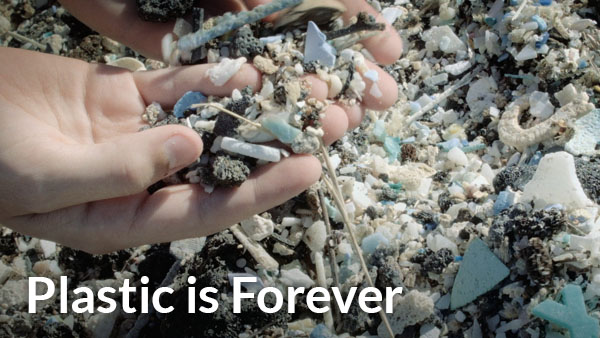
Why Plastic is the Salvation of Oil Industry

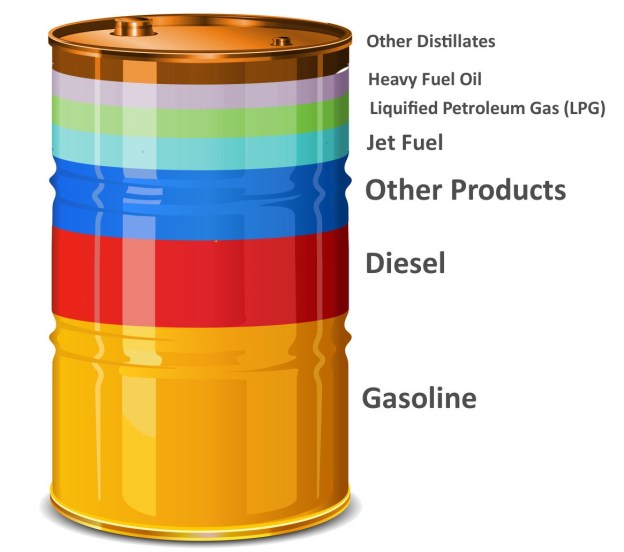
As people switch to electric cars, or at least buy more fuel-efficient versions of traditional vehicles, energy companies will have too much oil on their hands. ..Energy companies hope consumers will soak up the glut through their clothing, food and electronic goods. Exxon Mobil expects demand for products that have fossil fuel-derived components and shells like “cellphones and medical supplies, as well as products necessary to preserve food and improve hygiene” to increase.

Crude oil and natural gas are turned into petrochemical feedstocks such as naphtha or natural gas liquids in a gas-processing plant or at an oil refinery. They are then “cracked” into the building blocks of common plastics. Ethylene is processed into polyethylene, which winds up in plastic bags, shampoo bottles and children’s toys. Polypropylene is used for everything from car bumpers to carpets. ..Today, 15.4% of global oil demand is driven by petrochemicals, according to data from Wood Mackenzie. The share is expected to rise to 19.1% by 2035 as emerging markets become wealthier and swelling middle classes spend more on synthetic clothing and do their grocery shopping at big supermarket chains, where food is more likely to be wrapped in plastic to prolong its shelf life.  Advanced economies like the U.S. use up to 20 times more plastic than developing nations on a per capita basis, according to the IEA. Big Oil’s bet is that shoppers in emerging markets will close at least part of that gap.

Energy companies are pouring billions of dollars into petrochemical facilities, notably in China where ethylene capacity has almost doubled since 2019. Capacity is also rising in the U.S. and Middle East. Saudi Arabia wants to invest $600 billion into petrochemicals by the end of the decade to secure nonfuel uses of its crude oil. 

But the global petrochemical industry is already saturated and capacity is expected to outstrip demand until at least 2030. This points to weak profit margins and less-than-ideal utilization rates at petrochemical facilities.  Plants in high-cost regions are shutting down. Exxon Mobil sold refineries in Italy last year and plans to close an ethylene cracker in Normandy, France…Pumping money into petrochemicals as governments are trying to solve the problem of plastic waste feels risky…. A worldwide ban on single-use plastic would wipe out a third of global plastic demand that comes from things like mini hotel toiletries, fast-food packaging and disposable cutlery, although there would probably be exemptions for categories like medical intravenous bags that are hard to substitute. 

Excerpts from Carol Ryan, Driving an EV? Big Oil Hopes You Don’t Cut Down on Plastic Too, WSJ, Dec. 24, 2024

Environmental Victories of 2024

End of Fossil Fuels? The year 2024 r saw some extraordinary breakthroughs for climate and nature. The UK closed its last coal-fired power plant in 2024….As countries aim to rapidly decarbonise their economies, many former fossil fuel power plants are proving to be promising sites for industrial-scale batteries.…Renewable energy sources are growing rapidly around the world. In the US, wind energy generation hit a record in April 2024, exceeding coal-fired generation….By the end of this decade, renewable energy sources are set to meet almost half of all electricity.  The lion’s share of this growth comes from just one country:

The rivers, mountains, waves and whales given legal personhood
Back in 2021, the Ecuadorian government issued a landmark ruling stating that mining in its Los Cedros cloud forest violated the rights of nature. Another ruling in Ecuador stated that pollution had violated the rights of the Machángara River that runs through the capital, Quito. Beyond Ecuador, a growing number of natural features and spaces were granted legal personhood in 2024. In New Zealand, the peaks of Egmont National Park – renamed Te Papakura o Taranaki – were recognised as ancestral mountains and jointly became a legal person, known as Te Kāhui Tupua.] In Brazil, part of the ocean was given legal personhood – with the coastal city of Linhares recognising its waves as living beings, granting them the right to existence, regeneration and restoration. Meanwhile, a new treaty formed by Pacific Indigenous leaders saw whales and dolphins officially recognised as “legal persons”.

New ocean protections for the Azores
The North Atlantic saw a new marine protected area (MPA) announced by the Azores. When established, it will be the largest in the region, spanning 30% of the sea around the Portuguese archipelago. Half of the 111,000 sq miles (287,000 sq km) protected area will be “fully protected”, with no fishing or other natural resource extraction, according to the initiative behind the MPA. The other half will be “highly protected”.
The area contains nine hydrothermal vents, 28 species of marine mammals and 560 species of fish, among many others. 

Deforestation in the Brazilian Amazon
dropped to a nine-year low in 2024, falling by more than 30% in the 12 months to July, 2024 according to data released by Brazil’s national space research institute, INPE. nt

The Altyn Dala Conservation Initiative saved the critically endangered in the Golden Steppe grassland from extinction. The project used careful, science-based monitoring, tagging and habitat protection and restoration to ensure the best recovery for the Saiga Antelope, which numbered just 20,000 in 2003. Today, 2.86 million of the antelope roam the Golden Steppe, and it has been moved from “critically endangered” to “near threatened” status on the International Union for Conservation of Nature’s Red List.

After a 100-year hiatus, salmon were spotted in Oregon’s Klamath River basin, following an historic dam removal further downstream in the California stretch of the Klamath. In August 2024, the final of four dams were removed – in what was America’s biggest dam removal project – following pressure from environmentalists and tribes.

Excerpts from Isabelle Gerretsen et al., Seven quiet breakthroughs for climate and nature in 2024 you might have missed, BBC, Dec. 16, 2024

The Dirty Environmental Tricks of Elon Musk

Elon Musk made big promises to Wall Street about Tesla’s Model Y SUV in 2022, and the company was ramping up its production in Austin, Texas, when environmental problems threatened to derail his plans. The door to the plant’s giant casting furnace, which melts metal to be molded into the Model Y’s parts, wouldn’t shut, spewing toxins into the air and raising temperatures for workers on the floor to as high as 100 degrees. Hazardous wastewater from production—containing paint, oil and other chemicals—was also flowing untreated into the city’s sewer, in violation of state guidelines. Tesla left the costly problems largely unaddressed during the critical ramp-up. As a result, the company’s 10 million-plus square foot plant—among the largest car factories in the world—dumped toxic pollutants into the environment near Austin for months.

This account of the Austin plant’s environmental problems, which haven’t been reported previously, comes from emails between Texas regulators and the company obtained by The Wall Street Journal in response to public-records requests, as well as interviews with former employees and other documents, including a memo sent by a whistleblower to the Environmental Protection Agency….Former employees said they feared they might lose their job if they drew attention internally to potential environmental hazards, because senior managers didn’t consider such issues to be mission critical. As head of the company, Musk set the tone, these people said, pushing employees to move fast and complaining frequently in public statements that unnecessary regulations are strangling the U.S.

Musk is considered a champion of the environment for his role in pioneering the electric car industry. He has said the mission of Tesla, which is the largest maker of electric cars in the U.S., is to “protect life on Earth.” Yet across his business empire, Musk’s companies show a pattern of breaking environmental rules again and again, federal and state government filings and documents show.

Tesla’s Fremont, Calif., facility has accumulated more warnings for violations of air pollution rules over the past five years than almost any other company’s plant in California, according to a Journal analysis of informal enforcement actions in the EPA’s compliance database. It is second only to a refinery owned by oil-and-gas behemoth Chevron, which is in nearby Richmond.

In 2024, California regulators said Tesla violated air-pollution permits at its Fremont factory 112 times over the past five years and alleged it repeatedly failed to fix equipment designed to reduce emissions, releasing thousands of pounds of toxic chemicals in excess of permissible limits into the surrounding communities.

Musk’s rocket company, SpaceX, has also had run-ins with regulators in Texas and community pushback in Florida, including over the impact of its launches on local plants and animals. Federal regulators recently fined the company for dumping about 262,000 gallons of wastewater from launches into wetlands in Texas without a permit. SpaceX has denied the allegations. 

Excerpt from Susan Pulliam and Emily Glazer,  Musk Says He Wants to Save the Planet. Tesla’s Factories Are Making It Dirtier, WSJ, Nov. 25, 2024

Under the Radar: How the U.A.E. is Colonizing Africa

The petrostate, United Arab Emirates, has invested billions of dollars on the other side of the Arabian peninsula, in Africa, where it is now emerging as a significant player, at times muscling out China and annoying the U.S. and others. It has taken sides in local wars and spent heavily on buying farmland, ports and other projects that could help reduce its own dependence on oil in the decades to come.

The U.A.E. government says investments in Africa amounted to about $110 billion over the past decade….Its portfolio includes renewable-energy projects in Egypt, leased rice and wheat farmlands in the muddy plains of northern Angola and a majority stake in one of Zambia’s largest copper mines. U.A.E.-backed port projects are dotted around the coasts of the Atlantic, the Red Sea and the Indian Ocean. The Gulf state is also trying to become a key supplier of the minerals used in a new generation of batteries.  

The Wall Street Journal has reported that the U.A.E. shipped weapons including antiaircraft missiles and drones, to Sudan’s Rapid Support Forces, which is waging a civil war against the Iran-backed Sudanese military and has perpetrated a series of well-documented atrocities against civilian populations, especially in Darfur. It also sold armed drones to Ethiopia’s government, while the U.S. was pushing for a peace deal with Ethiopian rebel groups. Before that, U.N. investigators say it transferred arms to Libyan militia leader Khalifa Haftar in violation of a United Nations Security Council arms embargo…

There are signs of pushback in parts of Africa, too. In Chad, local Zaghawa communities have repeatedly staged protests against the U.A.E.’s use of Amdjarass airport in the east of the country to ship supplies to the RSF, according to activists and videos shared online. .

Excerpts from Nicholas Bariyo, The New Investment Superpower Outflanking China and the U.S. in Africa, WSJ, Nov. 6, 2024

The Quick and Dirty AI Boom

Nowhere else on Earth has been physically reshaped by artificial intelligence as quickly as the Malaysian state of Johor. Three years ago, this region next to Singapore was a tech-industry backwater. Palm-oil plantations dotted the wetlands. Now rising next to those tropical trees 100 miles from the equator are cavernous rectangular buildings that, all together, make up one of the world’s biggest AI construction projects…

TikTok’s Chinese parent company, ByteDance, is spending $350 million on data centers in Johor. Microsoft just bought a 123-acre plot not far away for $95 million. Asset manager Blackstone recently paid $16 billion to buy AirTrunk, a data-center operator with Asia-wide locations including a Johor facility spanning an area the size of 19 football fields. Oracle last week announced a $6.5 billion investment in Malaysia’s data-center sector, though it didn’t specify where. In all, investments in data centers in Johor, which can be used for both AI and more conventional cloud computing, will reach $3.8 billion this year, estimates regional bank Maybank.

To understand how one of the first boomtowns of the AI era sprouted at the southern tip of the Malay Peninsula, consider the infrastructure behind AI. Tech giants want to train chatbots, driverless cars and other AI technology as quickly as possible. They do so in data centers with thousands of computer chips, which require a lot of power, as well as water for cooling…Northern Virginia became the world’s biggest data-center market because of available power, water and land. But supply is running low. Tech companies can’t build data centers fast enough in the U.S. alone. Enter Johor. It has plentiful land and power—largely from coal—and enough water. Malaysia enjoys generally friendly relations with the U.S. and China, reducing political risk for companies from the rival nations. The other important factor: location. Across the border is Singapore, which has one of the world’s densest intersections of undersea internet cables. Those are modern-age highways, enabling tech companies to sling mountains of data around the world.

Excerpt from Stu Woo, One of the Biggest AI Boomtowns Is Rising in a Tech-Industry Backwater, WSJ, Oct.  8, 2024

How Murder, Torture and Rape Fuel the Technological Revolution

Congo is the world’s leading producer of coltan, from which tantalum is extracted. Tantalum is in hot demand because of its growing use in consumer products, from smartphones to laptops and it is critical for the defense industry (e.g., Apple iPhones, SpaceX rockets, IBM computers).

Coltan is mined in the country’s restive east, a region that has been engulfed in a decadeslong war between rebel groups and the Congolese army…A powerful militia backed by neighboring Rwanda has taken over swaths of eastern Congo, driving some two million people from their homes as fighters kill, torture and rape civilians. The militia, known as M23, has also seized control of Congo’s coltan production and transport, according to United Nations investigators, supply-chain experts, researchers and local traders. 

Now, a network of smuggling routes is increasingly being used to move ore illegally from militia-controlled mines in eastern Congo to neighboring Rwanda. From there, it is sold as Rwandan, and hence “conflict-free,” to smelters around the world, but primarily in China. 

M23 fighters levy taxes on informal coltan miners, who dig the ore from the ground, mostly by hand. The fighters also tax the movement of coltan, providing the militia with revenue to purchase weapons and other supplies. Overall, the trade generates around $300,000 a month for the fighters, according to Bintou Keita, the head of the U.N. mission in Congo….U.S. lawmakers have sought to prevent minerals commonly mined in eastern Congo—tin, tungsten, tantalum and gold—from financing conflict in the region. Legislation embedded in the 2010 Dodd-Frank Act requires U.S.-listed companies to disclose their use of the minerals, known as the 3TGs, as well as steps they are taking to prevent inadvertently financing armed groups. It doesn’t, however, oblige companies to remove potentially tainted materials from their supply chains…

Other armed groups are also profiting from the illegal coltan trade, including an alliance of militias that is helping the Congolese military fight M23, according to rights groups and U.N. researchers. The alliance, known as the Wazalendo, which U.N. investigators say is armed by Congo’s military, includes groups that are under international sanctions for war crimes. M23 and the Wazalendo are both recruiting child soldiers, raping women and girls, looting, murdering civilians and committing other atrocities, according to rights groups and U.N. investigators. Like M23, the Wazalendo are collecting illegal taxes on coltan at roadblocks along transportation routes, as well as from some mining sites. 

Excerpt from Alexandra Wexler, How This Conflict Mineral Gets Smuggled Into Everyday Tech,  WSJ, Oct. 6, 2024

Can a Wind Turbine Accident Be Worse than a Oil Spill?

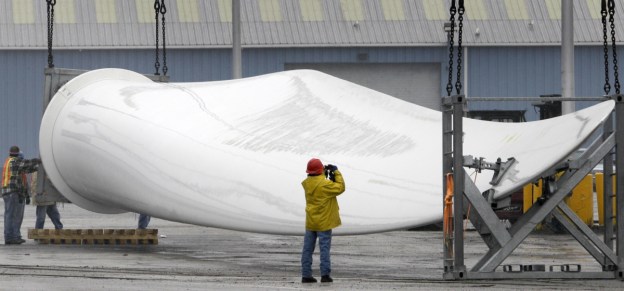
The operations of offshore wind farm, Vineyard Wind 1, were halted in July 2024 after part of a blade on one of the offshore turbines broke off and fell into the ocean. The offshore wind farm is about 15 miles south of Martha’s Vineyard, and debris from the blade has washed up on Nantucket’s southern-facing beaches, as well as Tuckernuck and Muskeget islands. The turbine the blade was attached to, designated AW 38, was in its commissioning phase and was still undergoing testing. No employees, contractors or fishing vessels were in the vicinity of the turbine at the time. The beaches on Nantucket were closed to swimming on Tuesday as large quantities of insulation foam and non-toxic pieces of fiberglass washed ashore.

Excerpt from, Heather McCarron, Wind turbine blade 15 miles off Martha’s Vineyard breaks, pieces fall into ocean, Cape Cod Times, July 18, 2024

What is the Difference between Recycling and Fake Recycling?

Chemical companies, oil-and-gas incumbents and startups around the world are touting plans for new recycling facilities, promising to turn old bottles and bags into usable material. But policymakers are questioning whether some of these methods, broadly termed chemical or advanced recycling, should be considered recycling at all.

In 2024, Eastman Chemical began processing plastic at a new plant in Kingsport, Tenn., that it calls the largest material-to-material molecular recycling facility in the world. The company uses a chemical procedure called methanolysis to break down hard-to-recycle plastics and turn them into “virgin quality” polyesters. When operating at capacity, the facility will process 110,000 tons of plastic waste a year, the equivalent of 11 billion water bottles a year, said Mark Costa, Eastman’s chief executive. 
In July 2024, Australian company Samsara Eco announced a $65 million funding round that attracted investment from Singapore’s state-investment company Temasek and apparel company Lululemon, among others. Using a process it calls enzymatic recycling, it aims to recycle 1.5 million tons of plastic a year by 2030. 

Yet in June 2024, during last-minute negotiations on a New York state packaging bill that would have forced companies to meet ambitious recycling standards and reduce their packaging waste by 30%, state legislators agreed that technologies like Eastman’s or Samsara Eco’s would not initially be considered “recycling.”   “We had a serious concern about the pseudo solution pushed by the industry called chemical recycling,” said Judith Enck, a former Environmental Protection Agency official and founder of Beyond Plastics, an advocacy group that supported the bill. In a report published last October, Beyond Plastics raised doubts about advanced recycling plants’ yield, emissions, byproducts and energy use. The group has argued that advanced recycling amounts to little more than a marketing tactic deployed to distract decision makers from proven waste-reduction methods, like using less packaging… 

A recent ProPublica investigation found that the dominant advanced recycling technique, pyrolysis, yields 15% to 20% usable plastic materials. The rest turns into fuel and other chemicals. Traditional mechanical recycling yields 55% to 85% new plastic…

Excerpts from Claire Brown, A Fight Over the Future of Recycling Brews as Plastics Legislation Gains Traction, WSJ, July 2, 2024

Corporate Greed and the Grid: How AI Fell For Nuclear Power

The owners of roughly a third of U.S. nuclear-power plants are in talks with tech companies to provide electricity to new data centers needed to meet the demands of an artificial-intelligence boom.  Among them, Amazon Web Services is nearing a deal for electricity supplied directly from a nuclear plant on the East Coast with Constellation Energy, the largest owner of U.S. nuclear-power plants, according to people familiar with the matter. In a separate deal in March, the Amazon.com subsidiary purchased a nuclear-powered data center in Pennsylvania for $650 million…

Instead of adding new green energy to meet their soaring power needs, tech companies would be effectively diverting existing electricity resources. That could raise prices for other customers and hold back emission-cutting goals…The nuclear-tech marriage is fueling tensions over economic development, grid reliability, cost and climate goals in states including Connecticut, Maryland, New Jersey and Pennsylvania. Amazon’s deal in Pennsylvania set off alarm bells for Patrick Cicero, the state’s consumer advocate. Cicero said he is concerned about cost and reliability if “massive consumers of energy kind of get first dibs.” It is unclear if the state currently has the regulatory authority to intervene in such deals, he said. “Never before could anyone say to a nuclear-power plant, we’ll take all the energy you can give us,” said Cicero.

Excerpts from Jennifer Hiller, Tech Industry Wants to Lock Up Nuclear Power for AI, WSJ, July 1, 2024

The Race for Fusion: US v. China

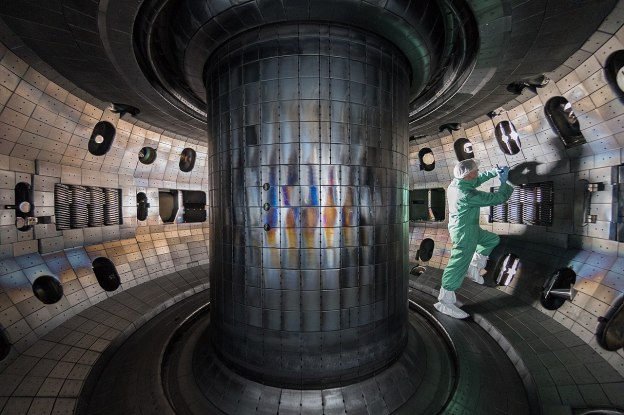
A high-tech race is under way between the U.S. and China as both countries chase an elusive energy source: nuclear fusion.  China is outspending the U.S., completing a massive fusion technology campus and launching a national fusion consortium that includes some of its largest industrial companies. Crews in China work in three shifts, essentially around the clock, to complete fusion projects.

The result is an increasing worry among American officials and scientists that an early U.S. lead is slipping away. JP Allain, who heads the Energy Department’s Office of Fusion Energy Sciences, said China is spending around $1.5 billion a year on fusion, nearly twice the U.S. government’s fusion budget. What’s more, China appears to be following a program similar to the road map that hundreds of U.S. fusion scientists and engineers first published in 2020 in hopes of making commercial fusion energy. “They’re building our long-range plan,” Allain said. “That’s very frustrating, as you can imagine.”

China already has a fast-growing nuclear-technology industry and is building more conventional nuclear power plants than any other country. The country’s nuclear-plant development will give it an advantage when commercial fusion is reached, according to a report released last month by the Information Technology and Innovation Foundation, a Washington, D.C.-based think tank with backers that include big tech companies…

The Chinese Academy of Sciences’ Institute of Plasma Physics in the eastern Chinese city of Hefei in 2018 broke ground on a nearly 100-acre magnetic fusion research and technology campus. The facility is expected to be completed in 2025 but is already largely operational and focused on industrializing the technology. In 2023 China said it would form a new national fusion company, and said the state-owned Chinese National Nuclear Corp. would lead a consortium of state-owned industrial firms and universities pursuing fusion energy. Among the largest efforts by a private Chinese company are those of ENN, an energy conglomerate, which created a fusion division from scratch in 2018. Since then, ENN has built two tokamaks, the machines where fusion can happen, using powerful magnets to hold plasma. ENN’s fusion work isn’t well-understood outside of China and its pace of development would be difficult to replicate in the U.S. or Europe.

Excerpts from Jennifer Hiller, China Outspends the U.S. on Fusion in the Race for Energy’s Holy Grail, WSJ, July 9 2024

Who Terrifies an American President?

Though tensions between Iran and the U.S. have ratcheted up since the Oct. 7, 2024 attacks on Israel by Tehran-backed Hamas, exports from Iran surpassed 1.5 million barrels a day in 2024 starting in February, substantially more than at the start of the Biden presidency. Most of that oil is bought by small Chinese refineries at discounted prices. The U.S. and its allies have been “very, very careful not to go too far and damage the ability of Western economies to function,” when it comes to sanctions, said John Smith, partner at Morrison Foerster and former head of the U.S. Treasury Department’s Office of Foreign Assets Control.

U.S. diplomats and energy officials have for decades worked around the globe to keep oil flowing, often involving uncomfortable alliances and accommodations. When the Treasury department hit Moscow with a wave of sanctions on June 12, 2024 over the Ukraine war, it targeted banks but left the country’s oil industry largely untouched. There is frustration among some staffers in the U.S. Treasury Department over the lack of action against oil-trading networks that ferry Russian and Iranian oil, including one that officials are currently investigating, according to U.S. diplomats and some of the energy-industry players briefed by current officials. The network is operated by a little-known trader from Azerbaijan who emerged as the premier middleman for Russia’s Rosneft Oil, The Wall Street Journal reported.

When the Treasury imposed sanctions on Russia’s state tanker owner, Sovcomflot, it also issued licenses exempting all but 14 of the company’s fleet, which data provider Kpler estimates totals 91 ships. Industry players said the exemption licenses were a green light to oil traders to do business with those ships, minimizing the risk that they would be targeted by future sanctions. The National Economic Council, led by Lael Brainard, and others within the administration worried that broader measures would lead to logistical problems in the oil market and boost inflation, said people familiar with the matter. Rising oil output from sanctioned countries is one reason crude prices have fallen from their highs earlier this year, analysts said…

In another example of the collision of foreign and energy policies, earlier this year, Washington asked Ukraine to stop attacking some Russian refineries with drones after the damage rattled global diesel and gasoline markets….

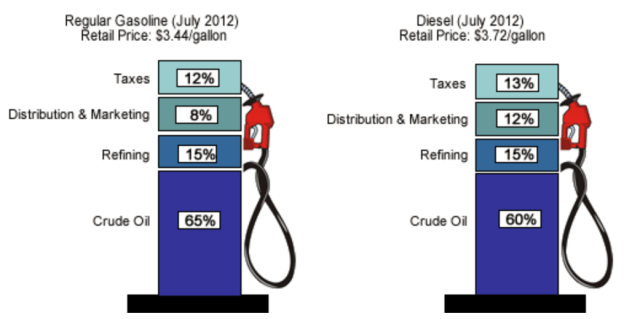
“Nothing terrifies an American president more than a gasoline-pump price spike,” said Bob McNally, president of consulting firm Rapidan Energy Group and former White House policy official under George W. Bush. “They will go to great lengths to prevent this, especially in an election year.”

Excerpts from Anna Hirtenstein et al., Biden Wants to Be Tough With Russia and Iran—but Wants Low Gas Prices Too, WSJ, June 26, 2024


What Ails the West: the Forgotten Art of Industrialization

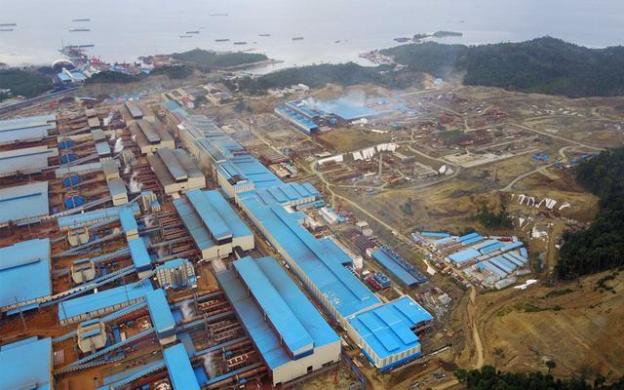
For the past few years, the West has been trying to break China’s grip on minerals that are critical for defense and green technologies. Despite their efforts, Chinese companies are becoming more dominant, not less. They are expanding operations, supercharging supply and causing prices to drop. Their challengers can’t compete. Take nickel, which is needed for electric-vehicle batteries. Chinese processing plants that dot the Indonesian archipelago are pumping out vast quantities of the mineral from new and expanding facilities, jolting the market. Meanwhile, Switzerland-based mining giant Glencore is suspending operations at its nickel plant in New Caledonia, a French territory, concluding it can’t survive despite offers of financial help from Paris. The U.K.’s Horizonte Minerals, whose new Brazilian mine was expected to become a major Western source, said last month that investors had bailed, citing oversupply in the market. Lithium projects in the U.S. and Australia have been postponed or suspended after a surge in Chinese production at home and in sub-Saharan Africa. 

The only dedicated cobalt mine in the U.S. also suspended operations last year, five months after local dignitaries attended its opening ceremony. Its owners say they are struggling against a flood of Chinese-produced cobalt from Indonesia and the Democratic Republic of Congo.

Last year, non-Chinese production of refined cobalt declined to its lowest level in 15 years… The share of lithium mining done within China or by Chinese companies abroad has grown from 14% in 2018 to 35% this year… Over the same time, lithium processing done within China has risen from 63% in 2018 to 70%…China has many advantages in the race to lock up minerals. Its miners are deep-pocketed and aggressive, making bets in resource-rich countries that Western companies have long viewed as corrupt or unstable, such as Indonesia, Mali, Bolivia and Zimbabwe. State banks provide financing for power plants and industrial parks abroad, paving the way for further private Chinese investment.

China’s rapid industrial development also means its companies have spent decades fine-tuning the art of turning raw ore into metals. They can set up new facilities quickly and cheaply. A paper published in February by the Oxford Institute for Energy Studies pegs the costs of building a lithium refinery outside China as three to four times higher than building one within the country. In eastern Indonesia, Chinese companies have built a fleet of highly efficient nickel and cobalt plants over the past few years after mastering a technology Western miners long considered glitchy and expensive. The plants run on coal power, some of it new, at a time when the world is looking to phase out dirty energy. “It’s just a simple, straightforward engineering capability that the Chinese have that has been lost in the rest of the world,” said Jim Lennon, managing director for commodities strategy at Macquarie, an Australian bank. “The Chinese have this overwhelming competitive advantage now that can’t really be addressed.”….

Excerpts from Jon Emont, China Is Winning the Minerals War, WSJ, June 19, 2024

How Fish Becomes Extinct

Five fish species, including the iconic Chinese sturgeon, have gone extinct, or will soon be extinct, because of dams on the Yangtze River in China, according to a paper released on 10 May 2024 in Science Advances. The Yangtze River is a mighty 6,300-kilometre-long waterway and a global biodiversity hotspot that runs through 11 Chinese provinces. But over the past 50 years, six major hydropower dams and more than 24,000 smaller hydropower stations have been built in the river’s main stream.

The paper focused on five iconic species: the Chinese sturgeon (Acipenser sinensis), the Yangtze sturgeon (Acipenser dabryanus), the Chinese paddlefish (Psephurus gladius), the Chinese sucker (Myxocyprinus asiaticus) and the largemouth bronze gudgeon (Coreius guichenoti). By the time of the analysis, the paddlefish was already extinct. The Yangtze sturgeons are being kept alive only through captive-breeding programs. The Chinese sturgeon is critically endangered. The International Union for Conservation of Nature lists the sucker as vulnerable, and the gudgeon as endangered. The researchers’ modelling found that all five species will be entirely extinct or extinct in the wild by 2030.

Excerpts from Xiaoying You, China’s Yangtze fish-rescue plan is a failure, study says, Nature, May 20, 2024

Making Nuclear Energy Sustainable Means Getting Rid of Nuclear Waste: Is this Possible?

“When using fast reactors in a closed fuel cycle, one kilogram of nuclear waste can be recycled multiple times until all the uranium is used and the actinides — which remain radioactive for thousands of years — are burned up. What then remains is about 30 grams of waste that will be radioactive for 200 to 300 years,” said Mikhail Chudakov, IAEA Deputy Director General and Head of the Department of Nuclear Energy.

Fast reactors were among the first technologies deployed during the early days of nuclear power, when uranium resources were perceived to be scarce. However, as technical and material challenges hampered development and new uranium deposits were identified, light water reactors became the industry standard. However, efforts are underway in several countries to advance fast reactor technology, including in the form of small modular reactors (SMRs) and microreactors (MRs). 

Five fast reactors are now in operation: two operating reactors (BN-600 and BN-800) and one test reactor (BOR-60) in the Russian Federation, the Fast Breeder Test Reactor in India and the China Experimental Fast Reactor. The European Union, Japan, the United States of America, the United Kingdom and others have fast reactor projects tailored to a variety of aims and functions underway, including SMRs and MRs. Russia’s Pilot Demonstration Energy Complex, which is under construction in Seversk, brings together a lead-cooled BREST-OD-300 fast reactor, a fuel fabrication and refabrication plant, and a plant for reprocessing mixed nitride uranium–plutonium spent fuel. A deep geological waste repository will also be built. The importance of this pilot project is not only to demonstrate the making of new fuel, irradiate it, and then recycle it, but to do so all on one site.

“Having the whole closed fuel cycle process on one site is good for nuclear safety, security and safeguards,” said Amparo Gonzalez Espartero, Technical Lead for the Nuclear Fuel Cycle at the IAEA. “It should also make more sense economically as the nuclear waste and materials do not need to be moved between locations — as they are currently in some countries — thereby minimizing transportation and logistical challenges.”

Projects are advancing in other countries. China is constructing two sodium cooled fast reactors (CFR-600) in Xiapu County, Fujian province. The first unit is under commissioning and is expected to be connected to the grid in 2024. In the USA, a fast reactor project backed by Microsoft co-founder Bill Gates is under development; it will not operate in a closed fuel cycle, although the country is renewing efforts to work on closed nuclear fuel cycles and use its existing nuclear waste to develop its own supply of fuel. In Europe, the MYRRHA project in Belgium is aimed towards building a lead-bismuth cooled accelerator driven system by 2036 to test its ability to break down minor actinides as part of a future fully closed fuel cycle.

Excerpts from Lucy Ashton, When Nuclear Waste is an Asset, not a Burden, IAEA, Sept., 2023

The Dangers of Manic Oil Production

In a desolate stretch of desert spanning West Texas and New Mexico, drillers are pumping more crude than Kuwait. The oil production is so frenzied that huge swaths of land are literally sinking and heaving. The land has subsided by as much as 11 inches since 2015 in a prime portion of the Permian Basin, as drillers extract huge amounts of oil and water, according to a Wall Street Journal analysis of satellite data. In other areas where drillers dispose of wastewater in underground wells, the land has lifted by as much as 5 inches over the same period. Alongside crude, oil-and-gas companies are extracting gargantuan amounts of subterranean water—in the Delaware, between five and six barrels of water are produced, on average, for every barrel of oil. To dispose of it, they inject billions of barrels of putrid wastewater into underground disposal wells.

The constant extraction and injection of liquids has wrought complex geologic changes, which are raising concerns among local communities long supportive of oil and gas. Earthquakes linked to water disposal have rattled residents and prompted state regulators to step in. Some researchers worry that wastewater might end up contaminating scarce drinking-water supplies

Excerpts from Benoit Morenne and Andrew Mollica, Permian Oil Extraction Lifts and Sinks Land, WSJ, Apr. 29, 2024

Will the 4 Waves of Sanctions Stop Russia?

Supercooled gas has quickly become one of the world’s most important energy sources—and a flashpoint between Russia and the U.S. Nowhere is that contest more apparent than in Russia’s Arctic north. An enormous new coastal facility is being built there to produce liquefied natural gas, a key project for Russian President Vladimir Putin. The U.S. is using a barrage of sanctions to cripple the initiative, known as Arctic LNG 2. These have stopped Russia from taking delivery of specialized, colossal tankers that it needs to transport the gas, and made it hard to build alternative vessels domestically. “Our role is to ensure Arctic LNG 2 is dead in the water,” Geoffrey Pyatt, the U.S. assistant secretary of state for energy resources, told a conference in Switzerland in April 2024.

Globally, LNG is ascendant. Demand is buoyant as governments ditch dirtier coal and the uptake of power-hungry artificial intelligence accelerates. Supply is surging too, and players such as industry heavyweight Qatar have major expansion plans. For Russia’s part, Putin aims to more than triple LNG exports in the coming years. His goal: Bring in more money to fund the war in Ukraine and offset a decline in Russia’s traditional business of exporting gas via pipelines. ..

About 32 million metric tons a year of capacity are under construction, according to Rystad Energy, a consulting firm, on top of an existing 29 million tons. In December 2023, the first of three liquefaction plants, known in the industry as trains, was completed at Arctic LNG 2, and the facility began producing LNG. The milestone, despite U.S. sanctions, was lauded as a win for Moscow by analysts and Russian officials. A few months later, however, victory looks less certain.

Exports were supposed to begin in the first quarter of 2024, according to Russia’s energy minister. But the custom-built ships that Novatek, the Russian energy giant behind the project, needs to break through frozen parts of the Arctic Ocean haven’t been delivered.

Hanwha Ocean, a South Korean shipbuilder, said it has canceled plans to build three vessels for Arctic LNG 2 for sanctions-related reasons. Mitsui O.S.K. Lines, a Japanese shipping company, has said it also won’t provide vessels to Arctic LNG 2 despite having planned to charter three carriers. Without ships, Novatek can’t export any gas. As a result, LNG output has ground to a halt, and the facility is mostly recirculating already-produced gas, according to people familiar with the plant. Novatek didn’t respond to a request for comment.

France’s TotalEnergies, which holds 10% of Arctic LNG 2, declared a force majeure earlier this year, indicating it can’t supply customers due to circumstances beyond its control. Total said it was complying with sanctions and doesn’t plan to deliver gas from the project this year.

In total, the U.S. has hit Russia’s fledgling LNG industry with four waves of sanctions since September. It has targeted operating companies for the Arctic LNG 2 project, storage vessels, shipping companies it suspected were seeking to buy specialized carriers for the project, and companies working on a second facility near the Baltic Sea.

Excerpts from Anna Hirtenstein, The U.S. Is Trying to Cripple Russia’s Vast Arctic LNG Project, WSJ, Apr. 14, 2024

The Real Price for ‘Green’ Energy

Civilization would not exist were it not for miners. Every year the world’s oldest industry supplies hundreds of megatons of the primary metals and minerals that are essential to all subsequent industries—from medical devices to kitchen appliances, aircraft, toys, power plants, computers and cars. Hence it’s consequential when the governments of Europe and the U.S. implement policies requiring that global mining expand, and soon, by 400% to 7,000%. Those policies are meant to force a transition away from the oil, natural gas and coal that supply 80% of global energy. But it’s an unavoidable fact that building the favored transition machines—wind turbines, solar panels, electric cars—will require astonishing quantities of minerals to produce the same amount of energy.

The other challenge involves people. Mining has always been as much about people as it has about geology, technology and money. In “The War Below: Lithium, Copper, and the Global Battle to Power Our Lives,” Ernest Scheyder highlights the myriad difficulties faced by the people who build mines, as well as those hurt by or opposed to them. As Mr. Scheyder notes, mining is “dirty work.” That’s no invective; it’s just reality…He focuses on the social and political dynamics that accompany big mining projects because, as he writes, there’s “no way around the fact that mines are gargantuan creations that maim the Earth’s surface.” He makes clear that his goal isn’t to question the need for more mines but to understand “whether these lands should be dug up in an attempt to defuse climate change,” especially when some lands are considered sacred by their neighbors and inhabitants.

Excerpts, ‘Mark P. Mills, The War Below’ Review: Digging for Minerals, WSJ, Mar. 3, 2024

Fracking v. Nuclear Wastes: the Fate of New Mexico

Holtec International, a Florida-based company, aims to rail thousands of canisters of spent nuclear fuel to Lea County, New Mexico, United States, and store the containers below ground. The site has a 40-year license and could ultimately hold around 170,000 metric tons of used radioactive fuel—about twice as much as the U.S. currently holds. It would be the largest such facility in the world, and Holtec says it would further the development of U.S. nuclear energy. [This plan is opposed by Fasken Oil and Ranch] a company that claims that  a nuclear incident in the Permian basin, which cranks out more oil than Iraq and Libya combined, would have devastating consequences for U.S. energy and the local economy. “I’m not antinuclear,” Fasken Assistant General Manager Tommy Taylor, said. “We just don’t feel like siting all the nuclear waste in the middle of our biggest oil and gas resource is a good idea.” 

Fasken said the nuclear-waste storage sites threaten its operations in the Permian. According to the court filing of Fasken:

“The proposed site sits on top of and adjacent to oil and gas minerals to be developed
by means of fracture stimulation techniques. Currently, drilling techniques used to
extract minerals in the Permian Basin involve drilling horizontally into deep
underground formations up to two miles beneath the earth’s surface. High pressure
fluids are pumped into the wells, in some cases exceeding twelve thousand pounds
per square inch. This pressure is power enough to fracture the surrounding rock
thus releasing the oil and gas
. The pressure creates fissures and cracks
beneath the surface
. And, at this time, there are oil and gas operators testing a new
technique of simultaneously drilling and fracturing up to 49 horizontal wellbores in
a single section of land. Either the traditional or new and unproven drilling
technique, involving more than 20,000,000 bbls of water and sand, could
conceivably be utilized to inject into and withdraw from the rock formation beneath
and surrounding the Holtec site. Hydraulic fracturing beneath and around Holtec
should give the NRC pause and is sufficient reason not to proceed.” (HOLTEC INTERNATIONAL’S ANSWER OPPOSING FASKEN’S, pdf)

The yearslong fight has entangled large oil companies, the country’s top nuclear regulator, the states of Texas and New Mexico, as well as local communities that want to host the nuclear waste

Supporters of the nuclear-waste projects say they could help break a decades-old nuclear waste logjam that has led to radioactive refuse piling up at reactors. President Biden and billionaire investors are endorsing new nuclear projects to reduce greenhouse-gas emissions, but the U.S. has yet to figure out where to permanently unload some of the most hazardous material in the world.  The Permian is home to two sites that handle some types of nuclear waste and to the only commercial uranium-enrichment facility in the country.  Holtec’s storage would be temporary, and some nuclear experts say interim facilities can be a stopgap until the federal government builds a permanent, deep geologic repository. A plan to house nuclear waste at Nevada’s Yucca Mountain fizzled under former President Barack Obama, and the search for an alternative site has stalled.

As a result, the US federal government is paying utilities billions of dollars to keep used fuel rods in steel-lined concrete pools and dry casks at dozens of sites.  Consolidating used nuclear fuel at one or two facilities would lessen that financial

Fasken has notched court victories. Last year, the U.S. Fifth Circuit Court of Appeals in New Orleans found that federal law didn’t authorize the Nuclear Regulatory Commission to license a private, away-from-reactor storage facility for spent nuclear fuel. It vacated the federal license for another storage project proposed by Interim Storage Partners, a joint-venture between Orano USA and Waste Control Specialists. The Nuclear Regulatory Commission has asked the court to reconsider.

The Holtec project faces other hurdles. New Mexico last year passed legislation all but banning storage of high-level nuclear waste. Texas lawmakers have also opposed interim storage facilities. The Holtec spokesman said the company was evaluating the legislation’s impact on the project. Fasken expects the fight over interim storage will eventually reach the Supreme Court. 

Excerpts from Benoit Morenne, The War over Burying Nuclear Waste in America’s Busiest Oil Field, WSJ, Feb. 19, 2024

When Lakes Become a Soup of Minerals: the Fate of Great Salt Lake

In the summer 2024, a California startup plans to start construction on a project to suck up water from the Great Salt Lake, Utah, United States to extract one of its many valuable minerals: lithium, a critical ingredient in the rechargeable batteries used in electric vehicles. The water will then be reinjected back into the lake, which Lilac Solutions says addresses concerns about the damaging effects of mineral extraction. At its peak, Lilac says it will use a series of pipes to suck up 80,000 gallons of water a minute to harvest the mineral. The company plans to eventually produce up to 20,000 tons of battery-grade lithium a year.

The effort is one of dozens of projects across the U.S. racing to build up a domestic supply of lithium and other battery minerals as the Biden administration is dedicating billions of dollars to strengthening the U.S. battery supply chain and reducing reliance on China, which dominates the global production of battery minerals.

One common extraction method of lithium pumps briny underground water into vast man-made ponds, where evaporation separates lithium from other elements over 18 months or more. Mining companies in Chile and elsewhere have used the approach, which drains scarce water resources and can leave deposits of toxic residues.

Lilac says its technology is much faster, taking a matter of hours from the time of extraction, while preserving water levels. Its method deploys reusable ceramic “beads” that attach to lithium atoms to separate them from the brine.

At the Great Salt Lake, mineral extraction is nothing new. The lake has been shrinking for decades because of agricultural, industrial and other diversions of its feed waters. Extraction of minerals accounts for about 13% of its water diversion, according to a 2019 study. Meanwhile, the lake has become a concentrated soup of minerals, since it doesn’t have an outlet that lets it discharge the ones that flow into it.

Scott Patterson, The Great Salt Lake Is Full of Lithium. A Startup Wants to Harvest It, WSJ, Feb. 12, 2024

Great Fear and Uphill Struggle: US, Japan and China

In Japan’s glory days of the the late 1980s, the country accounted for about half of the global semiconductor industry, and the U.S. was left to beg, plead and threaten as it tried to get a small slice of the Japanese market. A bestselling book in Japan during the Cold War’s waning days called “The Japan That Can Say No” suggested that Tokyo could leverage its dominance in semiconductors to control the world’s military balance—and perhaps help the Soviet Union instead of the U.S.

Today, the great fear driving chip investments in both U.S. and Japan is China. The U.S. policy calls for helping allies such as Japan build a supply chain that is less exposed to risks posed by a hostile Beijing. While the U.S. is expanding its own chip production through the Chips and Science Act, which includes some $53 billion of spending, people involved in the Rapidus project (between U.S. and Japan) said the U.S. needed further global diversification. ..The Rapidus project aims to get Japan back into the heart of the business of chip making by building facilities on the northern island of Hokkaido, known for its ski resorts. Rapidus says it wants to begin pilot production in 2025 and full-scale production in 2027. Some 6,000 workers are being drafted to put up the factory.

Japan’s Ministry of Economy, Trade and Industry has said that it intends to help Rapidus achieve its goals, and that it wants the Japanese semiconductor industry to have revenue of some $100 billion in 2030, triple the 2020 figure. The ministry is pitching in billions of dollars for additional projects in Japan. TSMC is building an $8.6 billion factory on the southern island of Kyushu and is in talks about a second. Assuming it gets the money, Rapidus still has to master a level of manufacturing technology attained so far by only two companies, TSMC and South Korea’s Samsung Electronics. Both are projected to have the ability to mass-produce 2-nanometer chips by 2025.

Excerpts from Peter Landers and  Yang Jie, Japan’s Plan to Become a Chipmaking Champ Hinges on This Football-Loving Engineer, WSJ, July 6, 2023

Fraud and Manipulation in Voluntary Carbon Markets

The $2 billion voluntary carbon-offsets market has suffered allegations that many credits don’t deliver the emissions cuts they promise, but multiple efforts to rebuild credibility face an uphill battle. In 2023 the US Commodity Futures Trading Commission said it would make policing carbon offsets a priority. Nestlé decided to leave the market and standard setters published guidelines that few existing buyers would meet…“The offset industry’s inability to self-regulate has produced a slow-moving crisis,” said Danny Cullenward, research fellow at the Institute for Carbon Removal Law and Policy at American University. “Companies are asking whether the marketing benefits are worth the legal risks.”

Morgan Stanley estimated in February 2023 that that carbon offsets could be a $100 billion market by 2030. However, over the past year the market’s credibility has suffered after a series of allegations that credits aren’t delivering on their emissions-reduction promises. It has left many companies with cold feet.

Each carbon credit is supposed to equal one metric ton of carbon dioxide avoided or removed from the atmosphere. Removal credits usually fund restoration projects such as tree planting, while the most common offset or avoidance credits fund energy-efficiency projects, renewable energy or protect forests. These so-called voluntary credits are separate and usually cheaper than government-regulated carbon trading that polluters pay for in the European Union and elsewhere. There are also some voluntary credits for mechanically removing CO2 directly from the air, which are currently much more expensive.

0In June 2023, the CFTC— the US federal regulator of derivatives—created an environmental task force focused on rooting out fraud in carbon markets. Earlier that month, the agency called for whistleblowers to expose misconduct. “As carbon credit markets continue to grow, we will act to foster the integrity of these markets by fighting fraud and manipulation,” CFTC Enforcement Director Ian McGinley said.

Excerpts from Dieter Holger, Rebuilding Trust in Carbon Offsets Faces Uphill Battle, WSJ, July 12, 2023

Essence of Fear: Fukushima Radioactive Water Dump in Pacific Ocean

Nearly three-fourths of South Koreans say they will eat less seafood after Japan starts releasing Fukushima radioactive wastewater into the Pacific Ocean. The price of sea salt in the country skyrocketed and government reserves were released, as panic buying ahead of the nuclear-water dump emptied out the shelves…Japan’s plan to release the water into the sea after diluting the radioactive elements to what it says are safe levels has been affirmed by the International Atomic Energy Agency (IAEA), a United Nations body. The agency’s chief, Rafael Grossi, personally delivered the final IAEA report to Japanese Prime Minister Fumio Kishida this week. The report said radionuclides would be released at a lower level than those produced by natural processes and would have a negligible impact on the environment.

But….“The field of nuclear power is contaminated with fear,” said Michael Edwards, a clinical psychiatrist in Sydney who interviewed Fukushima residents following the nuclear accident. “Psychologically, people do not really understand and trust science, and know science can be an instrument of government.”…Beijing’s Foreign Ministry has slammed the Fukushima wastewater plan, accusing Japan of treating the surrounding ocean as the country’s own “private sewer.” China has expanded restrictions on food imports from Japan, which include a ban on food products from Fukushima and nine other prefectures.

Excerpts from Dasl Yoon and Miho Inada ‘How Could I Feel Safe?’ Japan’s Dumping of Radioactive Fukushima Water Stirs Fear, Anger, WSJ, July 7, 2023

The Environmental Harm Caused by the Energy Transition

In the electric-vehicle business, the quandary is known as the nickel pickle. To make batteries for EVs, companies need to mine and refine large amounts of nickel. The process of getting the mineral out of the ground and turning it into battery-ready substances, though, is particularly environmentally unfriendly. Reaching the nickel means cutting down swaths of rainforest. Refining it is a carbon-intensive process that involves extreme heat and high pressure, producing waste slurry that’s hard to dispose of. The nickel issue reflects a larger contradiction within the EV industry: Though electric vehicles are designed to be less damaging to the environment in the long term than conventional cars, the process of building them carries substantial environmental harm.

The challenge is playing out across Indonesia’s mineral-rich islands, by far the world’s largest source of nickel. These deposits aren’t deep underground but lie close to the surface, under stretches of overlapping forests. Getting to the nickel is easy and inexpensive, but only after the forests are cleared.  One Indonesian mine, known as Hengjaya, obtained permits five years ago to expand its operations into a forested area nearly three times the size of New York City’s Central Park. The mine’s Australian owner, Nickel Industries, said that rainforest clearing in 2021 caused greenhouse gas emissions equivalent to 56,000 tons of carbon-dioxide. That’s roughly equal to driving 12,000 conventional cars for a year, according to calculations by The Wall Street Journal based on U.S. Environmental Protection Agency data. “Unfortunately, land clearing is required for all open-cast mining processes, including our operations,” said the firm’s sustainability manager…. The negative impact is offset, he said, by nickel’s use in environmentally friendly batteries…Auto executives worried about having enough nickel to meet rapidly growing demand for EVs. They had moved away from cobalt, another battery component, after human-rights groups and journalists reported on widespread child labor in cobalt operations and dangerous conditions faced by miners in the Democratic Republic of Congo. Automakers tweaked their batteries to reduce cobalt by adding more nickel…

The nickel rush has created pressing new environmental concerns. The HPAL process used to process nickel pioneered by Chinese companies involves dousing nickel ore in sulfuric acid and heating it to more than 400 degrees Fahrenheit at enormous pressures. Producing nickel this way is nearly twice as carbon-intensive as mining and processing sulfide nickel found in Canada and Russia. Another way of processing laterite ore that often uses coal-powered furnaces is six times as carbon-intensive, according to the International Energy Agency. Companies also face questions about how to get rid of the processing waste. It is difficult to safely sequester in tropical countries because frequent earthquakes and heavy rains destabilize soil, which can cause waste dams to collapse. A 2018 Indonesian law allowed companies to obtain permits to discard mineral processing waste into the ocean….

China’s domination of Indonesian nickel processing poses risks for Western electric-vehicle companies at a time of fraying relations between Washington and Beijing. Last year, the U.S. government declared nickel a critical mineral whose supply is vulnerable to disruption, with very limited nickel production operations in the U.S.

Excerpts from Jon Emont, EV Makers Confront the ‘Nickel Pickle’, WSJ, June 5, 2023

Saving the Climate by Fouling the Oceans

The Norwegian government in June 2023 opened the door for deep-sea mining in its waters, despite opposition from environmental groups and a growing list of nation states arguing to ban the practice.  The government said it was proposing parts of the Norwegian continental shelf be opened for deep sea mining and other commercial seabed mineral activities…Companies and countries are scouring the planet to find and secure additional sources of metals and minerals critical for the energy transition, including cobalt, manganese and nickel.  To date deep-sea mining has focused on the extraction of seabed nodules—tennis-ball sized pieces of rock which contain manganese, cobalt and nickel, all of which are used in electric-vehicle batteries

So far much of the attention has centered on the Clarion Clipperton Zone in the Pacific Ocean: An area of water between Mexico and Hawaii that contains millions of tons of nodules.  In Norway however, the focus will be on seabed crusts on the country’s continental shelf. The target crusts contain copper, zinc and cobalt, as well as some rare-earth elements, according to the Norwegian Petroleum Directorate…

Countries including France and Germany have called for moratoriums on deep-sea mining, while in May 2023 a report found that when researching the pacific seabed, 90% of the more than 5,000 marine creatures found living in the Clarion Clipperton Zone were new species. Companies including Maersk and Lockheed Martin have also been divesting their deep-sea mining investments. 

Excerpts from Yusuf Khan, Norway Opens Door for Deep-Sea Mining of Copper and Other Critical Materials, WSJ, June 20, 2023

Wielding the Weapon of Nuclear Expertise: Russia

Cutting the heart out of a nuclear power plant, the dismantling of a nuclear power plant, is a surgical procedure that only a few specialists are equipped to handle. The process begins by launching plasma-torch-wielding robots into an empty pool surrounded by thick concrete walls. From there, the remote-controlled machines make circular cuts, as if slicing pineapple rings, through a 600-ton steel vessel that contains radiation generated over decades of splitting atoms. These rings are then diced into meter-long pieces and transported via secure convoy to radioactive waste repositories, where they are left to cool down — indefinitely.

Behind the scenes, scores of nuclear engineers, radiation safety experts and state regulators monitor this operation, which can cost upwards of a billion dollars and take years to plan and execute. The expertise needed to pull this off without error is why “there are only a handful of players” in the high-radiation decommissioning (dismantling) business, said Uniper SE’s Michael Baechler, who is supervising the dismantling of Sweden’s Barsebaeck Nuclear Power Plant.

Among the oldest and most experienced is Germany’s Nukem Technologies Engineering Services GmbH, which for decades has offered its unique services in Asia and Africa and across Europe. Nukem engineers helped contain radiation from the destroyed reactors in Chernobyl and Fukushima. They helped lead the clean-up of an atomic-fuel factory in Belgium. In France, the company devised ways to treat waste from the International Thermonuclear Experimental Reactor. With researchers predicting that cleaning up after aging nuclear power plants will evolve into a $125 billion global business in the near future, Nukem should be ideally positioned to capitalize on the moment.

Except for one thing: the company is wholly owned by Rosatom Corp., the Kremlin-controlled nuclear giant, putting it in the center of an uncomfortable standoff…Unlike Germany’s seizure of Russian storage and refining assets after the war with Ukraine, Nukem does not have as much fixed infrastructure to go after. If sanctions were to be imposed, Rosatom might simply close shop or move Nukem’s headquarters to a friendlier jurisdiction… But this presents a problem because “Nukem presides over a large pool of know-how.” Its valuable asset being its 120 mostly German engineers who can work across the nuclear supply chain from the building to the decommissioning of nuclear power plants. The International Atomic Energy Agency has warned of an acute shortage of decommissioning workers.

Excerpt from The Russian nuclear company the West can’t live without, Bloomberg News, May 13, 2023

Dirty Air: the Lack of Cross-Border Cooperation

An airshed is a geographical area where local topography and meteorology limit the dispersion of pollutants away from the area. Research and practice has shown that regulating pollution by taking into account airsheds, rather the arbitrary boundaries of cities and towns, can be a cost-effective way of fighting pollution.

Managing air pollution by taking into account the airsheds has done successfully in Europe and China, whose capital was once as synonymous with smog as New Delhi, India, is today. Beijing’s air is now cleaner chiefly thanks to the creation in 2013 of a powerful airshed-wide authority responsible for the capital, the city of Tianjin and 26 adjacent prefectures. In 2017 pm2.5 levels in Beijing were half those of the previous year.

India is trying to follow this example in and around Delhi. In 2021 it launched a pollution-control agency, called the Commission for Air Quality Management, with responsibility for a 55,000-square-km area, encompassing the capital and parts of Haryana, Rajasthan and Uttar Pradesh… Yet a decisive way to deal with air pollution in India will require a major expansion of this approach, according to the World  Bank.

The World Bank has identified six regional airsheds of South Asia. They are vast areas, covering multiple urban, provincial and national jurisdictions. Significantly, four of the six cross national borders. One stretches from eastern Iran into western Afghanistan and southern Pakistan; another covers much of northern India and western Bangladesh. According to the World Bank’s modelling, the more coordinated the pollution controls adopted in these airsheds, the more cost-effective and beneficial they would be.

The ideal scenario, it suggests, would be for authorities within a given airshed to co-operate, across national borders, on data-sharing and policy formulation, while each working towards a locally determined target. This would allow them to prioritize relatively easy or low-cost forms of pollution control—such as regulating brick kilns—over more difficult or expensive sorts, such as closing coal-fired power stations. The World Bank reckons that in this scenario South Asian life expectancies would rise, infant mortality would drop and health-care expenditure would fall. For a cost of $5.7bn, it estimates the approach could bring economic benefits worth $52.5bn by 2030.

The idea of Bangladesh, India and Pakistan—let alone Afghanistan and Iran—working together to such an extent… might almost seem absurd. South Asia is one of the most unneighborly, least-integrated regions in the world. It is haunted by a history of war and mutual suspicion. Its cross-border linkages are meagre. Trade within the region is just 5% of its members’ total trade…

Excerpts from, South Asia’s Filthy Air: Choked and Gasping, Economist, Feb. 18, 2023.

Economic Consequences of Falling Asleep on Wheel: the Geopolitics of Energy Transition

American officials see Africa as helping to solve two problems. The first is a global shortfall in the minerals that will be needed if the world is to meet its climate goals.The second problem, at least for the West, is China’s outsized influence on supply chains. China refines 68% of the world’s nickel, 40% of copper, 59% of lithium and 73% of cobalt, according to a report in July by the Brookings Institution, an American think-tank. “China has had free rein for 15 years while the rest of the world was sleeping,” says Brian Menell, chief executive of TechMet, a minerals firm.

America views cobalt, which is used in batteries, as a cautionary tale. In Congo, the source of about 70% of global production, Chinese entities owned or had stakes in 15 of 19 cobalt-producing mines as of 2020. America’s decision to allow a US firm to sell one of Congo’s largest copper-cobalt mines to a Chinese one in 2020 is seen in Washington as an enormous act of stupidity. It is little comfort that battery-makers are trying to use less cobalt, in part because of concerns about operating in Congo. “We cannot allow China to become an OPEC of one in critical minerals,” says an American official, referring to the oil cartel.

It is possible to identify three strands in America’s approach. The first is a multilateral effort involving Western allies. In June, Jose Fernandez, America’s under-secretary of state for economic growth, energy, and the environment, launched the Minerals Security Partnership, whose 13 members include all the G-7 countries and the EU. Many of these countries are also looking to secure more scarce rocks. Britain launched a “critical minerals strategy” in July 2022 and later this month the European Commission will propose a Critical Raw Materials Act.

A second strand in America’s approach involves its development agencies “de-risking” projects as they have done in, say, agriculture or the power sector. As well as the us Export-Import Bank, which offers trade-financing, there is the International Development Finance Corporation (DFC)... Another potential success is a memorandum of understanding signed by America, Congo and Zambia in January. America says it will help Africa’s two largest copper exporters do more than just sell the metal in its elemental state. Under it, America agreed to help the two African countries build supply chains to process their raw minerals into battery precursors for electric vehicles.

Excerpts from How America plans to break China’s grip on African minerals, Economist,  Mar. 4, 2023

Visible and Vulnerable: the Power Grid and Terrorism

Physical attacks on the U.S. power grid rose 71% last year compared with 2021 and will likely increase this year, according to a confidential industry analysis viewed by The Wall Street Journal. A division of the grid oversight body known as the North American Electric Reliability Corporation found that ballistic damage, intrusion and vandalism largely drove the increase. The analysis also determined that physical security incidents involving power outages have increased 20% since 2020, attributed to people frustrated by the onset of the pandemic, social tensions and economic challenges.

The NERC division, known as the Electricity Information Sharing and Analysis Center, or E-ISAC, recorded the sharp increase in incidents in 2022, driven in part by a series of clustered attacks on infrastructure in the Southeast, Midwest and Pacific Northwest. One of the most significant incidents occurred in early December 2022 when attackers targeted several substations in North Carolina with gunfire, leaving roughly 45,000 people in the dark…The number of politically or ideologically motivated attacks appears to be growing though it is difficult to identify the reasons for each one.  There seems to be a pattern where people are targeting critical infrastructure, probably with the intent to disrupt. In 2013, snipers targeted a large-scale transmission substation near San Jose, Calif., and raised fears that the country’s power grid was vulnerable to terrorism. The attack took out 17 transformers critical to supplying power to Silicon Valley, authorities said. A former federal regulator at the time called the event “the most significant incident of domestic terrorism involving the grid that has ever occurred.”

Excerpts from Katherine Blunt, Power-Grid Attacks Surge and Are Likely to Continue, Study Finds, WSJ, Feb. 22, 2023

Pollution as an Entitlement of the Rich

The East African Crude Oil Pipeline, a 900-mile pipeline between Uganda and Tanzania at the Murchison Falls National Park, is about to be built. The $10 billion project has become a flashpoint in the global battle against climate change, as some African governments with unexplored natural resources seek to resist a global push to limit investment in new fossil-fuel projects.

Opponents such as the U.S.-based Climate Accountability Institute, France’s Friends of the Earth and the European Parliament say the pipeline, which needs to be heated to 50 degrees Celsius (122 degrees Fahrenheit) to keep Uganda’s waxy crude liquid, would produce 34.3 million tons in annual greenhouse-gas emissions… But the governments of Uganda and Tanzania are arguing that they can’t afford not to exploit their natural resources while the world still runs on fossil fuels. It is unfair, they say, to ask poor countries to safeguard global carbon sinks and nature reserves that rich Western countries, which are responsible for most historic emissions, destroyed long ago in pursuit of their own economic development.

Nothing will stop this project,” Uganda’s President Yoweri Museveni, said from the garden of his official residence in Kampala. “We shall not accept any pressure from anybody. We know what we are doing.” TotalEnergies SE and China’s Cnooc Ltd. are involved in the project. Fitch Solutions estimates that Uganda could earn as much as $2 billion a year in taxes and royalties from the 230,000 barrels-a-day fields and the pipeline, a significant bump to the $4.5 billion it currently collects in domestic taxes.

Uganda’s neighbor, the Democratic Republic of Congo, has faced criticism, including from the Biden administration, over its plans to auction off oil-and-gas drilling sites inside its famed Virunga National Park, home to some of the world’s last remaining mountain gorillas, and peatland and rainforest areas that absorb carbon. Further south, the government of Namibia is under pressure from the United Nations to put a stop to exploratory oil drilling in the Okavango Delta, a UNESCO World Heritage site. 

The moves aren’t confined to Africa. In Mexico, President Andrés Manuel López Obrador has bet big on fossil energy. He is building a large oil refinery, the first one in the country since 1979, which is expected to start production in July, and ramped up public investment in oil exploration and production. In response to criticism from the U.S. and environmental groups, Mr. López Obrador has said that climate change became a fashionable topic among rich countries and accused some them of being hypocritical for defending reducing gas emissions while at the same time boosting oil output.

In the case of the East African Crude Oil Pipeline, more than a dozen international banks and insurers—including HSBC, Barclays and major French lenders that have helped finance previous TotalEnergies projects—have publicly said they won’t support it. ..TotalEnergies says it is confident it can raise the financing necessary to build the pipeline, with South Africa’s Standard Bank, the Industrial and Commercial Bank of China and Japan’s Sumitomo Mitsui Bank acting as lead arrangers for the project loans. People familiar with the project say the participating banks are asking for higher interest rates, which has helped raise the cost of the pipeline to $5 billion from $3.5 billion.

Some officials in poorer countries say such restrictions on developing new oil infrastructure in poor countries exacerbate global inequities, by allowing countries that already have the necessary infrastructure to profit from their fossil-fuel reserves, while potential newcomers are locked out. Uganda, like other African countries, saw protests over record-high fuel prices last year, while Tanzania’s government introduced a costly fuel subsidy to cushion the hit on households and businesses.

Excerpts from Ncholas Bariyom Uganda, Other African Nations Push for Fossil-Fuel Projects, WSJ, Feb. 22, 2023

Mining the Earth to Save it

The rush to secure green-energy metals is bringing new life to one of the world’s oldest mining hubs. Like the United States, Europe is worried that it is too reliant on China for supplies of once-obscure natural resources, such as lithium and rare-earth metals, that are seen as climate-friendly successors to oil and gas…. 

On both sides of the Atlantic, one of the best answers to long-simmering worries about green-energy security is to look north…, for example, to the “Canadian Shield,” a vast band of rock encircling Hudson Bay. The “Baltic Shield” that stretches across Scandinavia to western Russia is similarly mineral-rich. It helps explain why Sweden in particular has such a long mining heritage. In the mid-17th century, the country’s “Great Copper Mountain” near Falun provided two-thirds of the world’s copper. Even today, 80% of iron ore mined in the EU comes from a site near the Arctic town of Kiruna that Swedish state operator LKAB has exploited for well over a century.

The energy transition is an opportunity for Sweden’s mining complex. LKAB said in January 2023 that it had identified Europe’s largest body of rare-earth metals close to its existing Kiruna operation…Digging up the planet to save it is an awkward pitch. The only way for miners to counter accusations that they are adding to the problem they want to solve is by decarbonizing operations. Here Sweden is again helped by the geology of the Baltic Shield, whose river valleys are favorable for green-energy production. Roughly 45% of the country’s electricity comes from hydroelectric power, with much of the remainder provided by nuclear and wind. It is also cheap, particularly in the Arctic, where many mines are located. Against a favorable geopolitical backdrop, the biggest risk for investors is political. Mines, which can bring a lot of noise and relatively few jobs to an area, don’t tend to be popular locally.

There is a reason the West relies on autocracies for a lot of its oil.

Excerpts from Stephen Wilmot, For Mining EV Metals, the Arctic Is Hot, WSJ, Feb. 14, 2023

How Countries Dissolve: the Conquest of Africa

As Wagner fighters, a Russian mercenary group, play a central role in Russia’s war in Ukraine, the group is quietly expanding its alliances in Africa, penetrating new mineral-rich areas, exploiting the exit of Western powers and creating alliances with local fighters. Wagner fighters and instructors are working with the government of the Central African Republic in a bid to seize areas rich with precious minerals that could be exported through Sudan, say Western security officials. Wagner is also looking to expand its influence in Burkina Faso and Ivory Coast, while consolidating its relationship with the military junta in Mali

With an estimated 5,000 men stationed across Africa, Wagner’s footprint is now almost as large as the U.S.’s 6,000 troops and support personnel on the continent. ..The push aims to create a corridor from Wagner-controlled mines in the Central African Republic through Sudan, where the group works closely with a local strongman, and onto the mineral trading hub of Dubai.

In January 2023,  Mr. Prigozhin, head of Wagner, stressed that sending fighters to Africa was “absolutely necessary.” “There are presidents to whom I gave my word that I would defend them,” he said on his Telegram channel. “If I now withdraw one hundred, two hundred or five hundred fighters from there, then this country will simply cease to exist.”  

Excerpts from Benoit Faucon & Joe Parkinson, Wagner Group Aims to Bolster Putin’s Influence in Africa, WSJ, Feb. 14, 2023

Sanctions Busters for Russia

In the year since the war in Ukraine began, once-dominant Western firms have pulled back from trading, shipping and insuring Russian oil. In their place, mysterious newcomers have helped sell the country’s crude. They are based not in Geneva, but in Hong Kong or Dubai. Many have never dealt in the stuff before. The global energy system is becoming more dispersed, divided—and dangerous.

Russia’s need for this alternative supply chain, present since the war started, became more pressing after December 5th, 2022 when a package of Western sanctions came into effect. The measures ban European imports of seaborne crude, and allow Russian ships to make use of the West’s logistics and insurance firms only if their cargo is priced below $60 a barrel. More sanctions on diesel and other refined products will come into force on February 5th, 2023 making the new back channels more vital still.

The Economist has spoken to a range of intermediaries in the oil market, and studied evidence from across the supply chain, to assess the effect of the sanctions and get a sense of what will happen next. We find, to the West’s chagrin and Russia’s relief, that the new “shadow” shipping and financing infrastructure is robust and extensive. Rather than fade away, the grey market stands ready to expand when the next set of sanctions is enforced.

As expected, China and India are picking up most of Russian embargoed oil barrels. Yet there is a surprise: the volume of cargo with unknown destinations has jumped. Russian oil, once easy to track, is now being moved through more shadowy channels….Battered tankers as much as half a century old sail to clandestine customers with their transponders off. They are renamed and repainted, sometimes several times a journey. They often transit via busy terminals where their crude is blended with others, making it harder to detect. Recently, several huge tankers formerly anchored in the Gulf were spotted taking cargo from smaller Russian ships off Gibraltar. Oman and the United Arab Emirates (UAE), which imported more Russian oil in the first ten months of 2022 than in the previous three years combined, seem to have blended and re-sold some to Europe. Malaysia is exporting twice as much crude to China as it can produce. Much of it is probably Iranian, but ship-watchers suspect a few Russian barrels have snuck in, too.

Most of Russia’s crude runs through grey networks which do not recognize the price cap but are not illegal, because they use non-Western logistics and deliver to countries that are not part of the blockade. friendlier locations…More than 30 Russian trading outfits have set up shop in Dubai—some under new names—since the war started. As Western traders have withdrawn, newcomers have emerged to sell to India, Sri Lanka, Turkey and others. Most have no history of trading Russian oil, or indeed any oil; insiders suspect the majority to be fronts for Russian state firms….

For Russia, growth in the grey trade has advantages. It puts more of its export machine outside the control of Western intermediaries. And it makes pricing less transparent.  Meanwhile, Russia’s sanctions-dodging will have nasty side-effects for the rest of the world. A growing portion of the world’s petroleum is being ferried by firms with no reputation, on ageing ships that make longer and dicer journeys than they have ever done before. Were they to cause an accident, the insurers may be unwilling or unable to cover the damage. Ukraine’s allies have good reasons for wanting to wash their hands of Russian oil. But that will not prevent debris from nearby wreckages floating to their shores. 

Excerpts from the The Economic War: Ships in the Night, Economist, Feb. 4, 2023

After the Oil Shock, the Metals Shock: fueling the green economy

Indonesia banned exports of nickel ore in 2020 in a bid to capture more of the metal’s value. As a result, exports of Indonesian nickel products were worth $30bn in 2022, more than ten times what they were in 2013. Nickel smelters have sprouted around the country, and makers of batteries, in which the metal is a key component, are building factories. On January 17, 2023 a cabinet official said the government was close to sealing deals with the world’s two largest makers of electric vehicles (EVS), Tesla and BYD, to build cars in Indonesia. Flushed with progress, the government is now thinking beyond nickel.

“This success will be continued for other commodities,” said Joko Widodo, Indonesia’s president, in December 2022. He confirmed that an export ban on bauxite, the ore used to make aluminum, was coming in June 2023. The bauxite industry is scrambling to prepare itself for the shock….The government has suggested that a ban on copper exports could be implemented next, with bans on tin and gold exports to follow.

The country’s pulling power in the global nickel market will be hard to replicate, though. Indonesia produces 37% of the world’s nickel. But its bauxite, gold and copper production is less than 5% of the global total…Bauxite smelters are also expensive and harder to build than nickel smelters. Local firms are struggling to raise the capital needed for them, often around 18trn rupiah ($1.2bn)…All the eight bauxite smelters are under construction are Chinese investments. . 

Indonesia’s resource nationalism also risks falling foul of global trade rules but Jokowi, Indonesia’s president  remains  undeterred. “This is what we want to do: be independent, independent, independent,” he said.

Excerpts from Indonesia’s Industrial Policy: Full Metal Jacket, Economist,  Jan. 28, 2023

Rebranding Saudi Arabia as a Nuclear Superpower

Saudi Arabia plans to use domestically-sourced uranium to build up its nuclear power industry, energy minister Prince Abdulaziz bin Salman said in January 2023. Saudi Arabia has a nascent nuclear programme that it wants to expand to eventually include uranium enrichment, a sensitive area given its role in nuclear weapons. Riyadh has said it wants to use nuclear power to diversify its energy mix. It is unclear where its ambitions end, since Crown Prince Mohammed bin Salman said in 2018 that the kingdom would develop nuclear weapons if regional rival Iran did.

“The kingdom intends to utilize its national uranium resources, including in joint ventures with willing partners in accordance with international commitments and transparency standards,” Abdulaziz bin Salman said. He told a mining industry conference in Riyadh that this would involve “the entire nuclear fuel cycle which involves the production of yellowcake, low enriched uranium and the manufacturing of nuclear fuel both for our national use and of course for export“.

Fellow Gulf state the United Arab Emirates (UAE) has the Arab world’s first multi-unit operating nuclear energy plant. The UAE has committed not to enrich uranium itself and not to reprocess spent fuel. Atomic reactors need uranium enriched to around 5% purity, but the same technology in this process can also be used to enrich the heavy metal to higher, weapons-grade levels. This issue has been at the heart of Western and regional concerns about Iran’s nuclear program, and led to the 2015 deal between Tehran and global powers that capped enrichment at 3.67%.

Excerpts from Ahmed Yosri, Saudi Arabia plans to use domestic uranium for nuclear fuel, Reuters, Jan. 11, 2023

Floating on Ice: the Nuclear Infrastructure of Russia

Not since Soviet days has more nuclear-powered icebreakers been operating at the same time in Arctic waters, the Barents Observer reported in the beginning of 2023. Russia has over the last few years put three brand new icebreakers of the Project 22220 class into operation. Two more are under construction in St. Petersburg and a sixth vessel got funding with a goal to put it into service by 2030 as a transport- and maintenance ship for spent nuclear fuel and radioactive waste removal from the country’s fleet of icebreakers.

This  new service ship (Project 22770) will be nearly 160 meters long and carry its own cranes to lift in and out containers with spent nuclear fuel or fresh uranium fuel from the icebreaker reactors, either at Rosatom’s service base in Murmansk or in open sea anywhere along the Northern Sea Route. Typically, the uranium fuel is used in icebreaker reactors for 3-4 years before being replaced. The spent fuel elements are then taken out of the reactors and loaded over to special casks to the service vessel where they are stored for a few years before being loaded on land at Atomflot in Murmansk and later transported by train to Mayak in the South Urals for reprocessing.

The vessel could also serve Russia’s floating nuclear power plants (FNPP), like the “Akademik Lomonosov” which today provides electricity to Pevek or to any of the new FNPPs planned for the Arctic.

Excerpts from Thomas Nilsen, Arctic nuclear waste ship gets funding, The Barents Observer, Jan 11, 2023

A Costly Affair: Japan’s Nuclear Waste Legacy

The Japan Atomic Energy Agency estimates that it will cost taxpayers 36.1 billion yen ($280 million) to rectify the shoddy storage of radioactive waste in a storage pool at the Tokai Reprocessing Plant, the nation’s first facility for reprocessing spent nuclear fuel, 

Around 800 containers of transuranic radioactive waste, or “TRU waste,” were dropped into the pool from 1977 to 1991 using a wire in the now-disused plant in Tokai, a village in Ibaraki Prefecture northeast of Tokyo. They emit high levels of radiation. The waste includes pieces of metal cladding tubes that contained spent nuclear fuel, generated during the reprocessing process. The containers are ultimately supposed to be buried more than 300 meters below surface.

The agency has estimated that 19.1 billion yen will be needed to build a new storage facility for the containers, and 17 billion yen for a building that will cover the storage pool and the crane equipment to grab containers. The 794 containers each are about 80 centimeters in diameter, 90 cm tall and weigh about 1 ton, with many lying on their sides or overturned in the pool. Some have had their shape altered by the impact of being dropped. The containers were found stored in the improper manner in the 1990s. While the agency said the storage is secure from earthquakes and tsunamis, it has nonetheless decided to improve the situation. The extractions have been delayed by about 10 years from the original plan and are expected to begin in the mid-2030s.

The Tokai Reprocessing Plant was the nation’s first plant that reprocessed spent fuel from nuclear reactors to recover uranium and plutonium. Between 1977 and 2007, about 1,140 tons of fuel were reprocessed. The plant’s dismantlement was decided in 2014 and is expected to take about 70 years at a cost of 1 trillion yen.

Excerpts from Righting shoddy nuclear waste storage site to cost Japan 36 bil. yen, Kyodo News, Jan 15, 2023

Space-based Solar Power: Endless Sunshine to a Fried Earth

In recent years, space agencies from all over the world have launched studies looking at the feasibility of constructing orbiting solar power plants. Such projects would be challenging to pull off, but as the world’s attempts to curb climate change continue to fail, such moonshot endeavors may become necessary.

Solar power plants in space, exposed to constant sunshine with no clouds or air limiting the efficiency of their photovoltaic arrays, could have a place in this future emissions-free infrastructure. But these structures, beaming energy to Earth in the form of microwaves, would be quite difficult to build and maintain…

A space solar power plant would have to be much larger than anything flown in space before. The orbiting solar power plant will have to be enormous, and not just to collect enough sunlight to make itself worthwhile. The main driver for the enormous size is not the amount of power but the need to focus the microwaves that will carry the energy through Earth’s atmosphere into a reasonably sized beam that could be received on the ground by a reasonably sized rectenna. These focusing antenna would have to be 1 mile (1.6 kilometers) or more wide, simply because of the “physics you are dealing with. Compare this with the International Space Station, at 357 feet (108 meters) long the largest space structure constructed in orbit to date…

In every case, building a space-based solar power plant would require hundreds of rocket launches (which would pollute the atmosphere depending on what type of rocket would be used), and advanced robotics systems capable of putting all the constituent modules together in space. This robotic construction is probably the biggest stumbling block to making this science fiction vision a reality.

Converting electricity into microwaves and back is currently awfully inefficient
Airbus, which recently conducted a small-scale demonstration converting electricity generated by photovoltaic panels into microwaves and beaming it wirelessly to a receiving station across a 118-foot (36 m) distance, says that one of the biggest obstacles for feasible space-based solar power is the efficiency of the conversion process… Some worry that microwave beams in space could be turned into weapons of mass destruction and used by evil actors to fry humans on the ground with invisible radiation.

A spaced-space solar plant transmits energy collected from the sun to a rectenna on earth by using a laser microwave beam. Image from wikipediia

The vast orbiting structure of flat interweaving photovoltaic panels would be constantly battered by micrometeorites, running a risk of not only sustaining substantial damage during operations, but also of generating huge amounts of space debris in the process. For the lifecycle of the station, you have to design it in a way that it can be maintained and repaired continuously…

And what about the whole thing once it reaches the end of its life, perhaps after a few decades of power generation?  It is assumed that, by the time we may have space-based solar power plants, we are most likely going to see quite a bit of permanent infrastructure on the moon. Space tugs that don’t exist yet could then move the aged plant to the moon, where its materials could be recycled and repurposed for another use…We could also have some kind of recycling center on the moon to process some of the material..

Excerpts from Tereza Pultarovanal, Can space-based solar power really work? Here are the pros and cons, Space.com, Dec. 23, 2022

Bacteria Can Rescue World One Building at a Time

Concrete is one of the world’s most important materials. But making the cement that binds it generates about 8% of anthropogenic carbon-dioxide emissions. This is not just because of the heat involved. That could, in principle, be supplied in environmentally friendly ways. It is, rather, embedded in the very chemistry of the process. The heat is applied to limestone, to break up its principal constituent, calcium carbonate, into calcium oxide (cement’s crucial ingredient) and CO2…

Intriguingly, this may be an area where microbes can come to the rescue….One proposal is to recruit the services of chlorophyll-laden, photosynthezing organisms called cyanobacteria. That has allowed Prometheus Materials, a firm in Colorado, to develop a cement-making process in which the energy comes not from heat but light—something easily generated from electricity that has, in turn, been provided by renewable sources. Moreover, and perhaps more importantly, photosynthesis subtracts CO2 from the atmosphere rather than adding it.

Applications for biocement extend beyond conventional construction, too. America’s Department of Defense, for one, has shown interest. Its aim is to be able to build things in remote areas without having to hump in cement and other materials. That would be doubly valuable if the territory through which the humping would otherwise be happening were hostile. Indeed, it was the Defense Department that catalyzed the formation of Prometheus, by awarding the team at the University of Colorado which later founded the firm a grant of $1.8m back in 2017.

The department is also, in the guise of the Defense Advanced Research Projects Agency (DARPA) and the Air Force Research Laboratory, collaborating with Biomason to develop biocement sprays that can turn sand or loose soil into runways. Michael Dosier, Biomason’s chief technologist (and the boss’s husband), says the hardening involved could require less than 72 hours.

Kathleen Hicks, America’s deputy secretary of defense, during a talk at the DARPA Forward conference, outlined a goal that is literally out of this world: an ability to spray a bacterial liquid on lunar or Martian regolith, in order to “grow a landing pad”.

Excerpts Green Construction: Building with Bacteria, Economist,  Nov. 26, 2022

Taming the Apocalypse Horsemen: Steel Cement Chemicals

Heavy industry has long seemed irredeemably carbon-intensive. Reducing iron ore to make steel, heating limestone to produce cement and using steam to crack hydrocarbons into their component molecules all require a lot of energy. On top of that, the chemical processes involved give off lots of additional carbon dioxide. Cutting all those emissions, experts believed, was either technically unfeasible or prohibitively expensive.

Both the economics and the technology are at last looking more favorable. Europe is introducing tougher emissions targets, carbon prices are rising and consumers are showing a greater willingness to pay more for greener products. Several European countries have crafted strategies for hydrogen, the most promising replacement for fossil fuels in many industrial processes. Germany is launching the Hydrogen Intermediary Network Company, a global trading hub for hydrogen and hydrogen-derived products. Most important, low-carbon technologies are finally coming of age. The need for many companies to replenish their ageing assets offers a “fast-forward mechanism”, says Per-Anders Enkvist of Material Economics…Decarbonising industry has turned from mission impossible to “mission possible”, says Adair Turner of the Energy Transitions Commission, a think-tank.

In July 2022 the board of Salzgitter, a German steel company, gave the nod to a €723m project called SALCOS that will swap its conventional blast furnaces for direct-reduction plants by 2033 (it will use some natural gas until it can secure enough hydrogen). Other big European steel producers, including ArcelorMittal and Thyssenkrupp, have similar plans.

HeidelbergCement, the world’s fourth-largest manufacturer of the cement has launched half a dozen low-carbon projects in Europe. They include a carbon capture storage (CCS) facility in the Norwegian city of Brevik and the world’s first carbon-neutral cement plant on the Swedish island of Gotland…The chemicals industry faces the biggest challenge. Although powering steam crackers with electricity instead of natural gas is straightforward in principle, it is no cakewalk in practice, given the limited supply of low-carbon electricity. Moreover, the chemicals business breathes hydrocarbons, from which many of its 30,000 or so products are derived. Even so, it is not giving up. BASF, a chemicals colossus, is working with two rivals, SABIC and Linde, to develop an electrically heated steam cracker for its town-sized factory in Ludwigshafen. It wants to make its site in Antwerp net-zero by 2030. 

A few dozen pilot projects—even large ones—do not amount to a green transition. The hard part is scaling them up.  However, the first movers will be able to  set the standards and grabbing a slice of potentially lucrative businesses such as software to control hydrogen- and steelmaking equipment. 

Excerpts from Green-dustrialization, Economist, Sept. 24, 2022

The Power of Listening: when Indigenous People Win

 Indigenous traditional owners on Sept. 21, 2022 won a court challenge that prevents an energy company from drilling for gas off Australia’s north coast. The Federal Court decision against Australian oil and gas company Santos Ltd. was a major win for Indigenous rights in the nation. Dennis Murphy Tipakalippa, who was described in court documents as an elder, senior lawman and traditional owner of the Munupi clan on the Tiwi Islands, had challenged the regulator’s approval of Santos’ $3.6 billion plan to drill the Barossa Field beneath the Timor Sea. Justice Mordy Bromberg quashed the February decision by the regulator, the National Offshore Petroleum Safety and Environmental Management Authority, to allow the drilling.

Tipakalippa had argued that the regulator could not be “reasonably satisfied,” as required by law, that Santos had carried out necessary consultations with indigenous peoples about its drilling plans. Santos had not consulted with his clan, Tipakalippa said, and he feared the project would harm the ocean environment.

See Tipakalippa v National Offshore Petroleum Safety and Environmental Management Authority (No 2) [2022] FCA 1121    

Judge Bromberg went to the Tiwi Islands in August and took evidence about the Munupi people’s connection to the environment. According to indigenous peoples, the court’s willingness  to travel and listen to communities are signs that Australian institutions are increasingly taking  the concerns and heritage of indigenous peoples into account.

ROD McGUIRK, Australian Indigenous traditional owners halt gas drilling, AP, Sept. 21, 2022; Mike Cherney, In Australian Gas-Project Dispute, Sacred Dances Part of Court Hearing, WSJ, Sept. 8, 2022

Bury It and Forget It: Nuclear Waste

The first nuclear burial site has been built in Finland, the Onkalo spent nuclear fuel repository]. Deep geological disposal of this sort is widely held to be the safest way to deal with the more than 260,000 tons of spent nuclear fuel which has accumulated in 33 countries since the first nuclear plants began churning out electricity in the mid-1950s, and the still large…. Spent fuel is a high-level nuclear waste. That means it is both physically hot (because of the energy released by radioactive decay) and metaphorically so—producing radiation of such intensity that it will kill a human being in short order. Yet unlike the most radioactive substances of all, which necessarily have short half-lives, spent fuel will remain hot for hundreds of thousands of years—as long, in fact, as Homo sapiens has walked Earth—before its radioactivity returns to roughly the same level as that of the ore it came from.

Once full, the waste repository will be backfilled with bentonite before their entrances are sealed with a reinforced-concrete cap. In 100 years’ time, Finland will fill the whole site in, remove all traces of buildings from the surface and hand responsibility over to the Finnish government. The thinking is that leaving no trace or indication of what lies below is preferable to signposting the repository for the curious to investigate.

[Unless someone decides to drill?]

Excerpt from Nuclear Waste: Oubliette, Economist, June 25, 2022

The Best Opportunity for Nuclear Industry

[After the war on climate change….]Russia’s war in Ukraine has created the “best opportunity” for Japan’s nuclear industry to stage a comeback since the 2011 Fukushima disaster, according to the country’s largest reactor maker. Akihiko Kato, nuclear division head at Mitsubishi Heavy Industries, said in an interview with the Financial Times…” Japan’s heavy reliance on Russian gas imports has rekindled a debate over nuclear power in the country more than a decade after regulators took most plants offline following one of the worst nuclear disasters in history. The world’s third-largest economy has been plunged into a power crisis exacerbated by the soaring cost of liquefied natural gas and oil. Japan imports about 9 per cent of its LNG from Russia, putting it in a difficult diplomatic position as its western allies impose sanctions on Moscow.

But in contrast with the US, which sources close to a quarter of its processed uranium from Russia, Japan imports about 55 per cent of its processed uranium from western European countries, according to Ryan Kronk, a power markets analyst at Rystad Energy. Kato’s remarks underscored a shift in the country’s nuclear narrative, with an industry that had been in retreat now emboldened to speak out. His remarks come after Prime Minister Fumio Kishida told investors this month in London that Japan would use nuclear power to “help the world achieve de-Russification of energy”. “

Mitsubishi Heavy expects an increase in orders for components from Europe in the coming years, as countries including the UK and France commit to building new nuclear plants.  

Excerpts from Ukraine war is ‘best opportunity’ for nuclear comeback since Fukushima, industry says, FT, May 15, 2022

The Lies Around Plastics

California’s attorney general is investigating Exxon Mobil C and other fossil-fuel and petrochemical companies, accusing them of misleading the public about the impact of plastic pollution. He said his office has issued a subpoena to Exxon seeking information about what he called an “an aggressive campaign to deceive the public, perpetuating a myth that recycling can solve the plastics crisis.” 

“The truth is: The vast majority of plastic cannot be recycled,” Mr. Bonta said. “This first-of-its-kind investigation will examine the fossil fuel industry’s role in creating and exacerbating the plastics pollution crisis—and what laws, if any, have been broken in the process.”

Plastics and other petrochemical products are ubiquitous features of modern life, used to fashion everything from car fenders and shampoo bottles to smartphones. The United Nations estimates that the world generates more than 400 million metric tons of plastic waste every year and that vast amounts of that end up in oceans and other waterways. Plastics take hundreds of years to decompose and first break down into tiny particles. Scientists have found these particles in drinking water and food, and some estimate many human beings will consume dozens of pounds of plastic in their lifetimes.

Driven by the shale drilling revolution, which unleashed massive volumes of oil and gas, the petrochemical industry has invested more than $200 billion in U.S. plastics-and-chemical-manufacturing plants over the past decade. Exxon has invested billions of dollars on such facilities and is one of the world’s largest producers of virgin plastic.

Petrochemical companies have recently promised to invest billions of dollars in recycling. Exxon said last year that it would build its first large recycling facility in Texas, which it said would initially have the capacity to recycle 30,000 metric tons of plastic waste a year. The Minderoo Foundation, an Australian philanthropic group, estimates that Exxon produced 5.9 million metric tons of single-use plastic in 2019. The Environmental Protection Agency estimates the U.S. typically recycles only about 9% of produced plastic.

Excerpts from Christopher M. Matthew, Exxon Subpoenaed in California’s Probe of Plastics Makers, Apr. 29, 2022

See also Inside the long war to protect plastic

Regulators are Smart but Smugglers are Smarter

In a move cheered by climate activists, the European Union began in 2015 to restrict the production and import of gases known as hydrofluorocarbons (HFCs). HFCs are widely used in refrigeration, air-conditioning and manufacturing, but they are also potent greenhouse gases. The first big shortages hit in early 2018. Prices across Europe multiplied sixfold or even more. The EU wanted to push HFC users to adopt pricey, climate-friendlier alternatives. It thought that the engineered shortage would do the trick.

But prices are still not much higher than before the crunch. The reason: HFCs were being smuggled into the EU. The trafficking is still going on. The Environmental Investigation Agency, a watchdog based in London that has dispatched researchers to pose as buyers in Romania, estimates that a quarter of all HFCs  in the EU are contraband. A body formed by chemical companies, the European FluoroCarbons Technical Committee (EFCTC), says the proportion may be as high as a third.

Such estimates are rough. But they have not been plucked from thin air. Much can be inferred, for example, by examining officially registered trade flows. Data from Turkish sources show that in 2020 more than four times as much HFC tonnage left Turkey bound for the EU than the latter reported as imported. This suggests that plenty of tanks and canisters holding HFCs enter on the sly.

The smuggling has hit some firms particularly hard. To supply greener alternatives to HFCs, Chemours, an American firm, spent around $500m on r&d and production facilities. But with illegal imports continuing to hold down HFC prices, demand for alternatives has been “stagnating” and even declining…

This has miffed America. In a report last year on barriers to trade, Katherine Tai, the American trade representative, wrote that the eu’s “insufficient oversight and enforcement” of its HFC caps is hurting American chemical firms, not to mention the climate. European officials, for their part, point to the difficulty of preventing profitable

When prices first soared, a car boot could be filled in Ukraine with canisters of an HFC blend called R404A that would sell, hours later, for ten times as much in Poland. Margins have since shrunk as legions have got in on the action. But contraband HFCs are still so valuable that canisters are sometimes given space on boats trafficking migrants from north Africa to Europe…The black market is now dominated by crime syndicates that move large volumes, says the European Anti-Fraud Office (OLAF). Most of the contraband seems to come from China, Russia, Turkey and Ukraine.

Excerpts from HFC Smuggling: Free as Air, Economist, Feb. 26, 2022

Unleashing Hydropower without Wasteful Disasters

After years of fighting, Native American tribes, environmentalists and the hydroelectric power industry say they have reached a deal on a proposed legislative package that could boost clean energy as well as river conservation. The compromise deal, which would require approval from Congress, is the result of four years of talks between groups that have long been courtroom and policy adversaries because of disagreements involving vanishing fish populations and changes to river ecosystems. Concerns over climate change have helped them find common ground to potentially expand hydroelectric power, a carbon-free energy source, they said.

The deal seeks to grant approvals to add hydroelectric power to some existing dams in as little as two years, while speeding the approval of off-river pumped-storage projects, which store surplus energy for later use, in as little as three years. Another key component would give tribes, instead of the Department of the Interior, authority on the conditions put on permits for things like the protection of tribal cultural resources or fish passage.

Groups supporting the package include the National Hydropower Association, American Rivers, the Skokomish Tribe, Upper Skagit Indian Tribe and the Union of Concerned Scientists. “Our respective constituencies have battled each other to a draw for generations,” said Malcolm Woolf, the National Hydropower Association’s chief executive.

Hydroelectric power makes up about 7% of the U.S. electricity mix. Around 281 hydro-generating facilities, making up roughly one-third of non-federally owned generation, are up for re-licensing by 2030. The re-licensing process usually takes more than seven years and new projects take almost as long, a regulatory environment that has been likened to nuclear power approvals. Republican Sen. John Barrasso of Wyoming, ranking member of the Senate Energy and Natural Resources Committee, called the current permitting process for hydropower “a wasteful disaster” because of its yearslong timelines. “I look forward to seeing the agreement various stakeholders have reached,” he said Friday.

The proposal would amend the Federal Power Act, first passed in 1920.

Excerpts from Jennifer Hille, Tribes, Industry Groups Reach Deal to Boost U.S. Hydroelectric Power, WSJ, Apr. 4, 2022

Loving Oil in Any Way, Shape or Form — Damn Climate Change!

Many oil assets are ending up in the hands of private-equity (PE) firms. In the past two years alone these bought $60bn-worth of oil, gas and coal assets, through 500 transactions… Some have been multibillion-dollar deals, with giants such as Blackstone, Carlyle and KKR carving out huge oilfields, coal-fired power plants or gas grids from energy groups, miners and utilities. Many other deals, sealed by smaller rivals, get little publicity. This sits uncomfortably with the credo of many pension funds, universities and other investors in private funds, 1,485 of which, representing $39trn in assets, have pledged to divest fossil fuels. But few seem ready to leave juicy returns on the table.

As demand for oil and gas persists while dwindling investment in production limits supply, prices are rising again, boosting producers’ profits….And discounts imposed on “brown” assets by the stock market, linked to sustainability factors rather than financial… create even more pockets of opportunity…The Economist has looked at 8 PE firms that have closed fossil-fuel deals in 2020-2021 The investors in some of their latest energy-flavored vehicles include 53 pension funds, 23 universities and 32 foundations. Many are from America, such as Teacher Retirement System of Texas, the University of San Francisco and the Pritzker Traubert Foundation, but that is partly because more institutions based there disclose pe commitments. The list also features Britain’s West Yorkshire Pension Fund and China Life. Over time, some investors may decide to opt out of funding their portion of fossil-fuel deals.

But a third, yet more opaque class stands ready to step in: state-owned firms and sovereign funds operating in the shadows. Last month Saudi Aramco, the Kingdom’s national oil company, acquired a 30% stake in a refinery in Poland, and Somoil, an Angolan group, bought offshore oil assets from France’s Total. In 2020 Singapore’s GIC was part of the group that paid $10bn for a stake in an Emirati pipeline.

Excerpts from Who buys the dirty energy assets public companies no longer want?, Economist, Feb. 12, 2022

The Sacrificial Lambs of Green Energy

Lithium Americas, a Canadian company, has plans to build a mine and processing plant at Thacker Pass, near the southern tip of the caldera in Nevada. It would be America’s biggest lithium mine. Ranchers and farmers in nearby Orovada, a town of about 120 people, worry that the mine will threaten their water supply and air quality. Native American tribes in the region say they were not properly consulted before the Bureau of Land Management (BLM), a federal agency that manages America’s vast public lands, decided to permit the project. Tribes also allege that a massacre of their ancestors took place at Thacker Pass in 1865…

The fight over Thacker Pass is not surprising. President Joe Biden wants half of all cars sold in 2030 to be electric, and to reach net-zero emissions by 2050. These ambitious climate targets mean that battles over where and how to mine are coming to mineral-rich communities around the country. America is in need of cobalt, copper and lithium, among other things, which are used in batteries and other clean-energy technologies. As with past commodity booms, large deposits of many of these materials are found in America’s western states . America, of course, is not the only country racing to secure access to such materials. As countries pledge to go carbon-free, global demand for critical minerals is set to soar. The International Energy Agency, a forecaster, estimates that by 2040 demand for lithium could increase by more than 40 times relative to 2020. Demand for cobalt and nickel could grow by about 20 times in the same period.

Beyond its green goals, America is also intent on diversifying mineral supplies away from China and Russia (big producer of nickel), which—by virtue of its natural bounty and muscular industrial policy—has become a raw-materials juggernaut… The green transition has also turned the pursuit of critical minerals into a great-power competition not unlike the search for gold or oil in eras past. Mining for lithium, the Department of Energy (DOE) says, is not only a means of fighting climate change but also a matter of national security.

Westerners have seen all this before, and are wary of new mines…The economic history of the American West is a story of boom and bust. When a commodity bubble burst, boomtowns were abandoned. The legacy of those busts still plagues the region. In 2020 the Government Accountability Office estimated that there could be at least 530,000 abandoned hardrock-mine features, such as tunnels or waste piles, on federal lands. At least 89,000 of those could pose a safety or environmental hazard. Most of America’s abandoned hardrock mines are in 13 states west of the Mississippi River…

Is it possible to secure critical minerals while avoiding the mistakes of previous booms? America’s debates over how to use its public lands, and to whom those lands belong, are notoriously unruly. Conservationists, energy companies, ranchers and tribal nations all feel some sense of ownership. Total harmony is unlikely. But there are ways to lessen the animosity.

Start with environmental concerns. Mining is a dirty business, but development and conservation can coexist. In 2020 Stanford University helped broker a national agreement between the hydropower industry and conservation groups to increase safety and efficiency at existing dams while removing dams that are harming the environment….Many worry that permitting new development on land sacred to tribes will be yet another example of America’s exploitation of indigenous peoples in pursuit of land and natural resources. msci, a consultancy, reckons that 97% of America’s nickel reserves, 89% of copper, 79% of lithium and 68% of cobalt are found within 35 miles of Native American reservations.

TThe BLM is supposed to consult tribes about policies that may affect the tribes but the  consultation process is broken. Often it consists of sending tribes a letter notifying them of a mining or drilling proposal.

Lithium Americas has offered to build the town a new school, one that will be farther away from a road that the firm will use to transport sulphur. Sitting in her truck outside a petrol station that doubles as Orovada’s local watering hole, Ms Amato recalled one group member’s response to the offer: “If all I’m going to get is a kick in the ass, because we’re getting the mine regardless, then I may as well get a kick in the ass and a brand new school.”

Excerpt from America’s Next Mining Boom: Between a Rock and a Hard Place, Economist, Feb. 19, 2022

Who Will Save the Red Sea from the Safer Oil Spill?

An oil tanker, the Safer,  tuffed with a load of more than 1 million barrels of crude oil has been left abandoned and rusting off the coast of Hodeidah, Yemen since 2015. Its decaying hulk encompasses the complexity of the civil war in Yemen. The Safer was permanently anchored off Hodeidah in 1987 and used for some four decades as a floating storage unit by Yemen’s state-run oil company to get oil from other tankers onto the mainland. However, the tanker fell into the hands of Houthi insurgents in March 2015 and has since then been – for all intents and purposes – left to rot. As a result, the structural integrity of the ship, which was built in 1976, is now at serious risk. Its firefighting system is out of order, and it has sprung several leaks over the past couple of years.

Experts estimate that the risks of an explosion on the tanker are huge and that the impact of this would be massive, as a full-blown leak in the closed basin of the Red Sea would be four times bigger than the historic Exxon Valdez disaster of 1989. Under the worst-case scenario, all of Yemen’s Red Sea ports would have to shut down, depriving millions of people of food and life-saving humanitarian aid. A spill would also affect the country’s water supply by shutting down its desalination plants…

The question is who will undertake the cost of around $75-100 million needed to defuse the Safer time bomb…On February 16, 2022 the UN under-secretary-general for humanitarian affairs, Martin Griffiths, informed the Security Council of an agreement, in principle, for a UN-coordinated proposal to shift the oil to another ship. Now all eyes are turned to the conference of donors that the UN is holding at the end of March 2022, where various states are expected to offer money to bankroll the operation.

Excerpt from Nikolas Katsimpras, An impending Red Sea disaster and Greece, Ekathimerini, Feb. 23, 2022

See also Greenpeace report

Nuclear Power Invades Space

The Defense Advanced Research Projects Agency (DARPA) is testing a technology known as “nuclear thermal propulsion”… DARPA spacecraft will carry a small nuclear reactor. Inside, uranium atoms will be split to generate tremendous heat…to produce thrust. Such a spacecraft could climb to a geostationary orbit above the Earth, nearly 36,000km up, in mere hours. Satellites that burn normal rocket fuel need several days for the same trip. Nuclear-powered satellites with abundant power would also be hard to destroy—their trajectories could be changed often enough to become unpredictable. DARPA  wants to test its spacecraft, dubbed DRACO  (Demonstration Rocket for Agile Cislunar Operations), in orbit in 2025.

Other proposals are for radioisotope thermoelectric generators (RTGs). These kinds of “nuclear batteries” have long been used to power probes sent into deep space, where solar power is especially feeble. Instead of building a nuclear reactor, an RTG uses devices called thermocouples to produce a modest wattage from heat released by the decay of radioactive isotopes. Plutonium-238, which is a by-product of weapons development, has been used by NASA to power both the Voyager probes, launched in the 1970s and still functioning, as well as the Curiosity rover currently trundling around Mars. Plutonium-238, however, is heavily regulated and in short suppl..Cobalt-60, with a half-life of 5.3 years, is a promising alternative and available commercially.

DARPA Draco Image https://www.youtube.com/watch?v=h3ubR9F55nk

How safe is it, however, to send nuclear devices, especially reactors, into space?…A danger is accidental atmospheric re-entry. The Soviet Union flew at least 33 spy satellites with nuclear reactors for onboard power (but not propulsion). In one accident, the reactor in a satellite named Kosmos 954 failed to ascend into a high-enough “disposal orbit” at the end of its mission. In 1978 it ended up spraying radioactive debris over a swathe of Canada’s Northwest Territories…The fuel for the Soviet Kosmos 954…was 90% uranium-235, similar to the material used in the atom bomb detonated over Hiroshima in 1945…

America is not alone in its nuclear quest. China and Russia are also developing nuclear power for space. China’s wish list includes a fleet of nuclear-powered space shuttles. Russia is designing an electric-propulsion cargo spacecraft called Zeus, which will be powered by a nuclear reactor. Roscosmos, Russia’s space agency, hopes to launch it in 2030. The prospect of more capable satellites will, no doubt, raise suspicions among spacefaring nations. Nuclear spacecraft with abundant electrical energy could be used to jam satellite communications…..

And not all of the interest in nuclear power comes from the armed forces. NASA…wants a nuclear plant to power a base on the Moon

Excerpt from Faster, higher, stronger: Why space is about to enter its nuclear age, Economist, Feb. 5, 2022

The Super Polluters: methane

Methane is a colorless, odorless greenhouse gas that makes up the bulk of the natural gas burned to heat homes, cook food and generate electricity. It is also the second largest driver of global warming after carbon dioxide, responsible for at least one-quarter of the rise in global average temperatures since the Industrial Revolution. Once emitted, methane molecules degrade in around a decade so they do not pile up in the atmosphere in the same way as carbon dioxide, which can persist for hundreds of years.

Slashing methane emissions, therefore, could help reduce the overall atmospheric volume of greenhouse gases and slow the pace of global warming in the near term. Patching up leaky oil-and-gas infrastructure, responsible for 22% of all man-made methane emissions, would help meet those goals. This has led to efforts to quantify methane leaks…

Two-thirds of the ultra-emitting events of methane were co-located with oil and gas production sites and pipelines; the rest came from coal production, agricultural or waste-management facilities. Accounting for 1.3m tonnes of methane per year, Turkmenistan is a ultra emitter of methane…followed by Russia, the United States, Iran, Kazakhstan and Algeria…

At the United Nations COP26 climate negotiations, held in November 2021 in Glasgow, leaders of more than 100 countries made a pact to reduce global emissions of methane by 30% by 2030. The cheapest, most cost-effective way of doing this will be to patch up oil-and-gas infrastructure, starting with the ultra-emitters…

Excerpts from Climate Change: Methane Mission, Economist, Feb. 5, 2022

The Heavy Toll of Nuclear Waste Inheritance

After decades of prevarication, Sweden decided on a final storage plan for its nuclear waste, becoming only the second country in the world after Finland to take such a step. Permission was granted in January 2022 to build a facility to package and store spent nuclear fuel at a coastal site near the Forsmark nuclear power plant, about an hour’s drive north of the capital. 

The decision is significant because it confirms Sweden’s position as a global leader in the storage of nuclear waste. Finland is the only other country to decide on such a plan and is building a storage facility at Olkiluoto, across the Gulf of Bothnia from Forsmark. Like the Forsmark project, the Finnish plan was based on a process developed by Swedish researchers. 

The method — referred to as KBS3 — will see the spent nuclear fuel stored in copper containers surrounded by bentonite clay and placed in 500 tunnels that will be 500 meters under the ground. The aim is to keep the radioactive waste isolated for at least 100,000 years….But there has been criticism of the KBS3 method over recent years, including by researchers who have suggested that copper may not be as resistant to corrosion as the method assumes, meaning the risk of leaks could be higher than expected. 

The approval of the Forsmark site is a big step forward in a long-running saga.  Since the 1970s, Swedish authorities — like their counterparts in nuclear-power-dependent states the world over — have been seeking a solution for the final storage of nuclear waste, scouring the country for suitable sites while also tasking researchers to develop safe methods.  But it took until 2011 for an application to be made by the company SKB — a nuclear waste manager owned by Swedish nuclear power producers — for planning permission at Forsmark. Since then, lengthy consultations have been held with interested parties, from scientists to residents in Östhammar municipality where Forsmark is located. The process became more politically divisive as the Green Party, which quit the government in November 2021, said the process was being rushed and more time was needed for research. 

According to the Environmental Minister Strandhäll:  “Today we have the knowledge and technology which means we don’t need to pass this responsibility onto our children and grandchildren,” she said. “This is a responsibility the government needs to take now.” 

Excerpts from  CHARLIE DUXBUR, Sweden approves nuclear waste storage site, http://www.politico.eu, Jan. 27, 2021

The Nuclear Middle East Kingdom

Russia’s state nuclear energy producer Rosatom is in talks with “several” countries in the Middle East and North Africa to explore development of nuclear power… Saudi Arabia is one of the countries that Rosatom is ready to work with when the kingdom puts out tenders, including to provide the fuel or build the plants…Rosatom was selected to help provide the enriched uranium for the UAE‘s first nuclear power plant, and is building the first nuclear power plants in both Turkey and Egypt.

Egypt’s El-Dabaa project is expected to start production in 2028…The Akkuyu project in Turkey will supply 35 TWh of electricity annually for 60 years, or 10% of Turkey’s consumption. Turkish President Tayyip Erdogan said the plant’s first unit would come online in May 2023.

Excerpt from Claudia Carpenter, Rosatom in talks with ‘several’ Middle East countries about starting nuclear power plants, S&P Global, Jan. 19, 2022

The Secret Nuclear Weapons Capabilities of States

South Korea, like the United States, has long relied on nuclear power as a major source of electric power. As a result, it has amassed large stores of spent nuclear fuel and, as in the United States, has experienced political pushback from populations around proposed central sites for the spent fuel.

South Korea also has a history of interest in nuclear weapons to deter North Korean attack. South Korea’s interest in spent fuel disposal and in a nuclear-weapon option account for the Korea Atomic Energy Research Institute’s dogged interest in the separation of plutonium from its spent fuel. Plutonium separated from spent fuel can be used to make nuclear weapons.

Two US Energy Department nuclear laboratories, Argonne National Laboratory  and the Idaho National Laboratory have encouraged South Korea’s interest in plutonium separation because of their own interests in the process. Now, a secret, leaked, joint South Korean-US report shows deliberate blindness to the economic and proliferation concerns associated with plutonium separation and lays the basis for policies that would put South Korea on the threshold of being a nuclear-weapon state. 

Japan is the only non-nuclear-armed state that separates plutonium. The Korea Atomic Energy Research Institute has domestic political support, however, for its demand that South Korea have the same right to separate plutonium as Japan. 

In 2001 Argonne and Idaho National Laboratories (INL) persuaded an energy-policy task force led by then-Vice President Dick Cheney that pyroprocessing is “proliferation resistant” because the extracted plutonium is impure and unsuitable for nuclear weapons. On that basis, Argonne and INL were allowed to launch a collaboration on pyroprocessing research and development with Korea. The Korea Atomic Energy Research Institute was enthusiastic. It had been blocked from pursuing reprocessing R&D since it had been discovered in 1974 that the institute was part of a nuclear-weapon program.

At the end of the Bush administration, however, nonproliferation experts from six US national laboratories, including Argonne and INL, concluded that pyroprocessing is not significantly more proliferation resistant than conventional reprocessing because it would be relatively easy to remove the weakly radioactive impurities from the plutonium separated by pyroprocessing. The finding that pyroprocessing is not proliferation resistant precipitated a struggle between the Obama administration and South Korea’s government during their negotiations for a new US-Republic of Korea Agreement of Cooperation on the Peaceful Uses of Nuclear Energy. The new agreement was required to replace the existing agreement, which was due to expire in 2014. But the negotiations stalemated when South Korea demanded the same right to reprocess the Reagan administration had granted Japan in 1987. 

At the beginning of September 2021, INL and the Korea Atomic Energy Research Institute submitted a 10-year report on their joint fuel cycle study. Instead of making a policy recommendation on the future of pyroprocessing, however, the Korea-US Joint Nuclear Fuel Cycle Research Steering Committee decided to continue the joint research. A senior US official with knowledge of the situation, told that “at least three or four more years will be necessary for the two governments to be in a position to draw any actual conclusions related to the technical and economic feasibility and nonproliferation acceptability of pyroprocessing on the Korean Peninsula.”

Excerpts from  Frank N. von Hippel, Jungmin Kang, Why joint US-South Korean research on plutonium separation raises nuclear proliferation danger, January 13, 2022

The Curious Case of Larry Fink, BlackRock: He Stays, They Go

Few private citizens wield more power in America today than Larry Fink, the chief executive of BlackRock in pushing companies to embrace climate-friendly policies, that has made him a lightning rod. The firm he runs manages some $10 trillion for pension funds, endowments, governments, companies and individuals, equal to more than 10% of the world’s gross domestic product in 2020. As steward for millions of investors, BlackRock wields vast shareholder voting power, which it uses either to back managements or to prod them in new directions.

Today, Mr. Fink is telling CEOs that companies must prepare for a scale back of fossil fuels, and that the private sector should work with governments to do so. He warns of the disruption climate change could cause both the economy and financial markets, but sees historic investment opportunity in the energy shift. It’s a point he has made to conferences in Davos, Venice, Riyadh and Glasgow over the past year. Mr. Fink’s power, combined with his advocacy on a hot-button issue, has made him a flashpoint for activists, politicians and unions, both those who think BlackRock isn’t doing enough and others who say it’s doing too much…

U.S. government officials have called on Mr. Fink to help them cope with crises—the pandemic-rattled financial markets in March 2020, and, during the 2008 financial meltdown. “Treasury Secretaries and finance ministers come and go,” said David Rubenstein, the co-founder of the private-equity firm Carlyle Group Inc. “They work for someone else who can fire them tomorrow and have to build what others want them to. When you are the CEO of the biggest asset manager, you don’t have to do that.”

Excerpts from Dawn Lim Follow, Larry Fink Wants to Save the World (and Make Money Doing It), Jan. 6, 2022

How to Microwave People

An international studies professor in Beijing has claimed China used microwave weapons against Indian soldiers during a standoff along the disputed Himalayan border. Jin Canrong, professor of international relations at Renmin University, told his students Chinese forces forced the Indian soldiers to retreat by turning “the mountain tops into a microwave oven”, according to The Times. Microwave weapons work much the same as regular microwaves. The device heats the water in the human target’s skin, causing immense pain and nausea. The weapon is meant to incapacitate enemies through severe pain but isn’t meant to cause lasting damage. Professor Jin claimed the weapon worked “beautifully” on the Indian soldiers, without violating the “no gunfire” agreement between the parties.

“In 15 minutes, those occupying the hilltops all began to vomit,”reportedly told his students during a lecture. “They couldn’t stand up, so they fled. This was how we retook the ground.” Professor Jin said the reason China didn’t publicize the event was because it was so successful, adding that India also kept the incident under wraps because “they lost so miserably”..

Similar microwave technology aimed at incapacitating but not killing targets have been developed by other militaries. The US used the same technology to develop the Active Denial System, which was designed to be used for area denial, perimeter security and crowd control…Recently, Russia was accused of using its own secret microwave weapon to attack two CIA agents in Australia. It comes after American officials in Cuba fell in with what was dubbed “Havana Syndrome”, with victims often hearing strange sounds, before becoming dizzy, suffering headaches, experiencing memory loss and hearing loss.

Excerpts from Ally Foster,  China allegedly used a secret ‘microwave weapon’ on enemy troops, news.com.au, Nov. 19, 2021

Another Wave of Colonization? Africa

Most of Africa’s data are currently stored elsewhere, zipping down undersea cables that often make landfall in the French city of Marseille….An upheaval is overdue. Africa has more internet users than America, but only as much data-center space as Switzerland.  The boom is partly driven by regulation. Two dozen African countries have passed data-protection laws, or are planning to do so. They often require certain data, such as personal information, to be kept in the country. Another boost comes from competition, says Jan Hnizdo of Teraco, a leading data center in South Africa, where liberalization of the telecoms industry created space for such firms to flourish.

Capital is pouring in. Teraco is building Africa’s largest stand-alone data center in Johannesburg, with backing from foreign funds. Actis, a private-equity firm, is putting $250m into the industry, starting with a majority stake in a Nigerian company, Rack Centre. American investors founded Raxio with an eye on less fashionable markets, from Uganda to Mozambique.

Data centers need power, and lots of it. Keeping their equipment cool consumes almost as much energy as running it, which is why centers are usually in chilly places such as Scandinavia or America’s Pacific north-west. Most of Africa is hot and has a lot of power cuts…To keep servers running, many centers use polluting and expensive diesel generators. Yet the potential gains from offering better connectivity and faster internet services in Africa outweigh the difficulties. Microsoft and Amazon are bringing their cloud services to the region, and have opened data centres of their own in South Africa. Huawei has helped build one for the government of Senegal. Google and Facebook are both involved in projects to lay new cables around Africa’s coasts

Excerpts from Seeding the cloud: Data centers are Taking root in Africa, Economist, Dec. 4, 2021

The Stealth Burial of Nuclear Waste

The U.S. government’s underground nuclear waste repository received more than 200 shipments from federal laboratories and other sites around the nation in 2021.
Officials with the U.S. Energy Department announced the number in December 2021, noting that total shipments to the Waste Isolation Pilot Plant have topped 13 000 since opening in 1999. Over more than 20 years, tons of Cold War-era waste have been stashed deep in the salt caverns that make up the repository. The shipments have included special boxes and barrels packed with lab coats, rubber gloves, tools and debris contaminated with plutonium and other radioactive elements.

The majority of shipments come from the decommissioning of legacy nuclear waste sites at the Idaho National Laboratory. More nuclear waste will be heading to the WIPP as the Biden Administration has approved a Trump rule that has redefined high-level nuclear waste. According to the new rule, what constitutes high-level radioactive waste  will be based on the waste’s radioactivity rather than how it was produced.

U.S. nuclear repository marks more than 200 shipments of waste in 2021, Associated Press, Dec. 30, 2021

Nowhere to Go: Nuclear Waste Germany

Germany is to shut down its last nuclear reactors in 2022. However, the country still has no place to store the 27,000 cubic meters of highly radioactive material it has already produced, with the amount set to grow as power stations are decommissioned and dismantled. German authorities have set a deadline of 2031 to find a permanent storage location – but for now, the waste is being stored in temporary locations, much to the anger of local residents.

See Youtube video France24

Solar and Chemicals Are Not Enough: Nuclear Reactors in Space

Chinese scientists are currently building a powerful nuclear reactor for their moon and Mars expeditions. Beijing claims its reactor will be 100 times more powerful than the device US space agency NASA wants to set up on the moon’s surface by 2030. ..One Chinese expert claims that to satisfy the objectives of human space exploration, chemical fuel and solar panels will no longer suffice; the hunger for more energy sources is likely to grow dramatically if there are human settlements on the moon or Mars in the future.

In November 2021, NASA has issued a request for proposals for the development of a 10-kilowatt nuclear fission device capable of supporting a long-term human presence on the moon within a decade…The plan is to deploy a fission surface power system by 2026, with a flying system, lander, and reactor in place. The facility will be completely built and integrated on Earth, then thoroughly tested for safety and functionality…In addition, Russia has also indicated its intention to launch a massive spaceship powered by TEM, a megawatt-sized nuclear reactor, before 2030. The spaceship would be able to function in Earth’s lower orbit for more than a decade while conducting more missions to the moon or beyond owing to the nuclear energy.

Democritos, a parallel project led by the European Space Agency, will test a 200kW nuclear space reactor on the ground by 2023. Additionally, NATO secretary-general Jens Stoltenberg says that the alliance will not put weapons in space, but it will be required to safeguard its assets, which include 2,000 satellites in orbit. Space is becoming an “operational domain” for NATO as well…

Excerpts from  Ashish Dangwal, 100 Times More Powerful Than US Tech, China Claims Its Nuclear Reactor For Space Missions Will Outdo NASA Device, Eurasiantimes.com, Nov. 26, 2021

The Limits of Green Energy: Wind Blades of Wood and Plastic

What does the deforestation of balsa wood in Ecuador’s Amazon region have to do with wind power generation in Europe? There is a perverse link between the two: a drive for renewable energy has boosted global demand for a prized species of wood that grows in the world’s largest rainforest. As Europe and China increase the construction of blades for wind turbines, balsa trees are being felled to accelerate an energy transition driven by the need to decarbonize the global economy.

In the indigenous territories of the Ecuadorian Amazon, people began to notice an uptick in international demand for balsa wood from 2018 onwards. Balsa is very flexible but tough at the same time, and offers a light yet durable option for long-term wind power production. The typical blades of a wind turbine are currently around 80 meters long, and the new generation of blades can extend up to 100 meters. That means about 150 cubic meters of wood are required to build a single unit, according to calculations by the United States National Renewable Energy Laboratory.

Ecuador is the world’s main exporter of balsa wood, holding 75% of the global market. Major players include Plantabal S.A. in Guayaquil, which has around 10,000 hectares dedicated to the cultivation of balsa wood destined for export. With the boom in demand starting in 2018, this company and many others struggled to cope with the quantity of international orders. This increase has led directly to the deforestation of the Amazon. Irregular and illegal logging has proliferated by those who have reacted to the scarcity of wood grown for timber by chopping down the virgin balsa that grows on the islands and riverbanks of the Amazon

The impact on the indigenous people who live in the area has been as devastating as mining, oil and rubber were in their day…The Amazon’s defenders are calling for the wind turbine industry to implement strict measures to determine the origin of the wood used in turbine blades, and to prevent market pressure leading to deforestation. Ultimately, they say, balsa wood should be replaced by other materials…

In 2019, Ecuador’s balsa exports were worth almost €195 million, 30% more than the previous record from 2015. In the first 11 months of 2020, this jumped to €696 million.

Wind turbine blades are mainly made from polymethacrylamide (PMI) foam, balsa wood and polyethylene terephthalate (PET) foam…But The Spanish-German company Siemens-Gamesa..has  introduced blade designs using PET only, other competitors soon followed. Wood Mackenzie, a consultancy firm, forecasts that this “will increase from 20% in 2018 to more than 55% in 2023, while demand for balsa will remain stable…”

Today’s blades also present a problem for recycling. The first generation of wind turbines are reaching the end of their lives, and thousands will need to be dismantled… “But the blades represent a challenge due to their composite materials, as their recycling requires very specific processes…

Excerpts from How the wind power boom is driving deforestation in the Amazon, ElPais, Nov. 26, 2021

No Matter What they Say-Nobody Likes Nuclear Waste

The first stage of the process has been under way since November 2020 for the town of Suttsu and the village of Kamoenai assessing two municipalities in Hokkaido for their suitability to host a final disposal facility for high-level radioactive waste from nuclear power plants.  Under the government’s plan, the first-stage surveys take two years and will be followed by the second phase… which will include geophysical exploration, geological reconnaissance surveys and drilling surveys. Already stories about divisions and conflict over the surveys are emerging from the local communities.

The mayoral election of Suttsu in October 2021, for example, turned into a bitter and divisive political battle over the issue between the incumbent who decided to apply for the first-phase survey and a challenger who ran on opposition to the project. Some of the neighboring municipalities have enacted an ordinance to ban the entry of radioactive materials. Both the Hokkaido prefectural government and most of the local administrations around the two municipalities have declined to accept state subsidies related to the surveys. These actions have been driven by the fear that accepting the surveys will set in motion an unstoppable process leading to a permanent repository for nuclear waste.

The NUMO (Nuclear Waste Management Organization of Japan) and the METI (Ministry of Economy, Trade and Industry)  have jointly held more than 100 meetings to explain the plan to local communities across the nation. Even though they have continued calling for localities to volunteer, no local governments except for the two in Hokkaido have responded.

Excerpts from Entire nation should share in disposal of spent nuke fuel, Asahi Shimbun, Nov. 22, 2021

Nobody Can Escape the Nuclear Rat Race

When America and the Soviet Union raced each other to build ever-larger nuclear arsenals during the cold war, China ambled disdainfully. It did not detonate its first nuclear weapon until 1964, kept only a few hundred warheads compared with the tens of thousands piled up by the superpowers, and to this day maintains it will never be the first to use nukes in a war. Now China is sprinting to catch up.

In its 2021 annual assessment, the Pentagon says China’s stockpile of nuclear warheads, which last year it reckoned to be in the “low-200s”, could triple to about 700 by 2027 and will probably quintuple to about 1,000 or more by 2030… Even so, it would still be smaller than America’s or Russia’s. Those countries each have about 4,000 warheads. The Pentagon believes China is building fast-breeder reactors to make the necessary plutonium; may already have created a full “triad”, ie, the ability to launch nuclear weapons from the land, sea and air; and is expanding its early-warning systems, with help from Russia.

All told, China is shifting to a “launch on warning” doctrine. Rather than rely on a minimal nuclear deterrent to retaliate after an initial nuclear attack, China would henceforth fire at the first sign of an incoming nuclear strike, even before the enemy warheads have landed. This posture is akin to that of America and Russia… Why is China building up its nukes at a time when America and Russia have extended the New START treaty, which limits their arsenals…? One reason is China’s worry that its arsenal is too small to survive an American first strike…

Excerpt from Military Strategy: An Unpacific Contest, Economist, Nov. 6, 2021

The Right to Know from Space

Rebuilding an entire planet’s energy system is a big job…The most basic problem is knowing what, exactly, you are trying to rebuild. Academic-research groups, think-tanks, charities and other concerned organizations try to keep track of the world’s wind turbines, solar-power plants, fossil-fueled power stations, cement factories and so on. To this end, they rely heavily on data from national governments and big companies, but these are often incomplete. The most comprehensive database covering American solar-power installations, for instance, is thought to miss around a fifth of the photovoltaic panels actually installed on the ground.

In a paper published in Nature, a team of researchers demonstrate another way to keep tabs on the green-energy revolution. Dr Kruitwagen and his colleagues have put together an inventory of almost 69,000 big solar-power stations (defined as those with a rated capacity of 10kw of electricity or more) all over the world—more than four times as many as were previously listed in public databases. This new inventory includes their locations, the date they entered service and a rough estimate of their generating capacity…

Pictures came from two sets of satellites, Sentinel-2 and SPOT, run by the European Space Agency and Airbus respectively. These peer down on the world, recording visible light and also the infrared and ultraviolet parts of the spectrum. The images amounted to around 550 terabytes of data, spanning the period between 2016 and 2018. That is enough to fill more than a hundred desktop hard drives. Sifting through this many pictures by eye would have been impractical. That is where the second technological trend comes in. Dr Kruitwagen and his colleagues trained a machine-learning system to spot the solar panels for them.

More generally, Dr Kruitwagen hopes that his eye-in-the-sky approach—which, despite the planetary scale of the project, cost only around $15,000 in cloud-computing time—could presage more accurate estimates of other bits of climate-related infrastructure, such as fossil-fuel power stations, cement plants and terminals for ships carrying liquefied natural gas. The eventual result could be the assembly of a publicly available, computer-generated inventory of every significant bit of energy infrastructure on Earth. Quite apart from such a model’s commercial and academic value, he says, an informed public would be one better able to hold politicians’ feet to the fire. 

Excerpt from Solar-cell census: An accurate tally of the world’s solar-power stations, Economist, Oct. 30, 2021

A Shameless Love Affair with Nuclear Energy

Nuclear power once seemed like the world’s best hope for a carbon-neutral future. After decades of cost-overruns, public protests and disasters elsewhere, China has emerged as the world’s last great believer, with plans to generate an eye-popping amount of nuclear energy, quickly and at relatively low cost. 

The world’s biggest emitter, China’s planning at least 150 new nuclear reactors in the next 15 years, more than the rest of the world has built in the past 35. The effort could cost as much as $440 billion; as early as the middle of this decade, the country will surpass the U.S. as the world’s largest generator of nuclear power… It could also support China’s goal to export its technology to the developing world and beyond, buoyed by an energy crunch that’s highlighted the fragility of other kinds of power sources. Slower winds and low rainfall have led to lower-than-expected supply from Europe’s dams and wind farms, worsening the crisis, and expensive coal and natural gas have led to power curbs at factories in China and India. Yet nuclear power plants have remained stalwart…

And yet, even if China can develop the world’s most cost-effective, safe, flexible nuclear reactors, the U.S., India and Europe are unlikely to welcome their biggest global adversary into their power supplies. CGN has been on a U.S. government blacklist since 2019 for allegedly stealing military technology. In July, the U.K. began looking for ways to exclude CGN from its Sizewell reactor development. Iain Duncan Smith, Tory Member of Parliament, put it bluntly: “Nuclear is critical to our electric power, and we just can’t trust the Chinese.”

China’s ultimate plan is to replace nearly all of its 2,990 coal-fired generators with clean energy by 2060. To make that a reality, wind and solar will become dominant in the nation’s energy mix. Nuclear power, which is more expensive but also more reliable, will be a close third…Other countries would have to stretch to afford even a fraction of China’s investments. But about 70% of the cost of Chinese reactors are covered by loans from state-backed banks, at far lower rates than other nations can secure…

The most eager customer of China is Pakistan which, like China, shares a sometimes violently contested border with India. China’s built five nuclear reactors there since 1993, including one that came online this year and another expected to be completed in 2022. Other countries have been more hesitant. Romania last year canceled a deal for two reactors with CGN and opted to work with the U.S. instead.

Still, versions of China’s first homegrown reactor design, known as Hualong One, continue to operate safely in Karachi and Fujian province. And in September, China announced a successful test of a new, modular reactor that could be enticing overseas. China Huaneng Group Co. said it had achieved sustained nuclear reactions in a domestically designed, 200-megawatt reactor that heats helium, not water. By making the cooling process independent of external power sources, it should prevent the potential for the kind of massive meltdown that required the evacuation of more than 150,000 people in Fukushima.  China’s modular reactors, if successful, wouldn’t require new power plant construction. In theory, they could replace coal-fired generators in existing thermal power plants…

Excerpts from Dan Murtaugh and Krystal Chia, China’s Climate Goals Hinge on a $440 Billion Nuclear Buildout, Bloomberg, Nov. 2, 2021

The Transparency of Oceans and Nuclear Submarines

There are warnings that different technologies will render the ocean “transparent”, so even the stealthiest submarines could be spotted by an enemy force… China has already developed submarine-spotting lasers. CSIRO is working with a Chinese marine science institute that has separately developed satellite technology that can find submarines at depths of up to 500 meters.   But others say submarines are just a base platform for a range of new and evolving technologies. The Australian Strategic Policy Institute’s outgoing head, Peter Jennings, said the nuclear-propelled submarines that Australia will get as part of the Aukus alliance have more space and energy for being “motherships” than conventional submarines.

“They’re significantly bigger and the reactors give you the energy not just for the propulsion but for everything else inside the boat,” he said. “You then have a huge amount of space for weapons, for vertical launch tubes for cruise missiles and for autonomous systems that can be stored on board. Not only is it a fighting unit but you might have half a dozen remote systems fanned out at quite a distance. They’ll be operating a long distance away from potential targets, potentially hundreds of kilometers. According to the taskforce set up under Aukus, the new submarines will have “superior characteristics of stealth, speed, manoeuvrability, survivability, and almost limitless endurance”, with better weapons, the ability to deploy drones and “a lower risk of detection”.

Excerpts from Tory Shepherd, Will all submarines, even nuclear ones, be obsolete and ‘visible’ by 2040?, Oct. 4, 2021

A New Page in History of Nuclear Energy?

A new page in the history of nuclear energy could be written this September 2021, in the middle of the Gobi Desert, in the north of China. At the end of August 2021, Beijing announced that it had completed the construction of its first thorium-fueled molten-salt nuclear reactor, with plans to begin the first tests of this alternative technology to current nuclear reactors within the next two weeks…

The Chinese reactor could be the first molten-salt reactor operating in the world since 1969, when the US abandoned its Oak Ridge National Laboratory facility in Tennessee. “Almost all current reactors use uranium as fuel and water, instead of molten salt and thorium,” which will be used in China’s new plant. These two “new” ingredients were not chosen by accident by Beijing: molten-salt reactors are among the most promising technologies for power plants

With molten-salt technology, “it is the salt itself that becomes the fuel”….The crystals are mixed with nuclear material – either uranium or thorium – heated to over 500°C to become liquid, and are then be able to transport the heat and energy produced. Theoretically, this process would make the installations safer. “Some accident risks are supposedly eliminated because liquid burning avoids situations where the nuclear reaction can get out of control and damage the reactor structures.”

There’s another advantage for China: this type of reactor does not need to be built near watercourses, since the molten salts themselves “serve as a coolant, unlike conventional uranium power plants that need huge amounts of water to cool their reactors”.  As a result, the reactors can be installed in isolated and arid regions… like the Gobi Desert.

Thorium belongs to a famous family of rare-earth metals that are much more abundant in China than elsewhere; this is the icing on the cake for Chinese authorities, who could increase its energy independence from major uranium exporting countries, such as Canada and Australia, two countries whose diplomatic relations with China have collapsed in recent years.

According to supporters of thorium, it would also a “greener” solution. Unlike the uranium currently used in nuclear power plants, burning thorium does not create plutonium, a highly toxic chemical element…

Among the three main candidates for nuclear reaction – uranium 235, uranium 238 and thorium – the first is “the only isotope naturally fissile”, Sylvain David explained. The other two must be bombarded with neutrons for the material to become fissile (able to undergo nuclear fission) and be used by a reactor: a possible but more complex process. Once that is done on thorium, it produces uranium 233, the fissile material needed for nuclear power generation….”This is an isotope that does not exist in nature and that can be used to build an atomic bomb,” pointed out Francesco D’Auria.

Excerpts from Why China is developing a game-changing thorium-fueled nuclear reactor, France24, Sept. 12, 2021

Mobile Nuclear Energy for the Arctic: Dream to Reality

Four small modular reactors (SMRs) will power the huge Baimskaya copper and gold mining development in the Russian Arctic, according to an agreement signed by Rosatom subsidiary Atomflot…Baimskaya is one of the world’s largest mineral deposits and is very rich in copper and gold. However, development of the remote site in Russia’s eastern Chukotka region demands a complex multi-partner plan involving the Russian government, the regional government and developers…

Nuclear power already plays a role in Baimskaya’s development as early facilities there are powered by the Akademik Lomonosov floating nuclear power plant at Pevek. KAZ Minerals said the plant will supply up to 20 MWe of nuclear power to the mine during its construction phase….Based on the agreement, two additional floating power plants will provided, each with two RITM-200M reactors. The first two should be in operation at Cape Nagloynyn by the beginning of 2027, the third in 2028 and the final one at the start of 2031….

Excerpts from SMRs to power Arctic development, World Nuclear News, Sept. 3, 2021

The $22 Trillion Global Carbon Market

Two of the world’s biggest oil companies, Royal Dutch Shell  and BP already have significant carbon-emissions trading arms, thanks to a relatively well-developed carbon market in Europe. Big carbon emitters such as steel producers receive emission allowances, and can buy more to stay under European emissions guidelines. Companies that fall below those limits can sell their excess carbon-emissions allowances.

Carbon traders get in the middle of those transactions, seeking to profit from even small moves in the price of carbon and sometimes betting on the direction of prices. The value of the world’s carbon markets—including Europe and smaller markets in places such as California and New Zealand—grew 23% last year to €238 billion, equivalent to $281 billion.

That is small compared with the world’s multitrillion-dollar oil markets and to other heavily traded energy markets, such as natural gas or electricity. But growth potential exists, the industry says. Wood Mackenzie, an energy consulting firm, estimates a global carbon market could be worth $22 trillion by 2050… An experienced carbon trader’s base salary can be roughly $150,000 to $200,000, although a lot of compensation occurs via bonuses, traders said…. BP’s overall annual trading profits were between $3.5 billion and $4 billion during the past two years, according to a person familiar with the matter.

Excerpts from Sarah McFarlane, Energy Traders See Big Money in Carbon-Emissions Markets, WSJ, Sept. 9, 2021

The 17 000 Nuclear Objects Dumped in the Kara Sea


“Having the exact coordinates for the dumped container with the nuclear reactors from K-19 submarine is undoubtedly good news,” says nuclear safety expert Andrey Zolotkov. Zolotkov hopes for risk assessments to be carried out soon with the aim to see how the nuclear reactors could be lifted out of the maritime environment and brought to a yard for safe decommissioning…More than 50 years have passed since the dumping.

In the so-called “White Book” on dumped nuclear objects, originally published by President Boris Yeltsin’s environmental advisor Alexei Jablokov, the dumping of the submarine’s two reactors is listed for the Abrosimova Bay on the east coast of the Kara Sea, but exact location hasn’t been confirmed.

It was in August 2021 that the the crew on “Akademik M. Keldysh” with the help of sonars and submersibles found the container. Both marine researchers, oceanology experts from Russia’s Academy of Science and representatives of the Ministry of Emergency Situations are working together in the expedition team.

K-19 is one of the most infamous nuclear-powered submarines sailing for the Soviet navy’s Northern Fleet. In July 1961 the reactor lost coolant after a leak in a pipe regulating the pressure to the primary cooling circuit. The reactor water started boiling causing overheating and fire. Crew members managed to extinguish the fire but had big problems fixing the leak in an effort to save the submarine from exploding. Many of them were exposed to high doses of radioactivity before being evacuated to a nearby diesel submarine sailing in the same area of the North Atlantic. Eight of the crew members who had worked on the leak died of radiation poisoning within a matter of days.

The submarine was towed to the Skhval shipyard (No. 10) in Polyarny. Later, the reactor compartment was cut out and a new installed. The two damaged reactors, still with spent nuclear fuel, were taken north to the Kara Sea and dumped. Keeping the heavily contaminated reactors at the shipyard was at the time not considered an option.

In the spring of 2021, Russia’s Foreign Ministry invited international experts from the other Arctic nations to a conference on how to recover sunken radioactive and hazardous objects dumped by the Soviet Union on the seafloor east of Novaya Zemlya. Moscow chairs the Arctic Council for the 2021-2023 period. 

The two reactors from the K-19 submarine are not the only objects posing a risk to marine environment. In fact, no other places in the world’s oceans have more radioactive and nuclear waste than the Kara Sea. Reactors from K-11 and K-140, plus the entire submarine K-27 and spent uranium fuel from one of the old reactors of the “Lenin” icebreaker are also dumped in the same sea. While mentality in Soviet times was «out of sight, out of mind», the Kara Sea seemed logical. Ice-covered most of the year, and no commercial activities. That is changing now with rapidly retreating sea ice, drilling for oil-, and gas, and increased shipping…Additional to the reactors, about 17,000 objects were dumped in the Kara Sea in the period from the late 1960s to the early 1990s.

Excerpts from Thomas Nilsen, Expedition finds reactors 56 years after dumping, The Barents Observer, Sept. 2, 2021

Measuring Methane Emissions

The American gas industry faces growing pressure from investors and customers to prove that its fuel has a lower-carbon provenance to sell it around the world. That has led the top U.S. gas producer, EQ , and the top exporter, Cheniere Energy to team up and track the emissions from wells that feed major shipping terminals. The companies are trying to collect reliable data on releases of methane—a potent greenhouse gas increasingly attracting scrutiny for its contributions to climate change—and demonstrate they can reduce these emissions over time.

“What we’re trying to really do is build the trust up to the end user that our measurements are correct,” said David Khani, EQT’s chief financial officer. “Let’s put our money where our mouth is.” Natural gas has boomed world-wide over the past few decades as countries moved to supplant dirtier fossil fuels such as coal and oil. It has long been touted as a bridge to a lower-carbon future. But while gas burns cleaner than coal, gas operations leak methane, which has a more potent effect on atmospheric warming than carbon dioxide, though it makes up a smaller percentage of total greenhouse gas emissions.

Investors, policy makers and buyers of liquefied natural gas, known as LNG, are rethinking the fuel’s role in their energy mix …Those concerns, pronounced in Europe and increasingly in Asia, are a problem for LNG shippers, as some of their customers signal plans to ease gas consumption over time…Nearly every industry now faces some pressure to reduce its carbon footprint, as investors focus more on ESG—or environmental, social and governance—issues and push companies for trustworthy emissions data. But the pressure has become particularly acute for oil-and-gas companies, whose main products contribute directly to climate change.

The companies and researchers plan to test drones, specialized cameras that can see methane gas, and other technologies across about 100 wells in the Marcellus Shale in the northeast U.S., the Haynesville Shale of East Texas and Louisiana, and the Permian Basin of West Texas and New Mexico. EQT has said it would spend $20 million over the next few years to replace leaky pneumatic devices, which help move fluids from wells to production facilities and water tanks, with electric-drive valves, executives said. They expect that will cut about 80% of the company’s methane emissions. The company also began exclusively using electric-powered hydraulic fracturing equipment last year.

Excerpts from Collin Eaton Frackers, Shippers Eye Natural-Gas Leaks as Climate Change Concerns Mount, WSJ, Aug. 13, 2021

Africa’s Single Electricity Market: Pools and Mini-Grids

Given this the magnitude of the energy access problem in Africa, a continent-wide risk-guarantee scheme should be established, ideally by a combination of African and other multilateral lending institutions. Such an integrated approach, through which overall savings can outweigh risk premia  could be articulated under the aegis of the African Single Electricity Market, launched in early February 2021 with the main goal of harmonizing regulatory and technical aspects of electricity generation, transmission, and distribution across the continent…

Most electricity projects in Africa are undertaken by foreign developers, notably European, Chinese, and United States companies, owing to their experience and, especially, their ability to secure financing. As a result, African governments have introduced different types of so-called local-content requirements, namely obligations concerning local employment, procurement of local goods and services, and the transfer of technologies and know-how, to which foreign investors have to abide. In countries such as Kenya and Nigeria, these requirements are defined through quantitative targets, whereas in other countries, such as Uganda and Zambia, they take the form of qualitative goals….

Power pooling, through cross-border trade in electric power, helps reduce electricity bills and enhances the reliability of electricity supply. Regional power pools, based increasingly on renewable energy supplies, are now possible across most of the African continent. Nonetheless, additional efforts are needed to reap the full benefits of power pooling….

South Africa is the main electricity producer for the Southern African power pool, facilitated by the Southern African Development Community (SADC). Given the challenges that the country is increasingly facing to meet its domestic demand for electricity, and the sharp decreases in cost of solar, wind, and energy storage, the case for relying on solar and wind energy–powered electricity generation becomes stronger in the region. Yet, at present, for both renewable energy and electric-power transmission, many of the investment discussions in the SADC region focus on large dams, which have been the technology of choice for decades. Concentrating solar power, a technology that generates electricity from the heat obtained by concentrating solar energy (in contrast to converting solar energy directly into electricity, as photovoltaic systems do), is already being deployed in South Africa…. Concentrating solar power technology can help shift the balance away from hydropower and toward solar energy, but only to the extent that stronger financial incentives are in place, compared to those introduced thus far…

To date, the members of the Maghreb Electricity Committee (COMELEC), Northern Africa’s power pool, have only engaged in cross-border trade with the Iberian Peninsula, across the Mediterranean Sea (Spain currently exports electricity to Morocco). As concentrating solar power in Morocco develops, the country plans to export electricity to Spain and possibly Portugal. Tunisia and Egypt are planning similar export arrangements (with Italy and Greece, respectively). Against this background, COMELEC has pledged to launch, in 2025, a common electricity market for its five members…

Both the Eastern Africa Power Pool (EAPP) and the West African Power Pool (WAPP) originate from preexisting cross-border arrangements aimed at promoting cooperation on energy issues. In both regions, cooperation thus far has been limited to bilateral agreements, such as the lines linking Kenya with Ethiopia and Ghana with Burkina Faso….The Central African Power Pool (CAPP) remains underdeveloped. Poverty and other developmental challenges in the region limit the size of the electricity market, thus inflating prices.

In moderately populated areas, where both grid extension and deployment of a relatively large number of stand-alone electricity-generation systems would be prohibitively expensive, off-grid mini-grids are the most economical electrification option in most cases. The so-called third-generation minigrids, which combine photovoltaic solar systems and batteries with or without a back-up diesel-powered electricity generator, require less than 2 weeks of scheduled maintenance per year. Such a high level of reliability makes it possible to incentivize off-grid mini-grid deployment through performance-based subsidies.  For example, with World Bank backing, Nigeria’s rural electrification agency pays off-grid mini-grid developers US$ 350 per connection, provided that the customer has had a steady supply of power for at least 3 months. Similarly, the reliability of third-generation mini-grids allows developers to offer customers a contract that includes, in addition to the electricity connection, the option to purchase income-generating appliances, such as machines for welding, milling, and rice hulling, thus increasing deployment rates…

Overcoming the barriers to interconnected mini-grid development requires national governments to clarify licensing procedures and tariff regulations and ultimately establish unambiguous tariff levels for the various interconnection options, a set of tasks that can be facilitated by the International Renewable Energy Agency….

Excerpts from Daniel Puig et al., An Action Agenda for Africa’s Electricity Sector, Science, Aug. 6, 2021

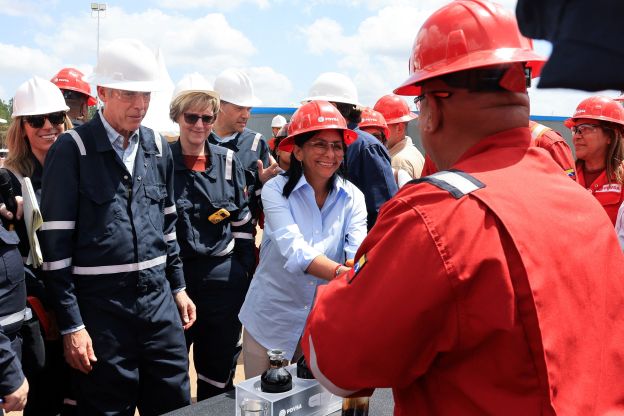
Imagining Failure: Nuclear Waste on the Beach, California

But for all the good vibes and stellar sunsets of  San Onofre state beach in California, beneath the surface hides a potential threat: 3.6m lb of nuclear waste from a group of nuclear reactors shut down nearly a decade ago. Decades of political gridlock have left it indefinitely stranded, susceptible to threats including corrosion, earthquakes and sea level rise. The San Onofre reactors are among dozens across the United States phasing out, but experts say they best represent the uncertain future of nuclear energy.

“It’s a combination of failures, really,” said Gregory Jaczko, who chaired the US Nuclear Regulatory Commission (NRC), the top federal enforcer, between 2009 and 2012, of the situation at San Onofre. That waste is the byproduct of the San Onofre Nuclear Generating Station (Songs), three nuclear reactors primarily owned by the utility Southern California Edison (SCE) that has shut down….

Since there is not central repository for the final disposition of nuclear wasted in the United States,  the California Coastal Commission approved in 2015 the construction of an installation at San Onofre to store it until 2035. In August 2020, workers concluded the multi-year burial process, loading the last of 73 canisters of waste into a concrete enclosure. San Onofre is not the only place where waste is left stranded. As more nuclear sites shut down, communities across the country are stuck with the waste left behind. Spent fuel is stored at 76 reactor sites in 34 states….

At San Onofre, the waste is buried about 100ft from the shoreline, along the I-5 highway, one of the nation’s busiest thoroughfares, and not far from a pair of faults that experts say could generate a 7.4 magnitude earthquake. Another potential problem is corrosion. In its 2015 approval, the Coastal Commission noted the site could have a serious impact on the environment in case of coastal flooding and erosion hazards beyond its design capacity, 

Concerns have also been raised about government oversight of the site. Just after San Onofre closed, SCE began seeking exemptions from the NRC’s operating rules for nuclear plants. The utility asked and received permission to loosen rules on-site, including those dealing with record-keeping, radiological emergency plans for reactors, emergency planning zones and on-site staffing.

San Onofre isn’t the only closed reactor to receive exemptions to its operating licence. The NRC’s regulations historically focused on operating reactors and assumed that, when a reactor shut down, the waste would be removed quickly.

It’s true that the risk of accidents decreases when a plant isn’t operating, said Dave Lochbaum of the Union of Concerned Scientists. But adapting regulations through exemptions greatly reduces public transparency, he argued. “Exemptions are wink-wink, nudge-nudge deals with the NRC,” he said. “In general, it’s not really a great practice,” former NRC chair Jaczko said about the exemptions. “If the NRC is regulating by exemption, it means that there’s something wrong with the rules … either the NRC believes the rules are not effective, and they’re not really useful, or the NRC is not holding the line where the NRC should be holding line,” he said…

It’s worth considering how things fail, though, argued Rod Ewing, nuclear security professor at Stanford University’s center for international security and cooperation, and author of a 2021 report about spent nuclear waste that focuses on San Onofre. “The problem with our safety analysis approach is we spend a lot of time proving things are safe. We don’t spend much time imagining how systems will fail,” he said. “And I think the latter is what’s most important.”

Excerpts from Kate Mishkin, ‘A combination of failures:’ why 3.6m pounds of nuclear waste is buried on a popular California beach, Guardian, Aug. 

The Dirty Secrets of Clean Energy

Solar panel installations are surging in the U.S. and Europe as Western countries seek to cut their reliance on fossil fuels. But the West faces a conundrum…: Most of them are produced with energy from carbon-dioxide-belching, coal-burning plants in China.

Concerns are mounting in the U.S. and Europe that the solar industry’s reliance on Chinese coal will create a big increase in emissions in the coming years as manufacturers rapidly scale up production of solar panels to meet demand. That would make the solar industry one of the world’s most prolific polluters, analysts say, undermining some of the emissions reductions achieved from widespread adoption. For years, China’s low-cost, coal-fired electricity has given the country’s solar-panel manufacturers a competitive advantage, allowing them to dominate global markets.

Chinese factories supply more than three-quarters of the world’s polysilicon, an essential component in most solar panels, according to industry analyst Johannes Bernreuter…Producing a solar panel in China creates around twice as much carbon dioxide as making it in Europe, said Fengqi You, professor of energy systems engineering at Cornell University.

Some Western governments and corporations are attempting to shift the solar industry away from coal…These policies would also help rebuild the West’s solar industry, which has withered under competition from higher-polluting Chinese producers, Western executives say…China has pushed down the price of panels so sharply that solar power is now less expensive than electricity generated from fossil fuels in many markets around the world. Imports of the solar cells that make up the panels are also flooding into the U.S. and Europe. Those shipments are either coming directly from China or contain key components made in China. “If China didn’t have access to coal, then solar power wouldn’t be cheap now,” said Robbie Andrew, a senior researcher at the Center for International Climate Research in Oslo. “Is it OK that we’ve had this huge bulge of carbon emissions from China because it allowed them to develop all these technologies really cheaply? We might not know that for another 30 to 40 years.”

Excerpts from Matthew Dalton, Behind the Rise of U.S. Solar Power, a Mountain of Chinese Coal, July 31, 2021

The Trillion Dollar Mess: Taking Down the Oil Infrastructure

Some of the world’s largest oil companies have been ordered to pay part of a $7.2 billion tab to retire hundreds of aging wells in the Gulf of Mexico that they used to own, capping a case that legal experts say is a harbinger of future battles over cleanup costs.

A federal judge ruled last month that Fieldwood Energy a privately held company that currently controls the old wells and had sought bankruptcy protection, could pass on hundreds of millions of dollars in environmental liabilities to prior owners and insurers of the wells as part of its reorganization plan. Exxon Mobil,  BP, Hess , Royal Dutch Shell and insurance companies had objected to the plan. The dispute, litigated for months in federal bankruptcy court in Houston, centered over who should bear the enormous costs of capping and abandoning wells, primarily in the shallow waters of the Gulf of Mexico where an oil spill could wreak havoc. The companies could still appeal the ruling…

Jason Bordoff, founding director of Columbia University’s Center for Global Energy Policy said that the expenses to decommission oil-and-gas infrastructure world-wide will in the trillions of dollars. “Who bears the costs?” he said. “There will be people who want to pass the buck.”

BP and Shell have pledged to reduce their carbon emissions to zero by 2050. To accomplish that, those companies will have to sell off some oil-and-gas wells to get their related emissions off their books, say energy analysts. But such asset sales present huge risks for big oil companies because many of the buyers are smaller, privately held firms, like Fieldwood, which may not have the financial wherewithal to bear cleanup costs, Ms. Usoro said. This was Fieldwood’s second bankruptcy in two years.

These smaller companies buy the wells for pennies on the dollar and assume the cleanup expenses in the hope that they can reduce the assets’ cost structure and squeeze out the remaining barrels of oil profitably. “I’ve always questioned this business model,” said Ms. Usoro. “Are these guys able to take care of the end of life?”

Excerpts Christopher M. Matthews, Oil Companies Are Ordered to Help Cover $7.2 Billion Cleanup Bill in Gulf of Mexico, WSJ, July 6, 2021

From Natural Landmark to an Oil Spill Wasteland

Mohammad Abubakar, Minister of Environment  disclosed in July 2021 that Nigeria recorded 4,919 oil spills between 2015 to March 2021 and lost 4.5 trillion barrels of oil to theft in four years.

Mr Abubakar disclosed this at a Town Hall meeting in Abuja, organised by the Ministry of Information and Culture, on protecting oil and gas infrastructure. “The operational maintenance is 106, while sabotage is 3,628 and yet to be determined 70, giving the total number of oil spills on the environment to 235,206 barrels of oil. This is very colossal to the environment.

“Several statistics have emphasised Nigeria as the most notorious country in the world for oil spills, loosing roughly 400,000 barrels per day. “The second country is followed by Mexico that has reported only 5,000 to 10,000 barrel only per day, thus a difference of about 3, 900 per cent.

“Attack on oil facilities has become the innovation that replaced agitations in the Niger Delta region against perceived poor governance and neglect of the area.

Excerpts from Nigeria Records 4,919 Oil Spills in 6 Years, 4.5trn Barrels Stolen in 4 Years, AllAfrica.com, July 6, 2021

Green Con Artists and their Moneyed Followers

Green investing has grown so fast that there is a flood of money chasing a limited number of viable companies that produce renewable energy, electric cars and the like. Some money managers are stretching the definition of green in how they deploy investors’ funds. Now billions of dollars earmarked for sustainable investment are going to companies with questionable environmental credentials and, in some cases, huge business risks. They include a Chinese incinerator company, an animal-waste processor that recently settled a state lawsuit over its emissions and a self-driving-truck technology company.

One way to stretch the definition is to fund companies that supply products for the green economy, even if they harm the environment to do so. In 2020 an investment company professing a “strong commitment to sustainability” merged with the operator of an open-pit rare-earth mine in California at a $1.5 billion valuation. Although the mine has a history of environmental problems and has to bury low-level radioactive uranium waste, the company says it qualifies as green because rare earths are important for electric cars and because it doesn’t do as much harm as overseas rivals operating under looser regulations…

When it comes to green companies, “there just isn’t enough” to absorb investor demand…In response, MSCI has looked at other ways to rank companies for environmentally minded investors, for example ranking “the greenest within a dirty industry”….

Of all the industries seeking green money, deep-sea mining may be facing the harshest environmental headwinds. Biologists, oceanographers and the famous environmentalist David Attenborough have been calling for a yearslong halt of all deep-sea mining projects. A World Bank report warned of the risk of “irreversible damage to the environment and harm to the public” from seabed mining and urged caution. More than 300 deep-sea scientists released a statement today calling for a ban on all seabed mining until at least 2030. In late March 2021, Google, battery maker Samsung SDI Co., BMW AG and heavy truck maker Volvo Group announced that they wouldn’t buy metals from deep-sea mining.

[However the The Metals Company (TMC) claims that deep seabed mining is green].

Excerpts from Justin Scheck et al, Environmental Investing Frenzy Stretches Meaning of ‘Green’, WSJ, June 24, 2021

Do It 100 Trillion Times Faster! Race Quantum Supremacy

The Defense Advanced Research Projects Agency (DARPA) initiative is looking in a full picture of how quantum computing will shape the next 30 years of computing.  In April 2021, the agency embarked on a new initiative to support the development of quantum computers. Called the Quantum Benchmarking program, the effort aims to establish key quantum-computing metrics and then make those metrics testable.

“It’s really about developing quantum computing yardsticks that can accurately measure what’s important to focus on in the race toward large, fault-tolerant quantum computers,” Joe Altepeter, program manager in DARPA’s Defense Sciences Office, said in an agency announcement. Historically, the U.S. has invested heavily in quantum science research, but it has not had a full national strategy to coordinate those efforts. The December 2018 National Quantum Initiative Act kickstarted the federal approach to accelerate quantum research and development for an initial five-year period.

Developing metrics would also help quantify and understand how transformative large quantum computers could be. ..The 2018 legislation also established various research centers and partnerships for quantum computing, such as the Quantum Economic Development Consortium comprising government, private and public entities. Under these partnerships, researchers have explored how quantum computing interacts with other technologies, like artificial intelligence, to impact health care. “One of the applications we’re excited about is enabling drug discovery. We want to investigate if we can help the pharmaceuticals industry,” said Altepeter…

“[Quantum computers] could be transformative and the most important technology we’ve ever seen, or they can be totally useless and these gigantic paperweights that are sitting in labs across the country. That window of potential surprise is the key. That’s the kind of surprise that DARPA cannot allow to exist,” said Altepeter. “It’s our job to make sure that we eliminate those kinds of surprises — hence why we wanted to do this program.”

Excerpts from Sarah Sybert, DARPA Aims for Quantum-Computing Benchmarks in New Program, https://governmentciomedia.com/, June 21, 2021

A team of Chinese scientists has developed the most powerful quantum computer in the world, capable of performing at least one task 100 trillion times faster than the world’s fastest supercomputers…In 2019, Google said it had built the first machine to achieve “quantum supremacy,” the first to outperform the world’s best supercomputers at quantum calculation. In December 2020, a Chinese team, based at the University of Science and Technology of China in Hefei, reported their quantum computer, named Jiuzhang, is 10 billion times faster than Google’s. Assuming both claims hold up, Jiuzhang would be the second quantum computer to achieve quantum supremacy anywhere in the world.

The Giant Nuclear Graveyard in the Arctic

The Nuclear Waste in Saida Bay, Russia, is financed by Germany as part of the Global Partnership Against the Spread of Weapons and Materials of Mass Destruction. Italy has paid for the floating dock that brings the nuclear reactor-compartments from the waters to the site. Reactor compartments from submarines and icebreakers will have to be stored for onshore for many decades before the radioactivity have come down to levels acceptable for cutting the reactors’ metal up and pack it for final geological disposal.

These giant containers contain parts of nuclear reactors in order to avoid leakages to the Arctic environment. Image Thomas Nilsen

The process of scrapping the 120 nuclear-powered submarines that sailed out from bases on the Kola Peninsula during the Cold War started in the early 1990 and has technically and economically been supported by a wide range of countries, including Norway and the European Union. Ballistic missile submarines scrapped at yards in Severodvinsk in the 1990s were paid by the United States Nunn-Lugar Cooperative Threat Reduction (CTR) Program.

Excerpts from Kola Peninsula to get radioactive waste from southern Russia, The Barents Observer, May 2021

Fossil-Free in 2026

Norrland (in Sweden) abounds in hydropower. Power that is cheap and—crucially—green, along with bargain land and proximity to iron ore, is sparking an improbable industrial revolution, based on hydrogen, “green” steel and batteries. SSAB, a steelmaker, is poised to deliver its first consignment of “eco-steel” from a hydrogen-fuelled pilot plant in Lulea, a northern city. 

Traditionally, to make steel, iron ore must be melted at high temperatures and reduced from iron oxide to iron, a process that typically involves burning fossil fuels, releasing huge amounts of carbon dioxide. Replacing them with hydrogen eliminates more than 98% of the carbon dioxide normally released. The hydrogen is made by electrolysing water, using electricity produced by hydro-power. This approach involves almost no carbon-dioxide emissions at all…..

Northern Sweden’s steelmaking leaps are being emulated elsewhere in Europe, in response to similar environmental pressures which will only increase if, as looks very likely, Germany’s Greens enter government after the election in September 2021. Europe produces a still significant 16% of the world’s steel. Big producers in Germany and Poland, where the industry is mostly coal-based and very dirty, are nervy. Even neighbouring Norway is in danger of losing out. It too has the gift of rich renewable-energy resources, but underinvestment means there may soon not be enough of this green electricity to meet the demands of both households and industry.

Excerpts from Green steel: Plentiful renewable energy is opening up a new industrial frontier, Economist, May 15, 2021

Resurrecting Used Materials: the Battle against E-Waste

Electric vehicles (EVs) continue to grow in popularity. According to IHS Markit, a research firm, almost 2.5m battery-electric and plug-in-hybrid cars were sold around the world in 2020—and the company expects that number to grow by 70% in 2021…. And, when all of these machines come to the ends of their useful lives, they will need to be recycled.

This coming avalanche of e-waste will be hard to deal with. When a petrol or diesel car is dismantled and crushed, as much as 95% of it is likely to be used again. Ways to do that are well-developed, straightforward and helped by the fact that, on average, almost 70% of such a vehicle consists of readily recyclable ferrous metals. EVs, by contrast, contain a far greater variety of materials. Separating and sorting these is tricky, especially as many of them are locked up inside complex electrical components.

For those who can manage to do so, though, there is good business to be had here. EVs contain lots of valuable stuff. The magnets in their motors are full of rare-earth metals, and their batteries of lithium and cobalt…Li-Cycle, a Canadian company founded in 2016 that is already the biggest recycler of lithium-ion batteries in North America, is one outfit betting on hydrometallurgy. Li-Cycle is not alone, though, in its hydrometallurgical ambitions. One rival is Redwood Materials of Carson City, Nevada…Northvolt… makes lithium-ion batteries for European carmakers. It is adding a recycling plant to its factory in Sweden, to process the batteries it produces there when they reach the ends of their lives. led. Similar “closed-loop” systems are being developed in other parts of the battery supply chain. For example, American Battery Technology, a firm in Nevada that mines and processes lithium, is adding a recycling plant intended to recover lithium and other metals from expired batteries. It will use the lithium in its own production processes and sell the other materials on.

The biggest battery-recycling operations of all, though, are not Western, but Chinese—not surprising, perhaps, given that China is the world’s largest market for EVs, and the country’s government has been promoting the recycling of lithium-ion batteries for some time. Brunp Reycling , a subsidiary of CATL, the world’s biggest EV-battery-maker, has half-a-dozen hydrometallurgical recycling operations around the country. Brunp says it can recycle 120,000 tonnes of old batteries a year, which it claims represents about half of China’s current annual battery-recycling capacity. …

Tesla itself also has trans-Pacific ambitions. It is setting up a battery-recycling facility at its  EV factory in Shanghai, to complement one it is developing at its battery factory in Nevada. Nor is Tesla the only vehicle-maker involving itself in the industry. In January, Volkswagen opened a pilot battery-recycling plant in Salzgitter. Salzgitter is close to the company’s battery factory in Braunschweig, which is being expanded to produce more than 600,000 EV battery packs a year. The idea is the firm’s battery experts will work with its recyclers to make battery packs easier to dismantle.

Designing recyclability in from the beginning will, in the long run, be crucial to the effective recycling of electric vehicles—and especially their batteries. Shredding lots of different types of e-waste at the same time inevitably results in contamination. Separating components before doing so would yield greater levels of purity.

Excerpts from Old electric cars are a raw material of the future, Economist, May 15, 2021

Unthinkable: What Happens When Water Floods a Nuclear Plant

As the 9.0 magnitude earthquake hit the Japanese shore, the reactors of the Fukushima Daiichi nuclear power plant shut down automatically to control the nuclear fission. The electrical lines collapsed, but the plant responded as designed, and the earthquake itself did not cause any other problems. The tsunami it triggered, however, did.

“The reactors were robust, seismically speaking,” said Gustavo Caruso, Director of the IAEA’s Office of Safety and Security Coordination. “But they were vulnerable to the high tsunami waves.” When the flooding hit, the ‘tsunami walls’ made to protect the plant from such events were too low to prevent the sea water from entering the plant. The water’s strength destroyed some of the structures, and entered the diesel generator room — which was built lower and at a closer distance to sea level than other plants in Japan — affecting Units 1, 2 and 3. “The diesel generators are essential for maintaining the plant’s electrical supplies in emergency situations,” said Pal Vincze, Head of the Nuclear Power Engineering Section at the IAEA. “They were drowned.”

If the diesel generator is affected, special batteries can be used to generate electricity, but these have a limited capacity, and, in the case of Fukushima Daiichi, some were also flooded. “In Japan, they put up a heroic fight to get the electrical systems up and running again, but it wasn’t enough,” Vincze added.

Without functioning instrumentation and control systems, or electrical power or cooling capabilities, the overheated fuel melted, sank to the bottom of the reactors, and breached the reactor vessels, leading to three meltdowns. In addition, data logs and vital systems operated by safety parameters were also flooded, which meant that there was no way for the operator to monitor what was going on inside the reactors.

As stated in the IAEA report on the Fukushima Daiichi accident, “a major factor that contributed to the accident was the widespread assumption in Japan that its nuclear power plants were so safe that an accident of this magnitude was simply unthinkable. But…When planning, designing and constructing the plant, experts did not properly take into consideration past tsunami experiences… “It must be noted that the combination of an earthquake of this magnitude and a tsunami is extremely rare, but unfortunately this is what happened.”…

Excerpt from Laura Gil Fukushima Daiichi: The Accident, IAEA Bulletin, Mar. 2021

Can We Change Path? Saving Forests and Cutting Carbon

No ecosystem is more important in mitigating the effects of climate change than tropical rainforest. And South-East Asia is home to the world’s third-biggest patch of it, behind the Amazon and Congo basins. Even though humans release carbon from these forests through logging, clear-felling for agriculture and other disruptions, some are so vast and fecund that the growth of the plants within them absorbs even more from the atmosphere. The Congo basin, for instance, locks up 600m tonnes of carbon a year more than it releases, according to the World Resources Institute (WRI), an international NGO that is equivalent to about a third of emissions from all American transport.

In contrast, such is the extent of clearing for plantations in South-East Asia’s rainforests, which run from Myanmar to Indonesia, that over the past 20 years they have turned from a growing carbon sink to a significant source of emissions—nearly 500m tonnes a year. Indonesia and Malaysia, home to the biggest expanses of pristine forest, have lost more than a third of it this century. Cambodia, Laos and Myanmar, relative newcomers to deforestation, are making up for lost time.

The Global Forest Watch, which uses satellite data to track tree cover, loss of virgin forest in Indonesia and Malaysia has slowed for the fourth year in row—a contrast with other parts of the world…The Leaf Coalition, backed by America, Britain and Norway, along with such corporate giants as Amazon, Airbnb, and Unilever, aims to create an international marketplace in which carbon credits can be sold for deforestation avoided. An initial $1bn has been pledged to reward countries for protecting forests. South-East Asia could be a big beneficiary,

Admittedly, curbing deforestation has been a cherished but elusive goal of climate campaigners for ages. A big un initiative to that end, called REDD+, was launched a decade ago, with Indonesia notably due for help. It never achieved its potential. Projects for conservation must jump through many hoops before approval. The risk is often that a patch of forest here may be preserved at the expense of another patch there. Projects are hard to monitor. The price set for carbon under the scheme, $5 a tonne, has been too low to overcome these hurdles.

The Leaf Initiative would double the price of carbon, making conservation more attractive. Whereas buyers of carbon credits under REDD+ pocketed profits from a rise in carbon prices, windfalls will now go to the country that sold the credits. Standards of monitoring are much improved. Crucially, the scheme will involve bigger units of land than previous efforts, the so-called jurisdictional approach. That reduces the risk of deforestation simply being displaced from a protected patch to an unprotected one.

Excerpts from Banyan: There is hope for South-East Asia’s beleaguered tropical forests, Economist, May 1, 2021

Nuclear Nightmare Coming Back to Haunt Us: Nuclear Waste Dumped at Sea

A stock control inspection has revealed that about 2,800 barrels of radioactive waste partly originating from the healthcare and defense industries may have been handled carelessly, Swedish Television reported. The barrels are reportedly located on the floor of the Baltic Sea 100 kilometres north of Stockholm in Forsmark, where one of Sweden’s seven nuclear plants is situated. The barrels, dating from the 1970s and 1980s, are said to be of no danger at the moment but may pose a risk in the future if not taken care of and repositioned properly.

The government will now have to make decisions on the financial costs of inspecting and restoring the waste and how it will be handled in the future…

 Pekka Vanttinen, 2,800 radioactive waste barrels found near Baltic Sea, stored carelessly, EURACTIV.com, May 18, 2021

The Wild West Mentality of Companies Running the U.S. Oil and Gas Infrastructure — and Who Pays for It

The ransomware attack on Colonial Pipeline Co. in May 2021 has hit an industry that largely lacks federal cybersecurity oversight, leading to uneven digital defenses against such hacks.

The temporary shutdown of Colonial’s pipeline, the largest conduit for gasoline and diesel to the East Coast, follows warnings by U.S. officials in recent months of the danger of cyberattacks against privately held infrastructure. It also highlights the need for additional protections to help shield the oil-and-gas companies that power much of the country’s economic activity, cyber experts and lawmakers say. “The pipeline sector is a bit of the Wild West,” said John Cusimano, vice president of cybersecurity at aeSolutions, a consulting firm that works with energy companies and other industrial firms on cybersecurity. Mr. Cusimano called for rules similar to the U.S. Coast Guard’s 2020 regulations for the maritime sector that required companies operating ports and terminals to put together cybersecurity assessments and plans for incidents.

 More than two-thirds of executives at companies that transport or store oil and gas said their organizations are ready to respond to a breach, according to a 2020 survey by the law firm Jones Walker LLP. But many don’t take basic precautions such as encrypting data or conducting dry runs of attacks, said Andy Lee, who chairs the firm’s privacy and security team. “The overconfidence issue is a serious phenomenon,” Mr. Lee said.

Electric utilities are governed by rules enforced by the North American Electric Reliability Corp., a nonprofit that reviews companies’ security measures and has the power to impose million-dollar fines if they don’t meet standards. There is no such regulatory body enforcing standards for oil-and-gas companies, said Tobias Whitney, vice president of energy security solutions at Fortress Information Security. “There aren’t any million-dollar-a-day potential fines associated with oil-and-gas infrastructure at this point,” he said. “There’s no annual audit.”

Excerpt from David Uberti and Catherine Stupp, Colonial Pipeline Hack Sparks Questions About Oversight, WSJ, May 11, 2021

Dumping Carbon in the Seabed

Oil companies have for decades made money by extracting carbon from the ground. Now they are trying to make money putting it back. Energy giants such as Exxon Mobil and Royal Dutch Shell are pushing carbon capture and storage (CCS)—where carbon is gathered and buried underground—as part of a drive to reduce both their own and their customers’ emissions. Executives say the service could become a new source of income when the industry is grappling with how to adapt to a lower-carbon economy.

Oil companies have long captured carbon from their operations, albeit mostly to produce more oil. Now they want to retool that skill as a service they can sell to heavy-polluting industries like cement and steel, burying their carbon in the ground indefinitely for a fee, rather than releasing it into the atmosphere. Yet critics question the environmental benefits and high cost of such projects.

In 2021, Shell, Total and Equinor launched a joint venture to store carbon in a rock formation thousands of feet beneath the seabed off the coast of Norway. The state-backed Northern Lights project is set to be the first time companies outside the oil industry will be able to pay to have their carbon gathered and stored. Most carbon-storage projects rely on government funding. Norway is covering about 80% of the $1.6 billion cost of the Northern Lights project, with the rest split equally between Shell, Equinor and Total.

Exxon has said it plans to form a new business unit to commercialize carbon capture and storage, forecasting it could become a $2 trillion market by 2040. Chevron has formed partnerships on storage projects, while BP is codeveloping storage projects in the U.K. and Australia. Oil executives’ sales pitch to carbon-intensive companies: We will provide your energy, then take back the carbon to minimize your footprint. Carbon capture and storage iss becoming a business rather than just a solution. 

The U.S. offers companies a tax credit of as much as $50 a metric ton of carbon captured, while the U.K., Norway and Australia have collectively committed billions of dollars of funding for carbon-capture projects. But There are  concerns about whether storage sites could leak carbon. In Europe, public resistance to land-based storage has led to the use of aquifers and depleted gas fields in the North Sea….In the Norway project, carbon will be transported by ship around the bottom of the country before being pumped offshore via a 68-mile pipeline and then injected into an aquifer under the seabed. BP is working on a similar concept for a project it will operate in northeast England, where carbon will be collected from a gas-power plant and various industrial sites, then stored under the North Sea. “We’ll capture the carbon, we’ll take it offshore, we’ll stuff it underground,” BP Chief Executive Bernard Looney recently said of the project. “Taking the carbon back is what I like to describe it as.”

Excerpts from Sarah McFarlane, Oil Giants Turn to Carbon Storage, Apr. 20, 2021

Chasing Super-Polluters

A constellation of satellites will be flown this decade to try to pinpoint significant releases of climate-changing gases, in particular carbon dioxide and methane. The initiative is being led by an American non-profit organisation called Carbon Mapper.
It will use technology developed by the US space agency over the past decade.
The satellites – 20 or so – will be built and flown by San Francisco’s Planet company.
Planet operates today the largest fleet of Earth-observing spacecraft.

There are already quite a few satellites in the sky that monitor greenhouse gases, but the capability is far from perfect. Most of these spacecraft can sense the likes of methane over very large areas but have poor resolution at the local level, at the scale, say, of a leaking pipeline. And those systems that can capture this detail will lack the wide-area coverage and the timely return to a particular location. The Carbon Mapper project wants to fix this either-or-situation by flying multiple high-resolution (30m) sensors that can deliver a daily view, or better.

They will look for super-emitters – the actors responsible for large releases of greenhouse gases. These would include oil and gas infrastructure, or perhaps poorly managed landfills and large dairy factory facilities.

Often these emitters want to know they have a problem but just don’t have the data to take action. “What we’ve learned is that decision support systems that focus just at the level of nation states, or countries, are necessary but not sufficient. We really need to get down to the scale of individual facilities, and even individual pieces of equipment, if we’re going to have an impact across civil society,” explained Riley Duren, Carbon Mapper’s CEO and a research scientist at the University of Arizona…The aim is to put the satellite data in the hands of everyone, and with the necessary tools also to be able to understand and use that information….

Excerpt from Jonathan Amos Carbon Mapper satellite network to find super-emitters, Reuters, April 16, 2021

The Leaky Oil Pipelines on Our Seafloor

Federal officials aren’t adequately monitoring the integrity of 8,600 miles of active oil-and-gas pipelines on the Gulf of Mexico’s seafloor, and for decades have allowed the industry to abandon old pipelines with little oversight, a new report to Congress shows. The Government Accountability Office report faults the Interior Department’s offshore oil-safety regulator’s reliance on surface observations and pressure sensors, rather than  subsea inspection, to monitor for leaks.

The report urges the regulator, the Bureau of Safety and Environmental Enforcement (BSEE), to resume work on a long-stalled update to pipeline rules. BSEE currently requires monthly inspections of pipeline routes in the Gulf by helicopter or marine vessel, to look for oil sheens or gas bubbles on the surface to determine whether a pipeline is leaking. By comparison, the bureau’s Pacific office requires subsea pipeline inspections, in part because of seismic concerns, on its much smaller network of 200 miles of active pipelines.

The GAO also found that BSEE and its predecessors allowed the oil industry to leave thousands of miles of decommissioned pipelines on the seafloor rather than incur the cost of raising them back to the surface. Federal regulations allow BSEE to permit operators to decommission pipelines in place, cleaning and burying them in the seabed. The GAO found that the agency doesn’t ensure standards are followed, even as it allowed 97% of the miles of decommissioned pipelines taken out of active use in the Gulf since the 1960s—nearly 18,000 miles—to remain in place.

BSEE also has failed to fully consider whether decommissioned pipelines represent a hazard to navigation and commercial fishing, like trawlers that can be damaged by snagging equipment on undersea pipelines, the report said. Eighty-nine trawlers reported damage from snagging on oil-and-gas equipment between 2015 and 2019, the report found.

BSEE’s failure to inspect decommissioned pipelines also means officials don’t have a complete record of which equipment has been properly cleaned and buried, or whether hurricanes and underwater landslides have moved buried pipelines, potentially creating navigation hazards and environmental damage. A buried 9-mile pipeline segment was swept 4,000 feet out of place by Hurricane Katrina, the report said.

BSEE also allowed oil producers to leave in place some 250 decommissioned “umbilical lines” that carry electricity and hydraulic power to subsea equipment, the report said, over objections of some Interior officials who were concerned that these lines often contain hazardous chemicals that could leak over time as the equipment degrades.

Excerpt from Ted Mann, U.S. Needs to Better Monitor Oil, Gas Pipelines in Gulf of Mexico, Report Says, WSJ, Apr. 19, 2021

Facing the Unprecedented: Nuclear Waste Burial in China

China is building a massive underground laboratory to research disposal technologies for high-level radioactive waste, the most dangerous byproduct of nuclear technology and applications. This is meant to pave the way for a repository that can handle the disposal of at least a century’s worth of such materials for tens of thousands of years, the lab’s chief designer told China Daily in an exclusive interview.

The lab will be situated in granite up to 560 meters below ground in the Beishan region of Gansu province, said Wang Ju, vice-president of the Beijing Research Institute of Uranium Geology. The underground lab was listed as one of China’s major scientific construction projects in the 13th Five-Year Plan (2016-20).

Its surface facilities will cover 247 hectares, with 2.39 hectares of gross floor space. The underground complex will have a total structural volume of 514,200 square cubic meters, along with 13.4 kilometers of tunnels, he added. The lab is estimated to cost over 2.72 billion yuan ($422 million) and take seven years to build. It is designed to operate for 50 years, and if its research proves successful and the site is suitable, a long-term underground repository for high-level waste will be built near the lab by 2050

According to the 14th Five-Year Plan (2021-25), China seeks to cut carbon emissions by optimizing its energy consumption structure and raising its proportion of nonfossil energy. This includes building a new generation of coastal nuclear plants,… small-scale reactors and offshore floating reactors.. As of 2020, China had 49 nuclear reactors in operation, making it the world’s third-largest nuclear energy producer, behind the United States and France. There are 16 nuclear reactors in construction in China, the most in the world, according to the World Nuclear Association.

Excerpts from Zhang Zhihao, Construction of radioactive waste disposal lab underway, China Daily, Apr. 8, 2021


The Nightmare of Keeping the Lights On

Some 330 million Americans rely on the nation’s critical infrastructure to keep the country humming. Disruptions to electrical grids, communications systems, and supply chains can be catastrophic, yet all of these are vulnerable to cyberattack. According to the government’s 2019 World Wide Threats Hearing, certain adversaries are capable of launching cyberattacks that can disrupt the nation’s critical infrastructure – including electrical distribution networks.

In recognition of the disruptions cyberattacks can cause, DARPA in 2016 established the Rapid Attack Detection, Isolation and Characterization Systems (RADICS) program. The goal of RADICS has been to enable black-start recovery during a cyberattack. Black start is the process of restoring power to an electric substation or part of the grid that has experienced a total or partial shutdown without relying on an external power transmission network to get things back online…

“Cyberattacks on the grid can essentially do two things – make the grid not tell you the truth, and make the grid operate in an unexpected way,” said Walter Weiss, the program manager responsible for RADICS. “For example, the grid could show you that a substation has power when in reality it does not. This could unintentionally prevent power restoration to an entire area since no one thinks there is a need to bring power back online. The technologies developed under RADICS help provide ground truth around grid status, giving responders the ability to quickly detect anomalies and then chart a path towards recovery.”…

 The RADICS testbed is comprised of miniaturized substations that were designed to operate as they do in the real world, but with safeguards to protect the system and those operating the substations. The substations are connected via power lines, forming a multi-utility crank path. With a crank path, power is generated to black start one utility that then powers the next utility and the next until the grid is fully restored.

DARPA substation, Plum island NY

Technologies to Rapidly Restore the Electrical Grid after Cyberattack Come Online, DARPA Website, Feb. 23, 2021

The Toxic Shadow of Abandoned Oil Infrastructure

Wearing blue hard hats, white hazmat suits and respirator masks, workers carted away bags of debris on a recent morning from a sprawling and now-defunct oil refinery once operated by Philadelphia Energy Solutions (PES). Other laborers ripped asbestos from the guts of an old boiler house, part of a massive demolition and redevelopment of the plant, which closed in 2019 after a series of explosions at the facility.

Plans call for the nearly 1,400-acre site to be transformed into a new commercial hub with warehousing and offices. All it will take is a decade, hundreds of millions of dollars, and confronting 150 years’ worth of industrial pollution, including buried rail cars and a poisonous stew of waste fuels poured onto the ground. A U.S. refinery cleanup of this size and scope has no known precedent, remediation experts said. It’s a glimpse of what lies ahead if the United States hopes to wean itself off fossil fuels and clean up the toxic legacy of oil, gas and coal.

President Joe Biden wants to bring the United States to net-zero greenhouse gas emissions by 2050 to fight climate change through a shift to clean-energy technologies, while reducing pollution in low-income and minority neighborhoods near industrial facilities. It’s a transition fraught with challenges. Among the biggest is what to do with the detritus left behind. The old PES plant is just one of approximately 135 oil refineries nationwide, to say nothing of the country’s countless gas stations, pipelines, storage hubs, drill pads and other graying energy infrastructure.

In Philadelphia, a private-sector company is taking the lead. Hilco Redevelopment Partners, a real estate firm that specializes in renovating old industrial properties, bought the PES refinery out of bankruptcy for $225.5 million in June…The full extent of the pollution won’t be understood for years. Also uncertain is the ability of the refinery’s previous owners to pay their share of the cleanup. The facility has had multiple owners over its lifetime and responsibility has been divided between them through business agreements and legal settlements.
Oil refining at the Philadelphia site began in 1870, 100 years before the creation of the U.S. Environmental Protection Agency (EPA). Gasoline, once a worthless byproduct of heating oil, was routinely dumped by the refinery into the soil, according to historians and researchers. Leaks and accidents spewed more toxins. The June 2019 blasts alone released 676,000 pounds of hydrocarbons, PES said at the time. The Philadelphia site is not unique. About half of America’s 450,000 polluted former industrial and commercial sites are contaminated with petroleum, according to the EPA.

Cleanup in Philadelphia will be painstaking. After asbestos abatement comes the demolition and removal of 3,000 tanks and vessels, along with more than 100 buildings and other infrastructure, the company said. Then comes the ground itself. Hilco’s Perez said dirt quality varies widely on the site and will have to be handled differently depending on contamination levels. Clearing toxins like lead must be done with chemical rinses or other technologies…The site also has polluted groundwater and giant benzene pools lurking underneath, according to environmental reports Sunoco filed over the years with the federal and state governments.

Excerpts from Laila Kearney, 150 years of spills: Philadelphia refinery cleanup highlights toxic legacy of fossil fuels, Reuters, Feb. 16, 2021
 

A Lethal Combination: Rusty Tanks and Melting Ice in the Artic

A mining firm has paid a record $2bn fine over a huge oil spill that caused one of Russia’s worst environmental disasters. Norilsk Nickel, the world’s leading nickel and palladium producer, said it had paid the fine on March 10, 2021.The fuel spill in May 2021 saw 21,000 tonnes of diesel pour from one of the company’s storage tanks into rivers and lakes in Russia’s Arctic north…The penalty is the biggest ever issued for environmental damage in Russia, officials say.

How did the spill happen? The diesel oil began leaking on May 29, 2020. It is thought to have originated from a rusty storage tank at Norilsk Nickel’s power plant in Siberia.
Investigators believe the tank near Norilsk sank because of melting permafrost which weakened its supports. The Arctic had seen weeks of unusually warm weather – widely believed to be a symptom of global warming – prior to the disaster. The oil contaminated the Ambarnaya river and surrounding subsoil before drifting about 20km (12 miles) north of Norilsk. It then entered Lake Pyasino, which flows to the Kara Sea in the Arctic Ocean. In total, the oil contaminated a 350 sq km (135 sq mile) area…

The clean-up could cost $1.5bn and take between five and 10 years…Norilsk is already a well-known pollution hotspot, because of contamination from the industry that dominates the city.

Excerpt from Norilsk Nickel: Mining firm pays record $2bn fine over Arctic oil spill, BBC, Mar. 10, 2021

Green-Shaming ExxonMobil

ExxonMobil’s shareholders concerned about greenery are angered by ExxonMobil’s continued carbon-cuddling. Those who care more about greenbacks are irked by its capital indiscipline. Right now, both are pushing in the same direction.

D.E. Shaw, a big hedge fund, is urging ExxonMobil to spend more wisely… More eye-catchingly, Engine No.1, a newish fund with a stake of just 0.02%, is trying to green-shame Mr Woods with a mantra as straightforward as ExxonMobil’s: if the company continues on its current course, and demand shifts quickly to cleaner energy, it risks terminal decline. The fund has launched a proxy battle by proposing four new directors; the current board, it complains, is long on blue-chip corporate credentials but short on energy expertise. Engine No.1’s agitation for a shake-up has won backing from, among others, Calstrs, which manages $283bn on behalf of California’s public-sector workers.

Most important, the tone from ExxonMobil’s three biggest institutional shareholders—BlackRock, Vanguard and State Street—has also shifted…In a recent letter to clients, Larry Fink, boss of BlackRock, talked of greener stocks enjoying a “sustainability premium” and dirty ones jeopardising portfolios’ long-term returns. He hinted that his firm—the world’s largest asset manager—might divest from firms that failed to appreciate the “tectonic shift” taking place. Vanguard, too, has called out ExxonMobil for flawed governance…

Excerpt from Schumpeter: The Long Squeeze, Economist, Feb. 6, 2021
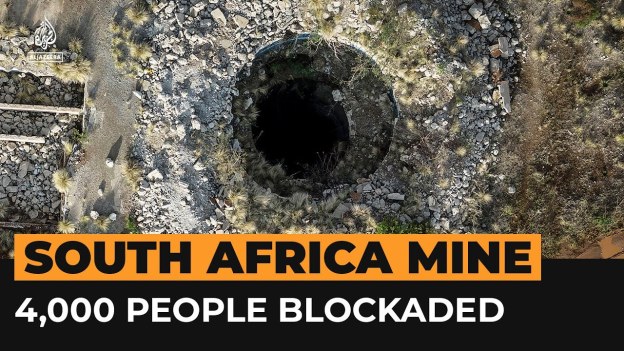
At Gunpoint in Congo: Is Coltan Worse than Oil?

Tantalum, a metal used in smartphone and laptop batteries, is extracted from coltan ore. In 2019 40% of the world’s coltan was produced in the Democratic Republic of Congo, according to official data. More was sneaked into Rwanda and exported from there. Locals dig for the ore by hand in Congo’s eastern provinces, where more than 100 armed groups hide in the bush. Some mines are run by warlords who work with rogue members of the Congolese army to smuggle the coltan out.

When demand for electronics soared in the early 2000s, coltan went from being an obscure, semi-valuable ore to one of the world’s most sought-after minerals. Rebels fought over mines and hunted for new deposits. Soldiers forced locals to dig for it at gunpoint. Foreign money poured into Congo. Armed groups multiplied, eager for a share.

Then, in 2010, a clause in America’s Dodd-Frank Act forced American firms to audit their supply chains. The aim was to ensure they were not using minerals such as coltan, gold and tin that were funding Congo’s protracted war. For six months mines in eastern Congo were closed, as the authorities grappled with the new rules. Even when they reopened, big companies, such as Intel and Apple, shied away from Congo’s coltan, fearing a bad press.

The “Obama law”, as the Congolese nickname Dodd-Frank, did reduce cash flows to armed groups. But it also put thousands of innocent people out of work. A scheme to trace supply chains known as ITSCI run by the International Tin Association based in London and an American charity, Pact, helped bring tentative buyers back to Congo.  ITSCI staff turn up at mining sites to see if armed men are hanging about, pocketing profits. They check that no children are working in the pits. If a mine is considered safe and conflict-free, government agents at the sites put tags onto the sacks of minerals. However, some unscrupulous agents sell tags on the black market, to stick on coltan from other mines. “The agents are our brothers,” Martin says. It is hard to police such a violent, hilly region with so few roads. Mines are reached by foot or motorbike along winding, muddy paths.

For a long time those who preferred to export their coltan legally had to work with itsci, which held the only key to the international market. Miners groaned that itsci charged too much: roughly 5% of the value of tagged coltan. When another scheme called “Better Sourcing” emerged, Congo’s biggest coltan exporter, Société Minière de Bisunzu, signed up to it instead.

Excerpts from Smugglers’ paradise: Congo, Economist, Jan. 23, 2021
Who Will Rule the Arctic?


Rosatom joined the Arctic Economic Council*in February 2021. Rosatom is a Russian state-owned corporation supplying about 20% of the country’s electricity. The corporation mainly holds assets in nuclear power and machine engineering and construction. In 2018, the Russian government appointed Rosatom to manage the Northern Sea Route (NSR). The NSR grants direct access to the Arctic, a region of increasing importance for Russia due to its abundance of fossil fuels. Moreover, due to climate changes, the extraction of natural resources, oil and gas are easier than ever before.

Since Russia’s handover of NSR’s management, Rosatom’s emphasis on the use of nuclear power for shipping, infrastructure development and fossil fuel extraction is likely to become more prevalent in the Arctic region. Rosatom already operate the world’s first floating nuclear power plant in the Siberian port of Pevek and is the only company in the world operating a fleet of civilian nuclear-powered icebreakers…The company has numerous plans up its sleeves, among them to expand the fleet of heavy-duty nuclear icebreakers to a minimum of nine by 2035.

*Other members of the Arctic Economic Council.

Excerpt from Polina Leganger Bronder, Rosatom joins Arctic Economic Council, BarentsObserver, Feb. 8, 2021
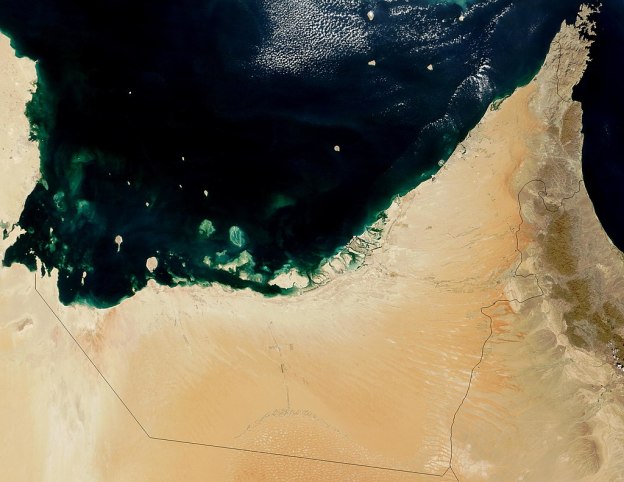
Living in the World of Tesla: Cobalt, Congo and China

 A 20% rise in the price of cobalt since the beginning of 2021 shows how the rush to build more electric vehicles is stressing global supply chains. 

A majority of the world’s cobalt is mined in the Democratic Republic of the Congo in central Africa. It typically is carried overland to South Africa, shipped out from the port of Durban, South Africa, and processed in China before the material goes to battery makers—meaning the supply chain has several choke points that make it vulnerable to disruption…

Car and battery makers have been looking for more control over their cobalt supply and ways to avoid the metal altogether. Honda Motor Co. last year formed an alliance with a leading Chinese car-battery maker, Contemporary Amperex Technology Ltd. , hoping that CATL’s supply-chain clout would help stabilize Honda’s battery supply..

Meanwhile, China plays a critical role even though it doesn’t have significant reserves of cobalt itself. Chinese companies control more than 40% of Congo’s cobalt-mining capacity, according to an estimate by Roskill, the London research firm…China’s ambassador to Congo was quoted in state media last year as saying more than 80 Chinese enterprises have invested in Congo and created nearly 50,000 local jobs…

To break China’s stronghold, auto makers and suppliers are trying to recycle more cobalt from old batteries and exploring other nations for alternative supplies of the material.  Another reason to look for alternatives is instability in Congo and continuing ethical concerns about miners working in sometimes-harsh conditions with rudimentary tools and no safety equipment.

Excerpt from Yang Jie, EV Surge Sends Cobalt Prices Soaring, WSJ, Jan. 23, 2021
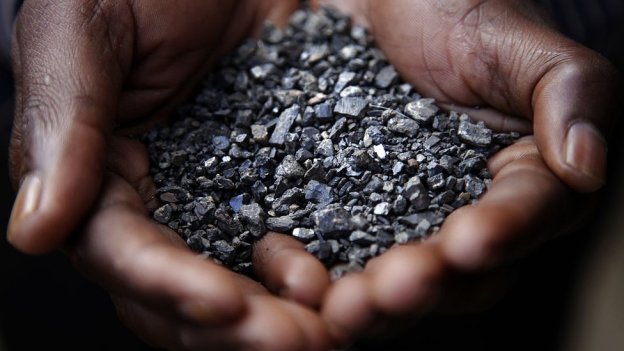
The New Lepers: Oil in Ecuador and Arctic Drilling

Some of Europe’s largest banks are phasing out trading services for the export of oil from the Ecuadorean Amazon, a move that reflects the growing focus of global banks on climate change and their shift away from increasingly risky fossil fuels.

On January 25, 2021, Switzerland’s Credit Suisse Group AG and Holland’s ING said that they were excluding new transactions related to exports of Ecuador’s Amazonian oil from their trading activities, citing climate change and concerns for the Amazon rainforest and its Indigenous people. France’s BNP Paribas SA, the largest bank in the eurozone and one of the region’s trading powerhouses, said in December 2020 that it would immediately exclude from its trading activities the seaborne exports of oil from the Esmeraldas region in Ecuador under its latest environmental finance policies.

Ecuador isn’t one of the world’s top oil producers, but petroleum exports are a key contributor to the country’s economy. Petroecuador, the nation’s state-owned oil company, didn’t respond to requests for comment.  The banks’ flight from Amazonian crude follows last year’s crash in oil prices and growing fears of so-called stranded assets, which are fossil fuels that lose value due to the world’s transition to cleaner forms of energy…

Banks are also facing calls from environmentalists and Indigenous peoples to limit their involvement in fossil fuels. In Ecuador, a campaign by activists and Indigenous people spurred ING and Credit Suisse to reduce their exposure to the Amazonian oil trade. The nonprofits Stand.earth and Amazon Watch published a report in 2020 that called out banks—including ING, Credit Suisse and BNP Paribas—for their financing of Amazonian crude…

Banks and insurers are also cutting ties with Arctic oil drilling. This month, Axis Capital Holdings joined fellow insurers AXA and Swiss Re in pledging not to underwrite any new oil-and-gas drilling in the Arctic Wildlife Refuge in Alaska.  The six biggest U.S. banks— Citigroup Inc., Bank of America Corp. , Goldman Sachs Group Inc., JPMorgan Chase & Co., Morgan Stanley and Wells Fargo & Co.—have also said they would end funding for new drilling and exploration projects in the Arctic.

Excerpts from Dieter Holger & Pietro Lombardi, European Banks Quit Ecuador’s Amazonian Oil Trade, WSJ, Jan. 25, 2021

Assigning Responsibility for Oil Leaks: Shell’s Deep Pockets

Royal Dutch Shell’s  Nigerian subsidiary has been ordered on January 29, 2021 by a Dutch court to pay compensation for oil spills in two villages in Nigeria…The case was first lodged in 2008 by four Nigerian farmers and Friends of the Earth Netherlands. They had accused Shell and its Nigerian subsidiary of polluting fields and fish ponds through pipe leaks in the villages of Oruma and Goi.
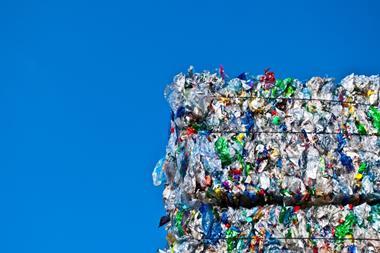
The Court of Appeal in the Hague, where Shell has its headquarters, also ordered the company to install equipment to safeguard against future pipeline leaks. The amount of compensation payable related to the leaks, which occurred between 2004 and 2007, is yet to be determined by the court.  The case establishes a duty of care for the parent company to play a role in the pollution abroad, in this case by having the duty to make sure there is a leak-detection system…

Shell argued that the leaks were caused by sabotage…

In recent years there have been several cases in U.K. courts related to whether claimants can take matters to a parent company’s jurisdiction. In 2019, the U.K. Supreme Court ruled that a case concerning pollution brought by a Zambian community against Vedanta, an Indian copper-mining company previously listed in the U.K., could be heard by English courts. “It established that a parent company can be liable for the actions of the subsidiary depending on the facts,” said Martyn Day, partner at law firm Leigh Day, which represented the Zambians.

The January 2021 case isn’t the first legal action Shell has faced related to pollution in Nigeria. In 2014, the company settled a case with over 15,000 Nigerians involved in the fishing industry who said they were affected by two oil spills, after claims were made to the U.K. High Court. Four months before the case was due to go to trial Shell, which has its primary stock-exchange listing in the U.K., agreed to pay 55 million British pounds, equivalent to $76 million…  

The January 2021  verdict tells oil majors that “when things go wrong they will be held to account and very likely held to account where their parent company is based,” said Mr. Day, adding that the ruling could spark more such actions.

Excerpts from Sarah McFarlane, Shell Ordered to Pay Compensation Over Nigerian Oil Spills, WSJ, Jan. 29, 2021

How Germany and China Saved the World from Fossil Fuels

In 2020, 132bn watts of new solar generating capacity were installed around the world; in many places solar panels are now by far the cheapest way to produce electricity. This transformation… was the result of a decisive shift in German government policy happening to coincide with China becoming the dominant force in global manufacturing.

By 2012 Germany had paid out more than €200bn in subsidies for solar energy production. It had also changed the world. Between 2004 and 2010 the global market for solar panels grew 30-fold as investors in Germany and the other countries which followed its lead piled in… By 2012 the price of a panel was a sixth what it had been in 2004, and it has gone on falling ever since… In sunny places new solar-power installations are significantly cheaper than generating electricity from fossil fuels. Installed capacity is now 776gw, more than 100 times what it was in 2004.

That does not mean Germany got exactly what it wanted. Solar power is not the decentralised, communal source of self-sufficient energy the Greens dreamed of; its provision is dominated by large industrial installations. And the panels on those installations are not made by the German companies the Social Democrats wanted to support: Chinese manufacturers trounced them…But they do provide the world with a zero-carbon energy source cheaper than fossil fuels, and there is room for many more of them…

The industry boasts no giants comparable to those in aircraft manufacture or pharmaceuticals, let alone computing; no solar company has a market capitalization of more than $10bn, and no solar CEO is in danger of being recognized on the street. It is a commodity business in which the commodity’s price moves in only one direction and everyone works on very thin margins. Good for the planet—but hardly a gold mine. 

Excerpt from How governments spurred the rise of solar power, Economist Technology Quarterly, Jan 9, 2021 
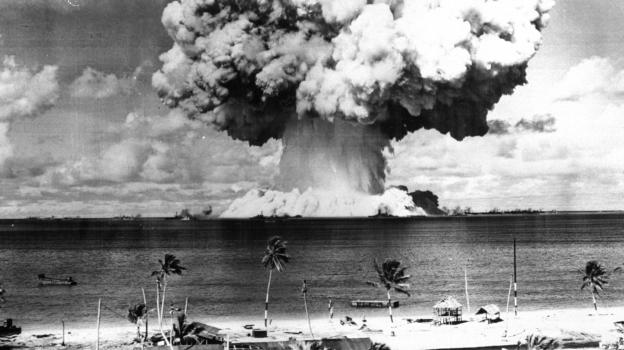
The Geo-Economics of Rare Earth Minerals

Greenland is rich in rare-earth minerals, and the superpowers want them…These 17 elements are used in  all things electronic. The renewable-energy revolution will also rely on them for power storage and transmission. On the darker side, weapons—including nuclear ones—need them too.

A new open-pit mine at the top of Kuannersuit, a cloud-rimmed mountain near the settlement of Narsaq in the south of Greenland may be rich in rare earth. So believes Greenland Minerals, an Australia-based company, which has been angling for the excavation rights for the past decade.

Greenland’s environment ministry has given a tentative go-ahead. A majority of parliamentarians have already declared themselves in favor of digging. In early February 2020, the townsfolk of Narsaq will hear representations from the island’s government. In Greenland, Urani Naamik (“No to Uranium”), a community lobby, has strong support. Nobody wants (mildly) radioactive dust, an inevitable by-product of mining. Many worry about the waste—a sludge of chemicals and discarded rock fragments—that mining would leave on top of the mountain.

The bigger long-term issue is who gets the mine’s spoils. Shenghe, a Chinese conglomerate, is the largest shareholder in Greenland Minerals. The Danish government, in a frenzy of Atlanticism, earlier managed to stop Chinese companies from investing in the expansion of two airports on the island. Will it preserve Greenland’s rare earths for NATO?

Cloud mining: In search of Greenland’s rare earths, Economist, Jan. 16, 2021, at 41
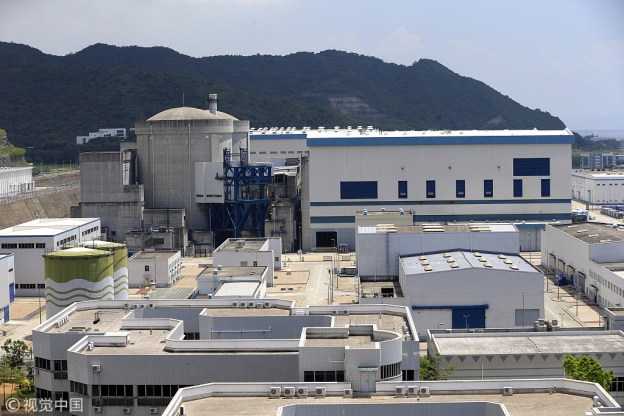
How to Reach Beyond the Stars? Nuclear Power

The US President issued Space Policy Directive-6 (SPD-6), the Nation’s Strategy for Space Nuclear Power and Propulsion (SNPP) on Dec. 16, 2020. Space nuclear systems power spacecraft for missions where alternative power sources are inadequate, such as environments that are too dark for solar power or too far away to carry sufficient quantities of chemical fuels. Space nuclear systems include radioisotope power systems and nuclear reactors used for power, heating, or propulsion. SPD-6 establishes high-level goals, principles, and a supporting roadmap that demonstrate the U.S. commitment to using SNPP systems safely, effectively, and responsibly…

NASA, the Department of Energy, and industry will design, fabricate, and test a 10-kilowatt class fission surface power system. NASA plans to demonstrate the system on the Moon in the late 2020s, providing power for sustainable lunar surface operations and testing its potential for use on Mars.  The space agency is also advancing nuclear thermal and nuclear electric propulsion capabilities. Nuclear propulsion can enable robust human exploration beyond the Moon. For crewed missions to the Red Planet, a traditional chemical propulsion system would require a prohibitively high propellant mass. 

NASA Supports America’s National Strategy for Space Nuclear Power and Propulsion, NASA Press Release, Dec. 16, 2020

Under-Water Data Centers: Reliable, Cool and Cheap

Earlier this year a ship hauled a large, barnacle-covered cylinder sporting a Microsoft logo from the seas off the Orkney islands. Inside were a dozen server racks, of the sort found in data-centres around the world. Sunk in 2018, and connected to the shore by cable, the computers had spent the past couple of years humming away, part of an experiment into the feasibility of building data-centres underwater.

On September 14th, 2020 Microsoft revealed some results. The aquatic data-centre suffered equipment failures at just one-eighth the rate of those built on land. Being inaccessible to humans, the firm could fill it with nitrogen instead of air, cutting down corrosion. The lack of human visitors also meant none of the bumping and jostling that can cause faults on land.

Microsoft hopes some of the lessons can be applied to existing, land-based data-centers. In the longer term, though, it notes that building underwater offers advantages beyond just reliability. Immersion in seawater helps with cooling, a big expense on land. Data-centres work best when placed close to customers. Land in New York or London is expensive, but nearby sea-floor is cheap. More than half the world’s population lives within 120 miles (192km) of the sea. Ben Cutler, the engineer in charge of the project, says submarine data-centres could be co-located with offshore wind farms as “anchor” customers. The cylinder fits in a standard shipping container, so could be deployed to remote places like islands, or even disaster areas to support relief efforts.

Excerpts from Cloud computing: Davy Jones’s data-center, Economist, Sept. 19, 2020

Lots of Money Forever for Waste that Lasts for Forever: Nuclear Waste in Japan

Since August 2020, two local governments on the western shore of Hokkaido in Japan have said they will apply to the central government for a survey that could eventually lead to their municipalities hosting a permanent underground repository for high-level radioactive waste. The fact that these two localities made their announcements about a month apart and are situated not far from each other was enough to attract more than the usual media attention, which revealed not only the straitened financial situations of the two areas, but also the muddled official policy regarding waste produced by the country’s nuclear power plants.

The respective populations of the two municipalities reacted differently. The town of Suttsu made its announcement in August 2020, or, at least, its 71-year-old mayor did, apparently without first gaining the understanding of his constituents, who, according to various media, are opposed to the plan…. Meanwhile, the mayor of the village of Kamoenai says he also wants to apply for the study after the local chamber of commerce urged the village assembly to do so in early September 2020. TBS asked residents about the matter and they seemed genuinely in favor of the study because of the village’s fiscal situation. Traditionally, the area gets by on fishing — namely, herring and salmon — which has been in decline for years. A local government whose application for the survey is approved will receive up to ¥2 billion in subsidies from the central government… Kamoenai, already receiving subsidies for nuclear-related matters. The village is 10 kilometers from the Tomari nuclear power plant, where some residents of Kamoenai work. In exchange for allowing the construction of the plant, the village now receives about ¥80 million a year, a sum that accounts for 15 percent of its budget. According to TBS, Kamoenai increasingly relies on that money as time goes by, since its population has declined by more than half over the past 40 years.

Since Japan’s Nuclear Waste Management Organization started soliciting local governments for possible waste storage sites in 2002, a few localities have expressed interest, but only one — the town of Toyo in Kochi Prefecture — has actually applied, and then the residents elected a new mayor who canceled the application. The residents’ concern was understandable: The waste in question can remain radioactive for up to 100,000 years.

The selection process also takes a long time. The first phase survey, which uses existing data to study geological attributes of the given area, requires about two years. If all parties agree to continue, the second phase survey, in which geological samples are taken, takes up to four years. The final survey phase, in which a makeshift underground facility is built, takes around 14 years. And that’s all before construction of the actual repository begins.

Neither Suttsu nor Kamoenai may make it past the first stage. Yugo Ono, an honorary geology professor at Hokkaido University, told the magazine Aera that Suttsu is located relatively close to a convergence of faults that caused a major earthquake in 2018. And Kamoenai is already considered inappropriate for a repository on a map drawn up by the trade ministry in 2017.

If the Nuclear Waste Management Organization’s process for selecting a site sounds arbitrary, it could reflect the government’s general attitude toward future plans for nuclear power, which is still considered national policy, despite the fact that only three reactors nationwide are online.

Japan’s spent fuel is being stored in cooling pools at 17 nuclear plants comprising a storage capacity of 21,400 tons. As of March 2020, 75 percent of that capacity was being used, so there is still some time to find a final resting place for the waste. Some of this spent fuel was supposed to be recycled at the Rokkasho Reprocessing Plant in Aomori Prefecture, but, due to numerous setbacks, it doesn’t look as if it’s ever going to open, so the fuel will just become hazardous garbage.

According to some, the individual private nuclear plants should be required to manage their own waste themselves. If they don’t have the capacity, then they should create more. It’s wrong to bury the waste 300 meters underground because many things can happen over the course of future millennia. The waste should be in a safe place on the surface, where it can be readily monitored.  However, that would require lots of money virtually forever, something the government would prefer not to think about, much less explain. Instead, they’ve made plans that allow them to kick the can down the road for as long as possible.

Excerpt from PHILIP BRASOR, Hokkaido municipalities gamble on a nuclear future, but at what cost? Japan Times, Oct. 24, 2020

The Unbankables: Fossil-Fuel Companies

Defenders of the oil-and-gas industry in Washington are fighting back against big banks who want to stop financing new Arctic-drilling projects, fearing it could be a harbinger of an unbankable future for fossil-fuel companies. Five of the six largest U.S. banks— Citigroup, Goldman Sachs,  JPMorgan Chase, Morgan Stanley, and Wells Fargo have pledged over the past year to end funding for new drilling and exploration projects in the Arctic.  Alaska Sen. Dan Sullivan has been lobbying the Trump administration to examine whether the federal government can prevent banks from cutting off financing.

“That these banks would discriminate against one of the most important sectors of the U.S. economy is absurd,” Mr. Sullivan said in an interview. “I thought it was important to push back.” The American Petroleum Institute, one of industry’s most influential lobbying groups, has said it is working with the Trump administration on the issue, which it called a “bad precedent.” API, Mr. Sullivan and others have also suggested the White House should examine whether it could cut off the banks’ access to funding under coronavirus relief packages.

Wall Street has been pulling back from the oil-and-gas industry after years of dismal returns from it and is under increasing pressure from environmentalists and others to limit fossil-fuel lending. While broader market conditions during the coronavirus pandemic this year have dried up capital for new exploration, some analysts have said a lack of bank financing could deter drilling in the Arctic National Wildlife Refuge, which the administration opened to exploration in August 2020…

Capital flight remains one of the primary risks facing the oil industry, according to Moody’s Corp. If the world were to accelerate a transition to renewable sources of energy, oil-and-gas reserves could become uneconomic and turn into a credit liability for producers, making it difficult to access longer-maturity loans, Moody’s said.

Alaska’s economy is almost entirely dependent on the fossil-fuel industry, which has historically funded about 90% of the state’s general fund through tax revenues. Energy executives worry the pledges that banks are making could spread to other regions and parts of the industry as pressure mounts from environmental groups, and companies face the prospect of tighter government regulations. This week, JPMorgan pledged to push clients to align with the Paris climate accord and work toward global net zero-emissions by 2050.

“If it is successful, why would they stop with the Arctic?” said wildcatter Bill Armstrong, founder of Armstrong Oil & Gas Inc., which has discovered more than 3 billion barrels of oil in Alaska. “A lot of misguided people are trying to make oil and gas the new tobacco.

Excerpt from Christopher M. Matthews and Orla McCaffrey, Banks’ Arctic Financing Retreat Rattles Oil Industry, WSJ, Oct. 9 2020

1 Million Tons Radioactive Water Release at Sea: Fukushima, Japan

On October 19, 2020, China urged the Japanese government to “cautiously” consider whether to release treated radioactive water in the sea from the Fukushima No. 1 nuclear power plant. China’s remarks came days after it was reported by Japanese media that an official decision on the discharge of the water from the nuclear plant may be made by the end of October 2020. The water has been treated using an advanced liquid processing system, or ALPS, to remove most contaminants other than the relatively less toxic tritium and is stored in tanks on the facility’s premises.

But space is expected to run out by the summer of 2022, with contaminated water increasing by about 170 tons per day. As of September 2020, the stored water totaled 1.23 million tons and continues to grow.

China urges Japan to cautiously consider nuclear plant water release, Japan Times, Oct. 19, 2020

Beautiful Coal and Other Maladies

President Trump hasn’t been able to bring back “beautiful, clean coal” as he promised four years ago. As mines and power plants continue to close, the question many are asking in the diminishing American coal industry is—what now?

The use of coal to generate electricity in the U.S. is expected to fall more than a third during Mr. Trump’s first term, data from the U.S. Energy Information Administration show, as a glut of cheap natural gas unlocked due to fracking and increasingly competitive wind and solar sources gained market share. More than half of that drop happened before the new coronavirus outbreak. That compares with a decline of about 35% in coal consumed for power generation during Mr. Obama’s eight years in office.

In 2019, the U.S. consumed more renewable energy than coal for the first time since the 1880s, federal data show…“Coal isn’t coming back. You can’t legislate it,” said Karla Kimrey , previously a vice president at Wyoming-based coal producer Cloud Peak Energy Inc., which filed for bankruptcy protection last year. Domestic demand has continued to drop as utilities retire coal power plants and turn to cheap natural gas and renewables to make electricity, trends that have only accelerated as economies have slowed due to the pandemic. With less demand for power, many utilities have cut back on coal generation first, as it is generally more expensive

Meanwhile the rise of “ESG” or environmental, social and governance investing is constricting the industry’s ability to obtain capital, current and former executives say.  As major investors such as JPMorgan Chase & Co. and BlackRock Inc., the world’s largest asset manager, turn away from coal over concerns about climate change, coal companies are struggling to secure the insurance they need to operate. That hurts not only companies that mine the thermal coal used to generate electricity, but also those that mine metallurgical coal to make steel.

Excerpts from Rebecca Elliott and Jonathan Randles, Trump’s Promise to Revive Coal Thwarted by Falling Demand, Cheaper Alternatives, WSJ, Sept. 17, 2020

Buy Carbon Stored in Trees and Leave it There

For much of human history, the way to make money from a tree was to chop it down. Now, with companies rushing to offset their carbon emissions, there is value in leaving them standing. The good news for trees is that the going rate for intact forests has become competitive with what mills pay for logs in corners of Alaska and Appalachia, the Adirondacks and up toward Acadia. That is spurring landowners to make century-long conservation deals with fossil-fuel companies, which help the latter comply with regulatory demands to reduce their carbon emissions.

For now, California is the only U.S. state with a so-called cap-and-trade system that aims to reduce greenhouse gasses by making it more expensive over time for firms operating in the state to pollute. Preserving trees is rewarded with carbon-offset credits, a climate-change currency that companies can purchase and apply toward a tiny portion of their tab. But lately, big energy companies, betting that the idea will spread, are looking to preserve vast tracts of forest beyond what they need for California, as part of a burgeoning, speculative market in so-called voluntary offsets.

One of the most enthusiastic, BP PLC, has already bought more than 40 million California offset credits since 2016 at a cost of hundreds of millions of dollars. In 2019, the energy giant invested $5 million in Pennsylvania’s Finite Carbon, a pioneer in the business of helping landowners create and sell credits. The investment is aimed at helping Finite hire more foresters, begin using satellites to measure biomass and drum up more credits for use in the voluntary market.  BP has asked Finite to produce voluntary credits ASAP so they can be available for its own carbon ledger and to trade among other companies eager to improve their emissions math. As part of its shift into non-fossil-fuel markets, BP expects to trade offset credits the way it presently does oil and gas.“The investment is to grow a new market,” said Nacho Gimenez, a managing director at the oil company’s venture-capital arm. “BP wants to live in this space.”

Skeptics contend the practice does little to reduce greenhouse gases: that the trees are already sequestering carbon and shouldn’t be counted to let companies off the hook for emissions. They argue that a lot of forest protected by offsets wasn’t at high risk of being clear-cut, because doing so isn’t the usual business of its owners, like land trusts, or because the timber was remote or otherwise not particularly valuable.

If other governments join California and institute cap-and-trade markets, voluntary offsets could shoot up in value. It could be like holding hot tech shares ahead of an overbought IPO. Like unlisted stock, voluntary credits trade infrequently and in a wide price range, lately averaging about $6 a ton, Mr. Carney said. California credits changed hands at an average of $14.15 in 2019 and were up to $15 before the coronavirus lockdown drove them lower. They have lately traded for about $13.

These days, voluntary offsets are mostly good for meeting companies’ self-set carbon-reduction goals. BP is targeting carbon neutrality by 2050. Between operations and the burning of its oil-and-gas output by motorists and power plants, the British company says it is annually responsible for 415 million metric tons of carbon emissions.

Excerpts from Emissions Rules Turn Saving Trees into Big Business, WSJ, Aug. 24, 2020

The Green Climate Fund and COVID-19

 The Green Climate Fund has promised developing nations it will ramp up efforts to help them tackle climate challenges as they strive to recover from the coronavirus pandemic, approving $879 million in backing for 15 new projects around the world…The Green Climate Fund (GCF) was set up under U.N. climate talks in 2010 to help developing nations tackle global warming, and started allocating money in 2015….

Small island states have criticised the pace and size of GCF assistance…Fiji’s U.N. Ambassador Satyendra Prasad said COVID-19 risked worsening the already high debt burden of small island nations, as tourism dived…The GCF  approved in August 2020 three new projects for island nations, including strengthening buildings to withstand hurricanes in Antigua and Barbuda, and installing solar power systems on farmland on Fiji’s Ovalau island.

It also gave the green light to payments rewarding reductions in deforestation in Colombia and Indonesia between 2014 and 2016. But more than 80 green groups opposed such funding. They said deforestation had since spiked and countries should not be rewarded for “paper reductions” in carbon emissions calculated from favourable baselines…. [T]he fund should take a hard look at whether the forest emission reductions it is paying for would be permanent.  It should also ensure the funding protects and benefits forest communities and indigenous people…

Other new projects included one for zero-deforestation cocoa production in Ivory Coast, providing rural villages in Senegal and Afghanistan with solar mini-grids, and conserving biodiversity on Indian Ocean islands.  The fund said initiatives like these would create jobs and support a green recovery from the coronavirus crisis.

Excerpts from Climate fund for poor nations vows to drive green COVID recovery, Reuters, Aug. 22, 2020

The End of the Mindless Self-Indulgence: the Gulf States

Algeria needs the price of Brent crude, an international benchmark for oil, to rise to $157 dollars a barrel. Oman needs it to hit $87. No Arab oil producer, save tiny Qatar, can balance its books at the current price, around $40 (summer 2020)….The world’s economies are moving away from fossil fuels. Oversupply and the increasing competitiveness of cleaner energy sources mean that oil may stay cheap for the foreseeable future. 

Arab leaders knew that sky-high oil prices would not last for ever. Four years ago Muhammad bin Salman, the de facto ruler of Saudi Arabia, produced a plan called “Vision 2030” that aimed to wean his economy off oil. Many of his neighbours have their own versions. But “2030 has become 2020…” 

Still, some see an upside to the upheaval in oil-producing states. The countries of the Gulf produce the world’s cheapest oil, so they stand to gain market share if prices remain low. As expats flee, locals could take their jobs…

Remittances from energy-rich states are a lifeline for the entire region. More than 2.5m Egyptians, equal to almost 3% of that country’s population, work in Arab countries that export a lot of oil. Numbers are larger still for other countries: 5% from Lebanon and Jordan, 9% from the Palestinian territories. The money they send back makes up a sizeable chunk of the economies of their homelands. As oil revenue falls, so too will remittances. There will be fewer jobs for foreigners and smaller pay packets for those who do find work. This will upend the social contract in states that have relied on emigration to soak up jobless citizens….With fewer opportunities in the oil-producing states, many graduates may no longer emigrate. But their home countries cannot provide a good life. Doctors in Egypt earn as little as 3,000 pounds ($185) a month, a fraction of what they make in Saudi Arabia or Kuwait. A glut of unemployed graduates is a recipe for social unrest…

For four decades America has followed the “Carter Doctrine”, which held that it would use military force to maintain the free flow of oil through the Persian Gulf. Under President Donald Trump, though, the doctrine has started to fray. When Iranian-made cruise missiles and drones slammed into Saudi oil facilities in September 2019, America barely blinked. The Patriot missile-defence batteries it deployed to the kingdom weeks later have already been withdrawn. Outside the Gulf Mr Trump has been even less engaged, all but ignoring the chaos in Libya, where Russia, Turkey and the UAE (to name but a few) are vying for control.

A Middle East less central to the world’s energy supplies will be a Middle East less important to America. ..As Arab states become poorer, the nature of their relationship with China may change. This is already happening in Iran, where American sanctions have choked off oil revenue. Officials are discussing a long-term investment deal that could see Chinese firms develop everything from ports to telecoms… Falling oil revenue could force this model on Arab states—and perhaps complicate what remains of their relations with America.

Excerpts from The Arab World: Twilight of the Petrostates, Economist, July  18, 2020

A Dream Come True? the Saudi Nuclear Program

Saudi Arabia has constructed with Chinese help a facility for extracting uranium yellowcake from uranium ore, an advance in the oil-rich kingdom’s drive to master nuclear technology…Even though Riyadh is still far from that point, the facility’s exposure appears certain to draw concern in the U.S. Congress, where a bipartisan group of lawmakers has expressed alarm aboutabout Saudi Crown Prince Mohammed bin Salman’s 2018 vow that “if Iran developed a nuclear bomb, we will follow suit as soon as possible.” ….Saudi Arabia has no known nuclear-weapons program, operating nuclear reactors or capacity to enrich uranium. But it says it wants to acquire nuclear plants that Saudi authorities say will generate power and reduce its reliance on oil, its principal export…

“Yellowcake” is a milled form of uranium ore which occurs naturally in Saudi Arabia and neighboring countries such as Jordan. It is produced by chemically processing uranium ore into a fine powder. It takes multiple additional steps and technology to process and enrich uranium sufficiently for it to power a civil nuclear energy plant. At very high enrichment levels, uranium can fuel a nuclear weapon…Olli Heinonen said that…yellowcake facility alone wouldn’t mark a significant advance unless the yellowcake is converted into a compound known as uranium hexafluoride and then enriched. But Mr. Heinonen said of the Saudis, “Where is the transparency? If you claim your program is peaceful, why not show what you have?”

One Western official said the facility is located in a remote desert location in the general vicinity of al Ula, a small city in northwest Saudi Arabia. Two officials said it was constructed with the help of two Chinese entities. While the identities of these entities couldn’t be learned, the China National Nuclear Corp. signed a memorandum of understanding with Saudi Arabia in 2017 to help explore its uranium deposits. A second agreement was signed with China Nuclear Engineering Group Corp. That followed a 2012 pact announced between Riyadh and Beijing to cooperate on peaceful uses of nuclear energy.

Riyadh has expressed a desire to master all aspects of the nuclear fuel cycle. It is constructing with Argentina’s state-owned nuclear technology company a small research reactor outside of Riyadh. In recent years, the Saudis have significantly expanded their nuclear workforce, experts say, through academic nuclear engineering programs and growing research centers. In addition to its agreement with Argentina, the Saudis are collaborating with South Korea in refining the design of a small commercial reactor to be built in Saudi Arabia, and that could also be marketed to other nations in the Middle East and Southeast Asia. It also has public cooperation agreements with Jordan on uranium mining and production.

Excerpts from  Warren P. Strobel et al., Saudi Arabia, With China’s Help, Expands Its Nuclear Program, WSJ, Aug. 4, 2020

Radioactive Water Dumping and Human Rights

In the aftermath of the Fukushima Daiichi nuclear disaster, [UN Special Rapporteurs  have] consistently raised concerns about the approaches taken by the government of Japan. UN Special Rapporteurs have been concerned that raising of “acceptable limits” of radiation exposure to urge resettlement violated the government’s human rights obligations to children.

UN Special Rapporteurs have been concerned of the possible exploitation of migrants and the poor for radioactive decontamination work. Their most recent concern is how the government used the COVID-19 crisis to dramatically accelerate its timeline for deciding whether to dump radioactive wastewater accumulating at Fukushima Daiichi in the ocean

The communities of Fukushima, so devastated by the tragic events of March 11, 2011, have expressed their concerns and opposition to the discharge of the contaminated water into their environment. It is their human right to an environment that allows for living a life in dignity, to enjoy their culture, and to not be exposed deliberately to additional radioactive contamination. Those rights should be fully respected and not be disregarded by the government in Tokyo. The discharge of nuclear waste to the ocean could damage Japan’s international relations. Neighboring countries are already concerned about the release of large volumes of radioactive tritium and other contaminants in the wastewater.

Japan has a duty under international law to prevent transboundary environmental harm. More specifically, under the London Convention, Japan has an obligation to take precaution with the respect to the dumping of waste in the ocean.

Indigenous peoples have an internationally recognized right to free, prior and informed consent. This includes the disposal of waste in their waters and actions that may contaminate their food. No matter how small the Japanese government believes this contamination will be of their water and food, there is an unquestionable obligation to consult with potentially affected indigenous peoples that it has not met…The disaster of 2011 cannot be undone. However, Japan still has an opportunity to minimize the damage…There are grave risks to the livelihoods of fishermen in Japan and also to its international reputation. Again, I urge the Japanese government to think twice about its legacy: as a true champion of human rights and the environment, or not.

Excerpts from, Baskut Tuncak [UN Rapporteur], Fukushima nuclear waste decision also a human rights issue, Kyodo News, July 8, 2020

Water Conflicts: Who Owns the Nile River

The Grand Ethiopian Renaissance Dam is a giant edifice that would span the Blue Nile, the main tributary of the Nile river.  Half a century in the making, the hydro-electric dam is Africa’s largest, with a reservoir able to hold 74bn cubic metres of water, more than the volume of the entire Blue Nile. Once filled it should produce 6,000 megawatts of electricity, double Ethiopia’s current power supply. Millions of people could be connected to the grid for the first time. More than an engineering project, it is a source of national pride.

For Egypt, however, it seems a source of national danger. Over 90% of the country’s 100m people live along the Nile or in its vast delta. The river, long seen as an Egyptian birthright, supplies most of their water. They fear the dam will choke it off. Pro-regime pundits, not known for their subtlety, have urged the army to blow it up….Ethiopia wants to start filling the reservoir during this summer’s rainy season. On June 26th, 2020 after another round of talks, Egypt, Ethiopia and Sudan pledged to reach a deal within two weeks. Ethiopia agreed not to start filling the dam during that period.

Diplomats say most of the issues are resolved. But the outstanding one is big: how to handle a drought. Egypt wants Ethiopia to promise to release certain amounts of water to top up the Nile. But Ethiopia is loth to “owe” water to downstream countries or to drain the reservoir so much that electric output suffers. It wants a broader deal between all riparian states, including those on the White Nile, which flows out of Lake Victoria down through Uganda and Sudan.

Even if talks fail and Ethiopia starts filling without a deal, Egyptians will not find their taps dry. There is enough water in the reservoir behind Egypt’s Aswan High Dam to make up for any shortfall this year. But the mood in both countries is toxic. Egyptians have cast Ethiopia as a thief bent on drying up their country. In Ethiopia, meanwhile, Egypt is portrayed as a neocolonial power trampling on national sovereignty. The outcome of the talks will have political consequences in both countries, and perhaps push them to the brink of conflict—at a time when Egypt is already contemplating involvement in a war in Libya.

Ethiopia’s grand dam became a reality and a national obsession under Meles Zenawi, the longtime prime minister who ruled until 2012. His political masterstroke was asking Ethiopians to finance it through donations and the purchase of low-denomination bonds…. Most contributed voluntarily, but there was always an element of coercion. Civil servants had to donate a month’s salary at the start. Local banks and other businesses were expected to buy bonds worth millions of birr. ….

Excerpts from The Grand Ethiopian Renaissance Dam: Showdown on the Nile, Economist, July 4, 2020

.

An Impossible Made Possible: the Green Energy Revolution

Since the cost of renewable energy can now be competitive with fossil fuels. Government, corporate and consumer interests finally seem to be aligning.  The stock market has noticed. After years of underperformance, indexes that track clean-energy stocks bottomed out in late 2018. The S&P Global Clean Energy index, which covers 30 big utilities and green-technology stocks, is now up 37% over two years, including dividends, compared with 18% for the S&P 500.

This year’s Covid crisis will delay some renewable projects, but could speed up the energy transition in other ways. Alternative-energy spending has held up much better than spending on oil and gas. Globally, clean-energy investment is now expected to account for half of total investment in the entire energy sector this year, according to UBS.  Moreover, the crisis has pushed governments to spend money, including on renewable technologies. The massive stimulus plan announced by the European Union last month is decidedly green. The German government increased electric-car subsidies as part of its pandemic-related stimulus package rather than rolling out a 2009-style “cash-for-clunkers” program. China’s plans include clean-energy incentives, too.

Solar and wind are now mature technologies that provide predictable long-term returns. Big lithium-ion batteries, such as those that power Teslas, are industrializing rapidly. More speculatively, hydrogen is a promising green fuel for hard-to-decarbonize sectors such as long-haul transport, aviation, steel and cement.  Many big companies—the likes of Royal Dutch Shell, Air Liquide and Toyota —have green initiatives worth many hundreds of millions of dollars. They are, however, a relatively small part of these large businesses, some of whose other assets may be rendered obsolete by the energy transition… Early-stage electric-truck maker Nikola jumped on its market debut this month to a valuation at one point exceeding that of Ford.

Investors might be better off looking at the established specialists in between. Vestas is the world’s leading manufacturer of wind turbines. Orsted, another Danish company, has made the transition from oil-and-gas producer to wind-energy supplier and aspires to be the first green-energy supermajor. More speculatively, Canadian company Ballard has three decades of experience making hydrogen fuel cells.

Rochelle Toplensky, Green Energy Is Finally Going Mainstream, WSJ, June 24, 2020

No Clean-Up, No Justice: Ogoniland, Nigeria

The UN Environment Programme in 2011 proposed the creation of a $1 billion fund to repair the damage done by decades of crude spills in the Ogoniland area in southeastern Nigeria. However, progress has been poor and the little work that has been done is sub-standard, advocacy groups including Amnesty International reported in June 2020.  “Research reveals that there is still no clean-up, no fulfillment of ‘emergency’ measures, no transparency and no accountability for the failed efforts, neither by the oil companies nor by the Nigerian government,” the groups said.

Shell’s Nigerian unit pumped oil in Ogoniland until 1993, when the company withdrew amid increasing protests against its presence. Even though the Hague-based company no longer produces crude in the area, a joint venture operated by Shell Petroleum Development Company, or SPDC, still owns pipelines that crisscross the region.

A government agency responsible for overseeing the clean-up, the Hydrocarbon Pollution Remediation Project, known as Hyprep, was finally set up in 2017 after several false starts, but it’s failing to deliver. …“Hyprep is not designed, nor structured, to implement a project as complex and sizable as the Ogoniland clean-up,” the report cites UNEP as saying in 2019

Excerpt from Clean Up Oil in Nigerial Lacks Progress, Bloomberg, June 18,, 2020

Oil Spills of Sudan, Humanity for Africa, and East African Court of Justice

The East African Court of Justice delivered in June 2020 a temporary injunction order to the country’s Minister for Justice, the Greater Pioneer Operating Company (GPOC), and the Dar Petroleum Operating Company. The Court approved the application by Hope for Humanity Africa (H4HA), a non-governmental organization (NGO), which sought to highlight the environmental damage caused by oil spills… The NGO contends that: “Over 47,249 of the local population in Upper Nile State and 60,000 in Unity State are at risk of being exposed to the oil pollution this is because the local population depends on the wild foods for survival, the contaminated swamps, streams and rivers waters for cooking, drinking, washing, bathing and fishing.”…

The H4HA is looking for an injunction to stop multiple companies from exporting oil from the region, including CNPC of China, Petronas of Malaysia, and Oil & Natural Gas Corp. of India (ONGC) 

Excerpts South Sudan Suspended by African Union, Barred From Exporting Oil by East African Court, https://www.youngbhartiya.com, June 24, 2020

Leave No Oil Under-Ground: OPEC against US Frackers

In 2014-16, the OPEC waged a failed price war to wipe out American frackers. Since then the cartel and its partners, led by Russia, have propped up oil prices enough to sustain shale, but not enough to support many members’ domestic budgets. In March 2020 Saudi Arabia urged Russia to slash output; Russia refused, loth to let Americans free-ride on OPEC-supported prices. The ensuing price war was spectacularly ill-timed, as it coincided with the biggest drop in oil demand on record.  The desire to chasten American frackers remains, though. OPEC controls about 70% of the world’s oil reserves, more than its 40% market share would suggest… If the world’s appetite for oil shrinks due to changing habits, cleaner technology or greener regulations, countries with vast reserves risk having to leave oil below ground. 

Excerpts from Crude Oil: After the Fall, Economist, June, 13, 2020

Praying for Renewable Energy

In the wake of the Fukushima nuclear disaster in 2011, Fukushima prefecture itself pledged to get all its power from renewable sources by 2040.  The hoped-for transformation, however, has been “slow and almost invisible.”…Renewable generation has grown from 10% of the power supply in 2010 to 17% in 2018, almost half of which comes from old hydropower schemes. Most nuclear plants, which provided more than a quarter of the country’s power before the 2011 disaster, have been shut down… But for the most part they have been replaced not by wind turbines and solar panels but by power stations that burn coal and natural gas. The current government wants nuclear plants to provide at least 20% of electricity by 2030. It also wants coal’s share of generation to grow, and has approved plans to build 22 new coal-fired plants over the next five years. The target for renewables, by contrast, is 22-24%, below the current global average, and far lower than in many European countries.

Geography and geology provide part of the answer. Japan is densely populated and mountainous. That makes solar and onshore wind farms costlier to build than in places with lots of flat, empty land. The sea floor drops away more steeply off Japan’s coasts than it does in places where offshore wind has boomed, such as the North Sea. And although geothermal power holds promise, the most suitable sites tend to be in national parks or near privately owned hot springs.

Government policies also help stifle the growth of renewable energy. Since the end of the second world war, privately owned, vertically integrated regional utilities have dominated the electricity market. These ten behemoths provide stable power within their regions, but do little to co-ordinate supply and demand across their borders…The limited transmission between regions makes it even harder than usual to cope with intermittent generation from wind turbines and solar panels. It also reduces competition, which suits the incumbent utilities just fine…Recent reforms have attempted to promote renewables both directly and indirectly…The “feed-in tariff”, obliging utilities to pay a generous fixed price for certain forms of renewable energy—a policy that has prompted investors to pile into solar and wind in other countries. In 2016, the government fully liberalised the retail electricity market. It has also set up new regulatory bodies to promote transmission between regions and to police energy markets. In April 2020 a law came into force that requires utilities to run their generation, transmission and distribution units as separate businesses. These reforms constitute a policy of “radical incrementalism”.

Critics say the steps have been too incremental and not radical enough. Utilities continue to make it time-consuming and costly for new entrants to get access to the grid, imposing rules that are “not fair for newcomers”, according to Takahashi Hiroshi of Tsuru University. Existing power plants are favoured over new facilities, and the share of renewables is limited, on the ground that their intermittency threatens the grid’s stability.

But even if the government is timid, investors can still make a difference…. Several of Japan’s big multinationals have pledged to switch to clean power on a scale and schedule that put the government’s targets to shame. Environmental activism has made banks and businesses wary of investments in coal. Even big utilities have come to see business opportunities in renewables, especially in the government’s imminent auction of sites for offshore wind plants. Two of them, Tohoku Electric Power and Tokyo Electric Power (TEPCO), have announced plans this year to issue “green bonds” to finance renewables projects. In March 2020, TEPCO established a joint venture with Orsted, a Danish oil firm that has become a pioneer in offshore wind. 

Exceprts from Renewable Energy in Japan: No Mill Will, Economist, June 13, 2020

The Big Trash Burners: Does it Make Sense to Incinerate Waste?

Global waste is expected to hit 3.4 billion tons by 2050 from 2.01 billion tons in 2016, according to the World Bank. As recycling programs encounter challenges and landfills in the U.S. and Europe reach capacity or face regulations making them more expensive, incinerators are becoming the most viable option for many municipalities to deal with much of their garbage. England now burns more municipal waste than it recycles or landfills. China—already the world’s biggest trash burner—is building more incinerators. And incineration companies say, for the first time in years, expansion projects are on the table in the U.S., although the industry faces significant legal and community challenges. Overall, incinerator-plant capacity is forecast to rise 43% globally between 2018 and 2028, according to Ecoprog, a consulting firm…..

Another growth driver is a European Union target for member states to cap the amount of municipal trash they send to landfill at 10% by 2030. Local communities and environmental groups have launched strong opposition to expansion of incineration plans, citing environmental and public-health concerns. Incinerator plants are also called waste-to-energy plants since the heat from burning trash is used to generate electricity, and many governments classify that electricity as renewable energy, a characterization opponents dispute…..But advocates for clean energy…say that while some energy is recovered by burning, recycling or composting garbage would save far greater amounts of energy.

Critics also say cities that own their incinerator plants have little incentive to pursue waste-reduction efforts because the plants are designed to run at full capacity. “Many countries are over-investing in incineration to cut down on landfilling, which will eventually lock them into burning,” said Janek Vähk, development and policy coordinator for Zero Waste Europe.

Excerpts from Saabira Chaudhuri, Trash Burning Ignites as World’s Waste Swells, WSJ, June 10, 2020

Japan’s Nuclear Bombs

On May 13, Japan’s Nuclear Regulation Authority announced that the nuclear fuel reprocessing plant in Rokkasho, Aomori Prefecture, had met new safety standards created after the March 11, 2011, earthquake and tsunami….The Rokkasho plant is a 3.8 million square meter facility designed to reprocess spent nuclear fuel from the nation’s nuclear reactors.  Construction began in 1993. Once in operation, the plant’s maximum daily reprocessing capacity will be a cumulative total of 800 tons per year.  During reprocessing, uranium and plutonium are extracted, and the Rokkasho plant is expected to generate up to eight tons of plutonium annually.

Both are then turned into a mixed uranium-plutonium oxide (MOX) fuel at a separate MOX fabrication plant, also located in Rokkasho, for use in commercial reactors. Construction on the MOX facility began in 2010 and it’s expected to be completed in 2022.  Japan had originally envisioned MOX fuel powering between 16 and 18 of the nation’s 54 commercial reactors that were operating before 2011, in place of conventional uranium.  But only four reactors are using it out of the current total of nine officially in operation. MOX fuel is more expensive than conventional uranium fuel, raising questions about how much reprocessed fuel the facilities would need, or want.

The Rokkasho reprocessing plant can store up to 3,000 tons of spent nuclear fuel from the nation’s power plants on-site. It’s nearly full however, with over 2,900 tons of high-level waste already waiting to be reprocessed.

Why has it taken until now for the Rokkasho plant to secure approval from the nuclear watchdog?   Decades of technical problems and the new safety standards for nuclear power that went into effect after the 2011 triple meltdown at the power plant in Fukushima Prefecture have delayed Rokkasho’s completion date 24 times so far. It took six years for the plant to win approval under the post-3/11 safety standards…By the time of the NRA announcement on May 13, 2020, the price tag for work at the Rokkasho plant had reached nearly ¥14 trillion.

Japan is the only non-nuclear weapons state pursuing reprocessing. But as far back as the 1970s, as Japan was debating a nuclear reprocessing program, the United States became concerned about a plant producing plutonium that could be used for a nuclear weapons program.  The issue was raised at a Feb. 1, 1977, meeting between U.S. Vice President Walter Mondale and Prime Minister Takeo Fukuda.  “Reprocessing facilities which could produce weapons grade material are simply bomb factories,” noted a declassified U.S. State Department cable on the meeting. “We want to cooperate (with Japan) to keep the problem under control.”

The U.S. oppose the Rokkasho plant’s construction in 1993, following an agreement in 1988 between the two countries on nuclear cooperation. ..The U.S.-Japan nuclear agreement meant the U.S. would give advance consent for Japan to send spent nuclear fuel to the United Kingdom and France — states with nuclear weapons — for reprocessing until Rokkasho was running at full-scale.

Currently, Japan has nearly 45 tons of plutonium stockpiled, including 9 tons held by domestic utilities. Another 21.2 tons is in the United Kingdom and France is holding 15.5 tons under overseas reprocessing contracts.

Thus, Japan finds itself caught between promises to the international community to reduce its plutonium stockpile through reprocessing at Rokkasho, and questions about whether MOX is still an economically, and politically, viable resource — given the expenses involved and the availability of other fossil fuel and renewable energy resources.

Excerpts from Aomori’s Rokkasho nuclear plant gets green light but hurdles remain, Japan Times, May 31, 2020

Builiding a Nuclear War Chest: the US Uranium Reserve

The US electricity production from nuclear plants hit at an all-time high in 2019… generating more than 809 billion kilowatt-hours of electricity, which is enough to power more than 66 million homes.  Yet, despite operating the largest fleet of reactors in the world at the highest level in the industry, US ability to produce domestic nuclear fuel is on the verge of a collapse.  

Uranium miners are eager for work, the United States’s only uranium conversion plant is idle due to poor market conditions, and its inability to compete with foreign state-owned enterprises (most notably from China and Russia) is not only threatening US energy security but weakening the ability to influence the peaceful uses of nuclear around the world. Restoring America’s Competitive Nuclear Energy Advantage was recently released by the U.S. Department of Energy (DOE) to preserve and grow the entire U.S. nuclear enterprise…. The first immediate step in this plan calls for DOE to establish a uranium reserve.   Under the Uranium Reserve program, the DOE Office of Nuclear Energy (NE) would buy uranium directly from domestic mines and contract for uranium conversion services. The new stockpile is expected to support the operation of at least two US uranium mines, reestablish active conversion capabilities, and ensure a backup supply of uranium for nuclear power operators in the event of a market disruption [such as that caused the COVID-19 pandemic]. 

NE will initiate a competitive procurement process for establishing the Uranium Reserve program within 2021.  Uranium production in the United States has been on a steady decline since the early 1980s as U.S. nuclear power plant operators replaced domestic uranium production with less expensive imports. State-owned foreign competitors, operating in different economic and regulatory environments, have also undercut prices, making it virtually impossible for U.S. producers to compete on a level-playing field.  As a result, 90% of the uranium fuel used today in U.S. reactors is produced by foreign countries.

Establishing the Uranium Reserve program is exactly what United States needs at this crucial time to de-risk its nuclear fuel supply. It will create jobs that support the U.S. economy and strengthen domestic mining and conversion services….The next 5-7 years will be a whirlwind of nuclear innovation as new fuels and reactors will be deployed across the United States.

Excerpts  from USA plans revival of uranium sector, World Nuclear News, May 12, 2020.  See also Building a Uranium Reserve: The First Step in Preserving the U.S. Nuclear Fuel Cycle, US Office of Nuclear Energy, May 11, 2020.

Will Saudi Arabia Own the United States?

In the coronavirus pandemic’s financial fallout, Saudi Arabia’s $300 billion sovereign-wealth fund has emerged as one of the world’s biggest bargain hunters, taking minority stakes worth billions of dollars in American corporations.  Saudi Arabia’s Public Investment Fund  (PIF)  in the first quarter of 2020 bought shares valued at about half a billion dollars each in Facebook, Walt Disney,  Marriott International,  and Cisco Systems.  The fund bought financial stocks, investing $522 million in Citigroup, and $488 million in Bank of America while also spending $714 million on a stake in Boeing…Crown Prince Mohammed bin Salman, the kingdom’s day-to-day ruler, tasked the sovereign-wealth fund in 2015 with diversifying the country’s economy away from oil by investing in companies and industries untethered to hydrocarbons.

PIF’s recent buying spree highlights a bold strategy of piling into global stocks even as the novel coronavirus and a crash in oil prices mean that Saudi Arabia’s financial position is now the most precarious in a decade. The Saudi government in May 2020 tripled its value-added tax rate and cut subsidies to state employees as it contends with lower oil revenue and an economy weakening under coronavirus lockdown.

Many of the stocks that PIF has targeted are trading at historic lows, bruised by the fallout from the coronavirus and rock-bottom oil prices that have battered stocks of energy companies in 2020. Teh PIF bought in 2020 undisclosed stakes in a bevy of energy companies, including Equinor (Norway), Royal Dutch Shell, Total (France) and Eni (France). The PIF invested $484 million in Shell, $222 million in Total and previously unreported stakes of $828 million in BP $481 million in Suncor Energy and $408 million in Canadian Natural Resources.

It also purchased shares valued at roughly $80 million each in: Warren Buffett’s Berkshire Hathaway; chipmakers Broadcom and Qualcom ; IBM; drugmaker Pfizer;  Starbucks; railroad company Union Pacific; outsourcer Automatic Data Processing; and Booking.com….On top of the stakes in public companies, PIF is also awaiting regulatory approval for a roughly £300 million ($363 million) buyout of U.K. Premier League soccer team Newcastle United.

Excerpts from Rory Jones and Summer Said, Saudi Sovereign-Wealth Fund Buys Stakes in Facebook, Boeing, Cisco Systems, WSJ, May 18, 2020

Nuclear Operators: Who Helps India and Pakistian with their Atomic Bombs

Using open-source data, the nonprofit Centre For Advance Defense Studies (C4ADS) report published in April 2020 provides one of the most comprehensive overviews of networks supplying the rivals, in a region regarded as one of the world’s most dangerous nuclear flashpoints.

To identify companies involved, C4ADS analysed more than 125 million records of public trade and tender data and documents, and then checked them against already-identified entities listed by export control authorities in the United States and Japan. Pakistan, which is subject to strict international export controls on its programme, has 113 suspected foreign suppliers listed by the United States and Japan. But the C4ADS report found an additional 46, many in shipment hubs like Hong Kong, Singapore and the United Arab Emirates. The father of Pakistan’s atomic bomb, AQ Khan, admitted in 2004 to selling nuclear technology to North Korea, Iran and Libya. He was pardoned a day later by Pakistani authorities, which have refused requests from international investigators to question him.

India has a waiver that allows it to buy nuclear technology from international markets. The Indian government allows inspections of some nuclear facilities by the International Atomic Energy Agency, but not all of them. C4ADS identified 222 companies that did business with the nuclear facilities in India that had no IAEA oversight. Of these, 86 companies did business with more than one such nuclear facility in India.

Both countries are estimated to have around 150 useable nuclear warheads apiece, according to the Federation of American Scientists, a nonprofit group tracking stockpiles of nuclear weapons.

Excerpts from Alasdair Pal, Exclusive: India, Pakistan nuclear procurement networks larger than thought, study shows, Reuters, Apr. 30, 2020

Wasted Energy: Methane Leakage in Permian Basin


The methane over the Permian Basin emitted by oil companies’ gas venting and flaring is double previous estimates, and represents a leakage rate about 60% higher than the national average from oil and gas fields, according to the research, which was publishe in the journal Science Advances. Methane is the primary component of natural gas. It also is a powerful driver of climate change that is 34 times more potent than carbon dioxide at warming the atmosphere over the span of a century. Eliminating methane pollution is essential to preventing the globe from warming more than 2 degrees Celsius (3.6 degrees Fahrenheit)—the primary target of the Paris climate accord, scientists say.

The researchers used satellite data gathered in 2018 and 2019 to measure and model methane escaping from gas fields in the Permian Basin, which stretches across public and private land in west Texas and southeastern New Mexico. The leaking and flaring of methane had a market value of nearly $250 million in April 2020.

Methane pollution is common in shale oil and gas fields such as those in the Permian Basin because energy companies vent and burn off excess natural gas when there are insufficient pipelines and processing equipment to bring the gas to market. About 30% of U.S. oil production occurs in the Permian Basin, and high levels of methane pollution have been recorded there in the past. Industry groups such as the Texas Methane and Flaring Coalition have criticized previous methane emission research. The coalition has repeatedly said (Environmental Defense Fund) EDF’s earlier Permian pollution data were exaggerated and flawed.

The Texas Railroad Commission, which regulates the oil and gas industry in Texas, allows companies to flare and vent their excess gas. The commission didn’t respond to a request for comment.

The use of satellites to measure methane is a different approach than the methods used by federal agencies, including the EPA, which base their estimates on expected leakage rates at oil and gas production equipment on the ground. A “top-down” approach to measuring methane using aircraft or satellite data almost always reveals higher levels of methane emissions than the EPA’s “bottom-up” approach.

Excerpts from Permian Oil Fields Leak Enough Methane for 7 Million Homes, Bloomberg Law, Apr. 22, 2020,

Craving Nuclear Energy: Emerging Nations

According to World Nuclear Assocation as of March 2020, about 30 countries are considering, planning or starting nuclear power programmes, and a further 20 or so countries have at some point expressed an interest.

In Europe: Albania, Serbia, Croatia, Portugal, Norway, Poland, Belarus, Estonia, Latvia, Lithuania, Ireland, Turkey.
In the Middle East and North Africa: Gulf states including UAE, Saudi Arabia, Qatar and Kuwait; Yemen, Israel, Syria, Jordan, Egypt, Tunisia, Libya, Algeria, Morocco, Sudan.
In west, central and southern Africa: Nigeria, Ghana, Senegal, Kenya, Uganda, Tanzania, Zambia, Namibia, Rwanda, Ethiopia.
In Central and South America: Cuba, Chile, Ecuador, Venezuela, Bolivia, Peru, Paraguay.
In central and southern Asia: Azerbaijan, Georgia, Kazakhstan, Mongolia, Bangladesh, Sri Lanka, Uzbekistan.
In SE Asia and Oceania: Indonesia, Philippines, Vietnam, Thailand, Laos, Cambodia, Malaysia, Singapore, Myanmar, Australia.

The Connection between Nuclear Energy and Nuclear Weapons

State-owned nuclear companies in Russia and China have taken the lead in offering nuclear power plants to emerging countries includingfinance and fuel services.

Excerpts from Emerging Nuclear Energy Countries, Press Release, World Nuclear Association, Mar. 20, 2020

Hunting Down Polluters from Space

When scanning for emissions from a mud volcano in western Turkmenistan in January 2019, a satellite called Claire came across a large plume of methane drifting across the landscape. … The company operating the satellite, GHGSAT passed details via diplomats to officials in Turkmenistan, and after a few months the leaks stopped. This largely unknown incident illustrates two things: that satellites can play an important role in spotting leaks of greenhouse gases and, rather worryingly, that the extent of such leaks is often greatly underestimated. The data from Claire suggested the leak in Turkmenistan had been a big one…142,000 tonnes of methane. This made the Turkmenistani leak far bigger than the 97,000 tonnes of methane discharged over four months by a notorious blowout at a natural-gas storage facility in Aliso Canyon, California, in 2015, which is reckoned to have been the worst natural-gas leak yet recorded in America. There have been other big leaks, too…

The reason for concern is that although methane, the main constituent of natural gas, does not linger in the atmosphere for anywhere near as long as carbon dioxide does, it is a far more potent heat-trapping agent. About a quarter of man-made global warming is thought to be caused by methane. And between a fifth and a third of the methane involved is contributed by the oil and gas industry. Methane can be detected spectroscopically. Like other gases, it absorbs light at characteristic frequencies. With a spectrometer mounted on a satellite it is possible to analyse light reflected from Earth for signs of the gas. As with the satellites that carry them, spectrometers come in many shapes and sizes. Tropomi can also detect the spectral signs of other polluting gases, such as nitrogen dioxide, sulphur dioxide and carbon monoxide.

Other methane-hunting satellites are coming. These include one due for launch in 2022 by Methanesat, an affiliate of the Environmental Defence Fund, an American non-profit organisation. The 350kg satellite will cost $88m to build and put into orbit. It will scan an area of land 200km wide with a resolution of 1km by 1km. According to Methanesat, it will be the most sensitive to emission levels yet, being able to detect methane concentrations as low as two parts-per-billion. Data collected by the satellite will be publicly available.

Excerpts from The Methane Hunters, Economist, Feb. 1 2020

Sewers: Turning Wastewater into a Valuable Resource

The world’s growing flows of wastewater offer a largely untapped, potentially lucrative source of energy, agricultural fertilizers, and water for irrigation. The opportunities will increase as the annual volume of wastewater—now 380 billion cubic meters—expands by an estimated 51% by 2050, as populations and incomes multiply, says a team led by researchers at United Nations University’s Institute for Water, Environment, and Health. About 13% of global demand for fertilizer could be met by recovering nitrogen, phosphorus, and potash from wastewater; such use provides a bonus, diverting nutrients from waterways, where they can create harmful eutrophication. Sewage also offers an alternative energy source…..

Reaping Resources from Sewers, Science, Feb. 7, 2020

Human and Environmental Costs of Low-Carbon Technologies

Substantial amounts of raw materials will be required to build new low-carbon energy devices and infrastructure.  Such materials include cobalt, copper, lithium, cadmium, and rare earth elements (REEs)—needed for technologies such as solar photovoltaics, batteries, electric vehicle (EV) motors, wind turbines, fuel cells, and nuclear reactors…  A majority of the world’s cobalt is mined in the Democratic Republic of Congo (DRC), a country struggling to recover from years of armed conflict…Owing to a lack of preventative strategies and measures such as drilling with water and proper exhaust ventilation, many cobalt miners have extremely high levels of toxic metals in their body and are at risk of developing respiratory illness, heart disease, or cancer.

In addition, mining frequently results in severe environmental impacts and community dislocation. Moreover, metal production itself is energy intensive and difficult to decarbonize. Mining for copper,and mining for lithium has been criticized in Chile for depleting local groundwater resources across the Atacama Desert, destroying fragile ecosystems, and converting meadows and lagoons into salt flats. The extraction, crushing, refining, and processing of cadmium can pose risks such as groundwater or food contamination or worker exposure to hazardous chemicals. REE extraction in China has resulted  threatens rural groundwater aquifers as well as rivers and streams.

Although large-scale mining is often economically efficient, it has limited employment potential, only set to worsen with the recent arrival of fully automated mines. Even where there is relative political stability and stricter regulatory regimes in place, there can still be serious environmental failures, as exemplified by the recent global rise in dam failures at settling ponds for mine tailings. The level of distrust of extractive industries has even led to countrywide moratoria on all new mining projects, such as in El Salvador and the Philippines.

Traditional labor-intensive mechanisms of mining that involve less mechanization are called artisanal and small-scale mining (ASM). Although ASM is not immune from poor governance or environmental harm, it provides livelihood potential for at least 40 million people worldwide…. It is also usually more strongly embedded in local and national economies than foreign-owned, large-scale mining, with a greater level of value retained and distributed within the country. Diversifying mineral supply chains to allow for greater coexistence of small- and large-scale operations is needed. Yet, efforts to incorporate artisanal miners into the formal economy have often resulted in a scarcity of permits awarded, exorbitant costs for miners to legalize their operations, and extremely lengthy and bureaucratic processes for registration….There needs to be a focus on policies that recognize ASM’s livelihood potential in areas of extreme poverty. The recent decision of the London Metals Exchange to have a policy of “nondiscrimination” toward ASM is a positive sign in this regard.

A great deal of attention has focused on fostering transparency and accountability of mineral mining by means of voluntary traceability or even “ethical minerals” schemes. International groups, including Amnesty International, the United Nations, and the Organisation for Economic Co-operation and Development, have all called on mining companies to ensure that supply chains are not sourced from mines that involve illegal labor and/or child labor.

Traceability schemes, however, may be impossible to fully enforce in practice and could, in the extreme, merely become an exercise in public relations rather than improved governance and outcomes for miners…. Paramount among these is an acknowledgment that traceability schemes offer a largely technical solution to profoundly political problems and that these political issues cannot be circumvented or ignored if meaningful solutions for workers are to be found. Traceability schemes ultimately will have value if the market and consumers trust their authenticity and there are few potential opportunities for leakage in the system…

Extended producer responsibility (EPR) is a framework that stipulates that producers are responsible for the entire lifespan of a product, including at the end of its usefulness. EPR would, in particular, shift responsibility for collecting the valuable resource streams and materials inside used electronics from users or waste managers to the companies that produce the devices. EPR holds producers responsible for their products at the end of their useful life and encourages durability, extended product lifetimes, and designs that are easy to reuse, repair, or recover materials from. A successful EPR program known as PV Cycle has been in place in Europe for photovoltaics for about a decade and has helped drive a new market in used photovoltaics that has seen 30,000 metric tons of material recycled.

Benjamin K. Sovacool et al., Sustainable minerals and metals for a low-carbon future, Science, Jan. 3, 2020