Author Archives: Stoa

Why Texas Loves Nuclear Waste

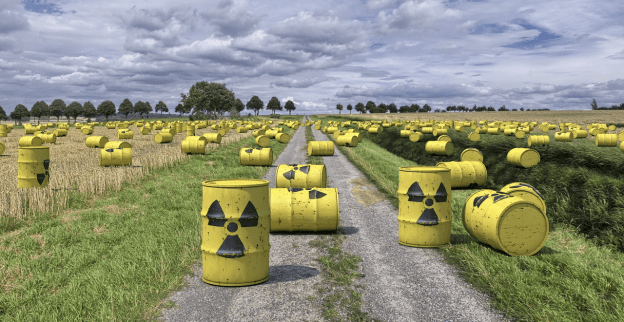
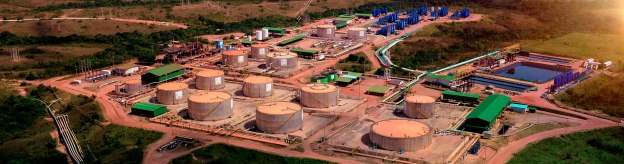
A proposal to take in more out-of-state waste at a West Texas radioactive waste disposal site has encountered an unlikely argument against it: that it can harm the booming oil and gas industry.  Waste Control Specialists is asking state lawmakers for permission to take in more low-level radioactive waste — such as rags, syringes and protective clothing from nuclear plants or hospitals — from outside of Texas for disposal at its Andrews County facility near the Texas-New Mexico border.

Environmental groups have long opposed radioactive waste at the site, which they say could jeopardize groundwater.  Environmentalists at the hearing were joined by Tommy Taylor, director of oil and gas development for Fasken Oil and Ranch, which operates in Andrews County.  Quoting from a handbook of the International Atomic Energy Agency, Taylor said radioactive waste dumps should be sited away from “land with exportable minerals and energy resources.”  “Don’t put it in an oilfield,” he said. “The oil and gas resources of the Permian Basin are too important for the security of the state of Texas and the United States to put it at risk with storing spent fuel rod casks in this region.”

Spent fuel is not designated as low-level waste, but he said he worried that designation could change.  It’s unusual for a representative of an oil and gas company to publicly criticize at the Capitol another segment of the energy industry…

But If Waste Control Specialists becomes insolvent the state might have to take control of the facility.  The legislation poposed by Texas lawmakers lifts the cap on the amount of out-of-state, low-level waste the company can accept at the 8.9 million cubic feet-capacity site from 30 percent to 60 percent.  The company currently pays six Austin lobbyists as much as $240,000 to persuade lawmakers of the wisdom of its plans….Waste Control Specialists’ partnership with Orano USA, called Interim Storage Partners LLC, has asked the Nuclear Regulatory Commission for permission to accept used nuclear fuel — high-level waste — at the Andrews facility.  Waste Control Specialists, which already disposes of other kinds of radioactive waste at its site in Andrews County, has been trying to position itself as a short-term alternative to Yucca Mountain, the Nevada site long ago selected by the federal government for storage of radioactive waste. Yucca had been bedeviled by decades of political quarrels, even as radioactive waste has piled up at the country’s nuclear power plants.

Excerpt from Asher Price, Radioactive waste site seeks more out-of-state material, Statesman, Mar. 30, 2019

Who Bears the Costs of Technology? Lynas and Hazardous Waste from Rare Earths

Companies and governments around the world are anxiously watching the fate of a sprawling industrial facility 30 kilometers north of this city on the east coast of peninsular Malaysia.The 100-hectare Lynas Advanced Materials Plant (LAMP) produces 10% of the world’s output of rare earth oxides (REOs), minerals needed in technologies including mobile phones, hard drives, fiber optic cables, surgical lasers, and cruise missiles. Lynas, an Australian company, imports concentrated ores from mines on Mount Weld in Australia and refines them in Malaysia, where costs are lower; it sells REOs—which include cerium compounds, used in catalytic converters, and neodymium, critical to permanent magnets—to Japan, the United States, and other countries. The plant produced almost 18,000 tons of REOs in 2018.

Now, the LAMP faces closure, barely 7 years after it opened. Environmental groups have long opposed the storage on the site of slightly radioactive waste from the extraction process, and they found a sympathetic ear in a new government elected in May 2018. In December 2018, the government demanded that the facility ship its radioactive waste back to Australia if it wants to renew its operating license, which expires on 2 September. On 12 March 2019overnment task force to help organize the shipments was announced. But the company says exporting the more than 451,000 tons of residue by the deadline is “unachievable.”

 A shutdown would be “a significant event with a ripple effect,” says Ryan Castilloux, a metals and minerals analyst at Adamas Intelligence in Amsterdam. For one thing, the shutdown would strengthen China’s position as the dominant supplier of REOs, which many countries deem a strategic risk. Japan’s electric vehicle industry, for instance, would lose its main supplier of REOs for permanent magnets; “it would have to reestablish a relationship with China after almost a decade of friction” in the REO trade, Castilloux says…. “Although rare earth oxides production worldwide is only worth several billions of dollars, it is essential for industries worth trillions,” Castilloux says.

Rare earth deposits themselves are not scare..Refining them takes lots of corrosive chemicals and generates huge amounts of residue. China was long the sole supplier; when it reduced exports in 2010, citing environmental concerns, prices jumped as much as 26-fold and major consumers scrambled for alternate sources. Lynas has become a “flagship” of REO production outside China, Castilloux says. The United States and Myanmar mine REEs as well, but they are processed in China, which today produces about 89% of the global REO output…

But in Malaysia, the waste has raised red flags. At the LAMP, concentrated ores are roasted with sulfuric acid to dissolve the rare earths and then diluted with water in a process called water leach purification, leaving a moist, pastelike residue. By September 2018, the LAMP had already produced 1.5 million tons of residue; because the ores contain thorium and uranium, almost 30% of it is slightly radioactive.  Some REO facilities elsewhere have built permanent, secure facilities to store such waste, says Julie Klinger, a geographer and expert in REO mining at Boston University; others are secretive about what they do with it.  Radioactivity isn’t the only risk…heavy metals as ickel, chromium, lead, and mercury could contaminate groundwater.

Excerpts by Yao-Hua, Radioactive waste standoff could slash high tech’s supply of rare earth elements, Science Magazine, Apr. 1, 2019

Assisted Evolution: Engineering Coral Reefs

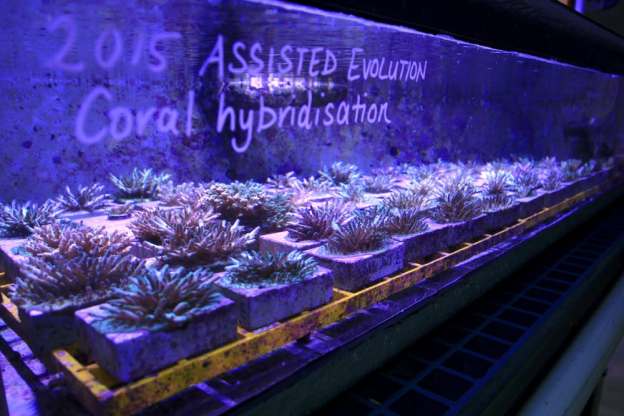
Imagine ecologists cultivating whole new breeds of trees to restock a devastated wilderness…. Coral conservation has traditionally focused on minimizing damage from insults such as water pollution, invasive starfish, and destructive fishing or tourism. In the Caribbean, some conservationists have worked to “replant” damaged coral. But Gates and Van Oppen [two scientists]  have something more intrusive in mind. They want to try to alter the genetics of coral or the microbes that live on it. They dubb the effort “assisted evolution.”

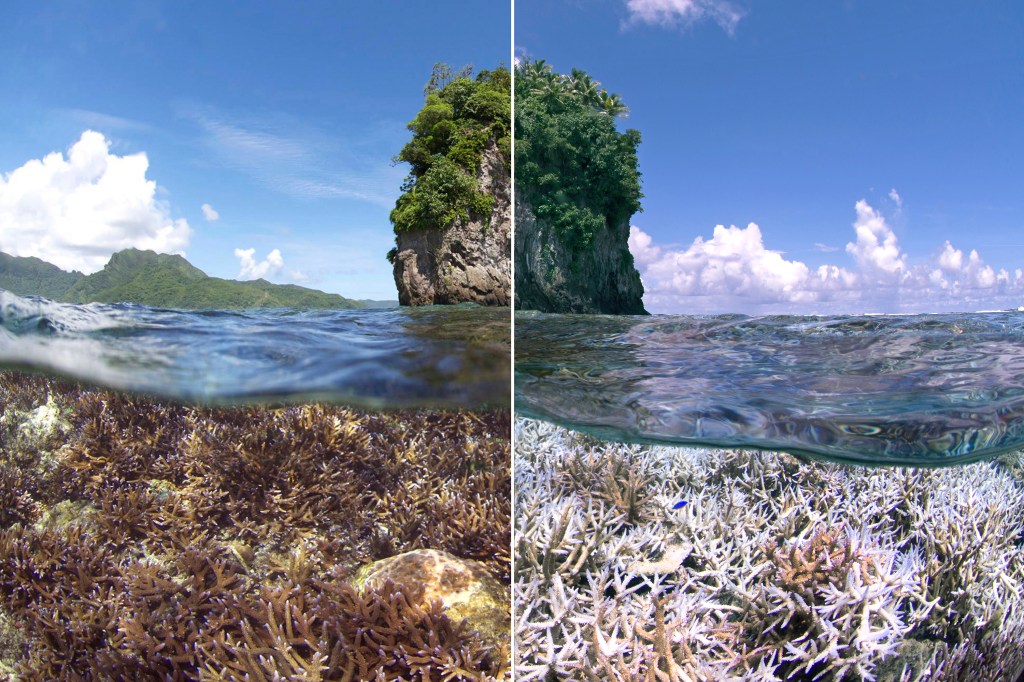
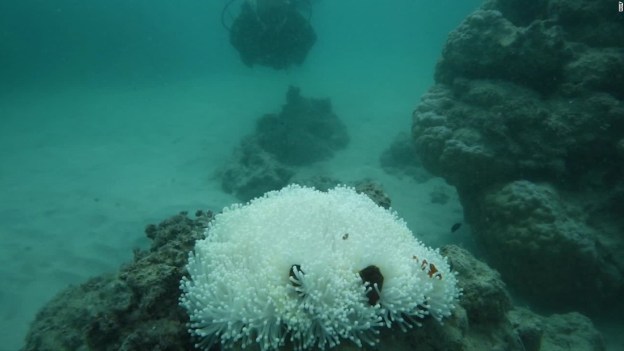
Coral’s most remarkable characteristic—being an animal that is part plant—is also its Achilles’ heel in a hotter world. Normally, coral polyps—the individual coral organisms, which resemble a sea anemone the size of a pinhead—live in harmony with their algal partners, which help feed the polyps and give corals their bright colors. But during heat waves, the relationship sours. Overheated polyps perceive the algae as an irritant and eject them like unwanted squatters. The coral is left bleached, bone-white and starving. If the heat persists, the coral won’t take in new algae and can die.  The bond between coral and algae is complicated, however, and still not fully understood. Just 25 years ago, for example, researchers believed that coral housed just one variety of symbiotic algae. Now, they have identified hundreds. And they are just beginning to examine the role played by the coral’s microbiome, the menagerie of bacteria that inhabit a coral polyp.

Coral bleaching right.

But the complexity also offers multiple paths for scientists trying to forge a less fragile bond between coral and algae. Today, four major lines of research exist: One involves cross-breeding corals to create heat-tolerant varieties, either by mixing strains within a species or by crossing two species that would not normally interbreed. The second enlists genetic engineering techniques to tweak coral or algae. A third tries to rapidly evolve hardier strains of coral and algae by rearing them for generations in overheated lab conditions. A fourth approach, the newest, seeks to manipulate the coral’s microbiome…

In 2018, Cleves [scientist] became the first to report successfully using the CRISPR-Cas9 gene-editing tool on coral. CRISPR is often touted as a method for making genetically modified species. But Cleves says he isn’t interested in creating new kinds of coral. Rather, he sees CRISPR as a tool for deciphering the inner workings of coral DNA by knocking out, or disabling, genes one by one. He hopes to identify genes that might serve as “master switches” controlling how coral copes with heat and stress—knowledge that could help researchers quickly identify corals in the wild or in the laboratory that are already adapted to heat.

Either way, such efforts to re-engineer coral reefs make people such as David Wachenfeld, chief scientist for the Great Barrier Reef Marine Park Authority here, uneasy. The authority is supposed to protect the reef and regulate activities there. In the past, that meant a hands-off approach. Now, he concedes that “it is almost inconceivable that we’re not going to need these tools.” But, he adds, “That doesn’t mean I’m happy about any of this. This is crisis management.”

He ticks off a list of potential difficulties. Scientists focused on breeding heat-loving coral have to avoid weakening other key traits, such as coping with cold. Introducing a new coral on the scale needed to make a dent on a network of 2900 reefs spanning an area half the size of Texas is a daunting challenge. Even in its damaged state, the Great Barrier Reef still contains hundreds of millions of corals—enough to swamp the genetic impact of new coral species…

Could some kind of “super coral,” as some researchers have dubbed them, also run amok in delicate coral ecosystems.

Excerpts from  The Reef Builders, Science, Mar. 22, 2019

Gummy Squirrels v. Cobalt: Mining the Seabed for Real


Sometimes the sailors’ myths aren’t far off: The deep ocean really is filled with treasure and creatures most strange. For decades, one treasure—potato-size nodules rich in valuable metals that sit on the dark abyssal floor—has lured big-thinking entrepreneurs, while defying their engineers. But that could change April 2019 with the first deep-sea test of a bus-size machine designed to vacuum up these nodules.

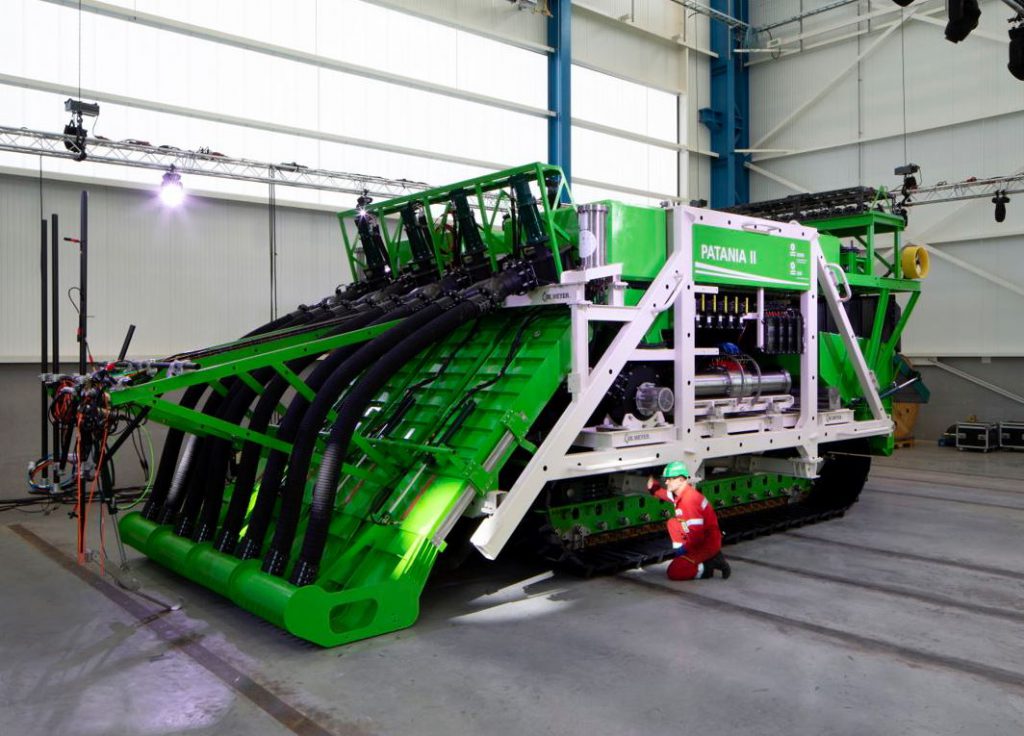
The trial, run by Global Sea Mineral Resources (GSR), a subsidiary of the Belgian dredging giant DEME Group, will take place in the international waters of the Clarion-Clipperton Zone (CCZ), a nodule-rich area the width of the continental United States between Mexico and Hawaii. The Patania II collector, tethered to a ship more than 4 kilometers overhead, will attempt to suck up these nodules through four vacuums as it mows back and forth along a 400-meter-long strip.

Patantia Vessel for Deep Sea Mining by DEME

Ecologists worried about the effect of the treasure hunt on the fragile deep-sea organisms living among and beyond the nodules should get some answers, too. An independent group of scientists on the German R/V Sonne will accompany GSR’s vessel to monitor the effect of the Patania II’s traverses. The European-funded effort, called MiningImpact2, will inform regulations under development for seafloor mining,…

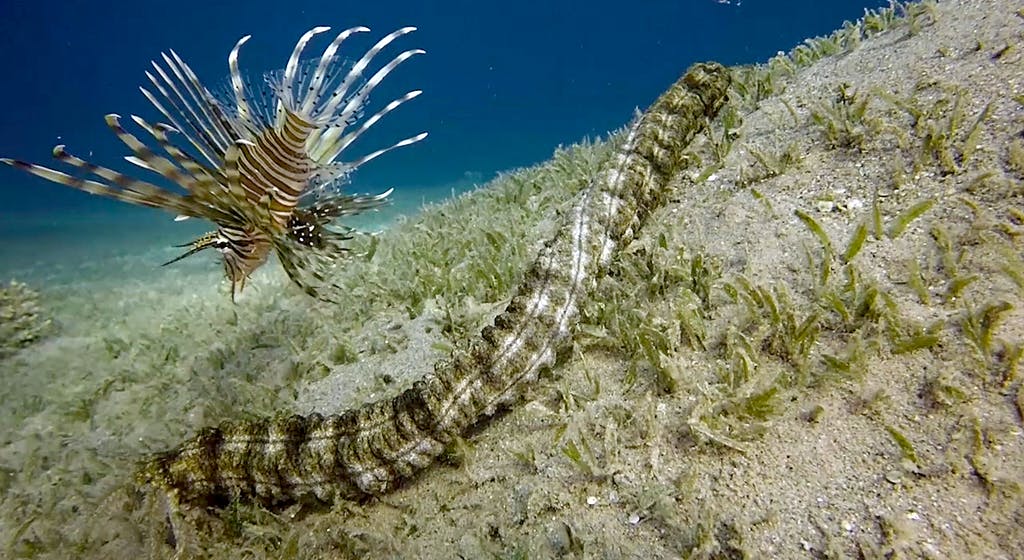
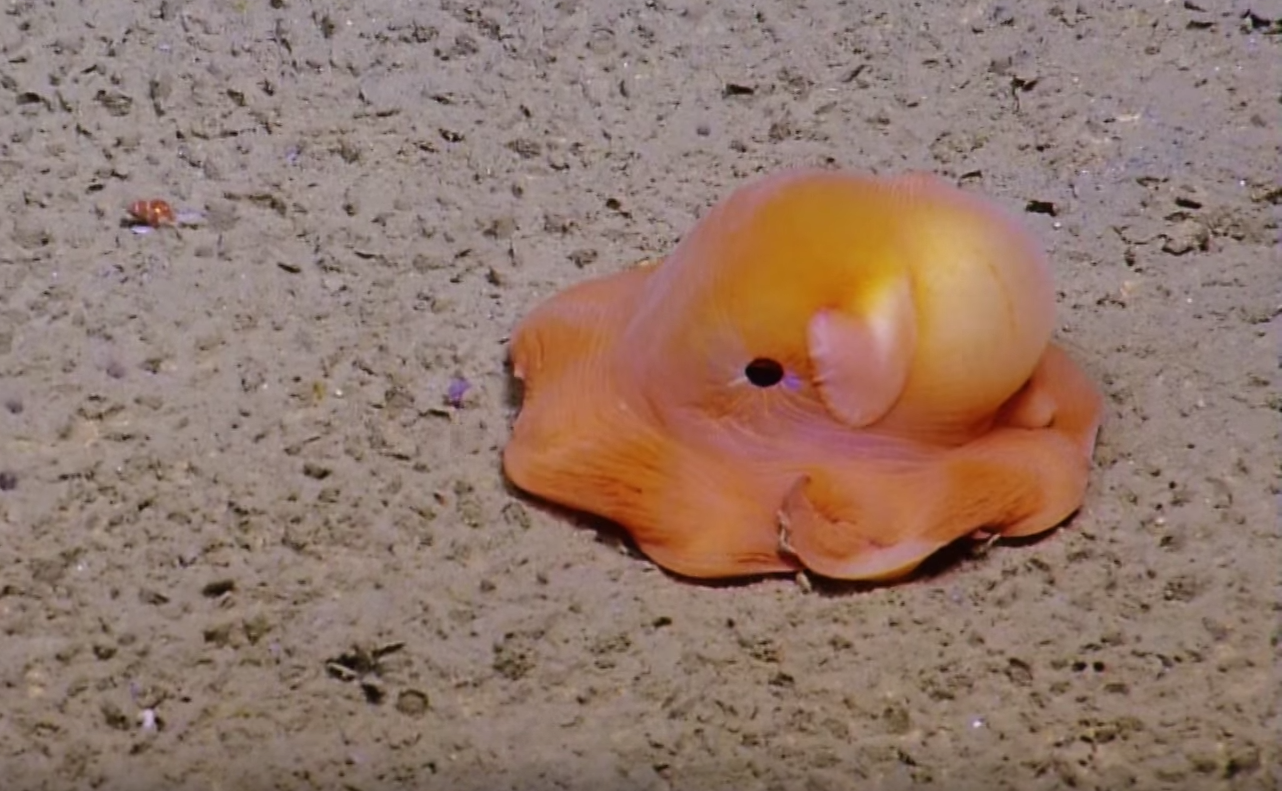
The nodules are abundant, and they are rich in cobalt, a costly metal important for many electronics that is now mined in the forests of the Democratic Republic of the Congo, a conflict zone…Ideal for nodule formation, the CCZ is estimated to contain some 27 billion metric tons of the ore. But its abyssal plain is also a garden of exotic life forms. Craig Smith, a benthic ecologist at the University of Hawaii in Honolulu, has helped lead biological surveys in the CCZ that, in one case, revealed 330 species living in just 30 square kilometers, more than two-thirds of them new to science. The CCZ’s inhabitants include a giant squid worm,  green-yellow sea cucumbers that researchers called “gummy squirrels,” and a greater variety of bristle worms than ever reported before.

gummy squirrel on seabed

Mining could leave a lasting imprint on these ecosystems. In 2015, MiningImpact scientists visited the site of a 1980s experiment off Peru in which a small sledge was pulled along the bottom to simulate nodule harvesting. Three decades later, “It looked like the disturbance had taken place yesterday,” says Andrea Koschinsky… Many of the species in the deep seabed, such as corals and sponges, live right on the nodules. “They will be sucked up and are gone. You can’t go back.”Such concerns make many environmentalists wary of opening any of the deep sea to mining…

For one thing, the legal framework for mining in international waters is uncertain. Although the United Nations’s International Seabed Authority has granted contracts for exploration, it is still drafting rules that will govern commercial operations and set limits for environmental damage. The rules are unlikely to be final before 2021…

These sensors will focus on the plume of sediment the collector kicks up. The waters of the CCZ are some of the clearest in the world, and scientists have long feared that mining could spread a vast blanket of silt, hurting life far outside the mining area. Recent experiments, however, suggest most of the silt particles will clump together and fall out within a kilometer or two, Koschinsky says. But a film of finer nanoparticles might spread farther.

Excerpts from Scheme to Mine the Abyss Gets Sea Tria, Science,  Mar. 15, 2019

Facebook Denizens Unite! the right to privacy and big tech

The European Union’s (EU) approach to regulating the big tech companies draws on its members’ cultures tend to protect individual privacy. The other uses the eu’s legal powers to boost competition.  The first leads to the assertion that you have sovereignty over data about you: you should have the right to access them, amend them and determine who can use them. This is the essence of the General Data Protection Regulation (GDPR), whose principles are already being copied by many countries across the world. The next step is to allow interoperability between services, so that users can easily switch between providers, shifting to firms that offer better financial terms or treat customers more ethically. (Imagine if you could move all your friends and posts to Acebook, a firm with higher privacy standards than Facebook and which gave you a cut of its advertising revenues.)

Europe’s second principle is that firms cannot lock out competition. That means equal treatment for rivals who use their platforms. The EU has blocked Google from competing unfairly with shopping sites that appear in its search results or with rival browsers that use its Android operating system. A German proposal says that a dominant firm must share bulk, anonymised data with competitors, so that the economy can function properly instead of being ruled by a few data-hoarding giants. (For example, all transport firms should have access to Uber’s information about traffic patterns.) Germany has changed its laws to stop tech giants buying up scores of startups that might one day pose a threat.

Ms Vestager has explained, popular services like Facebook use their customers as part of the “production machinery”. …The logical step beyond limiting the accrual of data is demanding their disbursement. If tech companies are dominant by virtue of their data troves, competition authorities working with privacy regulators may feel justified in demanding they share those data, either with the people who generate them or with other companies in the market. That could whittle away a big chunk of what makes big tech so valuable, both because Europe is a large market, and because regulators elsewhere may see Europe’s actions as a model to copy. It could also open up new paths to innovation.

In recent decades, American antitrust policy has been dominated by free-marketeers of the so-called Chicago School, deeply sceptical of the government’s role in any but the most egregious cases. Dominant firms are frequently left unmolested in the belief they will soon lose their perch anyway…By contrast, “Europe is philosophically more sceptical of firms that have market power.” ..

Tech lobbyists in Brussels worry that Ms Vestager agrees with those who believe that their data empires make Google and its like natural monopolies, in that no one else can replicate Google’s knowledge of what users have searched for, or Amazon’s of what they have bought. She sent shivers through the business in January when she compared such companies to water and electricity utilities, which because of their irreproducible networks of pipes and power lines are stringently regulated….

The idea is for consumers to be able to move data about their Google searches, Amazon purchasing history or Uber rides to a rival service. So, for example, social-media users could post messages to Facebook from other platforms with approaches to privacy that they prefer…

Excerpts from Why Big Tech Should Fear Europe, Economist, Mar. 3, 2019; The Power of Privacy, Economist, Mar. 3, 2019

Biodiversity and Respect for Human Rights

The instinctive response of many environmentalists  is to to fence off protected areas as rapidly and extensively as possible. That thought certainly dominates discussions of the Convention on Biological Diversity, the main relevant international treaty. An eight-year-old addendum to the pact calls for 17% of the world’s land surface and 10% of the ocean’s water column (that is, the water under 10% of the ocean’s surface) to be protected by 2020. Currently, those figures are 15% and 6%. Campaigners want the next set of targets, now under discussion, to aim for 30% by 2030—and even 50% by 2050. This last goal, biogeographers estimate, would preserve 85% of life’s richness in the long run.  As rallying cries go, “Nature needs half” has a ring to it, but not one that sounds so tuneful in the poor countries where much of the rhetorically required half will have to be found. Many people in such places already feel Cornered by Protected Areas.” (See also Biodiversity and Human Rights)

James Watson, chief scientist at the Wildlife Conservation Society (wcs), another American charity, has an additional worry about focusing on the fence-it-off approach. If you care about the presence of species rather than the absence of humans, he warns, “‘nature needs half’ could be a catastrophe—if you get the wrong half.” Many terrestrial protected areas are places that are mountainous or desert or both. Expanding them may not translate into saving more species. Moreover, in 2009 Lucas Joppa and Alexander Pfaff, both then at Duke University in North Carolina, showed that protected areas disproportionately occupy land that could well be fine even had it been left unprotected: agriculture-unfriendly slopes, areas remote from transport links or human settlements, and so on. Cordoning off more such places may have little practical effect.

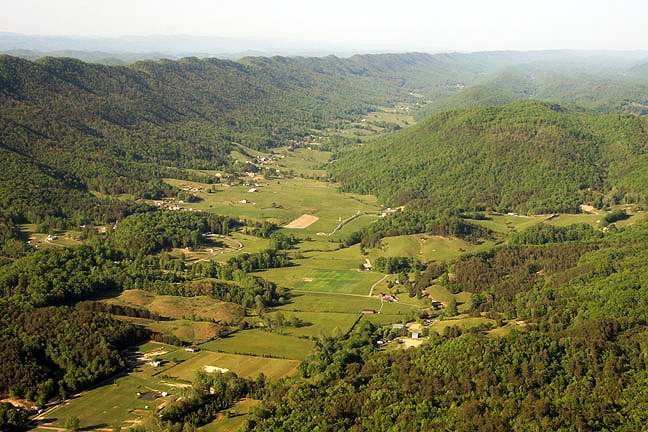
Southern Appalachians, Virginia. image from wikipedia

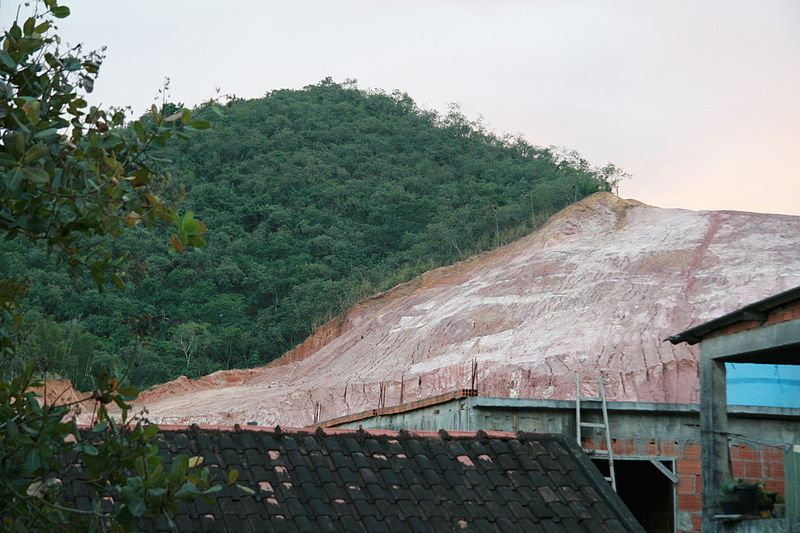
 In the United States it is the underprotected southern Appalachians, in the south-east of the country, that harbour the main biodiversity hotspots. The largest patches of ring-fenced wilderness, however, sit in the spectacular but barren mountain ranges of the west and north-west. In Brazil, the world’s most speciose country, the principal hotspots are not, as might naively be assumed, in the vast expanse of the Amazon basin, but rather in the few remaining patches of Atlantic rainforest that hug the south-eastern coast.

Deforestation Atlantic Rainforest in Rio de Janeiro. Image from wikipedia

Nor is speciosity the only consideration. So is risk-spreading. A team from the University of Queensland, in Australia, led by Ove Hoegh-Guldberg, has used a piece of financial mathematics called modern portfolio theory to select 50 coral reefs around the world as suitable, collectively, for preservation. Just as asset managers pick uncorrelated stocks and bonds in order to spread risk, Dr Hoegh-Guldberg and his colleagues picked reefs that have different exposures to rising water temperatures, wave damage from cyclones and so on. The resulting portfolio includes reefs in northern Sumatra and the southern Red Sea that have not previously registered on conservationists’ radar screens…

Another common finding—counterintuitive to those who take the “fence-it-all-off” approach—is that a mixed economy of conservation and exploitation can work. For example, rates of deforestation in a partly protected region of Peru, the Alto Mayo, declined by 78% between 2011 and 2017, even as coffee production increased from 20 tonnes a year to 500 tonnes.

Environmental groups can also draw on a growing body of academic research into the effective stewardship of particular species. For too long, says William Sutherland, of Cambridge University, conservationists have relied on gut feelings. Fed up with his fellow practitioners’ confident but unsubstantiated claims about their methods, and inspired by the idea of “evidence-based medicine”, he launched, in 2004, an online repository of relevant peer-reviewed literature called Conservation Evidence.  Today this repository contains more than 5,400 summaries of documented interventions. These are rated for effectiveness, certainty and harms. Want to conserve bird life threatened by farming, for example? The repository lists 27 interventions, ranging from leaving a mixture of seed for wild birds to peck (highly beneficial, based on 41 studies of various species in different countries) to marking bird nests during harvest (likely to be harmful or ineffective, based on a single study of lapwing in the Netherlands). The book version of their compendium, “What Works in Conservation”, runs to 662 pages. It has been downloaded 35,000 times.

Excerpts from How to preserve nature on a tight budget, Economist, Feb. 9, 2919

The Unquenchable Thirst for Oil

Demand for oil is rising and the energy industry, in America and globally, is planning multi-trillion-dollar investments to satisfy it. No firm embodies this strategy better than ExxonMobil, the giant that rivals admire and green activists love to hate. As our briefing explains, it plans to pump 25% more oil and gas in 2025 than in 2017. If the rest of the industry pursues even modest growth, the consequence for the climate could be disastrous.

To date politicians, particularly in America, have been reluctant to legislate for bold restrictions on carbon. That is in part thanks to ExxonMobil’s attempts to obstruct efforts to mitigate climate change. …ExxonMobil’s policies on climate change remain marred by inconsistencies. In October the company said it was giving $1m, spread over two years, to a group advocating a carbon tax. ExxonMobil maintains that a carbon tax is a transparent and fair way to limit emissions. But the sum is less than a tenth of its federal lobbying spending in 2018. Moreover, the carbon tax it favours would include protection for oil companies from climate lawsuits.

The firm is also working to reduce leaks of methane, a powerful greenhouse gas, from its wells, pipelines and refineries. However the American Petroleum Institute  (API) has been a main force urging Mr Trump’s administration to ease regulations on methane emissions. The API’s other efforts include lobbying against incentives for electric cars.  ExxonMobil is not alone in trying to sway the climate debate in its direction either. Shell, Total and BP are all members of the API. Marathon Petroleum, a refiner, reportedly campaigned to ease Barack Obama’s fuel-economy standards. BP spent $13m to help block a proposal for a carbon tax in Washington state in November. The Western States Petroleum Association, whose membership includes ExxonMobil and Shell, also lobbied to defeat that tax.

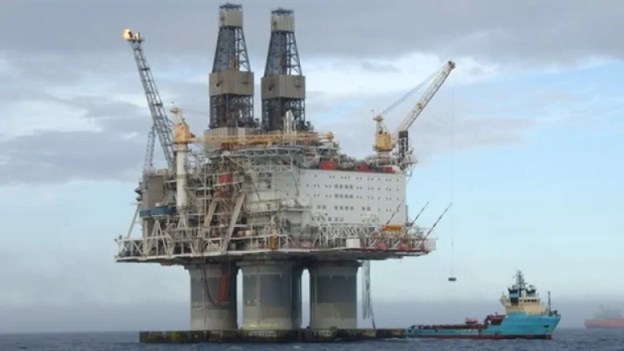
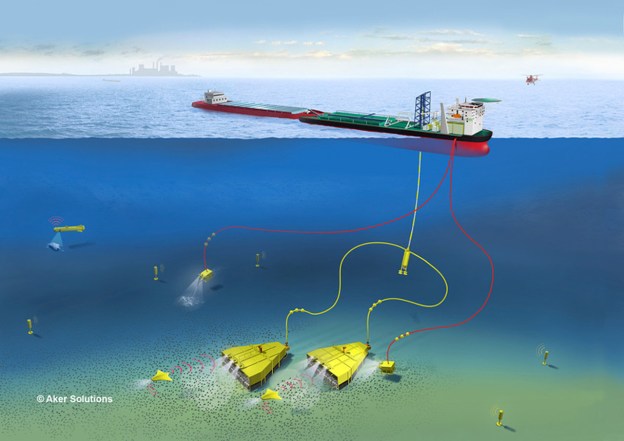
While oil companies plan to grow, trends in cleaner energy are moving in the wrong direction. Investments in renewables fell as a share of the total in 2017 for the first time in three years, as spending on oil and gas climbed. In 2018 carbon emissions in America grew by 3.4% as economic activity picked up, even as coal fell out of favour. Mr Woods maintains that any change to the energy supply will be gradual. “I don’t think people can readily understand just how large the energy system is, and the size of that energy system will take time to evolve,” he argues… Out at sea, ExxonMobil is working to increase production. By next year an underwater web of pipes will connect wells on the seabed to a vast vessel. From there the oil will be transferred to smaller tankers, then to the vast infrastructure that can refine and transport it until it reaches consumers in the form of fertiliser, plastic bottles, polyester or, most likely, petrol. From beneath the ocean floor to your car’s tank, for about the price of a gallon of milk.

Excerpts from  Crude Awakening, Economist,  Feb. 9, 2019; Bigger Oil, Economist,  Feb. 9, 2019

An Umbrella for the Sun: Geo-Engineering

The idea of cooling the climate with stratospheric sunshades that would shield the planet from the sun’s warming rays moved up the international agenda in March 2019, with mixed results. On the one hand, new research suggested that it is theoretically possible to fine-tune such a shield without some of its potentially damaging consequences. Publication of this work coincided with a proposal at the biennial UN Environment Assembly (UNEA), held in Nairobi, Kenya, for an expert review of such geoengineering methods. This was the highest-level discussion of the topic so far. On the other hand, the more than 170 nations involved could not arrive at a consensus. In a fitting illustration of the heat surrounding geoengineering, the proposal was withdrawn at the eleventh hour.

Under the Paris Agreement, governments have pledged to keep average global warming to “well below” 2°C above pre-industrial levels and to try to limit maximum warming to 1.5°C. Many see these targets as wishful thinking: the planet is already roughly 1°C warmer than it was in pre-industrial times, global greenhouse gas emissions are still on the rise and national pledges to cut them fall short of what is needed to hit the 2°C target, let alone 1.5°C.

Faced with this, some think there is a need to turn down the global thermostat using geoengineering. This encompasses a range of possibilities, including technologies that suck carbon dioxide out of the atmosphere and others that block incoming solar energy….  The unea resolution was tabled by Switzerland, and by the start of the week it had received support from most governments. It called for an expert review of the science of geoengineering,…Among the most controversial but also effective and affordable geoengineering options are planetary sunshades. By using high-flying aircraft, for instance, to spray a fine mist of mineral or man-made particles into the upper stratosphere, a portion of the sun’s incoming energy could be bounced back out into space before it gets a chance to warm the planet.  But there are challenges. Stratospheric particles eventually fall back to Earth in rain, so the effect is short-lived. A sunshade would need to be continually resupplied, which is one reason for an international governance framework. If a sunshade were allowed to dissipate while atmospheric CO2 concentrations remained high, global temperatures would rapidly shoot up, with devastating consequences in some regions of the world.  Another problem is the effect of solar geoengineering on the water cycle. Over the past decade, several studies have suggested that sunshades could disproportionately affect rainfall, bringing drought to some regions. But that argument may be oversimplified, according to the new study published in Nature Climate Change .

Position of Sunshade Relative to Earth, Moon and Sun from
http://mycgenie.seao2.info/pubs/Irvine_and_Ridgwell_2009.pdf

Switzerland’s proposal to study geo-engineering was blocked at the UNEA…Several delegates told the Economist that America and Saudi Arabia opposed the Swiss proposal to review geoengineering, preferring the issue to be assessed by the Intergovernmental Panel on Climate Change (IPCC), which is due to include something about the technologies in its next big report, expected in 2021. ..But the Swiss proposal was for a more comprehensive appraisal and one that would be delivered more quickly, by August 2020…. Indeed, there are concerns that some geoengineering methods could be unilaterally deployed by one or more nations, to the possible detriment of others.  The Americans, some said, did not appear to want to make room for conversations, let alone make decisions, about a framework for geoengineering that could restrict their future options.

Excerpts from  Sunny with Overcast Features: Geoengineering, Economist, Mar. 16, 2019

Islands are not Disappearing. They Just Suffer

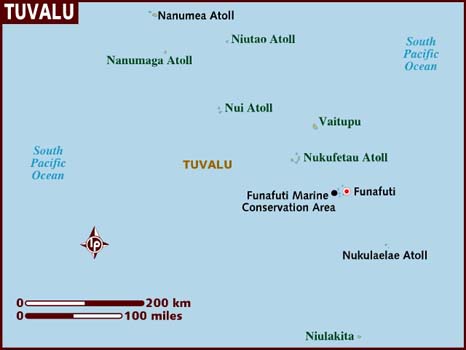
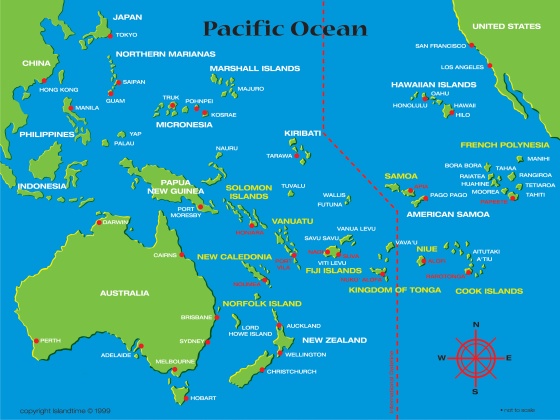
Every so often comes news of islands just up and disappearing. Eight in Micronesia. Five in the Solomon Islands. One off the coast of Hokkaido, Japan. Yet there’s also been a crop of studies and researchers, led by coastal geomorphologist Paul Kench from Simon Fraser University, saying that island nations such as Tuvalu (long a poster child for the existential threat of sea level rise) not only aren’t disappearing—they’re actually growing. So how do we make sense of this? Are the low-lying islands we know today doomed? Or are we seeing some other process at work? The answer is that a million complicated things are happening all at once, and it provides a window into how hard it is to talk about what’s currently happening to the planet….

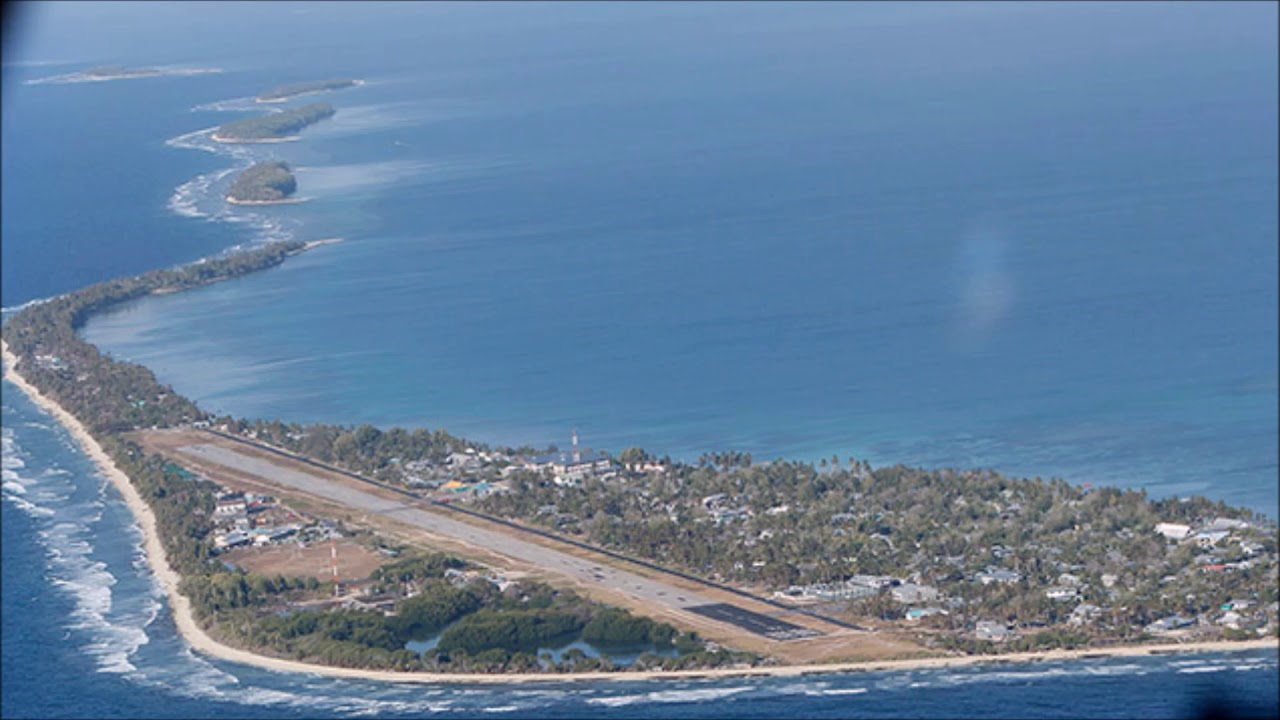
Tuvalu not sinking. Growing.

One big culprit that comes up when we talk about disappearing islands is sea level rise, of course. The Sea level was, for a few thousand years up to around the late 19th century, pretty constant, on average. Since the late 1800s, it’s been steadily rising. On average.We keep saying “on average” because sea level changes are not the same in all places. In fact, in a lot of places, the sea level is dropping.… The single largest cause of global sea level rise, right now, isn’t melting glaciers, but the phenomenon called thermal expansion.  Thermal expansion is the tendency of matter, including sea water, to change its volume in response to a change in temperature… Global temperatures have risen by about 1.4 degrees Fahrenheit since 1880, with most of that in the last half-century. And that means the water already in the ocean is getting bigger…

Yes, all of this is going to have a major impact on any low-lying land the world over. But the researchers I talked to for this story don’t necessarily think that islands are disappearing right now at a higher rate than they were in past centuries. Of the independent island nations most at risk of disappearing, Tuvalu is near the top of the list. But a 2018 Paul Kench study of all 101 islands—all small and low-lying—that make up Tuvalu reported that there’s no consistency in what is happening there at all. About three quarters of the islands actually grew in size, to one quarter that shrank, over the past 40 years. Overall, during this time period, Tuvalu grew almost three percent. This is not to say that Tuvalu isn’t in a period of intense crisis right now, because the country certainly is. But disappearing—which is a very specific thing—might not be the cause of that crisis, at least not today…. [It is imporant] to  realize that the impacts of the direction that global climate is headed in are simply not going to be the same everywhere.

Paul Kench’s work—which ran counter to the narrative that the days of the low-lying, habitable islands that we know are gone—angered some, who see it as unhelpful to the very real plight of Tuvalu and other South Pacific island nations. But Kench notes that the mere disappearance of some islands shouldn’t be the whole story. Those harsher and more frequent storms send waves of salt water inland—sometimes over entire islands, sometimes into fields, or into fragile island freshwater sources. Homes and infrastructure are at risk, as are the unusual plant, insect, and bird species found on small islands and nowhere else. Scientists are already exploring simply moving endemic species to more stable islands.

Excerpts from DAN NOSOWITZ, How Alarming Is It That Islands Are Just Disappearing? Atlas Obscura, Mar. 2019

An Affordable and Risk Free Way to Kill: Drones

Armed drones have become ubiquitous in the Middle East, say Aniseh Bassiri Tabrizi and Justin Bronk of the Royal United Services Institute, a British think-tank, in a recent report. America has jealously guarded the export of such aircraft for fear that they might fall out of government hands, be turned on protesters or used against Israel. America has also been constrained by the Missile Technology Control Regime, an arms-control agreement signed by 35 countries, including Russia, that restricts the transfer of particularly capable missiles and drones (both rely on the same underlying technology).

China…has sold missile-toting drones to Egypt, Jordan, Iraq, Saudi Arabia and the United Arab Emirates (UAE). All are American security partners…. Other countries, such as Israel, Turkey and Iran, have filled the gap with their own models.  America wants to muscle its way back into the market. In April 2018 the Trump administration began loosening export rules to let countries buy armed drones directly from defence companies rather than through official channels. Drones with “strike-enabling technology”, such as lasers to guide bombs to their targets, were reclassified as unarmed. American drones are costlier and require more paperwork than Chinese models, but are more capable. ..The flood of drones into the market is already making an impact—sometimes literally. Ms Tabrizi and Mr Bronk say some Middle Eastern customers see drones as an “affordable and risk-free” way to strike across borders… 

Drone Bayraktar made by Turkey

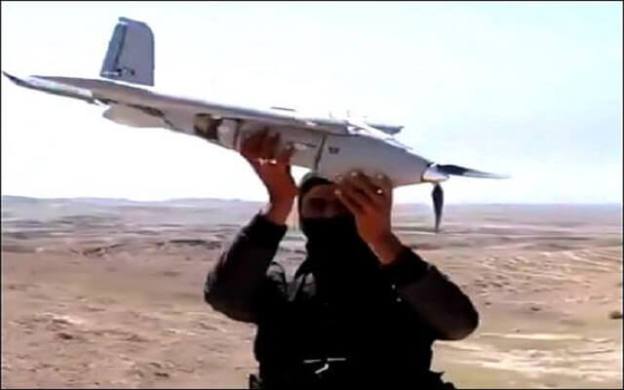
Non-state actors are unwilling to be left out of the party. The jihadists of Islamic State often used drones in Iraq and Syria. Hizbullah used drones when it hit 23 fighters linked to al-Qaeda in Syria in 2014. The Houthi drone that bombed Al-Anad looked a lot like an Iranian model. Last year the Houthis sent a similar one more than 100km (60 miles) into Saudi Arabia before it was shot down. ..

Excerpts from Predator Pricing: Weapon Sales, Economist,  Mar. 9, 2019

How to Make Broken Ships Disappear: pollution

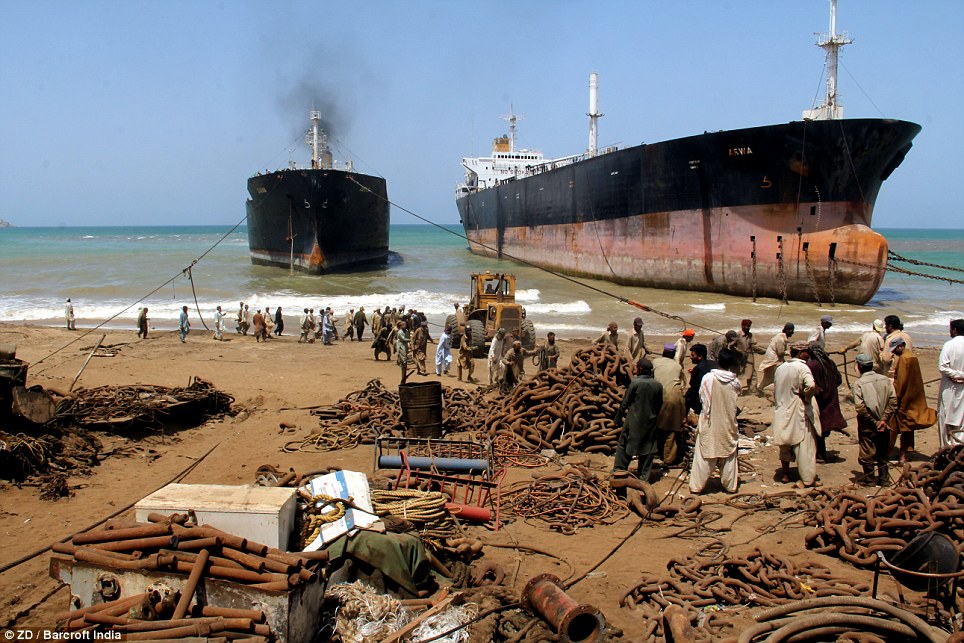
How do you make a 10,000-tonne container ship disappear? At Alang, a small town in Gujarat, on the western coast of India  is the world’s biggest ship-breaking town. Almost a third of all retired vessels—at least 200 each year—are sent to be broken up here, at over 100 different yards stretching along 10km of sand. The industry employs some 20,000 people, almost all men who migrate from the poorer states of India’s northern Hindi-speaking belt. Taxes paid by breakers generate huge sums for the state government. Yet it is a dangerous industry for its workers and a filthy one in environmental terms.

Of 744 ships that were pulled apart worldwide last year, 518 were dismantled on beaches. Only 226 were processed “off the beach” at industrial sites designed for the purpose, according to the Shipbreaking Platform, an ngo which campaigns against beach-breaking. The majority of big shipping firms use beaches, except a tiny few such as Hapag Lloyd of Germany and Boskalis of the Netherlands.

A typical operation involves a ship being beached at low tide. Once her fittings and other resaleable parts are removed, hundreds of workers with gas blowtorches clamber over the vessel’s hull, cutting it into huge steel blocks. These are then dropped onto the beach, where they are cut up again before being sold, then rerolled for use in construction.

Apart from the danger of dropping tens of tonnes of steel from a great height, the method is immensely polluting. A review in 2015 by Litehauz, a Danish marine environmental consultancy, found that in the process of scrapping a 10,000-tonne ship at least 120 tonnes of steel becomes molten and is lost in the sea. Levels of mercury and lead, as well as oil, in Alang’s water are at least 100 times higher than at other beaches. Workers must handle asbestos and dangerous chemicals. Accidents are common. Last year 14 workers died at Alang.Alang is just one of many ship-breaking centres in South Asia. Among the others are beaches in Bangladesh (where workers reportedly include children) and Pakistan. Last year the subcontinent recycled around 90% of the world’s ships by tonnage.

Ship-breaking is concentrated in the region for three reasons. Prices for scrap steel are higher than elsewhere (90% of a ship is typically steel), thanks to demand for rerolled steel for construction. Labour costs are lower than at yards in Europe, America or Turkey (workers at Alang make up to 800 rupees, or $11, per day, and usually less) and safety and environmental regulations are much weaker. Most sellers scrap their ships in South Asia because they get better prices for them.

 Shipowners, in particular Maersk, a Danish company which is the world’s biggest shipper, are preparing to comply with them…At the Baijnath Melaram shipyard a huge crane barge sits in the water next to a stretch of “impermeable” concrete. “We used to have to winch the blocks up the beach,” says Siddharth Jain, the firm’s business manager. Now, the crane lifts blocks of steel down from the ships directly to the concrete, so that they need never touch the sand. In contrast to the yards nearby, where men in simple work clothes and no safety goggles operate blowtorches, the workers scuttling around Baijnath Melaram wear boiler suits, face masks and helmets.

Blocks of steel from recycled ships

The changes are largely down to Maersk… Around 70 more are upgrading in order to meet standards set by the Hong Kong International Convention for the Safe and Environmentally Sound Recycling of Ships, an unratified treaty on ship recycling.  Maersk’s campaign is in response to new regulations in force since December 31st 2018 that require all European-flagged vessels to be recycled at shipyards approved by Brussels. Just over a third of the world’s ships fall in this category. Maersk, whose fleet is roughly 40% European-flagged, hopes that the best yards at Alang will be able to comply with the new rules. Two Indian yards have already been audited for the European certification; 11 more have applied. “If we sustain that momentum, in five, six or seven years all of Alang could be really responsible,” says John Kornerup Bang, Maersk’s sustainability chief.

But on January 30, 2019 the eu announced that the Indian yards audited will not make the list,… Ingvild Jenssen of the Shipbreaking Platform says that even Alang’s best yards are not clean enough. She argues that Maersk’s efforts merely “greenwash” a model that needs to change completely…. Not clean enough for Europe; but too expensive to compete with breakers in Bangladesh or Pakistan which have not changed at all. If that happens, the industry in Alang—and the jobs and revenue it generates—could disappear almost as quickly as the ships it dismantles.

Gadani, Pakistan

Excerpt from HIgh by the Beach: Ship Recycling, Economist, Mar. 9, 2019

The Secret Powers of Saudi Arabia — Murder not Included

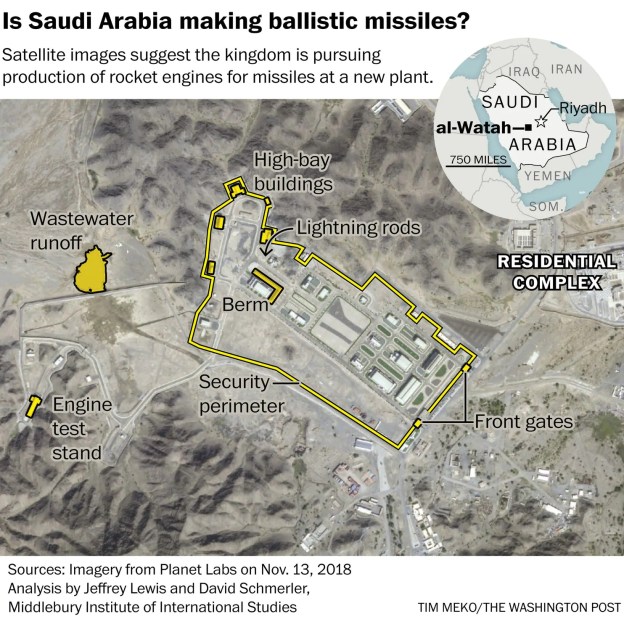
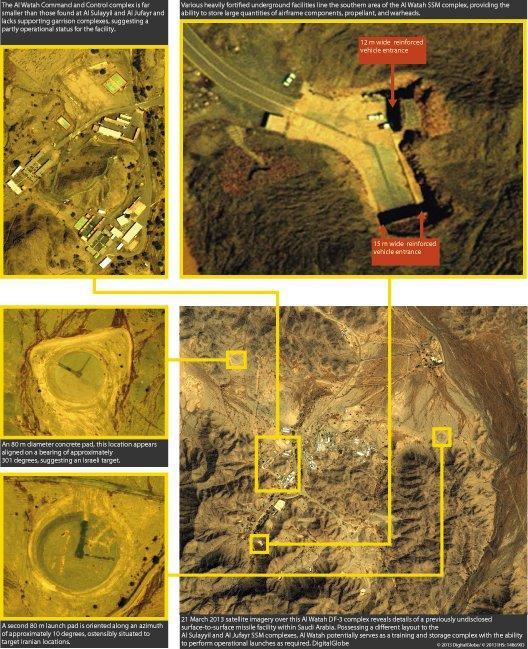
In 2016 Muhammad bin Salman, Saudi Arabia’s crown prince and de facto ruler, announced the latest stage of “Saudisation”—the replacement of foreign workers with Saudi ones. It now appears the policy does not stop at swapping out bankers and bakers, but extends to ballistic missiles.  Satellite photos analysed by researchers from the Middlebury Institute of International Studies, and reported by the Washington Post, appear to show that Saudi Arabia has been building a factory for rocket engines, at an existing missile base in al-Watah, south-west of Riyadh. It seems to be configured for solid-fuel rockets, which can be launched more quickly than liquid-fuelled ones….he rocket factory was “designed, equipped and constructed by an outside entity”. Saudi Arabia has “no capacity” for such a project. The facility, he notes, closely resembles a Chinese one in Lantian.

Saudi Arabia is no newcomer to missiles. Having watched Iran and Iraq fling them at each other during the 1980s, it bought a few dozen df-3 missiles from China in 1987. It came close to unleashing them after being struck by Iraqi Scud missiles during the Gulf war in 1991. In the 2000s it probably picked up a batch of newer, more accurate Chinese df-21s.

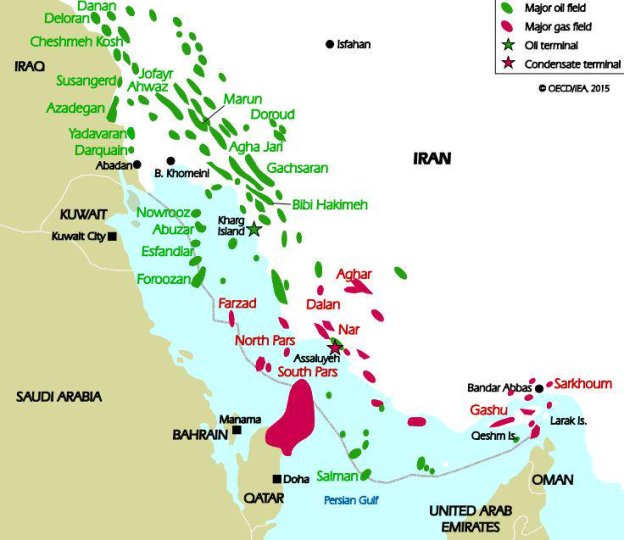
Iran, the kingdom’s arch-rival, has been honing its missile force despite Western opposition and un rebukes, conducting 135 test launches since 1990. On December 1st, 2018  it tested one thought capable of comfortably reaching any corner of Saudi soil….Nor is Iran the only concern. Hizbullah, a Lebanese militant group nurtured and armed by Iran, has a growing arsenal of missiles; some can already reach the north-western parts of Saudi Arabia. Israel is also armed to the teeth. Though Prince Muhammad is on good terms with the Jewish state, satellite images published in 2013 reportedly showed that one of the Saudi df-3 launching pads at al-Watah was set in the direction of Tel Aviv.

Because missiles are ideal delivery systems for nuclear weapons, news of the plant has also revived worries about Saudi Arabia’s atomic intentions…Without a doubt if Iran developed a nuclear bomb,” warned Prince Muhammad last March, “we will follow suit

So the Saudis may turn to other nuclear friends. Western diplomats and spooks have long been concerned that Pakistan, whose own nuclear programme was bankrolled by Saudi Arabia, might be a ready supplier of know-how, fuel or bombs. In 1999 Saudi Arabia’s then defence minister horrified American officials by touring Pakistan’s nuclear facilities and meeting A.Q. Khan, the scientist who sold nuclear technology to North Korea, Iran and Libya. Ties remain close. Prince Muhammad was due to agree on $14bn of investment in Pakistan during a visit to the country on February 16th.  2019. ….

Excerpts from Protection rocket Saudi Arabia’s missile race, Economist, Feb. 16, 2019

How Iranian Oil Escapes US Sanctions

 At least two tankers have ferried Iranian fuel oil to Asia in February 2019 despite U.S. sanctions against such shipments, according to a Reuters analysis of ship-tracking data and port information, as well as interviews with brokers and traders.  The shipments were loaded onto tankers with documents showing the fuel oil was Iraqi. But three Iraqi oil industry sources and Prakash Vakkayil, a manager at United Arab Emirates (UAE) shipping services firm Yacht International Co, said the papers were forged.  The people said they did not know who forged the documents, nor when.

“Some buyers…will want Iranian oil regardless of U.S. strategic objectives to deny Tehran oil revenue, and Iran will find a way to keep some volumes flowing,” said Peter Kiernan, lead energy analyst at the Economist Intelligence Unit.  While the United States has granted eight countries temporary waivers allowing limited purchases of Iranian crude oil, these exemptions do not cover products refined from crude, including fuel oil, mainly used to power the engines of large ships. Documents forwarded to Reuters by ship owners say a 300,000 tonne-supertanker, the Grace 1, took on fuel oil at Basra, Iraq, between Dec. 10 and 12, 2018. But Basra port loading schedules reviewed by Reuters do not list the Grace 1 as being in port during those dates.  One Iraqi industry source with knowledge of the port’s operations confirmed there were no records of the Grace 1 at Basra during this period. 

Grace 1 oil tanker

Reuters examined data from four ship-tracking information providers – Refinitiv, Kpler, IHS Markit and Vessel Finder – to locate the Grace 1 during that time. All four showed that the Grace 1 had its Automatic Identification System (AIS), or transponder, switched off between Nov. 30 and Dec. 14, 2018, meaning its location could not be tracked.  The Grace 1 then re-appeared in waters near Iran’s port of Bandar Assaluyeh, fully loaded, data showed. The cargo was transferred onto two smaller ships in UAE waters in January, from where one ship delivered fuel oil to Singapore in February 2019.  Shipping documents showed about 284,000 tonnes of fuel oil were transferred in the cargoes tracked by Reuters, worth about $120 million at current prices…

One of those vessels, the 130,000 tonne-capacity Kriti Island, offloaded fuel oil into a storage terminal in Singapore around Feb. 5 to 7. Reuters was unable to determine who purchased the fuel oil for storage in Singapore.  The Kriti Island is managed by Greece’s Avin International SA… Avin International’s Chief Executive Officer George Mylonas told Reuters. Mylonas confirmed the Kriti Island took on fuel oil from the Grace 1.There is no indication that Avin International knowingly shipped Iranian fuel oil. Mylonas said his firm had conducted all necessary due diligence to ensure the cargo’s legitimate origin….

Kriti Island oil tanker

Excerpts from Roslan Khasawneh et al, Exclusive: How Iran fuel oil exports beat U.S. sanctions in tanker odyssey to Asia, Reuters, Mar. 20, 2019

The Price of Banning Dirty Fuels for Ships

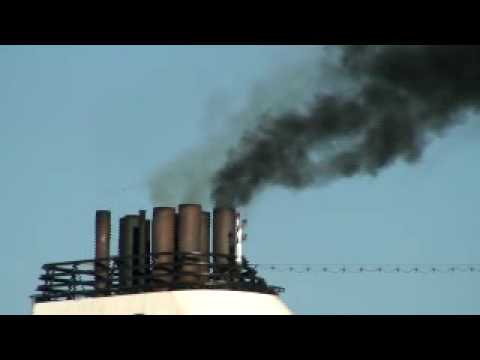
A strict sulfur limit for marine fuels is starting in 2020.  US refiners say they have been preparing for the International Maritime Organization’s 0.5% sulfur cap for a dozen years by making billions of dollars of investments to their plants. They also think US oil producers are well positioned to meet new global demand for lower-sulfur fuels.

Despite the industry’s confidence, Gulf Coast refiners are nevertheless skittish about one major wild card.  The January 1, 2020 implementation date comes right in the middle of President Donald Trump’s re-election campaign, and this White House has shown a particular sensitivity to pump prices and their impact on voters.  Trump administration sources told the Wall Street Journal in October that the White House was considering ways to delay the IMO’s 0.5% sulfur cap beyond the long-scheduled January 1, 2020, implementation date. The story alone sent the stock market value of five US refining companies down by a combined $11 billion – hence their skittishness.

Within weeks of the story, trade groups for refiners, oil and gas producers, LNG exporters and steelworkers created the Coalition for American Energy Security to educate White House officials and members of Congress about IMO 2020 and what US industries were already doing to prepare… “The American energy industry is ready to dominate the global market for these new fuels, and timely implementation is critical to achieving that objective.”  said Ken Spain, spokesman for the Coalition for American Energy Security..

Excerpts from Insight from Washington: US refiners worry about White House wild card as IMO 2020 nears, S&P Global The Barrel, Mar. 11, 2019

The Pristine Waters of Alaska and Big Oil: Exxon Valdez

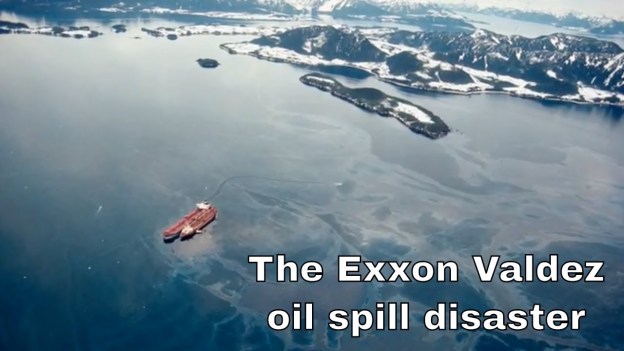
Thirty years ago this Sunday, at just after midnight on March 24, 1989, the Exxon Valdez supertanker ran aground in Prince William Sound off the south coast of Alaska. No-one was hurt, but the ship’s hull was ruptured, and of the 1.26m barrels of crude on board about 258,000 spilled into the water. The National Transportation Safety Board inquiry found that the causes of the accident included the failure of the ship’s master to provide a proper navigation watch “because of impairment from alcohol”, as well as inadequate personnel training and deficient management oversight.

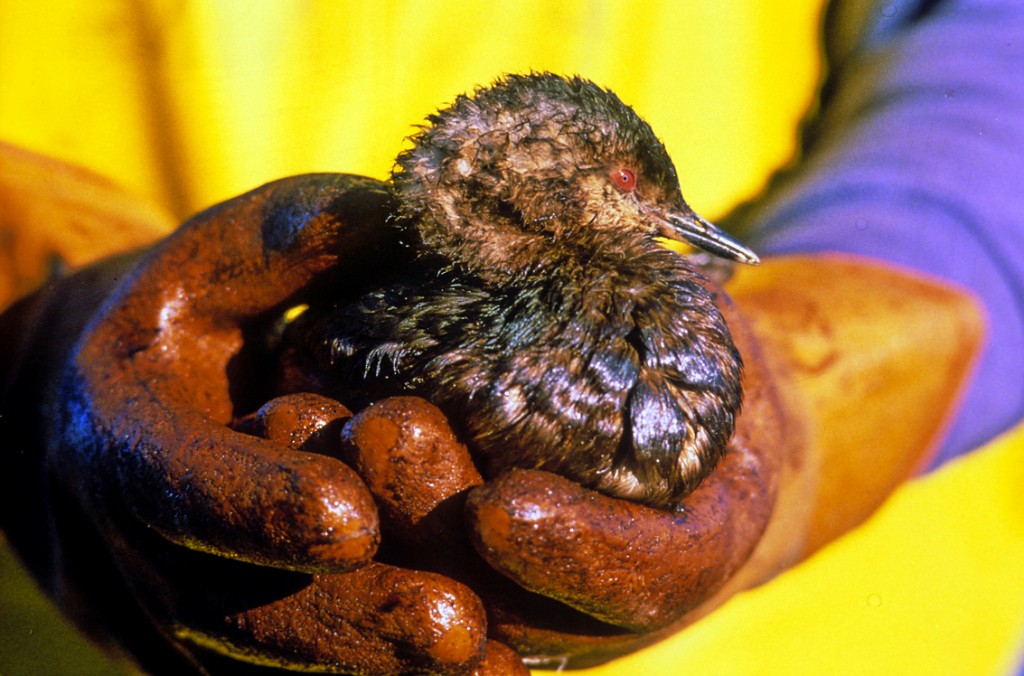
In terms of volume released, the spill does not make the list of the world’s largest, but it was one of the worst in US waters. The harm caused by a spill is also not a direct function of the quantity of oil: a release in the cool waters of Prince William Sound, where oil breaks down more slowly, could be more damaging than a larger volume in the Gulf of Mexico, where temperatures are warmer and there are more plentiful microbes that thrive on natural oil seeps. The location of the spill also added to its emotional impact: the pictures of the oil fouling the pristine waters of Alaska shocked the world.

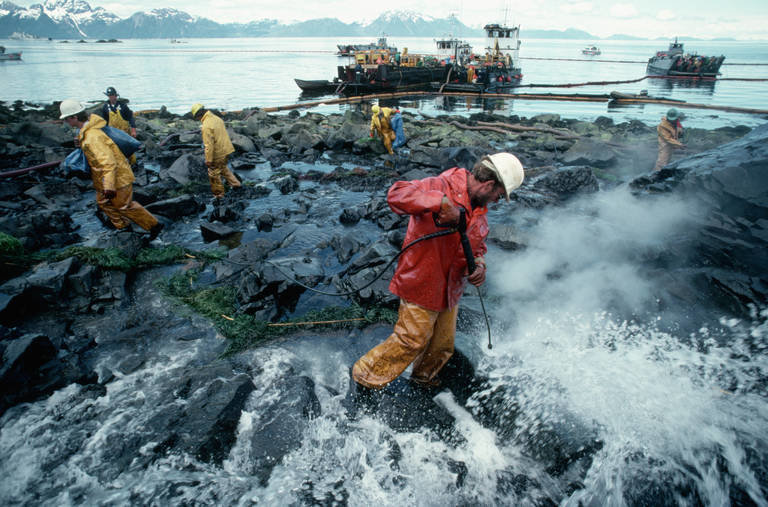
Exxon Valdez Clean up

Even decades after the spill, there was still evidence of the oil visible on some of the beaches in the region. Exxon agreed to pay $900m for restoration to settle damages claims from the state and federal governments, and the work of the Exxon Valdez Oil Spill Trustee Council, which oversees the use of that money, goes on. The Pacific herring population in Prince William Sound has collapsed since the early 1990s, although it is not clear whether the spill was responsible, and other wildlife such as sea ottershave recovered.

For the oil industry, the disaster was transformative. Single-hulled tankers began to be phased out, to be replaced by safer double hulls, first in the US and then worldwide. The process was accelerated after the sinking of the tanker Erika off the coast of Brittany in 1999, an accident that was considered one of France’s worst environmental disasters.

For Exxon in particular, the Valdez spill prompted a fundamental rethink of its safety culture and practices. The company developed what is called its Operations Integrity Management System, a framework that “puts safety at the center of everything we do”. By the time that Rex Tillerson ran ExxonMobil, in 2006-16, the company could rightly boast of having a safety record that was admired across the industry, and its OIMS was widely emulated….But any employer’s highest duty is to make sure workers can do their jobs safely and go home at the end of the day, and on that measure Exxon has performed better than its peers. Any workplace death is one too many, of course, but over the past decade Exxon has suffered significantly fewer than other leading oil companies.

Excerpts from Ed Crooks,  The Exxon Valdez spill 30 years on, Financial Times, Mar. 22, 2019

Can’t Eat This! MicroPlastics Carrying Bacteria

The hard surface of waterborne plastic provides an ideal environment for the formation of biofilm by opportunistic microbial colonisers, and could facilitate a novel means of dispersal for microorganisms across coastal and marine environments. Biofilms that colonise the so-called ‘plastisphere’ could also be a reservoir for faecal indicator organisms (FIOs), such as Escherichia coli, or pathogenic bacteria such as species of Vibrio.

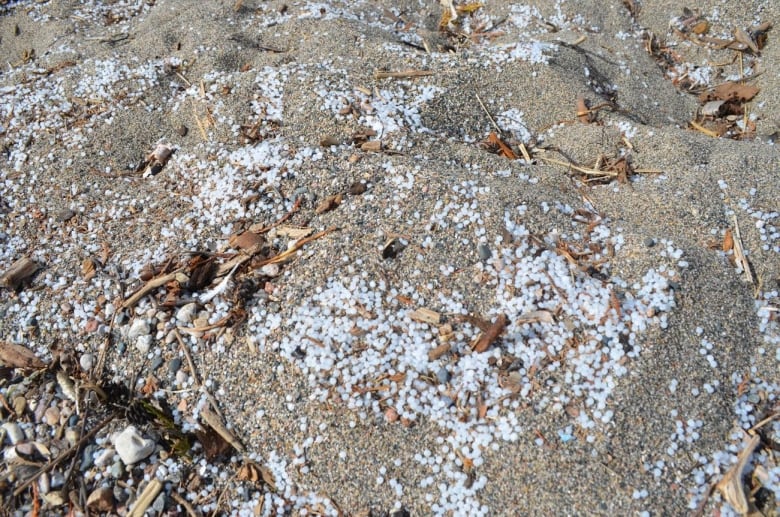
Nurdles on bathing beach

A study published in March 2019 looks into five public bathing beaches and quantifies their colonisation by E. coli and Vibrio spp. Nurdles [i.e., microplastics] were heterogeneously distributed along the high tide mark at all five beaches, and each beach contained nurdles that were colonised by E. coli and Vibrio spp. Knowledge of E. coli colonisation and persistence on nurdles should now be used to inform coastal managers about the additional risks associated with plastic debris.

Abastract from Colonisation of plastic pellets (nurdles) by E. coli at public bathing beaches

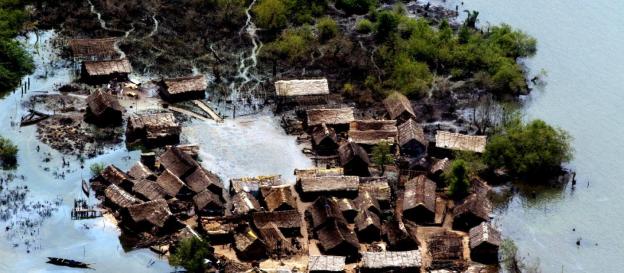
A Swamp of Oil Pollution: Ogoniland

Status of Cleaning up Oil Pollution in Ogoniland, Nigeria:

According to the Civil Society Legislative Advocacy Centre (CISLAC), the clean-up of Ogoniland is bugged with identity crisis, procedures, processes and overheads. Perception of corruption, lack of transparency and accountability, complex decision making, internal crisis of choice between Ogoni and the Niger Delta….The United Nations Environment Programme (UNEP) released its Environmental Assessment of Ogoniland in August 2011 after series of protests of oil spillage in the community that culminated to the death of Ken Sarowiwa and eight others.  The report  made recommendations to the government, the oil and gas industry and communities to begin a comprehensive cleanup of Ogoniland, restore polluted environments and put an end to all forms of ongoing oil contamination in the region…

Pollution of soil by petroleum hydrocarbons in Ogoniland is extensive in land areas, sediments and swampland.  In 49 cases, UNEP observed hydrocarbons in soil at depths of at least 5 metres. At 41 sites, the hydrocarbon pollution has reached the groundwater at levels in excess of the Nigerian standards permitted by National Laws..

Excerpts from Ogoni: Cleanup Exercise by Authorities Questioned by Civil Society Groups, UNPO, Mar. 12, 2019

How to Save the Rhino? Torture and Kill Civilians

In national parks across Asia and Africa, the beloved nonprofit WWF  with the cuddly panda logo funds, equips, and works directly with paramilitary forces that have been accused of beating, torturing, sexually assaulting, and murdering scores of people…WWF has provided high-tech enforcement equipment, cash, and weapons to forces implicated in atrocities against indigenous communities…Villagers have been whipped with belts, attacked with machetes, beaten unconscious with bamboo sticks, sexually assaulted, shot, and murdered by WWF-supported anti-poaching units, according to reports and document

 WWF has provided paramilitary forces with salaries, training, and supplies — including knives, night vision binoculars, riot gear, and batons — and funded raids on villages…The charity has operated like a global spymaster, organizing, financing, and running dangerous and secretive networks of informants motivated by “fear” and “revenge,” including within indigenous communities, to provide park officials with intelligence — all while publicly denying working with informants.

The charity funnels large sums of cash to its field offices in the developing world where staff work alongside national governments — including brutal dictatorships — to help maintain and police vast national parks that shelter endangered species. But many parks are magnets for poachers, and WWF expends much of its energy — and money — in a global battle against the organized criminal gangs that prey on the endangered species the charity was founded to protect.  It’s a crusade that WWF refers to in the hardened terms of war. Public statements speak of “boots on the ground,” partnerships with “elite military forces,” the creation of a “Jungle Brigade,” and the deployment of “conservation drones.”  WWF is not alone in its embrace of militarization: Other conservation charities have enlisted in the war on poaching in growing numbers over the past decade, recruiting veterans from the wars in Afghanistan and Iraq to teach forest rangers counterinsurgency techniques

The enemy is real, and dangerous. Poaching is a billion-dollar industry that terrorizes animals and threatens some species’ very existence. Poachers take advantage of regions ravaged by poverty and violence. And the work of forest rangers is indeed perilous: By one 2018 estimate, poachers killed nearly 50 rangers around the world in the previous year. But like any conflict, WWF’s war on poaching has civilian casualties.

Indigenous people living near one park in southeast Cameroon described a litany of horrors incuding dead-of-night break-ins by men wielding machetes, rifle butt bludgeonings, burn torture involving chilis ground into paste, and homes and camps torched to the ground. Their tormentors in these accounts were not poachers, but the park officials who police them. Although governments employ the rangers, they often rely on WWF to bankroll their work.  …Documents reveal WWF’s own staffers on the ground are often deeply entwined with the rangers’ work — coordinating their operations, jointly directing their raids and patrols alongside government officials, and turning a blind eye to their misdeeds.

Iindigenous groups — both small-fry hunters and innocent bystanders — say they suffer at the hands of the rangers.  Nepal’s park officials were given this free rein decades ago, shortly after WWF first arrived in Chitwan in 1967 to launch a rhinoceros conservation project in a lush lowland forest at the foot of the Himalayas. To clear the way, tens of thousands of indigenous people were evicted from their homes and moved to areas outside the park’s boundaries..

The park’s creation radically changed their way of life: Now they must scrape together money to buy tin for their roofs, pay hospital bills, and farm new crops. They also live in fear of the park’s wild animals, which, while rising in number thanks to anti-poaching efforts, have destroyed crops and mauled people to death.  Rhinoceros horns can sell for hundreds of thousands of dollars on the black market. Professional poachers offer a tiny portion to locals who assist them, which can be hard for impoverished residents of villages to turn down.

Chitwan’s forest rangers work alongside over 1,000 soldiers from the park’s army battalion. Nepalese law gives them special power to investigate wildlife-related crimes, make arrests without a warrant, and retain immunity in cases where an officer has “no alternative” but to shoot the offender, even if the suspect dies….. Indigenous groups living near Chitwan have long detailed a host of abuses by these forces. Villagers have reported beatings, torture, sexual assaults, and killings by the park’s guards. They’ve accused park officials of confiscating their firewood and vegetables, and forcing them into unpaid labor.

WWF’s work with violent partners spans the globe. In Central Africa, internal documents show the charity’s close involvement in military-style operations with both a repressive dictatorship and a notoriously fierce army. …The park’s management plan says WWF will help organize raids, known as “coup de poings,” on local villages suspected of harboring poachers. A confidential internal report found that such missions, frequently conducted in the dead of night with the help of police units, were often violent.

Excerpts from WWF Funds Guards Who Have Tortured And Killed People, BuzzFeed News

Who is Afraid of Bats?

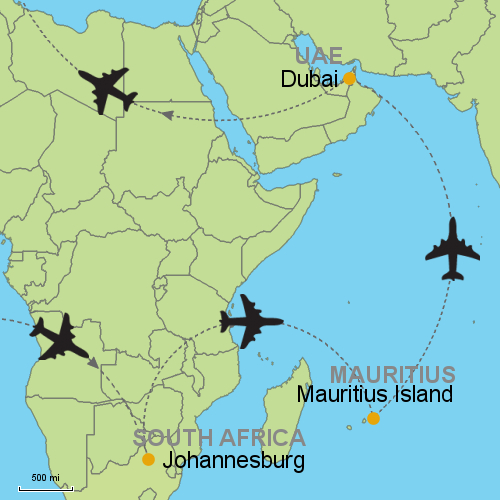
More than 50,000 of the fruit bats are thought to have been killed in Mauritius since 2015, in an attempt to protect fruit in orchards.  The bats – also known as flying foxes – are resorting to eating in orchards to survive because only 5 per cent of Mauritius’s native forests remain, animal experts warned.  Fruit bats are vital for biodiversity as they pollinate flowers and scatter seeds, enabling trees and plants to grow and spread, according to conservationists.  But populations of the flying foxes have fallen by more than 50 per cent in four years, said Vincent Florens, an ecologist at the University of Mauritius. Some believe fewer than 30,000 now remain.

The first cull, in 2015, killed 30,000, and in a second cull, the following year, 7,380 were targeted.  The latest cull involved 13,000.  Prof Florens said he believed the number killed is much higher than the 50,300 government figure.  “The culls took place late in the year, when many mothers were pregnant or had babies,” he told National Geographic. “You shoot one bat and basically kill two.” Others were likely to have been injured and died later, he said.

Scientists are supporting a lawsuit against the government on grounds of animal welfare violations to prevent any more culls…Mahen Seeruttun, Mauritius’s minister of agro-industry and food security, told FDI Spotlight: “We have a large population of bats who will eat fruit crops.

Excerpts from Endangered fruit bats ‘being driven to extinction’ in Mauritius after mass culls kill 50,000, Independent, Mar. 4, 2019

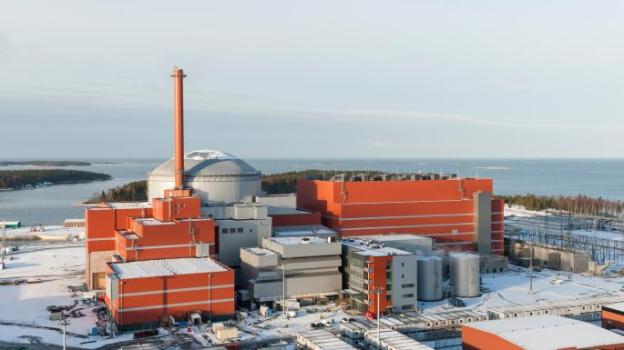
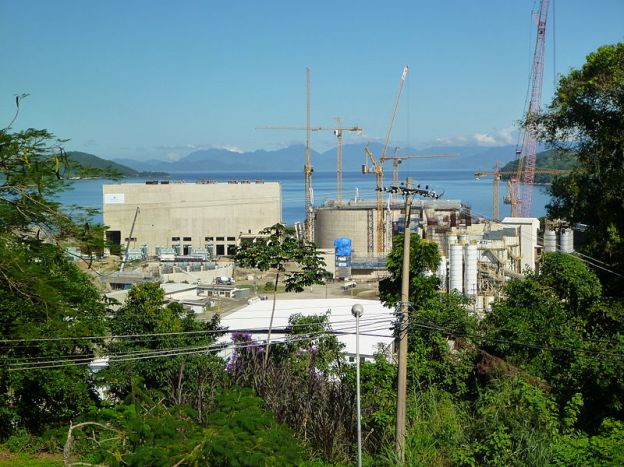
Olkiluoto 3 Nuclear Plant is Ready: 2005-2020

Finland’s Radiation and Nuclear Safety Authority (Stuk) yesterday informed the government it sees no reason why an operating licence for the first-of-a-kind nuclear plant EPR at Olkiluoto 3 should not be granted to utility Teollisuuden Voima Oyj (TVO).]…The Areva-Siemens consortium began construction of Olkiluoto 3 – the first-of-a-kind EPR – in 2005 under a turnkey contract signed with TVO in late 2003. Completion of the reactor was originally scheduled for 2009, but the project has suffered various delays and setbacks. Under the latest schedule, fuel will now be loaded into the reactor core in June 2019, with grid connection to take place in October 2019, and the start of regular electricity generation scheduled for January 2020.

In December 2018, unit 1 of the Taishan plant in China’s Guangdong province became the first EPR to enter commercial operation. Taishan 2 is scheduled to begin commercial operation in 2019. The loading of fuel into the core of the Flamanville EPR in France is expected towards the end of this year. Two EPR units are also under construction at the Hinkley Point C project in Somerset, UK.

Excerpts from Regulator concludes Finnish EPR can operate safely, Nuclear News, Feb. 2019

The Micro-Plastics Menance: Oceans

The IUCN report published in 2019 looked at primary microplastics – plastics that enter the oceans in the form of small particles, as opposed to larger plastic waste that degrades in the water – released from household and industrial products across seven geographical regions. Sources of primary microplastics include car tyres, synthetic textiles, marine coatings, road markings, personal care products, plastic pellets and city dust.  According to the report, between 15 and 31% of the estimated 9.5 m tonnes of plastic released into the oceans each year could be primary microplastics, almost two-thirds of which come from the washing of synthetic textiles and the abrasion of tyres while driving…Synthetic textiles are the main source of primary microplastics in Asia and tyres dominate in the Americas, Europe and Central Asia…. Synthetic clothes could be designed to shed fewer fibres, for example, and consumers can act by choosing natural fabrics over synthetic ones”

The World Health Organization is reviewing microplastics’ potential impact on human health after a study found plastic in 259 bottles of water from 11 different brands bought in nine countries. Microplastics have turned up in seafood, drinking water, beer, honey and sugar, according to studies, but the impact on human health is unclear.Research shows that ingesting microplastics can hurt the ability of planktonic organisms to feed and the ability of fish and marine worms to gain energy from food.  Pending bills in New York and California, if successful, would require labels on clothes made from more than 50% synthetic material to tell consumers that these shed plastic microfibers when washed.

Researchers also have zeroed in on how clothes are washed. Outdoor-apparel brand Patagonia found fabrics shed lots of microfibers on the first wash, but few in subsequent washes. That suggests pretreating garments before they are sold could potentially capture and recycle what otherwise goes down consumers’ drains.  It also found types of washing machines matter. Jackets washed in top-load washing machines shed seven times as many microfibers as front-loaders.

Excerpts from  Invisible plastic particles from textiles and tyres a major source of ocean pollution – IUCN study,Feb 2017; The Tiny Plastics in Your Clothes Are Becoming a Big Problem, Wall Street Journal, Mar. 7, 2019
 

Cleaning Up the US Nuclear Weapons Complex

A report from the National Academies of Sciences published in March 2019 recommends changes in the way that the U.S. Department of Energy manages science and technology (S&T) development in order to accelerate the cleanup of radioactive waste and contaminated soil, groundwater, and facilities at U.S. nuclear weapons sites.

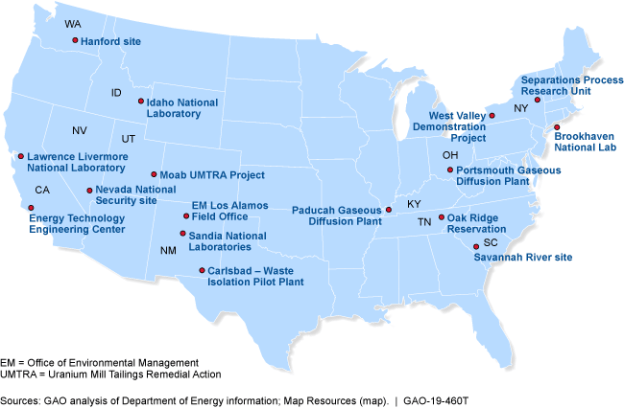
A portion of DOE’s technology development should focus on breakthrough solutions and technologies that can substantially reduce schedules, risks, and uncertainties in the cleanup, says Independent Assessment of Science and Technology for the Department of Energy’s Defense Environmental Cleanup Program. This effort should be managed by ARPA-E, a DOE division that has a record of investing in innovative solutions for complex technical challenges; it would require substantial new funding…DOE’s Office of Environmental Management (DOE-EM) is responsible for cleaning up 107 sites in 31 states and one territory that were used for nuclear weapons development, testing, and related activities during the Manhattan Project and Cold War. The cleanup program began in 1989 and has, over the past three decades, cleaned up 91 sites at a cost of about $170 billion. DOE-EM projects that it will spend at least another 50 years and $377 billion to complete its cleanup of the 16 remaining sites.

The new report says that these time and cost estimates are highly uncertain – and probably low – because of significant remaining technical challenges and uncertainties, and also because additional sites and facilities may be added to the cleanup program in the future. ..Currently, DOE-EM’s management of S&T development is ad hoc and uncoordinated, the report says. Most DOE-EM-related S&T development activities are focused on individual sites, are driven and managed by contractors, and have a short-term emphasis on addressing technical challenges in existing cleanup projects…The successful cleanup of the large, complex Rocky Flats site near Denver showed that technology development and deployment can have major impacts in accelerating schedules and reducing costs, the report notes. The remaining cleanup sites – which include large, complex sites such as Hanford in Washington state, the Savannah River Site in South Carolina, and the Oak Ridge Reservation in Tennessee – provide an opportunity for S&T to have similar impacts.

The report identifies seven examples of technologies and alternative approaches that could substantially reduce costs and speed cleanup schedules – these include changes in waste chemistry and nuclear properties to facilitate treatment and disposal, and changes in human involvement in cleanup activities to increase efficiencies and reduce worker risks. 

Excerpts from Breakthrough Solutions and Technologies Needed to Speed Cleanup of U.S. Nuclear Weapons Sites, National Academies Press Release, Mar. 4, 2019

US Special Forces in Africa: the G-5 Sahel

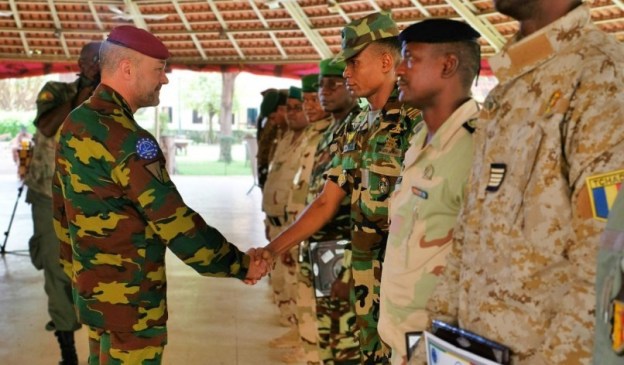
The number of attacks in Burkina Faso  have increased as al Qaeda- and ISIS-linked groups have established a presence there, attacking remote gendarmerie outposts and expanding their reach from Mali and Niger in attempt to take advantage of what they see as a permissible environment.  The number of violent incidents in Burkina Faso linked to the local affiliates of al Qaeda JNIM* and ISIS (Greater Sahara) rose from 24 in 2017 to 136 in 2018, according to a report by the Africa Center for Strategic Studies. 

 US Special Forces that train the Burkina Faso military told CNN in March 2019 that the US was considering deploying surveillance drones to Burkina Faso in order to help the country better monitor threats…The Burkina Faso, Mali, Niger, Mauritania and Chad, make up the G-5 Sahel, a multinational task force charged with combating transnational terrorists….A Burkinabe officer told CNN on Monday that terror groups had managed to recruit locals in the north of the country by exploiting the economic situation in the region, where many live in povert

**the local branch of al Qaeda, Jama’at Nasr al-Islam wal Muslimin (JNIM), commands over 800 fighters while ISIS in the Greater Sahara has approximately 300 members.

Excerpts from US Forces Train in African Nation Facing Twin Terror Threat, CNN, Mar. 2, 2019

From Savior to Villain: Biofuel from Palm Oil

Globally, average palm oil yields have been more or less stagnant for the last 20  years, so the required increase in palm oil production to meet the  growing demand for biofuels  has come from deforestation and peat destruction in Indonesia.  Without fundamental changes in governance, we can expect at least a third of new palm oil  area to require peat drainage, and a half to result in deforestation.

Currently, biofuel policy results in 10.7  million tonnes of palm oil demand.  If the current biofuel policy continues we expect by 2030:
• 67 million tonnes palm oil demand due to biofuel policy.
• 4.5 million hectares deforestation.
• 2.9 million hectares peat loss.
• 7 billion tonnes of CO2 emissions over 20 years, more than total annual U.S. GHG emissions.
It must always be remembered that the primary purpose of biofuel policy in the EU and many  other countries is climate change mitigation. Fuel consumers in the European Union, Norway  and elsewhere cannot be asked to continue indefinitely to pay to support vegetable oil based
alternative fuels
that exacerbate rather than mitigate climate change.

The use of palm oil-based biofuel should be  reduced and ideally phased out entirely.  In Europe, the use of biodiesel other than that produced from approved waste or  by-product feedstocks should be reduced or eliminated.
In the United States, palm oil biodiesel should continue to be restricted from generating  advanced RINs under the Renewable Fuel Standard. Indonesia should reassess the relationship between biofuel mandate, and its  international climate commitments, and refocus its biofuel programme on advanced biofuels from wastes and residues. The aviation industry should focus on the development of advanced aviation biofuels  from wastes and residues, rather than hydrotreated fats and oils.

Excerpts from Dr Chris Malins,  Driving deforestation: The impact of expanding palm oil demand through biofuel policy, January 2018

In Feb. 28, 2019, Norway’s $1 trillion sovereign wealth fund, the world’s largest, pulled out of more than 33 palm oil companies over deforestation risks.

Satellites and Algorithms against Slaveholders

Brick kilns, tens of thousands across South Asia are often run on forced labor.  Satellite imagery of such kilns can help tally the kilns, enabling organizations on the ground to target slaveholders at the sites…

Some 40.3 million people are held in bondage today, according to the latest estimates from the International Labor Organization, headquartered in Geneva, Switzerland. But finding them is hard… Boyd who works for the Rights Lab estimates, however, that one-third of all slavery is visible from space, whether in the scars of kilns or illegal mines or the outlines of transient fish-processing camps.

Boyd is now using artificial intelligence to speed up the search. As a pilot project, she and her colleagues at the Rights Lab used crowdsourced visual searchers to identify brick kilns. The oval shape of the large ovens, sometimes 150 meters long, and their chimneys are distinctive, even from space. “You cannot mix them up with something else,” Boyd says.

Since then, Boyd has turned to machine-learning algorithms that recognize the kilns after being trained on the human-tagged examples. Last month, in the journal Remote Sensing, she and her colleagues reported that the algorithms could correctly identify 169 of 178 kilns in Google Earth data on one area of Rajasthan, although it also output nine false positives…

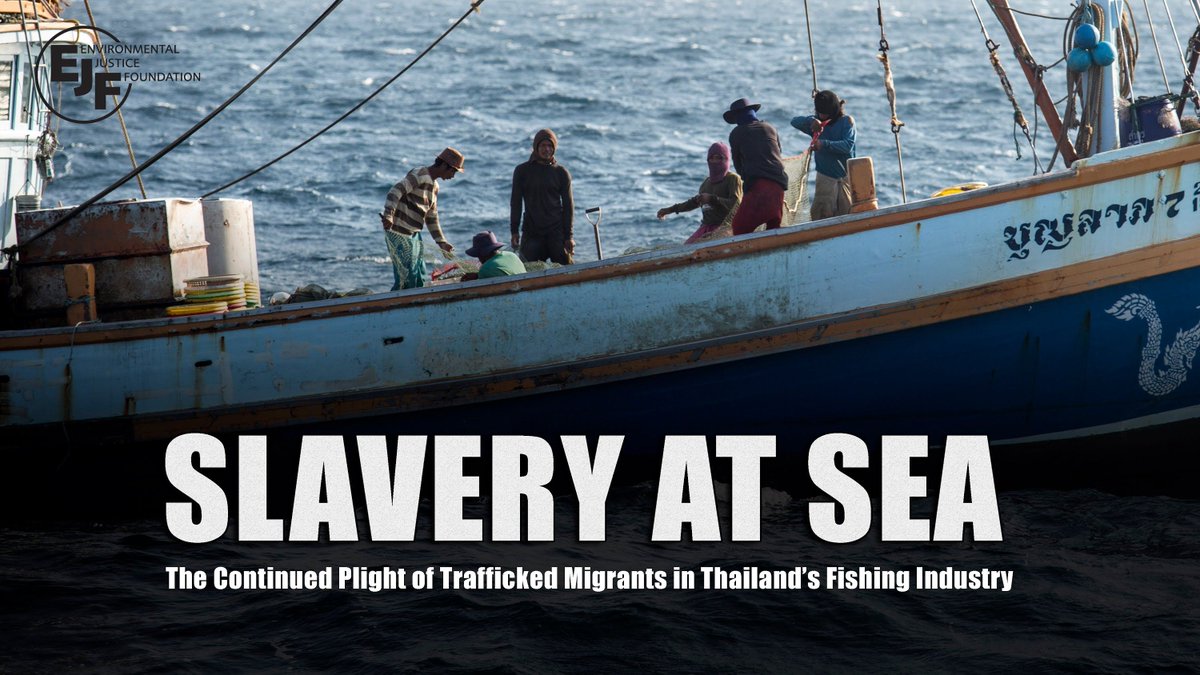
Another company, called Planet, has about 150 small satellites that snap images of the globe’s entire landmass daily. The images are lower-resolution than DigitalGlobe’s, but their frequency opens up opportunities to identify changes over time.With Planet data, Boyd and the Rights Lab plan to investigate fast moving signatures of slavery. From space, you can watch a  harvest in Turkmenistan and, based on how quickly the cotton disappears, you can tell whether machines or hands picked it. In the Sundarbans, an area spanning India and Bangladesh, shrimp farms and fish-processing camps employ slave labor to clear mangrove trees—a process satellites can capture.

Excerpts from Sarah Scoles, Researchers Spy Signs of Slavery from Space, Science, Feb. 21, 2018

100 Ways to Finance Criminal Cartels Logging Forests

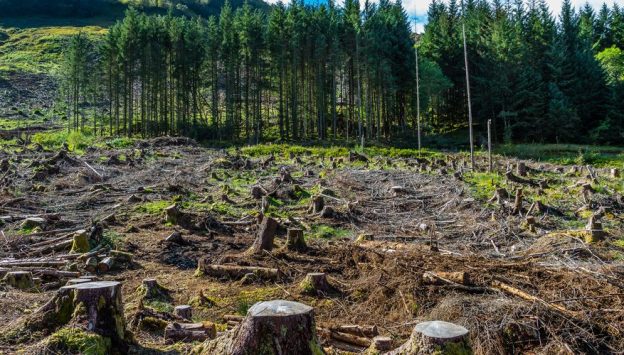
The report – Green Carbon, Black Trade (2012) – by UNEP and INTERPOL focuses on illegal logging and its impacts on the lives and livelihoods of often some of the poorest people in the world set aside the environmental damage. It underlines how criminals are combining old fashioned methods such as bribes with high tech methods such as computer hacking of government web sites to obtain transportation and other permits. The report spotlights the increasingly sophisticated tactics being deployed to launder illegal logs through a web of palm oil plantations, road networks and saw mills. Indeed it clearly spells out that illegal logging is not on the decline, rather it is becoming more advanced as cartels become better organized including shifting their illegal activities in order to avoid national or local police efforts. By some estimates, 15 per cent to 30 per cent of the volume of wood traded globally has been obtained illegally…

The much heralded decline of illegal logging in the mid- 2000s in some tropical regions was widely attributed to a short-term law enforcement effort. However, long-term trends in illegal logging and trade have shown that this was temporary, and illegal logging continues. More importantly, an apparent decline in illegal logging is due to more advanced laundering operations masking criminal activities, and notnecessarily due to an overall decline in illegal logging. In many cases a tripling in the volumes of timber “originating” from plantations in the five years following the law enforcement crack-down on illegal logging has come partly from cover operations by criminals to legalize and launder illegal logging operations….

Much of the laundering of illegal timber is only possible due to large flows of funding from investors based in Asia, the EU and the US, including investments through pension funds. As funds are made available to establish plantations operations to launder illegal timber and obtain permits illegally or pass bribes, investments, collusive corruption and tax fraud combined with low risk and high demand, make it a highly profitable illegal business, with revenues up to 5–10 fold higher than legal practices for all parties involved. This also undermines subsidized alternative livelihood incentives available in several countries.

[It is important to discourage] the use of timber from these regions and introducing a rating og companies based on the likelihood of their involvement in illegal practices to discourage investors and stock markets from funding them.

Excerpts from Nellemann, C., INTERPOL Environmental Crime Programme (eds). 2012.Green Carbon, Black Trade Illegal Logging, Tax Fraud and Laundering in the Worlds Tropical Forests. A Rapid Response Assessment United Nations Environment Programme

When the State is the Gang

In South Sudan “There is a confirmed pattern of how combatants attack villages, plunder homes, take women as sexual slaves and then set homes alight often with people in them,” commented Commission Chairperson Yasmin Sooka.  “Rapes, gang rapes, sexual mutilation, abductions and sexual slavery, as well as killings, have become commonplace in South Sudan. There is no doubt that these crimes are persistent because impunity is so entrenched that every kind of norm is broken,” she added.

UNICEF reports that 25 per cent of those targeted by sexual violence are children, including the rapes of girls as young as 7. Elderly and pregnant women have also been raped. The Commission also received reports of male victims of sexual violence. Sexual and gender-based violence against men and boys is even more underreported than that against women and girls as there is a greater level of stigma. There are even reports of raping and killing of the young and the elderly.

The Commission has also looked at the allegations of sexual exploitation and abuse by peacekeepers of the United Nations Mission in South Sudan (UNMISS). From January 2018 to 2019, seven such cases involving 18 alleged UNMISS perpetrators were registered in the UN Sexual Exploitation and Abuse Database. 

The oil producing areas of the country have become increasingly militarized by Government forces, including by the National Security Services, which have expanded their involvement in the oil sector. The state-owned Nilepet oil company’s operations have been characterized by a total lack of transparency and independent oversight, allegedly diverting oil revenues into the coffers of elites in the government. Furthermore, oil revenues, and income from other natural resources such as illegal teak logging, have continued to fund the war, enabling its continuation and the resulting human rights violations. 

Outraged by renewed fighting and continuing human rights violations in South Sudan, UN Human Rights Experts urge all parties to stop conflict, end impunity and respect provisions of the revitalized peace agreement, UN Human Rights Council, Press Release, Feb. 20, 2019

How Nuclear Technology Creates New Plants

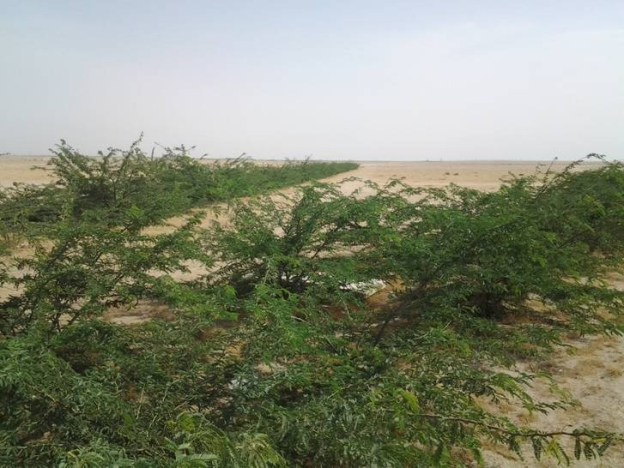
Joining the FAO/IAEA coordinated research projects in the area of mutation breeding has led to the development of several barley mutant lines with improved yield and quality under Kuwait’s environmental conditions.  As arable land is limited to small areas, 95% of the country’s food and animal fodder is imported. Barley is a preferred crop for cultivation, because it is relatively drought tolerant and therefore one of the most suitable crops for an arid country like Kuwait. Having high yielding home grown crops is among the key objectives of the country’s agricultural programme to enhance food security.

Drought, salinity and diseases have historically limited staple crop productivity in Kuwait.   Mutation induction by radiation rapidly increases the genetic diversity necessary to produce new and improved varieties and is thus advantageous over traditional breeding…The best adaptable varieties were identified, and the seeds were subjected to induced mutation using gamma rays.

New mutant lines have been generated and they are now examined for drought and salinity tolerance. The selected mutant lines will be advanced, which then can be multiplied for planting. …One of the major challenges was explaining to farmers the safety of the new mutated barley lines developed. “When they heard that ‘nuclear techniques’ were used to create improved barely seeds, they got scared….

Aabha Dixit , Nuclear Technology Helps Develop New Barley Variety in Kuwait, IAEA Press Release, Feb. 18, 2019

Worse than the Dirty Bomb? Mobile Nuclear Military Reactors

In January 2019, the Defense Department issued a call for information in support of the aptly titled Project Dilithium. It seeks to develop a tiny, readily transportable, yet virtually indestructible nuclear power reactor for use at forward operating bases, the military facilities that provide logistical and troop support to the front-lines of conflict zones.

To be sure, the type of reactor it is seeking could be a great military asset: all the benefits of nuclear energy with none of the risks. The costly and dangerous process of trucking diesel fuel to bases, sometimes through hostile territory, may eventually be a thing of the past. Unfortunately, the need to store and ship irradiated nuclear fuel in a war zone will introduce different problems. And the odds that a meltdown-proof reactor could be successfully developed any time soon are vanishingly small.

The Defense Department…is seeking a nuclear reactor capable of producing 1 to 10 megawatts of electricity. …The reactor, at a minimum, should be less than 40 tons total weight; small enough to be transported by truck, ship, and aircraft; able to run for at least three years without refueling; and capable of semi-autonomous operation… The reactor should have an “inherently safe design” that ensures “a meltdown is physically impossible in various complete failure scenarios;” cause “no net increase in risk to public safety … by contamination with breach of primary core;” and have “minimized consequences to nearby personnel in case of adversary attack.

 An Octrober 2018 report commissioned by the army’s Deputy Chief of Staff admits, quite reasonably, that exposed mobile nuclear plants would “not be expected to survive a direct kinetic attack.” If commanders need to expend significant resources to protect the reactors or their support systems from military strikes, such reactors could become burdens rather than assets.  Can one really invent a reactor robust enough to suffer such a strike without causing unacceptable consequences? …If a severe accident or sabotage attack were to induce more extreme conditions than the reactor was designed to withstand, all bets are off. How long would passive airflow keep nuclear fuel safely cool if, say, an adversary threw an insulating blanket over a small reactor? Or if the reactor were buried under a pile of debris?

Moreover, it is hard to imagine that a direct explosive breach of the reactor core would not result in dispersal of some radioactive contamination. An operating nuclear reactor is essentially a can filled with concentrated radioactive material, including some highly volatile radionuclides, under conditions of high pressure and/or temperature. Even a reactor as small as 1 megawatt-electric would contain a large quantity of highly radioactive, long-lived isotopes such as cesium-137—a potential dirty bomb far bigger than the medical radiation sources that have caused much concern among security experts. 

At best a release of radioactivity would be a costly disruption, and at worst it would cause immediate harm to personnel, render the base unusable for years, and alienate the host country. For any reactor and fuel design, extensive experimental and analytical work would be needed to understand how much radioactivity could actually escape after an attack and how far it would disperse. This is also true for spent fuel being stored or transported.

The 2018 report describes several existing reactor concepts that it thinks might meet its needs. One is the 2 megawatt-electric “Megapower” reactor being designed by Los Alamos National Laboratory. But a 2017 INL study of the design iden­­tified several major safety concerns, including vulnerabilities to seismic and flooding events. The study also found that the reactor lacked sufficient barriers to prevent fission product release in an accident. INL quickly developed two variants of the original Los Alamos design, but a subsequent review found that those shared many of the safety flaws of the original and introduced some new ones.

Building Mobile Nuclear Reactor LANL

The other designs are high-temperature gas-cooled reactors that use TRISO (“tristructural isotropic”) fuel, which was originally developed decades ago for use in reactors such as the now-decommissioned Fort St. Vrain plant in Colorado. TRISO fuel consists of small particles of uranium coated with layers of different materials designed to retain most fission products at temperatures up to 1,600 degrees Celsius.

TRISO fuel enthusiasts have long claimed that reactors utilizing it do not need containments because each particle essentially has its own. This would seem to make TRISO an ideal fuel for small, mobile reactors, which can’t be equipped with the large, leak-tight containment structures typical of commercial power reactors. The army report buys into the notion that these “encapsulated” nuclear fuels can “avoid the release of radioactive volatile elements” and prevent contamination of the surrounding area, either during normal operations or accidents.

TRISO fuel contained in pebble

TRISO fuel’s actual performance has been inconsistent, however, and much is still not known. The Energy Department has been carrying out a program for more than a decade to try to improve TRISO fuel, but final results are not expected for years. In addition, if the fuel temperature rises above 1,600 degrees Celsius, fission product release can rapidly increase, making it vulnerable to incendiary weapons that burn hotter, such as thermite. The Defense Department may have already realized that TRISO fuel is not as miraculous as it first thought.

The RFI also specifies that the reactor should be capable of being transported within seven days after shutdown, presumably with the irradiated nuclear fuel still inside. While this requirement is understandable—if forces need to retreat in a hurry, they would not want to leave the reactor behind—it is unrealistic to expect this could be met while ensuring safety. Typically, spent nuclear fuel is stored for many months to years after discharge from a reactor before regulators allow it to be shipped, to allow for both thermal cooling and decay of short-lived, intensely radioactive fission products. Moving a reactor and its irradiated fuel so soon after shutdown could be a risky business.

Finally, the proliferation risks of these reactors and their fuel is a concern. The original RFI stipulated that the reactor fuel had to be high-assay low-enriched uranium (HALEU), which is uranium enriched to levels above the 5 percent uranium-235 concentration of conventional power reactors, but still below the 20 percent that marks the lower limit for highly enriched uranium (HEU), which is usable in nuclear weapons….If the Defense Department goes forward with Project Dilithium, other nations, including US adversaries, may be prompted to start producing HALEU and building their own military power reactors.

Excerptsf rom Edwin Lyman The Pentagon wants to boldly go where no nuclear reactor has gone before. It won’t work, Feb. 22, 2019

Plastics in Seas as New Tiny Ecosystems

The malign effect of floating plastic debris on seabirds, turtles and other sea creatures is well known. But, as Dr Mincer and Dr Amaral-Zettler have discovered, plastic debris also provides a new habitat for organisms small enough to take advantage of it.  The two researchers collected pieces of plastic from various sites in the North Atlantic. They then examined each using DNA analysis, and also an electron microscope, to see what was living on it. Lots of things were. Altogether, they discovered about 50 species of single-celled plant, animal and bacterial life. Each bit of debris was, in effect, a tiny ecosystem….Plastics are energy-rich substances, which is why many of them burn so readily. Any organism that could unlock and use that energy would do well….Less encouragingly, Dr Mincer and Dr Amaral-Zettler also found cholera-like bacteria in their tiny floating ecosystems. Both fish and seabirds act as vectors for cholera (the former bring it into human settlements when caught by fishermen, the latter when resting ashore or nesting), so anywhere that such creatures might pick up cholera bugs is something worth keeping an eye on.

The researchers paint an intriguing picture of the adaptability of nature, and provide another piece of the jigsaw that is the Anthropocene. Conservationists intent on preserving charismatic megafauna have reason to lament the spread of plastics through the ocean. But those interested in smaller critters have been given a whole, new sphere—the plastisphere—to study.

Marine ecology: Welcome to the plastisphere, Economist, July 20, 2013, at 7

Radical New Potatoes

Potatoes are already a staple for 1.3 billion people… but unlike other major crops, however, the potato has not had a breeding breakthrough of the kind that helped dramatically boost yields during the Green Revolution of the 1950s and 1960s. The reason is that creating a new potato variety is slow and difficult, even by the patient standards of plant breeders…Readying a new potato variety for farm fields can take a decade or more.  Many countries continue to plant popular potato varieties that have remained essentially unchanged for decades. But new approaches, including genetic engineering, promise to add more options. Potato breeders are particularly excited about a radical new way of creating better varieties. This system, called hybrid diploid breeding, could cut the time required by more than half, make it easier to combine traits in one variety, and allow farmers to plant seeds instead of bulky chunks of tuber

Solynta Hybrid Potato Seeds

To breed a better potato, it helps to have plenty of genetic raw material on hand. But the world’s gene banks aren’t fully stocked with the richest source of valuable genes: the 107 potato species that grow in the wild. Habitat loss threatens many populations of those plants. In a bid to preserve that wild diversity before it vanishes, collectors have made their biggest push ever, part of a $50 million program coordinated by the Crop Trust, an intergovernmental organization based in Bonn, Germany.

The Crop Trust has provided grants and training to collectors around the world. The effort on wild potatoes, which wraps up this month, has yielded a collection representing 39 species from six nations: Peru, Brazil, Ecuador, Guatemala, Costa Rica, and Chile. Zorrilla’s team alone found 31 species in Peru, including one for which no seeds had ever been collected. They plan to continue to search for four other species still missing from gene banks. “We will not stop,” she says. The plants are being stored in each nation’s gene bank, CIP, and the Millennium Seed Bank at the Royal Botanic Gardens, Kew, in the United Kingdom. The stored seeds will be available to potato breeders worldwide.

THE HARDEST PART comes next: getting desirable genes from wild species into cultivated potatoes….Other researchers are skirting the limitations of traditional breeding by using genetic engineering. CIP’s Marc Ghislain and colleagues, for example, have directly added genes to already successful potato varieties without altering the plants in any other way—an approach not possible with traditional breeding. They took three genes for resistance to late blight from wild relatives and added them to varieties of potato popular in East Africa.

Potato Blight , a disease affecting potatoes

The engineered varieties have proved successful in 3 years of field tests in Uganda and are undergoing final studies for regulators. Transgenic potatoes that resist late blight have already been commercialized in the United States and Canada….

Pim Lindhout has been plotting a revolution that would do away with much of that tedium and complexity. As head of R&D for Solynta, a startup company founded in 2006, he and his colleagues have been developing a new way to breed potatoes….Breeders reduce the complexity either by using species with only two sets of chromosomes (known as diploids) or by manipulating domesticated potatoes to cut the number of chromosomes in half. With persistence, diploid potatoes can be inbred. In 2011, Lindhout published the first report of inbred diploid lines that are vigorous and productive. More recently, Jansky and colleagues also created inbred diploid lines.

Such diploid inbred plants are at the heart of Solynta’s strategy to revolutionize potato breeding. Other firms, including large seed companies, are also working to develop hybrid potatoes. HZPC in Joure, the Netherlands, has begun field trials in Tanzania and in several countries in Asia.

Excerpt from Erik Stokstad, The new potato, Science, Feb. 8, 2019

Can Gucci Save the Steppes of Mongolia?

 Essential to the identity and economy of Mongolia—more than half of the country’s 3 million people live there—the grasslands are under increasing threat from overgrazing and climate change. Multiple studies over the past decade have shown that the once lush Mongolian steppe, an expanse twice the size of Texas that is one of the world’s largest remaining grasslands, is slowly turning into a desert. An estimated 70% of all the grazing lands in the country are considered degraded to some degree…. 

The collective here of a little more than 100 families is at the center of an unusual effort, run by the Wildlife Conservation Society (WCS), to turn space-based maps of the grasslands into a tool for making grazing more sustainable. Supported by the world’s largest mining company and a luxury apparel giant, the pilot effort uses data gathered by NASA and Stanford University in Palo Alto, California, to help herders find places where the vegetation is healthy enough to sustain their voracious herds.

 Meanwhile, development, especially mining, has exponentially increased water usage. Twelve percent of rivers and 21% of lakes have dried up entirely. An increasing number of people, vehicles, and heavy equipment put additional stress on the land.  But one factor stands out: overgrazing, which, according to a 2013 study by researchers at Oregon State University in Corvallis, has caused 80% of the recent decline in vegetation on the grasslands.

Mongolia is now the world’s second-largest cashmere producer, after China. Goats, which account for more than half of all grazing animals on the grasslands, can be more lucrative than other livestock, but they’re also much more destructive than the sheep they’ve replaced because they eat roots and the flowers that seed new grasses=s.

WCS’s Sustainable Cashmere project may offer part of the solution. The project, whose budget the organizers won’t disclose, is funded by mining giant Rio Tinto, which runs a massive copper mine not far away, and Kering, the French luxury apparel giant that owns Gucci, Balenciaga, and other brands that need cashmere. Both aim to help offset their impact on the Mongolian environment, a requirement of Rio’s mining agreement and part of Kering’s corporate social responsibility program.

Excerpts Kathleen McLaughlin, Saving the steppes, Science, Feb. 1, 2019

US Military Leaves but CIA Remains: Syria

Is there a way for the United States and its allies to remain in northeastern Syria, even after President Trump pledged in December 2018 to withdraw U.S. military forces there? Officials are struggling to devise such a “workaround” strategy…One possibility, according to U.S. and foreign officials, would be to have paramilitary officers from the Central Intelligence Agency take over the training and advising of the Kurdish-led Syrian Democratic Forces (SDF). Since 2015, those duties have been carried out by U.S. Special Operations forces.  This approach, still in the discussion stage, would allow Trump to claim he is delivering on his pledge to withdraw troops from Syria, without creating a vacuum in the northeast that would be exploited by Turkey, Iran, Russia and the Syrian regime…

This new option, in the language of government lawyers, would mix Title 10 overt military operations and Title 50 covert action. Reduced military activity could continue under Title 10 authority, to provide air cover and logistical support for U.S. and allied troops on the ground, but the SDF’s advisers might be CIA officers. The CIA operatives, like existing Special Forces personnel, wouldn’t be involved directly in ground combat…

A paramilitary advisory force, operating under Title 50, would have some significant disadvantages…. Current U.S. military forces in Syria can deter adversaries because they carry the U.S. flag, literally and figuratively. A paramilitary force wouldn’t have that same deterrent capability, or the ability to deconflict operations with other forces in the area, such as Russia and Turkey. ..

Given the U.S. and European policy muddle, SDF commanders must weigh whether to make their own accommodation with Russia and the Syrian regime. The United Arab Emirates is said to favor such an approach, and some longtime SDF supporters say a deal with the regime would be safer for the Kurds than depending on a fickle United States and a gun-shy Europe.

Excerpts from David Ignatius, How the U.S. might stay in Syria, and leave at the same time, Washington Post, Feb. 16, 2019

Dragons v. Cattle in Indonesia

Is tourism endangering one of the world’s most iconic lizard species? It seemed that way after the unexpected announcement that Komodo National Park in Indonesia, home of the Komodo dragon (Varanus komodoensis) may be partly closed to visitors for a full year…

Komodo National Park consists of a group of islands with a total land area of 407 square kilometers. The two largest ones, Komodo and Rinca, are home to Komodo dragon populations and are open to visits by tourists; some 160,000 people came in 2018, most of them foreigners. Tourism has made the Komodo dragons “tame” and less inclined to hunt, according to Viktor Laiskodat, governor of the East Nusa Tenggara province, where the park is located. In addition, rampant poaching has reduced the number of Timor deer (Cervus timorensis), the dragon’s main prey; as a result, the dragons have become smaller in size, Laiskodat recently claimed. To “manage the Komodo dragon’s habitat,” Komodo Island should be closed to visitors for a year, Laiskodat said on 18 January.

And there is no need for the partial shutdown, says Maria Panggur, a scientist in charge of ecosystem monitoring at the park. According to government data, the park was home to a healthy population of more than 2700 Komodo dragons in 2017, more than 1000 of them living on Komodo Island…..Human activity does have some effects on the population. A 2018 study by Purwandana showed that animals exposed to tourism—which get fed—were bigger, healthier, less alert, and had higher chances of survival than dragons elsewhere. But tourists can only visit about 5 square kilometers of the park; 95% of the Komodo dragons are not in contact with them, so the impact is minimal, Panggur says…

“If the governor really wants to protect Komodo dragons, he should start looking at Flores,” the province’s main island, Panggur says. Northern Flores is home to a Komodo dragon population of unknown size that is “more sensitive to extinction,” because of its proximity to humans…There are several reports about people killing dragons because they attacked cattle.The Flores population is considered significant because “it has been historically isolated from the western populations,” Jessop says. A 2011 mitochondrial DNA study…confirmed that they are quite different genetically from the populations on Komodo and Rinca. “Retaining this diversity is extremely important” for the species’s ability to respond to climate and habitat changes, Jessop says.

Excerpts from Dyna Rochmyaningsih Is tourism endangering these giant lizards?, Science, Jan. 29, 2019

Rhinos with Toxic Horns

[S]ince rhino poaching isn’t slowing, horn “unmarketing” must become more aggressive. A cunning approach has been devised by a South African firm, Rhino Rescue Project (RRP). For about $600 per beast, RRP drills two holes into a sedated rhino’s horn and pumps in a secret cocktail of toxins into its fibres. Consume powder from that horn and expect a migraine, nausea, vomiting, diarrhoea, or, after a big serving, permanent twitching due to nerve damage, says RRP’s co-founder, Lorinda Hern. Signs warn of the dangers of illegal horn. RRP has treated more than 300 rhinos in South Africa since 2010. Since the horn is dead material, the firm says there is no danger to the animal.  A private reserve near the northern South African town of Phalaborwa paid RRP to treat about 30 rhinos. “We’re trying anything,” says one of the owners. Locals were invited to watch so word would spread. Poacher incursions dropped from about two a month to just four in two years, with no losses.

Excerpt from Saving the Rhino: A dilemma of horns, Economist, Aug. 8, 2015, at 42

Enclosure of the Commons: High Seas

Sunken coral islands, floating rainforests, giant undersea volcanoes or even spires of rock resembling sunken cities: none of these sites can be inscribed on the World Heritage List because they are found in the High Seas, outside of any national jurisdiction. A report launched today by UNESCO’s World Heritage Centre and International Union for Conservation of Nature (IUCN) explores the different ways the World Heritage Convention may one day apply to these wonders of the open ocean, which covers more than half the planet.  Titled World Heritage in the High Seas: An Idea Whose Time has Come, the reportpresents five sites that illustrate different ecosystems, from biodiversity-rich areas to the natural phenomena that can only be found in the depths of the ocean. Each of these sites could be recognized as having outstanding universal value, a key principle of the World Heritage Convention, where spectacular qualities of certain sites are seen to transcend national boundaries.

The five sites discussed are: the Costa Rica Thermal Dome (Pacific Ocean), a unique oceanic oasis, which provides critical habitat for a thriving marine life, including many endangered species; the White Shark Café (Pacific Ocean), the only known gathering point for white sharks in the north Pacific; the Sargasso Sea (Atlantic Ocean), home to an iconic ecosystem built around a concentration of floating algae; the Lost City Hydrothermal Field (Atlantic Ocean), an 800 meter-deep area dominated by carbonate monoliths up to 60 meters high; and the Atlantis Bank, a sunken fossil island in the subtropical waters of the Indian Ocean…

Although these sites are far from our shores, they are not safe from threats, whether it be climate change, deep seabed mining, navigation or plastic pollution…The report explores three ways in which the protection of the Convention could be expanded to protect these zones in the high seas.

A Theshold Nuclear Weapon State: Brazil

Brazil’s government is struggling to attract investors to restart construction on its Angra 3 nuclear plant, where work has been halted since 2015…The government continues to talk to potential investors, including Russian and Chinese companies, but remains far from a dea.

State-controlled Centrais Eletricas Brasileiras SA is building what would be Brazil’s third nuclear plant. Through its Eletronuclear unit, Eletrobras has already invested 5 billion reais ($1.56 billion) in the facility, which is two-thirds complete, and has contracted equipment from foreign and domestic suppliers.  The company now needs 13 billion reais to finish the project, and the proposed price of electricity produced would need to increase, according to the sources….Eletronuclear said a new business plan for Angra 3 should be ready by June 2019, with an aim to complete the plant by 2025…Construction of Angra 3 halted in 2015 amid a financial crisis at Eletrobras and allegations of corruption in handing out contracts for the project.  Work on the project had started in the 1980s but quickly stalled due to lack of resources before resuming in 2009.

Excerpts fromLuciano Costa, Rodrigo Viga Gaier, Brazil Struggles to Find Investors in on-again, off-again Nuclear Project, Reuters, Jan. 12, 2019

The Nine and their Nuclear Weapons

Nine nationst control the roughly 14,200 nuclear weapons in the world… But What makes a good nuclear arsenal?  First, a good nuclear doctrine. Will a country strike first, or only in response?  Second, safety. Are the nukes secure? Does the country participate in nonproliferation treaties?
Third, do the nukes work as intended? Is the arsenal sufficient? Can the nukes survive an initial attack?…Business Insider has weighed these questions with the help of Hans Kristensen, the director of the Nuclear Information Project at the Federation of American Scientists, to rank the world’s nuclear arsenals.

9. North Korea: North Korea fails by virtually every metric used to measure nuclear arsenals… Because Pyongyang can never hope to defeat any of its enemies in conventional fighting, it turned to nukes as a guarantor of its security.  Weapons count: estimated 60. North Korea has a number of short- to intercontinental-range ballistic-missile systems thought to operate off the backs of mobile missile launchers.  One analyst has warned that North Korea’s mobile launchers may simply distract from the real threat of hidden nuclear silos, but no evidence of such silos has ever appeared in US intelligence reports made public.  It’s completely unknown if North Korea keeps its nuclear weapons mated or with the warhead affixed to the missile.

8. Pakistan: Pakistan built nuclear weapons in response to its bitter regional rival, India, testing and proceeding with a relatively simple nuclear mission: deter or defeat India….Pakistan has links to Islamic extremists with connections to global terror networks. Experts have long feared not enough has been done to secure Islamabad’s nukes against these threats.  Additionally, “Pakistan has lowered the threshold for nuclear weapons use,” by building smaller, tactical nuclear weaponsWeapons count: 150.  Pakistan has ballistic missiles with ranges just long enough to hit anywhere in the country of India….The US has specifically given Pakistan permission to modify its F-16 fighters to drop nuclear weapons…Pakistan is thought to keep its nuclear warheads separate from its missiles and delivery systems.

7. India: “India is still a nuclear posture that’s still in vivid development,” Just as Pakistan fears India’s greater strength and numbers, India has come to fear China’s growing and modernizing conventional forces.  But unlike Pakistan, India has sworn off nuclear first strikes and not looked into tactical nuclear weapons. ..But India’s submarine fleet remains a dream at the moment, lowering its overall score.  Weapons count: 140 (stored)  India recently launched its first nuclear-powered submarine..As it stands, the missiles and submarine India has picked out for its underwater nuclear deterrent can’t range China’s vital points or most of Pakistan.

6. Russia: “Russia seems to sort of be driven by a frantic exploitation of different options,”   Weapons count: 6,850 (1,600 deployed; 2,750 stored; 2,500 retired).  Russia has the full nuclear triad with constantly modernized bombers, land-based missiles, and submarines. The triad is a true 24/7/365 force with submarines on deterrence patrols at all times.  Additionally, Russia has a high number of tactical nuclear weapons with shorter-range and smaller-explosive yield…Russia’s Poseidon underwater 100 to 200 megaton nuclear torpedo is the biggest nuclear explosive device ever built…The weapon would essentially set off tidal waves so large and an explosion so radioactive and punishing that continents, not countries, would pay the price for decades.  The US has not found it useful to respond to these doomsday-type devices.  Russia stores its nuclear warheads mated to missiles and ready to fire. Additionally, it has surrounded Moscow with 68 nuclear-tipped missile interceptors meant to protect the city from a US strike.

5. Israel:   “Israel is interesting because it’s a semi-dormant nuclear program, but it’s not dormant,” …Israel’s conventional military, with its top-of-the-line air force and close coordination with the US, easily overpowers its regional foes in traditional fighting.  Instead of reaching for nuclear weapons to threaten a more powerful foe, Israel has a “very relaxed nuclear posture, truly what you could call a last resort posture,”  Weapons count: estimated 80..Truly, nobody knows what weapons Israel has or doesn’t have, and that’s the way they like it.

4. UK:   Weapons count: 215 (120 deployed; 95 stored)  During the Cold War, the UK labored to create its own nuclear weapons and delivery systems, but since the collapse of the Soviet Union, the UK has withdrawn from that posture and essentially become a client of the US.  The UK operates four nuclear submarines that fire can fire 16 Trident missiles made by the US. That’s it. The UK won’t get an “arsenal” page for this reason. The warheads on these patrols are mated to missiles.

3. France:  France has a long history with nuclear weapons, like the UK, but has maintained more independence and control over its stockpile and doctrine.  Weapons count: 300 (290 deployed; 10 stored)..France has four nuclear-powered submarines, one of which stays on a constant deterrence patrol ready to fire mated nuclear missiles.  While it’s not a nuclear weapon outright, outside of the US, only France operates a nuclear-powered aircraft carrier, the Charles de Gaulle.

2. US: Weapons count: 6,450 (1,750 deployed; 2,050 stored; 2,650 retiredd)Today the US’s nuclear arsenal has narrowed down to a triad in constant stages of modernization.  The US operates two nuclear-capable bombers, the B-2 Spirit stealth bomber and the B-52 Stratofortress, originally built in the 1950s and slated to fly for 100 years.  The US operates a fleet of nuclear submarines, which it keeps on constant deterrence patrols.  The US also has nearly 400 intercontinental-range missiles in silos around the country, mostly aimed at Russia’s nuclear weapons for an imagined “mutual destruction” scenario.  Recently, the US has come under intense criticism for President Donald Trump’s proposal to build more smaller or tactical nuclear weapons. Experts say these weapons make nuclear war more likely.  The US has tactical nuclear weapons stored around Europe and Turkey, which, like the bigger strategic weapons, are stored mated.


1. China:   China has just 280 nuclear warheads, and none of them are mated to delivery systems. China flies bombers and sails submarines that it calls nuclear-capable, but none of them have ever actually flown with nuclear weapons.  China’s nuclear doctrine forbids first strikes and centers around the idea that China would survive a nuclear strike, dig its bombs out of deep underground storage, and send a salvo of missiles back in days, months, or years.  This essentially nails the idea of “credible minimum deterrence.” Everyone knows China has nuclear weapons, that they work, and nobody doubts China would use them if it first received a nuclear attack.  China has nuclear-capable submarines and bombers, but they do not ever travel with nuclear weapons on board.  China relies on a growing and modernizing conventional military to assert its will on other countries and virtually never mentions its nuclear arsenal.

Excerpts from Alex Lockie,  We ranked the world’s nuclear arsenals — here’s why China’s came out on top, Business Insider, Jan. 25, 2019

Premature De-industrialization in Africa

“Name any country in Africa, and I could have found a world-class firm there a decade ago,” says John Page of the Brookings Institution, a think tank, the co-author of a forthcoming book on African manufacturing. “The problem is, two years later, I’d go back and still find just the one firm. In Cambodia or Vietnam, I would go back and find 50 new ones.”

To be sure, many countries deindustrialise as they grow richer (growth in service-based parts of the economy, such as entertainment, helps shrink manufacturing’s slice of the total). But many African countries are deindustrialising while they are still poor, raising the worrying prospectthat they will miss out on the chance to grow rich by shifting workers from farms to higher-paying factory jobs.

Thi is not just happening in Africa—other developing countries are also seeing the growth of factories slowing, partly because technology is reducing the demand for low-skilled workers. “Manufacturing has become less labour intensive across the board,” says Margaret McMillan of Tufts University. That means that it is hard, and getting harder, for African firms to create jobs in the same numbers that Asian ones did from the 1970s onwards.

Yet deindustrialisation appears to be hitting African countries particularly hard. This is partly because weak infrastructure drives up the costs of making things. The African Development Bank found in 2010 that electricity, a large cost for most manufacturers, costs three times more on average in Africa than it does even in South Asia. Poor roads and congested ports also drive up the cost of moving raw materials about and shipping out finished goods.

Africa’s second disadvantage is, perversely, its bounty of natural riches. Booming commodity prices over the past decade brought with them the “Dutch disease”: economies benefiting from increased exports of oil and the like tend to see their exchange rates driven up, which then makes it cheaper to import goods such as cars and fridges, and harder to produce and export locally manufactured goods.

Excerpt from Industrialisation in Africa: More a marathon than a sprint, Economist, Nov. 7, 2015, at 41

After Khashoggi: the Saudi Missiles

Satellite images suggest that Saudi Arabia has constructed its first known ballistic missile factory, according to weapons experts and image analysts, a development that raises questions about the kingdom’s increasing military and nuclear ambitions under its 33-year-old crown prince.  If operational, the suspected factory at a missile base in al-Watah, southwest of Riyadh, would allow Saudi Arabia to manufacture its own ballistic missiles, fueling fears of an arms race against its regional rival Iran.  Saudi Arabia currently does not possess nuclear weapons, so any missiles produced at the apparent factory are likely to be conventionally armed. But a missile-making facility would be a critical component of any eventual Saudi nuclear weapons program, hypothetically giving the kingdom capability to produce the preferred delivery systems for nuclear warheads.

Two additional missile experts who reviewed the satellite images for The Washington Post… agreed that the high-resolution photographs of the al-Watah site appear to depict a ­rocket-engine production and test facility, probably using solid fuel…The complex…highlights the nation’s intention to make its own advanced missiles after years of seeking to purchase them abroad, at times successfully….

Saudi Arabia has been pursuing a nuclear power-plant deal with the United States that would potentially include allowing it to produce nuclear fuel. The kingdom’s insistence on domestic fuel production has raised worries among U.S. officials that the kingdom wants the atomic power project not only for civil use but also for covert weapon-making purposes. ..

How the Saudis obtained the technological expertise necessary to build the facility is unclear. One potential supplier: China…China has sold ballistic missiles to Saudi Arabia in the past and has helped supply ballistic missile production capabilities to other nations. In the 1990s, Pakistan secretly built a plant for medium-range missiles using blueprints and equipment supplied by China. The factory in Pakistan has long drawn the attention of top Saudi officials. ..

The main way the United States seeks to prevent the spread of drone and missile technology is through the Missile Technology Control Regime, or the MTCR, an informal multicountry pact designed to prevent the transfer of certain missile technologies. China is not a member but has agreed to abide by some of its stipulations.   While the United States sells an array of weaponry to Saudi Arabia, Washington has not sold ballistic missiles to Riyadh, in part because such missiles traditionally have been seen as destabilizing for the region. Saudi Arabia has turned to China in the past when met with refusals from the United States for certain weapons requests.

For example, the United States declined repeated Saudi requests to purchase what are known as category-one American drones, including Predators and Reapers, partly because of MTCR’s regulations. Instead, the kingdom turned to China, first purchasing drones and later striking a deal in which China will build a drone factory that will produce a Chinese copycat of the Predator in Saudi Arabia.

Excerpts Paul Sonne, Can Saudi Arabia produce ballistic missiles? Satellite imagery raises suspicions, Washington Post, Jan. 22, 2019

A Never-Ending Disaster: radioactive water at Fukushima

A Greenpeace report details how plans to discharge over 1 million tonnes of highly contaminated water into the Pacific Ocean was proposed by a Japanese government task force.  According to Greenpeace.

“The decision not to develop water processing technology that could remove radioactive tritium was motivated by short term cost cutting not protection of the Pacific ocean environment or the health and livelihoods of communities along the Fukushima coast,” said Kazue Suzuki, Energy Campaigner at Greenpeace Japan. “  The report concludes that the water crisis remains unresolved, and will be for the foreseeable future. The only viable option to protect the environment and the communities along the Fukushima coast being long term storage for the contaminated water.

The discharge option for water containing high levels of radioactive tritium was recommended as least cost by the Government’s Tritiated Water Task Force and promoted by Japan’s Nuclear Regulation Authority (NRA). The Task Force concluded in 2016 that “sea discharge would cost 3.4 billion yen (US$30 million) and take seven years and four months to complete. It concluded that this was cheapest and quickest of the five methods.” However, technical proposals for removing tritium were submitted to the same Government Task Force by multiple nuclear companies with estimated costs ranging from US$2-US$20 billion to US$50-US$180 billion depending on the technology used. These were dismissed as not viable but without detailed technical consideration.

TEPCO has claimed since 2013 that its ALPS technology would reduce radioactivity levels “to lower than the permissible level for discharge.” However, in September 2018 TEPCO admitted that the processing of over 800,000 tons of contaminated water in 1000 storage tanks, including strontium, had failed to remove radioactivity to below regulatory limits, including for strontium-90, a bone seeking radionuclide that causes cancer. TEPCO knew of the failure of the technology from 2013. The Greenpeace report details technical problems with the ALPS system.

The Fukushima Daiichi site, due its location, is subject to massive groundwater contamination which TEPCO has also failed to stop. Each week an additional 2-4000 tonnes of contaminated water is added to the storage tanks.

Excerpts from Technical failures increase risk of contaminated Fukushima water discharge into Pacific, Greenpeace Press Release,  Jan. 22, 2019

How to Kill One Million Fish: Murray-Darling

But it took a viral video posted on 8 January 2019 to drive home the ecological catastrophe that was unfolding in the Murray-Darling river system in Australia. In the footage, Rob McBride and Dick Arnold, identified as local residents, stand knee-deep among floating fish carcasses in the Darling River, near the town of Menindee. They scoff at authorities’ claims that the fish die-off is a result of the drought. Holding up an enormous, dead Murray cod, a freshwater predator he says is 100 years old, McBride says: “This has nothing to do with drought, this is a manmade disaster.” Arnold, sputtering with rage, adds: “You have to be bloody disgusted with yourselves, you politicians and cotton growers.”

Scientists say McBride probably overestimated the age of the fish. But they agree that the massive die-off was not the result of drought. “It’s about taking too much water upstream [to irrigate farms] so there is not enough for downstream users and the fish,” says Quentin Grafton, an economist specializing in water issues at Australian National University (ANU) in Canberra. The Australia Institute, a Canberra-based think tank, blamed “policy failure and mismanagement” in a 19 January 2019 report, but called drought a catalyst.

Excessive water use has left river flows too low to flush nutrients from farm runoff through the system, leading to large algal blooms, researchers say. A cold snap then killed the blooms, and bacteria feeding on the dead algae sucked oxygen out of the water,   This wasn’t supposed to happen. In 2012, the national government adopted the Murray-Darling Basin Plan, touted as a “historic” deal to ensure that enough water remained in the rivers to keep the ecosystem healthy even after farmers and households took their share.

In 2008, the federal government created the Murray-Darling Basin Authority to wrestle with the problem. In 2010, a study commissioned by the authority concluded that farmers and consumers would have to cut their use of river water by at least 3000 but preferably by 7600 gigaliters annually to ensure the health of the ecosystem. Farmers, who saw their livelihoods threatened, tossed the report into bonfires.  The final plan, adopted as national law in 2012, called for returning just 2750 gigaliters to the rivers, in part by buying water rights back from users. “It was a political compromise that has never been scientifically reviewed,” Williams says, adding that “climate change was never considered in the plan, which was a dreadful oversight.”..

Grafton says there are also suspicions of widespread water theft; up to 75% of the water taken by irrigators in the northern part of the system is not metered. Farmers are also now recapturing the runoff from irrigated fields that used to flow back into streams, and are increasing their use of ground water, leaving even less water in the system, says Mike Young, an environmental policy specialist at the University of Adelaide in Australia.

In February 2018, such issues prompted a group of 12 academics, including scientists and policy experts, to issue the Murray-Darling Declaration. It called for independent economic and scientific audits of completed and planned water recovery schemes to determine their effects on stream flows. The group, which included Williams and Grafton, also urged the creation of an independent, expert body to provide advice on basin water management. Young, who wasn’t on the declaration, wants to go further and give that body the power to manage the basin’s water, the way central banks manage a country’s money supply, using stream levels to determine weekly irrigation allocations and to set minimum flow levels for every river.

Excerpts from Dennis Normile, Massive fish die-off sparks outcry in Australia, Science, Jan. 22, 2019.

Natural Gas and Freedom

[A] tanker chartered by Cheniere Energy, an American company, left a Louisiana port this week with the first major exports of U.S. liquefied natural gas, or LNG. This shipment isn’t going to Europe, but others are expected to arrive by spring.  “Like shale gas was a game changer in the U.S., American gas exports could be a game changer for Europe,” said Maros Sefcovic, the European Union’s energy chief.

Many in Europe see U.S. entry into the market as part of a broader effort to challenge Russian domination of energy supplies and prices in this part of the world. Moscow has for years used its giant energy reserves as a strategic tool to influence former satellite countries, including Lithuania, one of the countries on the fringes of Russia that now see a chance to break away.

Some are building the capacity to handle seaborne LNG, including Poland, which opened its first import terminal in 2015. In Bulgaria, which buys about 90% of its gas from Russia, Prime Minister Boyko Borissov said last month that supplies of U.S. gas could arrive via Greek LNG facilities, “God willing.”… Deutsche Bank estimates the U.S. could catch up with Russia as Europe’s biggest gas supplier within a decade, with each nation controlling around a fifth of the market. Russia supplies about a third of Europe’s gas via pipeline….The U.S. will compete with Russia, Norway, U.K., Australia and others in Europe’s gas market. Germany, for example, gets half its gas and Italy a third from Russia.Low prices also mean natural gas could compete with coal and help Europe achieve its commitment to reducing greenhouse gas emissions .In Lithuania, officials have accused Moscow of engaging in a campaign of espionage and cyberwarfare to keep its share of the lucrative energy market….

Bulgarian officials allege Russia bankrolled a wave of street protests in 2012 that forced the government to impose a moratorium on shale gas exploration. In 2014, Anders Fogh Rasmussen, then-head of NATO, told reporters that Russia was covertly funding European environmental organizations to campaign against shale gas to help maintain dependence on Russian gas.

Until 2014, Gazprom owned 37% of Lithuania’s national gas company, Lietuvos Dujos, and dominated its boardroom, said current and former officials.“There was no negotiation about gas prices,” said Jaroslav Neverovic, Lithuania’s energy minister from 2012 to 2014. He said Gazprom would send Lietuvos Dujos a list of gas prices, which the board automatically approved..  In 2015,  [though] Lithuania began receiving Norwegian LNG, reducing Gazprom’s gas monopoly to a market share of less than 80%. In the months before the terminal opened, Gazprom lowered Lithuanian gas prices by 23% and it remained cheaper than Norwegian gas. Still, Lithuania plans to increase its purchase of Norwegian gas this year. The U.S. is next….

Klaipeda’s mayor, Mr. Grubliauskas, said during a recent interview at his office, decorated with photographs of U.S. naval drills in the port: “U.S. LNG is more than just about gas. It’s about freedom.”

Excerpts With U.S. Gas, Europe Seeks Escape From Russia’s Energy Grip, WSJ, Feb. 26, 2016

HyperSonic Gliders: Arms Race at the Speed of Sound

Hypersonics are like missiles that travel at over five times the speed of sound, but are able to manoeuvre in mid-flight, making them much harder to track and intercept than traditional projectiles.  France is the fourth of the five permanent UN Security Council members to join the so-called “stealth by speed” contest, after China, Russia and the United States.  “We have decided to issue a contract for a hypersonic glider”–V-MaX (Experimental Manoeuvering Vehicle)–that can travel at over 6,000 kilometres per hour, Defence Minister Florence Parly said last week, promising a test flight by the end of 2021.

In March 2018, Russian President Vladimir Putin stunned Western military analysts – and many in Russia – by unveiling plans for a new arsenal of hypersonic weapons which he said would render missile defence systems obsolete….A few months later US President Donald Trump threatened to walk away from a key arms control treaty with Moscow.

Hypersonic gliders would be carried to the end of the earth’s atmosphere by a launch vehicle and would then “glide” back to a target on the ground. “The goal is high-speed manoeuvrability. That’s how it differs from a ballistic trajectory,” the French government’s defence procurement and technology agency (DGA) said.  “Once the initial speed is reached, we can play with speed and altitude to move up and down, to the left and to the right, creating a trajectory that is more difficult to intercept,” it said…

In December 2018, the Kremlin touted the capabilities of its new hypersonic glider, aptly named “Avanguard”.  The Kremlin said that in tests, the intercontinental projectile reached 27 times the speed of sound – 33,000 kilometres per hour, or Mach 27.  “At this speed, not a single intercepter missile can shoot it down,” Deputy Prime Minister Yury Borisov boasted.  China has also reportedly carried out several successful tests since 2014 of a glider that can reach speeds of between Mach 5 and Mach 10.

Excerpts from Race for ‘hypersonic’ weapons heats up as France joins fray, Agence France Presse, Jan. 29, 2019

Shut-out, Cut-off and Suicidal: Aliens v. America

The United States leads the world in punishing corruption, money-laundering and sanctions violations. In the past decade it has increasingly punished foreign firms for misconduct that happens outside America. Scores of banks have paid tens of billions of dollars in fines. In the past 12 months several multinationals, including Glencore and ZTE, have been put through the legal wringer. The diplomatic row over Huawei, a Chinese telecoms-equipment firm, centres on the legitimacy of America’s extraterritorial reach.

America has taken it upon itself to become the business world’s policeman, judge and jury. It can do this because of its privileged role in the world economy. Companies that refuse to yield to its global jurisdiction can find themselves shut out of its giant domestic market, or cut off from using the dollar payments system and by extension from using mainstream banks. For most big companies that would be suicidal.

But as the full extent of extraterritorial legal activity has become clearer, so have three glaring problems.  First, the process is disturbingly improvised and opaque. Cases rarely go to court and, when they are settled instead, executives are hit with gagging orders. Facing little scrutiny, prosecutors have applied ever more expansive interpretations of what counts as the sort of link to America that makes an alleged crime punishable there; indirect contact with foreign banks with branches in America, or using Gmail, now seems to be enough. Imagine if China fined Amazon $5bn and jailed its executives for conducting business in Africa that did not break American law, but did offend Chinese rules and was discussed on WeChat.

Second, the punishments can be disproportionate. In 2014 bnp Paribas, a French bank, was hit with a sanctions-related fine of $8.9bn, enough to threaten its stability. In April ZTE, a Chinese tech firm with 80,000 employees, was banned by the Trump administration from dealing with American firms; it almost went out of business. The ban has since been reversed, underlining the impression that the rules are being applied on the hoof.

Third, America’s legal actions can often become intertwined with its commercial interests. As our investigation this week explains, a protracted bribery probe into Alstom, a French champion, helped push it into the arms of General Electric, an American industrial icon. American banks have picked up business from European rivals left punch-drunk by fines. Sometimes American firms are in the line of fire—Goldman Sachs is being investigated by the doj for its role in the 1mdb scandal in Malaysia. But many foreign executives suspect that American firms get special treatment and are wilier about navigating the rules.

America has much to be proud of as a corruption-fighter. But, for its own good as well as that of others, it needs to find an approach that is more transparent, more proportionate and more respectful of borders. If it does not, its escalating use of extraterritorial legal actions will ultimately backfire. It will discourage foreign firms from tapping American capital markets. It will encourage China and Europe to promote their currencies as rivals to the dollar and to develop global payments systems that bypass Uncle Sam…. Far from expressing geopolitical might, America’s legal overreach would then end up diminishing American power.

Excerpts from Tackling Corruption: Judge Dread, Economist, Jan. 19, 2019

The Space Rat Race

India, Japan and other space-faring countries are waking up to a harsh reality: Earth’s orbit is becoming a more dangerous place as the U.S., China and Russia compete for control of the final frontier…New Delhi is nervous because China has made no secret of its desire for influence in the Indian Ocean. China set up a naval base in Djibouti, a gateway to the ocean at the Horn of Africa. It secured a 99-year lease to the port of Hambantota in Sri Lanka. It is deeply involved in development projects in Maldives.

India has established itself as a player in the budget satellite business. It even put a probe into orbit around Mars in 2014, in a U.S.-assisted project that cost just $76 million. But it is scurrying to enhance its ability to monitor China’s activities, and the partnership with Japan is part of this.  Another sign that space is becoming a defense focus for India came on Dec. 19, when the country launched its third military communications satellite, the GSAT-7A. The satellite will connect with ground-based radar, bases and military aircraft, along with drone control networks.

China’s success in landing a craft on the far side of the moon on Jan. 3, 2019 came as a fresh reminder of its growing prowess. In late December, China also achieved global coverage with its BeiDou Navigation Satellite System. Only the U.S., Russia and the European Union had that capability.China aims to launch a Mars explorer in 2020 and complete its own Earth-orbiting space station around 2022.  In the back of Indian and Japanese officials’ minds is likely a stunning test China conducted in 2007. Beijing successfully destroyed one of its own weather satellites with a weapon, becoming only the third nation to pull off such a feat, after the Soviet Union and the U.S.

In December 2018, President Donald Trump ordered the Department of Defense to create a Space Command, widely seen as a precursor to a full-fledged Space Force.  There were 1,957 active satellites orbiting Earth as of Nov. 30, 2018 according to the Union of Concerned Scientists, a nonprofit U.S. advocacy group. America had the most by far, with 849, or 43% of the total. China was No. 2, with 284, followed by Russia with 152.  Japan and India had a combined 132 — 75 for the former and 57 for the latter.

Excerpts fromNUPUR SHAW India and Japan awaken to risks of superpower space race, Nikkei Asian Review, Jan. 8, 2019

How to Discover an Illegal Logger

Tropical forests nearly the size of India are set to be destroyed by 2050 if current trends continue causing species loss, displacement and a major increase in climate-changing greenhouse gas emissions.  Prior to the launch of the Global Land Analysis and Discovery (GLAD) alerts, researchers would have to manually track images of logging in specific areas.

The new process, developed by scientists at the University of Maryland and Google, uses an algorithm to analyze weekly updates of satellite images and sends automatic notifications about new logging activity.”This is a game changer,” said Matt Finer from the Amazon Conservation Association, an environmental group.

His organization tracks illegal logging in Peru, sending images of deforestation to policymakers, environmentalists and government officials to try and protect the Amazon rainforest.  In the past, he would rely on tips from local people about encroachment by loggers, then look at older satellite images to try and corroborate the claims.

“With this new data we can focus on getting actionable information to policy makers,” Finer told the Thomson Reuters Foundation.  “We have seen how powerful these images can be,” he said, citing a case where his group brought pictures of illegal gold miners cutting down trees to the Peruvian government, who then removed the miners.

Excerpt from  CHRIS ARSENAULT, New satellite program aims to cut down illegal logging in real time, Reuters, Mar. 2, 2016

Caring for the Third Pole

The Tibetan Plateau and its surrounding mountains [the Himalayas], often termed the Third Pole, contain more ice than anywhere outside the Arctic and Antarctic. This region is also the source of the nine largest rivers in Asia, providing fresh water, food, and other ecosystem services to more than 1.5 billion people…In recent decades, air temperature at the Third Pole has warmed significantly faster than the global average…Meanwhile, intensive anthropogenic activities, such as overgrazing, deforestation, urbanization, and expansion of infrastructure projects such as construction of roads, dams, and electrical grids, are causing widespread landcover changes within the region.

Together, these changes are altering the Third Pole’s biogeochemical cycles and pushing the fragile ecosystem toward degradation and possible collapse, which would cause irreversible harm on a regional and global scale. To avoid this, all nations must meet the standards laid out in the Paris Agreement. At the regional level, we strongly urge the relevant nations (including Afghanistan, Bhutan, China, India, Kyrgyzstan, Myanmar, Nepal, Pakistan, and Tajikistan) to cooperate in addressing these impending threats through systematic changes to management policies. Rapid and unprecedented coordination will be necessary, including a regional cooperation treaty and formation of a cross-border biodiversity conservation plan for the Third Pole region. Meanwhile, any infrastructure projects undertaken must be environmentally sustainable, and a practicable grazing management policy should be adopted.

Excerpts from Jie Liu, Protect Third Pole’s Fragile Ecosystem, Science,  Dec. 21, 2018

Saving the Scarlet Macaw

“Apu Pauni” is the name for the scarlet macaw in the indigenous Miskitu language.  This brightly coloured parrot is the national bird of Honduras. It is said that it once traveled the skies throughout the country and that its song was heard by the ancient Mayans.

Today, the largest wild population of macaw in the country is believed to be in the eastern region of ​​La Moskitia, …The “Apu Prana” (“the beauty of the scarlet macaw” in theMiskitu language) Community Association responsible for the initiative and the centre received training in hospitality, eco-tourism and business management….Although most of the bird monitoring processes are carried out by men, who walk up to six hours into the forest on the edge of the community, it is the women are responsible for caring for the birds in the rehabilitation centre.  “This is where we bring the captured scarlet macaws*, those that do not have wings, those that are sick, even abandoned chicks.

The Mavita community has been recognized internationally by the Mesoamerican Society for Biology and Conservation for its efforts in the conservation….The “La Moskitia” project was implemented by the United Nations Development Programme (UNDP) and financed by the Global Environment Facility (GEF).

Excerpts from Guardians of the scarlet macaw, UN Development Program, Press Release,  May 9, 2018

*Poachers climb trees where the parrots nest and pinch the chicks before they learn to fly. People in China, Australia and Middle East pay $6 000 online. In 2014 not one newborn parrort reached adulthood in its native land, Economist, Jan. 12, 2019, at 30

Killer Robots: Your Kids V. Theirs

The harop, a kamikaze drone, bolts from its launcher like a horse out of the gates. But it is not built for speed, nor for a jockey. Instead it just loiters, unsupervised, too high for those on the battlefield below to hear the thin old-fashioned whine of its propeller, waiting for its chance.

Israeli Aerospace Industries (IAI) has been selling the Harop for more than a decade. A number of countries have bought the drone, including India and Germany. …In 2017, according to a report by the Stockholm International Peace Research Institute (sipri), a think-tank, the Harop was one of 49 deployed systems which could detect possible targets and attack them without human intervention. It is thus very much the sort of thing which disturbs the coalition of 89 non-governmental organisations (ngos) in 50 countries that has come together under the banner of the “Campaign to Stop Killer Robots”.

The Phalanx guns used by the navies of America and its allies. Once switched on, the Phalanx will fire on anything it sees heading towards the ship it is mounted on. And in the case of a ship at sea that knows itself to be under attack by missiles too fast for any human trigger finger, that seems fair enough. Similar arguments can be made for the robot sentry guns in the demilitarised zone (dmz) between North and South Korea.

Autonomous vehicles do not have to become autonomous weapons, even when capable of deadly force. The Reaper drones with which America assassinates enemies are under firm human control when it comes to acts of violence, even though they can fly autonomously…. One of the advantages that MDBA, a European missile-maker, boasts for its air-to-ground Brimstones is that they can “self-sort” based on firing order. If different planes launch volleys of Brimstones into the same “kill box”, where they are free to do their worst, the missiles will keep tabs on each other to reduce the chance that two strike the same target.

Cost is also a factor in armies where trained personnel are pricey. “The thing about robots is that they don’t have pensions,”…If keeping a human in the loop was merely a matter of spending more, it might be deemed worthwhile regardless. But human control creates vulnerabilities. It means that you must pump a lot of encrypted data back and forth. What if the necessary data links are attacked physically—for example with anti-satellite weapons—jammed electronically or subverted through cyberwarfare? Future wars are likely to be fought in what America’s armed forces call “contested electromagnetic environments”. The Royal Air Force is confident that encrypted data links would survive such environments. But air forces have an interest in making sure there are still jobs for pilots; this may leave them prey to unconscious bias.

The vulnerability of communication links to interference is an argument for greater autonomy. But autonomous systems can be interfered with, too. The sensors for weapons like Brimstone need to be a lot more fly than those required by, say, self-driving cars, not just because battlefields are chaotic, but also because the other side will be trying to disorient them. Just as some activists use asymmetric make-up to try to confuse face-recognition systems, so military targets will try to distort the signatures which autonomous weapons seek to discern. Paul Scharre, author of “Army of None: Autonomous Weapons and the Future of War”, warns that the neural networks used in machine learning are intrinsically vulnerable to spoofing.

The 2017 UN Convention on Certain Conventional Weapons has put together a group of governmental experts to study the finer points of autonomy. As well as trying to develop a common understanding of what weapons should be considered fully autonomous, it is considering both a blanket ban and other options for dealing with the humanitarian and security challenges that they create.  Most states involved in the convention’s discussions agree on the importance of human control. But they differ on what this actually means. In a paper for Article 36, an advocacy group named after a provision of the Geneva conventions that calls for legal reviews on new methods of warfare, Heather Roff and Richard Moyes argue that “a human simply pressing a ‘fire’ button in response to indications from a computer, without cognitive clarity or awareness” is not really in control. “Meaningful control”, they say, requires an understanding of the context in which the weapon is being used as well as capacity for timely and reasoned intervention. It also requires accountability…

The two dozen states that want a legally binding ban on fully autonomous weapons are mostly military minnows like Djibouti and Peru, but some members, such as Austria, have diplomatic sway. None of them has the sort of arms industry that stands to profit from autonomous weapons. They ground their argument in part on International Humanitarian Law (IHL), a corpus built around the rules of war laid down in the Hague and Geneva conventions. This demands that armies distinguish between combatants and civilians, refrain from attacks where the risk to civilians outweighs the military advantage, use no more force than is proportional to the objective and avoid unnecessary suffering…Beyond the core group advocating a ban there is a range of opinions. China has indicated that it supports a ban in principle; but on use, not development. France and Germany oppose a ban, for now; but they want states to agree a code of conduct with wriggle room “for national interpretations”. India is reserving its position. It is eager to avoid a repeat of nuclear history, in which technological have-nots were locked out of game-changing weaponry by a discriminatory treaty.

At the far end of the spectrum a group of states, including America, Britain and Russia, explicitly opposes the ban. These countries insist that existing international law provides a sufficient check on all future systems….States are likely to sacrifice human control for self-preservation, says General Barrons. “You can send your children to fight this war and do terrible things, or you can send machines and hang on to your children.” Other people’s children are other people’s concern.

Excerpts from Briefing Autonomous Weapons: Trying to Restrain the Robots, Economist, Jan. 19, 2019, at 22

Unwanted Fish: Another Waste

Long before fillets reach your dinner plate, lots of seafood is thrown away. Overboard, actually. As fishing crews sort through their catches, they toss unwanted fish back into the sea—as much as 20% of the global catch. The vast majority die. On 1 January, 2019 the wasteful practice became illegal in waters of the European Union. Scientists believe the policy will lead to more efficient fisheries and eventually boost stocks, while incentivizing more selective fishing gear and strategies. But in the short term it could mean hardship for the industry and perhaps even compromise fisheries data, if hidden cheating becomes widespread.

Few expect all fishing vessels to obey the discard ban. “Put yourself in the boots of a fishermen who can see he will run out of quota for a species. If he does, he would have to tie up for the rest of the year. He might have to sell the boat, or sell the house,” says Barrie Deas, CEO of the National Federation of Fishermen’s Organisations in York, U.K. “What’s he going to do?”  Scofflaws could jeopardize not just fish stocks, but also data about how they are faring. Researchers, who suggest catch levels to regulators, get their discard data largely from independent observers on just a few boats—less than 1% of the EU fleet. Observed boats are now likely to discard much fewer fish than other vessels, leaving an official undercount of the discard rate and a falsely rosy picture of how heavily stocks are fished, says Lisa Borges, a fisheries biologist who runs a consultancy called FishFix in Lisbon. “It could bring about a very big, negative change,” Borges says. “I get very worried about European fisheries management.”

Environmentalists want to toughen up enforcement by installing cameras on ships, the practice in New Zealand and a few other places with discard bans. But Voces de Onaindi says this is impractical on some vessels and raises privacy concerns. Countries where discard bans have succeeded, including Norway and Iceland, have gradually introduced incentives and controls to develop the economic use of unwanted fish and create a culture of regulatory compliance. Those steps, Andersen says, lessen conflict but can take decades to achieve.

Ships banned from throwing unwanted fish overboard
Erik Stokstad

Climate Change: the Costs of Deep Decarbonization

Nuclear is already the largest source of low-carbon energy in the United States and Europe and the second-largest source worldwide (after hydropower). In the September 2018 report of the MIT Energy Initiative, The Future of Nuclear Energy in a Carbon-Constrained World shows that extending the life of the existing fleet of nuclear reactors worldwide is the least costly approach to avoiding an increase of carbon emissions in the power sector. Yet, some countries have prioritized closing nuclear plants, and other countries have policies that undermine the financial viability of their plants. Fortunately, there are signs that this situation is changing. In the United States, Illinois, New Jersey, and New York have taken steps to preserve their nuclear plants as part of a larger decarbonization strategy. In Taiwan, voters rejected a plan to end the use of nuclear energy. In France, decisions on nuclear plant closures must account for the impact on decarbonization commitments. In the United Kingdom, the government’s decarbonization policy entails replacing old nuclear plants with new ones. Strong actions are needed also in Belgium, Japan, South Korea, Spain, and Switzerland, where the existing nuclear fleet is seriously at risk of being phased out.

What about the existing electricity sector in developed countries—can it become fully decarbonized? In the United States, China, and Europe, the most effective and least costly path is a combination of variable renewable energy technologies—those that fluctuate with time of day or season (such as solar or wind energy), and low-carbon dispatchable sources (whose power output to the grid can be controlled on demand). Some options, such as hydropower and geothermal energy, are geographically limited. Other options, such as battery storage, are not affordable at the scale needed to balance variable energy demand through long periods of low wind and sun or through seasonal fluctuations, although that could change in the coming decades.

Nuclear energy is one low-carbon dispatchable option that is virtually unlimited and available now. Excluding nuclear power could double or triple the average cost of electricity for deep decarbonization scenarios because of the enormous overcapacity of solar energy, wind energy, and batteries that would be required to meet demand in the absence of a dispatchable low-carbon energy source.  One obstacle is that the cost of new nuclear plants has escalated, especially in the first-of-a-kind units currently being deployed in the United States and Western Europe. This may limit the role of nuclear power in a low-carbon portfolio and raise the cost of deep decarbonization. The good news is that the cost of new nuclear plants can be reduced through…modular construction shifting  labor from construction sites to productive factories and shipyards…and seismic isolation to protect the plant against earthquakes, which simplifies the structural design of the plant.

Excerpts from John Parsons, A fresh look at nuclear energy, Science, Jan. 2019

The Bloody Hunt: Whale-Meat Hunger

Japan’s 26 December 2018 announcement that it will withdraw from the International Whaling Commission (IWC) and resume commercial whaling in its own waters and unabandon large-scale whaling ion the high seas under the mantle of scientific research triggered fierce criticism around the world.

In March 2014, the International Court of Justice sided with the critics in a suit brought by Australia, ordering Japan to halt its Antarctic whaling research. (The case did not address Japan’s North Pacific research programs.) Japan canceled its Antarctic research cruises for a year, then resumed them under new programs it deemed compliant with the court’s ruling.

In its scientific programs, Japan has harvested thousands of minke whales and smaller numbers of other species. Numbers have fallen, in part because demand for whale meat has dropped, and may fall further when whaling is limited to a commercial hunt in coastal waters.  The International Whaling Commission (IWC) concedes that the current population of several hundred thousand minke whales in the Antarctic is “clearly not endangered.” But the fight is no longer just about sustainability; whaling opponents say the bloody hunt for the majestic mammals is simply inhumane. IWC rejected the Japanese proposal, and the meeting adopted a resolution emphasizing that IWC’s purpose is to ensure the recovery of cetacean populations to preindustrial levels and reaffirming the moratorium on commercial whaling. That one-two punch triggered Japan’s December announcement.

Now Japan’s whaling efforts will shift to its own coastal waters and the 320-kilometer exclusive economic zone around them. Whether whales there will now be at risk is a subject of debate. The Northern Hemisphere minke population as a whole “is not threatened,” says Cooke, but waters near the Koreas and Japan are home to an “unusual and possibly unique” population, called the J-stock, that breeds in the summer instead of the winter, he says.  Japanese fishers already catch about 100 minke whales each year in these waters, Komatsu says. (Rather than the traditional harpoons, they use nets, which is allowed under the IWC moratorium.) But increasing the harvest with harpoon whaling could put pressure on the J-stock. Japan’s December  2018 announcement said catch limits will be set “to avoid negative impact on cetacean resources” but provided no details.

Shifting consumer tastes and a growing environmental awareness have already led to a steep decline in Japanese whale meat consumption, from 203,000 tons in 1965 to just 4000 tons in 2015. Three major fishing companies appear to have no interest in commercial whaling. Cooke suspects Japan will go the way of Norway, where “a niche operation is feeding a niche market but with decreasing interest in the market and decreasing interest in going whaling.”…Although Japan intends to continue to participate in IWC as an observer, it will no longer contribute to the group’s budget. (In 2017, it provided about 6% of IWC’s $2.7 million total income.)

Excerpts from , ennis NormileWhy Japan’s exit from international whaling treaty may actually benefit whales, Science, Jan. 10, 2018

Your Biometric Data in Facebook

A federal judge has dismissed a class action lawsuit against Facebook after the California-based social media site claimed there was a lack of personal jurisdiction in Illinois.The plaintiff in the case, Fredrick William Gullen, filed the complaint alleging violations of the Illinois Biometric Information Privacy Act. Gullen is not a Facebook user, but he alleged that his image was uploaded to the site and that his biometric identifiers and biometric information was collected, stored and used by Facebook without his consent. The Illinois Biometric Information Privacy Act, implemented in 2008, regulates the collection, use, and storage of biometric identifiers and biometric information such as scans of face or hand geometry. The act specifically excludes photographs, demographic information, and physical descriptions….

In the Facebook case, no ruling has been made on whether the information on Facebook counts as biometric identifiers and biometric information under the Illinois Biometric Information Privacy Act. Instead, the judge agreed with Facebook that the case could not be tried in Illinois.

However, the company is currently facing a proposed class action in California relating to some of the same questions….How the California class action will play out remains to be seen. California does not yet have a clear policy on biometric privacy.A bill pending in the state’s legislature would extend the scope of the data security law to include biometric data as well as geophysical location, but it has not yet become law.  The question of privacy in regards to biometric information is one that has garnered increasing attention in recent months. On Feb. 4, 2016 the Biomterics Institute, an independent research and analysis organization, released revised guidelines comprising 16 privacy principles for companies that gather and use biometrics data.

Excerpts from Emma Gallimore, Federal judge boots Illinois biometrics class action against Facebook, Legal Newswire, Feb. 22, 2016, 12:15pm

See also the case (pdf)

Making a Fortune from Climate Change

Eleven years ago Dharsono Hartono, a former JPMorgan Chase & Co. banker, spotted what he thought was a new way to make a fortune: climate change.The plan was to snap up rainforest in Borneo, preserve it from logging and sell carbon credits to big polluting companies in the developed world. The earth’s temperature was rising, and this was a way to profit by confronting the problem.  Investors around the world have poured money into assets like once-frozen farmland in Canada and groundwater basins in California, betting that warming temperatures will raise their value.  Another bet has been on what some investors hope will be the most profitable outcome of a warming climate: government regulation of carbon emissions. Those who correctly anticipate future government responses to climate change are likely to reap profits.

Mr. Hartono went in big. His company’s rain forest, a humid and swampy expanse home to orangutans and clouded leopards, is twice the size of New York City and has one of the largest carbon stores of any such project in the world.  Mr. Hartono has sold just 20% of his credits to environmentally conscious corporations voluntarily buying credits, and has lost around $20 million, burning through $5 million to $10 million a year in recent years. Other investors in Indonesia and Latin America who made similar bets, including one backed by Australian bank Macquarie Group , failed to sell credits and abandoned their rain-forest projects…

Only after actor Harrison Ford visited the project to shoot a documentary on climate change, and raised the issue with Indonesia’s forestry minister, did final approval come for most of the concession in October 2013. For an initial payment of around $3 million to the Indonesian government, Mr. Hartono’s company gained the rights to the forestland for 60 years.  By then, however, some environmentalists were questioning private carbon-selling projects like Mr. Hartono’s. They argued that buying up and preserving rain forest to sell credits wouldn’t decrease net deforestation, since palm-oil barons would simply work around the few protected plots in the forest.  U.S. legislation that would have put a price on carbon failed during the Obama administration. The European Union’s carbon market doesn’t include tropical forests amid worry that low-cost credits generated there would make it affordable to pollute…

The Paris climate accords are expected to lead to an international carbon market after 2020, where countries that exceed emissions targets can purchase offset credits from countries that reduce emissions beyond their targets, potentially opening up new opportunities for Mr. Hartono.

Excerpts fom One Man’s Money Draining Bet on Climate Change, WSJ, Dec. 27, 2018

Keeping up with the Joneses: Nuclear Power

Worried the U.S. may be falling behind rivals in nuclear-power technology, the Energy Department plans to spend $115 million to help develop advanced fuels for next-generation reactors.  Under a three-year pilot project announced, the money would go to an Ohio company to produce a more energy-dense uranium, which the nuclear industry has been asking for to support a budding industry of smaller reactors.  Department officials say they plan to award the contract to American Centrifuge Operating, a unit of Centrus Energy Corp. , unless rival companies can make a compelling case by Jan. 22, 2019.

The U.S. nuclear industry is at a crossroads that has jeopardized its workforce in the U.S. and helped fuel the rise of U.S. rivals abroad. The industry, faced with safety concerns, expensive regulations and competition from other fuels, is pushing to reinvent its core technology to be simpler, cheaper and often much smaller….China has become one of the few countries building nuclear-power capacity, and Russia has taken a dominant position in developing projects elsewhere…Russia is the only country capable of producing the higher-enriched uranium the Energy Department’s new program would produce. Without it, the U.S. risks being left out of the global industry’s next stage, said Dan Brouillette, Deputy Energy Secretary.

Excertps from Timothy Puko, New Effort to Develop Advanced Nuclear Fuel, WSJ, Jan. 7, 2018

A Botanical Treasure: Congo

Situated along the banks of the Congo River, the Yangambi Research Station was in its heyday a booming scientific hub, revered for its invaluable work in the Congo Basin throughout the midcentury.

It wasn’t to last. War, political instability and budget cuts were to hamper the center’s survival after Democratic Republic of Congo (DRC) gained independence from its colonial ruler, Belgium, in 1960. The following decades would see skilled staff numbers dwindle, the jungle reclaim its buildings, and the center’s science work come to a stop.  But inside these crumbling walls lay a botanical treasure-trove. Yangambi’s herbarium holds Central Africa’s largest collection of dried plants. In fact, 15% of its 150,000 specimens are so rare, that they can only be found here….

Efforts from the Congolese Institute for Agronomy Research (INERA) could not keep the center running alone.   It was in 2017 that a ‘game changing’ opportunity arrived. INERA and the Meise Botanic Garden partnered with FORETS, a project coordinated by the Center for International Forestry Research (CIFOR)and financed by the European Union…Now, the herbarium has benefitted from a facelift – including a new roof, windows and doors, and a water cistern – soon its staff will be trained in modern preservation techniques and new technologies…Digitization of specimens will enable access to researchers around the world.

Excerpts from AHTZIRI GONZALEZ, Protecting Congo’s botanical treasures, CIFOR Press Release, Jan 11, 2019

What to Do with 56 000 Drums of Nuclear Waste: Japan

At least 1.9 trillion yen ($17.12 billion) will be needed for the planned scrapping of 79 nuclear facilities, including the failed Monju prototype fast-breeder reactor, according to the Japan Atomic Energy Agency (JAEA).

However, the JAEA’s estimate, released on Dec. 26, 2018 does not include maintenance expenses for the facilities nor costs to deal with leftover uranium and plutonium, meaning the actual tally could increase by hundreds of billions of yen.  State subsidies account for the bulk of the JAEA’s budget, so taxpayers will likely foot most of the bill.  The agency plans to shut down 79 of its 89 nuclear facilities, including research reactors and test buildings, over 60 to 70 years due to aging and the huge costs needed for their continued operations under stricter safety standards.

According to the JAEA’s estimate, the cost to decommission the Tokai spent nuclear fuel reprocessing plant in Ibaraki Prefecture will be 770 billion yen.  But the overall cost would reach nearly 1 trillion yen if expenses on dealing with highly radioactive liquid waste, which is left after plutonium is extracted from spent fuel rods at the plant, are included.

The problem-plagued Monju prototype fast-breeder reactor in Tsuruga, Fukui Prefecture, cost taxpayers more than 1 trillion yen ($8.82 billion) despite running for only 250 days during its two-decade operation. ..But the JAEA currently has no plan on how to handle plutonium stored at the facilities. In addition, no decision has been made on what to do with radioactive waste from the 79 facilities that could fill more than 560,000 200-liter drums.

Excerpt JAEA: Closing 79 nuclear facilities will cost at least 1.9 trillion yen
THE ASAHI SHIMBUN, Dec. 27 2018

Planting Electronics in Brains

 An implantable brain device that literally melts away at a pre-determined rate minimizes injury to tissue normally associated with standard electrode implantation, according to research led by a team from the Perelman School of Medicine at the University of Pennsylvania. …Thin, flexible neural electrode arrays with fully bioresorbable construction based on patterned silicon nanomembranes (Si NMs) as the conducting component.

“Dissolvable silicon electronics offer an unprecedented opportunity to implant advanced monitoring systems that eliminate the risks, cost, and discomfort associated with surgery to extract current devices used for post-operative monitoring,” said senior co-author Brian Litt, MD,….“This study tested the usefulness of temporary, dissolvable monitoring systems capable of providing continuous streams of data for guiding medical care over predetermined periods of time — from days to months — before dissolving.”

The device is made of layers of silicon and molybdenum that can measure physiological characteristics and dissolve at a known rate, as determined by its thickness. For example, the team used the device to record brain waves in rats under anesthesia, as well as voltage fluctuations between neurons (EEGs), and induced epileptic spikes in intact live tissue. A separate experiment demonstrated a complex, multiplexed array made from these materials that could map rat-whisker sensing capabilities at high resolution.

These electrophysiological signals were recorded from devices placed at the surface of the brain cortex (the outer layer of tissue) and the inner space between the scalp and skull. Chronic measurements were made over a 30-day period, while acute experiments demonstrated device operations over three to four hours.

The type of neurophysiologic features measured by the new device are commonly used for diagnosing and treating such disorders as epilepsy, Parkinson’s disease, depression, chronic pain, and conditions of the peripheral nervous system. “….

This work was funded by the Defense Advanced Research Projects Agency, the Penn Medicine Neuroscience Center,  and others.

See Next-Gen Electrodes: Proof-of-Concept Animal Study Shows that Flexible, Dissolvable Silicon Electronic Device Holds Promise for Brain Monitoring , Press Release, May 5, 2016

See also Nature Materials

The US Military and the Peripheral Nervous System

How the Shipping Industry Gets its Way: pollution from ships

Do not give the regulated power over the regulators, unless you want consumers to lose out and producers to game the system. ..That lesson has been learned in many places around the world. National regulators are increasingly independent of the firms they regulate. But international ones still have further to go—and none further than the specialised agencies of the United Nations, such as the International Maritime Organisation (IMO) for shipping where the interests of the shipping industry are upheld d in several ways. The first is the distribution of voting rights between countries. At the IMO, for example, Panama and Liberia, with populations of just 4m and 4.8m respectively, can automatically get seats on its decision-making body as they have the world’s biggest merchant fleets.

The second is the assignment of those voting rights by individual countries. Remarkably, many governments have handed voting rights to private-sector firms… At the IMO least 17 countries have assigned their voting rights to flag registries operated by private firms, reckons Transparency International, an anti-corruption group; that adds up to about a tenth of delegates. At an IMO environmental-committee meeting in 2017, almost a third of countries were represented, at least in part, by business interests.

The third way in which producer interests are protected is through a spectacular lack of transparency. The agenda of the IMO’s council in November 2018 in London is available only to those with a password. Journalists are forbidden to report what delegates say or how they vote. There are no rules on the suitability or conflict of interests of delegates. In 2014 St Lucia appointed a Saudi billionaire without previous shipping experience as its IMO representative; a court in London judged in 2016 that the appointment was obtained in order to gain diplomatic immunity against divorce proceedings. There are no limits on the amount of gifts that can be showered on representatives. Goodies put on top of desks at an IMO assembly meeting last year were so heavy that they broke 137 sets of headphones underneath.

Such swampiness matters. The IMO is responsible for limiting emissions from ships, which were excluded from the Paris climate deal.   Some countries are interested in reform. At the imo council meeting this week Australia proposed allowing journalists to report on its meetings as a first step. The Marshall Islands has taken back some of its votes from the private firm that runs its flag registry. But more radical change is needed. Countries should send civil servants, not private actors, as their representatives. The un’s rules on conflicts of interest should be imposed. And voting rights should be allocated with the interests of consumers in mind. These lessons have been widely absorbed within borders. They ought to cross them, too

Excerpts from UN Regulatory Bodies: Agency Problems, Economist, Nov. 24, 2018, at 15

How to Hide Nuclear Bombs in the Ocean: Nuclear Submarines

The INS Arihant’s India’s nuclear submarine inaugural voyage in November 2018 was a triumphal step forward in India’s long, often tortuous quest to deploy atomic weapons at sea…  Hiding missiles in the ocean solves these problems, giving India more confidence that its forces could survive a nuclear attack from China or Pakistan, and hit back.But managing such weapons is not easy. One difficulty is ensuring that a submarine can receive orders without giving away its location. India has been building low-frequency radio stations, which use large antennas to propel signals underwater, for this purpose. Yet these are also vulnerable to attack, which is why some nuclear-armed states use airborne transmitters as well.

A second hitch is that the k-15 missiles aboard the Arihant can only fly a puny 750km, which means that the submarine would have to park itself dangerously close to China’s coastline to have a hope of striking big cities. Longer-range missiles, which could be fired from the safety of Indian waters, are in the works. But bigger missiles, and more of them, necessitate a bigger hull. That, in turn, requires that the nuclear-powered subs be fitted with bigger reactors—a fiendish technical challenge.

A third problem is keeping the Arihant safe. Nuclear submarines can only do their job if they can slip silently out of port and into the oceans. They are typically chaperoned by leaner attack submarines. But admirals complain that the navy, whose share of the defence budget has dwindled to 15%, has just 13 of these. The delivery of new French attack subs has been delayed.

Meanwhile India’s nuclear arsenal is swelling. A recent report by the Bulletin of the Atomic Scientists, a research organisation, estimates that it has 130-140 nuclear warheads, with enough fissile material for 60-70 more. The stockpile, though smaller than Pakistan’s and half the size of China’s, has roughly doubled since 2010. Many of the new warheads will go to sea. A second nuclear submarine, the Arighant, is nearing completion, and a third is in the works.

India’s Nuclear Submarines, Economist,  Nov. 17, 2018, at 44

Who to Blame for Climate Change? the Carbon Majors

 Whether the damage caused by extreme weather events can be linked to human emissions of greenhouse gases is one of the hottest topics in climate science. And that debate leads directly to another: if this link can be established, who bears the responsibility?  Both of these questions are at the center of an inquiry by the Philippine Commission on Human Rights, whose latest hearings took place in London in November 2018. It is the first time a human-rights commission has heard evidence on whether large emitters violate basic human rights by causing climate change

 Where the hearings become more unusual is in investigating the link between the damage caused by climate change and the behaviour of large industrial companies. This is predicated on recent efforts to trace greenhouse-gas emissions back to large corporate and state-owned producers of fossil fuels and cement, dubbed the “carbon majors”. The latest analysis by cdp (formerly the  Carbon Disclosure Project), a non-governmental organisation that works with companies, cities and states to measure their environmental impact, published in 2017, found that 100 of them had produced just over half of emissions since the Industrial Revolution.

The Philippine hearings will come to a close in December in Manila. The commission does not have the power to compensate victims of typhoons or to sanction emitters of carbon dioxide. According to Roberto Cadiz, one of the commissioners, that isn’t even the point. His wish is to open a dialogue about possible solutions to climate change that includes the industrial emitters. So far, however, only one side of the story is being heard. The emitters have declined to participate.

Excerpts from Climate Change: The Blame Game, Economist, Nov. 17, 2018

Saving the Sea of Galilee

The water level of the Sea of Galilee, on which Jesus supposedly walked, is a national obsession in Israel. Newspapers report its rise and fall next to the weather forecast. Lately the sea, which is actually a freshwater lake, has been falling. It is now a quarter empty. Small islands have emerged above its shrinking surface. 

For the past five years Israel has experienced its worst drought in nearly a century. That has reduced the flow of the Jordan river and other streams that feed into the Sea of Galilee. Less turnover in the lake’s water is leading to increased salinity and the spread of cyanobacteria (sometimes called “blue-green algae”, despite not being algae). As the pressure from fresh water eases, it allows in more salt water from subterranean streams. Climate change is expected to exacerbate these problems, perhaps one day making the lake water undrinkable.

Israel can probably cope. For most of its history the Sea of Galilee was its largest source of drinking water. But over the past decade the country has invested heavily in desalination plants and projects that allow it to reclaim effluents and brackish water. Since 2016 well over half of the water consumed by households, farms and industry has been “man-made”. Less than 70m cubic metres of water will be pumped out of the Sea of Galilee this year for consumption, down from 400m in the past. Some 50m will go to Jordan, which is also suffering from a severe drought.

In Jun 2018e the Israeli government authorised a billion-shekel ($270m) plan to pump desalinated sea water, mostly from the Mediterranean, into the Sea of Galilee. Work on a new pipeline began last month. A freshwater lake has never been replenished in this way, but the scientists monitoring the plan believe it will work similarly to rainfall and will not harm the lake’s unique ecosystem.  By 2020 the new pipeline is expected to pump enough desalinated water into the Sea of Galilee to stabilise its level. 

Excerpts from The Sea of Galilee: Walking on Desalinated Water, Economist,  Dec. 1, 2018

Genetically Modified Crops in Africa: opponents

According to the acting director, Andrew Kigundu,  of Uganda’s National Agricultural Research Organisation (NARO): “The idea of work on genetically engineered bananas is a result of many years of testing of Banana production.” The experiments started in 2005 and work is still ongoing to improve on the content of the fruit and resistance to parasites….The East African country is the first African country to turn toward GM to improve its production of bananas. An option which should make the country remain the first producer in the world .

The adoption of restrictive policies across Africa has been pursued under the pretext of protecting the environment and human health. So far there has been little evidence to support draconian biosafety rules. It is important that the risks of new products be assessed. But the restrictions should proportionate and consistent with needs of different countries.

Africa’s needs are different from those of the EU. There are certain uniquely African problems where GM should be considered as an option.   The Xanthomonas banana wilt bacterial disease causes early ripening and discoloration of bananas, a staple crop for Uganda. This costs the Great Lakes region nearly US $500m annually in losses. There is no treatment for the disease, which continues to undermine food security.  Ugandan scientists at Kawanda Agricultural Research Institute have developed a GM approach but their efforts to further their research in the technology are hampered by opposition to it. Those opposed to the technology advocate the adoption of an EU biosafety approach that would effectively stall the adoption of the technology. In fact, some of opponents using scare tactics against the technology are EU-based non-governmental organizations.

Genetically modified bananas solve Uganda’s productivity problems, AllAfricanews, May 24, 2016; See also Excerpt FromHow the EU starves Africa into submission,” by Calestous Juma, a professor of the practice of international development at the Harvard Kennedy School of Government:  “EU policy undermines African agricultural innovation …in the field of genetically modified (GM) crops. The EU exercises its right not to cultivate transgenic crops but only to import them as animal feed. However, its export of restrictive policies on GM crops has negatively affected Africa.”

The Most Highly Polluted Mammals: Killer Whales

Killer whales (Orcinus orca) are among the most highly polychlorinated biphenyl (PCB)–contaminated mammals in the world, raising concern about the health consequences of current PCB exposures.  Until they were recognized as highly toxic and carcinogenic, polychlorinated biphenyls (PCBs) were once used widely. Their production was banned in the United States in 1978, though they are still produced globally and persist in the environment. Persistent organic compounds, like PCBs, magnify across trophic levels, and thus apex predators are particularly susceptible to their ill effects. Desforges et al. looked at the continuing impact of PCBs on one of the largest marine predators, the killer whale. Using globally available data, the authors found high concentrations of PCBs within killer whale tissues. These are likely to precipitate declines across killer whale populations, particularly those that feed at high trophic levels and are the closest to industrialized areas.

Jean-Pierre Desforge, Predicting global killer whale population collapse from PCB pollution, Science, Sept. 28, 2018

How to Stop the Chemical Wars of the Future

Stark illustrations of the dangers from chemical weapons can be seen in attacks using toxic industrial chemicals and sarin against civilians and combatants in Syria and toxic industrial chemicals in Iraq, as well as more targeted assassination operations in Malaysia and the United Kingdom, employing VX and novichok nerve agents, respectively. . With the parties to the Chemical Weapons Convention (CWC) convening a Review Conference to address such issues beginning 21 November 2018, we highlight important scientific aspects .

The Chemical Weapons Convention (CWC) is a multilateral treaty in effect since 1997 that proscribes the development, production, stockpiling, transfer, and use of chemical weapons “under any circumstances” and requires their destruction within a specified time period. The CWC allows the use of toxic chemicals for a range of industrial, agricultural, research, medical, pharmaceutical, or other peaceful purposes, including law enforcement, as long as the “types and quantities” of chemicals employed are “consistent with such purposes.” …The Organisation for the Prohibition of Chemical Weapons (OPCW), which is the implementing body of the CWC, comprises the 193 State Parties and a Technical Secretariat that provides technical assistance to States, routinely inspects relevant State and commercial industrial facilities, and monitors activities to ensure compliance. It was awarded the Nobel Peace Prize in 2013 for overseeing and facilitating the verified destruction of most of the declared chemical weapons stocks produced in the last century—to date totaling more than 96% (69,750 metric tons) of the declared stockpiles of chemical agents.

Although the CWC includes three schedules of toxic chemicals for the application of verification measures, the scope of the CWC is not constrained to these schedules but by its General Purpose Criterion (GPC), which prohibits misuse of toxic chemicals based on intent rather than on this limited list of chemicals.  [This GPC makes it possible to widen the authority of the OPCW. More, specifically issues to consider include]:

1) Riot control agents (RCAs). The CWC defines RCAs—such as tear gas and pepper spray—as “any chemical not listed” in one of its three schedules that can produce “rapidly in humans sensory irritation or disabling physical effects which disappear within a short time following termination of exposure.”…However, a recurring concern documented by the medical community and human rights monitors has been the widespread misuse of RCAs by police and security forces in excessive quantities, including in hospitals, prisons, homes, and automobiles, where targeted individuals cannot disperse. In such situations, serious injury or death can result from toxic properties of chemicals or from asphyxiation… [It is important to clarify] the nature and scope of “law enforcement” activities and develop guidance as to “types and quantities” of RCAs that can legitimately be used in such circumstances

2) Delivery systems… capable of delivering far greater amounts of RCAs (and potentially other toxic chemicals) over wider areas or more extended distances than current standard law enforcement delivery mechanisms, such as handheld sprays, grenades, and single launched projectiles. Such new systems include large-capacity spraying devices, automatic grenade launchers, multibarrel projectile launchers, large-caliber RCA projectiles, and unmanned ground or aerial vehicles capable of carrying spraying devices or projectile launchers. ..

3) Incapacitating chemical agent (ICA) weapons. Although the CWC permits use of appropriate types and quantities of RCAs for law enforcement, certain countries have conducted research into weapons employing other distinct toxic chemicals, so-called ICAs. Not separately defined under the CWC, ICAs can be considered as a range of toxic chemicals—only one of which [3-quinuclidinyl benzilate (BZ) and two of its immediate precursors] is currently scheduled—including anesthetics and other pharmaceutical chemicals that are purportedly intended to act on the body’s core biochemical and physiological systems, notably the central nervous system (CNS), to cause prolonged but nonpermanent disability. Such CNS-acting chemicals can produce unconsciousness, sedation, hallucination, incoherence, disorientation, or paralysis…An aerosolized mixture of two anesthetics—carfentanil and remifentanil—employed by Russian security forces to end the Moscow theatre siege of October 2002 caused the deaths of 125 of the 900 hostages

Other chemical production facilities (OCPFs) are chemical plants that do not currently produce, but are capable of manufacturing, chemical warfare agents or precursors. At present, a small fraction of declared OCPFs are selected for verification by the OPCW; the Review Conference should consider authorizing a substantial increase in OCPF inspections per year. …Biological and biologically mediated processes for production of discrete organic chemicals  Some products and processes used by the biomanufacturing industry are as relevant to the CWC as those used by other OCPF facilities  The OPCW should  build on the considerable progress made toward developing a network of designated laboratories for the analysis of biomedical and biological samples. Advances in other fields could also facilitate more effective evidence collection, for example, exploring the potential of unmanned aerial vehicles to support reconnaissance, detection, and chain of custody.

Excerpts from  Michael Crowley at al., Preventing Chemical Weapons as Sciences Converge, Science, Nov. 16, 2018

By Hook or By Crook: Harvesting DNA of Indigenous Peoples

Tensions between Western scientists and Indigenous communities around the world. (“Indigenous” is an internationally inclusive term for the original inhabitants, and their descendants, of regions later colonized by other groups.) Scientists have used Indigenous samples without permission, disregarded their customs around the dead, and resisted returning samples, data, and human remains to those who claim them. Indigenous communities have often responded by severely restricting scientists’ sampling of their bodies and their ancestors, even as genomics has boomed, with increasing relevance for health….

The  Indigenous Peoples in Genomics (SING) aims to train Indigenous scientists in genomics so that they can introduce that field’s tools to their communities as well as bring a sorely needed Indigenous perspective to research. Since Malhi helped found it at UI in 2011, SING has trained more than 100 graduates and has expanded to New Zealand and Canada. The program has created a strong community of Indigenous scientists and non-Indigenous allies who are raising the profile of these ethical issues and developing ways to improve a historically fraught relationship…

Some Indigenous communities, such as the Navajo Nation, decline to participate in genetic research at all. And many tribes don’t permit research on their ancestors’ remains. Such opposition can feel like a hostile stumbling block to Western scientists, some of whom have gone to court to gain or maintain access to Indigenous samples. Not being able to study at least some early samples would “result in a world heritage disaster of unprecedented proportions,” the American Association of Physical Anthropologists said in 2007 in a debate over an amendment to the Native American Graves Protection and Repatriation Act.

To understand why so many Indigenous people distrust Western scientists, consider how intertwined science has been with colonialism, says SING co-founder Kim TallBear, an anthropologist at the University of Alberta in Edmonton, Canada, and a member of the Sisseton Wahpeton Oyate in North and South Dakota. “While the U.S. was moving westward, stealing land, and massacring Indians, you had contract grave robbers coming out onto the battlefields and immediately picking up the dead—Native people—and boiling them down to bone, and sending their bones back east,” she says. Many of those skeletons were displayed and studied in museums by researchers who used them to argue for the biological inferiority of Indigenous people. Some of those skeletons are still there.  “Science was there, always. It’s part of that power structure,”

Many Indigenous communities see echoes of this painful history reverberating in the 21st century. In 2003, the Havasupai Tribe in Arizona discovered that samples taken for a study on diabetes had been used for research projects they had never consented to, including on population genetics and schizophrenia. They sued Arizona State University in Tempe, which eventually returned the samples and paid $700,000 to the tribe (Science, 30 April 2010)…

Researchers working for the Human Genome Diversity Project (HGDP), a major international effort, were collecting samples from around the world to build a public database of global genetic variation. The project publicly emphasized the importance of collecting DNA from genetically isolated Indigenous populations before they “went extinct.”  That rationale “was offensive to Indigenous populations worldwide,” Gachupin says. “Resources for infrastructure and for the wellbeing of the community were not forthcoming, and yet now here were these millions and millions of dollars being invested to ‘save’ their DNA.” The message from the scientific establishment was, she says, “We don’t care about the person. We just want your DNA.” Some activists dubbed the HGDP “the Vampire Project,” believing the only beneficiaries would be Western scientists and people who could afford costly medical treatments.

Excerpts from Lizzie Wade, Bridging the Gap, Science,  Sept. 28, 2018

Amazon Turtles are Back! Thanks to Local Vigilantes

The historically over-exploited Giant South American Turtle is making a significant comeback on river beaches in the Brazilian Amazon thanks to local protection efforts, say researchers at the University of East Anglia.  Their results, published in Nature Sustainability, show that Giant Turtle populations are well on their way to full recovery on beaches guarded by local vigilantes. There are now over nine times more turtles hatching on these beaches than there were in 1977, equivalent to an annual increase of over 70,000 hatchlings.  The beach survey showed that, of over 2000 turtle nests monitored on protected beaches, only two per cent were attacked by poachers. In contrast, on unprotected beaches, poachers had harvested eggs from 99 per cent of the 202 nests surveyed.The beach protection programme along the Juruá river is part of the largest community-based conservation programme in the Brazilian Amazon. Beaches are guarded on a shoestring budget by local communities carrying out round-the-clock beach surveillance throughout the five-month turtle breeding season.

Prof Carlos Peres, from UEA’s School of Environmental Sciences and a senior author on the study, said: “This study clearly demonstrates the effectiveness of empowering local management action by stakeholders who have the largest stake and a 24/7 presence at key conservation sites. The beaches protected by local communities represent noisy islands of high biodiversity, surrounded by lifeless unprotected beaches, which are invariably empty and silent.”

Excerpts from Amazon turtle populations recovering well thanks to local action, Nov. 3, 2018

Devil’s Idea for Tokyo’s End: Fukushima

By late March 2011… after tsunami struck the Fukushima Daiichi plant—it was far from obvious that the accident was under control and the worst was over. Chief Cabinet Secretary Yukio Edano feared that radioactive material releases from the Fukushima Daiichi plant and its sister plant (Fukushima Daini) located some 12 km south could threaten the entire population of eastern Japan: “That was the devil’s scenario that was on my mind. Common sense dictated that, if that came to pass, then it was the end of Tokyo.”

Prime Minister Naoto Kan asked Dr. Shunsuke Kondo, then-chairman of the Japanese Atomic Energy Commission, to prepare a report on worst-case scenarios from the accidenta .  Dr. Kondo led a 3-day study involving other Japanese experts and submitted his report (Kondo, 2011) to the prime minister on March 25, 2011. The existence of the report was initially kept secret because of the frightening nature of the scenarios it described. An article in the Japan Times quoted a senior government official as saying, “The content [of the report] was so shocking that we decided to treat it as if it didn’t exist.” …

One of the scenarios involved a self-sustaining zirconium cladding fire in the Unit 4 spent fuel pool. Radioactive material releases from the fire were estimated to cause extensive contamination of a 50- to 70-km region around the Fukushima Daiichi plant with hotspots significant enough to require evacuations up to 110 km from the plant. Voluntary evacuations were envisioned out to 200 km because of elevated dose levels. If release from other spent fuel pools occurred, then contamination could extend as far as Tokyo,…There was particular concern that the zirconium cladding fire could produce enough heat to melt the stored fuel, allowing it to flow to the bottom of the pool, melt through the pool liner and concrete bottom, and flow into the reactor building.

Lessons Learned from the Fukushima Daiichi Accident for Spent Fuel Storage: The U.S. nuclear industry and its regulator should give additional attention to improving the ability of plant operators to measure real-time conditions in spent fuel pools and maintain adequate cooling of stored spent fuel during severe accidents and terrorist attacks. These improvements should include hardened and redundant physical surveillance systems (e.g., cameras), radiation monitors, pool temperature monitors, pool water-level monitors, and means to deliver pool makeup water or sprays even when physical access to the pools is limited by facility damage or high radiation levels….

[At nuclear power plants there must be…adequate separation of plant safety and  security systems so that security systems can continue to function independently if safety systems are damaged. In particular, security systems need to have independent, redundant, and protected power sources…]

Excerpts from Lessons Learned from the Fukushima Accident for Improving
Safety and Security of U.S. Nuclear Plants: Phase 2, US National Academies, 2016

Sequencing All Species: the Earth BioGenome Project

In the first attempt of its kind, researchers plan to sequence all known species of eukaryotic life—66,000 species of animals, plants, fungi, and protozoa—in a single country, the United Kingdom. The announcement was made here today at the official launch of an even grander $4.7 billion global effort, called the Earth BioGenome Project (EBP), to sequence the genomes of all of Earth’s known 1.5 million species of eukaryotes within a decade.

In terms of genomes sequenced, the eukaryotes—the branch of complex life consisting of organisms with cells that have a nucleus inside a membrane—lag far behind the bacteria and archaea. Researchers have sequenced just about 3500 eukaryotic genomes, and only 100 at high quality.

The U.K. sequencing effort—dubbed The Darwin Tree of Life project—will now become part of the EBP mix…Also announced today was a memorandum of understanding for participating in EBP. It has been signed by 19 institutions, including BGI Shenzhen, China; the Royal Botanic Gardens, Kew; and Sanger. 

Excerpts from Erik Stokstad, Researchers launch plan to sequence 66,000 species in the United Kingdom. But that’s just a start, Science, Nov. 1, 2018

Eradicate Mosquitoes Forever: Gene Drives

The mosquitoes are being fitted with a piece of dna called a gene drive. Unlike the genes introduced into run-of-the-mill genetically modified organisms, gene drives do not just sit still once inserted into a chromosome. They actively spread themselves, thereby reaching more and more of the population with each generation. If their effect is damaging, they could in principle wipe out whole species.. If gene drives were to condemn to a similar fate the mosquitoes that spread malaria, a second of humankind’s great scourges might be consigned to history.

Gene drives can in principle be used against any creatures which reproduce sexually with short generations and aren’t too rooted to a single spot. The insects that spread leishmaniasis, Chagas disease, dengue fever, chikungunya, trypanosomiasis and Zika could all be potential targets. So could creatures which harm only humankind’s dominion, not people themselves. Biologists at the University of California, San Diego, have developed a gene-drive system for Drosophila suzukii, an Asian fruitfly which, as an invasive species, damages berry and fruit crops in America and Europe. Island Conservation, an international environmental ngo, thinks gene drives could offer a humane and effective way of reversing the damage done by invasive species such as rats and stoats to native ecosystems in New Zealand and Hawaii.

Such critics fear that the laudable aim of vastly reducing deaths from malaria—which the World Health Organisation puts at 445,000 a year, most of them children—will open the door to the use of gene drives for far less clear-cut benefits in ways that will entrench some interests, such as those of industrial farmers, at the expense of others. They also point to possible military applications: gene drives could in principle make creatures that used not to spread disease more dangerous… The ability to remove species by fiat—in effect, to get them to remove themselves—is, like the prospect of making new species from scratch, a power that goes beyond the past ambit of humankind.

Gene drives based on crispr-Cas9 could easily be engineered to target specific bits of the chromosome and insert themselves seamlessly into the gap, thus ensuring that every gamete gets a copy . By 2016, gene drives had been created in yeast, fruitflies and two species of mosquito. In work published in the journal Nature Biotechnology in September, Andrea Crisanti, Mr Burt and colleagues at Imperial showed that one of their gene drives could drive a small, caged population of the mosquito Anopheles gambiae to extinction—the first time a gene drive had shown itself capable of doing this. The next step is to try this in a larger caged population.

There are also worries about how gene drives might be used to create a weapon. …The need to find ways to guard against such attacks is one of the reasons that the Pentagon’s Defence Advanced Research Projects Agency (darpa) gives for its work on gene drives. Renee Wegrzyn, programme manager for darpa’s “Safe Genes” project, says the work is to prevent “technological surprise”, whether in the form of an unintended consequence or nefarious use. One of the academic teams she funds has made progress in developing anti-crispr enzyme systems that one day might be able to inhibit a drive’s operation.

Oversight needs not just to bring together a range of government agencies; it requires co-operation between governments, too. The Cartagena Protocol on Biosafety, which entered into force under the un Convention on Biological Diversity (cbd) in 2003, provides controls on the transfer of genetically modified organisms. But how it applies to gene drives is unclear—and besides, America has never ratified the convention. An attempt to ban gene-drive research through the cbd, which was backed by the etc Group and other ngos, failed at the convention’s biennial meeting in Cancún in 2016…Like the reintroduction of vanished species advocated by the rewilding movement, gene-drive technology will provide new arenas for the fight between those who wish to defend nature and those who wish to tame it.

Excerpts from Gene Drives: Extinction on Demand, Economist, Nov. 10, 2018, at 24

Meddling with Nature: Is it Right? Is it Fair?

Many envisioned environmental applications of newly developed gene-editing techniques such as CRISPR might provide profound benefits for ecosystems and society. But depending on the type and scale of the edit, gene-edited organisms intentionally released into the environment could also deliver off-target mutations, evolutionary resistance, ecological disturbance, and extinctions. Hence, there are ongoing conversations about the responsible application of CRISPR, especially relative to the limitations of current global governance structures to safeguard its use,   Largely missing from these conversations is attention to local communities in decision-making. Most policy discussions are instead occurring at the national or international level even though local communities will be the first to feel the context-dependent impacts of any release. ..

CRISPR gene editing and other related genetic technologies are groundbreaking in their ability to precisely and inexpensively alter the genome of any species. CRISPR-based gene drives hold particular import because they are designed to rapidly spread genetic changes—including detrimental traits such as infertility—through populations of sexually reproducing organisms, to potentially reach every member of a species. Villages in Burkina Faso are weighing the release of gene drive–bearing mosquitoes that could suppress malaria. Nantucket Island residents in the United States are considering the release of genetically engineered white-footed mice to deplete Lyme disease reservoirs. New Zealand communities are discussing the possibility of using genetic methods to eliminate exotic predators.

But what if a gene drive designed to suppress an invasive species escaped its release site and spread to a native population? Or if a coral species gene edited to better adapt to environmental stressors dominated reef ecosystems at the expense of a diversity of naturally evolving coral species and the fish that depend on them ? The gravity of these potential outcomes begs the question: Should humans even be meddling with the DNA of wild organisms? The absence of generally agreed on answers can be used to support calls for moratoria on developing and releasing genetically altered organisms, especially those with gene drives (6).

However, the promising benefits of environmental gene editing cannot be dismissed. Gene drives may provide a long-sought-after tool to control vectors of infectious disease and save millions of human lives. Projects to conserve ecosystems or promote species resilience are often intended to repair human-inflicted environmental damage. Put simply, either using this technology irresponsibly or not using it at all could prove damaging to humans, our welfare, and our planet.

At the international level, the Convention on Biological Diversity (CBD) has enlisted an expert technical panel to, in part, update its Cartagena Protocol (of which the United States is not a party) that oversees transboundary transport of living modified organisms to accommodate gene drive–bearing organisms. The International Union for the Conservation of Nature (IUCN) is also developing policy to address the release of gene-edited organisms. Although the CBD and the IUCN offer fora to engage diverse public feedback, a role largely fulfilled by civil society groups, none of these agencies currently use the broad and open deliberative process we advocate….

Different societal views about the human relationship to nature will therefore shape decision-making. Local community knowledge and perspectives must therefore be engaged to address these context-dependent, value-based considerations.  A special emphasis on local communities is also a matter of justice because the first and most closely affected individuals deserve a strong voice in the decision-making process…Compounding this challenge is that these decisions cannot be made in isolation. Organisms released into local environments may cross regional and even international borders. Hence, respect for and consideration of local knowledge and value systems are necessary, but insufficient, to anticipate the potentially ramifying global implications of environmental release of gene-edited organisms. What is needed is an approach that places great weight on local perspectives within a larger global vision…

The needs of ecosystems could also be given voice to inform deliberative outcomes through custodial human proxies. Inspired by legislative precedent set by New Zealand, in which the Whanganui River was granted legal “personhood,” human representatives, nominated by both an international body like the IUCN and the local community, would be responsible for upholding the health and interests of the ecosystems in question. Proposed gene-editing strategies would be placed in the larger context of alternative approaches to address the public health or environmental issue in question…

An online registry for all projects intending to release genetically engineered organisms into the environment must be created. Currently, no central database exists for environmental gene-editing applications or for decision-making outcomes associated with their deployment, and this potentially puts the global community at risk…A global coordination task force would be charged with coordinating multiple communities, nations, and regions to ensure successful deliberative outcomes. As a hypothetical example, genetic strategies to eliminate invasive possums from New Zealand must include representatives from Australia, the country likely to be affected should animals be transported outside the intended range. Similarly, the African Union is currently deliberating appropriate governance of gene drive–bearing mosquitoes to combat malaria on a regional scale. 

Excerpts from Natalie Kofl et al.,  Editing nature: Local roots of global governance, Science Magazine, Nov. 2, 2018

De-Extinction: Bring Back the Passenger Pigeon

The Crispr-Cas9 system consists of two main parts: an RNA guide, which scientists program to target specific locations on a genome, and the Cas9 protein, which acts as molecular scissors. The cuts trigger repairs, allowing scientists to edit DNA in the process. Think of Crispr as a cut-and-paste tool that can add or delete genetic information. Crispr can also edit the DNA of sperm, eggs and embryos—implementing changes that will be passed down to future generations. Proponents say it offers unprecedented power to direct the evolution of species.

The technology is widely used in animals. Crispr has produced disease-resistant chickens and hornless dairy cattle. Scientists around the world routinely edit the genes in mice for research, adding mutations for human diseases such as autism and Alzheimer’s in a search of possible cures. Crispr-edited pigs contain kidneys that scientists hope to test as transplants in humans.  Crispr has been discussed as a de-extinction tool since its earliest days. In March 2013 the conservation group Revive & Restore co-organized the first TedXDeExtinction conference in Washington, D.C. Revive & Restore was co-founded by Stewart Brand, the creator of the counterculture Whole Earth Catalog and a vocal advocate for a passenger pigeon revival.

The last known passenger pigeon—a bird named Martha—died in captivity at a Cincinnati zoo in 1914….The first step was to sequence the passenger pigeon genome…Sequencing an extinct species’ genome is no easy task. When an organism dies, the DNA in its cells begins to degrade, leaving scientists with what Shapiro describes as “a soup of trillions of tiny fragments” that require reassembly. For the passenger pigeon project, Shapiro and her team took tissue samples from the toe pads of stuffed birds in museum collections. DNA in the dead tissue left them with tantalizing clues but an incomplete picture. To fill in the gaps, they sequenced the genome of the band-tailed pigeon, the passenger pigeon’s closest living relative.

By comparing the genomes of the two birds, researchers began to understand which traits distinguished the passenger pigeon. In a paper published last year in “Science,” they reported finding 32 genes that made the species unique. Some of these allowed the birds to withstand stress and disease, essential traits for a species that lived in large flocks. They found no genes that might have led to extinction. “Passenger pigeons went extinct because people hunted them to death,” Shapiro says

.Revived passenger pigeons could also face re-extinction. The species thrived in the years before European settlement of North America, when vast forests supported billions of birds. Those forests have since been replaced by cities and farmland. “The habitat the passenger pigeons need to survive is also extinct,” Shapiro says.  But what does it mean to bring an extinct species back? Andre E.R. Soares, a scientist who helped sequence the passenger pigeon genome, says most people will accept a lookalike as proof of de-extinction. “If it looks like a passenger pigeon and flies like a passenger pigeon, if it has the same shape and color, they will consider it a passenger pigeon,” Soares says.

Shapiro says that’s not enough. Eventually, she says, gene-editing tools may be able to create a genetic copy of an extinct species, “but that doesn’t mean you are going to end up with an animal that behaves like a passenger pigeon or a woolly mammoth.” We can understand the nature of an extinct species through its genome, but nurture is another matter. 

After he determines how passenger pigeon DNA manifests in the rock pigeons, Novak hopes to edit the band-tailed pigeon, the passenger pigeon’s closest living relative, with as many of the extinct bird’s defining traits as possible. Eventually, he says, he’ll have a hybrid creature that looks and acts like a passenger pigeon (albeit with no parental training) but still contains band-tailed pigeon DNA. These new-old birds will need a name, which their human creator has already chosen: Patagioenas neoectopistes, or “new wandering pigeon of America.”

Excerpts from Amy Dockser Marcus, Meet the Scientists Bringing Extinct Species Back From the Dead, WSJ, the Future of Everything, Oct. 11, 2018

The Internet Was Never Open

Rarely has a manifesto been so wrong. “A Declaration of the Independence of Cyberspace”, written 20 years ago by John Perry Barlow, a digital civil-libertarian, begins thus: “Governments of the Industrial World, you weary giants of flesh and steel, I come from Cyberspace, the new home of Mind. On behalf of the future, I ask you of the past to leave us alone. You are not welcome among us. You have no sovereignty where we gather.”

At the turn of the century, it seemed as though this techno-Utopian vision of the world could indeed be a reality. It didn’t last… Autocratic governments around the world…have invested in online-surveillance gear. Filtering systems restrict access: to porn in Britain, to Facebook and Google in China, to dissent in Russia.

Competing operating systems and networks offer inducements to keep their users within the fold, consolidating their power. Their algorithms personalise the web so that no two people get the same search results or social media feeds, betraying the idea of a digital commons. Five companies account for nearly two-thirds of revenue from advertising, the dominant business model of the web.

The open internet accounts for barely 20% of the entire web. The rest of it is hidden away in unsearchable “walled gardens” such as Facebook, whose algorithms are opaque, or on the “dark web”, a shady parallel world wide web. Data gathered from the activities of internet users are being concentrated in fewer hands. And big hands they are too. BCG, a consultancy, reckons that the internet will account for 5.3% of GDP of the world’s 20 big economies this year, or $4.2 trillion.

How did this come to pass? The simple reply is that the free, open, democratic internet dreamed up by the optimists of Silicon Valley was never more than a brief interlude. The more nuanced answer is that the open internet never really existed.

[T]e internet, it was developed “by the US military to serve US military purposes”… The decentralised, packet-based system of communication that forms the basis of the internet originated in America’s need to withstand a massive attack on its soil. Even the much-ballyhooed Silicon Valley model of venture capital as a way to place bets on risky new businesses has military origins.

In the 1980s the American military began to lose interest in the internet…. The time had come for the hackers and geeks who had been experimenting with early computers and phone lines.  Today they are the giants. Google, Apple, Facebook, Amazon and Microsoft—together with some telecoms operators—help set policy in Europe and America on everything from privacy rights and copyright law to child protection and national security. As these companies grow more powerful, the state is pushing back…

The other big risk is that the tension between states and companies resolves into a symbiotic relationship. A leaked e-mail shows a Google executive communicating with Hillary Clinton’s state department about an online tool that would be “important in encouraging more [Syrians] to defect and giving confidence to the opposition.”+++ If technology firms with global reach quietly promote the foreign-policy interests of one country, that can only increase suspicion and accelerate the fracturing of the web into regional internets….

Mr Malcomson describes the internet as a “global private marketplace built on a government platform, not unlike the global airport system”.

Excerpts from Evolution of the internet: Growing up, Economist, Mar. 26, 2016

+++The email said Google would be “partnering with Al Jazeera” who would take “primary ownership” of the tool, maintaining it and publicizing it in Syria.  It was eventually published by Al Jazeera in English and Arabic.

Cleaning Up Dirty Shipping

Making shipping cleaner is made more urgent by the decision of the International Maritime Organisation (IMO), the United Nations body responsible for the world’s shipping, to reduce the amount of sulphur allowed in bunker fuel from 3.5% to 0.5% by 2020. Sulphur is nasty stuff. When burned, it forms sulphates, which cause acid rain and pollute the air. A paper published in February 2017 in Nature Communications, by Mikhail Sofiev of the Finnish Meteorological Institute, found that the imo’s new rule could stop between 139,000 and 396,000 premature deaths a year.

The trouble is that sulphates also scatter sunlight and help to form and thicken clouds, which reflect solar radiation away from Earth. As a result, shipping is thought to reduce rather than increase man-made global warming—by 7% throughout the 20th century, according to one study. Dr Sofiev’s research showed that this cooling effect could fall by 80% after 2020, with the new low-sulphur standard in place…

The obvious way to offset the loss of sulphur-related cooling is by steep cuts to shipping’s planet-cooking carbon-dioxide emissions. The IMO wants these to fall by half, compared with 2008 levels, by 2050, regardless of how many vessels then ply the seas. But unlike desulphurisation, which is both imminent and legally binding, the CO2 target looks fuzzy and lacks any enforcement mechanism. An attempt to begin fleshing it out, at a meeting of  IMO member states which concluded in London on October 26, 2018 foundered.

One way to cut fuel consumption is to reduce drag by redesigning hulls and propellers. This is happening. In the past five or so years many ships’ propellers have been fitted with tip fins analogous to the turbulence-reducing upturned winglets on aeroplanes.  Further percentage points can be shaved away by smoothing hulls. This means, in particular, stopping barnacles and other creatures growing on them. Tin-based antifouling paints are now banned as toxic to sea life, so paintmakers are returning to an 18th-century solution to the fouling problem—copper.   Hulls can be scraped smooth, too, but restrictions on littering waters with paint chips and species from foreign parts have made such cleaning problematic. This may change, though, thanks to an underwater drone described by its Norwegian maker, ecosubsea, as “a cross between a vacuum cleaner and a lawnmower”. Rather than scour hulls with a metal brush, ecosubsea’s robots blast water at an angle almost parallel with the hull’s surface, which mostly spares paint from abrasion but hits marine growth perpendicularly, and thus hard. 

Many have hopes of returning to wind propulsion, and engineers have devised various modern versions of the sail. None has yet succeeded. A system developed by SkySails, a firm in Hamburg, for example, relied on kites to pull ships along. It was installed on five ships from 2008-11, but proved fiddly to use and maintain…

Some hope to cut marine emissions by employing batteries and electric motors. For transoceanic shipping this looks a long-shot. But local shipping might benefit. Norway, for instance, has started to introduce battery-powered ferries. And a Dutch company called Port-Liner is building electric canal barges for transporting shipping containers. The technology is expensive. Without taxpayer subsidy it would hardly be a runner—a fact also true of the Norwegian ferries.

The problem of shifting emissions around rather than eliminating them also applies to the idea of powering ocean-going vessels using fuel-cells. These generate electricity by reacting hydrogen and oxygen together. Given that electric propulsion more usually disguises emissions than eliminates them, some suggest the most practical approach to reducing shipping’s contribution to global warming is to switch to low-carbon fuel systems rather than conducting a futile search for no-carbon fuels. One alternative is diesel-electric propulsion.  Liquefied natural gas (lng) is another option. 

Excerpts  from Marine Technology of the Future: In Need for a Cean Up, Economist,  Nov. 3, 2018, at 75

Sucking the Life out of Deep Sea

Those involved in deep-sea mining hope it will turn into a multi-billion dollar industry. Seabed nodules are dominated by compounds of iron (which is commonplace) and manganese (which is rarer, but not in short supply from mines on dry land). However, the nodules also contain copper, nickel and cobalt, and sometimes other metals such as molybdenum and vanadium. These are in sufficient demand that visiting the bottom of the ocean to acquire them looks a worthwhile enterprise. Moreover, these metals seldom co-occur in terrestrial mines. So, as Kris Van Nijen, who runs deep-sea mining operations at Global Sea Mineral Resources (gsr), a company interested in exploiting the nodules, observes: “For the same amount of effort, you get the same metals as two or three mines on land.”

Though their location several kilometres beneath the ocean surface makes the nodules hard to get at in one sense, in another they are easily accessible, because they sit invitingly on the seabed, almost begging to be collected. Most are found on parts of the ocean floor like the Clarion Clipperton Zone (ccz), outside the 200-nautical-mile exclusive economic zones of littoral countries. They thus fall under the purview of the International Seabed Authority (isa), which has issued 17 exploration licences for such resources. All but one of these licences pertain to the ccz, an area of about 6m square kilometres east-south-east of Hawaii.

The licensees include Belgium, Britain, China, France, Germany, India, Japan, Russia, Singapore and South Korea, as well as several small Pacific island states. America, which is not party to the United Nations Convention on the Law of the Sea that established the isa, is not involved directly, but at least one American firm, Lockheed Martin, has an interest in the matter through a British subsidiary, uk Seabed Resources. And people are getting busy. Surveying expeditions have already visited the concessions. On land, the required mining machines are being built and tested. What worries biologists is that if all this busyness does lead to mining, it will wreck habitats before they can be properly catalogued, let alone understood.

 Some of the ccz’s creatures stretch the imagination. There is the bizarre, gelatinous, yellow “gummy squirrel”, a 50cm-long sea cucumber with a tall, wide tail that may operate like a sail. There are galloping sea urchins that can scurry across the sea floor on long spines, at speeds of several centimetres a second. There are giant red shrimps, measuring up to 40cm long. And there are “Dumbo” octopuses, which have earlike fins above their eyes, giving them an eerie resemblance to a well-known cartoon elephant…Of 154 species of bristle worms the surveyors found, 70% were previously unknown. 

the Whale fossils, sea cucumbers and shrimps are just the stuff that is visible to the naked eye. Adrian Glover, one of Dr Amon’s colleagues at the Natural History Museum, and his collaborators spent weeks peering down microscopes, inspecting every nook and cranny of the surfaces of some of the nodules themselves. They discovered a miniature ecosystem composed of things that look, at first sight, like flecks of colour—but are, in fact, tiny corals, sponges, fan-like worms and bryozoans, all just millimetres tall. In total, the team logged 77 species of such creatures, probably an underestimate.

Inevitably, much of this life will be damaged by nodule mining. The impacts are likely be long-lasting. Deep-sea mining technology is still in development, but the general idea is that submersible craft equipped with giant vacuum cleaners will suck nodules from the seafloor. Those nodules will be carried up several kilometres of pipes back to the operations’ mother ships, to be washed and sent on their way.

The largest disturbance experiment so far was carried out in 1989 in the Peru Basin, a nodule field to the south of the Galapagos Islands. An eight-metre-wide metal frame fitted with ploughs and harrows was dragged back and forth repeatedly across the seabed, scouring it and wafting a plume of sediment into the water…. The big question was, 26 years after the event, would the sea floor have recovered? The answer was a resounding “no”. The robots brought back images of plough tracks that looked fresh, and of wildlife that had not recovered from the decades-old intrusion.

Conservation and seabed minerals: Mining the deep ocean will soon begin, Economist, Nov. 10, 2018

How to Stop the Expoitation of Internet Users

Data breaches at Facebook and Google—and along with Amazon, those firms’ online dominance—crest a growing wave of anxiety around the internet’s evolving structure and its impact on humanity…The runaway success of a few startups has created new, proprietized one-stop platforms. Many people are not really using the web at all, but rather flitting among a small handful of totalizing apps like Facebook and Google. And those application-layer providers have dabbled in providing physical-layer internet access. Facebook’s Free Basics program has been one of several experiments that use broadband data cap exceptions to promote some sites and services over others.

What to do? Columbia University law professor Tim Wu has called upon regulators to break up giants like Facebook, but more subtle interventions should be tried first…Firms that do leverage users’ data should be “information fiduciaries,” obliged to use what they learn in ways that reflect a loyalty to users’ interests…The internet was designed to be resilient and flexible, without need for drastic intervention. But its trends toward centralization, and exploitation of its users, call for action

Excerpts from Jonathan Zittrain, Fixing the internet, Science, Nov. 23, 2018

The Underground Nuclear Tank Farms: Hanford

After spending billions of dollars over several decades to remove radioactive waste leaking from a plant where nuclear bombs were made, the U.S. Department of Energy has come up with a new plan: leave it in the ground.  The shuttered Hanford Nuclear Reservation, which produced plutonium for U.S. atomic weapons from World War II through the Cold War, is the nation’s largest nuclear cleanup site with about 56 million gallons of waste stored in leak-prone underground tanks in south-central Washington State.  The Energy Department has proposed to effectively reclassify the sludge left in 16 nearly empty underground tanks from “high-level” to “low-level” radioactive waste. The re-classification would allow the department to fill the tanks with grout, cover them with an unspecified “surface barrier,” and leave them in place.

But environmental groups and others say the plan amounts to a semantic sleight of hand that will leave as much as 70,000 gallons of remaining nuclear sludge — some of which could be radioactive for millions of years — in the ground…

The cleanup operations at Hanford are projected to cost more than $100 billion, and the Energy Department has already spent more than $19 billion, according to the Government Accountability Office. The reclassification could save the department billions of dollars. It would also open the door to doing the same for all 177 tanks on the sprawling 586-square-mile reservation.

The Columbia River borders the Hanford land for almost 50 miles and some of the tanks are as close as five miles (eight kilometers) to the river, the largest in the Pacific Northwest and the source of irrigation for agriculture and drinking water for downstream citiesions.

Opponents include the Yakama Nation, whose reservation is located 20 miles west of the Hanford site and that has treaty rights to the Chinook salmon that spawn in the Columbia River. The nation wrote in comments to the agency that leaving the waste in unstable shallow land is “simply bad policy.”

Excerpts from Ari Natter, Plan to Leave Buried Nuclear Bomb Waste Underground Draws Fire, Bloomberg, Nov. 29, 2018

American Oligarchs

Warren Buffett, the 21st century’s best-known investor, extols firms that have a “moat” around them—a barrier that offers stability and pricing power.One way American firms have improved their moats in recent times is through creeping consolidation. The Economist has divided the economy into 900-odd sectors covered by America’s five-yearly economic census. Two-thirds of them became more concentrated between 1997 and 2012 (see charts 2 and 3). The weighted average share of the top four firms in each sector has risen from 26% to 32%…

These data make it possible to distinguish between sectors of the economy that are fragmented, concentrated or oligopolistic, and to look at how revenues have fared in each case. Revenues in fragmented industries—those in which the biggest four firms together control less than a third of the market—dropped from 72% of the total in 1997 to 58% in 2012. Concentrated industries, in which the top four firms control between a third and two-thirds of the market, have seen their share of revenues rise from 24% to 33%. And just under a tenth of the activity takes place in industries in which the top four firms control two-thirds or more of sales. This oligopolistic corner of the economy includes niche concerns—dog food, batteries and coffins—but also telecoms, pharmacies and credit cards.

The ability of big firms to influence and navigate an ever-expanding rule book may explain why the rate of small-company creation in America is close to its lowest mark since the 1970s … Small firms normally lack both the working capital needed to deal with red tape and long court cases, and the lobbying power that would bend rules to their purposes….

Another factor that may have made profits stickier is the growing clout of giant institutional shareholders such as BlackRock, State Street and Capital Group. Together they own 10-20% of most American companies, including ones that compete with each other. Claims that they rig things seem far-fetched, particularly since many of these funds are index trackers; their decisions as to what to buy and sell are made for them. But they may well set the tone, for example by demanding that chief executives remain disciplined about pricing and restraining investment in new capacity. The overall effect could mute competition.

The cable television industry has become more tightly controlled, and many Americans rely on a monopoly provider; prices have risen at twice the rate of inflation over the past five years. Consolidation in one of Mr Buffett’s favourite industries, railroads, has seen freight prices rise by 40% in real terms and returns on capital almost double since 2004. The proposed merger of Dow Chemical and DuPont, announced last December, illustrates the trend to concentration. //

Roughly another quarter of abnormal profits comes from the health-care industry, where a cohort of pharmaceutical and medical-equipment firms make aggregate returns on capital of 20-50%. The industry is riddled with special interests and is governed by patent rules that allow firms temporary monopolies on innovative new drugs and inventions. Much of health-care purchasing in America is ultimately controlled by insurance firms. Four of the largest, Anthem, Cigna, Aetna and Humana, are planning to merge into two larger firms.

The rest of the abnormal profits are to be found in the technology sector, where firms such as Google and Facebook enjoy market shares of 40% or more

But many of these arguments can be spun the other way. Alphabet, Facebook and Amazon are not being valued by investors as if they are high risk, but as if their market shares are sustainable and their network effects and accumulation of data will eventually allow them to reap monopoly-style profits. (Alphabet is now among the biggest lobbyists of any firm, spending $17m last year.)…

Perhaps antitrust regulators will act, forcing profits down. The relevant responsibilities are mostly divided between the Department of Justice (DoJ) and the Federal Trade Commission (FTC), although some …[But]Lots of important subjects are beyond their purview. They cannot consider whether the length and security of patents is excessive in an age when intellectual property is so important. They may not dwell deeply on whether the business model of large technology platforms such as Google has a long-term dependence on the monopoly rents that could come from its vast and irreproducible stash of data. They can only touch upon whether outlandishly large institutional shareholders with positions in almost all firms can implicitly guide them not to compete head on; or on why small firms seem to be struggling. Their purpose is to police illegal conduct, not reimagine the world. They lack scope.

Nowhere has the alternative approach been articulated. It would aim to unleash a burst of competition to shake up the comfortable incumbents of America Inc. It would involve a serious effort to remove the red tape and occupational-licensing schemes that strangle small businesses and deter new entrants. It would examine a loosening of the rules that give too much protection to some intellectual-property rights. It would involve more active, albeit cruder, antitrust actions. It would start a more serious conversation about whether it makes sense to have most of the country’s data in the hands of a few very large firms. It would revisit the entire issue of corporate lobbying, which has become a key mechanism by which incumbent firms protect themselves.

Excerpts from Too Much of a Good Thing, Economist, Mar. 26, 2016, at 23

Scattered Nuclear Waste: 88 000MT, 33 States, 75 Plants

The broad coalition of labor unions, state public service commissioners, clean energy organizations, and energy trade associations told U.S. House and Senate leaders in a December 4, 2018 letter: “It is time for the federal government to meet its statutory and contractual obligations. Utilities and their electricity customers have done their part.”

The letter notes that the Nuclear Waste Fund—a U.S. Treasury account collected via a fee charged to electric ratepayers over 30 years—today holds a balance of more than $40 billion. The fund is mostly unused, owing to paralysis of the Yucca Mountain project, and it continues to accumulate interest of about $1.7 billion a year from investments in Treasury securities.

About $7.4 billion in damages have now also been paid out from the Treasury’s Judgment Fund to utilities, which have filed lawsuits against the Department of Energy (DOE) since 2000, seeking compensation for defaulting on a standard contract and missing the deadline to begin disposing of highly radioactive spent nuclear fuel as required by the Nuclear Waste Policy Act of 1982. To date, 40 suits have been settled and an additional 57 cases have been resolved, a November 2018 special report from the DOE’s Office of Inspector General noted.

The coalition includes major industry trade groups the Nuclear Energy Institute (NEI), the American Public Power Association, the National Rural Electric Cooperative Association, and the Edison Electric Institute—along with the National Association of Regulatory Utility Commissioners, which is a group of state regulators….According to the NEI, the inventory of used fuel in temporary storage at 75 reactor sites scattered across 33 states has now grown to more than 80,000 metric tons.

Exceprts from Sonal Patel, Industry Groups to Congress: Inaction on Nuclear Waste Not an Option, Power Magazine,  Dec. 6, 2018

Nuclear Robots

Robots have been used in nuclear facilities for a long time.Scenarios such as maintenance tasks in nuclear facilities or even disasters like radioactive leaks or search and rescue operations have proven to be quite successful. We are talking about robotic  arms or remote operated vehicles with some end effectors built in to handle dangerous situations.”

1986: Chernobyl’s robot trouble–During the Chernobyl nuclear incident, the Soviet authorities in charge of cleaning up nuclear waste developed around 60 unique remote-controlled robots to spare human workers from radioactive exposure. The total cost of the clean-up operation was $2bn.  Designs included the STR-1 robot, which resembles a moon buggy. It was placed on the roof of the nuclear plant and used to clean upparts of the destroyed reactor. Another design for the purpose of debris cleaning was the Mobot, developed by Moscow State University. It was a smaller version of a loader used in construction, with a front-end bucket used to  scoop up debris.

The problem was that cleaning up nuclear waste required more skills than the robots could provide, eventually resulting in the authorities sending in soldiers to perform most of the decontamination works. Radiation was so high that each worker could only spend 40 seconds inside or near the facility; 31 died from exposure, while 237 suffered from acute radiation sickness.

2008: Cleaning up nuclear waste at Hanford Nuclear Reservation. The Hanford Nuclear Reservation in the US has been somewhat of a hub for nuclear waste innovation. This is because scientists, and their robot friends, are faced with the task of emptying nuclear and chemical waste tanks the size of around 150 basketball courts before the waste reaches the Columbia River. Exposure to the material would kill a human instantly.

Luckily, Hanford has developed a few automated machines thatare specifically designed for different parts of the job. Take Foldtrack, for example, which can access the tanks through one-foot-wide pipes in the roof bysplitting into a string of pieces, and then rebuilding itself like a Transformer once inside. The remote-controlled robot uses a 3,000psi water cannon to blast nuclear sludge off the walls of the tank and pump it out. Upon completion, scientists are forced to leave the $500,000 robot in the tank due to the high levels of contamination.

Another robot, the Sand Mantis, looks like a fire hose on wheels. However, it comes packed with power, with the ability to blast tough toxic salts that build up in waste tanks with its 35,000psi water cannon. For comparison, a regular firehose has around 300psi of pressure. In order to support the huge power, the orifice of the hose is made of gems, such as sapphires, which can withstand the pressure….Finally, the Tandem Synthetic Aperture Focusing Technique,or Tank Crawler, locates cracks or corrosion in Hanford’s waste storage tanks using ultrasonic and electrical conductivity sensors.

2011: Fukushima—Previously designed robots failed to visually inspect the reactor, either breaking due to high radiation or by getting stuck in the confined spaces. That was until Toshiba’s senior scientist in its technology division, Kenji Matsuzaki, developed the Little Sunfish – an amphibious bread loaf-sized robot that could slip into the 5.5-inch reactor pipelines.

In 2017,  the Sellafield nuclear site in the UK, scientists have been working on methods to clean up the vast amounts of nuclear sludge from its First-Generation Magnox Storage Pond, as part of decommissioning efforts said to cost around £1.9bn each year. The size of two Olympic swimming pools, the storage pond contains large amounts of nuclear sludge from decaying fuel rods stored below the surface.  While robots have been designed to reach the depths of the pond and remove nuclear waste, none proved to be very successful, until Cthulhu– Collaborative Technology Hardened for Underwater and Littoral Hazardous Environment.  Cthulhu is a tracked robot that can move along the bottom ofthe storage pond, using whisker-like sensors and sonar to identify and retrieve the nuclear rods.

2018:  The South West Nuclear Hub at the University of Bristol inthe UK is collaborating with Sellafield to develop a nuclear waste robotic suit for humans, taking inspiration from the comic book hero Iron Man.

Excepts from Cherno-bots to Iron Man suits: the development of nuclear waste robotics,, Power-Technology. com, Dec. 4, 2018

Where to Go? Plutonium from Nuclear Weapons

The lack of space at the federal government’s only underground nuclear waste repository is among several challenges identified by the National Academy of Sciences who is looking at the viability of disposing tons of weapons-grade plutonium.  The National Academies of Sciences, Engineering, and Medicine released a preliminary report on the U.S. government’s plan, which calls for diluting 34 metric tons of plutonium and shipping it to the Waste Isolation Pilot Plant (WIPP) in southern New Mexico.

The disposal of plutonium has to do with a  pact signed between the United States and Russia. That pact was based on a proposal for turning the surplus plutonium into fuel that could be used for commercial nuclear reactors. That project, beset by years of delays and cost overruns, was cancelled in early 2018.

If the plan were to be approved, the Energy Department has estimated that it would take 31 years to dilute and dispose of all 34 metric tons. The work would involve four sites around the U.S. — the Pantex Plant in West Texas, the Savannah River Site in South Carolina, Los Alamos National Laboratory in northern New Mexico and the Waste Isolation Pilot Plant.

The panel of scientists found that the agency doesn’t have a well-developed plan for reaching out to those host sites and stressed that public trust would have to be developed and maintained over the life of the project.

Excerpts from Scientists: Capacity at US nuclear waste dump a challenge, Associated Press, Nov. 30, 2018

The Sanctions Busters: Germany and France

The steps by Europe’s most powerful countries are part of their campaign to salvage the 2015 Iran nuclear deal after President Trump withdrew the U.S. in May. Their goal is to help European companies continue some business activity with Iran despite sweeping new U.S. sanctions on the country and any company that does business with it.

France or Germany will host the corporation that would handle the payments channel, the diplomats said. If France hosts it, a German official will head the corporation and vice versa. Both countries will help fund the corporation.  The payments channel, known as a special purpose vehicle, or SPV, would use a system of credits to facilitate compensation for goods traded between Iran and Europe—allowing some trade to proceed without the need for European commercial banks to make or receive payments to Iran.

U.S. pressure on Austria and Luxembourg recently prompted those countries to reject European Union requests to host it, raising the prospect that the initiative might collapse, the diplomats said.  The company would be owned directly by participating European governments—an arrangement intended to dissuade the U.S. from directly targeting it with sanctions, diplomats said.

Laurence Norman , France and Germany Step In to Circumvent Iran Sanctions, WSJ, Nov. 26, 2018

Preserving Snow Leopard for Eternity

The breeding of the highly-endangered snow leopard in the Himalayan nature park Himachal Pradesh resort (India) is set to begin with zoo authorities in Darjeeling agreeing to lend it a pair.  “The Padmaja Naidu Himalayan Zoological Park in Darjeeling is providing us a pair of snow leopards for conserving bloodlines of the highly endangered species in the participatory zoos,” state Chief Wildlife Warden S.S. Negi told IANS….

In 2004, snow leopard Subhash and his sibling Sapna were brought to Kufri, 15 km from the state capital Shimla, from Darjeeling under an exchange programme.Officials said the breeding programme couldn’t be initiated as they belonged to the same bloodline. Sapna died of disease in 2007…

The Darjeeling zoo is internationally recognised for its 33-year-old conservation breeding programme for the snow leopard, with 56 births.

Forest Minister Thakur Singh Bharmouri said the central government-funded Snow Leopard Conservation Project of Rs.5.15 crore ($758,000) is under way in the Spiti Valley, which lies in the state’s northernmost part and runs parallel to Tibet.The programme would take care of restoring the snow leopard’s habitat, he said. Studies by the state wildlife department show the presence of seven to eight snow leopards per 100 sq km in the Spiti Valley.The department is already monitoring the habitat, range and behaviour of snow leopards in the Valley through camera traps (automatic cameras).As per the information gleaned from these devices, the snow leopard population is estimated to be 28 in Spiti and its nearby areas, and 29 in the rest of the state.

“We will soon start radio-collaring five to six snow leopards in Spiti and other areas to monitor their behaviour and, of course, habitat and range,” an official of the state’s wildlife wing told IANS.  Each radio collar costs around Rs.300,000 and can send signals for at least 18 months. “But the cost of procuring data sent through radio collars is quite expensive,” he said.

The problem of starting the radio collar installations is the non-availability of tranquillising drugs in India as prescribed by our international partner, Snow Leopard Trust,

Excerpt from Himachal to begin breeding the highly-endangered snow leopards,  India Live Today, June 28, 2016

The New Oil – Lithum

As demand heats up for lithium, a group of companies are hastening efforts to shine a light into the long-opaque market for the battery material that metal-industry cheerleaders call the “new oil.” … Auto makers, battery companies, and smartphone and laptop providers have been racing to lock down supplies of lithium from major producers such as Albemarle Corp of United States, the world’s biggest miner of lithium by volume, and Chilean company Sociedad Quimica y Minera de Chile, the No. 2 producer. Some of the world’s notable lithium users include Apple Inc., Samsung Electronics Co. and TeslaInc.

The surge in demand has sparked efforts to bring transparency to prices for lithium. …Because lithium isn’t traded on any exchange—unlike gold or silver, for instance—buyers have long been at a disadvantage in negotiations with producers, according to market watchers. In opaque markets, producers often have greater access to information about fast-moving market dynamics, such as unintended mine outages or suddenly sagging demand. That is especially the case with lithium, a metal mined by a relatively small group of big suppliers in countries from Chile to Australia…Big lithium miners “may say they support transparency, but they really don’t,” said Chris Berry, founder of New York commodity consultant House Mountain Partners. “Keeping prices secret between themselves and their end users is good for them.”

Excerpts  from Scott Patterson Lithium Boom Raises Question: What Is Its Price? WSJ,  Nov. 27, 2018

Killing Machines: Tiny Spy Satellites

As long as we’ve been launching spy satellites into space, we’ve been trying to find ways to hide them from the enemy. Now, thanks to the small satellite revolution—and a growing amount of space junk—America has a new way to mask its spying in orbit…

The National Reconnaissance Office, the operator of many of the U.S.’s spy sats, refused to answer any questions about ways to hide small satellites in orbit.  In 2014, Russia launched a trio of communications satellites. Like any other launch, spent stages and space debris were left behind in space. Air Force Space Command dutifully catalogued them, including a nondescript piece of debris called Object 2014-28E.  Nondescript until it started to move around in space, that is. One thing about orbits; they are supposed to be predictable. When something moves in an unexpected way, the debris is not debris but a spacecraft. And this object was flying close to the spent stages, maneuvering to get closer.  This fueled speculation that the object could be a prototype kamikaze-style sat killer. Other less frantic speculation postulated that it could be used to examine other sats in orbit, either Russia’s or those operated by geopolitical foes. Either way, the lesson was learned…

Modern tracking radar is supposed to map space junk better than ever before. But small spy satellites that will hide in the cloud of space debris may go undetected, even by the most sophisticated new radar or Earth-based electronic signals snooping.

Excerpts from Joe Pappalardo, Space Junk Could Provide a Perfect Hiding Spot for Tiny Spy Satellites, Popular Mechanics, Nov. 30, 2018

Killing US Enemies: Covert Operations

The U.S. has some of the best special operations units in the world, but they can’t do everything on their own. The American military relies on allied special operators from places like Britain, Iraq, and Israel to collect intelligence and kill enemy insurgents and soldiers. Here are 6 of those special operations commands.

1. SAS and SBS (UK)
These could obviously be two separate entries, but we’re combining them here because they’re both British units that often operate side-by-side with U.S. forces, just with different missions and pedigrees. The Special Air Service (SAS) pulls from the British Army and focuses on counter-terrorism and reconnaissance. The Special Boat Service (SBS) does maritime counter-terrorism and amphibious warfare (but will absolutely stack bodies on land, too).

2. Sayeret Matkal (Israel)
Israel’s Sayeret Matkal has generated rumors and conjecture for decades, and it’s easy to see why when you look at their few public successes…. The commandos in the unit are skilled in deception, direct action, and intelligence gathering…One of their most public recent successes came when they led a daring mission to install listening devices in ISIS buildings, learning of a plan to hide bombs in the battery wells of laptops.

3. French Special Operations Command
French special operations units are even more close-mouthed than the overall specops community…

4. Kommando Spezialkräfte (Germany)
The commandos have reportedly deployed to Syria in recent years to fight ISIS.

5. Iraqi Counter Terrorism Service

6. Afghan National Army Commando Corps
It’s even capable of the rapid nighttime raids that U.S. forces became famous for when they were in the lead in that country…Afghanistan also has the Ktah Khas, a counter-terrorism unit known for daring raids like their 2016 rescue of 59 prisoners in a Taliban hideout.

Logan Nye, We Are The Mighty: 6 foreign special operations units the US relies on to collect intelligence and kill enemy insurgents, Business Insider, Nov. 30, 2018


Undersea Drones: Military

Currently, manipulation operations on the seabed are conducted by Remotely Operated Vehicles (ROVs) tethered to a manned surface platform and tele-operated by a human pilot. Exclusive use of ROVs, tethered to manned ships and their operators, severely limits the potential utility of robots in the marine domain, due to the limitations of ROV tether length and the impracticality of wireless communications at the bandwidths necessary to tele-operate an underwater vehicle at such distances and depths. To address these limitations, the Angler program will develop and demonstrate an underwater robotic system capable of physically manipulating objects on the sea floor for long-duration missions in restricted environments, while deprived of both GPS and human intervention

The Angler program seeks to migrate advancements from terrestrial and space-based robotics, terrestrial autonomous manipulation, and underwater sensing technologies into the realm of undersea manipulation, with specific focus on long-distance, seabed-based missions. Specifically, the program aims to discover innovative autonomous robotic solutions capable of navigating unstructured ocean depths, surveying expansive underwater regions, and physically manipulating manmade objects of interest.

Excerpts DARPA Angle Program Nov. 2018

Under Greenland’s Ice: Nuclear Waste

In 1959 the U.S. Army Corps of Engineers built Camp Century beneath the surface of the northwestern Greenland Ice Sheet. There they studied the feasibility of deploying ballistic missiles within the ice sheet. The base and its wastes were abandoned with minimal decommissioning in 1967, under the assumption they would be preserved for eternity by perpetually accumulating snowfall.

In 2016 scientists showed that global warming could release the radioactive waste stored in the ice if Greenland’s ice continues to melt…

The general existence of Camp Century was understood by both the Danish and U.S. governments, which together signed the 1951 Defense of Greenland Agreement under the auspices of the North Atlantic Treaty Organization (NATO)….Reports, for example, suggest Danish permission for the operational disposal of radiological waste in the ice sheet. However, it is unclear whether Denmark was sufficiently consulted regarding the specific decommissioning of Camp Century, and thus whether the abandoned wastes there remain U.S. property. Article XI of the 1951 treaty states that “All property provided by the Government of the United States of America and located in Greenland shall remain the property of the Government of the United States of America. … [it] may be removed from Greenland free of any restriction, or disposed of in Greenland by the Government of the United States of America after consultation with the Danish authorities…”

Given the multinational origin and multigenerational legacy of Camp Century, there appears to be substantial ambiguity surrounding the political and legal liability associated with mitigating the potential remobilization of its pollutants. Interests likely differ across NATO members, particularly Denmark, the U.S. and Canada, partly because of their distinct levels of historical participation and their future potential for pollutant exposure.

Excerpts from  William Colgan et al, The abandoned ice sheet base at Camp Century, Greenland, in a warming climate, , Aug. 4, 2016

A Case for Nuclear Energy: Taiwan

Taiwanese voters have rejected the island’s policy to phase out nuclear energy. In a referendum held on Saturday, 59% of voters supported overturning legislation enacted last year that would end all use of nuclear power by 2025.

Taiwan’s three nuclear reactors provided 8.3% of its electricity in 2017, according to the Ministry of Economic Affairs. The Democratic Progressive Party (DPP), which controls both the presidency and the legislature, had hoped to take nuclear power out of the mix by increasing the share of renewable sources in power generation to 20% by 2025; 50% would come from liquefied natural gas (LNG) and 30% from coal. But pro-nuclear advocates gathered more than 290,000 valid signatures in favor of a referendum on removing the nuclear phaseout clause from the books—enough for the referendum to proceed.  Science spoke with Min Lee, a nuclear engineering professor at National Tsing Hua University in Hsinchu, Taiwan, and one of the referendum’s co-organizers.

Q: Why do you think Taiwan cannot make it without nuclear power?

A: The government says we are going to have 20% renewable energy. I don’t think we can make it, because Taiwan is a highly populated island, and for renewable energy you need large pieces of land. But even if we succeed, what are you going to use for the remaining 80%? Coal is considered a highly polluted fuel; people don’t like coal at all. That leaves only LNG. But Taiwan is an island, so we have to rely on ships, LNG terminals, and a big tank to store LNG. It’s not safe. If anything happened, we could easily be left without gas and we could face the problem of power shortages. And the price of LNG is not stable—it fluctuates a lot—so the price of electricity is not going to be stable.

Q: Hundreds of academics wrote a letter urging the public to vote “no” on your referendum. They argued nuclear power is unsafe and there is no long-term solution to nuclear waste. How would you respond?

A: I think nuclear power is safe, even after the Three Mile Island accident, Chernobyl, and Fukushima. The Three Mile Island accident happened 40 years ago [in Pennsylvania]; the nuclear industry really made a lot of changes since then. The Chernobyl reactor [in what is now Ukraine] used a different design than the light-water reactor designs we use in Taiwan; what happened in Chernobyl will not happen here. As to the nuclear power plant in Fukushima, [Japan,] it was not damaged by the earthquake, it was the tsunami. The Tokyo Electric Power Company really did not pay enough attention to plant safety related to the tsunami. And we don’t think nuclear power plants in Taiwan could be hit by a tsunami of the same magnitude because the height of a tsunami is maximal if seismic faults are parallel to the coast, as they were in Fukushima. Faults near Taiwan are instead at an angle to the coast.

Talking about nuclear waste, there is low-level and high-level waste. We really do not have much high-level nuclear waste, we only have spent fuel, but it is all on-site. We can have interim storage for spent fuel in a dry cask. So, it’s not a problem either.

Excerpts from Andrew Silver , Meet the engineering professor who got Taiwanese voters to support nuclear power, Sience Magazine, Nov. 27, 2018

Crabs in Radioactive Seas: Kara Sea

The Soviet Union during the 1960s and 70s dumped several hundred containers with solid radioactive waste in the Blagopoluchie Bay in Novaya Zemlya. Back then, these waters were covered with ice overwhelming parts of the year.  Today, that is quickly changing. The bay located in the northern part of the Russian Arctic archipelago is now ice-free increasing parts of the year. With the retreating ice follow new species.

Researchers from the Russian Shirshov Institute of Oceanology have comprehensively studied the eco system of the bay for several years. Among their key findings is a quickly growing number of snow crabs. In this year’s research expedition to the remote waters, the researchers were overwhelmed by the numbers. According to the institute, the crab invasion can be described «as avalanche».

The number of crabs in the area is now estimated to almost 14,000 per hectare, the institute informs. With the help of underwater photo and video footage, the researchers have studied how the crab expansion is leading to a other reduction in other marine life on the sea bottom.    A further spread in the other parts of the Kara Sea is imminent, and the Russian Fisheries Agency (Rosrybolovstvo) believe that the Kara Sea will ultimately become an area with commercial crab fishing.

But Kara seas is a major nuclear waste dump…No major leakage from the radioactive materials have so far been registered.  Soviet authorities are believed to have dumped about 17,000 containers with solid radioactive wastes in Arctic waters and primarily in the Kara Sea. More than 900 containers are located on the bottom of the Blagopoluchie Bay. Also a number of reactor compartments were dumped, as well as three nuclear subs and other nuclear materials.

Exceprts from Atle Staalesen, Arctic crab invasion comes to nuclear waste graveyard, the Barents Observer, Nov. 26, 2018

Sniffing the Earth for Nuclear Exposions

Australia’s infrasound station “IS03” in Davis Base, Antarctica, is one of nearly 300 certified stations of the Comprehensive Nuclear Test Ban Treaty (CTBT) Organization monitoring system, feeling and sniffing the Earth for any signs of a nuclear explosion. The global system will comprise 337 facilities when complete.  “The monitoring stations in Australia cover a large expanse of the Southern hemisphere. They are strategically positioned to contribute significantly to the International Monitoring System (IMS) detection and location capability. All six nuclear tests by North Korea were clearly detected by Australia’s IMS seismic stations,” Zerbo said.

“Australia ranks third among countries hosting the largest number of monitoring facilities.  It covers all four technologies used for nuclear test detection. Some of the stations are located in particularly remote and inaccessible areas of the Earth, such as Antarctica. This has been a 20 year-long joint effort by CTBTO and Australia and is truly an extraordinary achievement,” Zerbo said.

The CTBTO’s global monitoring network captures four types of data: vibrations through the ground and in water – seismic and hydroacoustic; sound beyond the range of the human ear and detection of radioactive particles – infrasound and radionuclide.

The network guards against violations of the Comprehensive Nuclear-Test-Ban Treaty (CTBT) banning nuclear explosions by everyone, everywhere: in the atmosphere, underwater and underground.  The global network detects nuclear tests with high reliability. For example, on 3 September 2017, over 100 stations in the network detected and alerted Member States to North Korea’s last announced nuclear test.

Excerpts from Comprehensive Nuclear Test  Ban Treaty Organization (CTBTO), Australia Completes Its Monitoring Stations in the Global Network to Detect Nuclear Tests, Nov 18, 2018, 15:45 ET

Future of Green Life Depends on a Toilet

Innovator Cranfield University, U.K.: Putting down the toilet lid activates a dry flush. The motion turns a set of gears that drop feces and urine into a pan, where they are separated and either combusted into ash that can be thrown away or filtered into clean water that could be used to water plants, for instance, though not drinking. It was one of the few completely standalone toilets at the expo, able to function without links to water, sewer or electric lines.

The Innovator: Helbling Group, Switzerland: Helbling’s self-contained toilet system
Similar to other models, this toilet is a mostly self-contained system that transforms waste into clean water and a form of charcoal. But its makers, who were contracted by the Gates Foundation to develop this model, also had modern design in mind: A sleek, black-and-white prototype includes a touchpad for the flush and a container that can be detached to dump out excess water. While it doesn’t have to connect to water or sewer lines, one limit is that the model still needs electricity from an outside source

Sedron Technologies makes the Janicki Omni Processor, a small-scale waste-treatment plant that can filter wet fecal matter so thoroughly that the resulting water is not only free of bacteria and viruses but also safe for drinking. At its highest capacity the plant can manage waste for up to 500,000 people, the same range as two other plants featured at the expo. A trial has been running in Dakar, Senegal, over the past three years to identify and fix technical problems.

Excerpts  from Flush With Ideas: Bill Gates Pursues the Toilet of the Future, WSJ, Nov. 9, 2018


Nuclear Priesthood: the future of nuclear waste

As  the world increasingly buries its nuclear waste, a growing number of experts are trying to come up with a way to warn future generations of what, exactly, will be lying under their feet.    Deciding where to create nuclear waste storage sites, demarcating them clearly and then writing it all down seems like the obvious solution. After all, mankind started writing down its history 5,500 years ago and the likelihood of us stopping to do so seems slim.   But the question then becomes: what should we write this crucial piece of information on?  Stone and paper deteriorate. USB sticks and servers do, too.  Some government entities, like ANDRA, the French National Agency in charge of managing radioactive waste, have started to record their archive on permanent paper.  Also known as acid-free paper due to its composition, it can remain chemically and physically stable for a long period of time — unlike traditional paper, which starts to yellow and decay over time when exposed to light or heat.

The agency has also built sapphire discs, made out of sapphire and etched with platinum on one side. These can contain up to 40,000 pages of pictures and text and could, theoretically, last for some two million years.   Language, after all, is a living, changing entity. That’s why it took us decades to decode Egyptian hieroglyphs and why you might have gotten a headache reading Shakespeare’s Old English masterpieces in class. So who’s to say that French scientists 1,000 years from now will be able to understand la langue de Moliere’s current form?  The OECD’s Nuclear Energy Agency (NEA) has since created a working group whose task it is to set the best practices on Radioactive Waste Repository Metadata Management so that all the information is not only stored properly but is also easily accessible as national nuclear waste programmes evolve…

In a report, the researchers led by Thomas Sebeok of the University of Indiana recommended the creation of a nuclear priesthood, inspired by the Catholic Church, which would relay information down the generations through “a mixture of iconic, indexical and symbolic elements” and “a high degree of redundancy of messages.”..

The problem with art, explained Peter Galison, professor of the History of Science and of Physics at Harvard University and author of the Containment documentary, is that if a message is too artistic, then it might not be properly understood as different people may have different interpretations of it….For instance, you know for sure what the skull pictogram means. If you’re thinking death, you’re right. Yet this symbol, Blanquer said, “comes from alchemists.”  “The skull represents Adam and the crossing bones the promise of resurrection,” he revealed. So in the span of just a few centuries this particular pictogram has evolved from meaning resurrection to meaning death.

As waste can be buried either near or deep under the surface, the signal should be seen both above but also under the ground. The researchers employed by the US Department of Energy in the mid-1980s (who came up with the nuclear priesthood, remember!), had also envisioned different monuments to get the point across: fields of pikes, threatening statues of thunderbolts, or enormous blocs of granite positioned into a tight grid….
The Finnish project of Onkalo took the problem completely differently: what if we came up with a way that would allow us to simply not tell future generations?  Its solution? Digging a deep geological repository for spent nuclear fuel.  “The entire concept of Posiva (the company which manages the project), is that 100 to 120 years after it’s been closed, the site will not be signalled. The 500 meters to the storage site in the geological layer will be filled with rock and the entire thing will be isolated and invisible in the natural landscape.”

Excerpts from What will a nuclear waste warning look like in 100,000 years’ time?, Euronews, Nov. 16, 2018

Restoring Species: ocean iron fertilization

Thought-Provoking Article by Randall S. Abate, Florida Agricultural and Mechanical University,Ocean iron fertilization (OIF) is a new and controversial climate change mitigation strategy that seeks to increase the carbon-absorbing capacity of ocean waters by depositing significant quantities of iron dust into the marine environment to stimulate the growth of phytoplankton blooms. The photosynthetic processes of these blooms absorb carbon from the atmosphere and sequester it to the ocean floor. OIF has been criticized on several grounds. including the foreseeable and unforeseeable adverse consequences it may cause to the marine environment….

Notwithstanding these challenges, OIF recently has produced a valuable benefit unrelated to its carbon sequestration purpose. In 2012, the Haida indigenous community in Canada conducted an OIF experiment that sought to restore its decimated supply of Pacific Northwest salmon stocks, upon which the Haida community relies for subsistence and self- determination. The experiment significantly increased salmon stocks within the span of one year. This Article addresses whether indigenous communities like the Haida in the U.S. Pacific Northwest region could assert a legal right to employ such a strategy in the future to help restore and maintain a cultural food source that has been depleted in part due to climate change impacts. 

Recommended Citation
Randall S. Abate, Ocean Iron Fertilization and Indigenous Peoples’ Right to Food: Leveraging International and Domestic Law Protections to Enhance Access to Salmon in the Pacific Northwest, 20 UCLA J. Int’l L. & For. Aff. 45 (2016).

See also the Haida Salmon Restoration Corporation

Fixing the Holes of Nuclear Security

The Trump administration’s decision to withdraw from the Intermediate-Range Nuclear Forces (INF) Treaty…is the most recent upset in a series of escalating tensions between the two superpowers. ..

Today, a new framework is needed to tackle risks posed by nuclear material in transit, to track small quantities of fissile material used in testing equipment, and to address the approximately 150 metric tons of weapons-grade uranium fuel designated for use in naval propulsion.  Nuclear material security in the naval sector represents an increasingly salient issue for all states—particularly as a number of governments announce plans to develop nuclear navies or face pressure to do so. Tony Abbott, a former prime minister of Australia, argues that a nuclear naval program is necessary to address the future security challenges in his country’s part of the world. South Korea has a similarly renewed interest in a nuclear navy. In the Middle East, Iran is purported to be planning a reactor for nuclear propulsion and in South America, Brazil has had an active program to develop nuclear-powered attack submarines for more than a decade. Beyond the planning phase, India recently commissioned its first nuclear submarine, the INS Arihant, using a Russian design…

There are a number of potential institutional configurations for plugging the holes in the nuclear security system. One approach might involve further bolstering the cooperative measures included in the Convention on the Physical Protection of Nuclear Material—the only legally binding document that outlines government obligations to protect nuclear facilities and nuclear material in transit. Another proposal calls for a so-called Supplemental Protocol within an IAEA-supported and state-sponsored committee process. The benefit of both of these approaches is that their implementation would use the IAEA’s institutional framework (relying on expertise and legal precedence emanating from the existing safeguards regime) rather than starting from scratch. A third approach may involve using the Global Initiative to Combat Nuclear Terrorism as a diplomatic vehicle to pioneer an international materials accountancy system similar to those that national governments use to keep track of their fissile material.

Excerpts from Andrew W. Reddie, Bethany L. Goldblum, Why the security of nuclear materials should be focus of US-Russia nuclear relations, Bulletin of Atomic Scientists, Nov. 13, 2018

The 500 Cases of Marine Pollution

An international law enforcement operation against maritime pollution has revealed hundreds of violations and exposed serious cases of contamination worldwide.  Codenamed 30 Days at Sea, the month-long (1-31 October) operation saw some 276 law enforcement and environmental agencies across 58 countries detect more than 500 offences, including illegal discharges of oil and garbage from vessels, shipbreaking, breaches of ship emissions regulations, and pollution on rivers and land-based runoff to the sea.  More than 5200 inspections have resulted in at least 185 investigations, with arrests and prosecutions anticipated.

“Criminals believe marine pollution is a low-risk crime with no real victims.  This is a mistake and one which INTERPOL and our partners are addressing as demonstrated by this operation,” said INTERPOL Secretary General Jürgen Stock.  Cases of serious contamination included the dumping of animal farm waste in Philippine coastal waters where local communities collect shellfish and children play.  In Germany, a vessel discharged 600 litres of palm oil into the sea. Ghana uncovered gallons of waste oil in large bottles thought to be illegally dumped at sea.  Authorities prevented an environmental disaster in Albania by securing waters around a sinking vessel containing some 500 litres of oil. Similarly, the pollution threat resulting from the collision of two ships in French waters was contained thanks to preventive action during the operation.

Innovative technologies permitted authorities to detect offences, including the use of satellite images (in Argentina and Sweden), aerial surveillance (Canada and Italy), drones (Nigeria, Indonesia and Pakistan) and night vision cameras.

Excerpt from Marine pollution crime: first global multi-agency operation, Interpol Press Release, Nov. 13, 2018


Overly Militarized Military: United States

Gray zone security challenges…that fall between the traditional war and peace duality, are characterized by ambiguity about the nature of the conflict, opacity of the parties involved, or uncertainty about the relevant policy and legal frameworks….

The U.S. already possesses the right mix of tools to prevail in the gray zone, but it must think, organize and act differently. Gray zone challenges are not new. Monikers such as irregular warfare, low-intensity conflict, asymmetric warfare, military operations other than war and small wars were employed to describe this phenomenon in the past. …

America spends roughly $600 billion every year on defense, and it is the dominant global power by every objective measure. Yet state and non-state actors (e.g., Russia and Daesh) are increasingly undeterred from acting in ways inimical to the global common good.
State actors like Russia and China reasonably believe we will not use nuclear or conventional military force to thwart their ambitions if they craft their aggressive actions to avoid clear-cut military triggers. Despite their inherent ambiguity, the United States should not be  frustrated by gray zone challenges. Rather, we should aim to achieve favorable outcomes by taking some practical steps to improve our ability to address them.

Our responses to gray zone challenges display several clear deficiencies. As separate U.S. government agencies strive to achieve their individual organizational goals, they seldom act in integrated ways to support wider government objectives….We also need to grow our non-military capabilities. Our gray zone actions are often overly militarized because the Department of Defense has the most capability and resources, and thus is often the default U.S. government answer…. Our counter-Daesh campaign is a perfect example. Thousands of airstrikes helped to check their rapid expansion, but the decisive effort against them will require discrediting their narrative and connecting the people to legitimate governing structures — areas where DoD should not have primacy.

Root Causes: Prudent strategies recognize root causes and address them. Daesh, for example, is merely symptomatic of the much larger problems of massive populations of disaffected Sunnis estranged from legitimate governance and a breakdown in the social order across much of Africa and the Middle East, which will worsen in coming years by economic and demographic trends. Daesh is also a prime example of gray zone challenges, since the legal and policy framework of how to attack a proto-state is highly ambiguous. Coalition aircraft started bombing Daesh in August of 2014, although the authorization for use of military force is still under debate a year later, highlighting the confusion on how to proceed.

[Develop and Nurture Surrogates to Fight China]

For example, China is both antagonistically asserting its questionable claims to specific islands  and atolls in the South China Sea while simultaneously expanding its import of raw materials from Africa. Instead of confronting China in the South China Sea directly, surrogates could, theoretically, be used to hold China’s African interests at risk in order to compel a more  favorable outcome of South China Sea disputes. Thus, the point of action (e.g., Africa) might be far removed from the point of effect (e.g., Asia), but the intent would be to alter the decision-making calculus regardless of geography. To be credible, such an approach requires  prep work every bit as important as the infrastructure behind our nuclear and conventional capabilities. Capable and trustworthy surrogates are the result of years of purposeful relationship nurturing,and the vast majority of the work should take place pre-crisis….

Changing our vocabulary could help yield better decisions in the gray zone. Adopting a business vocabulary and a “SWOT” model (strength, weakness, opportunity and threat) would open other opportunities not available in military decision-making models. Similar to the way businesses decide how to allocate capital, we would necessarily distinguish between opportunities and threats and have at least an estimate of our expected return on investment. Talking and thinking differently about national security in the gray zone would help us measure the oft-ignored opportunity costs and come up with some metric, however imperfect initially, to measure our expected return on investment for defense dollars.

Cost should be a significant up front consideration. For example, we famously refused to provide a cost estimate for Operation Iraqi Freedom, other than to know that $200 billion was ar too high. Assuming we established $200 billion as the top end to “invest” in
Iraq, it would at least force us to review our actions and evaluate our return on investment as we blew through initial estimates on our way to spending in excess of $2 trillion.

Excerpts from the Gray Zone, Special Warfare, Oct-Dec. 2015, Volume 28, Issue 4

13 Most Radioactive Places in the World

  1. Fukushima, Japan 2. Chernobyl, Pripyat, Ukraine 3. The Polygon, Semiplataninsk, Kazakhstan 4. The Hanford Site, Washington, USA 5. The Siberian Chemical Combine, Seversk, Russia 6. Zapadnyi Mining and Chemical Combine, Mailuu-Suu, Kyrgyzstan 7.The Somalian Coast, Somalia (illegal dumping) 8.Instituto Goiano de Radioterapia, Goias, Brazil (robbery at abandoned hospital) 9.Sellafield, United Kingdom 10. Mayak, Russia 11. BOMARC Site RW-01, The McGuire Air Force Base, Burlington County, New Jersey ,USA 12. Church Rock Uranium Mill, Church Rock, New Mexico, USA 13. Fort d’Aubervilliers, Paris, France

As reported by Engineering News

New Cold War over the Pacific

Australia said it would establish a development fund and offer Pacific island nations more than $2 billion for infrastructure projects while bolstering military cooperation, as U.S. allies take a more assertive stance against China in the region. Also Thursday, Australia said it would open new diplomatic posts across the Pacific, while New Zealand announced new funding to boost cultural engagement with small Pacific states.

The U.S. and its allies are increasingly coordinating to counter what officials in Washington and elsewhere see as Beijing’s attempts to gain influence over smaller nations through infrastructure loans under its Belt and Road initiative. Last month President Trump signed the Build Act, which expands American development financing for private companies to up to $60 billion….

Beijing, which says its goal is to help Pacific countries achieve peace, stability and prosperity, has urged other countries to “discard the Cold War mentality” and view its relations with Pacific states in an objective way.But old Western allies are concerned about its intentions toward impoverished island nations whose strategic value outstrips their size and wealth.  The U.K. recently announced three new diplomatic posts in the Pacific, while France gained a de facto seat in a key regional group—the Pacific Islands Forum—when its Pacific territories joined…

In September 2018, a senior U.S. official said the U.S., along with Japan and Australia, is vying to build an internet network in Papua New Guinea to block a Chinese telecom company.

Exceprts from U.S. Allies Vie With China to Make Pacific Island Friends, WSJ, Nov. 8, 2018 Continue reading

The Water Barons of Australia

Australia has one of the world’s most sophisticated water-trading systems, and officials in other water-challenged places—notably California and China—are drawing on its experience to manage what the World Bank has called world’s “most precious resource.”  The system here, set up after a catastrophic drought in the 2000s saw the country’s most important river system almost run dry, aims to make sure each gallon of river water goes to higher-value activities.

But the return of severe drought to an area of eastern Australia more than twice the size of Texas is testing the system…Putting a price on water is politically unacceptable in many countries, where access to lakes and rivers is considered a basic right and water is often allocated under administrative rules instead of by markets.

Many water markets that do exist only allow landowners to buy and sell water rights. Australia since 2007 has allowed anyone to trade water parcels, putting supply under the influence of market forces in a system now valued at about $21 billion. Water may be freely bought and sold by irrigators, farmers, water brokers or investors through four exchanges—H2OX, Waterfind, Water Exchange and Ruralco—which allow real-time pricing…

As Australia rewrote the rules of its water market over the last decade to deal with its own drought crises, many farmers chose to sell their water licenses and rely on one-off purchases to keep farming.  The tactic worked until winter rains failed to arrive this year, turning fertile areas into dust bowls. Where a megaliter of water in June last year, before the drought took hold, cost around 3,000 Australian dollars (U.S. $2,166), the price is now closer to A$5,000, according to Aither Water, an advisory firm. The high cost has left smaller farmers praying for rain…

Australia’s drought is splitting agriculture-producing regions into those who have water and those who don’t.  Large investors—including Canadian and U.S. funds—bought high-price water licenses to set up agribusiness ventures in profitable almonds, cotton and citrus, with an eye to growing Asian markets. Others have set up dedicated water investment funds, with prices at the highest levels seen since the drought last decade.

In a country where boom-and-bust cycles, through drought and flood, have historically made water a political flashpoint, some rural Australian lawmakers and farmers want the government to divert water to help parched farms…In August 2018, Victoria state auctioned 20 gigaliters of water that had been earmarked for the environment, putting it on the market for dairy and fruit regions around Cohuna…Some water traders and environmentalists criticized the move as political interference—and said it risked undermining the water market by giving priority to farmers and disrupting forward trades and planning by other irrigators….Euan Friday, a water manager for farm and water investment company Kilter Rural, said the market is doing what it is supposed to do, and warned that the country’s fragile rivers—much smaller than the major rivers of North America—would be facing a dire situation without it. Supported by Australian pension funds, Kilter Rural has invested $130 million in buying water rights and redeveloping farmland.

Excerpt from Australia Model Water Market Struggles with Drought, WSJ, Nov. 8, 2018

Ozone Layer Recovery Success

The study, “Scientific Assessment of Ozone Depletion: 2018”, is the latest in a series of reports, released every four years, which monitor the recovery of ozone in the stratosphere, a layer that protects life on Earth from harmful layers of ultraviolet rays from the sun.  It shows that the concentration of ozone-depleting substances continues to decrease, leading to an improvement in the layer since the previous assessment carried out in 2014.

Ozone in parts of the stratosphere has recovered at a rate of 1-3 percent since 2000 and, at projected rates, Northern Hemisphere and mid-latitude ozone is scheduled to heal completely by the 2030s, followed by the Southern Hemisphere in the 2050s and polar regions by 2060.

This is due to internationally agreed actions carried out under the historic Montreal Protocol, which came into being over 30 years ago in response to the revelation that chlorofluorocarbons (CFCs) and other ozone-depleting substances – used in aerosols, cooling and refrigeration systems, and many other items – were tearing a hole in the ozone layer and allowing dangerous ultraviolet radiation to flood through.

Next year, the Protocol is set to be strengthened with the ratification of the Kigali Amendment, which calls for the future use of powerful climate-warming gases in refrigerators, air conditioners and related products to be slashed…The writers of the report found that, if the Kigali Amendment is fully implemented, the world can avoid up to 0.4 percent of global warming this century, meaning that it will play a major role in keeping the global temperature rise below 2°C.

Excerpts from Healing of ozone layer gives hope for climate action: UN report, UN News, Nov. 5, 2018

Military Bunkers for the Rich

Deep in the Swiss Alps, next to an old airstrip suitable for landing Gulfstream and Falcon jets, is a vast bunker that holds what may be one of the world’s largest stashes of gold. The entrance, protected by a guard in a bulletproof vest, is a small metal door set into a granite mountain face at the end of a narrow country lane. Behind two farther doors sits a 3.5-ton metal portal that opens only after a code is entered and an iris scan and a facial-recognition screen are performed. A maze of tunnels once used by Swiss armed forces lies within.

The owner of this gold vault wants to remain anonymous for fear of compromising security, and he worries that even disclosing the name of his company might lead thieves his way…

Demand for gold storage has risen since the 2008 financial crisis. Many of the wealthy see owning gold as a hedge against the insecurity of banks and a reasonable investment at a time when markets are volatile and bank accounts and low-risk bonds pay almost no yield. It may also be a way to avoid the increasing scrutiny of tax authorities. In high-profile cases, U.S., French, and German prosecutors have gone after citizens of those countries with undeclared Swiss bank accounts.

Swiss storage operations such as these don’t have the same obligation that Swiss banks do to report suspicious transactions to federal regulators. Americans aren’t required under the U.S. Foreign Account Tax Compliance Act to declare gold stored outside financial institutions.
Of the roughly 1,000 former military bunkers still in existence across Switzerland, a few hundred have been sold in recent years, and about 10 are now storage sites holding gold as well as computer data, according to the Swiss defense department.

Few match the opulence of the airstrip setup, whose owner claims to run the largest store of gold for private clients—and the seventh-largest gold vault in the world. Near the runway sits the VIP lounge and a pair of luxurious apartments for clients. The walls of the apartments are lined with aged wood from Polish barns. South African quartzite was chosen for the floors to match the faded gray timber, and the amenities—bathroom mirror, TV screens—can retract into the ceiling, counter, or wall. The owner offers a place for clients to sleep and eat, because “many do not want to leave a paper trail of credit card receipts and passports” at hotels and restaurants…

Some miles away, Dolf Wipfli, the founder and chief executive officer of a different company, Swiss Data Safe, is one of the few operators willing to be interviewed about his business. The gold Swiss Data Safe stores for clients is kept in a mountainside bunker outside the hamlet of Amsteg.

Excerpts from Secret Alpine Gold Vaults Are the New Swiss Bank Accounts, Bloomberg, Sept. 30, 2016

Floating Nuclear Plants: Akademik Lomonosov

The physical launch of the reactor unit on the starboard side of the floating power plant Akademik Lomonosov happened on Friday. The reactor reached the minimum controlled power level at 17.58 Moscow time,” a spokesperson for Rosatom told Ria Novosti.

Comprehensive tests of the reactor will start within a few days, RBCreports. Testing will continue until first half of 2019, when the floating nuclear power plant will be towed from its current location at the Atomflot-base north of Murmansk where the plant is moored next to Russia’s fleet of nuclear powered icebreakers and service vessels.

“Akademik Lomonosov” has two reactors and also the other will be test-started in the nearest future….After reactor testing, the plan is to tow the plant across the Barents Sea and further east along the Northern Sea Route to the port of Pevek on the Chukotka Peninsula in the east Arctic next spring.  The two KLT-40S reactor units can generate up to 70 MW of electric energy additional to providing thermal heating to the town of Pevek.

Excerpts, Thomas Nilsen, First reactor started at floating nuclear plant, The Barents Observer, Nov. 2,  2018

Revival of Nuclear Industry – Japan

Japan prepares to  reopen Shikoku Electric Power’s Ikata nuclear plant, nestled next to Japan’s inland sea at the base of the verdant Sadamisaki peninsula. Nearly eight years after an earthquake and tsunami triggered nuclear meltdowns at Tokyo Electric Power’s Fukushima Daiichi plant, the battered industry is making a quiet and somewhat unexpected return in Japan.

Ikata is a poster child for that recovery. In September 2018, a court reversed a decision that had idled Shikoku Electric’s sole nuclear reactor for about a year, paving the way for the operator to re-open the facility last week.  Regional utilities like Shikoku Electric have aggressively fought a string of lawsuits since 2011, hiring veteran lawyers to beef up their legal teams. At the same time, they wooed towns where nuclear plants are based, visiting with residents door to door while the government kept up a stream of generous subsidies for local projects.

Thanks in large part to this strategy, Japan is on track to have nine reactors running in the near future…That is a far cry from the 54 running before 2011 – all of which were idled after the Fukushima disaster – but more than analysts and experts expected, considering it seemed at the time like the end of the road for the country’s nuclear industry…

The quiet revival of Japan’s nuclear industry is most tangible in rural areas like Ikata, which are home to the bulk of the country’s nuclear plants…The town, with 9,500 residents, relies on nuclear power for a third of its annual revenue. Since 1974, Ikata has received more than 101.7 billion yen ($908.4 million) in such payments.  These funds literally built the town; Ikata’s roads, schools, hospitals, fire stations and even five traditional “taiko” drums for festivals were all paid for with subsidies.  The town and utility’s mutual dependence stretch back decades.

Excerpts from  Mari Saito, Treading carefully, Japan’s nuclear industry makes a comeback, Reuters, Nov. 1, 2018


Peruvian Amazon: Oil Pollution & Human Rights

On September 15, 2018 indigenous federations from the Amazonian Loreto region of northern Peru scored a small victory in the fight for community rights. Representatives from four federations signed an agreement with the Peruvian government and the state-owned enterprise PetroPerú that acknowledges prior consultation as part of the new contracting process for petroleum Block 192. Under the new agreement, Block 192 will undergo a community consultation process before PetroPerú awards a new contract for operating the oil field…

Under the formal resolution with Prime Minister César Villanueva, the Ministry of Energy and Mining, and PetroPerú, the government will complete the community consultation for Block 192 between December 2018 and March 2019.

Extending across the Tigre, Corrientes, Pastaza and Marañón river basins in Peru’s remote Loreto province, Block 192 is the largest-yielding oil field in Peru, accounting for 17 percent of the country’s production. The government plans to continue production of oil at the block for another 30 years, adding to the almost 50 years of oil activity in the region. The oil field is currently operated by Canadian-based Frontera Energy, whose contract with PetroPerú is set to expire in September 2019.

American-based Occidental Petroleum discovered oil in the region in 1972 and a succession of companies, including the Dutch-Argentinian conglomerate Pluspetrol, left Block 192 (previously Block 1-AB) heavily polluted. While Peru’s Agency for Environmental Assessment and Enforcement fined Pluspetrol for violations, the Peruvian government remains in a protracted legal fight with the oil giant. A majority of the fines are outstanding and Pluspetrol denies any wrongdoing, despite settling with a local community in 2015.

For over 40 years, the indigenous Kichwa, Quechua, Achuar, and Urarina peoples who live near the oil field have been exposed to salts, heavy metals and hydrocarbons. According to a 2018 toxicology study by Peru’s National Center for Occupational Health and Environmental Protection for Health, over half of the indigenous residents in the region’s four basins have blood lead levels that surpass international recommended limits. A third have levels of arsenic and mercury above the levels recommended by Peru’s Ministry of Health…

The actual cost of cleaning up Block 192, along with neighboring Block 8, would approach $1 billion. To make matters more challenging, the $15 million fund of Peruvian government is almost exhausted..”

Excepts from Andrew Bogrand, Righting the many wrongs at Peru’s polluted oil Block 192, Nov. 2, 2018

How to Survive a Nuclear Explosion

Nukemap is a tool that lets you detonate nuclear weapons over an interactive map of the world.  The app was created by a historian to help people better understand the effects of nuclear explosions.  A new version shows how various types of radioactive fallout shelters might protect you from exposure.  Nukemap’s goal is help users understand both the horror of nuclear attacks and their potential survivability.

As an example, suppose a 150-kiloton bomb detonates in New York City (near the ground).  This yield, in kilotons of TNT, would be about 10 times that of the bomb dropped on Hiroshima. So Nukemap predicts that dangerous fallout from such a cataclysm could spread deep into Connecticut and douse Stamford….In this example blast, a person out in the open at Scalzi Park in Stamford, Connecticut, might get 116 rads of radiation exposure over five hours. Nukemap describes this as “sickness inducing,” since it’d be enough to weaken the body’s immune system (among other effects).  Meanwhile, if that Connecticut resident were to huddle in the basement of a nearby three-story brick building for 72 hours, they’d see only 8 rads — roughly equivalent to the dosage astronauts getafter living aboard the International Space Station for 6 months.

Exceprts from This simulator shows what a nuclear explosion would do to your town — and it just got a scary (yet helpful) new feature, Business Insider, Oct. 31, 2018

Cryopreservation of Endangered Species

In paper in 2018 in Nature Plants, researchers at the Royal Botanic Gardens, Kew, detail for the first time the scale of threatened species that are unable to be conserved in seed banks. The paper reveals that when looking at threatened species, 36 per cent of ‘critically endangered species produce recalcitrant seeds . This means they can’t tolerate the drying process and therefore cannot be frozen, the key process they need to go through to be safely ‘banked’.

In the paper, Kew scientist Dr. John Dickie, former Kew scientist Dr. Sarah Wyse, and former Director of Science at Kew Prof. Kathy Willis, found that other threatened categories and global tree species list also contain high proportions of species that are unbankable including 35% of ‘vulnerable’ species, 27% of ‘endangered’ species and 33% of all tree species.

Among these species are important UK heritage trees such as oaks, horse chestnuts and sweet chestnuts, as well as worldwide food staples like avocado, cacao, and mango. This latest research reveals that the scale of plants unable to be conserved in seed banks is much higher for threatened species. The issue is particularly severe for tree species, especially those in tropical moist forests where a half of the canopy tree species can be unsuitable for banking…

Currently, seed banking is the most commonly practiced way of conserving plantsoutside of their natural habitats. Seed banking works as an ‘insurance policy’ against the extinction of plants in the world—especially for those that are rare, endemic and economically important—so that they can be protected and utilised for the future.

[The scientists proposed]cryopreservation—a form of preservation using liquid nitrogen which offers a potential long-term storage solution for recalcitrant seeds. In seed banks, seeds are dried and frozen at -20°C whereas cryopreservation involves removing the embryo from the seed and then using liquid nitrogen to freeze it at a much colder temperature of -196°C…As well as allowing ‘unbankable’ species to be stored, cryopreservation also helps to extend the lifespans of orthodox seeds that otherwise have storage lives that are too short at -20°C.

Excerpts from Seed banking not an option for over a third of threatened species
November 2, 2018, Royal Botanic Gardens, Kew

Congo Uranium and the CIA

America’s interest in the Congo—and, specifically, in the resource-rich south-eastern province of Katanga—was one of the best-kept secrets of the second world war. Beneath its verdant soil lay a prize that the Americans believed held the key to victory…The Germans, they feared, might be after it, too: uranium. Congo was by far the richest source of it in the world. As the architects of America’s nuclear programme (the “Manhattan Project”) knew, uranium was the atom bomb’s essential ingredient. But almost everybody else was kept entirely in the dark, including the spies sent to Africa to find out if the heavy metal was being smuggled out of the Congo into Nazi Germany.

The men—and one woman—charged with protecting America’s monopoly of Congolese uranium worked for the Office of Strategic Services (OSS), an organisation set up by President Franklin Roosevelt as the wartime intelligence agency, and the precursor to what in peacetime became the Central Intelligence Agency (CIA).

Shortly after the war ended the focus of America’s nuclear rivalry shifted. In 1949 the Soviet Union tested its own nuclear bomb, launching a new era for America, Congo and the rest of the African continent. Huge sums were pumped into Katanga to facilitate uranium export and to prop up Belgian defences. After Congo became independent in 1960 the CIA lingered there for decades to keep uranium and, later, other minerals out of Russian hands. Much of Congo’s tragic late-20th-century history is attributable to these machinations…. A little-known story, but one with a terribly familiar ring—and ultimately devastating consequences.

Excerpt from Congo’s uranium: Rich pickings, Economist, Aug. 27, 2016 (Book review of
Spies in the Congo: America’s Atomic Mission in World War II. By Susan Williams, 2017)

Fishing in the Arctic: Banned

The Agreement to Prevent Unregulated High Seas Fisheries in the Central Arctic Ocean (CAO) in Ilulissat, Greenland was adopted on October 3, 2018.  The historic agreement represents a collaborative and precautionary approach by ten countries to the management of high seas fish stocks in the Central Arctic Ocean. The agreement covers approximately 2.8 million square kilometers, an area roughly the size of the Mediterranean Sea.

Ice has traditionally covered the high seas of the central Arctic Ocean year-round. Recently, the melting of Arctic sea ice has left large areas of the high seas uncovered for much of the year. The Agreement bars unregulated fishing in the high seas of the central Arctic Ocean for 16 years and establishes a joint program of scientific research and monitoring to gain a better understanding of Arctic Ocean ecosystems. It also authorizes vessels to conduct commercial fishing in the CAO only after international mechanisms are in place to manage any such fishing. This effort marks the first time an international agreement of this magnitude has been proactively reached before any commercial fishing has taken place in a high seas area.

Signatories include the United States, Canada, the Kingdom of Denmark, the European Union, Iceland, Japan, the Republic of Korea, the Kingdom of Norway, the People’s Republic of China, and the Russian Federation.

Excerpt from U.S. Signs Agreement to Prevent Unregulated Commercial Fishing on the High Seas of the Central Arctic Ocean, NOAA Press Release, Oct. 3, 2018

Skip Pakistan: new way into Afghanistan

A port being developed in the southern Iranian city of Chabahar underscores some of the dilemmas U.S. policy makers face in implementing sanctions against Tehran.  Strategically located on the Gulf of Oman and named for an Iranian revolutionary war hero, the Shahid Beheshti Port is exactly the sort of Iranian economic development the Trump administration wants to stop with sanctions that kick in on Nov. 5, 2018…

Once completed, the port—a small part of which started initial operations in December—could help Iran by strengthening economic ties with South and Central Asia, providing an export point for its oil beyond the Persian Gulf and functioning as a strategic military asset.   But it could also be a critical economic lifeline for Afghanistan, where the U.S. has tried for 16 years to strengthen and stabilize the government so thousands of U.S. troops can come home.

The port also could be a big boon to India, an increasingly close partner of the U.S. in Asia. India wants Chabahar port activities exempted from sanctions. Indian companies are mostly equipping and operating the facility. If the port is completed, they are expected to be among the biggest users of the port in order to participate in the reconstruction of Afghanistan—something the Trump administration has asked India to get more involved in—and establish a stronger economic presence in Central Asia.

The Chabahar port has long been seen as a potential way around Pakistan, a sworn enemy of India that believes holding sway over Afghanistan is critical to its own security.  Pakistan has squelched trade between India and Afghanistan across its territory. It wants Afghanistan to eventually transport goods through a competing Pakistani port on the Gulf of Oman that is being developed with China…

“If you stop Chabahar, you make Afghanistan permanently dependent on Pakistan,” said Barnett Rubin, a New York University expert on South Asia who has advised Western governments on policy in Afghanistan and the surrounding region.

Exceprts from Iranian Port Project Poses a Dilemma for U.S., WSJ, Oct. 29, 2018

Nuclear Waste Above Sea Level: Pilgrim

Pilgrim Nuclear Power Station (PNPS) is the only nuclear power plant operating in Massachusetts. …On October 13, 2015, plant owners announced that it would close by June 1, 2019, citing “market conditions and increased costs,” which would have included tens of millions of dollars of necessary safety upgrades.

Up to 2015,all of the nuclear reactor fuel rods from the Pilgrim Nuclear Power Station were submerged in a deep pool of water, which was running out of space.  In 2015, the company started to use casks to store the waste. Cask storage is used at many nuclear plants in the United States to deal with excess nuclear reactor waste. The casks, 18 feet tall and 11 feet wide, are designed to withstand a truck bomb or a tornado-borne projectile moving at 360 miles per hour.

The plant in 2018 had 17 steel-reinforced concrete cylinders filled with the radioactive waste on a concrete pad about 25 feet above sea level and about 200 feet from shore.  It announced it was planning to move these 360,000-pound casks to a new pad on an existing parking lot that’s about 75 feet above mean sea level and 700 feet from shore to avoid risks associated with sea-level rise due to climate change.

Under-Sea Nuclear Deterrence: China

China for decades has struggled to develop nuclear ballistic-missile submarines . The country finally might be on the cusp of deploying reliable boomers.  An effective Chinese ballistic-missile submarine fleet over the long term could have a stabilizing influence on the world’s nuclear balance. But in the short term, it might heighten tensions. Especially if Beijing lets popular fervor drive its build-up.n n That’s the surprising conclusion of a new report from Tong Zhao. …Beijing began developing boomers as far back as 1958. It wasn’t until the late 1980s that the country completed its first boat….A Type 094 apparently conducted China’s first undersea deterrence patrol in 2015. “China has obtained, for the first time, a demonstrably operational underwater nuclear capability. This represents the start of a new era for China’s sea-based nuclear forces.”  As of late 2018 there are four Type 094s in service. Beijing has not publicly released a detailed plan for its SSBN fleet expansion, but the U.S. military expects China to build between five and eight of the vessels, in total, according to Tong and various military reports and statements.

The U.S. military has responded to the China’s new boomers by boosting its own anti-submarine capabilities. “Between Chinese efforts to create a credible sea-based nuclear deterrent and U.S. endeavors to strengthen anti-submarine countermeasures, tensions are brewing under the surface of the South China Sea and the broader Pacific Ocean,” Tong explains.

Exceprts from David Axe China Is Building More Submarines That Carry Nuclear Weapons. And It Could Be a Good Thing, The National Interest, Oct. 27, 2018

Insect Biogeneering as a Biological Weapon: DARPA

According to Science Magazine, Agricultural genetic technologies typically achieve their agronomic aims by introducing laboratory-generated modifications into target species’ chromosomes. However, the speed and flexibility of this approach are limited, because modified chromosomes must be vertically inherited from one generation to the next. In an effort to remove this limitation, an ongoing research program funded by the U.S. Defense Advanced Research Projects Agency (DARPA) aims to disperse infectious genetically modified viruses that have been engineered to edit crop chromosomes directly in fields [through insects]. This is genetic engineering through horizontal transfer, as opposed to vertical inheritance. The regulatory, biological, economic, and societal implications of dispersing such horizontal environmental genetic alteration agents (HEGAAs)[eg leafhoppers, whiteflies and aphids) into ecosystems are profound. Further, this program stipulates that the means of delivery of these viral HEGAAs into the environment should be insect-based dispersion (Insect Allies Program). In the context of the stated aims of the DARPA program, it is our opinion that the knowledge to be gained from this program appears very limited in its capacity to enhance U.S. agriculture or respond to national emergencies (in either the short or long term). Furthermore, there has been an absence of adequate discussion regarding the major practical and regulatory impediments toward realizing the projected agricultural benefits. As a result, the program may be widely perceived as an effort to develop biological agents for hostile purposes and their means of delivery, which—if true—would constitute a breach of the Biological Weapons Convention (BWC).

Stop it: Illegal, Unreported and Unregulated Fishing

Large ships are supposed, by international agreement, to be fitted with what is known as the Automatic Identification System (AIS), and to keep it on all the time. Arrangements for small ones vary from country to country, but most require some sort of beacon to be fitted to craft sailing in their waters.

The beacons’ main purpose is to avoid collisions. But monitoring them can also give away who is fishing nefariously, if you develop the software to sift through masses of location data looking for patterns. Beacon-watching has also helped identify hot spots for the transfer of catches at sea from IUU fishing boats to refrigerated cargo vessels, a practice which conceals the origin of a catch. Transshipment hotspots have been identified in this way off west Africa and Russia, and in the tropical Pacific. But beacons can be (and are) switched off.

Global Fishing Watch—a collaboration between Oceana, a conservation group, Google, a division of Alphabet, and Sky Truth, a charity that uses remote sensing to monitor environmental problems—has turned to America’s National Oceanic and Atmospheric Administration for help. NOAA has long collected satellite data on clouds. These are available to outsiders at no cost. The agency’s Visible Infrared Imaging Radiometer Suite consists of two sensors, each mounted on a different satellite. Between them, these sensors photograph the entire planet every 24 hours. Though their target is cloud cover, they can also see small, bright sources of light. Some of these give away the activities of fishermen. Many marine species are attracted to light, so it is common practice to shine floodlights into the water.

To find those illegals who do not so conveniently illuminate their activities Global Fishing Watch turns to satellite radar data. These are gathered mainly by private companies for sale to customers who want to do things like monitor the logging of forests. Global Fishing Watch, too, has to pay for them. Radar data have proved themselves useful, though. In 2016, for example, radar turned up a fleet of ships off the coast of Chile that had their AIS turned off…. The European Union’s Sentinel satellites now provide radar data free of charge. Global Fishing Watch is working on an automated vessel-detection system that uses these data.

Better detection would certainly help limit IUU fishing. The Port State Measures Agreement, introduced in 2016 and now ratified by 55 countries, is supposed to stop vessels engaged in such fishing from landing their catches. But ports can act against a vessel only if they know what it has been up to. The technology being developed by Global Fishing Watch makes it possible to report offenders quickly, thus giving port authorities time to act.

The future, moreover, looks brighter still—or dimmer, if you are an illicit fisherman. CubeSats, satellites the size of a loaf of bread, are lowering the cost of Earth observation.  making it feasible to track all boats continuously.

Excerpts from Netting the Crooks: Curbing Illegal Fishing, Economist,  Sept. 8, 2018

What to Do with Radioactive Pools

More than 60,000 tons of highly radioactive spent nuclear fuel is stored on the shores of four of the five Great Lakes at the Border between United States and Canada — in some cases, mere yards from the waterline — in still-growing stockpiles…It remains on the shorelines because there’s still nowhere else to put it…

The nuclear power industry and its federal regulator, the U.S. Nuclear Regulatory Commission, point to spent nuclear fuel’s safe on-site storage over decades. But the remote possibility of a worst-case scenario release — from a natural disaster, a major accident, or an act of terrorism — could cause unthinkable consequences for the Great Lakes region.   Scientific research has shown a radioactive cloud from a spent fuel pool fire would span hundreds of miles, and force the evacuation of millions of residents in Detroit, Chicago, Cleveland, Toronto or other population centers, depending on where the accident occurred and wind patterns.

For five years, Michigan residents, lawmakers, environmental groups and others around the Midwest have, loudly and nearly unanimously, opposed a planned Canadian underground repository for low-to-medium radioactive waste at Kincardine, Ontario, near the shores of Lake Huron. Meanwhile, spent nuclear fuel, vastly more radioactive, sits not far from the shores of  four Great Lakes — Michigan, Huron, Erie and Ontario — at 15 currently operating or former nuclear power plant sites on the U.S. side. In Michigan, that includes Fermi 2; the Donald C. Cook nuclear plant in Berrien County; the Palisades nuclear plant in Van Buren County, and the former Big Rock Point nuclear plant in Charlevoix County, which ceased operation in 1997 and where now only casks of spent nuclear fuel remain.

Neither the U.S. nor the Canadian government has constructed a central collection site for the spent nuclear fuel. It’s not just a problem in the Great Lakes region — more than 88,000 tons of spent nuclear fuel, an amount that is rising, is stored at 121 U.S. locations across 39 states.

Spent nuclear fuel isn’t only radioactive, it continues to generate heat. It requires storage in pools with circulating water for typically five years before it can be moved into so-called dry-cask storage — concrete-and-steel obelisks where spent fuel rods receive continued cooling by circulating air.In practice, however, because of the high costs associated with transferring waste from wet pools to dry casks, nuclear plants have kept decades worth of spent fuel in wet storage. Plant officials instead “re-rack” the pools, reconfiguring them to add more and more spent fuel, well beyond the capacities for which the pools were originally designed.

Only in recent years have nuclear plants stepped up the transition to dry cask storage because there’s no room left in the wet pools. Still, about two-thirds of on-site spent nuclear fuel remains in wet pools in the U.S….That’s a safety concern, critics contend. A catastrophe or act of terrorism that drains a spent fuel pool could cause rising temperatures that could eventually cause zirconium cladding — special brackets that hold the spent fuel rods in bundles — to catch fire.  Such a disaster could be worse than a meltdown in a nuclear reactor, as spent nuclear fuel is typically stored with nowhere near the fortified containment of a reactor core.

At Fukushima…what almost happened — at the plant’s Unit 4 spent-fuel pool that gives nuclear watchdogs nightmares.  A hydrogen explosion four days into the disaster left the building housing the Unit 4 spent-fuel pool in ruins. The pool was seven stories up in a crumbling, inaccessible building.  It “was so radioactive, you couldn’t put people up there,” von Hippel said. “For about a month after Fukushima, people didn’t know how much water was in the pool. They were shooting water up there haphazardly with a hose, trying to drop it by helicopter.”  Two weeks after the earthquake and tsunami, the Japanese Atomic Energy Commission secretly conducted a worst-case scenario study of the ongoing disaster. The biggest fear that emerged: that a self-sustaining fire would start in the Unit 4 spent fuel pool, spreading to the nearby, damaged reactors. That, they found, would release radiation requiring evacuations as far away as 150 miles, to the outskirts of Tokyo and its more than 13.4 million residents. “That was the devil’s scenario that was on my mind,” Chief Cabinet Secretary Yukio Edano said during a special commission’s 2014 investigation of the accident.“Common sense dictated that, if that came to pass, then it was the end of Tokyo.”   What kept the spent fuel rods covered with water in Unit 4 was a miraculous twist of fate: The explosion had jarred open a gate that typically separated the Unit 4 spent fuel pool from an adjacent reactor pool.  “Leakage through the gate seals was essential for keeping the fuel in the Unit 4 pool covered with water,” a 2016 report on the Fukushima accident by the U.S. National Academies of Sciences, Engineering and Medicine concluded. “Had there been no water in the reactor well, there could well have been severe damage to the stored fuel and substantial releases of radioactive material to the environment.”

The U.S. nuclear industry sees Fukushima differently — in some ways as a success story.  “At Fukushima, you not only had a tsunami, you blew up the buildings … and you still did not drain the pool,” said Rod McCullum, senior director for fuel and decommissioning at the Nuclear Energy Institute, the trade association for nuclear utilities in the U.S.  “Those pools and those casks withstood explosions and earthquakes and tsunamis, all on the same day.”  A scenario where a fire can occur by the draining of water from a spent-fuel pool “has never been demonstrated,” McCullum said. He noted safety measures added in the U.S. since Fukushima include the ability to provide extra pumps and water supplies, in minutes or hours, should a spent fuel pool become breached and lose water — even if the disaster required that the resources be brought in by air from farther away….

Because nuclear power is much more widely used in Canada — the province of Ontario alone has 20 nuclear reactors at three plants — it also generates much more nuclear waste.  In Ontario, nearly 52,000 tons of spent nuclear fuel is stored on-site at nuclear plants along Lakes Huron and Ontario.“There’s a huge amount of high-level, radioactive waste stored right along the water,” said Edwards, the president of the nonprofit Canadian Coalition for Nuclear Responsibility  Like the U.S., Canada is seeking a long-term storage solution that will involve a central underground repository. Unlike the U.S., the Canadian government is seeking willing hosts, promising jobs and economic activity. …Even if a central repository is one day approved, another complication arises — how to get two generations of the most dangerous industrial waste man has ever created from sites all over the country to one point….

Germany, in the 1980s, tried using an abandoned salt and potash mine to store barrels of nuclear waste over 30 years, the Asse II mine.  It’s now prompting a cleanup that may take 30 years and cost nearly $12 billion U.S. dollars. The government has disputed the contention of workers at the mine that they were exposed to excessive levels of radiation, causing an unusual number of cancers….Nuclear power is projected to drop as a percentage of the world’s power generation mix from 10 percent in 2017 to just 5.6 percent by 2050, a report issued by the International Atomic Energy Agency this summer found…

If central repository solutions aren’t found, within years, the re-licensing of some early dry-cask storage facilities will come into play, as they meet a lifespan they were never expected to reach. “The age of nuclear power is winding down, but the age of nuclear waste is just beginning,” Edwards said.

Excerpts from Keith Matheny, 60,000 tons of dangerous radioactive waste sits on Great Lakes shores, Detroit Free Press, Oct. 19, 2018

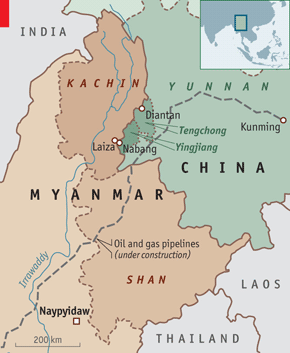
Dismantling Nuclear Reactors at Fukushima

In the aftermath of the Fukushima nuclear disaster in 2011, Naraha decided to oppose nuclear energy and call for the closure of the Fukushima No. 2 nuclear power plant that it co-hosts on the coast of the prefecture.  Since the 1970s, the town has been home to the No. 2 plant, which first went into service in 1982.  For decades, Naraha has received central government grants and subsidies for hosting the No. 2 plant, as well as tax revenues from TEPCO and its affiliates operating in the town.The plant also employed 860 people, many of them from Naraha and its surrounding communities.

Naraha had a population of about 8,000 before the Great East Japan Earthquake and tsunami caused the triple meltdown at TEPCO’s Fukushima No. 1 nuclear plant in March 2011. The crippled plant is located within 20 kilometers from Nahara.  The quake and tsunami also created a scare at the No. 2 plant by leaving the facility with only a limited power supply from external sources and emergency diesel generators to cool the reactors. But the plant brought the situation under control.

After long remaining silent about the fate of the No. 2 plant, TEPCO decided to retire all of its four reactors, which were approaching their legal operating limit of 40 years. If the power company wanted to continue operations at the plant, it would have to spend hundreds of billions of yen on upgrades to meet the more stringent safety standards that were set after the accident at the No. 1 plant…

Although Naraha and Tomioka officials share concerns about their municipalities’ financial futures, they see a silver lining in the situation at the Fukushima No. 1 nuclear plant.  Both towns have served as front-line bases for workers involved in decommissioning of the stricken plant.  About 5,000 workers a day who are involved in the decommissioning effort provide steady business for convenience stores and other shops in the two towns. Business hotels, dorms and apartment buildings have been built in the towns and neighboring communities to accommodate the workers. Work to dismantle the No. 1 plant is expected to take decades to complete. Local officials said the closure of the No. 2 plant could bring about a similar economic boon. “Decommissioning can become a major industry,” Naraha Mayor Matsumoto said.

Excerpts from  Nuclear plant closure brings hope, despair to Fukushima town
THE ASAHI SHIMBUN, October 18, 2018

How to Swarm your Enemy

Swarming is…a deliberately structured, coordinated, strategic way to strike from all directions, by means of a sustainable pulsing of force and/or fire, close-in as well as from stand-off positions. It will work best—perhaps it will only work—if it is designed mainly around the deployment of myriad, small, dispersed, networked maneuver units (what we call “pods” organized in “clusters”). Developing a swarming force implies, among other things, radical changes in current military organizational structures. From command and control of line units to logistics, profound shifts will have to occur to nurture this new “way of war.” …

Swarming could become the catalyst for the creation of a newly energized military doctrine:“BattleSwarm.” One requirement—well-informed, deadly small units—is already coming into being…

Technological hurdles also loom large on the path to BattleSwarm. First, aside from the
challenge of assuring the internetting of communications among myriad units, it is
imperative that communications also be hardened and made redundant. An enemy who
knows that information operations lie at the enabling core of swarming will surely strike
at them—and we must prepare to parry such blows in advance. It may also be possible
to safeguard a swarm force’s information flows by means of decoys and deception.
Indeed, the use of false or enhanced signals and traffic may prove to have offensive, in
addition to defensive, utility.

Swarming and the Future of Conflict (Rand pfd)

DARPA’s OFFensive Swarm-Enabled Tactics (OFFSET) program envisions future small-unit infantry forces using swarms comprising upwards of 250 small unmanned aircraft systems (UASs) and/or small unmanned ground systems (UGSs) to accomplish diverse missions in complex urban environments. By leveraging and combining emerging technologies in swarm autonomy and human-swarm teaming, the program seeks to enable rapid development and deployment of breakthrough capabilities.

Underwater Nuclear Wrecks

Russian scientists have said that radioactive waste sunk in the Arctic by the Soviet Navy has not leaked any contamination….  Data on the scuttled cargoes –– which includes several thousand containers of radioactive waste, as well as an entire nuclear submarine –– come from a month-and-a-half-long expedition in the Kara Sea conducted by the Russian Academy of Sciences Institute of Oceanology.  Mikhail Flint, the institute’s head, told reporters last week that scientists on the expedition had managed to significantly improve their maps of where the sunken waste lies, especially in the area of the Novaya Zemlya archipelago, a former Soviet nuclear bomb testing site.  From Novaya Zemlya’s craggy coast, the expedition conducted additional research mapping radioactive hazards in the White Sea, and then progressed to the Laptev Sea some 2000 nautical miles to the east.

Since the first decades of the 2000s, these mapping and measuring expeditions have taken place on an annual basis. Environmentalists fear the waste could eventually rupture and spoil thousands of square kilometers of fertile Arctic fishing grounds.

Beginning in 1955 and continuing until the early 1990s, the Russian Navy dumped enormous amounts of irradiated debris — and it one case an entire nuclear submarine — into the waters of the Arctic. It was not, however, until 2011 that the Russian government admitted this on an international level.  That year, Moscow shared with Norwegian nuclear officials the full scope of the problem. The list of sunken objects was far more than had initially been thought, and included 17,000 containers of radioactive waste; 19 ships containing radioactive waste; 14 nuclear reactors, including five that still contain spent nuclear fuel; the K-27 nuclear submarine with its two reactors loaded with nuclear fuel, and 735 other pieces of radioactively contaminated heavy machinery.

Exceprts from  Charles Digges ussian officials update maps of radioactive debris sunk in Arctic, Bellona, Oct. 15, 2018.

Flowering the Sahara

The installation of large-scale wind and solar power generation facilities in the Sahara could cause more local rainfall, particularly in the neighboring Sahel region. This effect,  could increase coverage by vegetation, creating a positive feedback that would further increase rainfall.

Wind and solar farms offer a major pathway to clean, renewable energies. However, these farms would significantly change land surface properties, and, if sufficiently large, the farms may lead to unintended climate consequences. In this study, we used a climate model with dynamic vegetation to show that large-scale installations of wind and solar farms covering the Sahara lead to a local temperature increase and more than a twofold precipitation increase, especially in the Sahel, through increased surface friction and reduced albedo. The resulting increase in vegetation further enhances precipitation, creating a positive albedo–precipitation–vegetation feedback that contributes ~80% of the precipitation increase for wind farms…

This highlights that, in addition to avoiding anthropogenic greenhouse gas emissions from fossil fuels and the resulting warming, wind and solar energy could have other unexpected beneficial climate impacts when deployed at a large scale in the Sahara, where conditions are especially favorable for these impacts. Efforts to build such large-scale wind and solar farms for electricity generation may still face many technological (e.g., transmission, efficiency), socioeconomic (e.g., cost, politics), and environmental challenges, but this goal has become increasingly achievable and cost-effective

Exceprts from Yan Li, Climate model shows large-scale wind and solar farms in the Sahara increase rain and vegetation, Science, Sept. 7, 2018

Shedding Nuclear Weapons: the uphill battle

At the June 2018 Singapore Summit, North Korea agreed to the goal of “complete denuclearization” in exchange for “security guarantees” by the United States, including an end to enmity … The two sides seem to have settled on the phrase “complete denuclearization.” For the purposes of this analysis, this is taken to include the key nuclear weapon–related obligations agreed on in the 1992 Joint Declaration of South and North Korea on the Denuclearization of the Korean Peninsula, namely to “not test, manufacture, produce, receive, possess, store, deploy or use nuclear weapons” and that these commitments would be verified.

In March 2018, North Korea announced a moratorium on nuclear weapons and ballistic missile testing. …Moving forward, eliminating North Korea’s nuclear weapons program and related facilities will need a freeze on current weapon-related activities; an agreed baseline of current stockpiles of nuclear weapons, fissile materials, ballistic missiles, and key components; and verified reductions of these stockpiles and downsizing of North Korea’s weapons complex….We assume that a new framework agreement would contain provisions similar to those in some other arms-control agreements, under which the parties agree not to interfere with specified remote-monitoring techniques or use concealment measures intended to obstruct verification.

Since North Korea’s withdrawal from the Nuclear Non-Proliferation Treaty (NPT) in 2003, there have been essentially no international inspection efforts in North Korea. At the same time, North Korea has expanded the scale and complexity of its nuclear weapons program. On the basis of information available via open sources, it is not clear how many nuclear weapons North Korea possesses today, of what kind (including possibly thermonuclear weapons), and whether they use plutonium or highly enriched uranium (HEU) or both as fissile material. Nor is there reliable information on its ballistic missile capabilities. To establish a basis for moving forward, North Korea could add to its freeze on nuclear weapon and ballistic missile tests a freeze on fissile material production. This can be verified primarily through agreed-on nonintrusive provisions.

In the case of plutonium, satellite imagery can be sufficient to confirm the operational status of reactors in North Korea. Imagery can be used to observe heat signatures, vapor plumes, cooling water discharges, and other activities near the reactor . All these indicators would provide good evidence for a suspension of plutonium production at Yongbyon nuclear reactor in North Korea. Regional krypton-85 monitoring, ideally with a small number of detectors placed around the Yongbyon site, could confirm that remaining spent fuel is not reprocessed . There are also simple measures to permanently disable the Yongbyon reactor—for example, by blowing boron dust through the core’s cooling channels—but North Korea may not agree to such actions until the later stages of the denuclearization process.

The situation with regard to uranium enrichment is more difficult. It may be possible to confirm remotely the shutdown status of the Yongbyon enrichment plant and a possible second plant suspected to be at Kangson—for example, by monitoring vehicle traffic, including shipments of uranium hexafluoride (UF6) cylinders entering and leaving the sites, or by monitoring signatures related to electricity supply.

Rather than shut them down, North Korea may prefer to use its enrichment plants for production of low-enriched uranium for its experimental light-water reactor (30 MW-electric). If this or other civilian reactors are allowed to operate, then International Atomic Energy Agency (IAEA) safeguards could be applied to these plants as well as to the feed and product materials associated with them, as happens with civilian uranium enrichment plants in all non-nuclear weapon states and also in some nuclear weapon states. In this case, verification could include unattended measurement systems confirming the nonproduction of HEU, but it would also include onsite inspections. Even if North Korea ended all nuclear activities, IAEA safeguards would still be required to detect possible efforts at reconstitution of its nuclear weapons program.

One major concern is the existence of undeclared nuclear facilities, especially uranium enrichment plants beyond that at Yongbyon and suspected at Kangson. This is a proliferation concern in all states and not limited to North Korea, however…

With a freeze as a starting point, declarations of current fissile material and nuclear warhead inventories would be important for measuring progress toward denuclearization. These initial declarations could be relatively simple. Ideally, as a transparency measure, they could be made public. In the case of nuclear warheads, a declaration could include the total number of warheads in North Korea’s stockpile, perhaps listed by type, and the number of additional warhead components in storage; in the case of fissile material, a declaration could include acquisitions, losses, and removals, including the aggregate amount of material consumed in tests, and the current inventory of plutonium and highly enriched uranium, ideally also specifying the respective plutonium-239 and uranium-235 contents. More detailed declarations could follow at a later stage of the process.

There is a precedent for fissile material declarations. In May 2008, North Korea declared its plutonium inventory, often reported as 37 kg and backed up by 18,000 pages of operating records. At the time, the United States estimated that North Korea had produced a total of 40 to 50 kg of plutonium, raising concerns that the declaration may be incomplete. U.S. negotiators requested access to the Yongbyon reactor to confirm total plutonium production through use of nuclear archaeological techniques, in which the isotopic ratios of trace impurities in graphite samples are analyzed. At that time, North Korea refused.  Nuclear archaeology techniques for graphite-moderated reactors are now well established and would be sufficient to narrow down the uncertainty in plutonium production to a few kilograms, possibly to less than one weapon-equivalent. North Korea may or may not agree to these procedures early on in the denuclearization process, but every effort must be made to preserve the reactor core and relevant operating records so that such an analysis can be conducted when circumstances permit.

Reconstructing uranium enrichment activities is more challenging. Perhaps the best option would be to reconstruct North Korea’s history of uranium supply and use. Such an effort would assess uranium production at North Korean mines, uranium purification, UF6 production, and enrichment. This would involve auditing the records for internal consistency. Reports of North Korean uranium ore grade suggest that it takes 300 to 400 tons of ore to extract 1 ton of uranium. This means that up to 2000 tons of ore are required to make 25 kg of weapon-grade HEU or 5 kg of weapon-grade plutonium, the typical amounts used in a nuclear weapon. The review of records from the different plants could be complemented with forensic analysis of tailings at the mines and depleted uranium in cylinders at known enrichment plants. It also may be possible to examine North Korea’s centrifuge-plant equipment and reconstruct the amount of uranium processed in these plants and respective HEU output.

It will take years to conclude that undeclared stockpiles of materials and warheads do not exist, even if North Korea fully cooperates...

For safety reasons, as former Los Alamos National Laboratory Director Siegfried Hecker and colleagues recently observed, “shipping the North’s nuclear weapons out of the country is naïve and dangerous. The weapons must be disassembled by the people who assembled them.”…A third option would be for North Korea to gradually reduce the size of its weapons complex without revealing where exactly nuclear weapons and long-range ballistic missiles remain. An estimate in 2014 suggested about 90 nuclear weapon and missile sites of potential interest…

Excerpts from Alexander Glaser and Zia Mian, Denuclearizing North Korea: A verified, phased approach, Science, Sept. 7, 2018

Who Owns the Genes in the Seas?

It’s an eye-catching statistic: A single company, the multinational chemical giant BASF, owns nearly half of the patents issued on 13,000 DNA sequences from marine organisms. That number is now helping fuel high-stakes global negotiations on a contentious question: how to fairly regulate the growing exploitation of genes collected in the open ocean, beyond any nation’s jurisdiction.

The negotiations that took place at the UN in September 2018 aim, inter alia, to replace today’s free-for-all scramble for marine genetic resources with a more orderly and perhaps more just regime.  Many developed nations and industry groups are adamant that any new rules should not complicate efforts to discover and patent marine genes that may help create better chemicals, cosmetics, and crops. But many developing nations want rules that will ensure they, too, share in any benefits. Scientists are also watching. A regulatory regime that is too burdensome could have “a negative impact” on scientists engaged in “noncommercial ocean research,” warns Robert Blasiak, a marine policy specialist at the Stockholm Resilience Centre.  It is not the first time nations have wrangled over how to share genetic resources. Under another U.N. pact, the 2010 Nagoya Protocol, 105 countries have agreed to rules to prevent so-called biopiracy: the removal of biological resources—such as plant or animal DNA—from a nation’s habitats without proper permission or compensation.

Those rules don’t apply in international waters, which begin 200 nautical miles from shore and are attracting growing interest from researchers and companies searching for valuable genes. The first patent on DNA from a marine organism was granted in 1988 for a sequence from the European eel, which spends part of its life in freshwater. Since then, more than 300 companies, universities, and others have laid claim to sequences from 862 marine species, a team led by Blasiak reported in June in Science Advances. Extremophiles have been especially prized. Genes from worms found in deep-sea hydrothermal vents, for example, encode polymers used in cosmetics. And BASF has patented other worm DNA that the company believes could help improve crop yields. The conglomerate, based in Ludwigshafen, Germany, says it found most of its 5700 sequences in public databases…

It may take years for nations to agree on a marine biodiversity treaty; [A]n “ideological divide” between developing and developed countries has, so far, “led to stalemate” on how to handle marine genetic resources, says Harriet Harden-Davies, a policy expert at the University of Wollongong in Australia.

Most developing nations want to expand the “common heritage” philosophy embedded in the 1982 United Nations Convention on the Law of the Sea, which declares that resources found on or under the seabed, such as minerals, are the “common heritage of mankind.” Applying that principle to genetic resources would promote “solidarity in the preservation and conservation of a good we all share,” South Africa’s negotiating team said in a recent statement. Under such an approach, those who profit from marine genes could, for example, pay into a global fund that would be used to compensate other nations for the use of shared resources, possibly supporting scientific training or conservation.

But developed nations including the United States, Russia, and Japan oppose extending the “common heritage” language, fearing burdensome and unworkable regulations. They argue access to high seas genes should be guaranteed to all nations under the principle of the “freedom of the high seas,” also enshrined in the Law of the Sea. That approach essentially amounts to finders keepers, although countries traditionally have balanced unfettered access with other principles, such as the value of conservation, in developing rules for shipping, fishing, and research in international waters.

The European Union and other parties want to sidestep the debate and seek a middle ground. One influential proposal would allow nations to prospect for high seas genes, but require that they publish the sequences they uncover. Companies could also choose to keep sequences private temporarily, in order to be able to patent them, if they contribute to an international fund that would support marine research by poorer nations. “Researchers all around the world should be put all on a level playing field,” says Arianna Broggiato, a Brussels-based legal adviser for the consultancy eCoast, who co-authored a paper on the concept this year in The International Journal of Marine and Coastal Law.

Exceprts from Eli Kintisch U.N. tackles gene prospecting on the high seas, Science, Sept. 7, 2018

The Biggest Bang for the Buck: Which Species to Save

Faced with a gulf between the species in need and the available resources, some scientists are pushing an approach that combines the cold-blooded eye of an accountant with the ruthless decisiveness of a battlefield surgeon. To do the greatest good, they argue, governments need to consider shifting resources from endangered species and populations that are getting too much attention to those not getting enough. That could mean resolving not to spend money on some species for which the chance of success appears low, such as the vaquita, an adorable small porpoise now down to fewer than 30 animals in Mexico’s Gulf of California.

The term “triage”—from the French verb trier, meaning to sort—was born on the battlefields of Napoleonic Europe. Faced with a flood of wounded soldiers, French military doctors conceived of a system to decide who got medical attention and who was too far gone. The idea reached conservation biology as early as the 1980s. But in recent years it has moved from scientific journals to the halls of policymakers, thanks in part to an Australian mathematician and conservation scientist, Hugh Possingham.

Over the following decade, Possingham and others worked to create formulas that could point to the most efficient way to spend money on species preservation. They tried to quantify answers to key questions: What will species restoration projects cost? How likely are they to succeed? How distinct and important is each species? What actions will benefit multiple species or entire ecosystems, bringing the biggest bang for the buck?…

Today, conservation spending is influenced by a complex array of factors, including how close a species is to extinction and the pressure brought by lawsuits, lobbying, and media coverage. The result, Possingham and others argue, is that money is often poured into costly long shots or charismatic organisms, whereas species that could be secured for a relatively low cost go wanting.

A dozen years ago, New Zealand became the first nation to test Possingham’s approach. A nation filled with unique species, some 3000 of them at risk, the country is a poster child for the extinction crisis. But New Zealand had no clear process for setting conservation spending priorities, recalls Richard Maloney, a senior scientist in the country’s Department of Conservation in Christchurch.

In a bid to do better, officials asked Possingham to help craft a plan for spending roughly $20 million per year. The result was a list of 100 top-priority species, developed using a formula that balanced costs and benefits. In general, highly threatened species unique to New Zealand and ended up at the top of the list. But it also included representatives from a variety of species and took into account the cost and likelihood of success. Before that process, the government was working to recover 130 species. Now, more than 300 are getting attention, Possingham says.  But for every species or population at the top of such lists, one is at the bottom. And that can lead to agonizing choices

But saving th Canadian caribou might mean keeping the species on life support for decades… When Mark Hebblewhite, a caribou biologist at the University of Montana in Missoula, looks at how maps of woodland caribou habitat overlap with Alberta’s oil and gas deposits, his response is: Get real. Hebblewhite doubts the government will ever summon the will to impose the development restrictions necessary to save all herds. He points to a 2010 study indicating that such restrictions could mean forgoing extraction of oil, gas, and timber worth more than $125 billion in Alberta alone…

Instead of focusing on the most feeble herds, Canada should instead protect habitat in key areas where caribou populations still stand a good chance, he argued in a 2017 Biological Conservation paper. “We’ve prioritized the most screwed populations,” Hebblewhite says. “All I’m saying is that we prioritize the winners.”

That idea makes biologist Alana Westwood uncomfortable. A Vancouver, Canada–based scientist with the Yellowstone to Yukon Conservation Initiative,… If Canada isn’t willing to take the necessary steps, she suggests officials rename its law “the ‘recover species that are most easy to accommodate under business as usual act.’”…”It’s an easy way out for managers who don’t have the balls to make tough decisions, and therefore we lose species after species,” says Stuart Pimm, a conservation scientist at Duke University in Durham, North Carolina, who has often sparred with Possingham in public forums. One problem, he argues, is that giving up on a species also means abandoning a potent tool to rally the public and the courts. Sometimes charismatic animals such as California condors or polar bears can help build political support for saving endangered species or habitats more broadly….

And some species stand for entire ecosystems, Pimm adds. Consider the Cape Sable seaside sparrow. The innocuous songbird lives in Florida’s Everglades, where water diversions threaten its marsh habitat. The species might not rank high in a triage system—in part because other populations of related seaside sparrows exist. But because of how the U.S. Endangered Species Act is structured, efforts to protect the sparrow have required policymakers to reallocate water, benefiting the entire ecosystem. “I’m afraid we have to make more complicated decisions than the simple recipes that Hugh comes up with,” Pimm says.

Possingham concedes that triage is not suited to every situation. Europe, for example, has wealthy countries and few native endangered species, which makes saving them all realistic. And sometimes a species is so culturally important that it gets special treatment. New Zealand, for instance, has departed from its triage system to give priority to protecting 50 cherished species, including five species of kiwi birds, the nation’s mascot.

Excepts from Warren Cornwall With limited funds for conservation, researchers spar over which species to save—and which to let go, Science Magazine, Sept. 6, 2018

Geopolitical Quintet: Legal Status of Caspian Sea

Caspian Sea…is the world’s largest body of inland water—or what some would call a rather salty lake. The confusion has fuelled disputes over its legal status for nearly 30 years, as lakes and seas fall under different international legal regimes.

The Caspian sits at a strategic spot between Europe and Asia, and contains lucrative stores of oil, gas and fish, including the caviar-producing sturgeon. The Soviet Union and Iran had a clearly defined maritime border but, after the Soviet collapse, the appearance of independent Azerbaijan, Kazakhstan and Turkmenistan muddied the waters.

On August 12th the five littoral countries at last signed an agreement the Convention on the Legal Status of the Caspian Sea. The Caspian, says a Russian official, is to be treated as neither sea nor lake, but instead subject to a “special legal status”. While leaving some of the thorniest issues unresolved, the pact clarifies the maritime borders, enabling new oil, gas and pipeline projects to go ahead.

All five countries are to have 15 mile-wide territorial waters extending from their shores and another ten miles of exclusive fishing rights. The rest of the surface water will be common territory, but non-signatory states (e.g., the United States) may not deploy armed forces there. For Russia, this helps preserve its military dominance by retaining freedom of movement for its warships. (Russia has used the Caspian to launch missiles into Syria.)

The seabed and its resources, meanwhile, will be divided separately between the signatories. Russia, Kazakhstan and Azerbaijan already have agreements that split up the northern Caspian. Carving up the rest of the seabed will require further negotiations. The agreement also allows pipelines to be constructed with the consent only of the countries whose sectors they pass through. That might unblock a much-discussed Trans-Caspian Pipeline from Turkmenistan to Azerbaijan which Russia has long opposed.

Exceprts from Big Lake Small Sea: Russia’s Neighborhood, Economist, Aug. 18, 2018, at 44

Favorite of the West: Niger as Police State

Niger, a poverty-stricken nation perched on the southern belt of the Sahara, is rapidly being transformed into one of the world’s most strategic security hubs….“This place is a nest of spies,” said one contractor … “Below the radar, it’s become a key country for the West.”  A surge in financial assistance from European nations seeking to stem the flow of African migrants has made Niger the world’s largest per capita recipient of European Union aid…Western military forces operate from at least nine bases in Niger, government officials said…. The U.S. is finishing a large air base in Agadez, while the Central Intelligence Agency has begun flying armed drones from an airstrip outside the northern town of Dirkou, Nigerien officials said.

U.S. and European policy makers praise the government as a good partner that has welcomed foreign military personnel and slashed the migrant flow by almost 90% from 2015 highs. …Locals, nongovernmental organizations and opposition activists say the government is using international backing to neutralize dissent and embezzle millions of dollars in aid, charges the government denies. The opposition—backed by rights group Amnesty International—says President Mahamadou Idriss Issoufou, in power since 2011, is arbitrarily jailing activists and spending Western aid on bolstering his elite Presidential Guard…

Swaths of the nation’s centuries-old transportation economy—the movement of people and goods from West Africa through the Sahara—has essentially been criminalized by the EU crackdown on migration.  Some of the desert-dwelling Tuareg people, who have transported goods for centuries, are now smuggling weapons, men and money for cash-rich jihadist insurgencies. Migrants are dying in the desert in failed attempts to find new routes.

“The West is pleased because Niger’s government is a willing partner,but as Niger’s security chief, Mohammed Bazoum, says “We have become a hinge country, a geostrategic hub, but it is a disaster for us. We are known as a land of terrorism and migrant traffic.”

Across Niger’s western border with Mali, jihadist groups including Islamic State and al Qaeda franchises control stretches of territory around the northern city of Gao. Along the southern frontier with Nigeria, a rejuvenated Boko Haram is mounting intensifying attacks against security forces, including around the city of Diffa, where the U.S. has dozens of troops stationed. To the north lies Libya, which has become a hotbed of instability, weapons and radicalization.

The European Development Fund last year awarded $1 billion to Niger through 2020, and unusually for a country governance watchdogs deem chronically corrupt, 75% is now infused directly into the Nigerien budget instead of through nongovernmental organizations.The money funds hundreds of off-road vehicles, motorcycles and satellite phones for Nigerien security forces as well as new infrastructure and technology along the borders and countrywide development programs.

In Niamey’s central Plateau district, tall black screens block the soaring new U.S. Embassy headquarters, which will be one of the largest in West Africa. Saudi Arabia has broken ground on its own huge mission, while buildings belonging to EU agencies occupy whole city blocks. Hotels and conference centers are rising in tandem, reconfiguring the economic and political landscape of a nation ranked the world’s second-poorest behind the Central African Republic.

The government says the building boom is creating jobs. Locals say it has stoked runaway inflation and priced them out of their neighborhoods. In the past year, the cost of a kilogram of rice has risen 29%, sending shock waves through homes where the average wage is $2.66 a day.

“The cost to live here rises with each new European coming,” lamented Abdulraham Mamoudou, repairing his motor scooter on a dusty corner near the expanding U.S. Embassy compound.

A similar pattern is playing out further north in the smuggling hub of Agadez, where the EU-coordinated migration crackdown has transformed a boomtown into a simmering bust.  The city’s jails are bursting with men who have been convicted of smuggling. Vast depots on the town’s outskirts house hundreds of trucks confiscated by authorities…“This place is now for the Americans and French,” said Sadiq, a former migrant smuggler who evaded arrest and is now unemployed. “They took our livelihood and don’t give us anything in return.”

Excerpts from ‘A Nest of Spies’: Niger’s Deserts Become Front Line of Fight Against Jihadis, Wall Street Journal, Sept. 12, 2018

One Player, Many Pawns: the thirst for nuclear technology

The nuclear power industry, which had been in the doldrums since the 1980s, suffered a devastating blow in 2011 when a tsunami engulfed the Fukushima power plant in Japan, ultimately causing a meltdown. The amount of electricity generated by nuclear power worldwide plunged 11% in two years, and has not recovered since. Within this declining industry, one country now dominates the market for design and export of nuclear plants: Russia.

Rosatom, Russia’s state-owned nuclear-power company,  is focused on what some call the “great grand middle”: countries that are close allies of neither the United States nor Russia. In April Russia started building Turkey’s first nuclear plant, worth $20bn. Its first reactor is due for completion in 2023. Rosatom says it has 33 new plants on its order book, worth some $130bn. A dozen are under construction, including in Bangladesh, India and Hungary…. Once completed the plants offer an obvious diplomatic lever in the form of sway over a large portion of a country’s electricty generation… The relationship betweeen exporter and customer is particularly close in a nuclear plant’s early years, when local employees are still being trained and the exporting country is direclty involved in the plant’s operation….

Russia’s nuclear programme has endured for two main reasons. Its designs are cheap, and Rosatom enjoys the backing of the state, which helps it absorb hard-to-insure risks like nuclear meltdowns. Its competitors trail hopelessly: France’s Areva (now Orano) has started building only two plants in the past ten years, in Finland and China; both are delayed and over budget. KEPCO, South Korea’s energy company, is facing a domestic backlash against nuclear power, while Westinghouse, in America, is only now emerging from bankruptcy.

Russia’s only real competitor is China..Yet although China will surely catch up, for now Russia has no serious rivals in the export of nuclear technology. In a world that needs to generate much more electricity from nuclear power if it is to take decarbonisation seriously, that is a sobering though

Excerpts from  Atoms for Peace: Russia and Nuclear Power, Economist, Aug. 4, 2018, at 43

How Rivers Die

Kapuas, Indonesia’s longest river support somes 3m people…One reason that the water is so murky is deforestation. Since the 1970s logging has enriched locals while stripping away the vegetation that held the soil in place. The Centre for International Forestry Research (CIFOR) found that between 1973 and 2010 over 100,000 square kilometres of forest was lost on Kalimantan, or a third of the original coverage. A national moratorium that began in 2011 has done little to still the axes. As a result, torrential tropical rains wash lots of loose earth into the Kapuas.

Illegal gold-mining compounds the problem. Locals tear up the riverbed with diggers or blast the banks with high-pressure hoses, then sieve the mud for gold. Mercury, which the miners use to separate gold from sediment, but which is poisonous to humans and fish alike, leaks into the river.

The riverbank is punctuated with corrugated-iron towers, which emit birdsong from loudspeakers. These are designed to lure swiftlets, who make their nests with saliva. The nests of swiftlets  are considered a delicacy and aphrodisiac by many Chinese.* Deane, a shop owner, built his tower last December after seeing others do the same. He sells the nests to a wholesaler for about 15m rupiah ($1,025) a kilogram…

In Kapuas Hulu, an upstream district, half the population rely on the river for drinking water. A quarter have no toilet. Even where bathrooms do exist along the river, they are often floating cubicles with a hole in the floorboards. Cows and goats, living in wooden riverside cages, also defecate straight into the Kapuas

The Kapuas passes through seven districts. Midstream ones, such as Sintang and Sanggau, earn hefty tax revenues by encouraging palm-oil plantations. But downstream districts suffer from the resulting silt, traffic and run-off without receiving any of the benefits. The same problem occurs at a village level. Mr Hadi says that fishing by sprinkling poisonous leaves on the water (the stricken fish float to the surface) is forbidden but other village heads do not enforce the rules…

A study by CIFOR on the income of villagers living near the Kapuas river found that the best-paid palm-plantation workers earned 50% more than the most successful fishermen. (Gold miners made three times as much—and spent more on education.)…But the environmental damage is plain to see. The river here is brown, clouded by silt. A study published in 2016 found that levels of phosphates in the water, from fertilisers and villagers washing themselves with soap, are highest near urban areas and palm plantations.

Down in Pontianak, the river water is darker still, occasionally brightened by oil slicks. Water bottles and instant-noodle packets cling together to form plastic islands.

Excerpts from  Indonesia’s Longest River,  Economist, Aug. 25, 2018

*According to Wikipedia: Authentic bird’s-nest soup is made from nests of some species of swiftlet.  Instead of twigs, feathers and straw, these swiftlets make their nest only from strands of their gummy saliva, which hardens when exposed to air. Once the nests are harvested, they are cleaned and sold to restaurants. Eating swiftlet nest material is believed to help maintain skin tone, balance qi (“life energy”) and reinforce the immune system… (Dictionary of Traditional Chinese Medicine, The History of Chinese Medicine and the Nutrition Table).

An Epiphany Moment: useful waste-water

Fledgling companies, many backed by private equity, are rushing to help shale drillers deal with one of their trickiest problems: what to do with the vast volumes of wastewater that are a byproduct of fracking wells.

When producers blast a mix of water, sand and chemicals to release oil and gas from rock formations miles underground, they not only unlock oil and gas, but also massive quantities of briny water long buried beneath the surface. Drillers in the Permian Basin in New Mexico and Texas currently generate more than 1,000 Olympic-size swimming pools full of this murky, salty water every day. Handling it amounts to up to 25% of a well’s lease operating expense, according to analysts.

Investors have expressed interest in this corner of the U.S. shale industry as oil production in the Permian soars to record levels. Analysts said the region could produce more than five million barrels of oil a day by 2023, more than the current daily production of Iran.

Sensing a chance for a big return, private-equity firms have invested more than $500 million into wastewater-disposal companies such as Solaris Water Midstream LLC, WaterBridge Resources LLC, Goodnight Midstream LLC and Oilfield Water Logistics LLC. There are roughly a dozen of these water-focused companies that analysts said could each be worth hundreds of millions of dollars.

These companies are building pipelines to transport the wastewater and dispose of it deep underground, hoping to displace the trucks that currently do the job. Some companies have a longer-term plan: recycling the wastewater to sell it back to drillers to reuse. Most of the companies are currently private;….

Apache Corp. , one of the largest producers in the Permian, wants to reuse more water to reduce the millions of barrels it must dispose of and limit the freshwater it purchases for fracking, according to a company presentation earlier this year. Apache recycled more than 22 million barrels of water from 2013 to 2016 in just one subsection of the Permian.

Excerpts from The Next Big Bet in Fracking: Water, WSJ, Aug. 12, 2018

How Many Uranium Mines Do We Need?

At the height of activity in 1980, U.S. companies produced nearly 44 million pounds of uranium concentrate and provided most of the supplies purchased by nuclear power plants. In 2017, American miners produced 2.4 million pounds and supplied just 7 percent of the uranium bought by domestic plants.  The industry, which once supported nearly 22,000 jobs, now employs just a few hundred people each year…

In July 2018, the U.S. Commerce Department opened an investigation to determine whether the nation’s growing dependence on foreign uranium supplies poses a risk to national security….The two miners that petitioned Commerce to conduct the review, Energy Fuels and UR-Energy, want the United States to take steps to ensure U.S. producers control 25 percent of the market. They say they can’t compete with subsidized supplies from places like Russia, Kazakhstan and Uzbekistan.

To be sure, nearly half of the uranium used in the United States comes from allies like Canada and Australia. From the moment they lost trade protections, U.S. miners had trouble competing with these foreign supplies.
“It’s been government-sponsored, government-subsidized just since the beginning. Trying to sort that out and find where there’s a free market in uranium — I find that very questionable.”-Luke Danielson, Sustainable Development Strategies Group president

The U.S. uranium mining industry is relatively young. It went through a brief golden age between about 1955 and 1980, beginning when the United States offered generous incentives to shore up its stockpiles of the nuclear weapons fuel during the Cold War….By the 1960s, the program had packed U.S. storehouses so full of uranium stockpiles that the government stopped paying the incentives. However, it left in place rules barring the use of foreign uranium until 1975, when it began to allow a growing percentage of overseas supplies into the market.  That opened the door to high-quality, low-cost supplies from Canada and Australia. By 1987, the United States was importing nearly 15 million pounds of uranium, and domestic output fell by about a third to roughly 13 million pounds.

While competition weighed on U.S. uranium production, the excitement around nuclear energy in the 1970s kept mines busy. However, the American love affair with atomic power proved short-lived. The 1979 meltdown of a reactor at Three Mile Island in Pennsylvania sparked fierce backlash against nuclear energy. Seven years later, the Chernobyl nuclear disaster turned a Ukrainian city into a ghost town…

By the early 2000s, U.S. uranium production was at its lowest in a half century.  Around that time, the former Soviet state Kazakhstan was ramping up uranium mining. In just a few short years, it would become the world’s top uranium producer and the second biggest supplier to the United States.
The Central Asian nation accomplished that feat in large part by exploiting a process called “in situ leaching” (ISL) or in situ recovery  (ISR)*** increasingly being used to extract uranium.  Along with countries like Niger, Mali and Mongolia, Kazakhstan has an advantage: lax regulations that allow it to process uranium cheaply from in situ leaching, which involves pumping chemicals into uranium reserves and carries serious risks to the environment if it’s not carried out responsibly…

And then in 2011, the Fukushima nuclear disaster in Japan created a backlash unlike anything seen since Three Mile Island and Chernobyl. In the aftermath, Japan shut down all of its nuclear reactors, and Germany decided to phase out nuclear energy by 2022.  The U.S. nuclear renaissance has also fizzled as flagship projects have turned into costly boondoggles. The venerable Westinghouse Electric Company filed for bankruptcy last year under the weight of billions of dollars in losses tied to its troubled nuclear power plant projects in Georgia and South Carolina. “There’s such a glut of inventory in the market that it’s just not profitable for some of the mines to produce, so the price has just really plummeted as a result of that,” said Sean Davis, a research analyst at IHS Markit who tracks the chemicals used in uranium mining.

Since their peak in 2007, uranium prices have crashed from nearly $140 per pound to $20-$25.

Excerpts from Nuclear wasteland: The explosive boom and long, painful bust of American uranium mining, CNBC, Aug. 4, 2018

***”No remediation of an ISR operation in the United States has successfully returned the aquifer to baseline conditions.”

Floating Nuclear Graveyard Rests

Russia: The Lepse service vessel, Russia’s waterborne atomic graveyard, has inched a step closer to complete dismantlement as officials say they will begin extracting nuclear fuel rods from its irradiated holds in September 2018 — a long awaited development involving robotic technology, thousands of technicians and a small city of radiation shelters surrounding the vessel’s hull.

The vessel, which technicians are carefully pulling apart at the Nerpa Shipyard near Murmansk, was used to refuel Russia’s nuclear icebreakers at sea – a job that eventually turned it into one of the world’s most dangerous radioactive hazards. Since its retirement, it has become a flagstone in Northwest Russia’s legacy of Cold War nuclear waste.

Removing spent fuel from the vessel ­– including the extraction of several damaged assemblies ­– is among the most complex nuclear cleanup operations Russia has ever undertaken. When it’s completed in 2020, it will be a decades-long culmination of high-tech preparation paid for by marshaling millions of dollars from nearly a dozen western countries, (the European Bank of Reconstruction and Development) often in the face of trying political circumstances.

The new phase in the Lepse dismantlement also marks another step toward cleaning up naval and civilian nuclear debris in Northwest Russia. Almost exactly a year ago, the first containers of spent nuclear fuel that accrued over fifty years at Andreyeva Bay were hauled away for storage. Both are projects that Bellona has long advocated for.

During its career, the Lepse amassed 639 spent nuclear fuel assemblies in its holds, many from refueling the Lenin, the flagship Soviet icebreaker, between 1965 and 1967. The bulk of those fuel rods are damaged, and defy removal by conventional means.

Excerpts from Charles Digges, Anna Kireeva,  Russia to start breaking down one of its most radioactive ships next month, Bellona. org, Aug. 1, 2018

Female Genital Mutilation: the first prosecution

Somalia’s Attorney General Ahmed Ali Dahir announced the country’s first ever prosecution in July 2018 against female genital mutilation (FGM) following the death of a 10-year-old girl, a government adviser said…[T]he girl, Deeqa, who suffered severe bleeding after her mother took her to a traditional cutter. …Deeqa’s death prompted campaigners to renew calls for Somalia to pass a law on FGM, which affects 98% of women in the east African country – the highest rate in the world, according to UN data.

Somalia’s constitution prohibits FGM, but efforts to pass legislation to punish offenders have been stalled by parliamentarians afraid of losing votes.Global campaigners against FGM, which affects around 200 million girls and women worldwide, welcomed the news. Many girls in Somalia undergo the most extreme form of the ancient ritual in which external genitalia are removed and the vaginal opening is sewn up.

Deeqa was taken by her mother to a traditional circumciser on July 14, 2018 in central Somalia’s Galmudug state and died in hospital two days later.   Her father was quoted by international media as defending the practice, saying he believed his daughter was “taken by Allah”.

Excepts from  First prosecution for female genital mutilation in Somalia, Reuters, July 26,  2018

Diving into a Nuclear Pool

United Kingdom: Specialist divers have completed their mission to deal with radioactive waste from Sizewell A Site’s nuclear fuel storage ponds, nearly two months ahead. The divers, who are shielded from radiation by the water in the ponds, successfully cut up and ‘size reduced’ all of the 35 waste storage containers left in Sizewell A’s ponds. They also cut up around 100 tonnes of other redundant equipment before removing all the radioactive sludge from the pond floor.

Conventionally, pond clean-out is done using remotely operated equipment to lift the whole radioactive skips  (waste containers) and other pond furniture clear of the water, exposing them to the air, where they are carefully cut and decontaminated. This process is slow with potential radiation dose risks for workers,” Magnox Sites said.  “Using this innovative underwater decommissioning technique, radiation levels for workers were around 20 times less than with conventional techniques of decommissioning the waste items in air,” it added. The diving technique also has a lower environmental impact, is quicker and more efficient and therefore cheaper.  The next phase of work is to take the waste out of the ponds where it will be treated and safely packaged. The ponds are set to be completely emptied and drained by the end of 2019.

The team of 12 nuclear divers was supplied by Underwater Construction UK Ltd. They tackled their first UK ‘nuclear dive’ at the Dungeness A Site in 2016 and arrived on site at Sizewell A in October 2017.

Sizewell A’s two 210 MWe Magnox gas-cooled reactors operated from 1966 until 2006. Defuelling began in 2009, with fuel removed from the reactors placed in the site’s used fuel storage ponds before being packaged in transport containers for shipment to the Sellafield complex for reprocessing. The final flask of fuel was shipped to Sellafield in August 2014. Sizewell A was declared completely fuel free in February 2015.

Excerpts from Divers Complete Radwast work at Sizewell A, World Nuclear News, Aug. 3,  2018

Nuclear Terrorism: How to Crash a Drone into a Nuclear Plant

Greenpeace crashed a drone into the spent-fuel cooling building at the EDF-Bugey nuclear power plant site on July 3, 2018 to demonstrate gaps in the facility’s security. Officials  were lucky it was just Greenpeace demonstrating vulnerabilities at the facility, and not a terrorist group intent on attacking the site. This incident highlights why the 2010 US Nuclear Posture Review’s assessment that nuclear terrorism is “today’s most immediate and extreme danger” remains relevant: It underscores the importance of the sustained and persistent six-year effort from 2010 to 2016 to reduce the threat posed by nuclear terrorism, far from the headline nuclear issues of Iran, North Korea, and arms control with Russia…

The Nuclear Security Summits, initiated by President Barack Obama in 2009 and concluded in April 2016, significantly strengthened the global nuclear security architecture and brought high-level political attention to the risk posed by nuclear terrorism. ..According to a new report from the Arms Control Association and the Fissile Materials Working Group, The Nuclear Security Summits: And Overview of State Actions to Curb Nuclear Terrorism 2010-2016, countries made more than 935 distinct commitments to strengthen and improve nuclear security throughout the six-year process.

As a result, three entire geographic regions—South America, Southeast Asia, and Central and Eastern Europe—have entirely eliminated highly-enriched uranium from their soil, and only 22 countries possess weapons-usable nuclear material, down from more than 50.

Excerpts from Sara Z. Kutchesfahani, Kelsey Davenpor, Why countries still must prioritize action to curb nuclear terrorism, Bulletin of Atomic Scientists, Aug. 3, 2018

Mini-Green Grids

A forested village in Jharkhand state, eastern India, Narotoli is home mainly to adherents of Sarna, a nature-worshipping tribal religion. In more ways than one, it has long been off-grid… In 2018, it became one of the last in India to benefit from a push by Narendra Modi, the prime minister, to supply electricity to all the country’s villages. But the national power lines are so “reliably unreliable”, says an Indian executive, that they might as well be washing lines.

In 2016, before the national grid arrived, however, Mlinda, a social enterprise, had set up a “mini-grid”, a bank of batteries charged by solar panels and hooked up to homes, to guarantee round-the-clock power independent of the national network.  The power generated by the plant is expensive (though it costs less than villagers often pay for alternatives such as kerosene for lighting and diesel for irrigation pumps). The worry is that demand for electricity may not be enough to justify the installation cost. …But Mlinda and other mini-grid installers see them as more than a way to satisfy existing demand for electricity: they are a way to catalyse development. The installers advise villagers on irrigation, farming and marketing to help them develop businesses that require reliable electricity, which in turn justifies the expense of installation.

Vijay Bhaskar of Mlinda says a big mistake in development has been to assume that, once people are hooked up to electricity, businesses will automatically flourish. People have to be taught how to make the most of power, he says. “Bringing energy is the easy part. The hard part is finding productive ways to make use of it.”  According to one British expert, “mini-grid operators are not sellers of kilowatt-hours; they are stimulators of rural development.” Jaideep Mukherjee, the boss of Smart Power India, an NGO supported by the Rockefeller Foundation, says their job is to “demonstrate the benefits, train and then propagate”.

An independent study for Mlinda found that GDP per person in eight villages with mini-grids rose by 10.6% on average over the first 13 months, compared with 4.6% in a group of similar villages without them.  Mini-grids are being set up at the rate of just 100 or so a year, from Myanmar to Mozambique. But the International Energy Agency (IEA), a forecaster, says hundreds of thousands of them could connect 440m people by 2030, with the right policies and about $300bn of investment.

African countries used to focus almost exclusively on expanding national electricity networks. Now some, including Nigeria and Togo, have started to prioritise mini-grids. ..

Most mini-grids are green, unlike diesel, kerosene and coal- and gas-fired electricity. That is a welcome feature, though not the main aim, since the contribution of places like Narotoli to global warming is minuscule.

Excerpts from Mini-girds and development: Empowering Villages, Economist, July 14, 2018, at 61

How to Relocate Elephants

Diamond producer De Beers said on July 23, 2018 it was relocating 200 elephants from its private reserve in South Africa to neighboring Mozambique, part of wider efforts to restore wildlife populations ravaged by conflict there.  The Anglo American unit said its 32,000-hectare (80,000-acre) Venetia Limpopo Nature Reserve could support around 60 elephants but now had 270, causing “extensive damage to an ecosystem that must sustain a diverse wildlife population.”

The world’s largest land mammals have a jumbo-sized impact on their terrain and in many South African parks, which are fenced to contain them, populations have reached levels where the vegetation cannot support their numbers.  De Beers said the elephants would be moved 1,500 km (1,000 miles) to Mozambique’s Zinave National Park, which has over 400,000 hectares and an elephant population of only 60.  Mozambique’s wildlife numbers were badly hit by a 15-year civil war that ended in 1992. In more recent years, its remaining elephant populations have been targeted by ivory poachers.

The operation is being conducted with the Peace Parks Foundation (PPF) conservation group, and De Beers said it was providing it with $500,000 to support anti-poaching efforts…Elephants are extremely social animals and family groups will be kept together for the translocation, a huge logistical undertaking that will include darting operations and the movement of tranquilized animals over long distances by road.

Excerpts from De Beers to move 200 elephants from South Africa to Mozambique, Reuters, July 23, 2018

Can’t Touch This! America FANG v. China BATX

The Economist magazine has considered four measures of Chinese corporate unfairness, using data from Morgan Stanley and Bloomberg. The first is the weight of China in the foreign sales that American firms bring in. It stands at 15%; if it was in line with China’s share of world GDP, it would be 20%. This shortfall amounts to a small 1% of American firms’ global sales (both foreign and domestic). America Inc is similarly underweight in the rest of Asia, but there is much less fighting talk about South Korea or Japan.

The second test is whether there is parity in the commercial relationship. Firms based in China make sales to America almost exclusively through goods exports, which were worth $506bn last year. American companies make their sales to China both through exports and through their subsidiaries there, which together delivered about $450bn-500bn in revenue. Again, there is not much of a gap. American firms’ aggregate market share in China, of 6%, is almost double Chinese firms’ share in America, based on the sales of all listed firms.

The third yardstick is whether American firms underperform other multinationals and local firms. In some cases failure is not China-specific. Walmart has had a tough time in China, but has also struggled in Brazil and Britain. Uber sold out to a competitor in China, but has done the same in South-East Asia. American consumer and industrial blue chips are typically of a similar scale in China to their nearest rivals. Thus the sales of Boeing and Airbus, Nike and Adidas, and General Electric and Siemens are all broadly in line with each other. Where America has a comparative advantage—tech—it leads (Facebook, Amazon, Netflix, Google (FANG)). Over half of USA Inc’s sales in China are from tech firms, led by Apple, Intel and Qualcomm. Overall, American firms outperform. For the top 50 that reveal data, sales in China have risen at a compound annual rate of 12% since 2012. That is higher than local firms (9%) and European ones (5%).

The final measure is whether American firms are shut out of some sectors. This is important as China shifts towards services and as the smartphone market, a goldmine, matures. The answer is clearly “yes”. Alphabet, Facebook and Netflix are nowhere, and Wall Street firms are all but excluded from the mainland. Chinese firms, however, can make a similar complaint. The market share of all foreign firms (incuding China’s Baidu, Alibaba,Tencent and Xiaomi popularly called BATX) in Silicon Valley’s software and internet activities, and on Wall Street, is probably below 20%. America’s national-security rules, thickets of regulation, lobbying culture and political climate make it inconceivable that a Chinese firm could play a big role in the internet or in finance there.

Far-sighted bosses know their stance on China must reflect a balanced assessment, not a delusional vision of globalisation in which anything less than a triumph is considered a travesty. But their voices are being drowned out. The shift of the business establishment to hawkishness on China has probably emboldened the White House and also led the Treasury and Department of Commerce to be more combative. Most big firms are blasé about tariffs; they can pass on the cost to clients. Few export lots to China. But soon China will run out of American imports to subject to retaliatory tariffs; in a tit-for-tar war, beating up American firms’ Chinese subsidiaries is a logical next step. USA Inc’s Sino-strop would then end up enabling the opposite of what it wants.

Excerpts from Raging Against Beijing, Economist,  June 30, 2018, at 58

A Sinkhole Sucking in Failed States: jihad in Africa

The number of violent incidents involving jihadist groups in Africa has increased by more than 300% between 2010 and 2017… Many Western officers are despondent. Without more troops “there is no question we will lose”, says a senior French officer.

In the potpourri of jihadist groups, many pledge their loyalties to al-Qaeda or IS. They include al-Shabab in Somalia, Boko Haram and its factions in Nigeria, and Jama’a Nusrat al-Islam wal-Muslimin in Mali. In each country, conflict may be fuelled largely by local grievances. But the insurgents share some ideological traits. Many have been strengthened by the breakdown of Libya after the downfall of Muammar Qaddafi’s regime in 2011. Weapons spilled out of Libya’s armouries, and smuggling networks for everything from people to drugs developed across the Sahara. There are signs that the jihadists are learning from one another and sucking money and support from militant groups in the Middle East

The most important of the battles is Nigeria’s campaign against Boko Haram. ..A retired general who once held a senior post at AFRICOM, America’s military command for Africa, puts it thus: “If Nigeria goes down it would make a giant sinkhole that would suck in six or seven other countries.” Nigeria’s difficulties, moreover, offer sobering lessons to many other African countries, and their Western allies.

Maiduguri (Nigeria) was the birthplace of Boko Haram, whose factions make up the world’s deadliest terrorist group. It is so extreme that it sickens even IS and al-Qaeda. The group was founded by the followers of a charismatic Islamic preacher, Mohammed Yusuf, who had started a religious school and mosque in Maiduguri in 2002… Among his demands was a ban on secular schooling (the group’s name, Boko Haram, means “Western education is a sin” in Hausa).

The Nigerian police arrested and then killed Yusuf in front of a crowd outside the police headquarters in Maiduguri (the government insisted he was shot while trying to escape). Yusuf’s followers went into hiding before emerging under the command of Abubakar Shekau. In 2011 they blew up the headquarters of the Nigerian police and a UN building in Abuja, Nigeria’s capital. By the end of 2014 they had overrun large parts of three states in north-eastern Nigeria, gained international notoriety after kidnapping almost 300 schoolgirls from Chibok and were fighting their way into Maiduguri. Nigeria’s army, hollowed out by corruption, was in disarray. Units were filled by ghost soldiers whose pay was being pocketed by their commanders. One Western officer recalls how a company that should have had 100-150 soldiers consisted of just 20 men.

Boko Haram did not at first try to govern…. It preferred chaos. It bombed mosques and markets, massacred villagers and abducted women and children. Some girls were enslaved and sold. Others were pressed into being human bombs. A study by the Combating Terrorism Centre at West Point, a military academy, found that more than half of 434 such human bombs the group used between April 2011 and June 2017 were female.UNICEF, the UN children’s agency, says that last year Boko Haram strapped bombs to at least 135 children.

Mr Shekau’s brutality proved too much even for IS, to which he had sworn allegiance in 2015, changing Boko Haram’s name to Islamic State West Africa Province (ISWAP). In 2016 IS named Abu Musab al-Barnawi the leader of ISWAP, splintering the group into two factions.  Meanwhile, thousands of villagers and residents of Maiduguri took up machetes or handmade muskets and joined a self-defence militia, the Civilian Joint Task Force (CJTF), that held the gates of the city. The new president of Nigeria, Muhammadu Buhari, a northerner and former military dictator, ordered his generals to move their headquarters to Maiduguri. Neighbouring states such as Chad, Niger and Cameroon contributed troops to a multinational force. Within months the army had recaptured most big towns, pushing the insurgents into forests or Lake Chad, a mass of swamps where the borders of four countries meet.

Since then, though, stalemate has set in…The ISWAP has learned how to make roadside bombs and has become more skilled in conducting attacks.  …It levies “taxes” on locals and erects roadblocks to extort money from passing traffic… It is building a proto-caliphate. 

Nigeria’s generals talk about “winning hearts and minds” but they are doing the opposite. The army has systematically cleared people from the countryside, burning their villages and packing them into squalid camps in Maiduguri and other “garrison towns”. In all, some 2.4m people have been displaced by the fighting in Nigeria and neighbouring countries. T  Most observers think that indiscriminate killings by the army and the forcing of people into garrison towns are fuelling the insurgency. There are almost no jobs in the camps. Access is through checkpoints manned by the army and CJTF, who demand bribes. Amnesty International, a human-rights group, says many women and girls have been raped in the camps and that hundreds if not thousands of people confined in them have died of starvation or a lack of medical care. … “It is like a factory for jihadis.”

The Nigerian state’s failure extends far beyond the camps. In  In effect, Nigeria’s north-east is a failed state within a dysfunctional one.

Excerpts from Jihad’s Next Battleground,  Economist, July 14, 2018, at 41

7 Frozen Embryos and the Resuscitation of Rhinos

SUDAN, the last male northern white rhinoceros on Earth, died in March 2018. He is survived by two females, Najin and her daughter Fatu, who live in a conservancy in Kenya. This pair are thus the only remaining members of the world’s most endangered subspecies of mammal. But all might not yet be lost. Thomas Hildebrandt of the Leibniz Institute for Zoo and Wildlife Research, in Berlin, in collaboration with Avantea, a biotechnology company in Cremona, Italy, is proposing heroic measures to keep the subspecies alive. In a paper published in Nature, he and his colleagues say that they have created, by in vitro fertilisation (IVF), apparently viable hybrid embryos of northern white rhinos and their cousins from the south. This, they hope, will pave the way for the creation of pure northern-white embryos.

Though stored sperm from Sudan and several other males are available, both Najin and Fatu now seem unable to conceive. This means, if the subspecies is to be preserved, that one or both of them will have to have some eggs removed from their ovaries and combined with stored sperm in a Petri dish;… and subsenquently implanted in the uterus of a southern white, who would act as a surrogate mother, with a reasonable hope of success.  That has not yet happened. The seven embryos are now in a freezer awaiting the results of research on how best to transfer them to surrogates. In the meantime, having proved their technique with these hybrids, Dr Hildebrandt and his colleagues now hope to create more embryos, this time using eggs from the two remaining female northern whites.

Even if they succeed, though, it will be a long haul back for the northern white rhino. Members of any new generation resulting from IVF will have then to be bred with each other to create subsequent generations—with all the risks of reduced biological fitness which such incest entails. It is not so much a gene pool that Dr Hildebrandt is working with as a gene puddle.

Then there is the question of what to do with the resulting animals. Analysis of other rhinoceros species, both in Africa and Asia, points to a viable population in the wild needing to be at least 500 strong. Even if such a group could be created, and not collapse from lack of genetic diversity, releasing it into the tender mercies of what remains of Kenya’s savannah would be risky.

Excerpts from Animal Conservation: Drinking in the last-chance saloon, Economist, July 7, 2018, at 66.

Slyly Conquering East Africa

The rulers of United Arab Emirates (UAE), one of whose components, Dubai, own a majority stake in DP World, one of the world’s largest maritime firms with perations in 40 countries.It is one of several Gulf states trying to gain a strategic foothold in east Africa through ports. Controlling these offers commercial and military advantages but risks exacerbating tensions in the region…

DP World thinks the region from Sudan to Somalia needs 10-12 ports. It has just half that. The firm’s first foray was on Djibouti’s coast. When DP World won its first concessions there in the 1990s, the Emiratis were among the few investors interested in the small and poor former French colony. DP World built and operated a new container terminal, Doraleh,and helped finance roads and other infrastructure. Doraleh is now the country’s largest employer and the government’s biggest source of revenue. It runs at nearly full capacity, handling 800,000 containers a year. Much of its cargo travels along a Chinese-built railway from Addis Ababa, Ethiopia’s capital.

Djibouti’s profile rose further after the terrorist attacks on America of September 11th, 2001, when America opened a military base there. France and China also have bases; other navies patrol off its coast to deter Somali pirates. But when the Emiratis wanted to open their own naval base they were rebuffed, partly because of their close ties to Djibouti’s rival, Eritrea (the two states had a bloody border dispute in 2008). In 2015 the UAE started building a naval base in Assab, in southern Eritrea. The base has been used in the Saudi-led war against Houthi rebels in Yemen….In 2016 DP World won a 30-year concession to operate the port of Berbera in Somaliland, which declared independence in 1991 (though no foreign government recognises it). Critics said the deal would hasten the break-up of Somalia.

The Horn ports all sit near the Bab al-Mandab strait, a vital choke-point at the mouth of the Red Sea: 4.8m barrels of oil passed through it every day in 2016. Competition is getting fierce, though. Qatar and its ally, Turkey, are building ports in Sudan. Saudi Arabia is in talks to set up a naval base in Djibouti. All three Gulf states are trying to snap up farmland in east Africa, part of a broader effort to secure food supplies for their arid countries. Emirati-built ports could one day export crops from Emirati-owned farms…

Gulf states could also find themselves in competition with China…In February 2018 Djibouti seized the Doraleh port, a concession to the UAE… Shippers believe it took Doraleh as a sop to China, to which it is heavily indebted. In July 2018, Djibouti opened the first phase of a new $3.5bn free-trade zone, set to be the largest in Africa when it is finished. Built mostly by state-owned Chinese firms, it sits next to Doraleh. DP World says the project violates the terms of its concession and is threatening to sue.

Excerpts from Red Sea Scamble: Ports on the Horn, Economist, July 21, 2018, at 33

Running out of Beaches: sand miners and builders

For a place that depends on sun-and-sand-seeking tourists, Fort Lauderdale, Florida has a big problem: Its beaches are disappearing.  The Florida city has been fighting a defensive battle against nature for decades. The sand that lines its shores is constantly being swept out to sea by wind, waves and tides. In the natural course of things, that sand would be replenished by grains carried by the Atlantic’s southward-moving currents. That’s what used to happen. Today, however, so many marinas, jetties and breakwaters have been built along the Atlantic coast that the flow of incoming sand has been blocked. The natural erosion continues, but the natural replenishment does not.

For many years, Broward County, in which Fort Lauderdale sits, solved its vanishing-beach problem by replacing the sand with grains dredged up from the nearby ocean floor. Nearly 12 million cubic yards of underwater grains have been stripped off the sea bottom and thrown onto the county’s shores. But by now, virtually all of the accessible undersea sand has been used up.  The same goes for Miami Beach, Palm Beach and many other beach-dependent Florida towns. In fact, according to the state’s Department of Environmental Protection, nearly half of the state’s beaches have suffered “critical erosion.” Florida isn’t an anomaly. Beaches are disappearing all across America and around the world, from South Africa to Japan to Western Europe. A 2017 study by the U.S. Geological Survey warned that unless something is done, as much as two-thirds of Southern California’s beaches may be completely eroded by 2100…

Massive coastal development blocks the flow of ocean-borne sand. In many countries, including the U.S., river dams also cut off sand that used to feed beaches. The widespread practice of dredging up river sand to use for making concrete makes the problem worse. Researchers at the South African Institute of International Affairs believe that sand mining has slashed by one-third the flow of river sand that feeds the beaches of Durban, South Africa; and in the San Francisco Bay, environmentalists warn that massive sand dredging may be starving nearby beaches.

In some places, outlaw sand miners are hauling away the beach itself. In Morocco, Algeria, Russian-occupied Crimea and elsewhere, illegal miners have stripped entire beaches for construction sand, leaving behind rocky moonscapes. Smugglers in Malaysia, Indonesia and Cambodia load beach sand onto small barges in the night to sell in Singapore.

Having thwarted the natural processes that used to feed beaches, people are now replacing them with artificial ones. The easiest and cheapest method is to suck up grains from offshore and blast them onto the beach through massive pipes. But having run out of offshore sand, many towns in southern Florida are left with no choice but to dig their sand from inland quarries and haul it to the coast one roaring, diesel-spewing truck at a time. Tourists and locals hate the noise and traffic, and county officials hate the extra cost, which can be easily double that of dredged sand. Desperate officials are even talking about importing sand from the Bahamas.

The costs add up fast. The price of renourishing a beach can reach $10 million per mile. Broward County alone has spent more than $100 million replenishing its beaches in a multiyear project launched in 2015. More than a few places, such as Atlantic City, have already racked up tabs of well over $100 million by themselves. All told, nearly $9 billion has been spent in the U.S. in recent decades on artificially rebuilding hundreds of miles of beach, according to researchers at Western Carolina University. Florida accounted for about a quarter of the total. Almost all of the costs are covered by taxpayers.

Dredging up ocean sand clouds the water with stirred-up grains and muck. Suspended in the water, those particles can block life-giving sunlight from reaching coral reefs. And when the grains settle, they can suffocate the reefs and whatever creatures are living on them.  Moreover, beach sands are themselves home to a multitude of creatures. Besides the obvious ones—clams, crabs, birds, plants—they shelter all kinds of nematodes, flatworms, bacteria and other organisms so small that they live on the surface of individual sand grains. Despite their tiny size, these creatures play an important role in the ecosystem, breaking down organic matter and providing food for other creatures. Dumping thousands of tons of imported sand on top of these organisms can obliterate whole colonies of them.

Beaches are bulwarks that can protect lives and property from storms and rising seas in our climatically imperiled world….The U.S.’s densely populated eastern seaboard is already getting a taste of what that means. When Hurricane Sandy hit in 2012, it killed 159 people and damaged or destroyed at least 650,000 homes. The storm struckhardest in areas where beaches had eroded, leaving little or no buffer between cities and the raging wind and waves. On the other hand, according to the U.S. Army Corps of Engineers, renourished beaches in New York and New Jersey prevented an estimated $1.3 billion in damages that Sandy otherwise would have inflicted.

Excerpts from Vince Beiser, The Battle for our Beaches, Wall Street Journal, July 19, 2018

See also The World in a Grain

How to Navigate the Rubble: DARPA

Imagine a natural disaster scenario, such as an earthquake, that inflicts widespread damage to buildings and structures, critical utilities and infrastructure, and threatens human safety. Having the ability to navigate the rubble and enter highly unstable areas could prove invaluable to saving lives or detecting additional hazards among the wreckage.

Dr. Ronald Polcawich, a DARPA program manager in the Microsystems Technology Office (MTO):”There are a number of environments that are inaccessible for larger robotic platforms. Smaller robotics systems could provide significant aide, but shrinking down these platforms requires significant advancement of the underlying technology.”

Technological advances in microelectromechanical systems (MEMS), additive manufacturing, piezoelectric actuators, and low-power sensors have allowed researchers to expand into the realm of micro-to-milli robotics. However, due to the technical obstacles experienced as the technology shrinks, these platforms lack the power, navigation, and control to accomplish complex tasks proficiently

To help overcome the challenges of creating extremely [Size, Weight and Power] SWaP-constrained microrobotics, DARPA is launching a new program called SHort-Range Independent Microrobotic Platforms (SHRIMP). The goal of SHRIMP is to develop and demonstrate multi-functional micro-to-milli robotic platforms for use in natural and critical disaster scenarios. To achieve this mission, SHRIMP will explore fundamental research in actuator materials and mechanisms as well as power storage components, both of which are necessary to create the strength, dexterity, and independence of functional microrobotics platforms.

“The strength-to-weight ratio of an actuator influences both the load-bearing capability and endurance of a micro-robotic platform, while the maximum work density characterizes the capability of an actuator mechanism to perform high intensity tasks or operate over a desired duration,” said Polcawich. “

Excerpts from Developing Microrobotics for Disaster Recovery and High-Risk Environments: SHRIMP program seeks to advance the state-of-the art in micro-to-milli robotics platforms and underlying technology, OUTREACH@DARPA.MIL, July 17, 2018

Drones for Renewable Energy

Utilities in Europe are looking to long-distance drones to scour thousands of miles of grids for damage and leaks in an attempt to avoid network failures that cost them billions of dollars a year. w altitudes over pipelines and power lines….Italy’s Snam, Europe’s biggest gas utility, told Reuters it is trialing one of these machines – known as BVLOS drones (Beyond Visual Line of Sight) because they fly ‘beyond the visual line of sight’ of operators – in the Apennine hills around Genoa. It hopes to have it scouting a 20 km stretch of pipeline soon.

France’s RTE has also tested a long-distance drone, which flew about 50 km inspecting transmission lines and sent back data that allowed technicians to virtually model a section of the grid. The company said it would invest 4.8 million euros ($5.6 million) on drone technology over the next two years.

At present, power companies largely use helicopters equipped with cameras to inspect their networks. They have also recently started occasionally using more basic drones that stay within sight of controllers and have a range of only about 500 meters.  However an industry-wide shift toward renewable energy, and the need to monitor the myriad extra connections needed to link solar and wind parks to grids, is forcing utilities to look at the advanced technology.  “It’s a real game changer,” Michal Mazur, partner at consultancy PwC, said of drones. “They’re 100 times faster than manual measurement, more accurate than helicopters and, with AI devices on board, could soon be able to fix problems.”

In-sight drones cost around 20,000 euros each and BVLOS ones will cost significantly more, according to executives at tech companies that make the machines for utilities, and a fleet of dozens if not hundreds would be needed to monitor a network.

Power grid companies are expected to spend over $13 billion a year on drones and robotics by 2026 globally, from about $2 billion now, according to Navigant Research.  But that is still dwarfed by the amount of money the sector loses every year because of network failures and forced shutdowns – about $170 billion, according to PwC…

BVLOS drone flights are largely prohibited because of safety concerns. However over the past year European watchdogs have for the first time granted special permits to allow utilities – namely RTE and Snam – to test prototypes. it…Xcel Energy (XEL.O) in April  2018 became the first American utility to gain approval for BVLOS flights.

Excerpts from Power to the drones: utilities place bets on robots, Reuters, July 16, 2018

Japan’s weapon: the plutonium exception

Japan’s nuclear cooperation agreement with the U.S. — the pillar of Tokyo’s nuclear energy policy — renewed automatically on July 15, 2018  after the current pact, which took effect in 1988, expire  The agreement allows Japan to be the sole non-nuclear-weapons state to use plutonium for peaceful purposes and underlies the country’s policy of recycling spent nuclear fuel.

But the renewal comes at a time when Japan’s “plutonium exception” is increasingly under scrutiny…Japan’s neighbors have cried foul over Japan’s plutonium exception. China has said it creates a path for Japan to obtain nuclear weapons. South Korea, which also has a nuclear cooperation agreement with the U.S., has pressed Washington hard to be granted similar freedom on fuel reprocessing.  Countries such as Saudi Arabia that are looking to develop their own nuclear programs have also protested….Resolving the inconsistent treatment afforded Japan’s plutonium stockpile would make it easier for the United States to convince Pyongyang to give up reprocessing capabilities as part of its denuclearization. On July 3, 2018, Japan’s cabinet approved a new basic energy plan that includes reducing plutonium holdings, aiming to assuage American concerns…

So far, the U.S. has not called on Japan to abandon its plutonium entirely, or to speed up its reduction. And there is little chance the U.S. will end the cooperation agreement, as “Japan’s nuclear technology is indispensable to the American nuclear industry,” according to a Japanese government source.

Excerpts from YUKIO TAJIMA, Japan’s ‘plutonium exception’ under fire as nuclear pact extended, NIkkei, July 14, 2018

Threshold Nuclear Weapon States

Sea Supremacy with Boat Drones

To protect the natural resources in the EEZ, which stretch 200 nautical miles from a country’s coastline, countries need almost constant presence in the open seas. One option is unmanned surface vehicles (USVs)…

Israel recently discovered huge reservoirs of natural gas in the Mediterranean and these are threatened by the Hezbollah terror organization in Lebanon. This threat accelerated the development of advanced USVs by some Israeli defence companies. Rafael was the first to develop such a system. The company’s Protector USV proved its capability to launch Spike ER missiles.   Protector can carry a variety of weapons and equipment, including a water cannon, electronic warfare systems for protection and escort of naval vessels, mine countermeasures equipment, the Toplite electro-optical long-range detection and tracking system, and Spike missile…. It can also fit the Mini-Typhoon stabilized gun mount…

In Yemen, the Houthis  attacks against navy and commercial ships are performed by Chinese made C-802 missiles and other weapons like anti-tank rockets launched from speed boats. “In such an arena, the Protector with the Spike ER missiles is the best solution for protecting such a vital connection between seas,” the Rafael official said…Intelligence sources say that the Houthis have been building capabilities to perform “Swarm Attacks” using a number of high speed boats.

Elbit systems, another Israeli major defence company has developed the Seagull USV. This is a 12-meter long vessel that can be operated from a mother-ship or from shore stations…And Israel Aerospace Industries (IAI) has also joined the trend and developed the Katana USV …Meteor Aerospace, a new Israeli company developed the Orca. The Orca vessel is a 13 metres long, and weighs eight tons.

Excerpts from Arie Egozi, Israeli unmanned boats deliver firepower on the high seas, Defence web, June 20, 2018

The Game-Changers: oil, gas and geothermal

The Democratic Republic of the Congo (DRC) has decided to degazette parts of two UNESCO World Heritage Sites to allow for oil drilling. Environmentalists have reacted sharply to the decision to open up Virunga and Salonga national parks – a move that is likely to jeopardise a regional treaty on the protection of Africa’s most biodiverse wildlife habitat and the endangered mountain gorilla…The two national parks are home to mountain gorillas, bonobos and other rare species. Salonga covers 33 350 km2 (3,350,000 ha)of the Congo Basin, the world’s second largest rainforest, and contains bonobos, forest elephants, dwarf chimpanzees and Congo peacocks….

On 7 April, 2018, a council of ministers from the DRC, Rwanda and Uganda agreed to ratify the Treaty on the Greater Virunga Transboundary Collaboration (GVTC) on Wildlife Conservation and Tourism Development. The inaugural ministerial meeting set the deadline for September 2018 to finalise the national processes needed to ratify the treaty.

The Virunga National Park (790,000 ha, 7 900 km2)is part of the 13 800 km2 (1 3800 00 ha) Greater Virunga Landscape, which straddles the eastern DRC, north-western Rwanda and south-western Uganda.  The area boasts three UNESCO World Heritage Sites – Virunga, Rwenzori Mountains National Park and Bwindi Impenetrable National Park. It also boasts a Ramsar Site (Lake George and Lake Edward) and a Man and Biosphere Reserve (in Queen Elizabeth National Park). It is the most species-rich landscape in the Albertine Rift – home to more vertebrate species and more endemic and endangered species than any other region in Africa.

According to the Greater Virunga Landscape 2016 annual report, the number of elephant carcasses recorded in 2016 was half the yearly average for the preceding five years. The report also mentions a high rate of prosecution and seizures. It cites a case study on Uganda’s Queen Elizabeth National Park where 282 suspects involved in poaching were prosecuted, with over 230 sentenced….The GVTC has also helped to ease tensions between the countries by providing a platform where their military forces can collaborate in a transparent way. ..

Armed groups have reportedly killed more than 130 rangers in the park since 1996. Militias often kill animals such as elephants, hippos and buffaloes in the park for both meat and ivory. Wildlife products are then trafficked from the DRC through Uganda or Rwanda. The profits fund the armed groups’ operations.

Over 80% of the Greater Virunga Landscape is covered by oil concessions and this makes it a target for state resource exploitation purely for economic gain.


2015: Until recently, in GVL, extraction of highly valued minerals such as gold and coltan, were largely artisanal. The recent discovery of oil, gas and geothermal potential, however, is a game-changer. Countries are now moving ahead in the exploration and production of oil and gas, which if not properly managed, is likely to result in major negative environmental (and social) changes. Extractive industries are managed under each GVL partner state policy guidelines and legislation. Concessions for these industries cover the whole of the GVL, including the World Heritage Sites as well as national protected areas . Since 2006, Uganda discovered commercial quantities of oil in the Albertine Graben and production in Murchison will begin within the next few years. The effect of the extractive industries, similar to and contributing to that of the increase in urbanization is the increased demand for bush meat, timber and fuel wood from the GVL.

Excertps from Duncan E Omondi Gumba, DRC prioritises oil over conservation, ISS Africa,  July 11, 2018//GREATER VIRUNGA LANDSCAPE
ANNUAL CONSERVATION STATUS REPORT 2015


How to Market Freshly-Poached Ivory

In spite of a ban, illegal ivory trading still flourishes in the European Union, as traders use a loophole allowing exchange of very old pieces, an Oxford University study sponsored by a campaign group found.

European law allows ivory obtained prior to 1947 to be traded freely. Ivory obtained after 1947 but before 1990 can be sold with a government certificate, while selling ivory obtained after the global ivory trade was banned is illegal.

Campaign organisation Avaaz purchased more than 100 pieces of ivory from 10 different EU countries to undergo carbon testing at Oxford University. Scientists concluded 75% of the ivory was from after 1947 and 20% was ivory obtained since 1989.  Many traders use the provision which allows free trade of old ivory to illegally trade newer ivory, fuelling the market and incentivising the killing of elephants, Avaaz said.

Exceprts, Illegal ivory breezes past EU law – campaign grou Reuters, Tuesday, July 10, 2018
Fukushima in 2018: Radioactive Mud

Radioactive cesium from the crippled Fukushima No. 1 nuclear power plant continued to flow into Tokyo Bay for five years after the disaster unfolded in March 2011, according to a researcher.  Hideo Yamazaki, a former professor of environmental analysis at Kindai University, led the study on hazardous materials that spewed from the nuclear plant after it was hit by the Great East Japan Earthquake and tsunami on March 11, 2011.

Five months after disaster caused the triple meltdown at the plant, Yamazaki detected 20,100 becquerels of cesium per square meter in mud collected at the mouth of the Kyu-Edogawa river, which empties into Tokyo Bay.  In July 2016, the study team detected a maximum 104,000 becquerels of cesium per square meter from mud collected in the same area of the bay, Yamazaki said.

He said cesium released in the early stages of the Fukushima disaster remained on the ground upstream of the river, such as in Chiba Prefecture. The radioactive substances were eventually washed into the river and carried to Tokyo Bay, where they accumulated in the mud, he said.

On a per kilogram basis, the maximum level of radioactivity of cesium detected in mud that was dried in the July 2016 study was 350 becquerels.  The government says soil with 8,000 becquerels or lower of radioactive cesium per kilogram can be used in road construction and other purposes.  The amount of radioactive cesium in fish in Tokyo remains lower than 100 becquerels per kilogram, the national safety standard for consumption.

Excerpts from  NOBUTARO KAJI,  Cesium from Fukushima flowed to Tokyo Bay for 5 years, June 7, 2018

The De-humanization of a Nation

Rebels and government troops in Congo committed atrocities including mass rape, cannibalism and dismembering civilians, according to testimony published by a team of UN human rights experts who said the world must pay heed.

The team investigating conflict in the Kasai region of Democratic Republic of Congo told the UN Human Rights Council they suspected all sides were guilty of war crimes and crimes against humanity.   Their detailed 126-page report catalogued gruesome attacks committed in the conflict, which erupted in late 2016, involving Kamuina Nsapu and Bana Mura militias and Congo’s armed forces, the FARDC.

The testimony included boys forced to rape their mothers, little girls told witchcraft would allow them to catch bullets, and women forced to choose gang-rape or death.  “One victim told us in May 2017 she saw a group of Kamuina Nsapu militia, some sporting female genitals (clitorises and vaginas) as medals,” the report said.   “Some witnesses recalled seeing people cutting up, cooking and eating human flesh, including penises cut from men who were still alive and from corpses, especially FARDC and drinking human blood.”

Lead investigator Bacre Waly Ndiaye told the Council in one incident, at least 186 men and boys from a single village were beheaded by Kamuina Nsapu, many of whose members were children forced to fight, unarmed or wielding sticks and were convinced magic made them invulnerable.   Many child soldiers were killed when FARDC soldiers machine-gunned them indiscriminately, he said. “The bodies were often buried in mass graves or were sometimes piled in trucks by soldiers to be buried elsewhere.”   There were initially thought to be about 86 mass graves, but after investigating the team suspects there may be hundreds, he said.

Excerpts from DR Congo war atrocities, Reuters, July 4, 2018

Rape in Congo

The Underground War

U.S. Army leaders say the next war will be fought in mega-cities..In 2017, the Army launched an accelerated effort that funnels some $572 million into training and equipping 26 of its 31 active combat brigades to fight in large-scale subterranean facilities that exist beneath dense urban areas around the world….For this new type of warfare, infantry units will need to know how to effectively navigate, communicate, breach heavy obstacles and attack enemy forces in underground mazes ranging from confined corridors to tunnels as wide as residential streets. Soldiers will need new equipment and training to operate in conditions such as complete darkness, bad air and lack of cover from enemy fire in areas that challenge standard Army communications equipment…

“This training circular is published to provide urgently needed guidance to plan and execute training for units operating in subterranean environments, according to TC 3-20.50 “Small Unit Training in Subterranean Environments,” published in November 2017.

The Army has always been aware that it might have to clear and secure underground facilities such as sewers and subway systems beneath densely-populated cities. ..An assessment last year estimates that there are about 10,000 large-scale underground military facilities around the world that are intended to serve as subterranean cities…The endeavor became an urgent priority because more than 4,800 of these underground facilities are located in North Korea, the source said… But in addition to its underground nuclear missile facilities, North Korea has the capability to move thousands of troops through deep tunnels beneath the border into South Korea, according to the Army’s new subterranean manual.

“North Korea could accommodate the transfer of 30,000 heavily armed troops per hour,” the manual states. “North Korea had planned to construct five southern exits and the tunnel was designed for both conventional warfare and guerrilla infiltration. Among other things, North Korea built a regimental airbase into a granite mountain.”

For its part, Russia inherited a vast underground facilities program from the Soviet Union, designed to ensure the survival of government leadership and military command and control in wartime, the manual states. Underground bunkers, tunnels, secret subway lines, and other facilities still beneath Moscow, other major Russian cities, and the sites of major military commands.  More recently, U.S. and coalition forces operating in Iraq and Syria have had to deal with fighters from the Islamic State of Iraq and Syria operating in tunnel systems.

Toxic air, or a drop in oxygen, are other challenges soldiers will be likely to face operating deep underground. The Army is evaluating off-the-shelf self-contained breathing equipment for units to purchase.”Protective masks without a self-contained breathing apparatus provide no protection against the absence of oxygen,” the subterranean manual states. ”  Soldiers can find themselves exposed to smoke, carbon monoxide, carbon dioxide, hydrogen sulfide, methane natural gas underground, according to the manual. Breathing gear is expensive; some apparatus cost as much as $13,000 apiece, the source said.

Underground tunnels and facilities are often lighted, but when the lights go out, soldiers will be in total darkness. The Army announced in February that it has money in its fiscal 2019 budget to buy dual-tubed, binocular-style night vision goggles to give soldiers greater depth perception than offered by the current single-tubed Enhanced Night Vision Goggles and AN/PVS 14s.

Excerpts from Matthew Cox, Army Is Spending Half a Billion to Train Soldiers to Fight Underground, Military.com, June 24, 2018
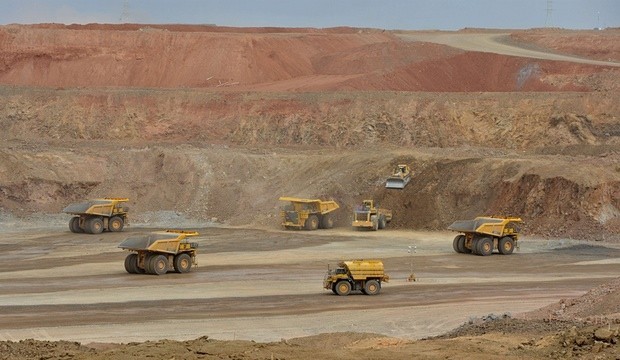
See also DARPA on Underground War

The fate of SS-18 Satan
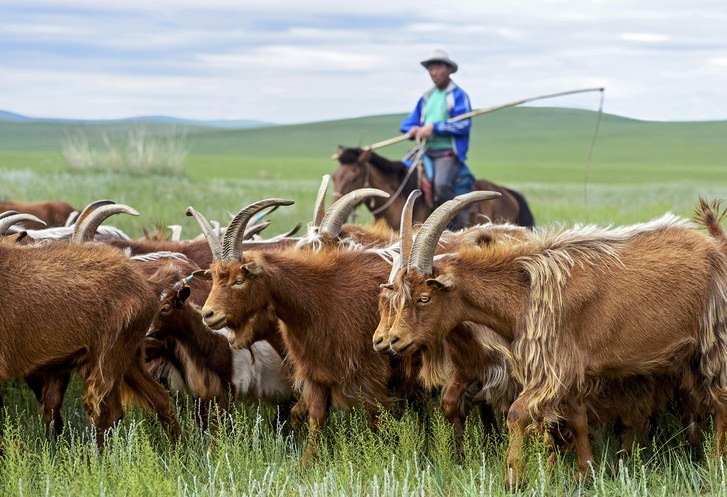
While Ukraine renounced its own possession of nuclear weapons in 1994, many scientists and design bureaus in the country still have the know-how required to manufacture important components of strategic weapons.

China has often been particularly keen of this knowledge, acquiring Ukrainian help in designing their first phased-array radar system.  Ukrainian aerospace, tank and naval engineers is also a common phenomenon in China, most notably Valerii Babich, designer of the Varyag aircraft carrier. There are even rumors of “Ukrainetowns” in some Chinese cities founded by the large number of expats hired by Chinese firms. Ukrainian and Russian businessmen even sold Kh-55 nuclear cruise missiles (without the warheads) from Ukrainian stockpiles to China in the 2000s. As China continues to modernize their ICBM fleet, it begs the question: how much help is Ukraine providing, willingly and unwillingly?

This wouldn’t be the first time Ukraine’s ICBM knowhow was possibly exported. In the fall of 2017, Ukraine’s Yuzhnoye Design Bureau, based in Dnipro, was accused of providing rocket engines to North Korea. While Ukrainian media has denied this allegation, there was a definite case of Yushnoye employees who were caught selling the plans on the RS-20 (SS-18 “Satan”) to Chinese missile engineers. Although the Chinese engineers were caught by Ukrainian police, Chinese diplomatic influence resulted in the charges being cleared. This trend has continued, as recently as 2016 when a scientist at Dnipropetrovsk National University left for China with many materials regarding the use of composites and heat-shielding coatings on rocket launchers—which were considered Ukrainian state secrets…
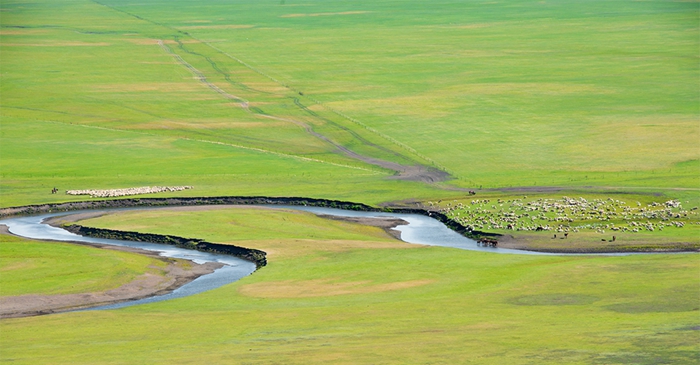
Given all the different vectors through which rocket and missile technology are flowing from Ukraine to China, it’s reasonable to say that Ukraine has provided considerable aid to the Chinese ballistic missile program.

Excerpts, Charlie Gao, Do China’s Nuclear Missiles Have Ukrainian DNA?, The National Interest, June 23