Author Archives: Stoa

Unparalleled Generosity: How China Won the Hearts and Minds of Africa

When  it comes to building big things in Africa, China is unrivalled. Beijing-backed firms have redrawn the continent’s transport map. Thanks to China’s engineers and bankers you can hop on a train in Lagos to beat the traffic to Ibadan, drive across parts of eastern Congo in hours rather than days or fly into any one of dozens of recently spruced-up airports from Zanzibar to Zambia. Throw in everything else from skyscrapers and bridges to dams and three dozen-odd ports and it all adds up to rather a lot of mortar.

It was not always so. In 1990 American and European companies scooped up more than 85% of construction contracts on the continent. Chinese firms did not even get a mention. Now Western firms are struggling to win business in a fast-growing market. (The World Bank predicts that demand for infrastructure spending alone will be more than $300bn a year by 2040.) Africa’s population is growing faster than that of any other continent, and Africans are moving to cities faster than people elsewhere. Both these trends will drive demand. The dragon’s share will be built by Chinese firms, which in 2020 were responsible for 31% of all infrastructure projects in Africa with a value of $50m or more, according to Deloitte, a consultancy. That was up from 12% in 2013. Western firms were directly responsible for just 12% or so (compared with 37% in 2013)…

Chinese lenders are pluckier than their Western rivals. Sometimes this borders on recklessness. When Uhuru Kenyatta, Kenya’s president, wanted $4.7bn to build a new railway which the World Bank warned would never turn a profit, Chinese lenders backed it. The railway has since lost more than $200m. Often, Chinese firms are tough negotiators. Several have struck resources-for-roads deals, such as those worth more than $1.1bn in Ghana and Guinea, where the loans are backed by bauxite… 

In 2021,  China said it would stump up its own cash to build smart new foreign ministries in Congo and Kenya. It has also picked up the tab for numerous other official buildings, from parliament complexes in Sierra Leone and Zimbabwe to presidential palaces in Burundi, Guinea-Bissau and Togo. Given such generosity, it is hardly surprising that some African governments are predisposed to favor Chinese firms…. 

Perhaps as important is that China is unwittingly crowding in Western money by stoking the geopolitical anxieties of Western leaders. Britain’s government recently said its development arm would invest $1bn in Kenyan infrastructure and that a British firm would build a new rail hub in central Nairobi. The G7 group of countries last year launched the Build Back Better World initiative, a shameless copy of China’s Belt and Road Initiative (BRI). All this should mean more opportunities for construction firms of all nationalities, whether Western, Chinese or, with a bit of luck, African, too.

Excerpts from Chasing the dragon: How Chinese firms have dominated African infrastructure, Economist,  Feb. 19, 2022

How Artificial Intelligence Can Help Produce Better Chemical Weapons

An international security conference convened by the Swiss Federal Institute for NBC (nuclear, biological and chemical) Protection —Spiez Laboratory explored how artificial intelligence (AI) technologies for drug discovery could be misused for de novo design of biochemical weapons.  According to the researchers, discussion of societal impacts of AI has principally focused on aspects such as safety, privacy, discrimination and potential criminal misuse, but not on national and international security. When we think of drug discovery, we normally do not consider technology misuse potential. We are not trained to consider it, and it is not even required for machine learning research.

According to the scientists, this should serve as a wake-up call for our colleagues in the ‘AI in drug discovery’ community. Although some expertise in chemistry or toxicology is still required to generate toxic substances or biological agents that can cause significant harm, when these fields intersect with machine learning models, where all you need is the ability to code and to understand the output of the models themselves, they dramatically lower technical thresholds. Open-source machine learning software is the primary route for learning and creating new models like ours, and toxicity datasets that provide a baseline model for predictions for a range of targets related to human health are readily available.

The genie is out of the medicine bottle when it comes to repurposing our machine learning. We must now ask: what are the implications? Our own commercial tools, as well as open-source software tools and many datasets that populate public databases, are available with no oversight. If the threat of harm, or actual harm, occurs with ties back to machine learning, what impact will this have on how this technology is perceived? Will hype in the press on AI-designed drugs suddenly flip to concern about AI-designed toxins, public shaming and decreased investment in these technologies? As a field, we should open a conversation on this topic. The reputational risk is substantial: it only takes one bad apple, such as an adversarial state or other actor looking for a technological edge, to cause actual harm by taking what we have vaguely described to the next logical step. How do we prevent this? Can we lock away all the tools and throw away the key? Do we monitor software downloads or restrict sales to certain groups?

Excerpts from Fabio Urbina et al, Dual use of artificial-intelligence-powered drug discovery, Nature Machine Intelligence (2022)

Who Cares? Clicking Away Privacy Rights

The latest developments in a high-profile criminal probe by  US special counsel John Durham show the extent to which the world’s internet traffic is being monitored by a coterie of network researchers and security experts inside and outside the US government. The monitoring is made possible by little-scrutinized partnerships, both informal and formal, among cybersecurity companies, telecommunications providers and government agencies.

The U.S. government is obtaining bulk data about network usage, according to federal contracting documents and people familiar with the matter, and has fought disclosure about such activities. Academic and independent researchers are sometimes tapped to look at data and share any findings with the government without warrants or judicial authorization…

Unlike the disclosures by former intelligence contractor Edward Snowden from nearly a decade ago, which revealed U.S. intelligence programs that relied on covert access to private data streams, the sharing of internet records highlighted by Mr. Durham’s probe concerns commercial information that is often being shared with or sold to the government in bulk. Such data sets can possess enormous intelligence value, according to current and former government officials and cybersecurity experts, especially as the power of computers to derive insights from massive data sets has grown in recent years.

Such network data can help governments and companies detect and counter cyberattacks. But that capability also has privacy implications, despite assurances from researchers that most of the data can’t be traced back to individuals or organizations.

At issue are several kinds of internet logs showing the connections between computers, typically collected on networking devices such as switches or routers. They are the rough internet equivalent of logs of phone calls—showing which computers are connecting and when, but not necessarily revealing anything about the content of the transmissions. Modern smartphones and computers generate thousands of such logs a day just by browsing the web or using consumer apps…

“A question worth asking is: Who has access to large pools of telecommunications metadata, such as DNS records, and under what circumstances can those be shared with the government?…Surveillance takes the path of least resistance…,” according to Julian Sanchez, a senior fellow at the Cato Institute.

Excerpts from Byron Tau et al., Probe Reveals Unregulated Access to Data Streams, WSJ, Feb.. 28, 2022

The Sacrificial Lambs of Green Energy

Lithium Americas, a Canadian company, has plans to build a mine and processing plant at Thacker Pass, near the southern tip of the caldera in Nevada. It would be America’s biggest lithium mine. Ranchers and farmers in nearby Orovada, a town of about 120 people, worry that the mine will threaten their water supply and air quality. Native American tribes in the region say they were not properly consulted before the Bureau of Land Management (BLM), a federal agency that manages America’s vast public lands, decided to permit the project. Tribes also allege that a massacre of their ancestors took place at Thacker Pass in 1865…

The fight over Thacker Pass is not surprising. President Joe Biden wants half of all cars sold in 2030 to be electric, and to reach net-zero emissions by 2050. These ambitious climate targets mean that battles over where and how to mine are coming to mineral-rich communities around the country. America is in need of cobalt, copper and lithium, among other things, which are used in batteries and other clean-energy technologies. As with past commodity booms, large deposits of many of these materials are found in America’s western states . America, of course, is not the only country racing to secure access to such materials. As countries pledge to go carbon-free, global demand for critical minerals is set to soar. The International Energy Agency, a forecaster, estimates that by 2040 demand for lithium could increase by more than 40 times relative to 2020. Demand for cobalt and nickel could grow by about 20 times in the same period.

Beyond its green goals, America is also intent on diversifying mineral supplies away from China and Russia (big producer of nickel), which—by virtue of its natural bounty and muscular industrial policy—has become a raw-materials juggernaut… The green transition has also turned the pursuit of critical minerals into a great-power competition not unlike the search for gold or oil in eras past. Mining for lithium, the Department of Energy (DOE) says, is not only a means of fighting climate change but also a matter of national security.

Westerners have seen all this before, and are wary of new mines…The economic history of the American West is a story of boom and bust. When a commodity bubble burst, boomtowns were abandoned. The legacy of those busts still plagues the region. In 2020 the Government Accountability Office estimated that there could be at least 530,000 abandoned hardrock-mine features, such as tunnels or waste piles, on federal lands. At least 89,000 of those could pose a safety or environmental hazard. Most of America’s abandoned hardrock mines are in 13 states west of the Mississippi River…

Is it possible to secure critical minerals while avoiding the mistakes of previous booms? America’s debates over how to use its public lands, and to whom those lands belong, are notoriously unruly. Conservationists, energy companies, ranchers and tribal nations all feel some sense of ownership. Total harmony is unlikely. But there are ways to lessen the animosity.

Start with environmental concerns. Mining is a dirty business, but development and conservation can coexist. In 2020 Stanford University helped broker a national agreement between the hydropower industry and conservation groups to increase safety and efficiency at existing dams while removing dams that are harming the environment….Many worry that permitting new development on land sacred to tribes will be yet another example of America’s exploitation of indigenous peoples in pursuit of land and natural resources. msci, a consultancy, reckons that 97% of America’s nickel reserves, 89% of copper, 79% of lithium and 68% of cobalt are found within 35 miles of Native American reservations.

TThe BLM is supposed to consult tribes about policies that may affect the tribes but the  consultation process is broken. Often it consists of sending tribes a letter notifying them of a mining or drilling proposal.

Lithium Americas has offered to build the town a new school, one that will be farther away from a road that the firm will use to transport sulphur. Sitting in her truck outside a petrol station that doubles as Orovada’s local watering hole, Ms Amato recalled one group member’s response to the offer: “If all I’m going to get is a kick in the ass, because we’re getting the mine regardless, then I may as well get a kick in the ass and a brand new school.”

Excerpt from America’s Next Mining Boom: Between a Rock and a Hard Place, Economist, Feb. 19, 2022

Noise-Barriers and Noise-Victims: the Plants

Sounds are concussive pressure waves transmitted through gases, liquids and solids. Scientists have previously hypothesized that plants may be able to sense these waves as they are struck by them. A number of experiments have confirmed this in recent years—plants bombarded with ultrasound in the lab have shown a range of adverse responses including the expression of stress-related genes, stunted growth and reduced germination of seeds.

Yet blasting plants with ultrasound is not the same as growing them in the presence of actual traffic noise. To this end, Dr Ghotbi-Ravandi decided to set up an experiment to study precisely this question….Dr Ghotbi-Ravandi’s results were published in the journal Basic and Applied Ecology. His findings make it clear that, though plants lack ears, the vibrations generated by the noise of traffic still bothers them enough to trigger potent stress responses that are not much different to those that would be found in plants exposed to drought, high salinity or heavy metals in their soil… Whether some plant species have evolved coping mechanisms, which might one day be collected and transferred into urban-dwelling species, is a mystery worth exploring.

Excerpt from Botany: Deafened, Economist, Feb. 12, 2022

Living in the Russian Digital Bubble

Vladimir Putin, Russia’s president, has portrayed his aggression on the Ukrainian border as pushing back against Western advances. For some time he has been doing much the same online. He has long referred to the internet as a “CIA project”. His deep belief that the enemy within and the enemy without are in effect one and the same… Faced with such “aggression”, Mr Putin wants a Russian internet that is secure against external threat and internal opposition. He is trying to bring that about on a variety of fronts: through companies, the courts and technology itself.

In December 2021, VK, one of Russia’s online conglomerates, was taken over by two subsidiaries of Gazprom, the state-owned gas giant. In the same month a court in Moscow fined Alphabet, which owns Google, a record $98m for its repeated failure to delete content the state deems illegal. And Mr Putin’s regime began using hardware it has required internet service providers (ISPS) to install to block Tor, a tool widely used in Russia to mask online activity. All three actions were part of the country’s effort to assure itself of online independence by building what some scholars of geopolitics, borrowing from Silicon Valley, have begun calling a “stack”.

In technology, the stack is the sum of all the technologies and services on which a particular application relies, from silicon to operating system to network. In politics it means much the same, at the level of the state. The national stack is a sovereign digital space made up not only of software and hardware (increasingly in the form of computing clouds) but also infrastructure for payments, establishing online identities and controlling the flow of information

China built its sovereign digital space with censorship in mind. The Great Firewall, a deep-rooted collection of sophisticated digital checkpoints, allows traffic to be filtered with comparative ease. The size of the Chinese market means that indigenous companies, which are open to various forms of control, can successfully fulfil all of their users’ needs. And the state has the resources for a lot of both censorship and surveillance. Mr Putin and other autocrats covet such power. But they cannot get it. It is not just that they lack China’s combination of rigid state control, economic size, technological savoir-faire and stability of regime. They also failed to start 25 years ago. So they need ways to achieve what goals they can piecemeal, by retrofitting new controls, incentives and structures to an internet that has matured unsupervised and open to its Western begetters.

Russia’s efforts, which began as purely reactive attempts to lessen perceived harm, are becoming more systematic. Three stand out: (1) creating domestic technology, (2) controlling the information that flows across it and, perhaps most important, (3) building the foundational services that underpin the entire edifice.

Russian Technology

The government has made moves to restart a chipmaking plant in Zelenograd near Moscow, the site of a failed Soviet attempt to create a Silicon Valley. But it will not operate at the cutting edge. So although an increasing number of chips are being designed in Russia, they are almost all made by Samsung and TSMC, a South Korean and a Taiwanese contract manufacturer. This could make the designs vulnerable to sanctions….

For crucial applications such as mobile-phone networks Russia remains highly reliant on Western suppliers, such as Cisco, Ericsson and Nokia. Because this is seen as leaving Russia open to attacks from abroad, the industry ministry, supported by Rostec, a state-owned arms-and-technology giant, is pushing for next-generation 5g networks to be built with Russian-made equipment only. The country’s telecoms industry does not seem up to the task. And there are internecine impediments. Russia’s security elites, the siloviki, do not want to give up the wavelength bands best suited for 5g. But the only firm that could deliver cheap gear that works on alternative frequencies is Huawei, an allegedly state-linked Chinese electronics group which the siloviki distrust just as much as security hawks in the West do.

It is at the hardware level that Russia’s stack is most vulnerable. Sanctions imposed may treat the country, as a whole,  like Huawei is now treated by America’s government. Any chipmaker around the world that uses technology developed in America to design or make chips for Huawei needs an export license from the Commerce Department in Washington—which is usually not forthcoming. If the same rules are applied to Russian firms, anyone selling to them without a license could themselves risk becoming the target of sanctions. That would see the flow of chips into Russia slow to a trickle.

When it comes to software the Russian state is using its procurement power to amp up demand. Government institutions, from schools to ministries, have been encouraged to dump their American software, including Microsoft’s Office package and Oracle’s databases. It is also encouraging the creation of alternatives to foreign services for consumers, including TikTok, Wikipedia and YouTube. Here the push for indigenization has a sturdier base on which to build. Yandex, a Russian firm which splits the country’s search market with Alphabet’s Google, and VK, a social-media giant, together earned $1.8bn from advertising last year, more than half of the overall market. VK’s vKontakte and Odnoklassniki trade places with American apps (Facebook, Instagram) and Chinese ones (Likee, TikTok) on the top-ten downloads list.

This diverse system is obviously less vulnerable to sanctions—which are nothing like as appealing a source of leverage here as they are elsewhere in the stack. Making Alphabet and Meta stop offering YouTube and WhatsApp, respectively, in Russia would make it much harder for America to launch its own sorties into Russian cyberspace. So would disabling Russia’s internet at the deeper level of protocols and connectivity. All this may push Russians to use domestic offerings more, which would suit Mr Putin well.

As in China, Russia is seeing the rise of “super-apps”, bundles of digital services where being local makes sense. Yandex is not just a search engine. It offers ride-hailing, food delivery, music-streaming, a digital assistant, cloud computing and, someday, self-driving cars. Sber, Russia’s biggest lender, is eyeing a similar “ecosystem” of services, trying to turn the bank into a tech conglomerate. In the first half of 2021 alone it invested $1bn in the effort, on the order of what biggish European banks spend on information technology (IT). Structural changes in the IT industry are making some of this Russification easier. Take the cloud. Its data centres use cheap servers made of off-the-shelf parts and other easily procured commodity kit. Much of its software is open-source. Six of the ten biggest cloud-service providers in Russia are now Russian…The most successful ones are “moving away from proprietary technology” sold by Western firms (with the exception of chips)…

Information Flow

If technology is the first part of Russia’s stack, the “sovereign internet” is the second. It is code for how a state controls the flow of information online. In 2019 the government amended several laws to gain more control of the domestic data flow. In particular, these require ISPS to install “technical equipment for counteracting threats to stability, security and functional integrity”. This allows Roskomnadzor, Russia’s internet watchdog, to have “middle boxes” slipped into the gap between the public internet and an ISPS’ customers. Using “deep packet inspection” (DPI), a technology used at some Western ISPS to clamp down on pornography, these devices are able to throttle or block traffic from specific sources (and have been deployed in the campaign against Tor). DPI kit sits in rooms with restricted access within the ISPS’ facilities and is controlled directly from a command center at Roskomnadzor. This is a cheap but imperfect version of China’s Great Firewall.

Complementing the firewall are rules that make life tougher for firms. In the past five years Google has fielded 20,000-30,000 content-removal requests annually from the government in Russia, more than in any other country. From this year 13 leading firms—including Apple, TikTok and Twitter—must employ at least some content moderators inside Russia. This gives the authorities bodies to bully should firms prove recalcitrant. The ultimate goal may be to push foreign social media out of Russia altogether, creating a web of local content… But this Chinese level of control would be technically tricky. And it would make life more difficult for Russian influence operations, such as those of the Internet Research Agency, to use Western sites to spread propaganda, both domestically and abroad.

Infrastructure

Russia’s homegrown stack would still be incomplete without a third tier: the services that form the operating system of a digital state and thus provide its power. In its provision of both e-government and payment systems, Russia puts some Western countries to shame. Gosuslugi (“state services”) is one of the most-visited websites and most-downloaded apps in Russia. It hosts a shockingly comprehensive list of offerings, from passport application to weapons registration. Even critics of the Kremlin are impressed, not least because Russia’s offline bureaucracy is hopelessly inefficient and corrupt. The desire for control also motivated Russia’s leap in payment systems. In the wake of its annexation of Crimea, sanctions required MasterCard and Visa, which used to process most payments in Russia, to ban several banks close to the regime. In response, Mr Putin decreed the creation of a “National Payment Card System”, which was subsequently made mandatory for many transactions. Today it is considered one of the world’s most advanced such schemes. Russian banks use it to exchange funds. The “Mir” card which piggybacks on it has a market share of more than 25%, says GlobalData, an analytics firm.

Other moves are less visible. A national version of the internet’s domain name system, currently under construction, allows Russia’s network to function if cut off from the rest of the world (and gives the authorities a new way to render some sites inaccessible). Some are still at early stages. A biometric identity system, much like India’s Aadhaar, aims to make it easier for the state to keep track of citizens and collect data about them while offering new services. (Muscovites can now pay to take the city’s metro just by showing their face.) A national data platform would collect all sorts of information, from tax to health records—and could boost Russia’s efforts to catch up in artificial intelligence (AI).

Excerpt from Digital geopolitics: Russia is trying to build its own great firewall, Economist, Feb. 19, 2022


Ending the Plastic Paradise?

Heads of State, Ministers of environment and other representatives from 175 nations endorsed a historic resolution at the UN Environment Assembly (UNEA-5) on March 2, 2022: “End Plastic Pollution: Towards an internationally legally binding instrument.” The resolution addresses the full lifecycle of plastic, including its production, design and disposal. 

The resolution…establishes an Intergovernmental Negotiating Committee (INC), which will begin its work in 2022, with the ambition of completing a draft global legally binding agreement by the end of 2024…The UN Environment Programme (UNEP) will convene a forum by the end of 2022 that is open to all stakeholders in conjunction with the first session of the INC, to share knowledge and best practices in different parts of the world.

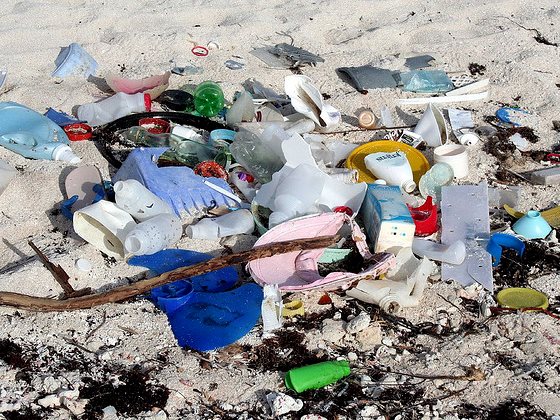
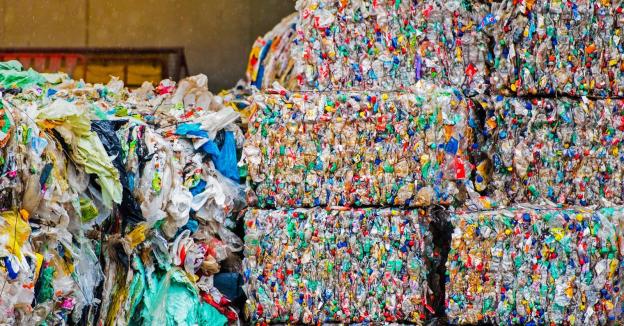
Plastic production soared from 2 million tonnes in 1950 to 348 million tonnes in 2017, becoming a global industry valued at US$522.6 billion, and it is expected to double in capacity by 2040. 

Exposure to plastics can harm human health, potentially affecting fertility, hormonal, metabolic and neurological activity, and open burning of plastics contributes to air pollution. By 2050 greenhouse gas emissions associated with plastic production, use and disposal would account for 15 per cent of allowed emissions, under the goal of limiting global warming to 1.5°C (34.7°F). More than 800 marine and coastal species are affected by this pollution through ingestion, entanglement, and other dangers.

Some 11 million tonnes of plastic waste flow annually into oceans. This may triple by 2040. A shift to a circular economy can reduce the volume of plastics entering oceans by over 80 per cent by 2040; reduce virgin plastic production by 55 per cent; save governments US$70 billion by 2040; reduce greenhouse gas emissions by 25 per cent; and create 700,000 additional jobs – mainly in the global south.

Excerpts from ,Historic day in the campaign to beat plastic pollution: Nations commit to develop a legally binding agreement, UNEP Press Release, Mar.  2, 202

Robots to the Rescue: Best Dams on Amazon River

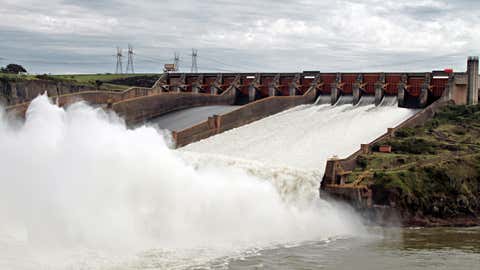
Proposed hydropower dams at more than 350 sites throughout the Amazon require strategic evaluation of trade-offs between the production electricity and the protection of biodiversity. 

Researchers are using artificial intelligence (AI) to identify sites that simultaneously minimize impacts on river flow, river connectivity, sediment transport, fish diversity, and greenhouse gas emissions while achieving energy production goals. The researchers found that uncoordinated, dam-by-dam hydropower expansion has resulted in forgone environmental benefits from the river. Minimizing further damage from hydropower development requires considering diverse environmental impacts across the entire basin, as well as cooperation among Amazonian nations. 

Alexander Flecker et al., Reducing adverse impacts of Amazon hydropower expansion, Science, Feb. 17, 2022

How to Make Carbon-Negative Chemicals

Bacteria engineered to turn carbon dioxide into compounds used in paint remover and hand sanitiser could offer a carbon-negative way of manufacturing industrial chemicals.

Michael Köpke at LanzaTech in Illinois and his colleagues searched through strains of an ethanol-producing bacterium, Clostridium autoethanogenum, to identify enzymes that would allow the microbes to instead create acetone, which is used to make paint and nail polish remover. Then they combined the genes for these enzymes into one organism. They repeated the process for isopropanol, which is used as a disinfectant.

The engineered bacteria ferment carbon dioxide from the air to produce the chemicals. “You can imagine the process similar to brewing beer,” says Köpke. “But instead of using a yeast strain that eats sugar to make alcohol, we have a microbe that can eat carbon dioxide.” After scaling up the initial experiments by a factor of 60, the team found that the process locks in roughly 1.78 kilograms of carbon per kilogram of acetone produced, and 1.17 kg per kg of isopropanol. These chemicals are normally made using fossil fuels, emitting 2.55 kg and 1.85 kg of carbon dioxide per kg of acetone and isopropanol respectively.

This equates to up to a 160 per cent decrease in greenhouse gas emissions, if this method were to be broadly adopted, say the researchers. The technique could also be made more sustainable by using waste gas from other industrial processes, such as steel manufacturing.

Excerpt from Chen Ly, Engineered bacteria produce chemicals with negative carbon emissions, New Scientist, Feb. 21, 2022

Who Will Save the Red Sea from the Safer Oil Spill?

An oil tanker, the Safer,  tuffed with a load of more than 1 million barrels of crude oil has been left abandoned and rusting off the coast of Hodeidah, Yemen since 2015. Its decaying hulk encompasses the complexity of the civil war in Yemen. The Safer was permanently anchored off Hodeidah in 1987 and used for some four decades as a floating storage unit by Yemen’s state-run oil company to get oil from other tankers onto the mainland. However, the tanker fell into the hands of Houthi insurgents in March 2015 and has since then been – for all intents and purposes – left to rot. As a result, the structural integrity of the ship, which was built in 1976, is now at serious risk. Its firefighting system is out of order, and it has sprung several leaks over the past couple of years.

Experts estimate that the risks of an explosion on the tanker are huge and that the impact of this would be massive, as a full-blown leak in the closed basin of the Red Sea would be four times bigger than the historic Exxon Valdez disaster of 1989. Under the worst-case scenario, all of Yemen’s Red Sea ports would have to shut down, depriving millions of people of food and life-saving humanitarian aid. A spill would also affect the country’s water supply by shutting down its desalination plants…

The question is who will undertake the cost of around $75-100 million needed to defuse the Safer time bomb…On February 16, 2022 the UN under-secretary-general for humanitarian affairs, Martin Griffiths, informed the Security Council of an agreement, in principle, for a UN-coordinated proposal to shift the oil to another ship. Now all eyes are turned to the conference of donors that the UN is holding at the end of March 2022, where various states are expected to offer money to bankroll the operation.

Excerpt from Nikolas Katsimpras, An impending Red Sea disaster and Greece, Ekathimerini, Feb. 23, 2022

See also Greenpeace report

The EU and US Bait and Switch Operation in Ukraine

What Is Bait and Switch?
Bait and switch is a morally suspect sales tactic that lures customers [Ukraine] in with specific claims about the quality or low prices on items [joining NATO and the EU] that turn out to be unavailable in order to upsell them on a similar, pricier item [Russian invasion]. It is considered a form of retail sales fraud, though it takes place in other contexts…From the Investopedia

Q-Day: the Behind-The-Scenes Internet

In cybersecurity circles, they call it Q-day: the day when quantum computers will break the Internet. Almost everything we do online is made possible by the quiet, relentless hum of cryptographic algorithms. These are the systems that scramble data to protect our privacy, establish our identity and secure our payments. And they work well: even with the best supercomputers available today, breaking the codes that the online world currently runs on would be an almost hopeless task.

But machines that will exploit the quirks of quantum physics threaten that entire deal. If they reach their full scale, quantum computers would crack current encryption algorithms exponentially faster than even the best non-quantum machines can. “A real quantum computer would be extremely dangerous,” says Eric Rescorla, chief technology officer of the Firefox browser team at Mozilla in San Francisco, California.

As in a cheesy time-travel trope, the machines that don’t yet exist endanger not only our future communications, but also our current and past ones. Data thieves who eavesdrop on Internet traffic could already be accumulating encrypted data, which they could unlock once quantum computers become available, potentially viewing everything from our medical histories to our old banking records. “Let’s say that a quantum computer is deployed in 2024,” says Rescorla. “Everything you’ve done on the Internet before 2024 will be open for discussion.”

But the risk is real enough that the Internet is being readied for a makeover, to limit the damage if Q-day happens. That means switching to stronger cryptographic systems, or cryptosystems. Fortunately, decades of research in theoretical computer science has turned up plenty of candidates. These post-quantum algorithms seem impervious to attack: even using mathematical approaches that take quantum computing into account, programmers have not yet found ways to defeat them in a reasonable time.

Which of these algorithms will become standard could depend in large part on a decision soon to be announced by the US National Institute of Standards and Technology (NIST) in Gaithersburg, Maryland. In 2015, the US National Security Agency (NSA) announced that it considered current cryptosystems vulnerable, and advised US businesses and the government to replace them. The following year, NIST invited computer scientists globally to submit candidate post-quantum algorithms to a process in which the agency would test their quality, with the help of the entire crypto community. It has since winnowed down its list from 65 to 15. In the next couple of months, it will select a few winners, and then publish official versions of those algorithms. Similar organizations in other countries, from France to China, will make their own announcements…

Although NIST is a US government agency, the broader crypto community has been pitching in. “It is a worldwide effort,” says Philip Lafrance, a mathematician at computer-security firm ISARA Corporation in Waterloo, Canada. This means that, at the end of the process, the surviving algorithms will have gained wide acceptance. “The world is going to basically accept the NIST standards,” he says. He is part of a working group that is monitoring the NIST selection on behalf of the European Telecommunications Standards Institute, an umbrella organization for groups worldwide. “We do expect to see a lot of international adoption of the standard that we’ll create,” says Moody…

China is said to be planning its own selection process, to be managed by the Office of State Commercial Cryptography Administration... “The consensus among researchers in China seems to be that this competition will be an open international competition, so that the Chinese [post-quantum cryptography] standards will be of the highest international standards,” says Jintai Ding, a mathematician at Tsinghua University in Beijing. Meanwhile, an organization called the Chinese Association for Cryptologic Research has already run its own competition for post-quantum algorithms. Its results were announced in 2020, leading some researchers in other countries to mistakenly conclude that the Chinese government had already made an official choice…

Fully transitioning all technology to be quantum resistant will take a minimum of five years and whenever Q-day happens, there are likely to be gadgets hidden somewhere that will still be vulnerable, he says. “Even if we were to do the best we possibly can, a real quantum computer will be incredibly disruptive.”

Excerpts from Davide Castelvecchi, The race to save the Internet from quantum hackers, Nature, Feb. 8, 20202

Sustainability or Lethality: Space

The United States SPACEWERX is the innovation arm of the U.S. Space Force and a part of AFWERX (the Air Force technology accelerator) whose purpose is to increase lethality at a lower cost.

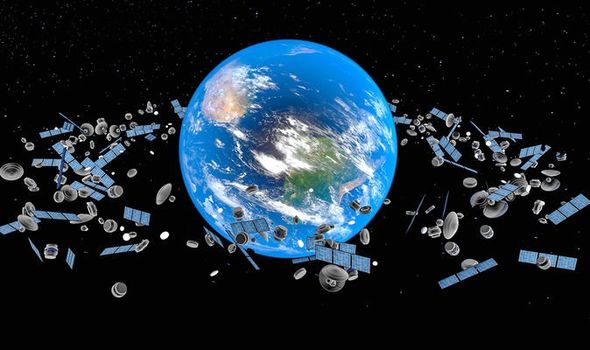
The SPACEWERX has launched Orbital Prime whose purpose is to invigorate the On-orbit Servicing, Assembly, and Manufacturing (OSAM) market using Active Debris Remediation (ADR) as a use case for the foundational technologies. As the congestion of the space domain and  space debris threaten the long-term sustainability of the space domain, Orbital Prime will transition agile, affordable, and accelerated OSAM space capabilities to build the foundation for space logistics while preserving the global commons.

Excerpt from Space Prime

Relentless Efficiency: the View of Pigs

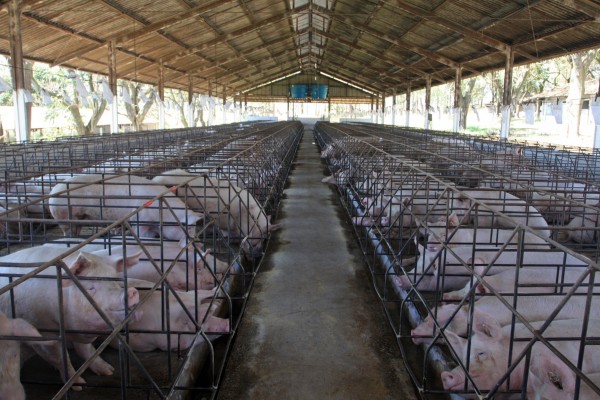
Gestation crates for pigs are typically about two feet wide and prevent sows from turning around, maximizing use of available space. Some producers say it also prevents the pigs from harming one another. Breeding pigs can produce seven or more piglets per litter, totaling well over 60 piglets in consecutive pregnancies over a few years. Widespread use of gestation crates began in the 1970s as pork producers gave priority to efficiency. A 1978 article in the industry publication National Hog Farmer suggested producers consider the sow “a valuable piece of machinery whose function is to pump out baby pigs like a sausage machine.”

“Under that mind-set, the industry went, no pun intended, hog wild into moving pigs into gestation crates,” says Matthew Prescott, senior director of food and agriculture for the Humane Society, who has been focused on eliminating the crates since 2002.

Excerpt from Cara Lombardo, Relentless Wall Street Billionaire Has a Secret Cause, WSJ, Feb. 8, 2021

Treating People Like Roaches-no longer legal

Since its adoption in 1993, the Chemical Weapons Convention has banned the development, possession, and use of weaponized toxic chemicals.  However, whether this prohibition also applied to law enforcement use of certain agents that act on the central nervous system (CNS) remained the subject of debate. In December 2021,  Chemical Weapons Convention adopted a landmark Decision to effectively outlaw the aerosolized use of CNS-acting chemical agents for law enforcement purposes.  

Although 85 countries supported the Decision, including Australia, Switzerland, and the United States, the vote was opposed by 10 countries, which may not feel constrained by its prohibitions. Notable among the opponents was Russia, whose security forces used aerosolized fentanyl derivatives to end the 2002 Moscow theater siege, causing the deaths of more than 120 hostages from poisoning and asphyxiation. Subsequent dual-use research into CNS-acting chemicals has been reported by Russian scientists as well as scientists from China and Iran, who also opposed this Decision.

Furthermore, the Decision is limited in scope. It explicitly prohibits only aerosolized CNS weapons, excluding other delivery mechanisms such as law enforcement dart guns…
 
Excerpt from MICHAEL CROWLEY AND MALCOLM DANDO, Central nervous system weapons dealt a blow, Science, Jan. 14, 2022

Alas! Computers that Really Get You

 Artificial intelligence (AI) software can already identify people by their voices or handwriting. Now, an AI has shown it can tag people based on their chess-playing behavior, an advance in the field of “stylometrics” that could help computers be better chess teachers or more humanlike in their game play. Alarmingly, the system could also be used to help identify and track people who think their online behavior is anonymous

The researchers are aware of the privacy risks posed by the system, which could be used to unmask anonymous chess players online…In theory, given the right data sets, such systems could identify people based on the quirks of their driving or the timing and location of their cellphone use.

Excerpt from  Matthew Hutson, AI unmasks anonymous chess players, posing privacy risks, Science, Jan. 14, 2022

The Most Fantastic Thing in the World: Icefish

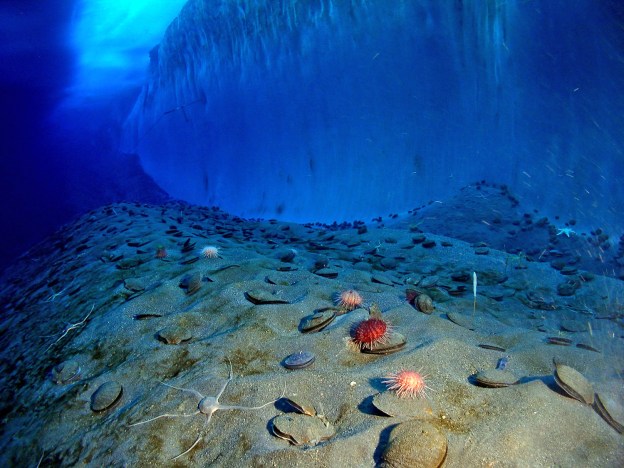
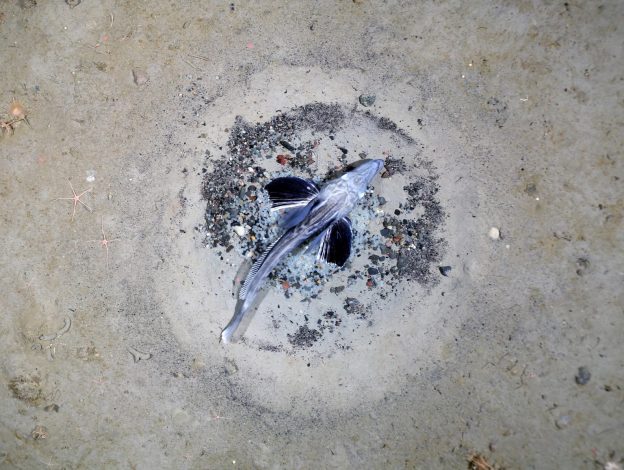
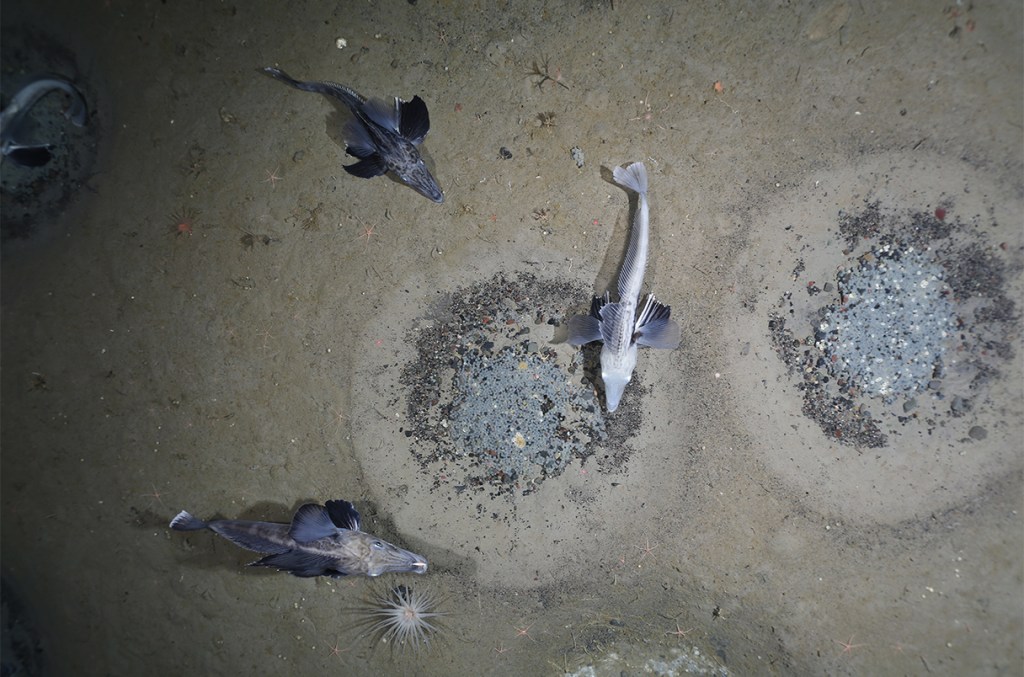
The most extensive and densely populated breeding colony of fish anywhere lurks deep underneath the ice of the Weddell Sea.. The 240 square kilometers of regularly spaced icefish nests, east of the Antarctic Peninsula, has astonished marine ecologists. “We had no idea that it would be just on this scale, and I think that’s the most fantastic thing,” says Mark Belchier, a fish biologist…

In February 2021, the RV Polarstern—a large German research ship–came upon thousands of 75-centimeter-wide nests, each occupied by a single adult icefish—and up to 2100 eggs…High-resolution video and cameras captured more than 12,000 adult icefish (Neopagetopsis ionah)….The  team on the RV Polarstern saw 16,160 closely packed fish nests, 76% of which were guarded by solitary males. Assuming a similar density of nests in the areas between the ship’s transects, the researchers estimate that about 60 million nests cover roughly 240 square kilometers.

The vast colony, the researchers say, is a new reason to create a marine protected area in the Weddell Sea…The Weddell Sea—a unique and largely undisturbed ecosystem—is already protected from a destructive fishing practice called bottom trawling…

Excerpt from Huge Icefish Colony Found, Science, Jan. 14, 2022

Nuclear Power Invades Space

The Defense Advanced Research Projects Agency (DARPA) is testing a technology known as “nuclear thermal propulsion”… DARPA spacecraft will carry a small nuclear reactor. Inside, uranium atoms will be split to generate tremendous heat…to produce thrust. Such a spacecraft could climb to a geostationary orbit above the Earth, nearly 36,000km up, in mere hours. Satellites that burn normal rocket fuel need several days for the same trip. Nuclear-powered satellites with abundant power would also be hard to destroy—their trajectories could be changed often enough to become unpredictable. DARPA  wants to test its spacecraft, dubbed DRACO  (Demonstration Rocket for Agile Cislunar Operations), in orbit in 2025.

Other proposals are for radioisotope thermoelectric generators (RTGs). These kinds of “nuclear batteries” have long been used to power probes sent into deep space, where solar power is especially feeble. Instead of building a nuclear reactor, an RTG uses devices called thermocouples to produce a modest wattage from heat released by the decay of radioactive isotopes. Plutonium-238, which is a by-product of weapons development, has been used by NASA to power both the Voyager probes, launched in the 1970s and still functioning, as well as the Curiosity rover currently trundling around Mars. Plutonium-238, however, is heavily regulated and in short suppl..Cobalt-60, with a half-life of 5.3 years, is a promising alternative and available commercially.

DARPA Draco Image https://www.youtube.com/watch?v=h3ubR9F55nk

How safe is it, however, to send nuclear devices, especially reactors, into space?…A danger is accidental atmospheric re-entry. The Soviet Union flew at least 33 spy satellites with nuclear reactors for onboard power (but not propulsion). In one accident, the reactor in a satellite named Kosmos 954 failed to ascend into a high-enough “disposal orbit” at the end of its mission. In 1978 it ended up spraying radioactive debris over a swathe of Canada’s Northwest Territories…The fuel for the Soviet Kosmos 954…was 90% uranium-235, similar to the material used in the atom bomb detonated over Hiroshima in 1945…

America is not alone in its nuclear quest. China and Russia are also developing nuclear power for space. China’s wish list includes a fleet of nuclear-powered space shuttles. Russia is designing an electric-propulsion cargo spacecraft called Zeus, which will be powered by a nuclear reactor. Roscosmos, Russia’s space agency, hopes to launch it in 2030. The prospect of more capable satellites will, no doubt, raise suspicions among spacefaring nations. Nuclear spacecraft with abundant electrical energy could be used to jam satellite communications…..

And not all of the interest in nuclear power comes from the armed forces. NASA…wants a nuclear plant to power a base on the Moon

Excerpt from Faster, higher, stronger: Why space is about to enter its nuclear age, Economist, Feb. 5, 2022

The Super Polluters: methane

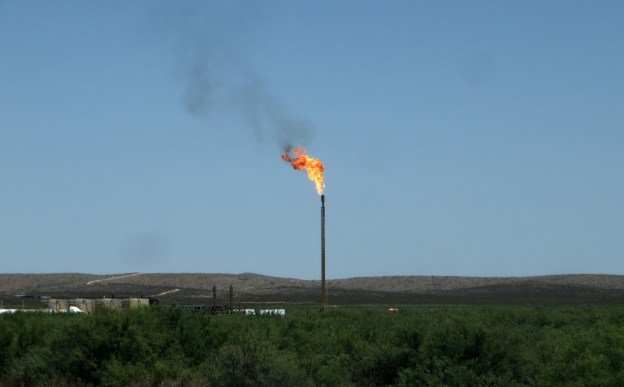
Methane is a colorless, odorless greenhouse gas that makes up the bulk of the natural gas burned to heat homes, cook food and generate electricity. It is also the second largest driver of global warming after carbon dioxide, responsible for at least one-quarter of the rise in global average temperatures since the Industrial Revolution. Once emitted, methane molecules degrade in around a decade so they do not pile up in the atmosphere in the same way as carbon dioxide, which can persist for hundreds of years.

Slashing methane emissions, therefore, could help reduce the overall atmospheric volume of greenhouse gases and slow the pace of global warming in the near term. Patching up leaky oil-and-gas infrastructure, responsible for 22% of all man-made methane emissions, would help meet those goals. This has led to efforts to quantify methane leaks…

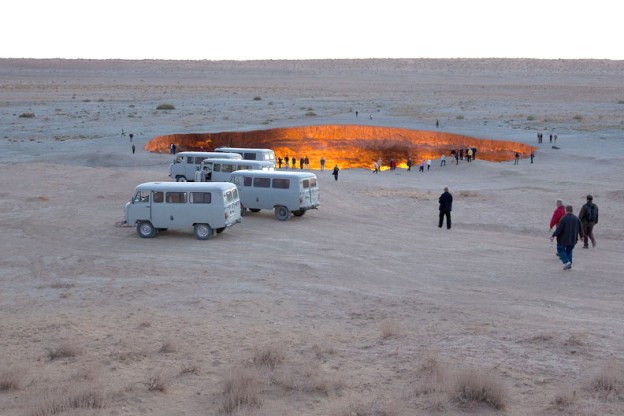
Two-thirds of the ultra-emitting events of methane were co-located with oil and gas production sites and pipelines; the rest came from coal production, agricultural or waste-management facilities. Accounting for 1.3m tonnes of methane per year, Turkmenistan is a ultra emitter of methane…followed by Russia, the United States, Iran, Kazakhstan and Algeria…

At the United Nations COP26 climate negotiations, held in November 2021 in Glasgow, leaders of more than 100 countries made a pact to reduce global emissions of methane by 30% by 2030. The cheapest, most cost-effective way of doing this will be to patch up oil-and-gas infrastructure, starting with the ultra-emitters…

Excerpts from Climate Change: Methane Mission, Economist, Feb. 5, 2022

Rapes and Razor Blades: Raping Children to Death in War Zones

Sexual abuse of young children happens all around the world. But children living in war-torn countries are at much higher risk. Those in countries recovering from conflict, such as Liberia, may also face greater dangers. The UN has recorded 15,000 cases of rape and sexual violence against children in conflict zones over the past 15 years. This, it warns, is probably a fraction of the true number. Around 72m children live in war zones in which fighters sexually attack children, according to research by Ragnhild Nordås of the University of Michigan and co-authors. That is almost ten times the number in 1990. In 2021, Liberia recorded 1,275 sexual assaults or rapes of people of all ages, according to official figures. Fully 10% of the victims were younger than six and 36% were younger than 13.

At a sexual-violence clinic in Monrovia, the capital, a nurse recounts how an eight-month-old baby was raped by her step father. A soft toy to comfort children perches on the examination table next to a large doll which young victims, often unable to speak, can point at to show what happened to them… In 2020,  another three-year-old was lured away from a water pump by a 15-year-old who used a razor blade to cut open her genital area to penetrate her. That attack caused large protests in Monrovia, which prompted President George Weah to declare rape a “national emergency”.

Why so many men rape young children in war and its aftermath is not well understood. Some experts think that war warps not just morality but also common sense. Between 2013 and 2016 in Kavumu, a village in eastern Congo, at least 11 men kidnapped and raped about 40 girls under the age of ten. Some were as young as 18 months. After each rape the men would take some blood from the victim’s hymen, believing this would protect them from bullets in battle. In 2017 a court convicted the 11 men of murder and rape.

Many of their victims were treated at Panzi Hospital, which was founded by Denis Mukwege, who was jointly awarded the Nobel peace prize in 2018 for his efforts to end sexual violence in war. The number of babies and infants treated for rape at the hospital dipped in the year after the trial, says Sylvain Mwambali, a doctor who works there. But it soon shot up again, to a higher level than in the three years before the convictions. In the past three years the hospital has treated 103 raped children aged five or younger, or about one every ten days. In 2020 Dr Mwambali treated a baby just a few months old whose vagina and intestines were mutilated by rape. “I could not sleep for weeks,” she says. “How can someone carry on, creating a wound like that? She would have been suffering, crying, they destroyed her vulva, up until the anus, yet they continued.”

Sometimes rebels may rape children to terrorise and control the population. Other men may copy them, perhaps because it makes them feel powerful. A breakdown in law and order may allow rapists to escape any punishment. “There is a social deterioration,” says Dr Mwambali. “People can rape your mother in front of you…there are rapes in churches.” In Liberia, warped beliefs of a different kind are a common explanation for why men rape young children. Some traditional healers tell people, “If you have intercourse with a young girl, you will become rich,” says Margaret Taylor of Women Empowerment Network, an NGO. “The younger the person is, the more riches they get.”

Excerpt from: The Sexual Abuse of Children: Child rape is far too common in some war-torn African countries, Economist, Feb. 5, 2022

The Heavy Toll of Nuclear Waste Inheritance

After decades of prevarication, Sweden decided on a final storage plan for its nuclear waste, becoming only the second country in the world after Finland to take such a step. Permission was granted in January 2022 to build a facility to package and store spent nuclear fuel at a coastal site near the Forsmark nuclear power plant, about an hour’s drive north of the capital. 

The decision is significant because it confirms Sweden’s position as a global leader in the storage of nuclear waste. Finland is the only other country to decide on such a plan and is building a storage facility at Olkiluoto, across the Gulf of Bothnia from Forsmark. Like the Forsmark project, the Finnish plan was based on a process developed by Swedish researchers. 

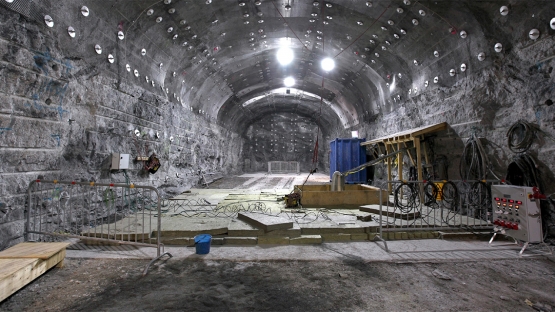
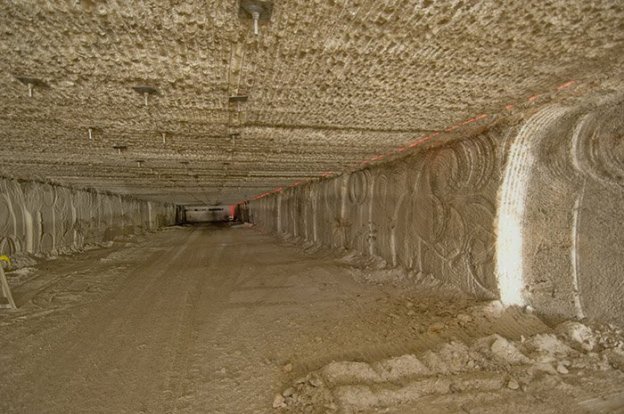
The method — referred to as KBS3 — will see the spent nuclear fuel stored in copper containers surrounded by bentonite clay and placed in 500 tunnels that will be 500 meters under the ground. The aim is to keep the radioactive waste isolated for at least 100,000 years….But there has been criticism of the KBS3 method over recent years, including by researchers who have suggested that copper may not be as resistant to corrosion as the method assumes, meaning the risk of leaks could be higher than expected. 

The approval of the Forsmark site is a big step forward in a long-running saga.  Since the 1970s, Swedish authorities — like their counterparts in nuclear-power-dependent states the world over — have been seeking a solution for the final storage of nuclear waste, scouring the country for suitable sites while also tasking researchers to develop safe methods.  But it took until 2011 for an application to be made by the company SKB — a nuclear waste manager owned by Swedish nuclear power producers — for planning permission at Forsmark. Since then, lengthy consultations have been held with interested parties, from scientists to residents in Östhammar municipality where Forsmark is located. The process became more politically divisive as the Green Party, which quit the government in November 2021, said the process was being rushed and more time was needed for research. 

According to the Environmental Minister Strandhäll:  “Today we have the knowledge and technology which means we don’t need to pass this responsibility onto our children and grandchildren,” she said. “This is a responsibility the government needs to take now.” 

Excerpts from  CHARLIE DUXBUR, Sweden approves nuclear waste storage site, http://www.politico.eu, Jan. 27, 2021

The Nuclear Middle East Kingdom

Russia’s state nuclear energy producer Rosatom is in talks with “several” countries in the Middle East and North Africa to explore development of nuclear power… Saudi Arabia is one of the countries that Rosatom is ready to work with when the kingdom puts out tenders, including to provide the fuel or build the plants…Rosatom was selected to help provide the enriched uranium for the UAE‘s first nuclear power plant, and is building the first nuclear power plants in both Turkey and Egypt.

Egypt’s El-Dabaa project is expected to start production in 2028…The Akkuyu project in Turkey will supply 35 TWh of electricity annually for 60 years, or 10% of Turkey’s consumption. Turkish President Tayyip Erdogan said the plant’s first unit would come online in May 2023.

Excerpt from Claudia Carpenter, Rosatom in talks with ‘several’ Middle East countries about starting nuclear power plants, S&P Global, Jan. 19, 2022
The Secret Nuclear Weapons Capabilities of States

South Korea, like the United States, has long relied on nuclear power as a major source of electric power. As a result, it has amassed large stores of spent nuclear fuel and, as in the United States, has experienced political pushback from populations around proposed central sites for the spent fuel.

South Korea also has a history of interest in nuclear weapons to deter North Korean attack. South Korea’s interest in spent fuel disposal and in a nuclear-weapon option account for the Korea Atomic Energy Research Institute’s dogged interest in the separation of plutonium from its spent fuel. Plutonium separated from spent fuel can be used to make nuclear weapons.

Two US Energy Department nuclear laboratories, Argonne National Laboratory  and the Idaho National Laboratory have encouraged South Korea’s interest in plutonium separation because of their own interests in the process. Now, a secret, leaked, joint South Korean-US report shows deliberate blindness to the economic and proliferation concerns associated with plutonium separation and lays the basis for policies that would put South Korea on the threshold of being a nuclear-weapon state. 

Japan is the only non-nuclear-armed state that separates plutonium. The Korea Atomic Energy Research Institute has domestic political support, however, for its demand that South Korea have the same right to separate plutonium as Japan. 

In 2001 Argonne and Idaho National Laboratories (INL) persuaded an energy-policy task force led by then-Vice President Dick Cheney that pyroprocessing is “proliferation resistant” because the extracted plutonium is impure and unsuitable for nuclear weapons. On that basis, Argonne and INL were allowed to launch a collaboration on pyroprocessing research and development with Korea. The Korea Atomic Energy Research Institute was enthusiastic. It had been blocked from pursuing reprocessing R&D since it had been discovered in 1974 that the institute was part of a nuclear-weapon program.

At the end of the Bush administration, however, nonproliferation experts from six US national laboratories, including Argonne and INL, concluded that pyroprocessing is not significantly more proliferation resistant than conventional reprocessing because it would be relatively easy to remove the weakly radioactive impurities from the plutonium separated by pyroprocessing. The finding that pyroprocessing is not proliferation resistant precipitated a struggle between the Obama administration and South Korea’s government during their negotiations for a new US-Republic of Korea Agreement of Cooperation on the Peaceful Uses of Nuclear Energy. The new agreement was required to replace the existing agreement, which was due to expire in 2014. But the negotiations stalemated when South Korea demanded the same right to reprocess the Reagan administration had granted Japan in 1987. 

At the beginning of September 2021, INL and the Korea Atomic Energy Research Institute submitted a 10-year report on their joint fuel cycle study. Instead of making a policy recommendation on the future of pyroprocessing, however, the Korea-US Joint Nuclear Fuel Cycle Research Steering Committee decided to continue the joint research. A senior US official with knowledge of the situation, told that “at least three or four more years will be necessary for the two governments to be in a position to draw any actual conclusions related to the technical and economic feasibility and nonproliferation acceptability of pyroprocessing on the Korean Peninsula.”

Excerpts from  Frank N. von Hippel, Jungmin Kang, Why joint US-South Korean research on plutonium separation raises nuclear proliferation danger, January 13, 2022
Are We Transgressing the Planetary Boundaries?

There are an estimated 350,000 different types of manufactured chemicals on the global market. These include plastics, pesticides, industrial chemicals, chemicals in consumer products, antibiotics and other pharmaceuticals….The rate at which these pollutants are appearing in the environment far exceeds the capacity of governments to assess global and regional risks, let alone control any potential problems..

In 2009, an international team of researchers identified nine planetary boundaries that demarcate the remarkably stable state Earth has remained within for 10,000 years – since the dawn of civilization. These boundaries include greenhouse gas emissions, the ozone layer, forests, freshwater and biodiversity. The researchers quantified the boundaries that influence Earth’s stability, and concluded in 2015 that four boundaries have been breached. But the boundary for chemicals was one of two boundaries that remained unquantified.

This new research takes this a step further. The researchers say there are many ways that chemicals and plastics have negative effects on planetary health, from mining, fracking and drilling to extract raw materials to production and waste management.

Some of these pollutants can be found globally, from the Arctic to Antarctica, and can be extremely persistent…Global production and consumption of novel entities is set to continue to grow. The total mass of plastics on the planet is now over twice the mass of all living mammals, and roughly 80% of all plastics ever produced remain in the environment. Plastics contain over 10,000 other chemicals, so their environmental degradation creates new combinations of materials – and unprecedented environmental hazards. Production of plastics is set to increase and predictions indicate that the release of plastic pollution to the environment will rise too, despite huge efforts in many countries to reduce waste.

Excerpt from Safe planetary boundary for pollutants, including plastics, exceeded, say researchers, Stockholm Resilience Center Press Release, Jan. 18, 2022

For an alternative view on planetary boundaries see NY Times Article, 2015

Who Owns the Real Information System

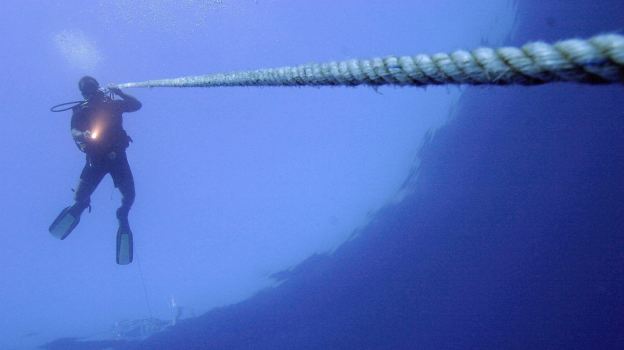
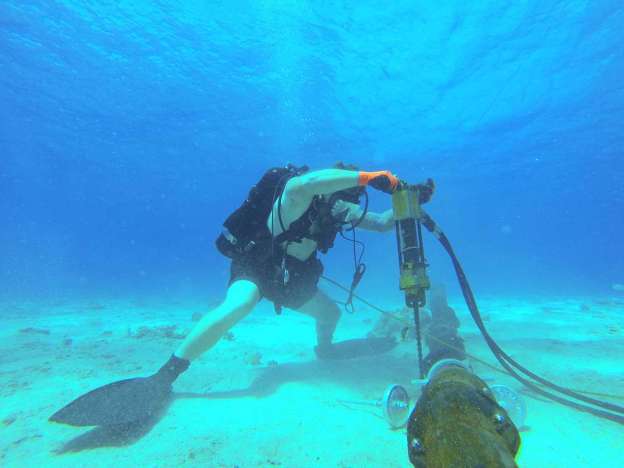
In January 2022, the head of the UK’s armed forces has warned that Russia submarine activity is threatening underwater cables that are crucial to communication systems around the world. Admiral Sir Tony Radakin said undersea cables that transmit internet data are ‘the world’s real information system,’ and added that any attempt to damage then could be considered an act of war.

The internet seems like a post- physical environment where things like viral posts, virtual goods and metaverse concerts just sort of happen. But creating that illusion requires a truly gargantuan—and quickly-growing—web of physical connections. Fiber-optic cable, which carries 95% of the world’s international internet traffic, links up pretty much all of the world’s data centers…

Where those fiber-optic connections link up countries across the oceans, they consist almost entirely of cables running underwater—some 1.3 million kilometers (or more than 800,000 miles) of bundled glass threads that make up the actual, physical international internet. And until recently, the overwhelming majority of the undersea fiber-optic cable being installed was controlled and used by telecommunications companies and governments. Today, that’s no longer the case.

In less than a decade, four tech giants— Microsoft, Google parent Alphabet, Meta (formerly Facebook ) and Amazon —have become by far the dominant users of undersea-cable capacity. Before 2012, the share of the world’s undersea fiber-optic capacity being used by those companies was less than 10%. Today, that figure is about 66%.  In the next three years, they are on track to become primary financiers and owners of the web of undersea internet cables connecting the richest and most bandwidth-hungry countries on the shores of both the Atlantic and the Pacific.

By 2024, the four are projected to collectively have an ownership stake in more than 30 long-distance undersea cables, each up to thousands of miles long, connecting every continent on the globe save Antarctica. In 2010, these companies had an ownership stake in only one such cable—the Unity cable partly owned by Google, connecting Japan and the U.S. Traditional telecom companies have responded with suspicion and even hostility to tech companies’ increasingly rapacious demand for the world’s bandwidth. Industry analysts have raised concerns about whether we want the world’s most powerful providers of internet services and marketplaces to also own the infrastructure on which they are all delivered. This concern is understandable. Imagine if Amazon owned the roads on which it delivers packages.

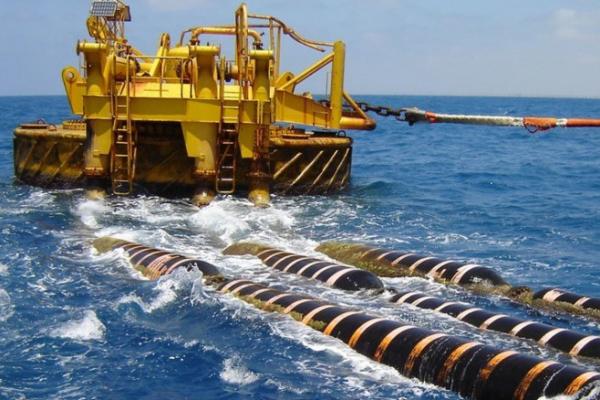
But the involvement of these companies in the cable-laying industry also has driven down the cost of transmitting data across oceans for everyone, even their competitors….Undersea cables can cost hundreds of millions of dollars each. Installing and maintaining them requires a small fleet of ships, from surveying vessels to specialized cable-laying ships that deploy all manner of rugged undersea technology to bury cables beneath the seabed. At times they must lay the relatively fragile cable—at some points as thin as a garden hose—at depths of up to 4 miles.

All of this must be done while maintaining the right amount of tension in the cables, and avoiding hazards as varied as undersea mountains, oil-and-gas pipelines, high-voltage transmission lines for offshore wind farms, and even shipwrecks and unexploded bombs…In the past, trans-oceanic cable-laying often required the resources of governments and their national telecom companies. That’s all but pocket change to today’s tech titans. Combined, Microsoft, Alphabet, Meta and Amazon poured more than $90 billion into capital expenditures in 2020 alone…

Most of these Big Tech-funded cables are collaborations among rivals. The Marea cable, for example, which stretches approximately 4,100 miles between Virginia Beach in the U.S. and Bilbao, Spain, was completed in 2017 and is partly owned by Microsoft, Meta and Telxius, a subsidiary of Telefónica, the Spanish telecom.  Sharing bandwidth among competitors helps ensure that each company has capacity on more cables, redundancy that is essential for keeping the world’s internet humming when a cable is severed or damaged. That happens around 200 times a year, according to the International Cable Protection Committee, a nonprofit group. 

There is an exception to big tech companies collaborating with rivals on the underwater infrastructure of the internet. Google, alone among big tech companies, is already the sole owner of three different undersea cables

Excerpts from Christopher Mims, Google, Amazon, Meta and Microsoft Weave a Fiber-Optic Web of Power, WSJ, Jan. 15, 2022
The Curious Case of Larry Fink, BlackRock: He Stays, They Go

Few private citizens wield more power in America today than Larry Fink, the chief executive of BlackRock in pushing companies to embrace climate-friendly policies, that has made him a lightning rod. The firm he runs manages some $10 trillion for pension funds, endowments, governments, companies and individuals, equal to more than 10% of the world’s gross domestic product in 2020. As steward for millions of investors, BlackRock wields vast shareholder voting power, which it uses either to back managements or to prod them in new directions.

Today, Mr. Fink is telling CEOs that companies must prepare for a scale back of fossil fuels, and that the private sector should work with governments to do so. He warns of the disruption climate change could cause both the economy and financial markets, but sees historic investment opportunity in the energy shift. It’s a point he has made to conferences in Davos, Venice, Riyadh and Glasgow over the past year. Mr. Fink’s power, combined with his advocacy on a hot-button issue, has made him a flashpoint for activists, politicians and unions, both those who think BlackRock isn’t doing enough and others who say it’s doing too much…

U.S. government officials have called on Mr. Fink to help them cope with crises—the pandemic-rattled financial markets in March 2020, and, during the 2008 financial meltdown. “Treasury Secretaries and finance ministers come and go,” said David Rubenstein, the co-founder of the private-equity firm Carlyle Group Inc. “They work for someone else who can fire them tomorrow and have to build what others want them to. When you are the CEO of the biggest asset manager, you don’t have to do that.”

Excerpts from Dawn Lim Follow, Larry Fink Wants to Save the World (and Make Money Doing It), Jan. 6, 2022

After We Vacuum the Earth, We Vacuum the Moon

Chinese nuclear scientists are studying samples carried back by China’s mission to the the moon in 2019. One of those under the microscope at the Beijing Research Institute of Uranium Geology is a 50-milligram rock—approximately the size of a lentil—believed to contain an isotope called helium-3. The isotope… is thought by scientists to have the potential to one day provide safer nuclear energy in a fusion reactor, as it isn’t radioactive. Rare on earth, helium-3 is thought to be abundant on the moon.

While researchers in the U.S. and other nations have studied the isotope, China’s renewed pursuit is part of a decadeslong plan to establish itself as a leading space power, mirroring the country’s rising economic and strategic influence on Earth. Since being shut out of working with the U.S. space agency by law a decade ago, the country has invested heavily in its own program. China is still playing catch-up technologically but is seeking to gain an edge through its moon missions…

China now building the Silk Road to space,” said James Head, a professor of geological sciences at Brown University who has lectured at universities across China in the past few years. 

The theory that the moon might have abundant reserves of helium-3 goes back several decades. In 1986, scientists at the University of Wisconsin estimated that lunar soil could contain a million tons of the isotope, also known as He3. A byproduct of the sun’s intense heat, it is carried through the solar system by solar winds…

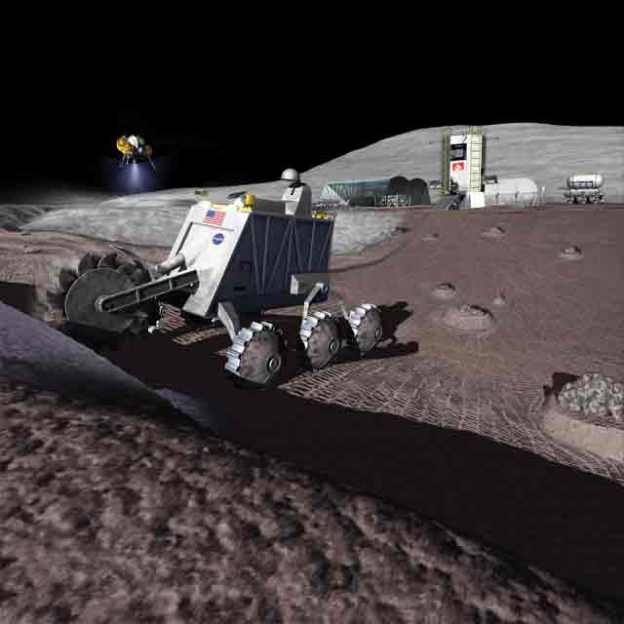
In the future, there could be machines that vacuum up the top layer of the moon’s surface, which could then be used to address Earth’s energy needs or to power moon bases for future missions…

Excerpts from Natasha Khan, Moon Dust Fuels China’s Pursuit of Space Power, WSJ, Dec. 14, 2021

How to Microwave People

An international studies professor in Beijing has claimed China used microwave weapons against Indian soldiers during a standoff along the disputed Himalayan border. Jin Canrong, professor of international relations at Renmin University, told his students Chinese forces forced the Indian soldiers to retreat by turning “the mountain tops into a microwave oven”, according to The Times. Microwave weapons work much the same as regular microwaves. The device heats the water in the human target’s skin, causing immense pain and nausea. The weapon is meant to incapacitate enemies through severe pain but isn’t meant to cause lasting damage. Professor Jin claimed the weapon worked “beautifully” on the Indian soldiers, without violating the “no gunfire” agreement between the parties.

“In 15 minutes, those occupying the hilltops all began to vomit,”reportedly told his students during a lecture. “They couldn’t stand up, so they fled. This was how we retook the ground.” Professor Jin said the reason China didn’t publicize the event was because it was so successful, adding that India also kept the incident under wraps because “they lost so miserably”..

Similar microwave technology aimed at incapacitating but not killing targets have been developed by other militaries. The US used the same technology to develop the Active Denial System, which was designed to be used for area denial, perimeter security and crowd control…Recently, Russia was accused of using its own secret microwave weapon to attack two CIA agents in Australia. It comes after American officials in Cuba fell in with what was dubbed “Havana Syndrome”, with victims often hearing strange sounds, before becoming dizzy, suffering headaches, experiencing memory loss and hearing loss.

Excerpts from Ally Foster,  China allegedly used a secret ‘microwave weapon’ on enemy troops, news.com.au, Nov. 19, 2021

Another Wave of Colonization? Africa

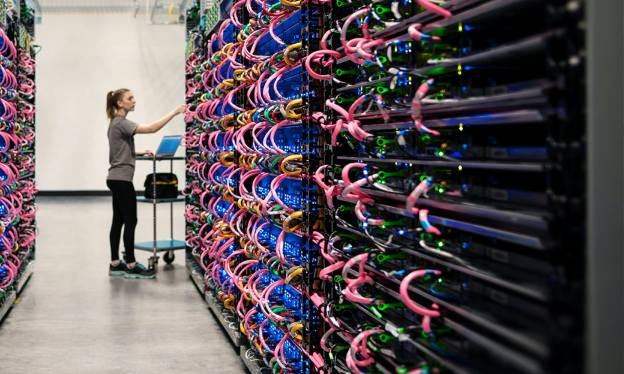
Most of Africa’s data are currently stored elsewhere, zipping down undersea cables that often make landfall in the French city of Marseille….An upheaval is overdue. Africa has more internet users than America, but only as much data-center space as Switzerland.  The boom is partly driven by regulation. Two dozen African countries have passed data-protection laws, or are planning to do so. They often require certain data, such as personal information, to be kept in the country. Another boost comes from competition, says Jan Hnizdo of Teraco, a leading data center in South Africa, where liberalization of the telecoms industry created space for such firms to flourish.

Capital is pouring in. Teraco is building Africa’s largest stand-alone data center in Johannesburg, with backing from foreign funds. Actis, a private-equity firm, is putting $250m into the industry, starting with a majority stake in a Nigerian company, Rack Centre. American investors founded Raxio with an eye on less fashionable markets, from Uganda to Mozambique.

Data centers need power, and lots of it. Keeping their equipment cool consumes almost as much energy as running it, which is why centers are usually in chilly places such as Scandinavia or America’s Pacific north-west. Most of Africa is hot and has a lot of power cuts…To keep servers running, many centers use polluting and expensive diesel generators. Yet the potential gains from offering better connectivity and faster internet services in Africa outweigh the difficulties. Microsoft and Amazon are bringing their cloud services to the region, and have opened data centres of their own in South Africa. Huawei has helped build one for the government of Senegal. Google and Facebook are both involved in projects to lay new cables around Africa’s coasts

Excerpts from Seeding the cloud: Data centers are Taking root in Africa, Economist, Dec. 4, 2021

Lunatics or Climate Fixers?

The ocean has already absorbed nearly one-third of the carbon emissions from human activities, and scientists hope it can shoulder even more of the burden. Ocean Iron fertilization is among the cheapest options. Ocean fertilization is a form of geoengineering  that involves adding iron to the upper layers of the ocean to stimulate phytoplankton activity  in an attempt to remove carbon from the atmosphere and, thus, abate global warming.

Photosynthetic plankton act like tropical rainforests, sucking CO2 from the atmosphere. Their populations are often limited by a scarcity of iron, which sifts into the ocean in windblown dust from deserts, in volcanic ash, and even from underwater hydrothermal vents. Extra iron would stimulate a bloom, the thinking goes, causing plankton to take up extra carbon. The carbon would sink into the depths in the form of dead plankton, or the feces or bodies of organisms that eat them. In theory, the carbon would be entombed for centuries.

Ocean scientists contended in 2021 that ocean fertilization  experiments were a priority and called for the United States to spend up to $290 million on even larger ones that would spread 100 tons of iron across 1000 square kilometers of ocean. Already, researchers next year plan to pour iron across a patch of the Arabian Sea (Center for Climate Repair at the University of Cambridge.)

But skeptics note that a recent survey of 13 past fertilization experiments found only one that increased carbon levels deep in the ocean. That track record is one reason why making iron fertilization a research priority is “barking mad,” says Wil Burns, an ocean law expert at Northwestern University. Stephanie Henson, a marine biogeochemist at the United Kingdom’s National Oceanography Centre, also worries about surprise consequences of the approach, likening it to the catastrophic introduction of rabbits to Australia ecology. “You could just imagine something like that happening in the oceans completely by accident.”

Excerpts from Warren Cornwall, To Draw Carbon, Ocean Fertilization Gets Another Look, Science, Dec. 17, 2021

The Other Middle East Crisis: Rivers are Drying

Protests in the Iranian city of Isfahan erupted in November 2021 due to a severe shortage of water, as the region continues to suffer from a year of low rainfall and drought. Thousands of farmers and others who supported them took to the streets in Isfahan in central Iran, expressing their dissatisfaction at the water shortages and urging the government to solve the crisis. They shouted “let Isfahan breathe again, revive Zayandeh Rud,” referring to the dried river which supplies their crops with water.

The drying up of the Zayandeh Rud river has not only been caused by drought, however, but also by the government’s diversion of water from the river to supply other areas and with a pipeline supplying water to Yazd province also having been damaged. Those incidences have contributed to the farms being left dry and the famers’ livelihoods being threatened.

The water shortages and the drying of the river come at a time when the region is suffering from a similar shortage, as rainfall has been low and temperatures have increased to make it one of the hottest and driest years recorded. ..Neighboring Iraq and Syria have also been expressed concern over the shortage of water this year… In November 201, a major reservoir in Syria also dried up completely, and was similarly due to a combination of climatic and structural causes.

Excerpts from Protests over water shortages erupt in Iran, as river dries up, Middle East Monitor, Nov. 21, 2021

The Space Internet: Space Bacon-DARPA

DARPA’s  Space-Based Adaptive Communications Node (Space-BACN) would allow seamless communication between various constellations of satellites that currently cannot talk to each other.

“There could be tens of thousands of small satellites launched into Low Earth Orbit over the next decade as the demand around the world for affordable space-based capabilities grows,” said Greg Kuperman, Space-BACN program manager in DARPA’s Strategic Technology Office. “The problem with this growth is that optical communications links are currently engineered to only connect satellites within a given constellation – they can’t dynamically adapt waveforms to communicate with satellites in other constellations. This lack of standardization results in a fragmented, stove-piped ‘Wild West’ space domain with new satellite constellations that can’t interoperate, government satellites that can’t communicate between one another, and government satellites unable to take advantage of emerging commercial communications capabilities.”

Space-BACN envisions an adaptable communications terminal that could be reconfigured on-orbit to talk across different standards, presenting a leap in technology from the current state of the art. Space-BACN will involve inter alia a novel cross-constellation command and control approach to automate interactions between government and commercial satellites

Space-BACN has significant military and civilian uses.

Excerpts from Adaptable Optical Communications to Facilitate Future Low-Earth Orbit Networks

See also DARPA solicitation Nov. 2021a

Companies and institutions that are working on this are: Analog Photonics, Arizona State University; CACI; II-VI Aerospace & Defense; Intel Federal; L3 Harris and Northrop Grumman.

Genocide in the Empire of Mark Zuckerberg

Facebook failed to quickly stop the spread of hate speech and misinformation against the Rohingya people, in turn contributing to the persecution and alleged genocide of the minority community in Myanmar, according to a lawsuit filed in December 2021 in a California court that asks for more than $150 billion in compensation.
 
The class-action lawsuit against Meta, Facebook’s parent company, was brought by a Rohingya woman in Illinois on behalf of the 10,000-plus Rohingya refugees who have resettled in the United States since 2012. It alleges that Facebook’s algorithm amplified hate speech and that the company neglected to remove inflammatory content despite repeated warnings that such posts could foment ethnic violence.
A similar complaint against the tech giant is expected to be filed in a British court.

Myanmar’s military launched a “scorched-earth campaign” in 2017 to push Rohingya residents, who are mostly Muslim, out of Rakhine state. Some 750,000 Muslim men, women and children were driven out in a campaign of rape, murder and razed villages that a top United Nations official called a “textbook example of ethnic cleansing.” That year, Doctors Without Borders estimated that at least 6,700 Rohingya people had been killed as a result of the attacks. Around the same time, influential figures such as nationalist monks and top government officials posted or recirculated slurs against the Rohingya, while spreading falsehoods and doctored images that suggested some Rohingya burned their own villages and then blamed it on Myanmar security forces. Myanmar has denied the genocide accusations and has justified some actions on counterterrorism grounds.
 
In 2018, a U.N. report connected Facebook to the atrocities against the Rohingya people. According to the report:

“Facebook has been a useful instrument for those seeking to spread hate, in a context where, for most users, Facebook is the Internet. Although improved in recent months, the response of Facebook has been slow and ineffective. The extent to which Facebook posts and messages have led to real-world discrimination and violence must be independently and thoroughly examined.” 

After the publication of the UN Report, the region became a priority for the company, which began flooding it with resources in 2018… The platform said that it removed some 64,000 pieces of content in Myanmar that violated its policies against hate speech…“Not until 2018 — after the damage had been done — did Facebook executives … meekly admit that Facebook should and could have done more,” the lawsuit alleges. “Facebook is like a robot programed with a singular mission: to grow. And the undeniable reality is that Facebook’s growth, fueled by hate, division, and misinformation, has left hundreds of thousands of devastated Rohingya lives in its wake.”….

Backed by the Organization of Islamic Cooperation, Gambia asked a U.S. court to force Facebook to turn over data related to accounts it deleted in 2018 that fueled atrocities in Myanmar. After some legal wrangling, a federal judge in D.C. shot down the request  on December 3, 2021.

Excerpt from Amy Cheng, Rohingya refugees sue Facebook for $150 billion, alleging it helped perpetuate genocide in Myanmar, Washington Post, Dec. 7, 2021

The New Alliance: SaudiChina

Saudi Arabia has imported sensitive missile technology from the Chinese military and is manufacturing its own ballistic missiles…The Saudi government has sought help from the missile branch of the Chinese military, the People’s Liberation Army Rocket Force…Ballistic missiles are powered by rockets that propel them in an arch-shaped trajectory upward before descending toward their target on the surface of the earth. They can be used to deploy both conventional and nuclear weapons.

The U.S. has long refused to sell ballistic missiles to Riyadh over proliferation concerns. The kingdom obtained Dong Feng-3 missiles in the 1980s from China and displayed them publicly in 2014. The Chinese military has also transferred multiple batches of finished Dong Feng-series missiles since around 2018 up to as recently as the spring of 2021….China also has helped Saudi Arabia construct a facility to fabricate uranium yellowcake, an early step along the path to a civil nuclear energy program or a nuclear arms capability, the Journal reported last year.

Excerpt from Jared Malsin et al, Saudis Begin Making Ballistic Missiles With Chinese Help, WSJ, Dec. 24, 2021

The Stealth Burial of Nuclear Waste

The U.S. government’s underground nuclear waste repository received more than 200 shipments from federal laboratories and other sites around the nation in 2021.
Officials with the U.S. Energy Department announced the number in December 2021, noting that total shipments to the Waste Isolation Pilot Plant have topped 13 000 since opening in 1999. Over more than 20 years, tons of Cold War-era waste have been stashed deep in the salt caverns that make up the repository. The shipments have included special boxes and barrels packed with lab coats, rubber gloves, tools and debris contaminated with plutonium and other radioactive elements.

The majority of shipments come from the decommissioning of legacy nuclear waste sites at the Idaho National Laboratory. More nuclear waste will be heading to the WIPP as the Biden Administration has approved a Trump rule that has redefined high-level nuclear waste. According to the new rule, what constitutes high-level radioactive waste  will be based on the waste’s radioactivity rather than how it was produced.

U.S. nuclear repository marks more than 200 shipments of waste in 2021, Associated Press, Dec. 30, 2021

The Forced Migration of Endangered Species

Rhino translocations have become a critical tool in the arsenal for the protection of these endangered animals. Recently, 30 white rhinos were flown into Rwanda from South Africa and introduced into the Akagera National Park, in what is the single largest translocation. 

In the late 19th century, southern white rhinos were almost on the brink of extinction. This was due to poaching and hunting. But in 1895 a small population of fewer than 100 individuals was discovered in KwaZulu-Natal, South Africa. After more than a century of protection and good management, there are now around 17,600 white rhinos (as of 2018) living in protected areas and private game reserves…However, this success story is being threatened by the illegal trade in horn. Between 2006 and 2020, 10,600 rhinos across the continent have been lost. With the exception of a few areas, rhinos are surviving in well protected, smaller national parks and reserves.

Why were rhinos translocated to Rwanda? Having a population in a Rwanda could create a secure new breeding stronghold in East Africa and help ensure the long-term survival of the species in the wild…

Any international translocation requires political support from national governments and conservation authorities and should be in full compliance with international agreements, such as CITES…Sourcing the animals is also an important aspect… South Africa has a vibrant wildlife industry based upon the buying and selling of wildlife. 

Catching and Translocating the Animals: A lot of time is spent on planning for this and ensuring the animals are treated as well as possible. Moving animals over thousands of kilometers is a serious endeavor. With 30 animals, chartered jumbo jets are the best way. This requires considerable veterinary and logistical coordination to capture the animals, load into crates, transport to the aircraft, load as quickly as possible, unload similarly, transport to the site and release into well-sited and secure bomas. 

Upon arrival, animals are put into holding bomas to get them adjusted to the local different foods that they’ll encounter…Once they’re in the new habitat, the next concern is security and making sure people can take care of them and monitor them.

Excerpts from Mike Knight, Africa: Moving African Rhinos – What It Takes to Translocate an Endangered Species, AllAfrica.com, Dec. 14, 2021

Global Microbiome Living on Plastics

The number of microbial enzymes with the ability to degrade plastic is growing, in correlation with local levels of plastic pollution. That is the finding of a study from Chalmers University of Technology, Sweden, that measured samples of environmental DNA from around the globe. The results illustrate the impact plastic pollution is having on the environment, and hint at potential new solutions for managing the problem.

The study analyzed samples of environmental DNA from hundreds of locations around the world. The researchers used computer modelling to search for microbial enzymes with plastic-degrading potential, which was then cross-referenced with the official numbers for plastic waste pollution across countries and oceans. “Using our models, we found multiple lines of evidence supporting the fact that the global microbiome’s plastic-degrading potential correlates strongly with measurements of environmental plastic pollution – a significant demonstration of how the environment is responding to the pressures we are placing on it,” says Aleksej Zelezniak, Associate Professor in Systems Biology at Chalmers University of Technology. 

More enzymes in the most polluted areas: In other words, the quantity and diversity of plastic-degrading enzymes is increasing, in direct response to local levels of plastic pollution. In total, over 30,000 enzyme ‘homologues’ were found with the potential to degrade 10 different types of commonly used plastic. Homologues are members of protein sequences sharing similar properties. Some of the locations that contained the highest amounts were notoriously highly polluted areas, for example samples from the Mediterranean Sea and South Pacific Ocean…

The researchers believe that their results could potentially be used to discover and adapt enzymes for novel recycling processes…“The next step would be to test the most promising enzyme candidates in the lab to closely investigate their properties and the rate of plastic degradation they can achieve. From there you could engineer microbial communities with targeted degrading functions for specific polymer types,” explains Aleksej Zelezniak.

Plastic-degrading enzymes increasing in correlation with pollution, Chalmers University of Technology Press Release, Dec. 14, 2021

Detoxing the Fish of Our Lakes and Rivers

Fish populations appear to recover rapidly from mercury pollution once humans stop adding it to their environment. A 15-year study of a lake in Canada found that eight years after the metal’s supply ceased, concentrations of methylmercury – a highly toxic substance made from mercury by bacteria in aquatic ecosystems – fell by 76 per cent… 

“I can’t imagine a much faster recovery,” says Paul Blanchfield at government agency Fisheries and Oceans Canada, who led the research. The team are not suggesting the fish excrete the mercury quickly – the experiment in fact shows they hang on to it for a long time – but that quick turnover of generations sees concentrations fall fast when new pollution stops.

Mercury pollution is still a major global environmental problem, with small-scale gold mining and coal burning being the two biggest sources. Transported in the atmosphere and rained down on lakes and oceans, the metal’s accumulation in freshwater and marine species has raised concerns over the human health impact of eating fish.

Excerpts from Adam Vaughan, Freshwater fish can recover from mercury pollution in just a few years, New Scientist, Dec. 15, 2021

Israel’s Preemptive Attacks on Chemical Weapons, Syria

Israel twice struck chemical weapons facilities in Syria between 2020 and 2021 in a campaign to prevent Syria from renewing chemical weapons production…Syria’s government denies using chemical arms. In 2013 it promised to surrender its chemical weapons, which it says it has done.

On June 8, 2021, Israeli jets hit three military targets near the cities of Damascus and Homs, all linked to Syria’s former chemical weapons program. In March 2020, Israel targeted a villa and compound tied with the procurement of a chemical that can be used in nerve agents. Whether Israel’s attacks were fully successful in disrupting Syria’s plans is unclear. Israeli officials intended the strikes to be preemptive, knocking out the country’s production capabilities before actual weapons could be made…

Excerpts from Israel hit chemical weapons facilities in Syria over past two years, Reuters, Dec. 13, 2021

To Save the Congo Rainforest, We Must Save the People First

The Special Representative of the Secretary-General in the Democratic Republic of the Congo told the Security Council in December 2021  that “a lasting solution” to the violence” in Congo requires a broader political commitment to address the root causes of conflict.”  Bintou Keita argued that, for stability to return to eastern Congo, “the State must succeed in restoring and maintaining the confidence of the people in state’s ability to protect, administer, deliver justice and meet their basic needs.” 

Starting on November 30, 2021  the Congolese Armed Forces initiated joint military operations with the Ugandan army against the rebel Allied Democratic Forces (ADF) in the east.  In May 2021, the Congolese authorities declared a state of siege in the provinces of Ituri and North Kivu, whose duration has just been extended for the 13th time

But the challenges facing the Government in implementing the state of siege highlight “the limits of a strictly military approach to the protection of civilians and the neutralization of armed groups.”  In fact, the period of the state of siege saw a 10 per cent increase in the number of violations and abuses of human rights in the country.  


According to the Special Representative, the humanitarian situation continues to deteriorate in the restive east, due to insecurity, epidemics, and limited access to basic services.  The number of internally displaced people stands at nearly 6 million, of which 51 per cent are women. This is the highest number of internally displaced people in Africa.  

The Special Representative pointed out the illegal exploitation of natural resources as “a major driver of conflict”, saying it must be addressed, and commended President Tshisekedi’s intervention at the COP26 Summit, where he committed to combat deforestation in the Congo Basin rainforest and reduce greenhouse gas emissions by 21 per cent, by 2030….  

Excerpts from DR Congo: Limitations to ‘strictly military approach’ to stem violence, mission chief warns, UN News, Dec. 6, 2021

Nowhere to Go: Nuclear Waste Germany

Germany is to shut down its last nuclear reactors in 2022. However, the country still has no place to store the 27,000 cubic meters of highly radioactive material it has already produced, with the amount set to grow as power stations are decommissioned and dismantled. German authorities have set a deadline of 2031 to find a permanent storage location – but for now, the waste is being stored in temporary locations, much to the anger of local residents.

See Youtube video France24

Re-Growing Our Lost Tropical Forests

Scientists have concluded that tropical forests demonstrate high resilience, even after they are cut down, due to agriculture or pasture use, if they are left alone for 20 years.  According to the study published in December 2021. 

“Tropical forests are converted at alarming rates to other land uses yet they also have the potential to regrow naturally on abandoned agricultural fields and pastures. Widespread land abandonment because of fertility loss, migration, or alternative livelihood options has led to a rapid increase in the extent of regrowing forests. Currently, regrowth covers as much as 28% (2.4 million km2) of the neotropics alone. Regrowing secondary forests form a large and important component of human-modified tropical landscapes and have the potential to play a key role in biodiversity conservation, climate change mitigation, and landscape restoration. 

See Multidimensional tropical forest recovery, SCIENCE VOL. 374, NO. 6573, Dec. 9, 2021

The Neck and Neck Race in Africa

Classified American intelligence reports suggest China intends to establish its first permanent military presence on the Atlantic Ocean in the tiny Central African country of Equatorial Guinea. The officials…said the reports raise the prospect that Chinese warships would be able to rearm and refit opposite the East Coast of the U.S.—a threat that is setting off alarm bells at the White House and Pentagon. Principal deputy U.S. national security adviser Jon Finer visited Equatorial Guinea in October 2021 on a mission to persuade President Teodoro Obiang Nguema Mbasogo and his son and heir apparent, Vice President Teodoro “Teodorin” Nguema Obiang Mangue, to reject China’s overtures…

In Equatorial Guinea, the Chinese likely have an eye on Bata, according to a U.S. official. Bata already has a Chinese-built deep-water commercial port on the Gulf of Guinea, and excellent highways link the city to Gabon and the interior of Central Africa….

Equatorial Guinea, a former Spanish colony with a population of 1.4 million, secured independence in 1968. The capital, Malabo, is on the island of Bioko, while Bata is the largest city on the mainland section of the country, which is wedged between Gabon and Cameroon. Mr. Obiang has ruled the country since 1979. The discovery of huge offshore gas and oil reserves in 1996 allegedly allowed members of his family to spend lavishly on exotic cars, mansions and other luxuries…The State Department has accused the Obiang regime of extrajudicial killings, forced disappearances, torture and other abuses. A U.S. Senate committee issued a report in 2004 criticizing Washington-based Riggs Bank for turning “a blind eye to evidence suggesting the bank was handling the proceeds of foreign corruption” in accepting hundreds of millions of dollars in deposits controlled by Mr. Obiang, his wife and other relatives……

Equatorial Guinea relies on American oil companies to extract offshore resources that have made the country the richest on the sub-Saharan mainland, as measured by per capita annual gross domestic product….Chinese state-owned companies have built 100 commercial ports around Africa in the past two decades, according to Chinese government data….

The State Department recently raised Equatorial Guinea’s ranking in the annual assessment of how diligently countries combat human trafficking. The upgrade could allow the Biden administration to offer maritime-security assistance to help win Equatorial Guinea’s cooperation.

Excerpts from MICHAEL M. PHILLIPS, China Seeks First Military Base on Africa’s Atlantic Coast, U.S. Intelligence Finds, WSJ, Dec. 5, 2021

What’s in that Suitcase? Endangered Turtles

Live animals, python skins and slimming pills made from crocodile blood are just a few of the items seized at world borders recently. In the space of a month, 29 big cats, 531 turtles, 336 reptiles, 1.4 million plant-derived products and 75,320kg of timber were found in luggage. 300 arrests were made. Many of the items are part of the world’s fourth biggest illegal market – the illegal wildlife trade. Despite decades of lawmakers’ crackdowns, it is still worth an estimated €17 billion annually.

The smuggled items were found as part of Operation Thunder 2021, which spanned 118 countries and the work of customs, police and wildlife enforcement agencies. The operation, coordinated by the World Customs Organisation (WCO) and INTERPOL, involved searching cars, boats and lorries with sniffer dogs and X-ray scanners. Law enforcement found that online platforms are being used to arrange trafficking, and illegal money transfers are used to enable money laundering.

Excerpt from Nichola Daunton, These are all the endangered species criminals tried to smuggle in just one month, Euronews, Dec. 1, 2021

See also Press Release of UNODC World Wildlife Crime

Why Crabs and Mussels Love Plastic Pollution

The “Great Pacific Garbage Patch,” is considered the world’s largest accumulation of ocean plastic. It’s so massive, in fact, that researchers found it has been colonized by species — hundreds of miles away from their natural home. The research, published in the journal Nature, found that species usually confined to coastal areas — including crabs, mussels and barnacles — have latched onto, and unexpectedly survived on, massive patches of ocean plastic.  As suitable habitat made of plastics now exists in the open ocean, coastal organisms can both survive at sea for years and reproduce, leading to self-sustaining coastal communities on the high seas!

But the mingling of the neuston and coastal species is “likely recent,” researchers said, and was caused largely because of the accumulation of “long-lived plastic rafts” that have been growing since the middle of the 20th century. Just by itself, the Great Pacific Garbage Patch, located between California and Hawai’i, is estimated to have at least 79,000 tons of plastic within a 1.6 million-square-kilometer area. There are at least four other similar patches throughout the world’s oceans. Researchers expect that plastic waste is going to “exponentially increase,” and by 2050, there will be 25,000 million metric tons of plastic waste.  

For lead author Linsey Haram, the research shows that physical harm to larger marine species should not be the only concern when it comes to pollution and plastic waste. “The issues of plastic go beyond just ingestion and entanglement,” Haram said in a statement. “It’s creating opportunities for coastal species’ biogeography to greatly expand beyond what we previously thought was possible.” 

But that expansion could come at a cost. “Coastal species are directly competing with these oceanic rafters,” Haram said. “They’re competing for space. They’re competing for resources. And those interactions are very poorly understood.” There is also a possibility that expansions of these plastic communities could cause problems with invasive species. A lot of plastic found in the Great Pacific Garbage Patch, for example, is debris from the 2011 Tohoku tsunami in Japan, which carried organisms from Japan to North America. Over time, researchers believe, these communities could act as reservoirs that will provide opportunities for coastal species to invade new ecosystems. 

There are still many questions researchers say need to be answered about these new plastic-living communities — like how common they are and if they can exist outside the Great Pacific Garbage Patch — but the discovery could change ocean ecosystems on a global scale, especially as climate change exacerbates the situation. 

Excerpts from LI COHEN, There’s so much plastic floating on the ocean surface, it’s spawning new marine communities, CBS News, Dec. 2, 2021
BY LI COHEN

Battle for Storing Medical Nuclear Waste: Australia

Napandee, a 211 hectare property near the town of Kimba, has been acquired by the Australian  government and will be used to store low and medium-level nuclear waste. “This is still the right decision at the right site,” Resources Minister Keith Pitt said.  “It’s certainly got all of the right geological requirements, we have majority support from the local community and we should never forget that this has taken 40 years and I understand some 16 ministers,” he said.  “Fundamentally, for the local community of Kimba it’s been over six years of consultation.” The consultation culminated in a ballot which showed just over 60 per cent of Kimba residents supported the project.

However, the Barngarla traditional owners opposed the project and said they were not included in the consultation. “There have been significant and repeated grave problems with the government’s conduct regarding the site selection process,” a spokesperson for the Barngarla Determination Aboriginal Corporation said in a statement. “We remain confident that, once assessed by the Court, the declaration to locate the facility at Napandee on our Country will likely be overturned.”

According to the Australian minister, every Australian would need to use nuclear medicine at some point in their life. “If we are going to use this technology, it produces low-level radioactive waste and we have to deal with it and store it. This is the best option on the table.” “This is a facility that will last more than 100 years and it’s important for the country.” The Australian Radioactive Waste Agency, created to establish the Napandee facility, will start work on detailed designs.

Excerpts from Declan Gooch and Emma Pedler, Napandee chosen as nuclear waste storage site after ‘six years of consultation’, ABC, Nov. 29, 2021

Solar and Chemicals Are Not Enough: Nuclear Reactors in Space

Chinese scientists are currently building a powerful nuclear reactor for their moon and Mars expeditions. Beijing claims its reactor will be 100 times more powerful than the device US space agency NASA wants to set up on the moon’s surface by 2030. ..One Chinese expert claims that to satisfy the objectives of human space exploration, chemical fuel and solar panels will no longer suffice; the hunger for more energy sources is likely to grow dramatically if there are human settlements on the moon or Mars in the future.

In November 2021, NASA has issued a request for proposals for the development of a 10-kilowatt nuclear fission device capable of supporting a long-term human presence on the moon within a decade…The plan is to deploy a fission surface power system by 2026, with a flying system, lander, and reactor in place. The facility will be completely built and integrated on Earth, then thoroughly tested for safety and functionality…In addition, Russia has also indicated its intention to launch a massive spaceship powered by TEM, a megawatt-sized nuclear reactor, before 2030. The spaceship would be able to function in Earth’s lower orbit for more than a decade while conducting more missions to the moon or beyond owing to the nuclear energy.

Democritos, a parallel project led by the European Space Agency, will test a 200kW nuclear space reactor on the ground by 2023. Additionally, NATO secretary-general Jens Stoltenberg says that the alliance will not put weapons in space, but it will be required to safeguard its assets, which include 2,000 satellites in orbit. Space is becoming an “operational domain” for NATO as well…

Excerpts from  Ashish Dangwal, 100 Times More Powerful Than US Tech, China Claims Its Nuclear Reactor For Space Missions Will Outdo NASA Device, Eurasiantimes.com, Nov. 26, 2021

The Limits of Green Energy: Wind Blades of Wood and Plastic

What does the deforestation of balsa wood in Ecuador’s Amazon region have to do with wind power generation in Europe? There is a perverse link between the two: a drive for renewable energy has boosted global demand for a prized species of wood that grows in the world’s largest rainforest. As Europe and China increase the construction of blades for wind turbines, balsa trees are being felled to accelerate an energy transition driven by the need to decarbonize the global economy.

In the indigenous territories of the Ecuadorian Amazon, people began to notice an uptick in international demand for balsa wood from 2018 onwards. Balsa is very flexible but tough at the same time, and offers a light yet durable option for long-term wind power production. The typical blades of a wind turbine are currently around 80 meters long, and the new generation of blades can extend up to 100 meters. That means about 150 cubic meters of wood are required to build a single unit, according to calculations by the United States National Renewable Energy Laboratory.

Ecuador is the world’s main exporter of balsa wood, holding 75% of the global market. Major players include Plantabal S.A. in Guayaquil, which has around 10,000 hectares dedicated to the cultivation of balsa wood destined for export. With the boom in demand starting in 2018, this company and many others struggled to cope with the quantity of international orders. This increase has led directly to the deforestation of the Amazon. Irregular and illegal logging has proliferated by those who have reacted to the scarcity of wood grown for timber by chopping down the virgin balsa that grows on the islands and riverbanks of the Amazon

The impact on the indigenous people who live in the area has been as devastating as mining, oil and rubber were in their day…The Amazon’s defenders are calling for the wind turbine industry to implement strict measures to determine the origin of the wood used in turbine blades, and to prevent market pressure leading to deforestation. Ultimately, they say, balsa wood should be replaced by other materials…

In 2019, Ecuador’s balsa exports were worth almost €195 million, 30% more than the previous record from 2015. In the first 11 months of 2020, this jumped to €696 million.

Wind turbine blades are mainly made from polymethacrylamide (PMI) foam, balsa wood and polyethylene terephthalate (PET) foam…But The Spanish-German company Siemens-Gamesa..has  introduced blade designs using PET only, other competitors soon followed. Wood Mackenzie, a consultancy firm, forecasts that this “will increase from 20% in 2018 to more than 55% in 2023, while demand for balsa will remain stable…”

Today’s blades also present a problem for recycling. The first generation of wind turbines are reaching the end of their lives, and thousands will need to be dismantled… “But the blades represent a challenge due to their composite materials, as their recycling requires very specific processes…

Excerpts from How the wind power boom is driving deforestation in the Amazon, ElPais, Nov. 26, 2021

How to Lift Nuclear Submarines from Arctic Seabed

Projects aimed to improve nuclear safety are some of the few successful arenas for cooperation still going strong between the European Union and Russia…especially wiht regard to the two old Soviet submarines K-159 and K-27, both rusting on the Arctic seabed with highly radioactive spent nuclear fuel elements in their reactors…

“The sunken submarines K-27 and K-159 are the potential source of contamination of the Arctic, the riskiest ones,” Ambassador Jari Vilén of Filand explains. “Assessments made by the European Union together with Rosatom show that in 20-30 years’ time the metals will start corroding and there is a genuine risk of leakage. Therefore, lifting them in the coming decade is extremely important.”

“I’m very happy we are making progress and that a decision to make a technical review has been decided by the European Bank for Reconstruction and Development (EBRD) through the Northern Dimension Environmental Partnership. Hopefully, when these technical reviews are done, we will come to a phase where we can make decisions on a lifting operation,” Vilén says with enthusiasm.

Lifting a nuclear submarine from the seabed is nothing new. It is difficult, but doable. In 2002, the Dutch salvage company Mammoet managed to raise the ill-fated “Kursk” submarine from the Barents Sea. A special barge was built with wires attached underneath. The wreak of “Kursk” was safely brought in and placed in a dry-dock where the decommissioning took place.

K-159 is a November-class that sank in late August 2003 while being towed in bad weather from the closed naval base of Gremikha on the eastern shores of the Kola Peninsula towards the Nerpa shipyard north of Murmansk. The two onboard reactors contain about 800 kilograms of spent nuclear fuel, with an estimated 5,3 GBq of radionuclides. A modeling study by the Norwegian Institute of Marine Research said that a pulse discharge of the entire Cesium-137 inventory from the two reactors could increase concentrations in cod in the eastern part of the Barents Sea up to 100 times current levels for a two-year period after the discharge. While a Cs-137 increase of 100 times in cod sounds dramatic, the levels would still be below international guidelines. But that increase could still make it difficult to market the affected fish.

K-27, the other submarine in urgency to lift, was on purpose dumped in the Kara Sea in 1982….

Lifting the dumped reactors from the Kara Sea, a price tag of nearly €300 million has been mentioned. The sum includes K-27 and K-159, but also the other dumped reactors from K-11, K-19 and K-140, as well as spent nuclear fuel from an older reactor serving icebreaker “Lenin”. “The value of the fishing stocks in the area is ruffly €1.4 billion annually,” he says.

Excerpts from Thomas Nilsen, EU willing to co-fund lifting of sunken nuclear subs from Arctic seabed, The Barents Observer, Nov. 22, 2021

Exchanging Nature for Crushing Debt

In 2020 tourism in Belized dried up, growth contracted sharply and public debt jumped from just under 100% GDO in 2019 to over 125%. That forced Belize,  into a debt restructuring…As part of the deal, concluded on November 5th, 2021 Belize bought back its only international bond, a $553m, at 55 cents on the dollar. It funded that with $364m of fresh money, arranged by The Nature Conservancy, an NGO, which is insured by the International Development Finance Corp, an American agency. The transaction is backed by the proceeds of a “blue bond” arranged by Credit Suisse, a bank. The payback is due over 19 years. It is called a blue bond because Belize has pledged to invest a large chunk of the savings into looking after the ocean. That includes funding a $23m endowment to support future marine-conservation projects and promising to protect 30% of its waters by 2026…

Debt-for-nature swaps are nothing new. Lenders have been offering highly indebted countries concessions in return for environmental commitments for decades. But these transactions have historically involved debt owed to rich countries, not commercial bondholders. As Lee Buchheit, a lawyer who specialises in sovereign-debt restructurings, points out, they were “negligible in size”. In total, the value of debt-for-climate and nature-swap agreements between 1985 and 2015 came to just $2.6bn, according to the United Nations Development Programme. Of the 39 debtor nations that benefited from the swaps, only 12 negotiated debts of over $30m. “It was really an exercise in public relations,” Mr Buchheit says….

Other poor countries are trying to move in the same direction. At the COP26 climate summit in Glasgow Ecuador’s president Guillermo Lasso proposed enlarging the country’s Galapagos nature reserve through a debt-for-nature swap…Yet no amount of creative dealmaking can distract from the grim truth: many emerging markets still suffer from crushing debts.

Excerpts from Debt-for Nature Swaps: Reef relief, Economist, Nov. 13, 2021

No Matter What they Say-Nobody Likes Nuclear Waste

The first stage of the process has been under way since November 2020 for the town of Suttsu and the village of Kamoenai assessing two municipalities in Hokkaido for their suitability to host a final disposal facility for high-level radioactive waste from nuclear power plants.  Under the government’s plan, the first-stage surveys take two years and will be followed by the second phase… which will include geophysical exploration, geological reconnaissance surveys and drilling surveys. Already stories about divisions and conflict over the surveys are emerging from the local communities.

The mayoral election of Suttsu in October 2021, for example, turned into a bitter and divisive political battle over the issue between the incumbent who decided to apply for the first-phase survey and a challenger who ran on opposition to the project. Some of the neighboring municipalities have enacted an ordinance to ban the entry of radioactive materials. Both the Hokkaido prefectural government and most of the local administrations around the two municipalities have declined to accept state subsidies related to the surveys. These actions have been driven by the fear that accepting the surveys will set in motion an unstoppable process leading to a permanent repository for nuclear waste.

The NUMO (Nuclear Waste Management Organization of Japan) and the METI (Ministry of Economy, Trade and Industry)  have jointly held more than 100 meetings to explain the plan to local communities across the nation. Even though they have continued calling for localities to volunteer, no local governments except for the two in Hokkaido have responded.

Excerpts from Entire nation should share in disposal of spent nuke fuel, Asahi Shimbun, Nov. 22, 2021

Nobody Can Escape the Nuclear Rat Race

When America and the Soviet Union raced each other to build ever-larger nuclear arsenals during the cold war, China ambled disdainfully. It did not detonate its first nuclear weapon until 1964, kept only a few hundred warheads compared with the tens of thousands piled up by the superpowers, and to this day maintains it will never be the first to use nukes in a war. Now China is sprinting to catch up.

In its 2021 annual assessment, the Pentagon says China’s stockpile of nuclear warheads, which last year it reckoned to be in the “low-200s”, could triple to about 700 by 2027 and will probably quintuple to about 1,000 or more by 2030… Even so, it would still be smaller than America’s or Russia’s. Those countries each have about 4,000 warheads. The Pentagon believes China is building fast-breeder reactors to make the necessary plutonium; may already have created a full “triad”, ie, the ability to launch nuclear weapons from the land, sea and air; and is expanding its early-warning systems, with help from Russia.

All told, China is shifting to a “launch on warning” doctrine. Rather than rely on a minimal nuclear deterrent to retaliate after an initial nuclear attack, China would henceforth fire at the first sign of an incoming nuclear strike, even before the enemy warheads have landed. This posture is akin to that of America and Russia… Why is China building up its nukes at a time when America and Russia have extended the New START treaty, which limits their arsenals…? One reason is China’s worry that its arsenal is too small to survive an American first strike…

Excerpt from Military Strategy: An Unpacific Contest, Economist, Nov. 6, 2021

The Mining Curse

Two poor, fragile, post-Soviet democracies, two spectacular holes in the ground. Mongolia’s Oyu Tolgoi, or “Turquoise Hill”, is a vast mine in the southern Gobi desert, just 80km from the Chinese border. Kumtor in the Tian Shan mountains of Kyrgyzstan, operating since 1997, is if anything even more remote. Located beside a series of glaciers at 13,000 feet above sea level, it is the world’s second-highest gold mine.

It is hard to exaggerate the importance of these two mines to their respective economies. Once completed, Oyu Tolgoi will be the world’s fourth-biggest copper mine. When the contract with Rio Tinto, an Anglo-Australian mining giant, was first signed in 2009, Oyu Tolgoi was predicted to add five percentage points to Mongolia’s annual economic growth, which, for a while, it did. The mine has created 15,000 jobs directly and another 45,000 indirectly, for a Mongolian population of 3.3m. As for Kumtor, its owner, Centerra, a Canadian exploration company, is the country’s largest private investor. In a good year the mine generates a tenth of Kyrgyzstan’s GDP and is the biggest contributor to the state budget.

Both mines loom large in national life. Both foreign operators won sweet, initial deals when naïve young states opened their doors to foreign investment. Controversy surrounding the mines was thus inevitable. Oyu Tolgoi has long been controversial. Politicians often accuse Rio Tinto of fleecing the country…In Kyrgyzstan the goverment accuses Centerra of corruption, enriching politicians instead of the national budget. 

Accusations of being cheated are common in poor, resource-rich countries. With Oyu Tolgoi, the stand-off is more easily resolved….A recent independent review makes it hard for Rio to deny it bears some blame for delays and cost overruns in developing the mine…. In Kyrgyzstan the situation is bleaker. There, bribery and corruption are not incidental to business but central to it….Foreign investors too often blame “resource nationalism” for their woes in host countries. That is self-serving. After all, the resources usually belong to the state. It is reasonable for citizens to ask how best to benefit from them…. 

Excerpts from Banyan: Mine for the Taking, Economist, Nov. 6, 2021

A Humane Bombing Campaign? the Baghuz Strike

In the last days of the battle against the Islamic State in Syria, when members of the once-fierce caliphate were cornered in a dirt field next to a town called Baghuz, a U.S. military drone circled high overhead, hunting for military targets. But it saw only a large crowd of women and children huddled against a river bank. Without warning, an American F-15E attack jet streaked across the drone’s high-definition field of vision and dropped a 500-pound bomb on the crowd, swallowing it in a shuddering blast. As the smoke cleared, a few people stumbled away in search of cover. Then a jet tracking them dropped one 2,000-pound bomb, then another, killing most of the survivors.

It was March 18, 2019. At the U.S. military’s busy Combined Air Operations Center at Al Udeid Air Base in Qatar, uniformed personnel watching the live drone footage looked on in stunned disbelief, according to one officer who was there. “Who dropped that?” a confused analyst typed on a secure chat system being used by those monitoring the drone, two people who reviewed the chat log recalled. Another responded, “We just dropped on 50 women and children.”

The Baghuz strike was one of the largest civilian casualty incidents of the war against the Islamic State, but it has never been publicly acknowledged by the U.S. military. The details, reported by the New York Times on November 13, 2021, show that the death toll was almost immediately apparent to military officials. A legal officer flagged the strike as a possible war crime that required an investigation. But at nearly every step, the military made moves that concealed the catastrophic strike. The death toll was downplayed. Reports were delayed, sanitized and classified. United States-led coalition forces bulldozed the blast site. And top leaders were not notified.

The Defense Department’s independent inspector general began an inquiry, but the report containing its findings was stalled and stripped of any mention of the strike. “Leadership just seemed so set on burying this. No one wanted anything to do with it,” said Gene Tate,  a former Navy officer who had worked for years as a civilian analyst with the Defense Intelligence Agency and the National Counterterrorism Center before moving to the inspector general’s office….

The details of the strikes were pieced together by The New York Times over months from confidential documents and descriptions of classified reports, as well as interviews with personnel directly involved, and officials with top secret security clearances who discussed the incident on the condition that they not be named. The Times investigation found that the bombing had been called in by a classified American special operations unit, Task Force 9, which was in charge of ground operations in Syria. The task force operated in such secrecy that at times it did not inform even its own military partners of its actions. In the case of the Baghuz bombing, the American Air Force command in Qatar had no idea the strike was coming, an officer who served at the command center said.

The only assessment done immediately after the strike was performed by the same ground unit that ordered the strike. It determined that the bombing was lawful because it killed only a small number of civilians while targeting Islamic State fighters in an attempt to protect coalition forces, the command said. Therefore no formal war crime notification, criminal investigation or disciplinary action was warranted, it said, adding that the other deaths were accidental.

But the Air Force lawyer, Lt. Col. Dean W. Korsak, believed he had witnessed possible war crimes and repeatedly pressed his leadership and Air Force criminal investigators to act. When they did not, he alerted the Defense Department’s independent inspector general. Two years after the strike, seeing no evidence that the watchdog agency was taking action, Colonel Korsak emailed the Senate Armed Services Committee, telling its staff that he had top secret material to discuss and adding, “I’m putting myself at great risk of military retaliation for sending this.”..

The United States portrayed the air war against the Islamic State as the most precise and humane bombing campaign in its history. The military said every report of civilian casualties was investigated and the findings reported publicly, creating what the military called a model of accountability. The details suggest that while the military put strict rules in place to protect civilians, the Special Operations task force 9 repeatedly used other rules to skirt them. The military teams counting casualties rarely had the time, resources or incentive to do accurate work. And troops rarely faced repercussions when they caused civilian deaths.

On the ground, Task Force 9 coordinated offensives and airstrikes. The unit included soldiers from the 5th Special Forces Group and the Army’s elite commando team Delta Force, several officials said. Over time, some officials overseeing the air campaign began to believe that the task force was systematically circumventing the safeguards created to limit civilian deaths. The process was supposed to run through several checks and balances. Drones with high-definition cameras studied potential targets, sometimes for days or weeks. Analysts pored over intelligence data to differentiate combatants from civilians. And military lawyers were embedded with strike teams to ensure that targeting complied with the law of armed conflict.  But there was a quick and easy way to skip much of that oversight: claiming imminent danger….By late 2018, about 80 percent of all airstrikes Task Force 9 was calling in claimed self-defense, according to an Air Force officer who reviewed the strikes. The rules allowed U.S. troops and local allies to invoke it when facing not just direct enemy fire, but anyone displaying “hostile intent,”… Under that definition, something as mundane as a car driving miles from friendly forces could in some cases be targeted…..

The aftermath of that approach was plain to see. A number of Syrian towns, including the regional capital, Raqqa, were reduced to little more than rubble. Human rights organizations reported that the coalition caused thousands of civilian deaths during the war. Hundreds of military assessment reports examined by The Times show the task force was implicated in nearly one in five coalition civilian casualty incidents in the region…Publicly, the coalition insisted the numbers were much lower. Privately, it became overwhelmed by the volume of civilian casualty claims reported by locals, humanitarian groups and the news media, and a backlog of civilian casualty assessment reports sat unexamined for months, two people who compiled the reports said…..

Excerpts from How the U.S. Hid an Airstrike That Killed Dozens of Civilians in Syria, NY Times, Nov. 13, 2021

The Right to Know from Space

Rebuilding an entire planet’s energy system is a big job…The most basic problem is knowing what, exactly, you are trying to rebuild. Academic-research groups, think-tanks, charities and other concerned organizations try to keep track of the world’s wind turbines, solar-power plants, fossil-fueled power stations, cement factories and so on. To this end, they rely heavily on data from national governments and big companies, but these are often incomplete. The most comprehensive database covering American solar-power installations, for instance, is thought to miss around a fifth of the photovoltaic panels actually installed on the ground.

In a paper published in Nature, a team of researchers demonstrate another way to keep tabs on the green-energy revolution. Dr Kruitwagen and his colleagues have put together an inventory of almost 69,000 big solar-power stations (defined as those with a rated capacity of 10kw of electricity or more) all over the world—more than four times as many as were previously listed in public databases. This new inventory includes their locations, the date they entered service and a rough estimate of their generating capacity…

Pictures came from two sets of satellites, Sentinel-2 and SPOT, run by the European Space Agency and Airbus respectively. These peer down on the world, recording visible light and also the infrared and ultraviolet parts of the spectrum. The images amounted to around 550 terabytes of data, spanning the period between 2016 and 2018. That is enough to fill more than a hundred desktop hard drives. Sifting through this many pictures by eye would have been impractical. That is where the second technological trend comes in. Dr Kruitwagen and his colleagues trained a machine-learning system to spot the solar panels for them.

More generally, Dr Kruitwagen hopes that his eye-in-the-sky approach—which, despite the planetary scale of the project, cost only around $15,000 in cloud-computing time—could presage more accurate estimates of other bits of climate-related infrastructure, such as fossil-fuel power stations, cement plants and terminals for ships carrying liquefied natural gas. The eventual result could be the assembly of a publicly available, computer-generated inventory of every significant bit of energy infrastructure on Earth. Quite apart from such a model’s commercial and academic value, he says, an informed public would be one better able to hold politicians’ feet to the fire. 

Excerpt from Solar-cell census: An accurate tally of the world’s solar-power stations, Economist, Oct. 30, 2021

Animal Rights March On

A dispute over the fate of hippos in Colombia has given rise to a federal court ruling in Ohio, United States that, for the first time in American law, recognizes animals as people. This should come as welcome news to the 100-plus hippos of Colombia’s Magdalena river. They are the offspring of four hippos smuggled into the country by Pablo Escobar, a drug lord. 

The surfeit of hippos has coated lakes with algae and could displace otters, manatees and endangered turtles. Hippos have begun wandering into villages, too—a potential peril for human persons. In 2020, Colombia’s government considered a cull, prompting a Colombian lawyer to take up the cause. The hippos, his lawsuit says, enjoy protection under Colombian law and must not be killed….

Judge Karen Litkovitz, the federal judge in Ohio (USA), does not get to decide the hippos’ fate. But on October 15, 2021 she agreed with the Animal Legal Defense Fund that the hippos are “interested persons” under a law permitting foreign litigants to gather evidence in America that may buttress their claims. Experts in non-surgical sterilization will be deposed for their insights on PZP, a contraceptive that could spare the hippos while dampening their growth.

America is not the first country to regard animals as legal persons. An Indian court cited the constitution in banning a bullfighting festival in 2014. A judge in Argentina ruled that Sandra, an orangutan, was a non-human person eligible for better environs than her concrete enclosure in a Buenos Aires zoo; she now luxuriates in a sanctuary in Florida. In 2020 a court in Islamabad, faced with cases involving stray dogs, an elephant and a bear, recognized the “right of each animal…to live in an environment that meets the latter’s behavioral, social and physiological needs”.

Judge Litkovitz’s decision is not couched in such sweeping terms. It remains to be seen whether other American courts take her cue in cases such as that of Happy, an elephant at the Bronx Zoo who has shown signs of self-awareness and misery. In 2022 New York’s highest court will consider whether the writ of habeas corpus—protection from unjust imprisonment—applies to Happy.
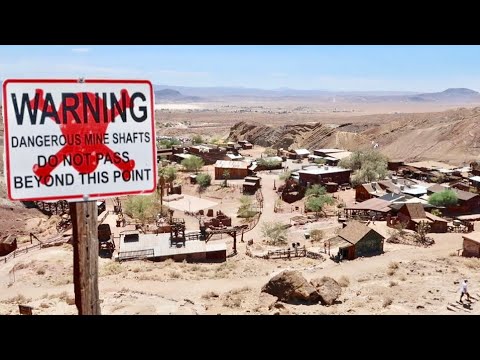
Excerpt from Animal rights: Pablo Escobar’s hippos lead a charge for animal rights, Economist, Oct. 30, 2021

A Shameless Love Affair with Nuclear Energy

Nuclear power once seemed like the world’s best hope for a carbon-neutral future. After decades of cost-overruns, public protests and disasters elsewhere, China has emerged as the world’s last great believer, with plans to generate an eye-popping amount of nuclear energy, quickly and at relatively low cost. 

The world’s biggest emitter, China’s planning at least 150 new nuclear reactors in the next 15 years, more than the rest of the world has built in the past 35. The effort could cost as much as $440 billion; as early as the middle of this decade, the country will surpass the U.S. as the world’s largest generator of nuclear power… It could also support China’s goal to export its technology to the developing world and beyond, buoyed by an energy crunch that’s highlighted the fragility of other kinds of power sources. Slower winds and low rainfall have led to lower-than-expected supply from Europe’s dams and wind farms, worsening the crisis, and expensive coal and natural gas have led to power curbs at factories in China and India. Yet nuclear power plants have remained stalwart…

And yet, even if China can develop the world’s most cost-effective, safe, flexible nuclear reactors, the U.S., India and Europe are unlikely to welcome their biggest global adversary into their power supplies. CGN has been on a U.S. government blacklist since 2019 for allegedly stealing military technology. In July, the U.K. began looking for ways to exclude CGN from its Sizewell reactor development. Iain Duncan Smith, Tory Member of Parliament, put it bluntly: “Nuclear is critical to our electric power, and we just can’t trust the Chinese.”

China’s ultimate plan is to replace nearly all of its 2,990 coal-fired generators with clean energy by 2060. To make that a reality, wind and solar will become dominant in the nation’s energy mix. Nuclear power, which is more expensive but also more reliable, will be a close third…Other countries would have to stretch to afford even a fraction of China’s investments. But about 70% of the cost of Chinese reactors are covered by loans from state-backed banks, at far lower rates than other nations can secure…

The most eager customer of China is Pakistan which, like China, shares a sometimes violently contested border with India. China’s built five nuclear reactors there since 1993, including one that came online this year and another expected to be completed in 2022. Other countries have been more hesitant. Romania last year canceled a deal for two reactors with CGN and opted to work with the U.S. instead.

Still, versions of China’s first homegrown reactor design, known as Hualong One, continue to operate safely in Karachi and Fujian province. And in September, China announced a successful test of a new, modular reactor that could be enticing overseas. China Huaneng Group Co. said it had achieved sustained nuclear reactions in a domestically designed, 200-megawatt reactor that heats helium, not water. By making the cooling process independent of external power sources, it should prevent the potential for the kind of massive meltdown that required the evacuation of more than 150,000 people in Fukushima.  China’s modular reactors, if successful, wouldn’t require new power plant construction. In theory, they could replace coal-fired generators in existing thermal power plants…

Excerpts from Dan Murtaugh and Krystal Chia, China’s Climate Goals Hinge on a $440 Billion Nuclear Buildout, Bloomberg, Nov. 2, 2021

Mining to Death for Uranium: the Navajo

The Navajo people have petitioned the Inter-American Commission on Human Rights arguing that the U.S. government failed to protect the human rights of Indigenous communities when the Nuclear Regulatory Commission (NRC) licensed uranium mining on their territories.

The Eastern Navajo Diné Against Uranium Mining (ENDAUM)  petition states that when the NRC licensed Hydro Resources, Inc. (HRI) (now known as NuFuels) to operate uranium mining in the two Diné (Navajo) communities of Crownpoint and Churchrock it violated human rights guaranteed in the American Declaration of the Rights and Duties of Man, including the rights to life, health, benefits of culture, fair trial, and property.
According to the Navajo, the NRC licensed uranium mining  it knew would contaminate the groundwater that is an important resource of drinking water and cultural identity to communities that suffer increased risk of death and disease from historic uranium mining and milling the United States government not only tolerated but promoted.

The Inter-American Commission on Human Rights declared ENDAUM’s petition “admissible” in March 2021 and provided until October 21, 2021 for additional observations to be submitted. These additional observations were submitted in October, 2021. 

New Mexico Environmental Law Center, Press Release, Oct. 20, 2021

Case with annexes

A Breach Too Far: 413 PPM

The abundance of heat-trapping greenhouse gases in the atmosphere once again reached a new record in 2021, with the annual rate of increase above the 2011-2020 average. That trend has continued in 2021, according to the World Meteorological Organization (WMO) Greenhouse Gas Bulletin.

Concentration of carbon dioxide (CO2), the most important greenhouse gas, reached 413.2 parts per million in 2020 and is 149% of the pre-industrial level. Methane (CH4) is 262% and nitrous oxide (N2O)  is 123% of the levels in 1750 when human activities started disrupting Earth’s natural equilibrium.

Roughly half of the CO2 emitted by human activities today remains in the atmosphere. The other half is taken up by oceans and land ecosystems. The Bulletin flagged concern that the ability of land ecosystems and oceans to act as “sinks” may become less effective in future, thus reducing their ability to absorb carbon dioxide and act as a buffer against larger temperature increase…Such changes are already happening, for example, transition of the part of Amazonia from a carbon sink to a carbon source

The Bulletin shows that from 1990 to 2020, radiative forcing – the warming effect on our climate – by long-lived greenhouse gases increased by 47%, with CO2 accounting for about 80% of this increase…The amount of CO2 in the atmosphere breached the milestone of 400 parts per million in 2015. And just five years later, it exceeded 413 ppm. 

“Carbon dioxide remains in the atmosphere for centuries and in the ocean for even longer. The last time the Earth experienced a comparable concentration of CO2 was 3-5 million years ago, when the temperature was 2-3°C warmer and sea level was 10-20 meters higher than now. But there weren’t 7.8 billion people then,” said Prof. Taalas.

Excerpt from Greenhouse Gas Bulletin: Another Year Another Record, WMO, Oct. 25, 2021

How to Buy the Global Yes-Men

China will finance the construction of an outpost for a special forces unit of Tajikistan’s police near the Tajik-Afghan border. The post will be located in Tajikistan’s eastern Gorno-Badakhshan Autonomous Province in the Pamir mountains, which border China’s Xinjiang province as well as the northeastern Afghan province of Badakhshan. No Chinese troops will be stationed at the facility.

The plan to build the post comes amid tension between the Dushanbe government and Afghanistan’s new Taliban rulers. Tajik President Emomali Rakhmon has refused to recognise the Taliban government, calling for a broader representation of Afghanistan’s ethnic groups – of which Tajiks are the second-biggest. Kabul, in turn, has warned Dushanbe against meddling in its domestic affairs. According to Russian media, the Taliban have struck an alliance with an ethnic Tajik militant group based in northern Afghanistan which seeks to overthrow Tajikistan’s current government.

China is a major investor in Tajikistan and Beijing has also acted as a donor on several occasions, handing over, for example, a new parliament building free of charge.

Excerpts from China to build outpost for Tajikistan special forces near Afghan border, Reuters, Oct. 28, 2021

Repairing Damaged Coral Reefs

Rather than blocking waves, as a sea wall does, a reef slows them, dissipating their energy before they reach land. One estimate, from the University of California, Santa Cruz and the Pacific Coastal and Marine Science Centre, suggests natural reefs prevent $1.8bn a year of flood damage in America alone.

While natural reefs take centuries to grow, hybrid versions can be conjured up in months. The idea began with Wolf Hilbertz, an architect with an interest in marine biology. In the 1970s Hilbertz developed a technique that uses submerged electrodes to run electrical currents through seawater. This precipitates calcium carbonate and magnesium hydroxide out of the seawater, forming limestone similar to that of natural reefs. The artificial reef can become the substrate upon which a natural coral ecosystem develops…Later work with Thomas Goreau, a marine biologist, produced both a catchy name—“Biorock”—and the idea of using the stuff as the basis of coral reefs, and, in particular, for repairing damaged reefs.

In 1996 the Global Coral Reef Alliance, a charity, began using Biorock for reef repairs by growing a six-metre structure in the Maldives. Other repairs have followed in Indonesia, Jamaica and Mexico. The Pemuteran Coral Reef Restoration Project, in Bali, is more than 300 metres long and includes dozens of “nurseries” in which Biorock acts as nuclei for the natural extension of the reef….DARPA a research agency run by America’s Department of Defense, also sees hybrid reefs as a means of coastal defence—in this case protecting the country’s seaside military installations. Lori Adornato, head of DARPA’s “Reefense” project, says the goal is a hybrid reef-type system which will be maintenance-free and self-repairing. Reefense therefore involves not only creating reefs and measuring their effectiveness, but also attracting and fostering appropriate organisms to sustain the reefs’ health, ensuring they can survive even when natural reefs are suffering.

Excerpts from Ocean Reefs: Hybrid Vigor, Economist, Sept. 11, 2021

How to Relocate a Whole Nation

Small island states will not, most likely, be swallowed by the sea… In research published in 2010, Paul Kench measured the size of 27 atolls over a period of decades and found that while 14% had shrunk and a couple had disappeared, 43% stayed the same size and another 43% became bigger. Many of the ring-shaped coral reefs have been able to adapt to sea-level rise, changing shape as sediment is eroded and pushed around. Tuvalu’s land surface, for instance, increased by 3% between 1971 and 2014 despite a rise in the local sea level of 4mm a year, twice the global average for that period…

But there are other, more immediate effects of climate change that threaten the lives and livelihoods of the citizens of these countries. They are less arresting, harder to explain and, as in the changing shape and size of islands, sometimes counterintuitive. But the upshot is the same: the countries may soon become uninhabitable.

One is “king tides”, high tides that briefly but entirely inundate the narrow strips of low-lying land that comprise most atoll, are becoming more frequent. The saltwater can kill crops such as banana and papaya and seeps into groundwater, making it unfit to drink

There are also ways to keep islands habitable: Kiribati plans to dredge its lagoons and use the sand to raise the surrounding islands higher above the sea. Tuvalu has embarked on a land-reclamation project. But the spectre of climate change makes it harder to drum up investment for such schemes. “I am trying to change the minds of the many people who say, ‘We cannot invest in your country, you’re finished’,” says Kiribati’s Mr Tito.

The depressing long-term solution may be to move. The Marshall Islands hopes to renegotiate its post-colonial “Compact of Free Association” with America, which expires in 2023, to ensure a permanent right of residence in the United States for all Marshallese. Tuvalu has no such option. Maina Talia, a climate activist, thinks that the government should take Fiji up on its offer of a home where Tuvaluans could practice the same culture rather than “be dumped somewhere in Sydney’‘.

Earlier this year, the government of Tuvalu, which until recently insisted that there would be no Plan B, established a new un initiative. Its aim is to work with “like-minded countries” to figure out how and where such countries could be relocated, how they could continue to function ex-situ, and whether they could still lay claim to vast exclusive economic zones if their land disappeared under water.

Relocating a country would raise other big questions, too, for both the international system and the way in which people think about statehood. “How to prepare to move a nation in dignity, that has never been done before,” says Kamal Amakrane, a migration expert whose ideas helped spark the UN initiative. 

Excerpt from Moving story: Pacific countries face more complex problems than sinking, Economist, August 7, 2021

Surveillance by the Masses for the Masses

New sensors, from dashboard cameras to satellites that can see across the electromagnetic spectrum, are examining the planet and its people as never before. The information they collect is becoming cheaper. Satellite images cost several thousand dollars 20 years ago, today they are often provided free and are of incomparably higher quality….

Human Rights Watch has analysed satellite imagery to document ethnic cleansing in Myanmar. Nanosatellites tag the automatic identification system of vessels that are fishing illegally. Amateur sleuths have helped Europol, the European Union’s policing agency, investigate child sexual exploitation by identifying geographical clues in the background of photographs. Even hedge funds routinely track the movements of company executives in private jets, monitored by a web of amateurs around the world, to predict mergers and acquisitions. OSINT (open-source intelligence) thus bolsters civil society, strengthens law enforcement and makes markets more efficient. It can also humble some of the world’s most powerful countries.

In the face of vehement denials from the Kremlin, Bellingcat, an investigative group, meticulously demonstrated Russia’s role in the downing of Malaysian Airlines Flight mh17 over Ukraine in 2014, using little more than a handful of photographs, satellite images and elementary geometry. It went on to identify the Russian agents who attempted to assassinate Sergei Skripal, a former Russian spy, in England in 2018. Amateur analysts and journalists used OSINT to piece together the full extent of Uyghur internment camps in Xinjiang. In recent weeks researchers poring over satellite imagery have spotted China constructing hundreds of nuclear-missile silos in the desert.

Such an emancipation of information promises to have profound effects. The decentralised and egalitarian nature of OSINT erodes the power of traditional arbiters of truth and falsehood, in particular governments and their spies and soldiers. The likelihood that the truth will be uncovered raises the cost of wrongdoing for governments. Although osint might not prevent Russia from invading Ukraine or China from building its gulag, it exposes the flimsiness of their lies

Liberal democracies will also be kept more honest. Citizens will no longer have to take their governments on trust. News outlets will have new ways of holding them to account. Today’s open sources and methods would have shone a brighter light on the Bush administration’s accusation in 2003 that Iraq was developing chemical, biological and nuclear weapons. That would have subjected America’s invasion of the country to greater scrutiny. It might even have prevented it.,,

The greatest worry is that the explosion of data behind open-source investigations also threatens individual privacy. The data generated by phones and sold by brokers let Bellingcat identify the Russian spies who last year poisoned Alexei Navalny, an opposition leader. Similar data were exploited to pick out a senior Catholic priest in America, who resigned last month after his location was linked to his use of Grindr, a gay dating app.

Excerpts from The people’s panopticon: The promise of open-source intelligence, Economist, Aug. 7, 2021

The Northern Frontier: Who’s Taking Advantage of Climate Change?

Owing to climate change…the share of boreal land that can support farming could increase from 8% to 41% in Sweden. It could increase from 51% to 83% in Finland. Efforts to farm these areas will alarm people who value boreal forests for their own sake. And cutting down such forests and ploughing up the soils that lie beneath them will release carbon. But the climatic effects are not as simple as they might seem. Northern forests absorb more heat from the sun than open farmland does, because snow-covered farmland reflects light back into space…

The fact that felling boreal forests may not worsen climate change, though, says nothing about the degree to which it could affect biodiversity, ecosystem services or the lives of forest dwellers, particularly indigenous ones.

Some governments are already keen to capitalize on climate change. Russia’s has long talked of higher temperatures as a boon. President Vladimir Putin once boasted that they would enable Russians to spend less money on fur coats and grow more grain. In 2020 a “national action plan” on climate change outlined ways in which the country could “use the advantages” of it, including expanding farming. Since 2015 Russia has become the world’s largest producer of wheat, chiefly because of higher temperatures.

Russia’s government has started leasing thousands of square kilometers of land in the country’s far east to Chinese, South Korean and Japanese investors. Much of the land, which was once unproductive, is now used to grow soybeans. Most are imported by China, helping the country reduce its reliance on imports from America. Sergey Levin, Russia’s deputy minister of agriculture, has predicted that soya exports from its far-eastern farmlands may reach $600m by 2024. That would be nearly five times what they were in 2017. The government of Newfoundland and Labrador, a province on the north-eastern tip of Canada, is also trying to promote the expansion of agriculture into lands covered by forests…

All told, the northern expansion of farmland will only go some way towards mitigating the damage climate change may do to agriculture. The societies that will benefit from it are mostly already wealthy. Poor places, which rely much more heavily on income from exporting agricultural produce, will suffer.

Excerpts from Farming’s New Frontiers: Agriculture, Economist, August 28, 2021

When the Cat’s Away the Mice Pollute

Police don’t share schedules of planned raids. Yet America’s Environmental Protection Agency (EPA) does not seem convinced of the value of surprise in deterring bad behavior. Every year it publishes a list of dates, spaced at six-day intervals, on which it will require state and local agencies to provide data on concentrations of harmful fine particulate matter (pm2.5), such as soot or cement dust…

A new paper by Eric Zou of the University of Oregon makes use of satellite images to spy on polluters at times when they think no one is watching. NASA, America’s space agency, publishes data on the concentration of aerosol particles—ranging from natural dust to man-made toxins—all around the world, as seen from space. For every day in 2001-13, Mr Zou compiled these readings in the vicinity of each of America’s 1,200 air-monitoring sites.

Although some stations provided data continuously, 30-50% of them sent reports only once every six days. For these sites, Mr Zou studied how aerosol levels varied based on whether data would be reported. Sure enough, the air was consistently cleaner in these areas on monitoring days than it was the rest of the time, by a margin of 1.6%. Reporting schedules were almost certainly the cause….The size of this “pollution gap” differed by region. It was biggest in parts of Appalachia and the Midwest with lots of mining, and in the northern Mountain West, where paper and lumber mills are common.

The magnitude of the gap also depended on the cost of being caught. Every year, the EPA produces a list of counties whose average air quality falls below minimum standards. The punishments for inclusion are costly: factories become subject to burdensome clean-technology requirements, and local governments can be fined. When firms risked facing sanctions, they seemed to game the system more aggressively. In counties that exceeded the pm2.5 limit in a given month, the pollution gap in the following month swelled to 7%. In all other cases, it was just 1.2%….

Excerpts from Poorly devised regulation lets firms pollute with abandon: We Were Expecting you, Economist, Sept. 4, 2021

Eradicating Old Cities and their Populations

The fighters of Islamic State…raided the tombs of Assyrian kings in Nineveh, blew up Roman colonnades in Palmyra and sold priceless relics to smugglers. But their vandalism was on a modest scale compared with some of the megaprojects that are habitually undertaken by many Middle Eastern government… Iraq’s government began to build the Makhoul dam. Once complete, it is likely to flood Ashur—and another 200 historical sites.

Similar archaeological tragedies have occurred across the region, mainly thanks to the appetite of governments for gigantism in the name of modernization…The re-landscaping displaces people as well as erasing their heritage, sometimes as a kind of social engineering….

Egypt’s dictator, Abdel Fattah al-Sisi, has bulldozed swathes of Cairo, the old capital, to make way for motorways, flyovers and shiny skyscrapers that line the road to the new administrative capital he is building. To ease congestion he has scythed a thoroughfare named Paradise through the City of the Dead, a 1,000-year-old necropolis that is a un-designated world heritage site. Hundreds of tombs were destroyed. He has turfed out tens of thousands of people from their homes in Boulaq, along the Nile, calling it slum clearance. This was where Cairo’s old port prospered in Ottoman times. Instead of rehabilitating it, Mr Sisi is letting property magnates carpet the area with high-rise apartment buildings. Mr Sisi has allowed investors from the United Arab Emirates to build a mini-Dubai on Cairo’s largest green space, a nature reserve on al-Warraq island. Its 90,000 residents will be shunted off, mainly to estates on the city’s edge. Protesters have been condemned as Islamist terrorists and sent to prison, many for 15 years…

Some rulers have security in mind when they bulldoze history. Mr Sisi can send in the tanks faster on wider roads. Removing Egypt’s poor from city centres may curb the risk of revolution. “They know that poor areas revolted in 2011,” says Abdelrahman Hegazy, a Cairene city planner. “They’re afraid of population density.” During Syria’s current civil war, President Bashar al-Assad and his Russian patrons ruined parts of the old cities of Homs and Aleppo, treasure troves of antiquity that were also rebel strongholds, with relentless barrel-bombing….

Excerpts from Bulldozing history: Arab states are wrecking old treasures, Economist, Sept. 4, 2021

How to Exclude China from the Global Technology Base: the Role of IMEC

The Interuniversity Microelectronics Centre (IMEC) located in Leuven, Belgium, does not design chips (like America’s Intel), manufacture them (like TSMC of Taiwan) or make any of the complicated gear (like ASML, a Dutch firm). Instead, it creates knowledge used by everyone in the $550bn chip business. Given chips’ centrality to the modern economy and increasingly to modern geopolitics, too, that makes it one of the most essential industrial research-and-development (R&D) center on the planet. Luc Van den hove, IMEC’s boss, calls it the “Switzerland of semiconductors”.

IMEC was founded in 1984 by a group of electronics engineers from the Catholic University of Leuven who wanted to focus on microprocessor research. In the early days it was bankrolled by the local Flemish government. Today IMEC maintains its neutrality thanks to a financial model in which no single firm or state controls a big share of its budget. The largest chunk comes from the Belgian government, which chips in some 16%. The top corporate contributors provide no more than 4% each. Keeping revenue sources diverse (partners span the length and breadth of the chip industry) and finite (its standard research contracts last three to five years) gives IMEC the incentive to focus on ideas that help advance chipmaking as a whole rather than any firm in particular.

A case in point is the development of extreme ultraviolet lithography (EUV)…It took 20 years of R&D to turn the idea into manufacturing reality. IMEC acted as a conduit in that process… Advanced toolmakers want a way to circulate their intellectual property (IP) without the large companies gaining sway over it. The large companies, meanwhile, do not want to place all their bets on any one experimental idea that is expensive (as chipmaking processes are) and could become obsolete.

IMEC’s neutrality allows both sides to get around this problem. It collects all the necessary gear in one place, allowing producers to develop their technology in tandem with others. And everyone gets rights to the IP the institute generates. Mr Van den hove says that progress in the chip industry has been driven by the free exchange of knowledge, with IMEC acting as a “funnel” for ideas from all over the world…IMEC’s revenues, which come from the research contracts and from prototyping and design services, doubled between 2010 and 2020, to €678m ($773m).

The deepening rift between America, home to some of the industry’s biggest firms, and China, which imported $378bn-worth of chips last year, threatens IMEC’s spirit of global comity. China’s chip industry is increasingly shielded by an overbearing Communist Party striving for self-sufficiency, and ever more ostracized by outsiders as a result of American and European export controls. All this limits the extent to which IMEC can work with Chinese semiconductor companies…IMEC would not comment on individual partnerships but says it has “a few engagements with Chinese companies, however not on the most sensitive technologies, and always fully compliant with current European and US export regulations and directives”.

Excerpts from Neutral but not idle: IMEC offers neutral ground amid chip rivalries, Economist, Sept. 25, 2021

Tracking and Removing Polluting Space Junk

At orbital speeds a tennis-ball-sized piece of space junk packs enough energy to obliterate a satellite…Even tiny bits of debris can do damage. In May 2021 the Canadian Space Agency said an untracked piece of junk had punched a hole 5mm across in Canadarm2, a robotic limb attached to the International Space Station (ISS).

As orbiting objects multiply, the danger grows. Roughly a dozen sizeable pieces of space debris break up every year as a result of collisions, exploding rocket fuel, or the rupturing of pressurized tanks or old batteries. Solar radiation chips off bits of paint and metal…Today there 4,500 active satellites orbiting Earth and this does not include defunct satellites…There could be 100,000 active satellites in orbit by the end of the decade…

Radars operated by the US Department of Defense have improved ‘space situational awareness’…One big advance has been “Space Fence”. This is a system built in the Marshall Islands for America’s air force. It is billed as the world’s most advanced radar…In April 2021, LeoLabs, a firm in Silicon Valley, switched on its fourth debris-tracking radar station. ..LeoLabs sells data to satellite operators, space agencies, America’s armed forces and insurers keen to calculate better actuarial tables for spacecraft….

Besides using radar, debris can also be tracked optically. In collaboration with Curtin University, in Perth, Lockheed Martin runs FireOpal, a system of 20 cheap cameras aimed at the sky from various parts of Australia. For several hours at dawn and dusk, when these cameras are in the dark but sunlight still illuminates debris orbiting above, the cameras take pictures every ten seconds. The closer an object, the more it appears to move relative to the stars, allowing triangulation of its position…fire

Lasers are another option….For finding stuff in high orbits, though, neither lasers nor radars are much help. But telescopes work. ExoAnalytic Solutions, a Californian firm, tracks junk up to 170,000km away—nearly halfway to the Moon—using instruments “just laying on the shelves” at astronomy shops...Northstar Earth & Space, a new firm in Montreal, is to raise money to build, at $25m a pop, three 100kg satellites that will use telescopic cameras to track junk from orbit..

Naturally, this orbital-tracking technology has military value as well. Knowing objects’ orbits can reveal much about an adversary’s capabilities—including, perhaps, orbital combat. Movements that represent any deviation from normal patterns are most telling…To illustrate why, he points to an object that had been considered to be just a piece of debris from a Russian military launch. In May 2014 the “debris” sprang to life. Its movements since then have fuelled fears that it could be an anti-satellite weapon. Whether other such “sleepers” are hidden in plain sight among the clouds of rubbish orbiting Earth remains to be seen. 

Excerpts from Orbital housekeeping: Tracking space debris is a growing business, Economist, Sept. 18, 2021

How to Suck Carbon and Convert it to Rocks

The Orca carbon-capture plant, just outside Reykjavik in Iceland, has switched on its fans and began sucking carbon dioxide from the air since September 2021. The sound was subtle—a bit like a gurgling stream. But the plant’s creators hope it will mark a big shift in humanity’s interaction with the climate. Orca is, for now, the largest installation in the infant “direct air capture” industry, which aims to remove CO2 from the atmosphere. When sealed underground such CO2 counts as “negative emissions”—an essential but underdeveloped method for tackling global warming.

Thus, the full operation extracts CO2 from air and turns it to rock. Trials have shown that Icelandic basalts can sequester CO2 in solid rock within two years. Power comes from a nearby geothermal power station….One catch is volume. Orca will capture 4,000 tonnes of carbon dioxide a year, out of around 35bn tonnes produced by burning fossil fuels. Another is cost. It costs Orca somewhere between $600-800 to sequester one tonne of carbon dioxide, and the firm sells offset packages online for around $1,200 per tonne. The company thinks it can cut costs ten-fold through economies of scale. But there appears to be no shortage of customers willing to pay the current, elevated price. Even as Orca’s fans revved up, roughly two-thirds of its lifetime offering of carbon removals had already been sold. Clients include corporations seeking to offset a portion of their emissions, such as Microsoft, Swiss Re as well as over 8,000 private individuals.

Climeworks is not alone in having spotted the opportunity. Using different chemistry, Carbon Engineering, a Canadian company, is gearing up to switch on its own carbon-scrubbing facilities. It will take more than these pioneer engineers and financiers to build a gigatonne-sized industry. But the fans are turning. 

Excerpts from Removing carbon dioxide from the air: The world’s biggest carbon-removal plant switches on, Economist, Sept. 18, 2021

The Transparency of Oceans and Nuclear Submarines

There are warnings that different technologies will render the ocean “transparent”, so even the stealthiest submarines could be spotted by an enemy force… China has already developed submarine-spotting lasers. CSIRO is working with a Chinese marine science institute that has separately developed satellite technology that can find submarines at depths of up to 500 meters.   But others say submarines are just a base platform for a range of new and evolving technologies. The Australian Strategic Policy Institute’s outgoing head, Peter Jennings, said the nuclear-propelled submarines that Australia will get as part of the Aukus alliance have more space and energy for being “motherships” than conventional submarines.

“They’re significantly bigger and the reactors give you the energy not just for the propulsion but for everything else inside the boat,” he said. “You then have a huge amount of space for weapons, for vertical launch tubes for cruise missiles and for autonomous systems that can be stored on board. Not only is it a fighting unit but you might have half a dozen remote systems fanned out at quite a distance. They’ll be operating a long distance away from potential targets, potentially hundreds of kilometers. According to the taskforce set up under Aukus, the new submarines will have “superior characteristics of stealth, speed, manoeuvrability, survivability, and almost limitless endurance”, with better weapons, the ability to deploy drones and “a lower risk of detection”.

Excerpts from Tory Shepherd, Will all submarines, even nuclear ones, be obsolete and ‘visible’ by 2040?, Oct. 4, 2021

Keep Killing Environmental Defenders

A report released by Global Witness in September 2021 reveals that 227 land and environmental activists were murdered in 2020 for defending their land and the planet. That constitutes the highest number ever recorded for a second consecutive year…The figures show the human cost of the destruction wrought by exploitative industries and corporations. At least 30% of recorded attacks were reportedly linked to resource exploitation – across logging, hydroelectric dams and other infrastructure, mining, and large-scale agribusiness. Logging was the industry linked to the most murders with 23 cases – with attacks in Brazil, Nicaragua, Peru and the Philippines…

Colombia was once again the country with the highest recorded attacks, with 65 defenders killed in 2020. A third of these attacks targeted indigenous and afro-descendant people, and almost half were against small-scale farmers. In 2020 the disproportionate number of attacks against indigenous communities continued – with over a third of all fatal attacks targeting indigenous people. Attacks against indigenous defenders were reported in Mexico, Central and South America, the Philippines, Saudi Arabia and Indonesia. Nicaragua saw 12 killings – rising from 5 in 2019, making it the most dangerous country per capita for land and environmental defenders in 2020.

Excerpt from  LAND AND ENVIRONMENTAL DEFENDERS, Global Witness Press Release, Sept. 13, 2021

A New Page in History of Nuclear Energy?

A new page in the history of nuclear energy could be written this September 2021, in the middle of the Gobi Desert, in the north of China. At the end of August 2021, Beijing announced that it had completed the construction of its first thorium-fueled molten-salt nuclear reactor, with plans to begin the first tests of this alternative technology to current nuclear reactors within the next two weeks…

The Chinese reactor could be the first molten-salt reactor operating in the world since 1969, when the US abandoned its Oak Ridge National Laboratory facility in Tennessee. “Almost all current reactors use uranium as fuel and water, instead of molten salt and thorium,” which will be used in China’s new plant. These two “new” ingredients were not chosen by accident by Beijing: molten-salt reactors are among the most promising technologies for power plants

With molten-salt technology, “it is the salt itself that becomes the fuel”….The crystals are mixed with nuclear material – either uranium or thorium – heated to over 500°C to become liquid, and are then be able to transport the heat and energy produced. Theoretically, this process would make the installations safer. “Some accident risks are supposedly eliminated because liquid burning avoids situations where the nuclear reaction can get out of control and damage the reactor structures.”

There’s another advantage for China: this type of reactor does not need to be built near watercourses, since the molten salts themselves “serve as a coolant, unlike conventional uranium power plants that need huge amounts of water to cool their reactors”.  As a result, the reactors can be installed in isolated and arid regions… like the Gobi Desert.

Thorium belongs to a famous family of rare-earth metals that are much more abundant in China than elsewhere; this is the icing on the cake for Chinese authorities, who could increase its energy independence from major uranium exporting countries, such as Canada and Australia, two countries whose diplomatic relations with China have collapsed in recent years.

According to supporters of thorium, it would also a “greener” solution. Unlike the uranium currently used in nuclear power plants, burning thorium does not create plutonium, a highly toxic chemical element…

Among the three main candidates for nuclear reaction – uranium 235, uranium 238 and thorium – the first is “the only isotope naturally fissile”, Sylvain David explained. The other two must be bombarded with neutrons for the material to become fissile (able to undergo nuclear fission) and be used by a reactor: a possible but more complex process. Once that is done on thorium, it produces uranium 233, the fissile material needed for nuclear power generation….”This is an isotope that does not exist in nature and that can be used to build an atomic bomb,” pointed out Francesco D’Auria.

Excerpts from Why China is developing a game-changing thorium-fueled nuclear reactor, France24, Sept. 12, 2021

Mobile Nuclear Energy for the Arctic: Dream to Reality

Four small modular reactors (SMRs) will power the huge Baimskaya copper and gold mining development in the Russian Arctic, according to an agreement signed by Rosatom subsidiary Atomflot…Baimskaya is one of the world’s largest mineral deposits and is very rich in copper and gold. However, development of the remote site in Russia’s eastern Chukotka region demands a complex multi-partner plan involving the Russian government, the regional government and developers…

Nuclear power already plays a role in Baimskaya’s development as early facilities there are powered by the Akademik Lomonosov floating nuclear power plant at Pevek. KAZ Minerals said the plant will supply up to 20 MWe of nuclear power to the mine during its construction phase….Based on the agreement, two additional floating power plants will provided, each with two RITM-200M reactors. The first two should be in operation at Cape Nagloynyn by the beginning of 2027, the third in 2028 and the final one at the start of 2031….

Excerpts from SMRs to power Arctic development, World Nuclear News, Sept. 3, 2021

The $22 Trillion Global Carbon Market
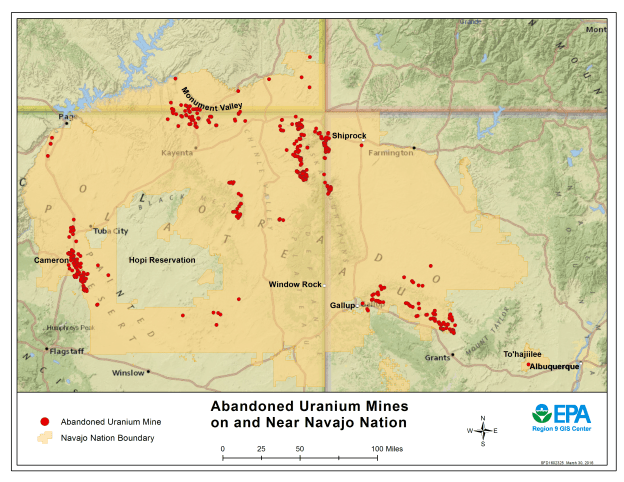
Two of the world’s biggest oil companies, Royal Dutch Shell  and BP already have significant carbon-emissions trading arms, thanks to a relatively well-developed carbon market in Europe. Big carbon emitters such as steel producers receive emission allowances, and can buy more to stay under European emissions guidelines. Companies that fall below those limits can sell their excess carbon-emissions allowances.

Carbon traders get in the middle of those transactions, seeking to profit from even small moves in the price of carbon and sometimes betting on the direction of prices. The value of the world’s carbon markets—including Europe and smaller markets in places such as California and New Zealand—grew 23% last year to €238 billion, equivalent to $281 billion.

That is small compared with the world’s multitrillion-dollar oil markets and to other heavily traded energy markets, such as natural gas or electricity. But growth potential exists, the industry says. Wood Mackenzie, an energy consulting firm, estimates a global carbon market could be worth $22 trillion by 2050… An experienced carbon trader’s base salary can be roughly $150,000 to $200,000, although a lot of compensation occurs via bonuses, traders said…. BP’s overall annual trading profits were between $3.5 billion and $4 billion during the past two years, according to a person familiar with the matter.
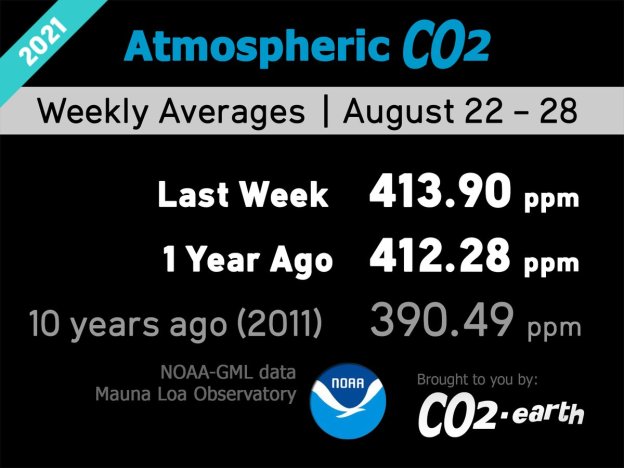
Excerpts from Sarah McFarlane, Energy Traders See Big Money in Carbon-Emissions Markets, WSJ, Sept. 9, 2021

The 17 000 Nuclear Objects Dumped in the Kara Sea


“Having the exact coordinates for the dumped container with the nuclear reactors from K-19 submarine is undoubtedly good news,” says nuclear safety expert Andrey Zolotkov. Zolotkov hopes for risk assessments to be carried out soon with the aim to see how the nuclear reactors could be lifted out of the maritime environment and brought to a yard for safe decommissioning…More than 50 years have passed since the dumping.

In the so-called “White Book” on dumped nuclear objects, originally published by President Boris Yeltsin’s environmental advisor Alexei Jablokov, the dumping of the submarine’s two reactors is listed for the Abrosimova Bay on the east coast of the Kara Sea, but exact location hasn’t been confirmed.

It was in August 2021 that the the crew on “Akademik M. Keldysh” with the help of sonars and submersibles found the container. Both marine researchers, oceanology experts from Russia’s Academy of Science and representatives of the Ministry of Emergency Situations are working together in the expedition team.

K-19 is one of the most infamous nuclear-powered submarines sailing for the Soviet navy’s Northern Fleet. In July 1961 the reactor lost coolant after a leak in a pipe regulating the pressure to the primary cooling circuit. The reactor water started boiling causing overheating and fire. Crew members managed to extinguish the fire but had big problems fixing the leak in an effort to save the submarine from exploding. Many of them were exposed to high doses of radioactivity before being evacuated to a nearby diesel submarine sailing in the same area of the North Atlantic. Eight of the crew members who had worked on the leak died of radiation poisoning within a matter of days.

The submarine was towed to the Skhval shipyard (No. 10) in Polyarny. Later, the reactor compartment was cut out and a new installed. The two damaged reactors, still with spent nuclear fuel, were taken north to the Kara Sea and dumped. Keeping the heavily contaminated reactors at the shipyard was at the time not considered an option.

In the spring of 2021, Russia’s Foreign Ministry invited international experts from the other Arctic nations to a conference on how to recover sunken radioactive and hazardous objects dumped by the Soviet Union on the seafloor east of Novaya Zemlya. Moscow chairs the Arctic Council for the 2021-2023 period. 

The two reactors from the K-19 submarine are not the only objects posing a risk to marine environment. In fact, no other places in the world’s oceans have more radioactive and nuclear waste than the Kara Sea. Reactors from K-11 and K-140, plus the entire submarine K-27 and spent uranium fuel from one of the old reactors of the “Lenin” icebreaker are also dumped in the same sea. While mentality in Soviet times was «out of sight, out of mind», the Kara Sea seemed logical. Ice-covered most of the year, and no commercial activities. That is changing now with rapidly retreating sea ice, drilling for oil-, and gas, and increased shipping…Additional to the reactors, about 17,000 objects were dumped in the Kara Sea in the period from the late 1960s to the early 1990s.

Excerpts from Thomas Nilsen, Expedition finds reactors 56 years after dumping, The Barents Observer, Sept. 2, 2021

Measuring Methane Emissions

The American gas industry faces growing pressure from investors and customers to prove that its fuel has a lower-carbon provenance to sell it around the world. That has led the top U.S. gas producer, EQ , and the top exporter, Cheniere Energy to team up and track the emissions from wells that feed major shipping terminals. The companies are trying to collect reliable data on releases of methane—a potent greenhouse gas increasingly attracting scrutiny for its contributions to climate change—and demonstrate they can reduce these emissions over time.

“What we’re trying to really do is build the trust up to the end user that our measurements are correct,” said David Khani, EQT’s chief financial officer. “Let’s put our money where our mouth is.” Natural gas has boomed world-wide over the past few decades as countries moved to supplant dirtier fossil fuels such as coal and oil. It has long been touted as a bridge to a lower-carbon future. But while gas burns cleaner than coal, gas operations leak methane, which has a more potent effect on atmospheric warming than carbon dioxide, though it makes up a smaller percentage of total greenhouse gas emissions.

Investors, policy makers and buyers of liquefied natural gas, known as LNG, are rethinking the fuel’s role in their energy mix …Those concerns, pronounced in Europe and increasingly in Asia, are a problem for LNG shippers, as some of their customers signal plans to ease gas consumption over time…Nearly every industry now faces some pressure to reduce its carbon footprint, as investors focus more on ESG—or environmental, social and governance—issues and push companies for trustworthy emissions data. But the pressure has become particularly acute for oil-and-gas companies, whose main products contribute directly to climate change.

The companies and researchers plan to test drones, specialized cameras that can see methane gas, and other technologies across about 100 wells in the Marcellus Shale in the northeast U.S., the Haynesville Shale of East Texas and Louisiana, and the Permian Basin of West Texas and New Mexico. EQT has said it would spend $20 million over the next few years to replace leaky pneumatic devices, which help move fluids from wells to production facilities and water tanks, with electric-drive valves, executives said. They expect that will cut about 80% of the company’s methane emissions. The company also began exclusively using electric-powered hydraulic fracturing equipment last year.

Excerpts from Collin Eaton Frackers, Shippers Eye Natural-Gas Leaks as Climate Change Concerns Mount, WSJ, Aug. 13, 2021

Amazon Deforestation: Putting a Number on Climate Damage

In April 2021, the Brazilian Federal Public Prosecutor’s Office filed a public civil action against a rural landowner, seeking the landowner’s accountability for alleged illegal deforestation connected to breeding cattle in the Amazon….Aside from demanding compensation for environmental damages, collective damages, as well as compensation due to the profits illegally obtained in the logging process, the prosecutor required that the defendant pay compensation for climate damages resulting from the deforestation, something until now unwitnessed in cases of this sort in Brazil. N

By employing a carbon calculator software developed by IPAM, the Amazonian Research Institute, the Prosecutor’s Office calculated how much carbon was expected to have been released into the atmosphere per hectare of deforestation in that particular area. With that information, knowing the extension of the deforestation and using the carbon pricing practiced by the Amazon Fund, the Prosecutor’s Office came to the conclusion that the defendant was liable for a BRL 44.7 million compensation for climate damages.

Excerpts from Climate litigation in Brazil: new strategy from prosecutors on climate litigation against private entities, Mayer/Brown, June 21, 2021

Africa’s Single Electricity Market: Pools and Mini-Grids

Given this the magnitude of the energy access problem in Africa, a continent-wide risk-guarantee scheme should be established, ideally by a combination of African and other multilateral lending institutions. Such an integrated approach, through which overall savings can outweigh risk premia  could be articulated under the aegis of the African Single Electricity Market, launched in early February 2021 with the main goal of harmonizing regulatory and technical aspects of electricity generation, transmission, and distribution across the continent…

Most electricity projects in Africa are undertaken by foreign developers, notably European, Chinese, and United States companies, owing to their experience and, especially, their ability to secure financing. As a result, African governments have introduced different types of so-called local-content requirements, namely obligations concerning local employment, procurement of local goods and services, and the transfer of technologies and know-how, to which foreign investors have to abide. In countries such as Kenya and Nigeria, these requirements are defined through quantitative targets, whereas in other countries, such as Uganda and Zambia, they take the form of qualitative goals….

Power pooling, through cross-border trade in electric power, helps reduce electricity bills and enhances the reliability of electricity supply. Regional power pools, based increasingly on renewable energy supplies, are now possible across most of the African continent. Nonetheless, additional efforts are needed to reap the full benefits of power pooling….

South Africa is the main electricity producer for the Southern African power pool, facilitated by the Southern African Development Community (SADC). Given the challenges that the country is increasingly facing to meet its domestic demand for electricity, and the sharp decreases in cost of solar, wind, and energy storage, the case for relying on solar and wind energy–powered electricity generation becomes stronger in the region. Yet, at present, for both renewable energy and electric-power transmission, many of the investment discussions in the SADC region focus on large dams, which have been the technology of choice for decades. Concentrating solar power, a technology that generates electricity from the heat obtained by concentrating solar energy (in contrast to converting solar energy directly into electricity, as photovoltaic systems do), is already being deployed in South Africa…. Concentrating solar power technology can help shift the balance away from hydropower and toward solar energy, but only to the extent that stronger financial incentives are in place, compared to those introduced thus far…

To date, the members of the Maghreb Electricity Committee (COMELEC), Northern Africa’s power pool, have only engaged in cross-border trade with the Iberian Peninsula, across the Mediterranean Sea (Spain currently exports electricity to Morocco). As concentrating solar power in Morocco develops, the country plans to export electricity to Spain and possibly Portugal. Tunisia and Egypt are planning similar export arrangements (with Italy and Greece, respectively). Against this background, COMELEC has pledged to launch, in 2025, a common electricity market for its five members…

Both the Eastern Africa Power Pool (EAPP) and the West African Power Pool (WAPP) originate from preexisting cross-border arrangements aimed at promoting cooperation on energy issues. In both regions, cooperation thus far has been limited to bilateral agreements, such as the lines linking Kenya with Ethiopia and Ghana with Burkina Faso….The Central African Power Pool (CAPP) remains underdeveloped. Poverty and other developmental challenges in the region limit the size of the electricity market, thus inflating prices.

In moderately populated areas, where both grid extension and deployment of a relatively large number of stand-alone electricity-generation systems would be prohibitively expensive, off-grid mini-grids are the most economical electrification option in most cases. The so-called third-generation minigrids, which combine photovoltaic solar systems and batteries with or without a back-up diesel-powered electricity generator, require less than 2 weeks of scheduled maintenance per year. Such a high level of reliability makes it possible to incentivize off-grid mini-grid deployment through performance-based subsidies.  For example, with World Bank backing, Nigeria’s rural electrification agency pays off-grid mini-grid developers US$ 350 per connection, provided that the customer has had a steady supply of power for at least 3 months. Similarly, the reliability of third-generation mini-grids allows developers to offer customers a contract that includes, in addition to the electricity connection, the option to purchase income-generating appliances, such as machines for welding, milling, and rice hulling, thus increasing deployment rates…

Overcoming the barriers to interconnected mini-grid development requires national governments to clarify licensing procedures and tariff regulations and ultimately establish unambiguous tariff levels for the various interconnection options, a set of tasks that can be facilitated by the International Renewable Energy Agency….

Excerpts from Daniel Puig et al., An Action Agenda for Africa’s Electricity Sector, Science, Aug. 6, 2021

Conquering Virgin Digital Lands a Cable at a Time

Facebook  said it would back two new underwater cable projects—one in Africa and another in Asia in collaboration with Alphabet — that aim to give the Silicon Valley giants greater control of the global internet infrastructure that their businesses rely on.

The 2Africa project, a partnership between Facebook and several international telecom operators, said that it would add four new branches: the Seychelles, Comoro Islands, Angola and Nigeria. The project’s overall plan calls for 35 landings in 26 countries, with the goal of building an underwater ring of fiber-optic cables around Africa. It aims to begin operating in 2023… Separately, Facebook that it would participate in a 7,500-mile-long underwater cable system in Asia, called Apricot, that would connect Japan, Taiwan, Guam, the Philippines, Indonesia and Singapore. Google said that it would also join the initiative, which is scheduled to go live in 2024.

Driving the investments are costs and control. More than 400 commercially operated underwater cables, also known as submarine cables, carry almost all international voice and data traffic, making them critical for the economies and national security of most countries…Telecom companies own and operate many of these cables, charging fees to businesses that use them to ferry data. Facebook and Google used so much bandwidth that they decided about a decade ago that it would make sense to cut out the middleman and own some infrastructure directly.

Excerpts from Stu Woo, Facebook Backs Underwater Cable Projects to Boost Internet Connectivity, WSJ, Aug. 17, 2021

Imagining Failure: Nuclear Waste on the Beach, California

But for all the good vibes and stellar sunsets of  San Onofre state beach in California, beneath the surface hides a potential threat: 3.6m lb of nuclear waste from a group of nuclear reactors shut down nearly a decade ago. Decades of political gridlock have left it indefinitely stranded, susceptible to threats including corrosion, earthquakes and sea level rise. The San Onofre reactors are among dozens across the United States phasing out, but experts say they best represent the uncertain future of nuclear energy.

“It’s a combination of failures, really,” said Gregory Jaczko, who chaired the US Nuclear Regulatory Commission (NRC), the top federal enforcer, between 2009 and 2012, of the situation at San Onofre. That waste is the byproduct of the San Onofre Nuclear Generating Station (Songs), three nuclear reactors primarily owned by the utility Southern California Edison (SCE) that has shut down….

Since there is not central repository for the final disposition of nuclear wasted in the United States,  the California Coastal Commission approved in 2015 the construction of an installation at San Onofre to store it until 2035. In August 2020, workers concluded the multi-year burial process, loading the last of 73 canisters of waste into a concrete enclosure. San Onofre is not the only place where waste is left stranded. As more nuclear sites shut down, communities across the country are stuck with the waste left behind. Spent fuel is stored at 76 reactor sites in 34 states….

At San Onofre, the waste is buried about 100ft from the shoreline, along the I-5 highway, one of the nation’s busiest thoroughfares, and not far from a pair of faults that experts say could generate a 7.4 magnitude earthquake. Another potential problem is corrosion. In its 2015 approval, the Coastal Commission noted the site could have a serious impact on the environment in case of coastal flooding and erosion hazards beyond its design capacity, 

Concerns have also been raised about government oversight of the site. Just after San Onofre closed, SCE began seeking exemptions from the NRC’s operating rules for nuclear plants. The utility asked and received permission to loosen rules on-site, including those dealing with record-keeping, radiological emergency plans for reactors, emergency planning zones and on-site staffing.

San Onofre isn’t the only closed reactor to receive exemptions to its operating licence. The NRC’s regulations historically focused on operating reactors and assumed that, when a reactor shut down, the waste would be removed quickly.

It’s true that the risk of accidents decreases when a plant isn’t operating, said Dave Lochbaum of the Union of Concerned Scientists. But adapting regulations through exemptions greatly reduces public transparency, he argued. “Exemptions are wink-wink, nudge-nudge deals with the NRC,” he said. “In general, it’s not really a great practice,” former NRC chair Jaczko said about the exemptions. “If the NRC is regulating by exemption, it means that there’s something wrong with the rules … either the NRC believes the rules are not effective, and they’re not really useful, or the NRC is not holding the line where the NRC should be holding line,” he said…

It’s worth considering how things fail, though, argued Rod Ewing, nuclear security professor at Stanford University’s center for international security and cooperation, and author of a 2021 report about spent nuclear waste that focuses on San Onofre. “The problem with our safety analysis approach is we spend a lot of time proving things are safe. We don’t spend much time imagining how systems will fail,” he said. “And I think the latter is what’s most important.”

Excerpts from Kate Mishkin, ‘A combination of failures:’ why 3.6m pounds of nuclear waste is buried on a popular California beach, Guardian, Aug. 

To Know the Truth Even if it Harms You

Distributed Denial of Secrets, or DDoSecrets, an NGO, had been a thorn in the side of secretive governments, corrupt corporations, and powerful law firms since its founding in late 2018. In June 2020, in a release known as BlueLeaks, the group published 269 gigabytes of law enforcement data, which exposed police malfeasance and surveillance overreach across the United States.

DDoSecrets also published incriminating records from overseas tax shelters, from the social media site Gab, and from a Christian crowdfunding site often used by the far right. The group has affected autocrats as well, exposing the Russian government’s plans in Ukraine and mapping out the Myanmar junta’s business dealings. These revelations have spawned numerous news stories in the public interest, making DDoSecrets a valuable source for journalists, but also rendering it a target: In July 2020, German authorities seized one of the organization’s servers. August of 2020 brought ominous news of a Department of Homeland Security bulletin labeling DDoSecrets a “criminal hacker group.” ..

Avowedly nonpartisan, DDoSecrets nonetheless exhibits an ethos that seems to fuse anarchist politics, a hacker’s curiosity about forbidden knowledge, and a general sympathy for the oppressed. Its barbed Latin slogan, Veritatem cognoscere ruat caelum et pereat mundus, roughly translates to, “To know the truth, even if the heavens fall and the world perishes.” Call it a bolder, more transformative version of “information wants to be free.”

Emma Best…launched DDoSecrets in December 2018 with someone known only by the pseudonym “The Architect.” Together, they set out to distinguish their group from WikiLeaks, which they felt had morphed into a vehicle for Julian Assange’s ego…”Truth has an impact, regardless of the respectability politics some people choose to engage in when it comes to the alleged sources,” Best wrote after Swiss law enforcement, at the request of U.S. authorities, arrested Tillie Kottmann, a hacker who alerted journalists to security vulnerabilities in a vast commercial network of surveillance cameras. “The world can no longer be rid of hacktivists or leaktivists. Not as long as people are willing.”

Excerpts from Jacob Silverman, The New WikiLeaks, The New Republic, Aug. 18, 2021

Who Owns your Cells? the case of Henrietta Lacks

In 1951, a young mother of five named Henrietta Lacks visited The Johns Hopkins Hospital complaining of vaginal bleeding….As medical records show, Mrs. Lacks began undergoing radium treatments for her cervical cancer…. A sample of her cancer cells retrieved during a biopsy were sent, without her knowledge or consent, to Dr. George Gey’s nearby tissue lab. For years, Dr. Gey, a prominent cancer and virus researcher, had been collecting cells from all patients who came to The Johns Hopkins Hospital with cervical cancer, but each sample quickly died in Dr. Gey’s lab. What he would soon discover was that Mrs. Lacks’ cells were unlike any of the others he had ever seen: where other cells would die, Mrs. Lacks’ cells doubled every 20 to 24 hours.

Today, these incredible cells— nicknamed “HeLa” cells, from the first two letters of her first and last names — are used to study the effects of toxins, drugs, hormones and viruses on the growth of cancer cells without experimenting on humans. They have been used to test the effects of radiation and poisons, to study the human genome, to learn more about how viruses work, and played a crucial role in the development of the polio vaccine.

In July 2021, the family of Henrietta Lacks has hired a prominent civil rights attorney, who says he plans to seek compensation for them from big pharmaceutical companies across the country that made fortunes off medical research with her famous cancer cells…The legal team is investigating lawsuits against as many as 100 defendants, mostly pharmaceutical companies, but they haven’t ruled out a case against the Johns Hopkins Hospital.’

Excerpts from Family of Henrietta Lacks hires civil rights attorney to seek funds over famous cells, Washington Post, July 31, 2021, and https://www.hopkinsmedicine.org/henriettalacks/

Decoding Brain Signals with a Credit Card

A man unable to speak after a stroke has produced sentences through a system that reads electrical signals from speech production areas of his brain, researchers reported in July 2021…The participant had a stroke more than a decade ago that left him with anarthria—an inability to control the muscles involved in speech. Because his limbs are also paralyzed, he communicates by selecting letters on a screen using small movements of his head, producing roughly five words per minute.

To enable faster, more natural communication, neurosurgeon Edward Chang of the University of California, San Francisco, tested an approach that uses a computational model known as a deep-learning algorithm to interpret patterns of brain activity in the sensorimotor cortex, a brain region involved in producing speech . The approach has so far been tested in volunteers who have electrodes surgically implanted for non-research reasons such as to monitor epileptic seizures.

In the new study, Chang’s team temporarily removed a portion of the participant’s skull and laid a thin sheet of electrodes smaller than a credit card directly over his sensorimotor cortex. To “train” a computer algorithm to associate brain activity patterns with the onset of speech and with particular words, the team needed reliable information about what the man intended to say and when….So the researchers repeatedly presented one of 50 words on a screen and asked the man to attempt to say it on cue. Once the algorithm was trained with data from the individual word task, the man tried to read sentences built from the same set of 50 words, such as “Bring my glasses, please.” 


With the new approach, the man could produce sentences at a rate of up to 18 words per minute, Chang says…The system isn’t ready for use in everyday life, Chang notes. Future improvements will include expanding its repertoire of words and making it wireless, so the user isn’t tethered to a computer roughly the size of a minifridge.

Excerpts from Kelly Servick, Brain signals ‘speak’ for person with paralysis, Science, July 16, 2021

The Uses and Abuses of Alexa

Excerpts from the Interview with Robert Lewis Shayon author of “The Voice Catchers: How Marketers Listen In to Exploit Your Feelings, Your Privacy, and Your Wallet” published  at the Pennsylvania Gazette July 2021

There is  emerging industry that is deploying immense resources and breakthrough technologies based on the idea that voice is biometric—a part of your body that those in the industry believe can be used to identify and evaluate you instantly and permanently. Most of the focus in voice profiling technology today is on emotion, sentiment, and personality. But experts tell me it is scientifically possible to tell the height of a person, the weight, the race, and even some diseases. There are actually companies now trying to assess, for example, whether you have Alzheimer’s based upon your voice…

The issue is that this new voice intelligence industry—run by companies you know, such as Amazon and Google, and some you don’t, such as NICE and Verint—is sweeping across society, yet there is little public discussion about the implications. The need for this conversation becomes especially urgent when we consider the long-term harms that could result if voice profiling and surveillance technologies are used not only for commercial marketing purposes, but also by political marketers and governments, to say nothing of hackers stealing data.

There are hundreds of millions of smart speakers out there, and far more phones with assistants, listening to you and capturing your voice. Voice technology already permeates virtually every important area of personal interaction—as assistants on your phone and in your car, in smart speakers at home, in hotels, schools, even stores instead of salespeople. 

Amazon and Google have several patents centering around voice profiling that describe a rich future for the practice…But consider the downside: we could be denied loans, have to pay much more for insurance, or be turned away from jobs, all on the basis of physiological characteristics and linguistic patterns that may not reflect what marketers believe they reflect.

The first thing to realize is that voice assistants are not our friends no matter how friendly they sound. I argue, in fact, that voice profiling marks a red line for society that shouldn’t be crossed.

The Dirty Secrets of Clean Energy

Solar panel installations are surging in the U.S. and Europe as Western countries seek to cut their reliance on fossil fuels. But the West faces a conundrum…: Most of them are produced with energy from carbon-dioxide-belching, coal-burning plants in China.

Concerns are mounting in the U.S. and Europe that the solar industry’s reliance on Chinese coal will create a big increase in emissions in the coming years as manufacturers rapidly scale up production of solar panels to meet demand. That would make the solar industry one of the world’s most prolific polluters, analysts say, undermining some of the emissions reductions achieved from widespread adoption. For years, China’s low-cost, coal-fired electricity has given the country’s solar-panel manufacturers a competitive advantage, allowing them to dominate global markets.

Chinese factories supply more than three-quarters of the world’s polysilicon, an essential component in most solar panels, according to industry analyst Johannes Bernreuter…Producing a solar panel in China creates around twice as much carbon dioxide as making it in Europe, said Fengqi You, professor of energy systems engineering at Cornell University.

Some Western governments and corporations are attempting to shift the solar industry away from coal…These policies would also help rebuild the West’s solar industry, which has withered under competition from higher-polluting Chinese producers, Western executives say…China has pushed down the price of panels so sharply that solar power is now less expensive than electricity generated from fossil fuels in many markets around the world. Imports of the solar cells that make up the panels are also flooding into the U.S. and Europe. Those shipments are either coming directly from China or contain key components made in China. “If China didn’t have access to coal, then solar power wouldn’t be cheap now,” said Robbie Andrew, a senior researcher at the Center for International Climate Research in Oslo. “Is it OK that we’ve had this huge bulge of carbon emissions from China because it allowed them to develop all these technologies really cheaply? We might not know that for another 30 to 40 years.”

Excerpts from Matthew Dalton, Behind the Rise of U.S. Solar Power, a Mountain of Chinese Coal, July 31, 2021

From Pegasus to Pariah: Israeli Spying is Not Sexy

When international news organizations revealed that at least ten governments had used Pegasus, a powerful software tool created by Israel’s NSO Group, to hack into the smartphones of thousands of people around the world, including politicians, human-rights activists and journalists, the Israeli government shrugged. None of its ministers has publicly commented….Israeli defence exporters privately expressed ridicule. “Arms companies can’t keep track of every rifle and bullet they sell to legitimate customers,” said one. “Why should we have higher expectations when it comes to software?…Israeli spying is a sexy subject and these reports are the price for doing business.”

Countries that have received Pegasus software include Brazil, Hungary and India, along with Sunni Arab regimes with whom Israel recently established diplomatic relations: Bahrain, Morocco and the United Arab Emirates. Saudi Arabia, a fellow enemy of Iran, is listed, too. “Deals on cyber-surveillance are the kind of sweetener you can throw into a diplomatic package with a foreign leader,” says a former NSO consultant.

Excerpts from Let Pegasus fly: Israel is loth to regulate its spyware exports, Economist, July 31, 2021

Sponsors of War: Captagon at $25 Better than Alcohol

In Saudi Arabial party-goers prefer Captagon pills (to alcohol), nowadays the Gulf’s favorite drug, at $25 a pop. Part of the amphetamine family, it can have a similar effect to Viagra—and conquers sleep. “With one pill,” says a raver, “we can dance all weekend.”

For Syria’s president, Bashar al-Assad, the drug has become a boon—at least in the short run. His country has become the world’s prime pusher of Captagon. As the formal economy collapses under the burden of war, sanctions and the predatory rule of the Assads, the drug has become Syria’s main export and source of hard currency. The Centre for Operational Analysis and Research (COAR), a Cyprus-based consultancy, reckons that last year authorities elsewhere seized Syrian drugs with a street value of no less than $3.4bn. That compares with Syria’s largest legal export, olive oil, which is worth some $122m a year. The drug is financing the central government, says Ian Larson, who wrote a recent report on the subject for COAR…

Chemical plants in the cities of Aleppo and Homs have been converted into pill factories. In the Gulf the mark-up for pills can be 50 times their cost in Syria. Smugglers hide them in shipments of paper rolls, parquet flooring and even pomegranates. Saudi princes use private jets to bring the stuff in

For the Syrians left behind, drugs may destroy what remains of society after a decade of civil war. “Young men who haven’t been killed, exiled or jailed are addicts,” says a social worker in Sweida, a city held by the Assads in the south. 

Excerpt from Pop a pill, save a dictator: Syria has become a narco-state, Economist, July 19, 2021

The Necessity of the Evil: Breeding Monkeys to Experiment with their Brains

In 2014 a German animal-rights group called soko Tierschutz planted a caretaker in the laboratory of Nikos Logothetis, a neuroscientist working at the Max Planck Institute in Tübingen. The infiltrator secretly filmed around 100 hours of lab work over six months, some of which was later broadcast on German television. The footage showed monkeys with metal plugs grafted into their skulls—ports which researchers used to probe and study their brains. One vomits on camera, apparently as a result of damage done to blood vessels in its brain while electrodes were inserted.

The impact was immediate and lasting. Around 800 people massed outside Dr Logothetis’s lab, demanding an end to his work with monkeys. He was called a monster and a murderer. He and his family received death threats. He faced charges (which were dismissed) of breaking German animal-welfare laws. So in 2020 he announced that his laboratory would move to China. He is building a new research facility in Shanghai, working with Mu-ming Poo of the Institute of Neuroscience, one of China’s leading brain researchers, who was on the team responsible for first cloning a genetically modified primate in 2018. 

In East Asia, particularly China and Japan, the volume of research carried out on monkeys is growing. Most of this has been driven by creating and expanding domestic primate-research programmes. Leading institutions such as the Shanghai Institute of Neuroscience focus on breeding monkeys whose genomes have been modified in order to make their physiology more like humans’ and so more useful for studying human diseases.

The social nature of monkeys and their intelligence—which is why they are so useful for research—also help explain why such experiments are so troubling. Research which relies on them is simultaneously more valuable and more ethically fraught than research on other creatures. Neuroscientists in particular consider monkeys irreplaceable. The brain is so poorly understood that looking at its activity in living creatures is the only way to fathom how it works, says Dr Treue. Dissecting dead brains produces only limited information. Brains only really make sense when active. Few humans would volunteer to have electrodes implanted in their brains. The consent of any who did would be suspect….

The list of medical advances which rest on animal experimentation is long, but Dr Bennett points to one in particular that could not have happened without monkeys: prosthetic limbs which “talk” to the brain, known as neural prosthetics. The brains of non-human primates are sufficiently similar to ours to allow for a prosthetic developed on monkeys to be used by humans. They are still rare, but prototypes have restored the power to interact with the physical world to people who have lost the use of their own limbs.

China is becoming the global centre for the kind of neuroscience that uses monkeys. And the stakes are getting higher. Neurological disorders are the world’s second-leading cause of death after heart disease. Conditions such as Parkinson’s disease, Alzheimer’s and dementia are becoming more burdensome as the world gets greyer. Meanwhile technology companies hope that an understanding of the brain can help them build cleverer software. Generals think advances in neuroscience can help them build better weapons.

The pandemic has bolstered China’s position. In February 2020 China’s government banned the export of all wild animals in an effort to tamp down the wildlife trade that is thought to be a vector for the zoonotic spillover of pathogens such as sars-cov-2, the virus that causes covid-19. Exceptions for research are subject to the government’s approval. Until recently the majority of monkeys used in America were imported from farms in China. But export controls have created shortages. China has decided that research primates are a strategic resource. Exports are unlikely to revert to their previous levels…America and Europe may find themselves outsourcing the creation of knowledge that relies on research methods they consider unethical. In future they may have to choose between relying on the fruits of that knowledge, such as treatments for neurological disorders, and rejecting them in principle….

Excerpt from Money Business: Attitudes towards experimenting on monkeys are diverging, Economist, July 24, 2021

How Does it Feel? Watching People Die from the Cold Comfort of a Computer Chair

A former intelligence analyst was sentenced on July 27, 2021 to nearly four years in prison after pleading guilty to giving classified information about the U.S. drone program to a reporter. Daniel Hale, a former airman in the U.S. Air Force assigned to intelligence operations and a onetime employee of the defense contractor Leidos, was given a 45-month sentence as well as three years supervised release by a Virginia federal judge. Mr. Hale was accused of giving numerous documents marked “Secret” and “Top Secret” to a journalist in 2014…

Mr. Hale has said he leaked the material because the public needed to know the full details about the U.S. drone program, which he believed led to unjustified civilian casualties and wasn’t being described forthrightly by political leaders…In a letter filed with the court  in advance of his sentencing, Mr. Hale recalled the first drone strike he witnessed against a handful of men drinking tea in Paktika province, Afghanistan—a group that included one suspected combatant and his companions.

“I could only look on as I sat by and watched through a computer monitor when a sudden, terrifying flurry of Hellfire missiles came crashing down,” Mr. Hale wrote. “Since that time and to this day, I continue to recall several such scenes of graphic violence carried out from the cold comfort of a computer chair. Not a day goes by that I don’t question the justification of my actions.”

Excerpts from Ex-Military Analyst Gets 45-Month Sentence for Leaking Classified Drone Information, WSJ, July 28, 2021

The Trillion Dollar Mess: Taking Down the Oil Infrastructure

Some of the world’s largest oil companies have been ordered to pay part of a $7.2 billion tab to retire hundreds of aging wells in the Gulf of Mexico that they used to own, capping a case that legal experts say is a harbinger of future battles over cleanup costs.

A federal judge ruled last month that Fieldwood Energy a privately held company that currently controls the old wells and had sought bankruptcy protection, could pass on hundreds of millions of dollars in environmental liabilities to prior owners and insurers of the wells as part of its reorganization plan. Exxon Mobil,  BP, Hess , Royal Dutch Shell and insurance companies had objected to the plan. The dispute, litigated for months in federal bankruptcy court in Houston, centered over who should bear the enormous costs of capping and abandoning wells, primarily in the shallow waters of the Gulf of Mexico where an oil spill could wreak havoc. The companies could still appeal the ruling…

Jason Bordoff, founding director of Columbia University’s Center for Global Energy Policy said that the expenses to decommission oil-and-gas infrastructure world-wide will in the trillions of dollars. “Who bears the costs?” he said. “There will be people who want to pass the buck.”

BP and Shell have pledged to reduce their carbon emissions to zero by 2050. To accomplish that, those companies will have to sell off some oil-and-gas wells to get their related emissions off their books, say energy analysts. But such asset sales present huge risks for big oil companies because many of the buyers are smaller, privately held firms, like Fieldwood, which may not have the financial wherewithal to bear cleanup costs, Ms. Usoro said. This was Fieldwood’s second bankruptcy in two years.

These smaller companies buy the wells for pennies on the dollar and assume the cleanup expenses in the hope that they can reduce the assets’ cost structure and squeeze out the remaining barrels of oil profitably. “I’ve always questioned this business model,” said Ms. Usoro. “Are these guys able to take care of the end of life?”

Excerpts Christopher M. Matthews, Oil Companies Are Ordered to Help Cover $7.2 Billion Cleanup Bill in Gulf of Mexico, WSJ, July 6, 2021

From Natural Landmark to an Oil Spill Wasteland

Mohammad Abubakar, Minister of Environment  disclosed in July 2021 that Nigeria recorded 4,919 oil spills between 2015 to March 2021 and lost 4.5 trillion barrels of oil to theft in four years.

Mr Abubakar disclosed this at a Town Hall meeting in Abuja, organised by the Ministry of Information and Culture, on protecting oil and gas infrastructure. “The operational maintenance is 106, while sabotage is 3,628 and yet to be determined 70, giving the total number of oil spills on the environment to 235,206 barrels of oil. This is very colossal to the environment.

“Several statistics have emphasised Nigeria as the most notorious country in the world for oil spills, loosing roughly 400,000 barrels per day. “The second country is followed by Mexico that has reported only 5,000 to 10,000 barrel only per day, thus a difference of about 3, 900 per cent.

“Attack on oil facilities has become the innovation that replaced agitations in the Niger Delta region against perceived poor governance and neglect of the area.

Excerpts from Nigeria Records 4,919 Oil Spills in 6 Years, 4.5trn Barrels Stolen in 4 Years, AllAfrica.com, July 6, 2021

Yummy Plastics

“From Waste to Food: A Generator of Future Food” by Ting Lu and Stephen Techtmann, won the Merck 1 million prize.  It concerns an efficient, economical and versatile technology that converts wastes such as end-of-life plastics into edible foods. These foods contain all the required nutrition, are non-toxic, provide health benefits, and additionally allow for personalization needs. This technology promises to transform waste streams into nutritious food supplements, thus solving the two problems of increasing food scarcity and plastic waste simultaneously.

The core of the proposed technology is to harness synthetic microbial consortia – a combination of natural and rationally engineered microorganisms – in order to efficiently convert waste into food. The project will comprise four research goals: conversion from polyethylene terephthalate (PET) to protein powder (goal 1), augmentation of biosafety for food and for the environment (goal 2), introduction of nutritional and health-promoting contents (goal 3), and expansion of the technology to include additional plastics or other types of waste (goal 4). The proposed work will establish a transformative basis for food generation.

  • Excerpts from Future Insight Prize, Merck Press Release, July 13, 2021

Who’s Not Giving a Damn about Nuclear Fallout

On May 1st 1962, French officials in Algeria told Algerians to leave their homes in the southern city of Tamanrasset. It was just a precaution. France was about to detonate an atom bomb, known as Beryl, in the desert some 150km away. The blast would be contained underground. Two French ministers were there to witness the test. But things did not go as planned. The underground shaft at the blast site was not properly sealed. The mountain (Taourirt Tan Afella) above the site cracked and black smoke spread everywhere. The ministers (and everyone else nearby) ran as radioactive particles leaked into the air. Nevertheless, in the months and years after, locals would go to the area to recover scrap metal from the blast for use in their homes.

France carried out 17 nuclear tests in Algeria between 1960 and 1966. Many took place after Algeria’s independence from France in 1962, under an agreement between the two countries. There are no good data on the effects of the explosions on public health and the environment, but locals note that some people living near the test sites have suffered cancers and birth defects typically caused by radiation. The sites, say activists, are still contaminated.

Taourirt is a group dedicated to identifying the location of nuclear waste left by France. All that exists in the public domain is an inventory of the contaminated materials buried somewhere in the desert. (The known test sites are poorly secured by the Algerian government.) Others are pressing France to clean up the sites and compensate victims. There has been some progress in this direction, but not enough, say activists.

In 2010 the French parliament passed the Morin law, which is meant to compensate those with health problems resulting from exposure to the nuclear tests. (France carried out nearly 200 tests in French Polynesia, too.) But the law only pertains to certain illnesses and requires claimants to show they were living near the tests when they took place. This is difficult enough for Algerians who worked for the French armed forces: few had formal contracts. It is almost impossible for anyone else. Only a small fraction of the claims filed have come from Algeria.

Excerpts from Algeria and France: Lingering Fallout, Economist, June 26, 2021

How to Detect Humans Under-the-Ground: Surveillance Best

Tunnel-digging in times of conflict has a long history. These days, secret tunnels are used to move weapons and people between Gaza and Egypt, and by Kurdish militia operating on the frontier between Syria and Turkey. But the same principle applies. What happens underground is hard for the enemy to observe. Digging for victory is therefore often a good idea…

That, though, may be about to change. Real-time Subsurface Event Assessment and Detection (RESEAD), a project being undertaken at Sandia National Laboratories in New Mexico, uses novel sensors to make accurate maps of what is happening underground. This will, no doubt, have many civilian applications. But Sandia is principally a weapons lab…The sensors themselves are a mixture of accelerometers, which pick up vibrations, current detectors, which measure the electrical-resistance of rocks and soil, and subsurface radar…

Exactly how RESEAD sensors would be put in place in a zone of active conflict remains to be seen. But the system could certainly be useful for other sorts of security. In particular, America has a problem with tunnels under its border with Mexico being used to smuggle drugs and migrants into the country. RESEAD would be able to detect existing tunnels and nip new ones in the bud. 

Excerpts from Tunnel Vision: How to detect the enemy when they are underground, Economist, June 24, 2021

How to Spy on Your Own Country for $1.25 per day

San Francisco-based Premise Data Corp. pays users, many of them in the developing world, to complete basic tasks for small payments. Typical assignments involve snapping photos, filling out surveys or doing other basic data collection or observational reporting such as counting ATMs or reporting on the price of consumer goods like food.

About half of the company’s clients are private businesses seeking commercial information, Premise says. That can involve assignments like gathering market information on the footprint of competitors, scouting locations and other basic, public observational tasks. Premise in recent years has also started working with the U.S. military and foreign governments, marketing the capability of its flexible, global, gig-based workforce to do basic reconnaissance and gauge public opinion.

Premise is one of a growing number of companies that straddle the divide between consumer services and government surveillance and rely on the proliferation of mobile phones as a way to turn billions of devices into sensors that gather open-source information useful to government security services around the world.

Premise launched in 2013,, As of 2019, the company’s marketing materials said it has 600,000 contributors operating in 43 countries, including global hot spots such as Iraq, Afghanistan, Syria and Yemen. According to federal spending records, Premise has received at least $5 million since 2017 on military projects—including from contracts with the Air Force and the Army and as a subcontractor to other defense entities. In one pitch on its technology, prepared in 2019 for Combined Joint Special Operations Task Force-Afghanistan, Premise proposed three potential uses that could be carried out in a way that is “responsive to commander’s information requirements”: gauge the effectiveness of U.S. information operations; scout and map out key social structures such as mosques, banks and internet cafes; and covertly monitor cell-tower and Wi-Fi signals in a 100-square-kilometer area. The presentation said tasks needed to be designed to “safeguard true intent”—meaning contributors wouldn’t necessarily be aware they were participating in a government operation…

 Another Premise document says the company can design “proxy activities” such as counting bus stops, electricity lines or ATMs to provide incentives for contributors to move around as background data is gathered. Data from Wi-Fi networks, cell towers and mobile devices can be valuable to the military for situational awareness, target tracking and other intelligence purposes. There is also tracking potential in having a distributed network of phones acting as sensors, and knowing the signal strength of nearby cell towers and Wi-Fi access points can be useful when trying to jam communications during military operations. Nearby wireless-network names can also help identify where a device is, even if the GPS is off, communications experts say.

Mr. Blackman said gathering open-source data of that nature doesn’t constitute intelligence work. “Such data is available to anyone who has a cellphone,” he said. “It is not unique or secret.” Premise submitted a document last July to the British government describing its capabilities, saying it can capture more than 100 types of metadata from its contributors’ phones and provide them to paying customers—including the phone’s location, type, battery level and installed apps. 

Users of the Premise app aren’t told which entity has contracted with the company for the information they are tasked with gathering. The company’s privacy policy discloses that some clients may be governments and that it may collect certain types of data from the phone, according to a spokesman…Currently the app assigns about five tasks a day to its users in Afghanistan, according to interviews with users there, including taking photos of ATMs, money-exchange shops, supermarkets and hospitals. One user in Afghanistan said he and others there are typically paid 20 Afghani per task, or about 25 cents—income for phone and internet services. A few months ago, some of the tasks on the site struck him as potentially concerning. He said the app posted several tasks of identifying and photographing Shiite mosques in a part of western Kabul populated largely by members of the ethnic Hazara Shiite minority. The neighborhood was attacked several times by Islamic State over the past five years…. Because of the nature and location of the tasks in a hot spot for terrorism, the user said he thought those tasks could involve spying and didn’t take them on.

Excerpt from Byron Tau, App Users Unwittingly Collect Intelligence, WSJ,  June 25, 2010

Green Con Artists and their Moneyed Followers

Green investing has grown so fast that there is a flood of money chasing a limited number of viable companies that produce renewable energy, electric cars and the like. Some money managers are stretching the definition of green in how they deploy investors’ funds. Now billions of dollars earmarked for sustainable investment are going to companies with questionable environmental credentials and, in some cases, huge business risks. They include a Chinese incinerator company, an animal-waste processor that recently settled a state lawsuit over its emissions and a self-driving-truck technology company.

One way to stretch the definition is to fund companies that supply products for the green economy, even if they harm the environment to do so. In 2020 an investment company professing a “strong commitment to sustainability” merged with the operator of an open-pit rare-earth mine in California at a $1.5 billion valuation. Although the mine has a history of environmental problems and has to bury low-level radioactive uranium waste, the company says it qualifies as green because rare earths are important for electric cars and because it doesn’t do as much harm as overseas rivals operating under looser regulations…

When it comes to green companies, “there just isn’t enough” to absorb investor demand…In response, MSCI has looked at other ways to rank companies for environmentally minded investors, for example ranking “the greenest within a dirty industry”….

Of all the industries seeking green money, deep-sea mining may be facing the harshest environmental headwinds. Biologists, oceanographers and the famous environmentalist David Attenborough have been calling for a yearslong halt of all deep-sea mining projects. A World Bank report warned of the risk of “irreversible damage to the environment and harm to the public” from seabed mining and urged caution. More than 300 deep-sea scientists released a statement today calling for a ban on all seabed mining until at least 2030. In late March 2021, Google, battery maker Samsung SDI Co., BMW AG and heavy truck maker Volvo Group announced that they wouldn’t buy metals from deep-sea mining.

[However the The Metals Company (TMC) claims that deep seabed mining is green].

Excerpts from Justin Scheck et al, Environmental Investing Frenzy Stretches Meaning of ‘Green’, WSJ, June 24, 2021

Junk: the Engine of Green Growth

“Plastic waste is not just a global crisis that threatens economic recovery, climate, and nature. It is also an investment opportunity that can flip it from a scourge into an engine for economic development,” said Rob Kaplan, who founded Circulate Capital in 2017. Initially the firm sought to back companies in India and Southeast Asia, such as recycling or waste-sorting companies, that help reduce the amount of plastic waste that winds up in the ocean.

In 2019 it raised a $106 million debt and project finance fund, Circulate Capital Ocean Fund, backed by a handful of large multinational corporations that include Coca-Cola, Danone,  Procter & Gamble,  and Unilever…Circulate is one of a small but growing number of firms investing in companies that contribute to what they call the circular economy, a business model that seeks to eliminate waste that organizations produce, continuously reuse products and materials and regenerate natural systems.

An estimated 30 private-market funds, including private-equity, venture and debt strategies focused on the circular economy in the first half of 2020, up from just three in 2016….A number of large multinational corporations are funding these firms’ efforts as part of a broader push to reduce both the overall waste their own companies produce and the amount of virgin materials they use.

Unilever, which has backed funds managed by Circulate and New York-based Closed Loop Partners, aims to cut in half the amount of virgin plastic it uses by 2025 and plans to collect and process more plastic packaging than it sells. Coca-Cola, also a backer of Circulate’s Ocean fund, aims to make all of its global packaging recyclable by 2025 and to use at least 50% of recycled packaging material by 2030, among other goals.

Excerpt from Laura Kreutzer, Growth Firms See Plastic Waste as an Investment Opportunity, WSJ, June 23, 2021
 

Who Benefits from Climate Change? Nuclear Ice-Breakers

Melting ice in the Arctic Ocean is bringing a centuries-old dream closer to reality for Russia: a shipping passage through its northern waters that could put it at the center of a new global trade shipping route…A host of issues remain, such as icebreaker escort tariffs, transit costs and navigational unpredictability in the Arctic Circle. But an opening of the passage (the Northern Sea Route-NSR) would put Russia at the center of a new global shipping route for energy supplies and cargo. Moscow says it has the right to restrict passage and set prices for transit, and the route would also give it an important bargaining chip in its ties with China—one of the biggest beneficiaries of the 3,500-mile long passage…

So far this year, traffic regulated by the Russian government is up 11% from the record 1,014 trips made in 2020….The traffic in 2020 was up more than 25% from 2019 with 33 million tons of cargo, oil and liquefied natural gas, and Moscow expects that number to grow. Russian President Vladimir Putin has said he wants cargo to double to 80 million tons by 2024.The State Atomic Energy Corporation, or Rosatom, which manages a fleet of nuclear icebreakers that can cut through ice up to 10-feet thick, is drafting plans to station personnel along the route, boost port infrastructure along the shipping lane to allow for loading, and provide navigational and medical aid for ships. Rosatom has already stationed one floating nuclear-power plant on the route, to help with onshore construction…

 “There is a certain interest in the NSR from the Chinese Navy for strategic mobility to move troops between Pacific to Atlantic theaters,” said Vasily Kashin, an expert on Russia-China relations at the Moscow-based Higher School of Economics. “And they do have this interest in establishing their presence on the Atlantic.”

Russia has already boosted its military presence in the Arctic and along the Northern Sea Route, but the U.S. says Moscow’s legal jurisdiction doesn’t extend to the waters where the Kremlin is working to develop the passage….Russian authorities are still determining the transparent tariff duties, both for transit and for icebreaker escorts along the passage, that are key to attracting both investment and cargo.  Traffic on the route, however, is already guaranteed by Russia’s increasing production of Arctic oil and gas. The majority of vessels carry LNG from the port of Sabetta, where gas from Russian energy giant Novatek’s Yamal project is loaded for consumers in Europe or Asia. Crude from Rosneft’s planned Vostok oil field project will also be sent along the route when it comes onstream….

Excerpts from Thomas Grove, Melt Boosts Russia Shipping Arctic,  WSJ, June 24, 2021

Save Time and Money but Destroy Soil and Oceans

The images of swaths of garbage floating on the oceans’ surface have become a rallying call to address plastic pollution, but there is more to this challenge than meets the eye. While plastics and microplastics – items smaller than 5 mm – accumulate and impact marine environments, much of the problem is rooted in land contamination. Land-based plastic pollution, which often feeds into the oceans, is estimated to be at least four times higher than what is in the oceans, according to a study published in Global Change Biology. 

“Soil is the main source of microplastics reaching oceans through soil erosion and surface runoff,”  Plastics settle in soil through disposal in landfills, as well as through the use of plastic-sheets in agriculture or application of microplastic contaminated compost. “Direct disposal of plastics to ocean is relatively less pronounced compared to the transfer of microplastics from land. Microplastics, lighter than soil particles, such as sand, silt and clay, are easily lost to waterways,”…

“We contribute to plastic pollution through indiscriminate disposal of plastics in landfills and use of microbeads in cosmetics and microfibers in textiles. There are efforts to produce biodegradable plastics, which may provide some solution to plastic pollution, but bioplastic may not be the silver bullet to manage plastic pollution.” Commonly used biodegradable bioplastics “retain their mechanical integrity under natural conditions, potentially causing physical harm if they are ingested by marine or terrestrial animals.” “The fate of biodegradable bioplastics in natural and engineered environments could be potentially problematic. Methane is a product of biodegradation in anaerobic environments in landfills.” These bioplastics, furthermore, require high temperatures, controlled aeration and humidity to degrade completely.

Due to their small size, microplastics, especially nanoplastics resulting from the degradation of microplastic, can enter organisms’ internal organs, where they could potentially transfer contaminants attached to them. These can include persistent organic pollutants, like polychlorinated biphenyls (PCBs), as well as trace metals like mercury and lead. The plastics and pollutants that accumulate on or in them enter the food chain and can eventually be transferred to humans, causing growing food safety concerns.

The Joint FAO/IAEA Centre’s laboratories are equipped to research the presence of microplastics in food. “Techniques such as energy dispersive X-ray spectroscopy and infrared and Raman spectroscopy can be applied to screen for plastics in foods, enabling risk assessment and management,” said Andrew Cannavan, Head of the Joint Centre’s Food and Environmental Protection Section. 

Excerpt from Joanne Liou Out of Sight but not out of Mind: IAEA and FAO Launch R&D to Identify Sources, Impacts of Microplastic Pollution in Soil, IAEA Press Release, July 2, 2021

The Starving Manatees of Florida

Florida manatees are dying at a record pace, prompting a federal investigation and calls to relist the aquatic mammals as endangered. So far this year, 800 manatees have died in Florida, more than double the average for the same period over the past five years, according to state data. Their estimated population numbered 5,733 in 2019, the most recent year in which wildlife officials conducted a count….

At the heart of the problem is deteriorating water quality that has depleted the seagrasses that manatees eat, researchers say. It highlights a broader threat to other marine species, they say, and to Florida’s economy, which relies heavily on visitors drawn to the state’s coastline. Manatees, which typically measure about 10 feet in length and weigh more than 1,000 pounds, have faced numerous perils in recent years, including collisions with watercraft and exposure to red tide, a harmful algal bloom. Now, researchers say, they are experiencing starvation.

Excerpt from Arian Campo-Flores, Manatees Are Dying in Florida, and the U.S. Wants to Know Why, WSJ, June 23, 2021

How to Remove Carbon from 30 Million Cars Every Single Year

Gabon is the first country in Africa to receive results-based payments for reduced emissions from deforestation and forest degradation. The first payment is part of the breakthrough agreement between Gabon and the multi-donor UN-hosted Central African Forest Initiative’s (CAFI) in 2019 for a total of $150 million over ten years.

At a high-level event organised on Tuesday, Sveinung Rotevatn, Norway’s Minister of Climate and Environment said on behalf of CAFI: “This is the first time an African country has been rewarded for reducing forest-related emissions at the national level.  It is extremely important that Gabon has taken this first step. The country has demonstrated that with strong vision, dedication and drive, emissions reductions can be achieved in the Congo Basin forest.” Gabon is leading the way in maintaining its status of High Forest Cover Low Deforestation (HFLD) country. ..

Gabon has preserved much of its pristine rainforest since the early 2000s in creating 13 national parks, one of which is listed UNESCO World Heritage Site. Its forests absorb a total of 140 million tons of CO2 every year, the equivalent of removing 30 million cars from the road globally.

Gabon has also made significant advances in sustainable management of its timber resources outside the parks, with an ambition to ensure that all forest concessions are FSC-certified. Forest spans over 88% of its territory, and deforestation rates have been consistently low (less than 0.08%) since 1990. Gabon’s forests house pristine wildlife and megafauna including 60% of the remaining forest elephants, sometimes called the “architects” or “gardeners” of the forest for their roles in maintaining healthy ecosystems and recently listed as critically endangered.

Excerpt from Gabon receives first payment for reducing CO2 emissions under historic CAFI agreement, Central African Forest Initiative, June 22, 2021

Do It 100 Trillion Times Faster! Race Quantum Supremacy

The Defense Advanced Research Projects Agency (DARPA) initiative is looking in a full picture of how quantum computing will shape the next 30 years of computing.  In April 2021, the agency embarked on a new initiative to support the development of quantum computers. Called the Quantum Benchmarking program, the effort aims to establish key quantum-computing metrics and then make those metrics testable.

“It’s really about developing quantum computing yardsticks that can accurately measure what’s important to focus on in the race toward large, fault-tolerant quantum computers,” Joe Altepeter, program manager in DARPA’s Defense Sciences Office, said in an agency announcement. Historically, the U.S. has invested heavily in quantum science research, but it has not had a full national strategy to coordinate those efforts. The December 2018 National Quantum Initiative Act kickstarted the federal approach to accelerate quantum research and development for an initial five-year period.

Developing metrics would also help quantify and understand how transformative large quantum computers could be. ..The 2018 legislation also established various research centers and partnerships for quantum computing, such as the Quantum Economic Development Consortium comprising government, private and public entities. Under these partnerships, researchers have explored how quantum computing interacts with other technologies, like artificial intelligence, to impact health care. “One of the applications we’re excited about is enabling drug discovery. We want to investigate if we can help the pharmaceuticals industry,” said Altepeter…

“[Quantum computers] could be transformative and the most important technology we’ve ever seen, or they can be totally useless and these gigantic paperweights that are sitting in labs across the country. That window of potential surprise is the key. That’s the kind of surprise that DARPA cannot allow to exist,” said Altepeter. “It’s our job to make sure that we eliminate those kinds of surprises — hence why we wanted to do this program.”

Excerpts from Sarah Sybert, DARPA Aims for Quantum-Computing Benchmarks in New Program, https://governmentciomedia.com/, June 21, 2021

A team of Chinese scientists has developed the most powerful quantum computer in the world, capable of performing at least one task 100 trillion times faster than the world’s fastest supercomputers…In 2019, Google said it had built the first machine to achieve “quantum supremacy,” the first to outperform the world’s best supercomputers at quantum calculation. In December 2020, a Chinese team, based at the University of Science and Technology of China in Hefei, reported their quantum computer, named Jiuzhang, is 10 billion times faster than Google’s. Assuming both claims hold up, Jiuzhang would be the second quantum computer to achieve quantum supremacy anywhere in the world.

The Reckless Gambles that Changed the World: darpa

Using messenger RNA to make vaccines was an unproven idea. But if it worked, the technique would revolutionize medicine, not least by providing protection against infectious diseases and biological weapons. So in 2013 America’s Defense Advanced Research Projects Agency (DARPA) gambled. It awarded a small, new firm called Moderna $25m to develop the idea. Eight years, and more than 175m doses later, Moderna’s covid-19 vaccine sits alongside weather satellites, GPS, drones, stealth technology, voice interfaces, the personal computer and the internet on the list of innovations for which DARPA can claim at least partial credit.

It is the agency that shaped the modern world, and this success has spurred imitators. In America there are ARPAS for homeland security, intelligence and energy, as well as the original defense one…Germany has recently established two such agencies: one civilian (the Federal Agency for Disruptive Innovation, or SPRIN-d) and another military (the Cybersecurity Innovation Agency). Japan’s interpretation is called Moonshot R&D. 

As governments across the rich world begin, after a four-decade lull, to spend more on research and development, the idea of an agency to invent the future (and, in so doing, generate vast industries) is alluring and, the success of DARPA suggests, no mere fantasy. In many countries there is displeasure with the web of bureaucracy that entangles funding systems, and hope that the DARPA model can provide a way of getting around it. But as some have discovered, and others soon will, copying DARPA requires more than just copying the name. It also needs commitment to the principles which made the original agency so successful—principles that are often uncomfortable for politicians.

On paper, the approach is straightforward. Take enormous, reckless gambles on things so beneficial that only a handful need work to make the whole venture a success. As Arun Majumdar, founding director of ARPA-e, America’s energy agency, puts it: “If every project is succeeding, you’re not trying hard enough.” Current (unclassified) DAROA projects include mimicking insects’ nervous systems in order to reduce the computation required for artificial intelligence and working out how to protect soldiers from the enemy’s use of genome-editing technologies.

The result is a mirror image of normal R&D agencies. Whereas most focus on basic research, DARPA builds things. Whereas most use peer review and carefully selected measurements of progress, DARPA strips bureaucracy to the bones (the conversation in 1965 which led the agency to give out $1m for the first cross-country computer network, a forerunner to the internet, took just 15 minutes). All work is contracted out. DARPA has a boss, a small number of office directors and fewer than 100 program managers, hired on fixed short-term contracts, who act in a manner akin to venture capitalists, albeit with the aim of generating specific outcomes rather than private returns.

Excerpt from Inventing the future: A growing number of governments hope to clone America’s DARPA, Economist, June 5, 2021

Can the Switzerland of Chips Crush the Global Economy?

Taiwan Semiconductor Manufacturing Co (TSMC) has emerged over the past several years as the world’s most important semiconductor company, with enormous influence over the global economy. With a market cap of around $550 billion, it ranks as the world’s 11th most valuable company. Its dominance leaves the world in a vulnerable position, however. As more technologies require chips of mind-boggling complexity, more are coming from this one company, on an island that’s a focal point of tensions between the U.S. and China, which claims Taiwan as its own.

The situation is similar in some ways to the world’s past reliance on Middle Eastern oil, with any instability on the island threatening to echo across industries….Being dependent on Taiwanese chips “poses a threat to the global economy,” research firm Capital Economics recently wrote. Its technology is so advanced, Capital Economics said, that it now makes around 92% of the world’s most sophisticated chips, which have transistors that are less than one-thousandth the width of a human hair. Samsung Electronics Co. makes the rest. 

The U.S., Europe and China are scrambling to cut their reliance on Taiwanese chips. While the U.S. still leads the world in chip design and intellectual property with homegrown giants like Intel Corp. , Nvidia Corp. and Qualcomm, it now accounts for only 12% of the world’s chip manufacturing, down from 37% in 1990, according to Boston Consulting Group. President Biden’s infrastructure plan includes $50 billion to help boost domestic chip production. China has made semiconductor independence a major tenet of its national strategic plan. The European Union aims to produce at least 20% of the world’s next-generation chips in 2030 as part of a $150 billion digital industries scheme.

The Taiwanese maker has also faced calls from the U.S. and Germany to expand supply due to factory closures and lost revenues in the auto industry, which was the first to get hit by the current chip shortage.

Semiconductors have become so complex and capital-intensive that once a producer falls behind, it’s hard to catch up. Companies can spend billions of dollars and years trying, only to see the technological horizon recede further. A single semiconductor factory can cost as much as $20 billion. One key manufacturing tool for advanced chip-making that imprints intricate circuit patterns on silicon costs upward of $100 million, requiring multiple planes to deliver

Taiwanese leaders refer to the local chip industry as Taiwan’s “silicon shield,” helping protect it from such conflict. Taiwan’s government has showered subsidies on the local chip industry over the years, analysts say.

Excerpts from Yang Jie et al., The World Relies on One Chip Maker in Taiwan, Leaving Everyone Vulnerable, WSJ, June 19, 2021

Tesla as Catfish: When China Carps-Tech CEOs Fall in Line

Many countries are wrestling with how to regulate digital records. Some economies, including in Europe, emphasize the need for data privacy, while others, such as China and Russia, put greater focus on government control. The U.S. currently doesn’t have a single federal-level law on data protection or security; instead, the Federal Trade Commission is broadly empowered to protect consumers from unfair or deceptive data practices.

Behind China’s moves is a growing sense among leaders that data accumulated by the private sector should in essence be considered a national asset, which can be tapped or restricted according to the state’s needs, according to the people involved in policy-making. Those needs include managing financial risks, tracking virus outbreaks, supporting state economic priorities or conducting surveillance of criminals and political opponents. Officials also worry companies could share data with foreign business partners, undermining national security.


Beijing’s latest economic blueprint for the next five years, released in March 2021, emphasized the need to strengthen government sway over private firms’ data—the first time a five-year plan has done so. A key element of Beijing’s push is a pair of laws, one passed in June 2021, the Data Security Law,  and the other a proposal updated by China’s legislature in Apr0il 2021. Together, they will subject almost all data-related activities to government oversight, including their collection, storage, use and transmission. The legislation builds on the 2017 Cybersecurity Law that started tightening control of data flows.

The law will “clearly implement a more stringent management system for data related to national security, the lifeline of the national economy, people’s livelihood and major public interests,” said a spokesman for the National People’s Congress, the legislature. The proposed Personal Information Protection Law, modeled on the European Union’s data-protection regulation, seeks to limit the types of data that private-sector firms can collect. Unlike the EU rules, the Chinese version lacks restrictions on government entities when it comes to gathering information on people’s call logs, contact lists, location and other data.

In late May 2021, citing concerns over user privacy, the Cyberspace Administration of China singled out 105 apps—including ByteDance’s video-sharing service Douyin and Microsoft Corp.’s Bing search engine and LinkedIn service—for excessively collecting and illegally accessing users’ personal information. The government gave the companies named 15 days to fix the problems or face legal consequences….

Beijing’s pressure on foreign firms to fall in line picked up with the 2017 Cybersecurity Law, which included a provision calling for companies to store their data on Chinese soil. That requirement, at least initially, was largely limited to companies deemed “critical infrastructure providers,” a loosely defined category that has included foreign banks and tech firms….Since 2021, Chinese regulators have formally made the data-localization requirement a prerequisite for foreign financial institutions trying to get a foothold in China. Citigroup Inc. and BlackRock Inc. are among the U.S. firms that have so far agreed to the rule and won licenses to start wholly-owned businesses in China…

Senior officials have publicly likened Tesla to a “catfish” rather than a “shark,” saying the company could uplift the auto sector the way working with Apple and Motorola Mobility LLC helped elevate China’s smartphone and telecommunications industries. To ensure Tesla doesn’t become a security risk, China’s Cyberspace Administration recently issued a draft rule that would forbid electric-car makers from transferring outside China any information collected from users on China’s roads and highways. It also restricted the use of Tesla cars by military personnel and staff of some state-owned companies amid concerns that the vehicles’ cameras could send information about government facilities to the U.S. In late May 2021, Tesla confirmed it had set up a data center in China and would domestically store data from cars it sold in the country. It said it joined other Chinese companies, including Alibaba and Baidu Inc., in the discussion of the draft rules arranged by the CyberSecurity Association of China, which reports to the Cyberspace Administration…

Increasingly, China’s president, Mr. Xi, leaned toward voices advocating greater digital control. He now labels big data as another essential element of China’s economy, on par with land, labor and capital.  “From the point of view of the state, anti-data monopoly must be strengthened,” said Li Lihui, a former president of state-owned Bank of China Ltd. and now a member of China’s legislature. He said he expects China to establish a “centralized and unified public database” to underpin its digital economy.

Excerpts from China’s New Power Play: More Control of Tech Companies’ Troves of Data, WSJ, June 12, 2021

The Giant Nuclear Graveyard in the Arctic

The Nuclear Waste in Saida Bay, Russia, is financed by Germany as part of the Global Partnership Against the Spread of Weapons and Materials of Mass Destruction. Italy has paid for the floating dock that brings the nuclear reactor-compartments from the waters to the site. Reactor compartments from submarines and icebreakers will have to be stored for onshore for many decades before the radioactivity have come down to levels acceptable for cutting the reactors’ metal up and pack it for final geological disposal.

These giant containers contain parts of nuclear reactors in order to avoid leakages to the Arctic environment. Image Thomas Nilsen

The process of scrapping the 120 nuclear-powered submarines that sailed out from bases on the Kola Peninsula during the Cold War started in the early 1990 and has technically and economically been supported by a wide range of countries, including Norway and the European Union. Ballistic missile submarines scrapped at yards in Severodvinsk in the 1990s were paid by the United States Nunn-Lugar Cooperative Threat Reduction (CTR) Program.

Excerpts from Kola Peninsula to get radioactive waste from southern Russia, The Barents Observer, May 2021

Fossil-Free in 2026

Norrland (in Sweden) abounds in hydropower. Power that is cheap and—crucially—green, along with bargain land and proximity to iron ore, is sparking an improbable industrial revolution, based on hydrogen, “green” steel and batteries. SSAB, a steelmaker, is poised to deliver its first consignment of “eco-steel” from a hydrogen-fuelled pilot plant in Lulea, a northern city. 

Traditionally, to make steel, iron ore must be melted at high temperatures and reduced from iron oxide to iron, a process that typically involves burning fossil fuels, releasing huge amounts of carbon dioxide. Replacing them with hydrogen eliminates more than 98% of the carbon dioxide normally released. The hydrogen is made by electrolysing water, using electricity produced by hydro-power. This approach involves almost no carbon-dioxide emissions at all…..

Northern Sweden’s steelmaking leaps are being emulated elsewhere in Europe, in response to similar environmental pressures which will only increase if, as looks very likely, Germany’s Greens enter government after the election in September 2021. Europe produces a still significant 16% of the world’s steel. Big producers in Germany and Poland, where the industry is mostly coal-based and very dirty, are nervy. Even neighbouring Norway is in danger of losing out. It too has the gift of rich renewable-energy resources, but underinvestment means there may soon not be enough of this green electricity to meet the demands of both households and industry.

Excerpts from Green steel: Plentiful renewable energy is opening up a new industrial frontier, Economist, May 15, 2021

Resurrecting Used Materials: the Battle against E-Waste

Electric vehicles (EVs) continue to grow in popularity. According to IHS Markit, a research firm, almost 2.5m battery-electric and plug-in-hybrid cars were sold around the world in 2020—and the company expects that number to grow by 70% in 2021…. And, when all of these machines come to the ends of their useful lives, they will need to be recycled.

This coming avalanche of e-waste will be hard to deal with. When a petrol or diesel car is dismantled and crushed, as much as 95% of it is likely to be used again. Ways to do that are well-developed, straightforward and helped by the fact that, on average, almost 70% of such a vehicle consists of readily recyclable ferrous metals. EVs, by contrast, contain a far greater variety of materials. Separating and sorting these is tricky, especially as many of them are locked up inside complex electrical components.

For those who can manage to do so, though, there is good business to be had here. EVs contain lots of valuable stuff. The magnets in their motors are full of rare-earth metals, and their batteries of lithium and cobalt…Li-Cycle, a Canadian company founded in 2016 that is already the biggest recycler of lithium-ion batteries in North America, is one outfit betting on hydrometallurgy. Li-Cycle is not alone, though, in its hydrometallurgical ambitions. One rival is Redwood Materials of Carson City, Nevada…Northvolt… makes lithium-ion batteries for European carmakers. It is adding a recycling plant to its factory in Sweden, to process the batteries it produces there when they reach the ends of their lives. led. Similar “closed-loop” systems are being developed in other parts of the battery supply chain. For example, American Battery Technology, a firm in Nevada that mines and processes lithium, is adding a recycling plant intended to recover lithium and other metals from expired batteries. It will use the lithium in its own production processes and sell the other materials on.

The biggest battery-recycling operations of all, though, are not Western, but Chinese—not surprising, perhaps, given that China is the world’s largest market for EVs, and the country’s government has been promoting the recycling of lithium-ion batteries for some time. Brunp Reycling , a subsidiary of CATL, the world’s biggest EV-battery-maker, has half-a-dozen hydrometallurgical recycling operations around the country. Brunp says it can recycle 120,000 tonnes of old batteries a year, which it claims represents about half of China’s current annual battery-recycling capacity. …

Tesla itself also has trans-Pacific ambitions. It is setting up a battery-recycling facility at its  EV factory in Shanghai, to complement one it is developing at its battery factory in Nevada. Nor is Tesla the only vehicle-maker involving itself in the industry. In January, Volkswagen opened a pilot battery-recycling plant in Salzgitter. Salzgitter is close to the company’s battery factory in Braunschweig, which is being expanded to produce more than 600,000 EV battery packs a year. The idea is the firm’s battery experts will work with its recyclers to make battery packs easier to dismantle.

Designing recyclability in from the beginning will, in the long run, be crucial to the effective recycling of electric vehicles—and especially their batteries. Shredding lots of different types of e-waste at the same time inevitably results in contamination. Separating components before doing so would yield greater levels of purity.

Excerpts from Old electric cars are a raw material of the future, Economist, May 15, 2021

The Killing Fad: Agile Drones

Drones built in Turkey with affordable digital technology wrecked tanks and other armored vehicles, as well as air-defense systems, of Russian protégés in battles waged in Syria, Libya and Azerbaijan. These drones point to future warfare being shaped as much by cheap but effective fighting vehicles as expensive ones with the most advanced technology. China, too, has become a leading war drone exporter to the Middle East and Africa. Iran-linked groups in Iraq and Yemen used drones to attack Saudi Arabia. At least 10 countries, from Nigeria to the United Arab Emirates, have used drones purchased from China to kill adversaries, defense analysts say.

Flying alone or in a group, these drones can surprise troops and disable poorly concealed or lightly defended armored vehicles, a job often assigned to expensive warplanes. The drones can stay quietly aloft for 24 hours, finding gaps in air-defense systems and helping target strikes by warplanes and artillery, as well as firing their own missiles. Militaries, including the U.S., are upgrading air-defense systems to catch up with the advances, seeking methods to eliminate low-budget drones without firing missiles that cost more than their targets. The U.S. Air Force Research Laboratory is also developing Skyborg and Valkyrie, lower-cost autonomous aircraft that are part of an innovation program

Israel and the U.S. have long used high-end drones in counterterrorism operations to target prominent enemies. But the countries have hesitated to sell their top models, even to allies, for fear of proliferation…Technological advances and global competitors have produced inexpensive alternatives.

The standard-bearer of the latest armed-drone revolution emerged last year on the battlefields around Turkey, the Bayraktar TB2. Compared with the American MQ-9, the TB2 is lightly armed, with four laser-guided missiles. Its radio-controlled apparatus limits its basic range to around 200 miles, roughly a fifth of the ground the MQ-9 can cover. Yet it is utilitarian, and reliable—qualities reminiscent of the Soviet Kalashnikov AK-47 rifle that changed warfare in the 20th century. A set of six Bayraktar TB2 drones, ground units, and other essential operations equipment costs tens of millions of dollars, rather than hundreds of millions for the MQ-9…

Ukraine signed a deal in January 2019 to buy TB2 drones from Turkey, receiving at least six so far, and Kyiv is in talks for joint production. A Ukrainian company is manufacturing engines for the latest Baykar drone, a larger model with a heavier payload than the TB2. The country hopes the drones will discourage a repeat of the Kremlin’s 2014 invasions. …Turkey’s drone sales have riled Moscow. …

The TB2 was born of Turkey’s dissatisfaction with available models from the U.S. and Israel, and the country’s desire for systems under its control to fight the PKK, a Kurdish militant group….Azerbaijan, geographically and culturally close to Turkey, procured a set of TB2 drones last year. The country had lost control of the Nagorno-Karabakh region to Armenia in a war that ended in a 1994 cease-fire. Rising petroleum wealth had bolstered Azerbaijan’s military in the years since. The TB2s, as well as Israeli-made drones, helped Azerbaijan overwhelm Armenian forces. Attacks were recorded for videos and posted online by Azerbaijan’s Defense Ministry….

The Azerbaijan victory caught the attention of Turkey’s suppliers. Some companies and countries, including Canada, halted export of components used in the TB2. [Too little too late?]

Excerpt from James Marson and Brett Forrest, Armed Low-Cost Drones, Made by Turkey, Reshape Battlefields and Geopolitics, WSJ, June 4, 2021

UFOs: Aliens or Just Enemies?

A forthcoming U.S. intelligence report contains no evidence that unexplained objects moving through the skies and witnessed by U.S. Navy pilots are alien spacecraft, but offers no conclusive explanation for the mysterious sightings, according to people familiar with its contents. The report, due to be delivered to Congress on June 25, 2021, appears unlikely to quell a debate over what the Pentagon calls “Unidentified Aerial Phenomena,” which pilots have observed moving at hypersonic speeds and conducting maneuvers that would be impossible using known technology.

Former President Barack Obama acknowledged in May 2021 that the U.S. government has no explanation for the strange objects. “What is true, and I’m actually being serious here, is that there is footage and records of objects in the skies that we don’t know exactly what they are,” Mr. Obama told CBS. “We can’t explain how they move, their trajectory,” he said. The draft report, the people familiar with it said, finds no evidence that the objects are alien spacecraft, but also no firm proof that they are not.

The New York Times, which first reported the study’s contents, said that it concludes that the most of the incidents didn’t originate from any advanced U.S. technology programs that might have been unknown to the pilots who witnessed them. One possibility officials have debated is that the craft are the result of secret research programs by a foreign adversary, such as Russia or China, both of which are believed to have experimented with hypersonic craft, which can travel more than five times the speed of sound.  The Pentagon last summer revived a small, secretive unit, called the Unidentified Aerial Phenomena Task Force, to study the encounters.

Excerpts from Gordon Lubold and Nancy A. Youssef, U.S. UFO Report Doesn’t Explain Mystery Sightings but Finds No Sign of Aliens, WSJ, June 5, 2021

Smart Weapons Who Make Many Mistakes: AI in War

Autonomous weapon systems rely on artificial intelligence (AI), which in turn relies on data collected from those systems’ surroundings. When these data are good—plentiful, reliable and similar to the data on which the system’s algorithm was trained—AI can excel. But in many circumstances data are incomplete, ambiguous or overwhelming. Consider the difference between radiology, in which algorithms outperform human beings in analysing x-ray images, and self-driving cars, which still struggle to make sense of a cacophonous stream of disparate inputs from the outside world. On the battlefield, that problem is multiplied.

“Conflict environments are harsh, dynamic and adversarial,” says UNDIR. Dust, smoke and vibration can obscure or damage the cameras, radars and other sensors that capture data in the first place. Even a speck of dust on a sensor might, in a particular light, mislead an algorithm into classifying a civilian object as a military one, says Arthur Holland Michel, the report’s author. Moreover, enemies constantly attempt to fool those sensors through camouflage, concealment and trickery. Pedestrians have no reason to bamboozle self-driving cars, whereas soldiers work hard to blend into foliage. And a mixture of civilian and military objects—evident on the ground in Gaza in recent weeks—could produce a flood of confusing data.

The biggest problem is that algorithms trained on limited data samples would encounter a much wider range of inputs in a war zone. In the same way that recognition software trained largely on white faces struggles to recognise black ones, an autonomous weapon fed with examples of Russian military uniforms will be less reliable against Chinese ones. 

Despite these limitations, the technology is already trickling onto the battlefield. In its war with Armenia last year, Azerbaijan unleashed Israeli-made loitering munitions theoretically capable of choosing their own targets. Ziyan, a Chinese company, boasts that its Blowfish a3, a gun-toting helicopter drone, “autonomously performs…complex combat missions” including “targeted precision strikes”. The International Committee of the Red Cross (ICRC) says that many of today’s remote-controlled weapons could be turned into autonomous ones with little more than a software upgrade or a change of doctrine….

On May 12th, 2021, the ICRD published a new and nuanced position on the matter, recommending new rules to regulate autonomous weapons, including a prohibition on those that are “unpredictable”, and also a blanket ban on any such weapon that has human beings as its targets. These things will be debated in December 2021 at the five-yearly review conference of the UN Convention on Certain Conventional Weapons, originally established in 1980 to ban landmines and other “inhumane” arms. Government experts will meet thrice over the summer and autumn, under un auspices, to lay the groundwork. 

Yet powerful states remain wary of ceding an advantage to rivals. In March, 2021 a National Security Commission on Artificial Intelligence established by America’s Congress predicted that autonomous weapons would eventually be “capable of levels of performance, speed and discrimination that exceed human capabilities”. A worldwide prohibition on their development and use would be “neither feasible nor currently in the interests of the United States,” it concluded—in part, it argued, because Russia and China would probably cheat. 

Excerpt from Autonomous weapons: The fog of war may confound weapons that think for themselves, Economist, May 29, 2021

Unthinkable: What Happens When Water Floods a Nuclear Plant

As the 9.0 magnitude earthquake hit the Japanese shore, the reactors of the Fukushima Daiichi nuclear power plant shut down automatically to control the nuclear fission. The electrical lines collapsed, but the plant responded as designed, and the earthquake itself did not cause any other problems. The tsunami it triggered, however, did.

“The reactors were robust, seismically speaking,” said Gustavo Caruso, Director of the IAEA’s Office of Safety and Security Coordination. “But they were vulnerable to the high tsunami waves.” When the flooding hit, the ‘tsunami walls’ made to protect the plant from such events were too low to prevent the sea water from entering the plant. The water’s strength destroyed some of the structures, and entered the diesel generator room — which was built lower and at a closer distance to sea level than other plants in Japan — affecting Units 1, 2 and 3. “The diesel generators are essential for maintaining the plant’s electrical supplies in emergency situations,” said Pal Vincze, Head of the Nuclear Power Engineering Section at the IAEA. “They were drowned.”

If the diesel generator is affected, special batteries can be used to generate electricity, but these have a limited capacity, and, in the case of Fukushima Daiichi, some were also flooded. “In Japan, they put up a heroic fight to get the electrical systems up and running again, but it wasn’t enough,” Vincze added.

Without functioning instrumentation and control systems, or electrical power or cooling capabilities, the overheated fuel melted, sank to the bottom of the reactors, and breached the reactor vessels, leading to three meltdowns. In addition, data logs and vital systems operated by safety parameters were also flooded, which meant that there was no way for the operator to monitor what was going on inside the reactors.

As stated in the IAEA report on the Fukushima Daiichi accident, “a major factor that contributed to the accident was the widespread assumption in Japan that its nuclear power plants were so safe that an accident of this magnitude was simply unthinkable. But…When planning, designing and constructing the plant, experts did not properly take into consideration past tsunami experiences… “It must be noted that the combination of an earthquake of this magnitude and a tsunami is extremely rare, but unfortunately this is what happened.”…

Excerpt from Laura Gil Fukushima Daiichi: The Accident, IAEA Bulletin, Mar. 2021

When Others Do our Dirty Work: the Costs of Overdependence

China is tightening its grip on the global supply of processed manganese, rattling a range of companies world-wide that depend on the versatile metal—including the planet’s biggest electric-vehicle makers.

China produces more than 90% of the world’s manganese products, ranging from steel-strengthening additives to battery-grade compounds. Since October 2020, dozens of Chinese manganese processors accounting for most of global capacity have joined a state-backed campaign to establish a “manganese innovation alliance,” led by Ningxia Tianyuan Manganese Industry Group, setting out in planning documents goals and moves that others in the industry say are akin to a production cartel. They include centralizing control over supply of key products, coordinating prices, stockpiling and networks for mutual financial assistance.

The squeeze sent prices soaring in metal markets world-wide, snagging steelmakers and sharpening concern among car makers. China’s metal industries already dominate the global processing of most raw materials for rechargeable batteries, including cobalt and nickel. Three-quarters of the world’s lithium-ion batteries and half of its electric vehicles are made in China.  High-purity forms of manganese have increasingly become crucial for battery-powered automobiles, touted by Volkswagen AG and Tesla Inc. in recent months as a viable replacement for other, more-expensive battery ingredients….

While manganese ore is relatively abundant around the world, it is almost solely refined in China. Battery-grade manganese is traded mostly privately, and pricing can be opaque. Miners say a metric ton of the purified metal could cost up to $4,000—barely a 10th of the cost of cobalt, a widely used battery metal. By replacing cobalt, manganese could help auto makers produce 30% more cars with the same amount of nickel, analysts say.

Rival manganese projects outside China view the cartel-like activities as an opportunity to gain momentum for their own battery-grade developments…Still, analysts say such projects outside China might take years to start and heavy cost investments to develop. Viable bases of manganese ore are often located in remote regions, which require expensive infrastructure to ferry and process extracted ores.

Excerpt from Chuin-Wei Yap, China Hones Control Over Manganese, a Rising Star in Battery Metals, WSH, May 21, 2021

The Most Radioactive Sea on Earth and How to Save it

No other places in the world’s oceans have more radioactive and nuclear waste than the Kara Sea. The reactors from the submarines K-11, K-19, and K-140, plus the entire submarine K-27 and spent uranium fuel from one of the old reactors of the Lenin-icebreaker have to be lifted from the seafloor and secured. While mentality in Soviet times was «out of sight, out of mind», the Kara Sea seemed logical. Ice-covered most of the year, and no commercial activities. That is changing now with rapidly retreating sea ice, drilling for oil-, and gas and increased shipping.

The submarine reactors dumped in shallow bays east of the closed-off military archipelago of Novaya Zemlya… had experienced accidents and posed a radiation threat at the navy yards where people were working.  Dumping the reactors in shallow waters, someplace at only 50 meters, meant they could be lifted one day when technology allowed.

A worst-case scenario would be a failed lifting attempt, causing criticality in the uranium fuel, again triggering an explosion with following radiation contamination of Arctic waters.  

A Russian-Norwegian expedition to the K-27 submarine in Stepovogo bay in 2012 took samples for studying possible radioactive leakages. Now, the Bellona group, an environmental NGOs, calls  an expedition in 2021  to thoroughly study the strength of the hull and look for technical options on how to lift the heavy submarine and reactor compartments. A previous study report made for Rosatom and the European Commission roughly estimated the costs of lifting all six objects, bringing them safely to a yard for decommissioning, and securing the reactors for long-term storage.

The estimated price-tag for all six is €278 million, of which the K-159 in the Barents Sea is the most expensive with a cost of €57.5 million. Unlike the submarines and reactors that are dumped in relatively shallow waters in the Kara Sea, the K-159 is at about 200 meters depth, and thus will be more difficult to lift.

Excerpt from Tackling dumped nuclear waste gets priority in Russia’s Arctic Council leadership in 2021, BarentsObserver, May 23, 2021

Can We Change Path? Saving Forests and Cutting Carbon

No ecosystem is more important in mitigating the effects of climate change than tropical rainforest. And South-East Asia is home to the world’s third-biggest patch of it, behind the Amazon and Congo basins. Even though humans release carbon from these forests through logging, clear-felling for agriculture and other disruptions, some are so vast and fecund that the growth of the plants within them absorbs even more from the atmosphere. The Congo basin, for instance, locks up 600m tonnes of carbon a year more than it releases, according to the World Resources Institute (WRI), an international NGO that is equivalent to about a third of emissions from all American transport.

In contrast, such is the extent of clearing for plantations in South-East Asia’s rainforests, which run from Myanmar to Indonesia, that over the past 20 years they have turned from a growing carbon sink to a significant source of emissions—nearly 500m tonnes a year. Indonesia and Malaysia, home to the biggest expanses of pristine forest, have lost more than a third of it this century. Cambodia, Laos and Myanmar, relative newcomers to deforestation, are making up for lost time.

The Global Forest Watch, which uses satellite data to track tree cover, loss of virgin forest in Indonesia and Malaysia has slowed for the fourth year in row—a contrast with other parts of the world…The Leaf Coalition, backed by America, Britain and Norway, along with such corporate giants as Amazon, Airbnb, and Unilever, aims to create an international marketplace in which carbon credits can be sold for deforestation avoided. An initial $1bn has been pledged to reward countries for protecting forests. South-East Asia could be a big beneficiary,

Admittedly, curbing deforestation has been a cherished but elusive goal of climate campaigners for ages. A big un initiative to that end, called REDD+, was launched a decade ago, with Indonesia notably due for help. It never achieved its potential. Projects for conservation must jump through many hoops before approval. The risk is often that a patch of forest here may be preserved at the expense of another patch there. Projects are hard to monitor. The price set for carbon under the scheme, $5 a tonne, has been too low to overcome these hurdles.

The Leaf Initiative would double the price of carbon, making conservation more attractive. Whereas buyers of carbon credits under REDD+ pocketed profits from a rise in carbon prices, windfalls will now go to the country that sold the credits. Standards of monitoring are much improved. Crucially, the scheme will involve bigger units of land than previous efforts, the so-called jurisdictional approach. That reduces the risk of deforestation simply being displaced from a protected patch to an unprotected one.

Excerpts from Banyan: There is hope for South-East Asia’s beleaguered tropical forests, Economist, May 1, 2021

Nuclear Nightmare Coming Back to Haunt Us: Nuclear Waste Dumped at Sea

A stock control inspection has revealed that about 2,800 barrels of radioactive waste partly originating from the healthcare and defense industries may have been handled carelessly, Swedish Television reported. The barrels are reportedly located on the floor of the Baltic Sea 100 kilometres north of Stockholm in Forsmark, where one of Sweden’s seven nuclear plants is situated. The barrels, dating from the 1970s and 1980s, are said to be of no danger at the moment but may pose a risk in the future if not taken care of and repositioned properly.

The government will now have to make decisions on the financial costs of inspecting and restoring the waste and how it will be handled in the future…

 Pekka Vanttinen, 2,800 radioactive waste barrels found near Baltic Sea, stored carelessly, EURACTIV.com, May 18, 2021

The Wild West Mentality of Companies Running the U.S. Oil and Gas Infrastructure — and Who Pays for It

The ransomware attack on Colonial Pipeline Co. in May 2021 has hit an industry that largely lacks federal cybersecurity oversight, leading to uneven digital defenses against such hacks.

The temporary shutdown of Colonial’s pipeline, the largest conduit for gasoline and diesel to the East Coast, follows warnings by U.S. officials in recent months of the danger of cyberattacks against privately held infrastructure. It also highlights the need for additional protections to help shield the oil-and-gas companies that power much of the country’s economic activity, cyber experts and lawmakers say. “The pipeline sector is a bit of the Wild West,” said John Cusimano, vice president of cybersecurity at aeSolutions, a consulting firm that works with energy companies and other industrial firms on cybersecurity. Mr. Cusimano called for rules similar to the U.S. Coast Guard’s 2020 regulations for the maritime sector that required companies operating ports and terminals to put together cybersecurity assessments and plans for incidents.

 More than two-thirds of executives at companies that transport or store oil and gas said their organizations are ready to respond to a breach, according to a 2020 survey by the law firm Jones Walker LLP. But many don’t take basic precautions such as encrypting data or conducting dry runs of attacks, said Andy Lee, who chairs the firm’s privacy and security team. “The overconfidence issue is a serious phenomenon,” Mr. Lee said.

Electric utilities are governed by rules enforced by the North American Electric Reliability Corp., a nonprofit that reviews companies’ security measures and has the power to impose million-dollar fines if they don’t meet standards. There is no such regulatory body enforcing standards for oil-and-gas companies, said Tobias Whitney, vice president of energy security solutions at Fortress Information Security. “There aren’t any million-dollar-a-day potential fines associated with oil-and-gas infrastructure at this point,” he said. “There’s no annual audit.”

Excerpt from David Uberti and Catherine Stupp, Colonial Pipeline Hack Sparks Questions About Oversight, WSJ, May 11, 2021

Addicted to Weather Modification: Make it Rain Now

Attempts to modify the weather can be dangerous. They require pilots to head into the kind of clouds they would normally avoid. But officials claim that China’s efforts to trigger or boost precipitation by scattering chemicals in the sky, which began in the 1950s, have been hugely successful. Today the country spends at least $200m a year on the programme. In 2018 about 50,000 people were involved in it, most of them part-time or seasonal staff working from small offices in rural areas.

Among the 50 or so countries where cloud-seeding is practiced, China is the most enthusiastic promoter of it….Officials claim it can help to put out wildfires and reduce air pollution. State media report that cloud-seeding brings down about 50bn cubic metres of extra rain or snow across the country each year—equal to about 8% of total water demand. Officials in Beijing claim that in the parched capital, seeding can boost rainfall by 15%…

Recent advances in radar and computer modelling have made rigorous tests more possible. Scientists now generally agree that cloud-seeding can slightly augment snowfall from specific types of cloud that form on the slopes of mountains. Some of China’s weather-modification projects take place in such environments. But elsewhere, despite the lack of convincing proof that it works, farmers still want the government to try. And the government likes getting credit when rain does fall. Cloud-seeding creates employment in poor rural places, in particular for army veterans who believe that the government owes them a job.

Only a few of China’s rainmakers use planes. More commonly, they fire silver iodide into the sky from artillery pieces. But that can be dangerous, too. Locals are often advised to keep an eye out for unexploded shells, which occasionally land on people’s homes….

Excerpts from No silver lining: Cloud-seeding will not solve China’s water shortages, Economist, Mar. 27, 2021

How Air Pollution Infiltrates the Seas

A global effort to curb pollution from the heavy fuel oil burned by most big ships appears to be encouraging water pollution instead. A 2020 regulation aimed at cutting sulfur emissions from ship exhaust is prompting many owners to install scrubbing systems that capture pollutants in water and then dump some or all of the waste into the sea.

Some 4 300 scrubber-equipped ships are already releasing at least 10 gigatons of such wastewater each year, often in ports and sometimes near sensitive coral reefs…. The shipping industry says pollutants in the waste don’t exceed national and international limits, and that there’s no evidence of harm. But some researchers fear scrubber water, which includes toxic metals such as copper and carcinogenic compounds called polycyclic aromatic hydrocarbons, poses a rapidly growing threat, and they want to see such systems outlawed.

The emerging debate is the result of a 2020 regulation put into place by the International Maritime Organization (IMO), an arm of the United Nations that works with 174 member states to develop common rules for international shipping. By banning the use of sulfur-heavy fuel oil, the rule intended to reduce pollutants that contribute to acid rain and smog. IMO estimated the rule would slash sulfur emissions by 77% and prevent tens of thousands of premature deaths from air pollution in ports and coastal communities.

But cleaner fuel can cost up to 50% more than the sulfur-rich kind, and the rule allows ship owners to continue to burn the cheaper fuel if they install scrubbers. In 2015, fewer than 250 ships had scrubbers (often to comply with local regulations); last year, that number grew to more than 4300, according to industry figures.

A scrubber system sends exhaust through a meters-tall metal cylinder, where it is sprayed with seawater or freshwater, depending on the type, at rates comparable to gushing fire hydrants, to capture pollutants. In the most popular systems, called open loop scrubbers, seawater is discharged to the ocean after little or no treatment. Other systems retain sludge for disposal on land and release much smaller (but more concentrated) amounts while at sea….Researchers are particularly worried about discharges in areas that IMO has designated as ecologically sensitive. The Great Barrier Reef, for example, receives about 32 million tons of scrubber effluent per year because it’s near a major shipping route for coal. Ships also release scrubber water around the Galápagos Islands….

Ports see substantial discharges, too. Cruise ships dominate those releases, contributing some 96% of discharges in seven of the 10 most discharge-rich ports. Cruise ships typically need to burn fuel in port to continue to operate their casinos, heated pools, air conditioning, and other amenities. Most ports have shallow water, so pollutants are less diluted and can accumulate more rapidly….

Researchers, who are participating in a €7.5 million European effort to study shipping pollution called EMERGE, would like to study how scrubber water affects fish larvae.

But shippers have become hesitant to share samples and data with scientists. “We’re reluctant to give it to organizations which we know have already an established agenda,” says Mike Kaczmarek, chairman of the Clean Shipping Alliance 2020

The ultimate solution is to require ships to use the cleanest fuel, called marine gas oil. In the meantime, 16 countries as well as some localities have banned the most common scrubbers.

Excerpts from Erik StokstadShipping rule cleans the air but dirties the water, Science, May 13, 2021

The International Council on Clean Transportation (ICCT) study, released on April 9, 2021

The Coin Curse: Bitcoin, Dogecoin and Carbon

Environmentalists…fret about how much energy bitcoin uses. In a paper in Nature Communications, a group of academics…examine bitcoin’s energy use in China. They conclude that, in the absence of legal curbs, bitcoin could by 2024 become a “non-negligible” barrier to China’s efforts to decarbonize its economy.

Bitcoin’s hunger for energy stems from its design. It forgoes centralised record-keeping in favour of a “blockchain”, a transaction database that is distributed among users. The blockchain is maintained by “miners”, who validate transactions by competing to crack mathematical puzzles with solutions that are hard to find but easy to check. Each successfully mined block of transactions generates a reward, currently 6.25 bitcoins ($357,000).

The system varies the difficulty of the puzzles to ensure that one new block is created, on average, every ten minutes. High bitcoin prices make it worthwhile to spend more computing power—and therefore electricity—chasing mining rewards…

Despite the currency’s democratic ambitions, mining is concentrated among a handful of professional operators. About 70% takes place in China. Scientists have concluded that, without regulation, Chinese bitcoin mining could consume around as much energy as Italy or Saudi Arabia by 2024. Annual carbon emissions, at 130m tonnes, would approach those of Nigeria. Such numbers should be taken with a good deal of salt. Bitcoin’s energy use depends crucially on its price, which swings wildly…

But the general picture—that bitcoin is a dirty business—fits with other research. One oft-cited model, which uses publicly available blockchain data, reckons its global energy consumption is already equal to that of Kazakhstan, and that its carbon footprint matches Hong Kong’s.

Excerpts from The dirty truth: Totting up bitcoin’s environmental costs, Economist, Apr. 10, 2021

Dumping Carbon in the Seabed

Oil companies have for decades made money by extracting carbon from the ground. Now they are trying to make money putting it back. Energy giants such as Exxon Mobil and Royal Dutch Shell are pushing carbon capture and storage (CCS)—where carbon is gathered and buried underground—as part of a drive to reduce both their own and their customers’ emissions. Executives say the service could become a new source of income when the industry is grappling with how to adapt to a lower-carbon economy.

Oil companies have long captured carbon from their operations, albeit mostly to produce more oil. Now they want to retool that skill as a service they can sell to heavy-polluting industries like cement and steel, burying their carbon in the ground indefinitely for a fee, rather than releasing it into the atmosphere. Yet critics question the environmental benefits and high cost of such projects.

In 2021, Shell, Total and Equinor launched a joint venture to store carbon in a rock formation thousands of feet beneath the seabed off the coast of Norway. The state-backed Northern Lights project is set to be the first time companies outside the oil industry will be able to pay to have their carbon gathered and stored. Most carbon-storage projects rely on government funding. Norway is covering about 80% of the $1.6 billion cost of the Northern Lights project, with the rest split equally between Shell, Equinor and Total.

Exxon has said it plans to form a new business unit to commercialize carbon capture and storage, forecasting it could become a $2 trillion market by 2040. Chevron has formed partnerships on storage projects, while BP is codeveloping storage projects in the U.K. and Australia. Oil executives’ sales pitch to carbon-intensive companies: We will provide your energy, then take back the carbon to minimize your footprint. Carbon capture and storage iss becoming a business rather than just a solution. 

The U.S. offers companies a tax credit of as much as $50 a metric ton of carbon captured, while the U.K., Norway and Australia have collectively committed billions of dollars of funding for carbon-capture projects. But There are  concerns about whether storage sites could leak carbon. In Europe, public resistance to land-based storage has led to the use of aquifers and depleted gas fields in the North Sea….In the Norway project, carbon will be transported by ship around the bottom of the country before being pumped offshore via a 68-mile pipeline and then injected into an aquifer under the seabed. BP is working on a similar concept for a project it will operate in northeast England, where carbon will be collected from a gas-power plant and various industrial sites, then stored under the North Sea. “We’ll capture the carbon, we’ll take it offshore, we’ll stuff it underground,” BP Chief Executive Bernard Looney recently said of the project. “Taking the carbon back is what I like to describe it as.”

Excerpts from Sarah McFarlane, Oil Giants Turn to Carbon Storage, Apr. 20, 2021

Chasing Super-Polluters

A constellation of satellites will be flown this decade to try to pinpoint significant releases of climate-changing gases, in particular carbon dioxide and methane. The initiative is being led by an American non-profit organisation called Carbon Mapper.
It will use technology developed by the US space agency over the past decade.
The satellites – 20 or so – will be built and flown by San Francisco’s Planet company.
Planet operates today the largest fleet of Earth-observing spacecraft.

There are already quite a few satellites in the sky that monitor greenhouse gases, but the capability is far from perfect. Most of these spacecraft can sense the likes of methane over very large areas but have poor resolution at the local level, at the scale, say, of a leaking pipeline. And those systems that can capture this detail will lack the wide-area coverage and the timely return to a particular location. The Carbon Mapper project wants to fix this either-or-situation by flying multiple high-resolution (30m) sensors that can deliver a daily view, or better.

They will look for super-emitters – the actors responsible for large releases of greenhouse gases. These would include oil and gas infrastructure, or perhaps poorly managed landfills and large dairy factory facilities.

Often these emitters want to know they have a problem but just don’t have the data to take action. “What we’ve learned is that decision support systems that focus just at the level of nation states, or countries, are necessary but not sufficient. We really need to get down to the scale of individual facilities, and even individual pieces of equipment, if we’re going to have an impact across civil society,” explained Riley Duren, Carbon Mapper’s CEO and a research scientist at the University of Arizona…The aim is to put the satellite data in the hands of everyone, and with the necessary tools also to be able to understand and use that information….

Excerpt from Jonathan Amos Carbon Mapper satellite network to find super-emitters, Reuters, April 16, 2021

A Gun to their Head: the Exclusive Vaccine Club

International tensions over access to Covid-19 vaccines have intensified as supply hiccups disrupt mass rollouts of shots. But trade experts warn that restrictions on vaccine exports risk making a bad situation worse. That’s because the world’s major vaccine producers rely on each other for the essential ingredients to manufacture vaccines through a web of cross-border supply chains in complex chemicals, fatty acids and glass vials. If governments restrict vaccine exports, they risk retaliation from other members of this exclusive club of vaccine makers, who could withhold vital supplies, squeezing production just when it is needed most.

These supply chains stretch across the world, drawing in producers of basic chemicals that provide critical ingredients as well as the pharmaceutical powerhouses that make the vaccines. The  U.S. , the  European Union  and  China  are among a handful of territories that produce vaccine ingredients and final vaccines for the entire world. More than half of global vaccines and of key vaccine ingredients come from the  U.S.  and  EU . These 12 countries and the EU make up the “Vaccine Club”—producers that make both the key ingredients as well as final vaccines

The members of the vaccine club, though, source on average 88.3% of the imported ingredients used in vaccine production from other club members, according to economists led by Simon Evenett, professor of international trade and economic development at the University of St. Gallen in Switzerland, who have mapped trade flows between the world’s major vaccine producers. Limiting vaccine exports to another major producer would therefore risk retaliatory action that could undermine production, threatening the mass vaccination drives that are the key to ending the pandemic, Prof. Evenett said. “Everyone has a gun to each other’s heads,” he said.

Excerpts from The Covid-19 Vaccine Club: How the World’s Biggest Producers Depend on Each Other, WSJ, May 1, 2021

Begging for a Vaccine: the other COVID crisis

On April 16, 2021  Adar Poonawalla, head of the world’s biggest vaccine-maker, the Serum Institute of India (SII), begged President Joe Biden, in a tweet, to ‘lift the embargo of raw material exports out of the us.’… because it would affect the manufacturing of vaccines: AstraZeneca’s, of which SII makes 100m doses a month, and Novavax’s, of which it expects to make 60m-70m doses a month.

That was shortly after the Biden administration announced, on February 5, 2021, plans to use the Defense Production Act (DPA)—a law dating from the 1950s that grants the president broad industrial-mobilization powers—to bolster US vaccine-making. This legislation…has helped American pharmaceutical companies to secure a variety of special materials and equipment, including plastic tubing, raw goods, filters and even paper, that are needed for vaccine production. But firms which export such products point out that the DPA  hinders their ability to sell them abroad. They must seek permission before exporting these goods. That requires time and paperwork. And if the government decides it needs the goods in question to remain in the country, the firms concerned may be barred from exporting them at all… 

To be used in vaccine manufacturing, products have to be approved by regulators. So finding substitutes quickly can be impossible. SII is not alone in its concern. On March 24, 2021  Micheal Martin, Ireland’s prime minister, warned that export bans (and not just from America) would harm global vaccine production. He noted that the Pfizer vaccine involves 280 components from 86 suppliers in 19 countries. Indeed, American export controls particularly harm European vaccine companies, which need special bags from America in which to make their products. At a vaccine supply-chain meeting in March, one such firm complained of 66-week delivery times for the supply of these bags.

Excerpts from A Vaxxing Problem: Covid 19 and the Defense Production Act, Economist, Apr. 24, 2021

Hazardous Waste Dumping on the Los Angeles Seafloor

An expedition led by UC San Diego’s Scripps Institution of Oceanography mapped more than 36,000 acres of seafloor between Santa Catalina Island and the Los Angeles coast in a region previously found to contain high levels of the toxic chemical DDT in sediments and the ecosystem. The survey on Research Vessel (R/V) Sally Ride identified an excess of 27,000 targets with high confidence to be classified as a barrel, and an excess of 100,000 total debris objects on the seafloor

“Unfortunately, the basin offshore Los Angeles had been a dumping ground for industrial waste for several decades, beginning in the 1930s. We found an extensive debris field in the wide area survey,” said Eric Terrill, chief scientist of the expedition and director of the Marine Physical Laboratory at Scripps Institution of Oceanography. The expedition that ran March 10-24, 2021 was developed in collaboration with NOAA’s Office of Marine and Aviation Operations…The project, part of ongoing collaboration with NOAA’s Uncrewed Systems Operations Center, tested autonomous underwater vehicle (AUV) technology to map the seafloor….Two AUVs, the REMUS 6000 capable of working up to depths of 6,000 meters (19,600 feet), and Bluefin , capable of depths up to 1,500 meters (4,900 feet), were deployed to work in tandem to map the seabed at a high resolution…

In 2011 and 2013, UC Santa Barbara professor David Valentine discovered concentrated accumulations of DDT in the sediments in the same region, and visually confirmed 60 barrels on the seafloor. Scientists are also finding high levels of DDT in marine mammals including dolphins and sea lions, with exposure to PCBs and DDT linked to the development of cancer in sea lions. Reporting on this issue by the Los Angeles Times noted that shipping logs from a disposal company supporting Montrose Chemical Corp. of California, a DDT-producing company, show that 2,000 barrels of DDT-laced sludge could have potentially been dumped each month from 1947 to 1961 into a designated dumpsite. In addition to Montrose, logs from other entities show that many other industrial companies in Southern California used this basin as a dumping ground until 1972, when the Marine Protection, Research and Sanctuaries Act, also known as the Ocean Dumping Act, was enacted…

There is a lot to be understood towards how DDT is impacting our environment and marine food webs, according to Scripps chemical oceanographer and professor of geosciences Lihini Aluwihare, who in 2015 co-authored a study that found high abundance of DDT and other man-made chemicals in the blubber of Bottlenose Dolphins that died of natural causes… “These results also raise questions about the continued exposure and potential impacts on marine mammal health, especially in light of how DDT has been shown to have multi-generational impacts in humans. How this vast quantity of DDT in sediments has been transformed by seafloor communities over time, and the pathways by which DDT and its degraded products enter the water column food web are questions that remain to be explored.”

Excerpts from SCRIPPS OCEANOGRAPHY COMPLETES SEAFLOOR SURVEY USING ROBOTICS, FINDS THOUSANDS OF POSSIBLE TARGETS OF INTEREST AT DUMPSITE OFF COAST OF LOS ANGELES, Apr. 26, 2021

The Leaky Oil Pipelines on Our Seafloor

Federal officials aren’t adequately monitoring the integrity of 8,600 miles of active oil-and-gas pipelines on the Gulf of Mexico’s seafloor, and for decades have allowed the industry to abandon old pipelines with little oversight, a new report to Congress shows. The Government Accountability Office report faults the Interior Department’s offshore oil-safety regulator’s reliance on surface observations and pressure sensors, rather than  subsea inspection, to monitor for leaks.

The report urges the regulator, the Bureau of Safety and Environmental Enforcement (BSEE), to resume work on a long-stalled update to pipeline rules. BSEE currently requires monthly inspections of pipeline routes in the Gulf by helicopter or marine vessel, to look for oil sheens or gas bubbles on the surface to determine whether a pipeline is leaking. By comparison, the bureau’s Pacific office requires subsea pipeline inspections, in part because of seismic concerns, on its much smaller network of 200 miles of active pipelines.

The GAO also found that BSEE and its predecessors allowed the oil industry to leave thousands of miles of decommissioned pipelines on the seafloor rather than incur the cost of raising them back to the surface. Federal regulations allow BSEE to permit operators to decommission pipelines in place, cleaning and burying them in the seabed. The GAO found that the agency doesn’t ensure standards are followed, even as it allowed 97% of the miles of decommissioned pipelines taken out of active use in the Gulf since the 1960s—nearly 18,000 miles—to remain in place.

BSEE also has failed to fully consider whether decommissioned pipelines represent a hazard to navigation and commercial fishing, like trawlers that can be damaged by snagging equipment on undersea pipelines, the report said. Eighty-nine trawlers reported damage from snagging on oil-and-gas equipment between 2015 and 2019, the report found.

BSEE’s failure to inspect decommissioned pipelines also means officials don’t have a complete record of which equipment has been properly cleaned and buried, or whether hurricanes and underwater landslides have moved buried pipelines, potentially creating navigation hazards and environmental damage. A buried 9-mile pipeline segment was swept 4,000 feet out of place by Hurricane Katrina, the report said.

BSEE also allowed oil producers to leave in place some 250 decommissioned “umbilical lines” that carry electricity and hydraulic power to subsea equipment, the report said, over objections of some Interior officials who were concerned that these lines often contain hazardous chemicals that could leak over time as the equipment degrades.

Excerpt from Ted Mann, U.S. Needs to Better Monitor Oil, Gas Pipelines in Gulf of Mexico, Report Says, WSJ, Apr. 19, 2021

The Gung-Ho Way to Seize Space Real Estate

Elon Musk’s internet satellite venture has spawned an unlikely alliance of competitors, regulators and experts who say the billionaire is building a near-monopoly that is threatening space safety and the environment. The Starlink project, owned by Mr. Musk’s Space Exploration Technologies Corp. or SpaceX, is authorized to send some 12,000 satellites into orbit to beam superfast internet to every corner of the Earth. It has sought permission for another 30,000.

Now, rival companies such as Viasat,  OneWeb, Hughes Network Systems and Boeing Co. are challenging Starlink’s space race in front of regulators in the U.S. and Europe. Some complain that Mr. Musk’s satellites are blocking their own devices’ signals and have physically endangered their fleets. Mr. Musk’s endeavor is still in beta testing but it has already disrupted the industry, and even spurred the European Union to develop a rival space-based internet project to be unveiled by the end of the year.

The critics’ main argument is that Mr. Musk’s launch-first, upgrade-later principle, which made his Tesla Inc. TSLA electric car company a pioneer, gives priority to speed over quality, filling Earth’s already crowded orbit with satellites that may need fixing after they launch.

“SpaceX has a gung-ho approach to space,” said Chris McLaughlin, government affairs chief for rival OneWeb. “Every one of our satellites is like a Ford Focus—it does the same thing, it gets tested, it works—while Starlink satellites are like Teslas: They launch them and then they have to upgrade and fix them, or even replace them altogether,” Mr. McLaughlin said. Around 5% of the first batch of Starlink satellites failed, SpaceX said in 2019…. 

Orbital space is finite, and the current lack of universal regulation means companies can place satellites on a first-come, first-served basis. And Mr. Musk is on track to stake a claim for most of the free orbital real estate, largely because, unlike competitors, he owns his own rockets.

Excerpts from Bojan Pancevski, Elon Musk’s Satellite Internet Project Is Too Risky, Rivals Say, April 19, 2021

A War Like No Other: the Covert Invasion of Iran

Within hours of Iran proudly announcing the launch of its latest centrifuges, on April 10, 2021, a power blackout damaged some of the precious machines at its site in Natanz…One thing reports seem to agree on is that an “incident” affected the power distribution network at Natanz.

Natanz is critical to Iran’s nuclear program. The heavily secured site is protected by anti-aircraft guns and has two large centrifuge halls buried more than 50 feet underground to protect them from airstrikes. Despite the conflicting reports, it appears the facility’s main power distribution equipment — Natanz has its own grid — was taken out with explosives. Backup emergency electricity also was taken down, and power cut out across the multibuilding compound, Behrouz Kamalvandi, spokesperson for Iran’s Atomic Energy Organization, told Iran’s state-run TV.

A blackout may not sound that serious, but it can be at an enrichment plant. Centrifuges are slender machines linked up in what are called cascades which enrich uranium gas by spinning it at incredibly high speeds using rotors. The stress on the advanced materials involved is intense and the process is technically immensely challenging. A small problem can send a centrifuge spinning out of control, with parts smashing into each other and damaging a whole cascade.

The question is: what caused the blackout – a cyber-attack or a physical act of sabotage, like a bomb?

Israel has a long history of sabotaging nuclear facilities in Iraq, Syria, and Iran, both through cyber means — including the sophisticated Stuxnet attack against Iran, which Israel conducted with U.S. and Dutch intelligence agencies — and with conventional bombs and explosives. Israel is also reportedly behind a number of assassinations of Iranian nuclear scientists and officials over the last decade. The Stuxnet attack was particularly significant because it launched the era of cyberwarfare, as it was the first cyberattack known to use a digital weapon that could leap into the physical realm to cause actual destruction of equipment. The highly skilled covert operation was conducted in lieu of a kinetic attack to avoid attribution and an escalation in hostilities with Iran; it remained undetected for three years..

Excerpts from Gordon Corera, Iran nuclear attack: Mystery surrounds nuclear sabotage at Natanz, BBC, Apr. 12, 2021, Kim Zetter, Israel may have Destroyed Iran Centrifuges Simply by Cutting Power, Intercept, Apr. 13, 2021

The Plastics Revolution: A Century Later

Businesses pay a fee to Tontoton,  a company established in 2019,  for every ton of plastic that they generate. Tontoton then uses the money to employ scavengers, who retrieve an equal weight of plastic garbage in Vietnam — the world’s No. 4 source of ocean debris…Tontoton said it has the only such program in Vietnam, while Plastic Bank runs a similar one in Indonesia and the Philippines, and the Plastic Collective covers Malaysia, Thailand, and Cambodia…Tontoton targets the worst ocean-bound rubbish, called orphan plastic because it cannot be recycled. Trash pickers find the single-use plastic along the cyan waters hugging Vietnam’s Phu Quoc and Hon Son islands. Their goal is to collect 5,000 tons a year and send it to INSEE, part of Siam City Cement, to be burned for energy….

These cleanup programs have sprung up globally as doubts emerge about recycling, which used to seem like a win-win idea because consumers could keep consuming and the environment could stay pristine. But instead, for decades, the public believed its plastic was being recycled, only to find that 91% of it was not, according to a study in the peer-reviewed journal Science Advances, assessing all plastic from 1950-2015.

Vietnam is a focus of cleanup campaigns because it’s among the top five countries sending litter to sea, along with China, Indonesia, the Philippines, and Thailand…These Asian countries earned this marker because they import so much waste for processing from the rest of the world.

Tontoton says clients sign a letter committing to multiple strategies beyond offsets, including plastic substitutes and reduction. The company helps them offset or “neutralize” plastic already used, but this isn’t a “getaway car” to escape broader responsibility. “Plastic neutralization cannot solve the problem by itself.”

Excerpt from LIEN HOANG, Vietnam tests waters for plastic credits to fight marine pollution, April 15, 2021

Better than Gods: Can We Master the Climate?

Given the urgency of the risks posed by climate change, the U.S. should pursue a research program for solar geoengineering — in coordination with other nations, subject to governance, and alongside a robust portfolio of climate mitigation and adaptation policies, says a 2021 report from the National Academies of Sciences, Engineering, and Medicine. The report emphasizes that solar geoengineering is not a substitute for reducing greenhouse gas emissions.
 
Solar geoengineering refers to strategies designed to cool Earth either by adding small reflective particles to the upper atmosphere, by increasing reflective cloud cover in the lower atmosphere, or by thinning high-altitude clouds that can absorb heat. While such strategies have the potential to reduce global temperatures and thereby ameliorate some of the risks posed by climate change, they could also introduce an array of unknown or negative consequences

Scientific understanding of many aspects of solar geoengineering technologies remains limited, including how they could affect weather extremes, agriculture, natural ecosystems, or human health. There currently is no coordinated national effort for solar geoengineering research. The report recommends a comprehensive plan for governing solar geoengineering research, designed to ensure it moves forward in a socially responsible manner. Researchers should follow a code of conduct, for example, and research should be catalogued in a public registry, be subject to regular program assessment and review, and allow for public engagement.

Deliberate outdoor experiments that involve releasing substances into the atmosphere should be considered only when they can provide critical observations that cannot be provided by laboratory study, modeling, or experiments of opportunity — such as volcanic eruptions. Outdoor experiments should be subject to appropriate governance including permitting and impact assessments, says the report…The report says the U.S. Global Change Research Program (USGCRP) should lead the effort to establish and coordinate a solar geoengineering research program across federal agencies and scientific disciplines, with funding in the range of $100 million-$200 million over the first five years. USGCRP would enable oversight and governance of research activities, including ensuring peer review, coordinating budget proposals and requests, periodically assessing progress, and defining program goals. Funding should be set aside specifically for implementation of governance and public engagement efforts.

Excerpts from New Report Says U.S. Should Cautiously Pursue Solar Geoengineering Research to Better Understand Options for Responding to Climate Change Risks, National Academies of Sciences, Engineering, and Medicine Press Release, Mar. 25, 2021

Nuking Tahiti: the Moruroa Files

From 1966 to 1974, France blew up 41 nuclear weapons in above-ground tests in French Polynesia, the collection of 118 islands and atolls that is part of France. The French government has long contended that the testing was done safely. But a new analysis of hundreds of documents declassified in 2013 suggests the tests exposed 90% of the 125,000 people living in French Polynesia to radioactive fallout—roughly 10

The findings come from a 2-year collaboration, dubbed the Moruroa Files, between Disclose, a French nonprofit that supports investigative journalism; Interprt, a collective of researchers, architects, and spatial designers affiliated with the Norwegian University of Science and Technology who focus on environmental issues; and the Science & Global Security program at Princeton. The findings were presented on 9 March on the project’s website, in a book, and in a technical paper posted to the arXiv preprint server.

The abandoned testing facility at the Moruroa Atoll. The atoll is at the risk of collapsing due to nuclear blasts

Declassified documents suggest actual exposures were between two and 20 times higher than France’s Atomic Energy Commission (CEA) estimates… Reasons for the discrepancies vary from test to test, he says. For example, CEA acknowledged that the first test, dubbed Aldébaran, exposed residents of the Gambier Islands to relatively high levels of fallout. But actual exposures were likely higher still… Although CEA noted that contaminated rainwater fell on the island, he says, it failed to consider that many residents likely drank the contaminated water, collected in household cisterns, for days.

Most important, the documents suggest a single test in 1974, called Centaure, exposed the entire population of Tahiti—87,500 people at the time—to fallout. French authorities set off a relatively tiny atom bomb with an explosive yield equal to 4 kilotons of TNT, and weather forecasts predicted that winds should carry fallout to the north. Instead, the wind blew to the west, carrying the plume directly over Tahiti. A new simulation based on data in the documents shows how the plume of radiation wafted over the island. CEA estimated that people on the island received a dose of about 0.6 mSv.  However, Phillipe and colleagues argue that CEA underestimated the total amount of radiation that accumulated on the ground over several days, didn’t account for radiation lingering in vegetables consumed later…

The new analysis moves the vast majority of French Polynesians past the exposure threshold to qualify for compensation. Philippe and Schoenberger would like to see France do away with the exposure standard and compensate anyone who lived through the tests and developed a qualifying cancer. “Our hope is to demonstrate that this kind of threshold can be prejudicial to claimants just because of the difficulties of proving exposure,” Schoenberger says.

Philippe estimates that, assuming a cancer rate of 0.2% per year, roughly 10,000 cancer patients or their families would qualify retroactively and that compensating them would cost about €700 million. Future cancers would cost about €24 million per year, he estimates. However, Hughes says it remains to be seen whether the French government will even acknowledge the analysis. “My fear is that they will simply ignore it,” Hughes says.

The declassified documents also show the French government routinely failed to warn Polynesians about the radiation risks, Philippe says. In the Centaure test, authorities could have warned Tahitians about the approaching fallout 2 days in advance, but did not. Ironically, Philippe notes, the United States, the Soviet Union, and other countries were monitoring the tests remotely. “Everybody knew what was going on,” he says, “except the Polynesians.”

Excerpt from Adrian Cho, France grossly underestimated radioactive fallout from atom bomb tests, study finds, Science, Mar. 11, 2021

Wild West: Mercury Pollution in the Amazon Rainforest

Munduruku Indigenous people in the Tapajós basin – an epicenter of illegal gold mining in the Amazon rainforest – in southwestern Pará state have reported increasing encroachments upon their lands by armed “wildcat” miners known as “garimpeiros” since March 14, 2021. The Federal Prosecutor’s Office has warned of a potential for violence between local residents and the miners and urged the deployment of the federal police and other authorities to remove the trespassers. But the government has yet to act. The tension has escalated in recent weeks after a group of miners brought equipment to the area.

Illegal mining causes significant deforestation in the Brazilian Amazon and has been linked to dangerous levels of mercury poisoning, from mercury widely used to process the gold, in several Munduruku communities along the Tapajós basin. Indigenous people also fear that miners could spread the Covid-19 virus in their communities.

In a public statement on March 16, 2021 the Federal Prosecutor’s Office reported that a helicopter appeared to have escorted the miners and their equipment, suggesting the invasion is “an orchestrated action” by an organized crime group. The office also reported that the miners may be coordinating the invasion with a “small group” of Indigenous people who support the mining. Members of Munduruku communities who oppose the mining and have reported the invasions to the authorities say they have faced threats and intimidation. On March 19, 2021 armed men reportedly prevented a group of Munduruku Indigenous people from disembarking from their boats in an area within their territory. On March 25, 2021 in the Jacareacanga municipality, miners and their supporters forced their way into a building that houses the Wakoborun Women’s Association and other community organizations that have opposed the mining. The attackers destroyed furniture and equipment and set fire to documents, Indigenous leaders reported…

President Bolsonaro has signaled his aversion to protecting Indigenous lands. As a candidate, he vowed not to designate “one more centimeter” of land as Indigenous territory. His administration has halted the demarcation of Indigenous territories – there are 237 pending requests – leaving Indigenous communities even more vulnerable to encroachments, deforestation, and violence. The Munduruku territory is already demarcated. In 2020, Bolsonaro introduced a draft bill in Congress to allow mining and other commercial activities in Indigenous territories. The bill is pending in Congress and is listed as one of Bolsonaro’s priorities.

Excerpt from Brazil: Remove Miners from Indigenous Amazon Territory, Human Rights Watch, Apr. 12, 2021

It’s Easy: How to Make a Radioactive Dirty Bomb

A truck carrying highly radioactive materials has been stolen by armed criminals in central Mexico the Independent reported on April 12, 2012. The Mexican government is now warning that anybody who comes in close contact with its deadly payload could be risking their lives. The individuals got away with an industrial inspection equipment truck during an armed heist on April 11, 2021 in the town of Teoloyucan. Included in the bounty is a QSA Delta 800 gamma ray projector that holds radioactive iridium-192, selenium-75 and ytterbium-169 isotopes — a highly unusual bounty for any hijacker.

It’s still unclear why they targeted the truck in question, but during a previous robbery involving radioactive waste, Mexican authorities feared the ingredients may be used to build a dirty bomb. Contact with the contents of the truck, authorities emphasized, can be fatal. “At 10am today, there was a robbery of radiographic equipment reported,” reads a warning issued by the National Commission for Nuclear Security and Safeguarding, as quoted by the Independent. “If the radioactive material is extracted from the container, is moved, or makes direct contact with any persons handling it, permanent injury can occur in minutes.” “In case of making direct contact with the source over the course of hours or days, the effects can prove fatal,” the warning reads. Even just being 30 meters away could cause radiation poisoning, according to the Commission.

Members of the Commission for National Civil Protection (CNPC) have been dispatched across the central region of Mexico. Authorities have not ruled out the possibility that the truck may now be in Mexico City….This is not the first time radioactive material has been stolen in Mexico.

Excerpt ‘Extremely dangerous’ radioactive material stolen in Mexico truck hijacking, Independent, Apr. 12, 2021

Facing the Unprecedented: Nuclear Waste Burial in China

China is building a massive underground laboratory to research disposal technologies for high-level radioactive waste, the most dangerous byproduct of nuclear technology and applications. This is meant to pave the way for a repository that can handle the disposal of at least a century’s worth of such materials for tens of thousands of years, the lab’s chief designer told China Daily in an exclusive interview.

The lab will be situated in granite up to 560 meters below ground in the Beishan region of Gansu province, said Wang Ju, vice-president of the Beijing Research Institute of Uranium Geology. The underground lab was listed as one of China’s major scientific construction projects in the 13th Five-Year Plan (2016-20).

Its surface facilities will cover 247 hectares, with 2.39 hectares of gross floor space. The underground complex will have a total structural volume of 514,200 square cubic meters, along with 13.4 kilometers of tunnels, he added. The lab is estimated to cost over 2.72 billion yuan ($422 million) and take seven years to build. It is designed to operate for 50 years, and if its research proves successful and the site is suitable, a long-term underground repository for high-level waste will be built near the lab by 2050

According to the 14th Five-Year Plan (2021-25), China seeks to cut carbon emissions by optimizing its energy consumption structure and raising its proportion of nonfossil energy. This includes building a new generation of coastal nuclear plants,… small-scale reactors and offshore floating reactors.. As of 2020, China had 49 nuclear reactors in operation, making it the world’s third-largest nuclear energy producer, behind the United States and France. There are 16 nuclear reactors in construction in China, the most in the world, according to the World Nuclear Association.

Excerpts from Zhang Zhihao, Construction of radioactive waste disposal lab underway, China Daily, Apr. 8, 2021


The Moon Miners

The joint announcement by China and Russia in March 20211 on their collaboration to explore the moon has the potential to scramble the geopolitics of space exploration, once again setting up competing programs and goals for the scientific and, potentially, commercial exploitation of the moon. This time, though, the main players will be the United States and China, with Russia as a supporting player.

In recent years, China has made huge advances in space exploration, putting its own astronauts in orbit and sending probes to the moon and to Mars. It has effectively drafted Russia as a partner in missions that it has already planned, outpacing a Russian program that has stalled in recent years. In December 2020, China’s Chang’e-5 mission brought back samples from the moon’s surface, which have gone on display with great fanfare in Beijing. That made China only the third nation, after the United States and the Soviet Union, to accomplish the feat. In the coming months, it is expected to send a lander and rover to the Martian surface, hard on the heels of NASA’s Perseverance, which arrived there in February 2021..

 According to a statement by the China National Space Administration, they agreed to “use their accumulated experience in space science research and development and use of space equipment and space technology to jointly formulate a route map for the construction of an international lunar scientific research station.”

After the Soviet Union’s collapse, Russia became an important partner in the development of the International Space Station. With NASA having retired the space shuttle in 2011, Russia’s Soyuz rockets were the only way to get to the International Space Station until SpaceX, a private company founded by the billionaire Elon Musk, sent astronauts into orbit on its own rocket last year. China, by contrast, was never invited to the International Space Station, as American law prohibits NASA from cooperating with Beijing. 

China pledged to keep the joint project with Russia “open to all interested countries and international partners,” as the statement put it, but it seemed all but certain to exclude the United States and its allies in space exploration. The United States has its own plans to revisit the moon by 2024 through an international program called Artemis. With Russia by its side, China could now draw in other countries across Asia, Africa and Latin America, establishing parallel programs for lunar development….

Excerpts from China and Russia Agree to Explore the Moon Together, NYT, Mar. 10, 2021

The Nightmare of Keeping the Lights On

Some 330 million Americans rely on the nation’s critical infrastructure to keep the country humming. Disruptions to electrical grids, communications systems, and supply chains can be catastrophic, yet all of these are vulnerable to cyberattack. According to the government’s 2019 World Wide Threats Hearing, certain adversaries are capable of launching cyberattacks that can disrupt the nation’s critical infrastructure – including electrical distribution networks.

In recognition of the disruptions cyberattacks can cause, DARPA in 2016 established the Rapid Attack Detection, Isolation and Characterization Systems (RADICS) program. The goal of RADICS has been to enable black-start recovery during a cyberattack. Black start is the process of restoring power to an electric substation or part of the grid that has experienced a total or partial shutdown without relying on an external power transmission network to get things back online…

“Cyberattacks on the grid can essentially do two things – make the grid not tell you the truth, and make the grid operate in an unexpected way,” said Walter Weiss, the program manager responsible for RADICS. “For example, the grid could show you that a substation has power when in reality it does not. This could unintentionally prevent power restoration to an entire area since no one thinks there is a need to bring power back online. The technologies developed under RADICS help provide ground truth around grid status, giving responders the ability to quickly detect anomalies and then chart a path towards recovery.”…

 The RADICS testbed is comprised of miniaturized substations that were designed to operate as they do in the real world, but with safeguards to protect the system and those operating the substations. The substations are connected via power lines, forming a multi-utility crank path. With a crank path, power is generated to black start one utility that then powers the next utility and the next until the grid is fully restored.

DARPA substation, Plum island NY

Technologies to Rapidly Restore the Electrical Grid after Cyberattack Come Online, DARPA Website, Feb. 23, 2021

Hearing the Naked Truth: Earth Observation

In the middle of last year, Ecuadorians watched with concern as 340 foreign boats, most of them Chinese, fished just outside the Exclusive Economic Zone (EEZ) around their country’s westernmost province, the Galapagos Islands. The law of the sea requires such vessels to carry GPS-based automatic identification systems (AIS) that broadcast where they are, and to keep those systems switched on. Some boats, however, failed to comply. There were more than 550 instances of vessels not transmitting their locations for over a day. This regular radio silence stoked fears that the boats concerned were sneaking into Ecuador’s waters to plunder its fish.

Both local officials and China’s ambassador to Ecuador denied this, and said all the boats were sticking to the rules. In October 2020, however, HawkEye 360, a satellite operator based in Virginia, announced it had detected vessels inside Ecuador’s EEZ on 14 occasions when the boats in question were not transmitting AIS. HawkEye’s satellites could pinpoint these renegades by listening for faint signals emanating from their navigation radars and radio communications.

HawkEye’s satellites are so-called smallsats, about the size of a large microwave oven. They are therefore cheap to build and launch. HawkEye deployed its first cluster, of three of them, in 2018. They are now in an orbit that takes them over both of Earth’s poles. This means that, as the planet revolves beneath them, every point on its surface can be monitored at regular intervals…Unlike spy satellites fitted with optical cameras, RF satellites can see through clouds. Their receivers are not sensitive enough to detect standard mobile phones. But they can pick up satellite phones, walkie-talkies and all manner of radar. And, while vessels can and do illicitly disable their AIS, switching off their communications gear and the radar they use for navigation and collision-avoidance is another matter entirely. “Even pirates don’t turn those things off,” says John Beckner, boss of Horizon Technologies….

RF data are also cheap to collect. Satellites fitted with robotic high-resolution cameras are costly. Flying microwave ovens that capture and timestamp radio signals are not. America’s National Geospatial-Intelligence Agency (NGA), one of that country’s numerous spying operations, is a big user of RF intelligence. It employs HawkEye’s data to find guerrilla camps and mobile missile-launchers, and to track both conventional warships and unconventional ones, like the weaponised speedboats sometimes deployed by Iran. Robert Cardillo, a former director of the agency who now advises HawkEye, says dozens of navies, Russia’s included, spoof AIS signals to make warships appear to be in places which they are not. RF intelligence is not fooled by this. Mr Cardillo says, too, that the tininess of RF satellites makes them hard for an enemy to destroy.

Beside matters military, the NGA also uses RFdata to unearth illicit economic activity—of which unauthorised fishing is merely one instance. Outright piracy is another. And the technique also works on land. In 2019, for example, it led to the discovery of an illegal gold mine being run by a Chinese company in a jungle in Gabon. And in 2020 the managers of Garamba National Park in the Democratic Republic of Congo began using HawkEye data to spot elephant poachers and dispatch rangers to deal with them…

Horizon also plans to compile a library of unique radar-pulse “fingerprints” of the world’s vessels, for the tiny differences in componentry that exist even between examples of the same make and model of equipment mean that signals can often be linked to a specific device. It will thus be able to determine not merely that a vessel of some sort is in a certain place, but which vessel it is, and where else it has been…

Excerpt from Espionage: Ears in the Sky, Economist, Mar. 20, 2021

Shallow Your Tongue: The Giddy Western Plutocracy of Hong Kong

You might think the death of liberalism in Asia’s financial center, Hong Kong, which hosts $10trn of cross-border investments, would trigger panic, capital flight and a business exodus. Instead Hong Kong is enjoying a financial boom. Share offerings have soared as China’s leading companies list there. Western firms are in the thick of it: the top underwriters are Morgan Stanley and Goldman Sachs. In 2020, the value of us dollar payments cleared in Hong Kong, a hub for the world’s reserve currency, hit a record $11trn.

The same pattern of political oppression and commercial effervescence is to be found on the mainland…Yet when they talk to shareholders about China, global firms gloss over this brutal reality: “Very happy,” says Siemens; “Phenomenal,” reckons Apple; and “Remarkable,” says Starbucks…Tougher policing does not affect Westerners, says a mainland financier. His foreign clients in Hong Kong laugh about the anxious memos they receive from bosses at home, asking about political developments. “It doesn’t really affect their life, right? They’re not going on the street to try to demonstrate against the government.”

Mainland China attracted $163bn of fresh multinational investment in 2020, more than any other country. It is opening the mainland capital markets to foreigners, who have invested $900bn, in a landmark shift for global finance.

Moreover, the pull China exerts is no longer just a matter of size—although, with 18% of world GDP, it has that too. The country is also where firms discover consumer trends and innovations. It is increasingly where commodity prices and the cost of capital are set, and is becoming a source of regulations. Business is betting that, in Hong Kong and the mainland, China’s… government is capable of self-restraint in the commercial sphere, providing contractual certainty, despite the lack of fully independent courts and free speech. Though China’s best-known tycoon, Jack Ma, has fallen from political favor, foreign investors’ stakes in his empire are still worth over $500bn.

Excerpts from Dealing with China, The Way its Going to Be, Economist, Mar 20, 2021 

The Horrors of Bombing: 50 Years After

 In Cambodia, however, fertile land often signifies danger rather than abundance. When America dropped an estimated 1.8m tonnes of explosives on the country during the Vietnam war, those falling on hard ground generally detonated, whereas many landing on softer earth did not. No one knows how many bombs remain in rich soil. But a paper by four academics at Ohio State University who studied satellite images and reports by landmine-removal groups from a single village, found that perhaps half of the munitions have not exploded.

These wartime remnants have given the United States’ bombing campaign of 1965-73—which ostensibly targeted Viet Cong supply lines, but caused perhaps 150,000 deaths—an enduringly lethal legacy. Since 1979, unexploded ordnance has killed at least 19,000 people in Cambodia (though some may have been blown up by landmines from subsequent wars, rather than by American bombs). Cambodia now has the world’s highest rate of amputees.

A recent study by Erin Lin shows that America’s bombardment injured not just Cambodia’s people but its economy as well. She first interviewed farmers in the country, who said they thought that richer, darker soil presented an unusually high risk of hidden ordnance—especially in heavily bombed areas. They work in constant fear of explosions. Some said that they only planted crops in parts of their farms that they were confident contained no bombs, or that they used hand tools instead of machines to reduce the risk of detonation.

Excerpt from Blood and Soil: American Bombing 50 Years Ago Still Shapes Cambodian Agriculture, Mar. 20, 2021

The Thirst for Rape that Won’t Go Away

Ethiopia’s government says it is conducting a policing operation against the ousted rulers of Tigray, the Tigrayan People’s Liberation Front. Yet as phone connections to the region are restored, having been cut off since the fighting started on November 4th, 2020 credible reports of atrocities and war crimes are emerging. Many involve troops from neighbouring Eritrea, who are fighting alongside Ethiopian forces.

Perhaps the worst incident took place in Axum, one of Ethiopia’s holiest cities. According to Amnesty International, a rights group, Eritrean soldiers killed hundreds of civilians over two days in late November 2020 in retaliation for an attack on their camp. The soldiers picked out unarmed young men and killed them on the spot. They then plundered the city. “All we could see on the streets were bodies and people crying,” one survivor told Amnesty…

Months of restrictions on journalists and NGOs make it hard to know exactly what has been happening. The state-funded Ethiopian Human Rights Commission says it is investigating the Axum massacre and that its preliminary findings indicate that Eritrean soldiers killed a number of civilians in the city. It says it is also investigating reports of shelling in several parts of Tigray. Ethiopian officials including the president, Sahle-Work Zewde, have admitted that women in Tigray have been raped in large numbers. “We cannot pretend that we do not see or hear,” she said on February 19th, 2021. But she failed to identify the perpetrators, even though the victims said their rapists were soldiers in Eritrean and Ethiopian uniforms.

One survivor recounted a harrowing 10-day ordeal during which she said she and five other women were gang-raped by Eritrean soldiers. She said the troops joked and took photos as they injected her with a drug, tied her to a rock, stripped, stabbed and raped repeatedly her. Doctors who’ve treated Tigrayan women have said one woman’s vagina was stuffed with nails, stones and plastic.

Excepts from Murder in the mountains: Soldiers have killed hundreds of civilians in Tigray, Economist, Feb. 27, 2021

The Fukushima Nuclear Meltdown: Ten Years — and Counting

A resolution to the crisis at the Fukushima Daiichi nuclear power plant remains a distant goal a decade after three of its reactors melted down. The most challenging part of the cleanup—removing molten nuclear fuel from each reactor—has yet to begin because of high radiation inside the reactor buildings, putting the targeted decommissioning of the plant by 2051 into doubt.

More than 80% of the Japanese public doesn’t feel significant progress is being made and is concerned about further accidents because of recent events. On Feb. 13, 2021 a large earthquake centered near Fukushima, an aftershock of the one 10 years ago, caused water to slosh out of a tank containing spent fuel rods, which must be kept submerged to avoid overheating. A week later, a fish caught off the coast of Fukushima was found to contain 10 times the allowed level of radioactive cesium…This incident shows how risks from the plant continue to weigh on those who live and work nearby. 

“We are still struggling with harmful rumors from the nuclear plant accident,” said Tadaaki Sawada, a spokesman for the federation of Fukushima fishery cooperatives. “How many more years will it continue?”…By several measures, the worst nuclear disaster since the Chernobyl accident in 1986 has been contained. Only around 2% of Fukushima prefecture, or state, is still a no-go area, down from 12% immediately after the disaster. An extensive decontamination process removed topsoil from areas around the plant. Still, thousands of people remain forced out of towns closest to the plant.

In 2020, plant operator Tokyo Electric Power Co., known as Tepco, and the government were close to a decision to start releasing into the sea over a million cubic meters of water from the plant, but plans were suspended amid opposition from local fishermen and concerns raised by neighboring countries. Contaminated rain and groundwater is stored in large tanks that dominate one side of the plant site. Once treated to remove most radioactive elements, the water still contains tritium, a form of hydrogen that emits a weak form of radiation. Tritium is regularly released into the sea and air from nuclear plants around the world after dilution.

Inspectors from the International Atomic Energy Agency visited the Fukushima plant in 2020 and said disposal of the treated water into the sea would be in line with international practice. “A decision on the disposition path should be taken urgently” to keep the overall decommissioning on track, the IAEA said.

The most challenging part of the cleanup—removing molten nuclear fuel from each reactor—has yet to begin…Tepco has yet to get a clear picture of the location of molten fuel in the reactors because the levels of radiation are damaging even to robots…Gov. Uchibori said that gaining an accurate grasp of the molten-fuel situation was critical to making headway. “If you look at the entire process, right now we are still around the starting point of decommissioning,” he said.

Excerpts from Alastair Gale Fukushima Nuclear Cleanup Is Just Beginning a Decade After Disaster, 

So You Want a Job? De-Humanizing the Hiring Process

Dr. Lee, chairman and chief executive of venture-capital firm Sinovation Ventures and author of “AI Superpowers: China, Silicon Valley and the New World Order,” maintains that AI “will wipe out a huge portion of work as we’ve known it.” He hit on that theme when he spoke at The Wall Street Journal’s virtual CIO Network summit.

Artificial intelligence (AI) (i.e., robots), according to Dr. Lee, can be used for recruiting…We can have a lot of résumés coming in, and we want to match those résumés with job descriptions and route them to the right managers. If you’re thinking about AI computer and video interaction, there are products you can deploy to screen candidates. For example, AI can have a conversation with the person, via videoconference. And then AI would grade the people based on their answers to your questions that are preprogrammed, as well as your micro-expressions and facial expressions, to reflect whether you possess the right IQ and EQ (emotional intelligence) for a particular job.

Excerpts from Jared Council , AI’s Impact on Businesses—and Jobs, WSJ,  Mar. 8, 2021

The Toxic Shadow of Abandoned Oil Infrastructure

Wearing blue hard hats, white hazmat suits and respirator masks, workers carted away bags of debris on a recent morning from a sprawling and now-defunct oil refinery once operated by Philadelphia Energy Solutions (PES). Other laborers ripped asbestos from the guts of an old boiler house, part of a massive demolition and redevelopment of the plant, which closed in 2019 after a series of explosions at the facility.

Plans call for the nearly 1,400-acre site to be transformed into a new commercial hub with warehousing and offices. All it will take is a decade, hundreds of millions of dollars, and confronting 150 years’ worth of industrial pollution, including buried rail cars and a poisonous stew of waste fuels poured onto the ground. A U.S. refinery cleanup of this size and scope has no known precedent, remediation experts said. It’s a glimpse of what lies ahead if the United States hopes to wean itself off fossil fuels and clean up the toxic legacy of oil, gas and coal.

President Joe Biden wants to bring the United States to net-zero greenhouse gas emissions by 2050 to fight climate change through a shift to clean-energy technologies, while reducing pollution in low-income and minority neighborhoods near industrial facilities. It’s a transition fraught with challenges. Among the biggest is what to do with the detritus left behind. The old PES plant is just one of approximately 135 oil refineries nationwide, to say nothing of the country’s countless gas stations, pipelines, storage hubs, drill pads and other graying energy infrastructure.

In Philadelphia, a private-sector company is taking the lead. Hilco Redevelopment Partners, a real estate firm that specializes in renovating old industrial properties, bought the PES refinery out of bankruptcy for $225.5 million in June…The full extent of the pollution won’t be understood for years. Also uncertain is the ability of the refinery’s previous owners to pay their share of the cleanup. The facility has had multiple owners over its lifetime and responsibility has been divided between them through business agreements and legal settlements.
Oil refining at the Philadelphia site began in 1870, 100 years before the creation of the U.S. Environmental Protection Agency (EPA). Gasoline, once a worthless byproduct of heating oil, was routinely dumped by the refinery into the soil, according to historians and researchers. Leaks and accidents spewed more toxins. The June 2019 blasts alone released 676,000 pounds of hydrocarbons, PES said at the time. The Philadelphia site is not unique. About half of America’s 450,000 polluted former industrial and commercial sites are contaminated with petroleum, according to the EPA.

Cleanup in Philadelphia will be painstaking. After asbestos abatement comes the demolition and removal of 3,000 tanks and vessels, along with more than 100 buildings and other infrastructure, the company said. Then comes the ground itself. Hilco’s Perez said dirt quality varies widely on the site and will have to be handled differently depending on contamination levels. Clearing toxins like lead must be done with chemical rinses or other technologies…The site also has polluted groundwater and giant benzene pools lurking underneath, according to environmental reports Sunoco filed over the years with the federal and state governments.

Excerpts from Laila Kearney, 150 years of spills: Philadelphia refinery cleanup highlights toxic legacy of fossil fuels, Reuters, Feb. 16, 2021
 

The Fake Green Labels Lulling Our Conscience

Certification is a verification process through which an owner of a farm, a fishery or a forest can indicate they comply with social or environmental standards, and earn the right to sell their products as certified. Certified products often include consumer-facing ecolabels. Companies producing or trading “forest and ecosystem-risk commodities” often rely on certification to reassure customers. They want to show that they or their suppliers have taken action to minimize the negative environmental and social impacts linked to production, so their products can be considered ‘sustainable’.

According to a Greenpeace report, while some certification schemes have strong standards, weak implementation combined with a lack of transparency and product traceability means even these schemes have major failings. Too many certified companies continue to be linked to forest and ecosystem destruction, land disputes and human rights abuses. Currently, certification enables destructive businesses to continue operating as usual. By improving the image of forest and ecosystem risk commodities and so stimulating demand, certification risks actually increasing the harm caused by the expansion of commodity production. Certification schemes thus end up greenwashing products linked to deforestation, ecosystem destruction and rights abuses.

Excerpt from Certification schemes such as FSC (Forest Stewardship Council) are greenwashing forest destruction, Greenpeace Press release, Mar. 10, 2021

A Lethal Combination: Rusty Tanks and Melting Ice in the Artic

A mining firm has paid a record $2bn fine over a huge oil spill that caused one of Russia’s worst environmental disasters. Norilsk Nickel, the world’s leading nickel and palladium producer, said it had paid the fine on March 10, 2021.The fuel spill in May 2021 saw 21,000 tonnes of diesel pour from one of the company’s storage tanks into rivers and lakes in Russia’s Arctic north…The penalty is the biggest ever issued for environmental damage in Russia, officials say.

How did the spill happen? The diesel oil began leaking on May 29, 2020. It is thought to have originated from a rusty storage tank at Norilsk Nickel’s power plant in Siberia.
Investigators believe the tank near Norilsk sank because of melting permafrost which weakened its supports. The Arctic had seen weeks of unusually warm weather – widely believed to be a symptom of global warming – prior to the disaster. The oil contaminated the Ambarnaya river and surrounding subsoil before drifting about 20km (12 miles) north of Norilsk. It then entered Lake Pyasino, which flows to the Kara Sea in the Arctic Ocean. In total, the oil contaminated a 350 sq km (135 sq mile) area…

The clean-up could cost $1.5bn and take between five and 10 years…Norilsk is already a well-known pollution hotspot, because of contamination from the industry that dominates the city.

Excerpt from Norilsk Nickel: Mining firm pays record $2bn fine over Arctic oil spill, BBC, Mar. 10, 2021

How the Global Trade in Plastics Spills Over the Oceans

Low-value or “residual” plastics – those left over after more valuable plastic is recovered for recycling – are most likely to end up as pollution. So how does this happen? In Southeast Asia, often only registered recyclers are allowed to import plastic waste. But due to high volumes, registered recyclers typically on-sell plastic bales to informal processors…When plastic types were considered low value, informal processors frequently dumped them at uncontrolled landfills or into waterways.

Plastics stockpiled outdoors can be blown into the environment, including the ocean. Burning the plastic releases toxic smoke, causing harm to human health and the environment. When informal processing facilities wash plastics, small pieces end up in wastewater, which is discharged directly into waterways, and ultimately, the ocean.

The price of many recycled plastics has crashed in recent years due to oversupply, import restrictions and falling oil prices, (amplified by the COVID-19 pandemic). However clean bales of (polyethylene terephthalate) PET and (high-density polyethylene) HDPE are still in demand. In Australia, material recovery facilities currently sort PET and HDPE into separate bales. But small contaminants of other materials (such as caps and plastic labels) remain, making it harder to recycle into high quality new products. Before the price of many recycled plastics dropped, Australia baled and traded all other resin types together as “mixed plastics”. But the price for mixed plastics has fallen to zero and they’re now largely stockpiled or landfilled in Australia.

Excerpts from Monique Retamal et al., Why Your Recycled Plastic May End up in the Ocean, the Maritime Executive, Mar. 8, 2021

Beyond Deforestation–Toxic Waste Pollution at the Amazon Rainforest

Maria do Socorro explains in graphic detail the spate of ailments affecting newborns in her remote community in the Amazon: her grandson died after being born with his intestines outside his body, while others were missing organs or had undeveloped bones.  For the 56-year-old community leader, there is little doubt about the cause of these illnesses. She said the rainforest town had for years suffered from toxic waste pollution from the local operations of Norwegian aluminum producer Norsk Hydro.

Long a simmering environmental scandal in Brazil, the allegations were brought on to the international stage in February 2021 when Socorro’s community sued the Norwegian giant in a Dutch court, seeking damages for claims that “the incorrect disposal of toxic waste” from operations in the area had caused a variety of health ailments, polluted the rainforest and destroyed economic opportunities.

“If business can be global, why can’t justice? These companies have businesses everywhere, but then when they do something wrong they want to smother the possibility of people getting compensation,” said Pedro Martins, partner at law firm PGMBM, which is representing 40,000 alleged victims bringing the suit against Norsk Hydro…

Through local entities, Norsk Hydro runs three facilities — a bauxite mine, a refinery and a smelter — in Pará, a vast Amazonian state that is a flashpoint for illegal deforestation, gold mining and land-grabbing.  The company…denied that in 2018 pollutants from its facilities spilled over during heavy rains and polluted nearby rivers and earth….

Locals say bauxite, lead and aluminium pollution have turned the region’s rivers red. A study from the Evandro Chagas Institute, a Brazilian public health body, found in 2018 that the region’s waters were so polluted with industrial waste from the Norsk Hydro facilities that they “cannot be used for recreation, fishing, or human consumption”.

“I invite these Norwegians to come and bathe in our waters. I challenge them. They have good water there in Norway. Our wealth just goes there,” said Socorro, who heads Cainquiama, a group representing mainly indigenous people and quilombolas — the descendants of runaway slaves. Nearly all of the claimants in the suit have complained about chronic pain, hair loss and skin conditions. The suit also contains claims in relation to birth defects, such as those that have affected Socorro’s grandson, who was born with gastroschisis — a hole in the abdominal wall.

The case is a sensitive one for Norwegian investors and the government, which owns a 34 per cent stake in Norsk Hydro. Oslo has long attempted to hold Brasília to account for the environmental destruction of the Amazon, even publishing its own data on deforestation in the world’s largest rainforest.

Excerpts from Bryan Harris, Norsk Hydro blamed for birth defects in Amazon forest pollution case, FT, Feb. 27, 2021

Planting Trees Can be Bad for the Planet

Some scientists argue that deforestation is not always harmful for the planet. Christopher A. Williams, a professor at Clark University’s Graduate School of Geography (Worcester, Massachusetts), says that instead of warming up the Earth, deforestation can actually cool it down. (See Climate impacts of U.S. forest loss span net warming to net cooling, Feb. 2021) But some experts are concerned that Williams’ work is likely to be misconstrued as permission to continue deforesting, which is not his intention.

It’s widely accepted that our existing forests are vital carbon sinks, and the best course of action is to stop deforestation, while rewilding and reforesting areas already lost. Deforestation contributes to climate change, can cause wildfires, desertification, soil erosion and most of all – releases huge amounts of carbon dioxide which causes global warming.

While the above may be true, Williams’ new research argues that there are two factors we are not acknowledging: the significance of location and something known as ‘the albedo effect’. Put simply, ‘the albedo effect’ is the process in which forests retain heat. Forests tend to be darker than other surfaces, which means they absorb more sunlight and hold onto heat, explains Williams. As a result, some scientists believe that deforestation gets rid of unwanted heat which is contributing to global warming.

“We found that in some parts of the country like the Intermountain West, more forest actually leads to a hotter planet when we consider the full climate impacts from both carbon and albedo effects,” says Professor Williams. He adds that it is important to consider the albedo effect of forests alongside their well-known carbon storage when aiming to cool the planet.

The team discovered that for approximately one quarter of the US, forest loss causes a persistent net cooling because the albedo effect outweighs the carbon effect.  “It is all about putting the right trees in the right place,” explains Williams, “and studies like ours can help identify where the potential for cooling is greatest.”

For instance, loss of forests east of the Mississippi River caused planetary warming, while forest loss in the Intermountain and Rocky Mountain West led to a net cooling. “If we fail to consider both the carbon and the albedo effects, large-scale tree-planting initiatives, such as Canada’s 2Billion Trees Initiative and The Nature Conservancy’s Plant a Billion Trees campaign, could end up placing trees in locations that are counterproductive for cooling the climate system,” he says.

Maeve Campbell, DEFORESTATION COULD BE COOLING THE PLANET DOWN, Euronews, SAY SCIENTISTS, Feb. 17,2021

Gorillas, Murders and Making $1.50 per day-Congo Rainforest

Protecting the forests of Virunga National Park in eastern Democratic Republic of Congo – home to endangered mountain gorillas – could be described as one of the toughest jobs on the planet. In the past 12 months, more than 20 of the park’s staff have been murdered – and last week rebels were accused of killing the Italian ambassador to DR Congo, his security guard and driver in an attack within the park. “The level of sacrifice that’s involved in keeping this work going will always be the hardest thing to deal with,” says Emmanuel de Merode, who is in charge of more than 800 rangers at Virunga, Africa’s oldest and largest national park.


The Virunga park spans 7,800 sq km (3,000 sq miles) and is home to an astonishingly diverse landscape – from active volcanoes and vast lakes to rainforest and mountains.
The park was set up nearly 100 years ago to protect mountain gorillas, of which there are only 1,000 left in the world. It’s a national park which is part of the Congolese state which has been affected by civil war for the most of its recent history.

In  April 2020, 13 rangers were murdered in what park officials described as a “ferociously violent and sustained” attack by an armed group In January 2021, six rangers, patrolling the park’s boundary on foot, were killed in an ambush by militias. All of those who died were aged between 25 and 30.  It’s a national park which is part of the Congolese state which has been affected by civil war…. 

It’s estimated that a dozen or so armed militia groups survive off the park’s resources – poaching or chopping down wood to sell for fuel. DR Congo’s natural resources have been fought over for decades. The country – which is the size of mainland western Europe – has more mineral wealth, with diamonds, oil, cobalt and copper, than anywhere else on the planet. These are some of the elements essential to modern technology, making up key components in electric cars and smartphones.
Virunga is no different. It’s rich in resources underground as well as in nature and wildlife. But the two million people living in the region of the park mainly live on under $1.50 (£1.08) a day. This tussle for survival is not lost on Mr De Merode who sees protecting the park as essentially a social justice issue.

“It’s not a simple problem of protecting gorillas and elephants; it is overcoming an economic problem at the heart of one of the most horrific civil wars in history,” says Merode. 

Excerpt from Vivienne Nunis and Sarah Treanor, DR Congo’s Virunga National Park: The deadly job of protecting gorillas, BBC, Mar. 4, 2021

The Techno-spheres: Westerners against the Chinese

Lithuania’s government on Feb. 17 prohibited Chinese security-scanner maker Nuctech Co. from supplying equipment to the country’s two airports, saying a proposed deal was “not in line with national-security interests.” State-controlled Nuctech, which the U.S. government in December 2020 listed among Chinese entities banned from certain transactions with U.S. parties, had won a tender launched a year ago by state-owned Lithuanian Airports.

Canada last year also abandoned a plan to buy Nuctech scanners for its embassies following controversy around the announced deal. Norway, Croatia and an EU directorate in recent months have also stopped scanner tenders involving Nuctech, although none publicly linked the cancellations to security, as Lithuania did. Lithuania banned China’s Nuctech from supplying security-scanning equipment to its two airports.

“We are choosing the Western technosphere. We are not choosing the Chinese technosphere,” said Laurynas Kasciunas, chairman of the Lithuanian parliament’s national-security and defense committee, which oversees a national-security review board that had recommended banning Nuctech. Such policy reversals remain a minority amid extensive Chinese business activity across the EU. 

Excerpt from Daniel Michaels and Valentina Pop, China Faces European Obstacles as Some Countries Heed U.S. Pressure, WSJ, Feb. 23, 2021